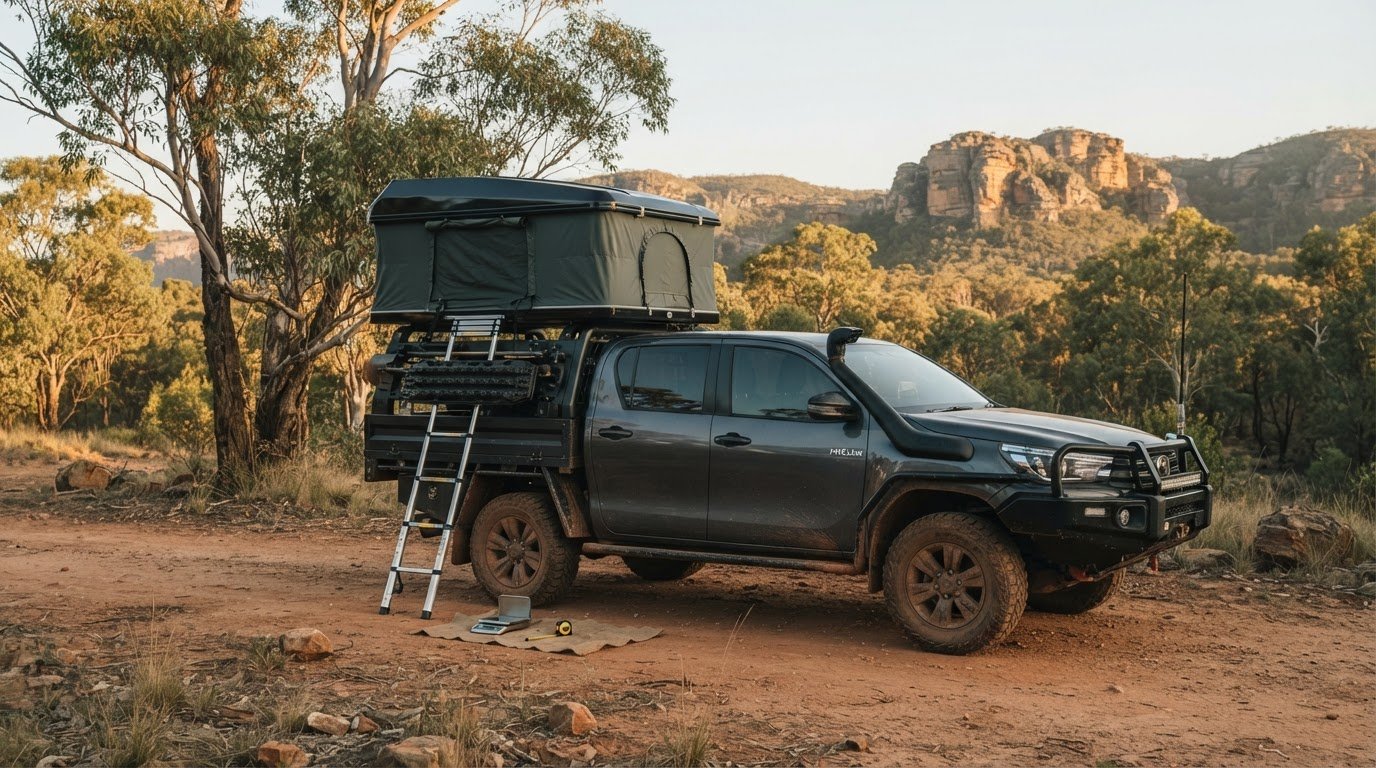
Imagine waking up at 3 AM in the Victorian High Country, not to the sound of the wind, but to the icy “rain” of condensation dripping from your tent ceiling onto your face. It’s a frustrating rite of passage for many of us, but shivering through the night shouldn’t be the price you pay for a remote winter adventure. We know the struggle of choosing the right roof top tent insulation for winter camping when you’re faced with confusing R-values and gear that promises the world but leaves you freezing in the middle of the night.
This guide will help you master the science of thermal management to turn your roof top tent into a true four-season sanctuary for your next Australian alpine expedition. We’ll explore the best insulation materials for 2026, compare hard shell versus soft shell performance, and share our expert secrets for keeping your sleeping environment bone-dry in sub-zero temperatures. It’s time to stop surviving the cold and start enjoying the stillness of the winter wilderness together. Let’s get your rig ready for the frost.
Key Takeaways
- Learn how to combat the “Cold Soak” effect where your tent floor acts as a heat sink, ensuring you stay warm even when the mercury drops.
- Compare the latest internal thermal liners and external hoods to find the best roof top tent insulation for winter camping in the rugged Australian alpine.
- Master the science of R-values to choose a sleeping surface that provides a true thermal barrier against freezing ground temperatures.
- Stop the “rain inside” with proven strategies for managing moisture and integrating diesel heaters for a bone-dry sleeping environment.
- Discover how to build a sustainable, four-season setup using recycled materials that respect our wild places while keeping you safe.
Understanding the Challenges of Winter Roof Top Tent Camping
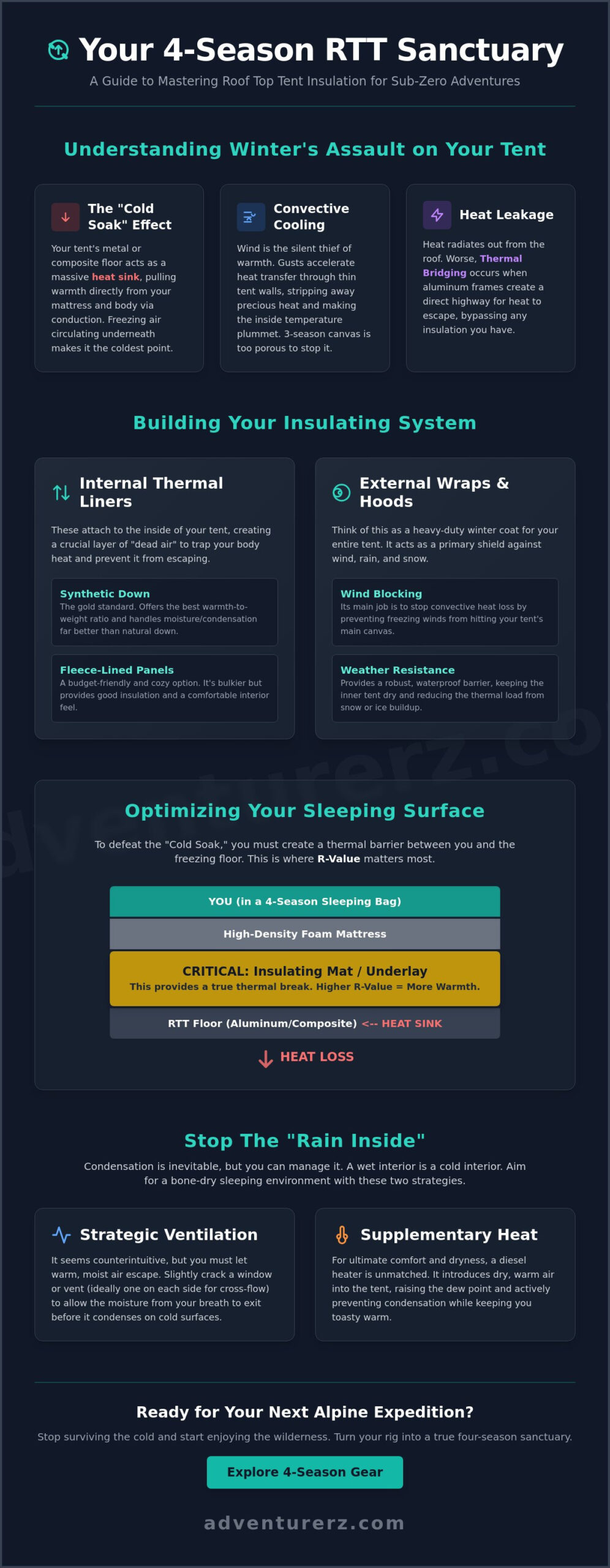
Winter in the Australian High Country isn’t just about the stunning frost on the snow gums; it’s a brutal test of your gear’s thermal limits. Many of us have made the mistake of thinking a heavy sleeping bag is enough to stay warm. The reality is that without proper roof top tent insulation for winter camping, you’re fighting a losing battle against physics. We often see community members struggle with the “Cold Soak” effect. This happens when your tent’s aluminum or composite floor acts as a massive heat sink, literally sucking the warmth out of your body and mattress through conduction. Because your tent is elevated, freezing air circulates underneath the base, making the floor the coldest part of your entire setup.
While standard poly-cotton canvas is a champion for breathability during a humid Queensland summer, it fails miserably when faced with sub-zero convective cooling. The fabric is simply too porous to hold onto your precious body heat when the wind picks up. We’ve identified three primary points of heat loss that every adventurer must address: the floor (conduction), the walls (convection), and the roof (radiation). Ignoring these leads to more than just a cold night. Poor sleep on remote trips has a massive psychological impact. It leads to fatigue, slower reaction times, and poor decision-making on technical 4WD tracks, which directly compromises your safety in the wilderness. Following general camping principles for summer won’t save you here; you need a specialized strategy for the cold.
The Thermodynamics of Rooftop Sleeping
Wind chill is the silent thief of warmth. As gusts hit your tent, they accelerate the transfer of heat through the thin walls, a process known as convective cooling. To fight this, we focus on creating “dead air space” rather than just relying on thin reflective blankets. Trapped air is one of the best insulators available to us. However, even with great fabric, you have to watch out for structural leaks. Thermal bridging in RTT frames occurs when highly conductive materials, like aluminum extrusions, create a direct path for heat to escape from the interior to the freezing outside environment. Understanding this allows us to target our insulation efforts where they actually matter.
Why 3-Season Tents Struggle in Winter
Most roof top tents are designed for 3-season use, meaning they prioritize airflow to prevent condensation. In winter, that same porosity becomes a liability as heat leaks through every pore of the canvas. Zippers are another major culprit; most standard tents don’t have insulated baffles behind the zips, creating literal “cold lines” throughout your sleeping area. Our community increasingly prioritizes 4-season modifications because we value self-reliance and durability. By upgrading your roof top tent insulation for winter camping, you turn a fair-weather shelter into a rugged sanctuary that can handle the most demanding Australian alpine conditions.
Key Methods for Insulating Your Roof Top Tent
We’ve found that the most effective way to stay warm isn’t just about adding one thick layer; it’s about building a system. When we look at roof top tent insulation for winter camping, we generally choose between internal liners, external hoods, or custom DIY additions. Each method tackles heat loss differently. Internal liners focus on trapping your body heat inside the sleeping area, while external wraps act as a shield against the biting alpine winds that can strip warmth from your tent canvas in seconds. If you’re planning a trip to the Victorian High Country, understanding these differences is the key to a restful night.
Internal Thermal Liners and Tents
Internal kits are often the first upgrade our community considers. You’ll typically choose between synthetic down and fleece-lined panels. Synthetic down is the gold standard for weight and warmth; it mimics the loft of natural down but handles the inevitable condensation of a roof top tent much better. Fleece is a budget-friendly alternative that feels cozy to the touch, though it’s generally bulkier when it’s time to pack down. Most of these kits use velcro-attached panels to seal the interior. This is a critical detail because it prevents icy drafts from whistling through the gaps at the corners or along the floor. For those starting their search, our Adventurerz roof top tents guide highlights which specific models are built to accept these thermal inserts seamlessly.
External Wraps and Winter Covers
External winter hoods are essentially a heavy-duty “rain fly” for your entire setup. By wrapping your tent in an additional layer of weather-resistant fabric, you create a “dual-wall” effect. This dead air space between the hood and your tent walls acts as a powerful insulator. It also serves a practical purpose: preventing snow and frost from building up directly on your main tent canvas. This makes your morning pack-down much easier since you aren’t trying to fold frozen, stiff fabric. Soft-shell tents usually benefit from a full “shower cap” style cover, while hard-shell owners often use specialized wraps that secure around the gas struts and base.
If you’re more of a DIY explorer, materials like Reflectix or closed-cell foam are fantastic for custom builds. While Reflectix is great at reflecting radiant heat, it only offers an R-value of about 1.1 unless you leave an air gap. For serious sub-zero expeditions, we suggest adding a 10mm layer of closed-cell foam under your mattress. This addresses the “cold soak” effect we discussed earlier. Following expert advice on winter camping gear ensures you’re layering these materials correctly to maximize thermal resistance. Just remember the trade-off: thicker insulation makes the tent harder to close. If your hinges are straining, it’s better to store your internal liner in a gear bag while you’re on the move to protect your tent’s longevity. Before you head out, check our reviews of winter-ready tents to see which setups offer the best balance of warmth and packability.
Optimising the Sleeping Surface and Floor
While we’ve tackled the walls and external hoods, the real battle for warmth is won or lost right beneath your sleeping bag. We often see adventurers focus entirely on the tent canvas while ignoring the fact that the floor is their biggest enemy. Because your body weight compresses the insulation in your sleeping bag, the loft that usually traps heat disappears. This leaves only your mattress to protect you from the “Cold Soak” effect we mentioned earlier. Without a dedicated thermal break, the aluminum or composite base of your tent will relentlessly pull heat from your body all night long.
To master roof top tent insulation for winter camping, you must understand the fundamental principles of winter camping regarding conduction. We recommend a layered approach to create a “warm floor” system. This starts with an anti-condensation mat, which provides a small but vital air gap, followed by your primary mattress and topped with a wool underlay. This combination doesn’t just stop the cold; it manages the moisture that tends to pool under the mattress in freezing weather.
High R-Value Mattresses and Mats
When the temperature hits -10°C in the Snowy Mountains, your standard open-cell foam mattress won’t cut it. These mattresses are mostly air, and in winter, that air stays cold. We suggest looking for a setup with an R-value of 4.0 or higher. High-density memory foam or self-inflating mats with vertical foam cores offer much better resistance to heat flow than basic foam. For those who want the ultimate setup, layering a self-inflating mat on top of your existing RTT mattress can boost your total R-value significantly. If you’re setting up in a snowy camp, having a dry transition area is just as important as the bed itself. We often suggest pairing your tent with one of the best 4WD awnings to keep the area around your ladder clear of ice and slush.
The Importance of Sub-Floor Insulation
Don’t rely on the mattress alone to do all the heavy lifting. We’ve found that adding a layer of interlocking EVA foam tiles (the kind used in gym floors) directly onto the tent base is a game-changer. These tiles are lightweight, inexpensive, and provide a consistent thermal barrier across the entire floor. Floor insulation is more critical than wall insulation because your body weight compresses sleeping bag loft, making the tent base the most direct path for conductive heat loss. For even more protection, you can slide a radiant barrier like Reflectix under the foam tiles. This reflects your body’s infrared heat back toward you rather than letting it escape through the floor. It’s these small, methodical steps that turn a shivering night into a restorative sleep.
Managing Moisture and Supplementary Heat
You’ve spent the weekend perfecting your roof top tent insulation for winter camping, but you wake up feeling like you’ve been sleeping in a rainforest. We call this the “Rain Inside” problem, and it’s the most common hurdle our community faces during remote Australian winter trips. When we breathe, we release roughly half a litre of water vapour overnight. In a tightly sealed tent, that warm air hits the cold canvas and reaches its dew point, turning into liquid that drips onto your bedding. If your insulation gets damp, its thermal efficiency drops significantly because water conducts heat far more effectively than dry air. Keeping your sanctuary dry is the secret to staying truly warm.
Condensation Control in Sub-Zero Temps
The most effective way to fight moisture is to maintain airflow, even when it feels counter-intuitive. We always recommend leaving at least one window or vent cracked open to allow that moist air to escape. To assist this, small 12V fans are a game-changer. By keeping the air moving, you prevent it from stagnating against the cold walls where it would otherwise condense and freeze into frost. A dry tent preserves the R-value of your liners and mattress, ensuring your setup performs exactly as intended. If you’re still deciding on a rig, check out our latest roof top tent reviews to see which models offer the best integrated ventilation systems for high-altitude camping.
Safe Heating Solutions for Remote Sites
For those of us heading into the truly bitter cold of the Snowy Mountains, supplementary heat can turn a survival exercise into a luxury experience. Diesel heaters have become the gold standard for our community because they provide “dry” heat. Unlike humans or propane, diesel heaters vent their combustion byproducts outside, pumping only warm, dehumidified air into the tent. We prefer external mounting for the heater unit to keep fuel smells and noise away from the sleeping area. If you use one, you must follow these safety protocols:
- Install a Carbon Monoxide (CO) Detector: This is a non-negotiable safety tool for any heated tent.
- Avoid Unvented Propane: Never use “Buddy” style propane heaters inside a roof top tent. They produce massive amounts of moisture and carry a high risk of CO poisoning in small spaces.
- Passive Hacks: If you aren’t ready for a diesel heater, a classic hot water bottle or a 12V electric blanket can provide hours of warmth with minimal complexity.
Whether you choose active heating or passive hacks, always prioritise safety and ventilation. A well-prepared explorer knows that a warm night starts with a dry tent. For more gear advice to complete your winter setup, explore our comprehensive guide to winter-ready roof top tents and start planning your next sub-zero escape.
Choosing the Right Setup for Your 2026 Adventures
Selecting the perfect roof top tent insulation for winter camping isn’t a one-size-fits-all decision; it requires a honest look at where you plan to explore. A winter expedition in the Stirling Ranges demands a different thermal strategy than a sub-zero night in the Tasmanian Central Highlands. We’ve spent the previous sections mastering the physics of “Cold Soak” and moisture control, but the final step is ensuring your gear works harmoniously with your vehicle and your values. Before you head out, we always suggest performing the “Pack-Up Test.” Many modern hard-shell tents have tight tolerances; if your internal liners and extra foam tiles are too thick, you risk straining the hinges or snapping the latches. It’s better to store a bulky liner in a dedicated gear bag than to compromise the structural integrity of your tent in the middle of a remote trip.
Sustainable and Ethical Gear Selection
As we push further into 2026, our community is shifting toward more responsible exploration. We believe that true self-reliance includes choosing gear built for durability rather than disposability. When you’re looking for insulation kits, prioritize manufacturers that use recycled synthetic down or ethically sourced wool. We also encourage you to move away from single-use chemical heat packs. These items create unnecessary waste in our pristine wilderness areas. Instead, invest in high-quality 12V blankets or reusable hot water bottles that serve you for years. A dry, well-insulated tent is a sustainable one; it requires less energy to heat and lasts decades when maintained correctly.
Planning Your Remote Winter Escape
Preparation is the difference between a miserable night and a legendary story. Once you’ve assembled your insulation system, don’t make the first night of your trip the first time you test it. Set up your rig in the driveway or a local campsite during a cold snap. This allows you to identify any thermal bridges or condensation gaps in a safe environment. To help you map out your next sub-zero journey, we recommend using The Ultimate Adventure Travel Planner to coordinate your route and check for seasonal road closures in alpine regions.
We’re all on this path toward better exploration together. Once you’ve dialed in your winter setup, we’d love for you to share your results with our community. Did the EVA tiles make the difference, or was the diesel heater the real hero? Your insights help us all stay warmer and safer under the stars. Use this final checklist before you depart:
- Check the hinges: Ensure the tent closes without excessive force.
- Test the CO detector: Fresh batteries are a non-negotiable safety item.
- Inspect the seals: Look for gaps in velcro or zippers where drafts could enter.
- Pack a backup: Always carry a high-loft emergency blanket, just in case.
Ready for Your Next Sub-Zero Expedition?
Mastering the science of thermal management turns your rig into a true four-season sanctuary. We’ve seen how addressing the floor’s “cold soak” effect and managing internal moisture are just as vital as the tent walls themselves. By choosing high-quality, durable components, you’re not just staying warm; you’re investing in gear that respects the wild places we love to explore. This systemic approach ensures you wake up refreshed rather than shivering at 3 AM.
Our team has been providing expert gear reviews since 2018, ensuring every recommendation is community-tested in extreme Australian conditions. We prioritize sustainable and responsible camping because protecting our regional natural environments is just as important as reaching the summit. Now that you’ve got the knowledge to optimize your roof top tent insulation for winter camping, it’s time to map out that remote escape. Don’t let the frost hold you back from the stillness of the winter wilderness. Join the Adventurerz community for more expert gear reviews! We’re here to guide you through every technical detail and share the excitement of the path ahead. See you out on the tracks.
Frequently Asked Questions
What is the best material for roof top tent insulation?
Synthetic down is the gold standard for roof top tent insulation for winter camping because it provides excellent loft to trap dead air while resisting damp conditions. Quilted fabric liners are also fantastic for durability and ease of cleaning. We always prioritize materials that offer a high warmth-to-weight ratio to ensure your rig stays agile on technical tracks without sacrificing comfort during freezing nights.
How do I stop condensation in my roof top tent during winter?
Maintain consistent airflow by leaving a window or vent slightly open to prevent your breath from reaching its dew point on the cold canvas. It sounds counter-intuitive to let cold air in, but moving air is the only way to stop moisture from pooling. We recommend using a small 12V fan to keep air circulating, which keeps your bedding dry and prevents the “rain inside” effect.
Is a diesel heater safe to use in a roof top tent?
Diesel heaters are extremely safe when the main unit is mounted externally and only the warm, dry air is piped into the tent sleeping area. This setup keeps combustion byproducts and fuel smells outside your living space. You must always use a high-quality Carbon Monoxide detector as a fail-safe. It’s the ultimate solution for a bone-dry interior during those bitter High Country nights.
Can I leave my insulation kit inside when I fold the tent?
Most hard-shell tents have very tight tolerances, so we usually suggest removing the insulation kit before folding to protect your tent’s longevity. Forcing the hinges against thick quilted liners can cause permanent structural damage or latch failure. Soft-shell tents often have more room, but it’s still best to perform a pack-up test first to ensure you aren’t straining the internal frame.
What R-value mattress do I need for winter camping?
Aim for a mattress system with a combined R-value of 4.0 or higher for temperatures down to -10°C. This level of resistance is necessary to stop the “cold soak” effect from the tent’s aluminum or composite base. You can achieve this by layering a self-inflating mat over your standard foam mattress. It’s a methodical way to ensure you aren’t losing body heat to the floor.
Do I really need an anti-condensation mat?
Yes, an anti-condensation mat is an essential part of your roof top tent insulation for winter camping strategy. It creates a vital air gap between your mattress and the cold floor, allowing moisture to evaporate rather than soaking into your bedding. Without this thermal break, your mattress will likely develop mold, which goes against our commitment to durable and healthy gear maintenance.
What is the cheapest way to insulate an RTT for winter?
Interlocking EVA foam tiles paired with a Reflectix radiant barrier is the most budget-friendly method for effective insulation. You can pick up these tiles from most local hardware stores and cut them to fit your tent floor perfectly. This DIY setup provides a surprisingly high thermal barrier for a fraction of the cost of custom kits. It’s a hardy, self-reliant solution for the budget-conscious explorer.
Does a hard-shell tent stay warmer than a soft-shell tent?
Hard-shell tents generally stay warmer because their solid roofs and bases provide better native insulation and superior wind resistance. The rigid shell doesn’t flap in the wind, which reduces convective heat loss significantly during alpine storms. However, a well-modified soft-shell with an external winter hood can perform just as well if you manage the specific thermal leaks of the canvas and zippers.