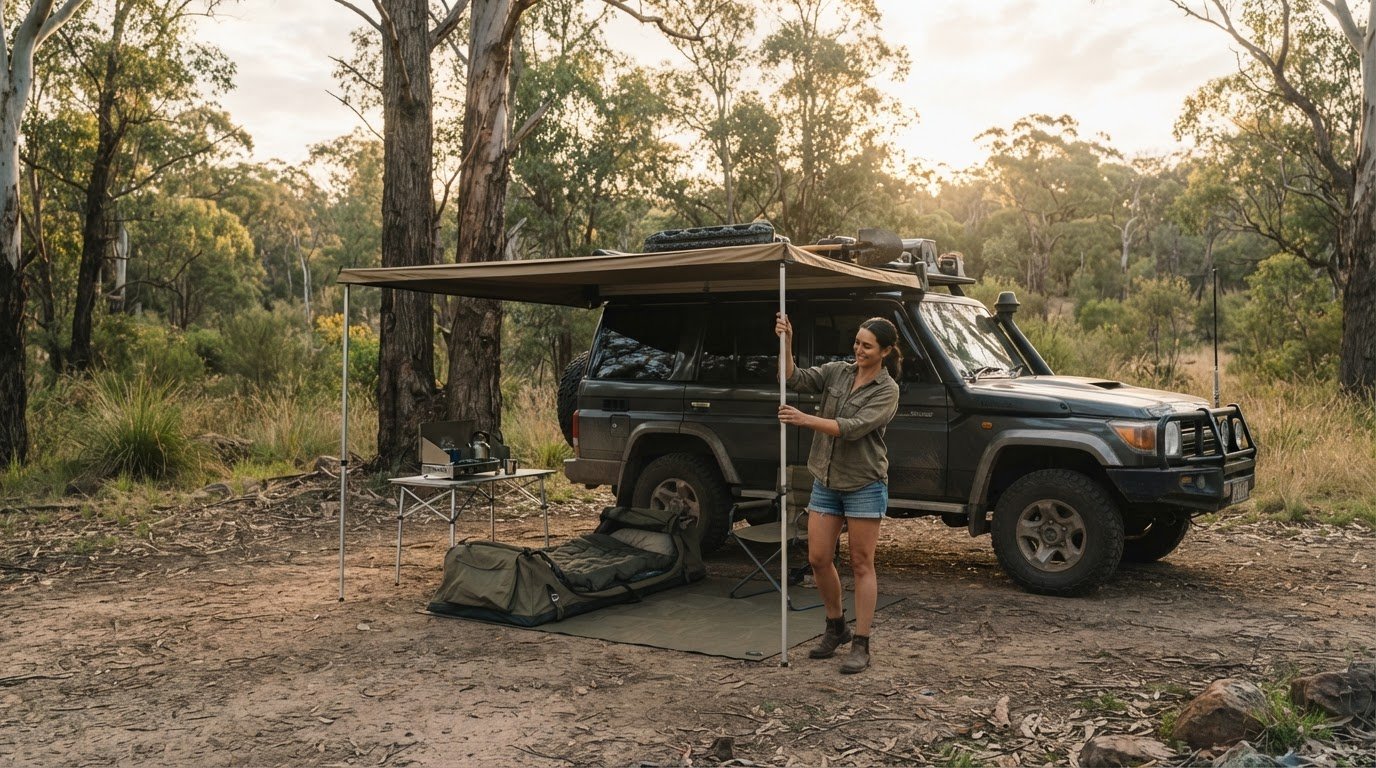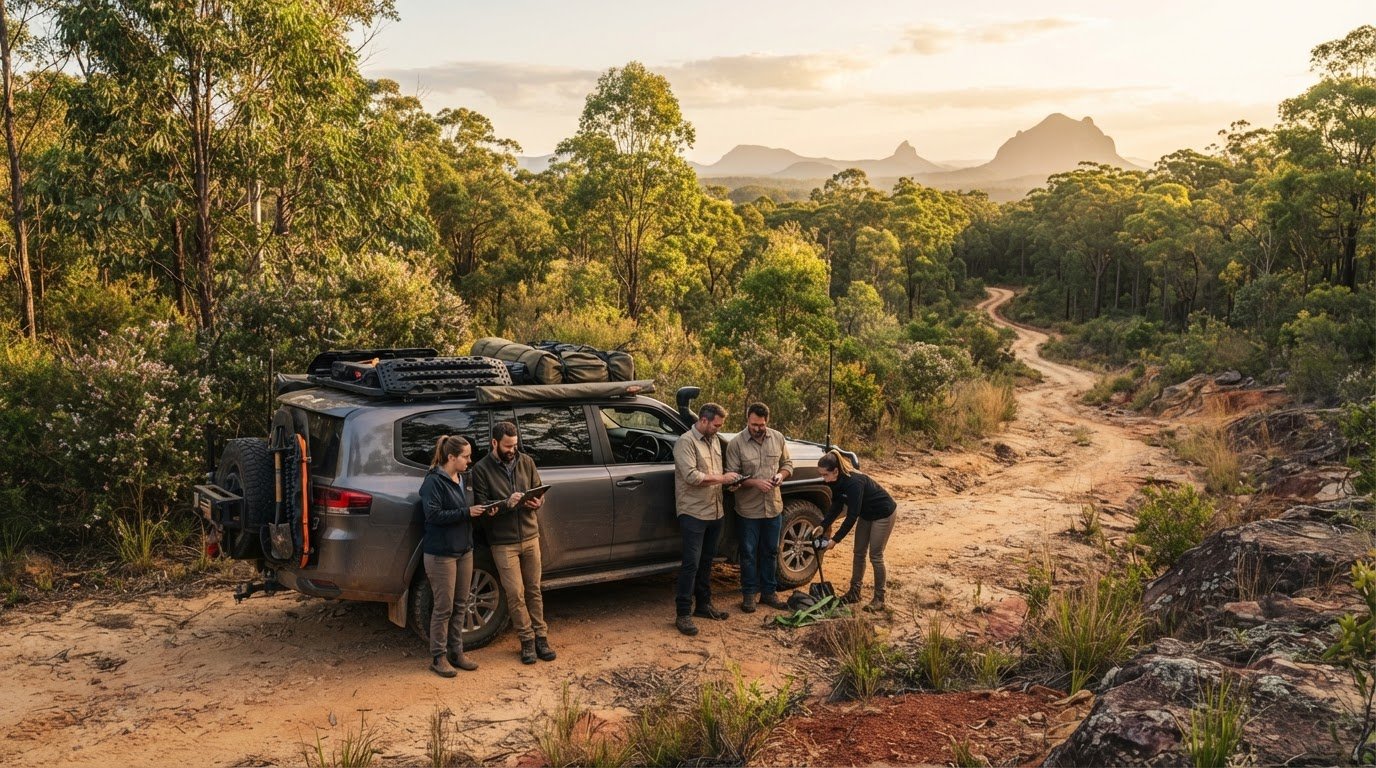
Living in a roof top tent full time isn’t just a long camping trip; it’s a high-stakes logistical sport that demands a “Basecamp” mindset to survive the long haul. With 12 million people now participating in overlanding, a massive 50% increase since 2024, the path to a nomadic life is well-trodden but requires serious preparation. We understand the magnetic pull of the open road, yet we also recognize the reality of battling mould in small spaces and the fatigue of daily pack-downs. If you’ve ever wondered if roof top tent living full time is truly sustainable beyond the curated photos, you aren’t alone.
We’re here to bridge the gap between the dream and the dirt. This guide helps you master the logistics, gear requirements, and lifestyle shifts needed to thrive rather than just survive. We’ll dive into building a reliable living setup, streamlining your hygiene routines, and finding a sense of belonging in the wild. From managing extreme weather to navigating 2026’s stricter camping regulations, we’ll provide the expert guidance you need to keep your spirit high and your footprint low. Let’s get you ready for the ultimate nomadic experience.
Key Takeaways
- Learn how to transition from short-term touring to a permanent nomadic rhythm that prevents burnout and sustains your passion for the road.
- Evaluate the technical trade-offs between hardshell and softshell designs to ensure your setup for roof top tent living full time can withstand 365 days of exposure.
- Master the daily logistics of hygiene and nutrition, including why a 12V fridge is a non-negotiable asset for long-term health and independence.
- Connect with our “Adventurerz” community and adopt environmental ethics that protect the remote landscapes we all call home.
- Equip yourself with a definitive safety checklist, from PLBs to vehicle recovery gear, ensuring you’re ready for any remote Australian scenario.
Table of Contents
The Reality of Roof Top Tent Living Full Time in 2026
Transitioning to roof top tent living full time means trading a fixed address for a 365-day residency on four wheels. It is a radical departure from the standard two-week getaway. While many start by asking What is a Roof Top Tent? to understand the basic mechanics, the real challenge lies in the shift from “touring” to “living.” Touring is about the destination; living is about the rhythm. We’ve seen many enthusiasts burn out because they treated every day like a holiday. In reality, your setup is your bedroom, and your 4WD serves as your entire utility room and foundation.
In 2026, the landscape of nomadic life has evolved. With overlanding participation jumping to 12 million people, finding a secluded spot requires more strategy than it did a few years ago. Stricter enforcement of 14-day stay limits on public lands means you’re constantly calculating your next move. Your vehicle is no longer just a way to get from A to B. It is a complex ecosystem that must manage your power, water, and shelter. You need to account for a 10-17% drop in fuel economy due to the drag of your home, and your maintenance schedule must be flawless. If the vehicle fails, you aren’t just stranded; you’re homeless.
The Mental Shift: From Holiday to Lifestyle
“Vacation brain” is a trap that leads to exhaustion. If you treat every night like a celebration, you’ll hit a wall within the first 60 days. Successful nomads establish a strict work-life-camp balance. This involves dedicated hours for remote work, vehicle maintenance, and genuine rest. Living in a small, elevated space can feel isolating if you don’t consciously engage with the environment. We embrace a “Basecamp” philosophy where the tent is strictly for sleeping, while the wilderness serves as the living room. This mental boundary is essential for long-term psychological health.
Why Australia is the Ultimate (and Hardest) Testing Ground
Australia offers the most rugged, beautiful terrain on Earth, but it acts as a brutal mentor. You’ll face extreme heat that turns a tent into an oven and red dust that finds its way into every zipper and seal. Then there is the infamous fly season. Navigating the thousands of kilometres between reliable resource hubs requires methodical planning and self-reliance. This is where our community of Adventurerz shines. We rely on shared knowledge to survive these conditions. Before you head out, check our latest recommendations on roof top tents to see which models actually withstand the relentless corrugations of the Outback.
Optimising Your Setup for Permanent Residency
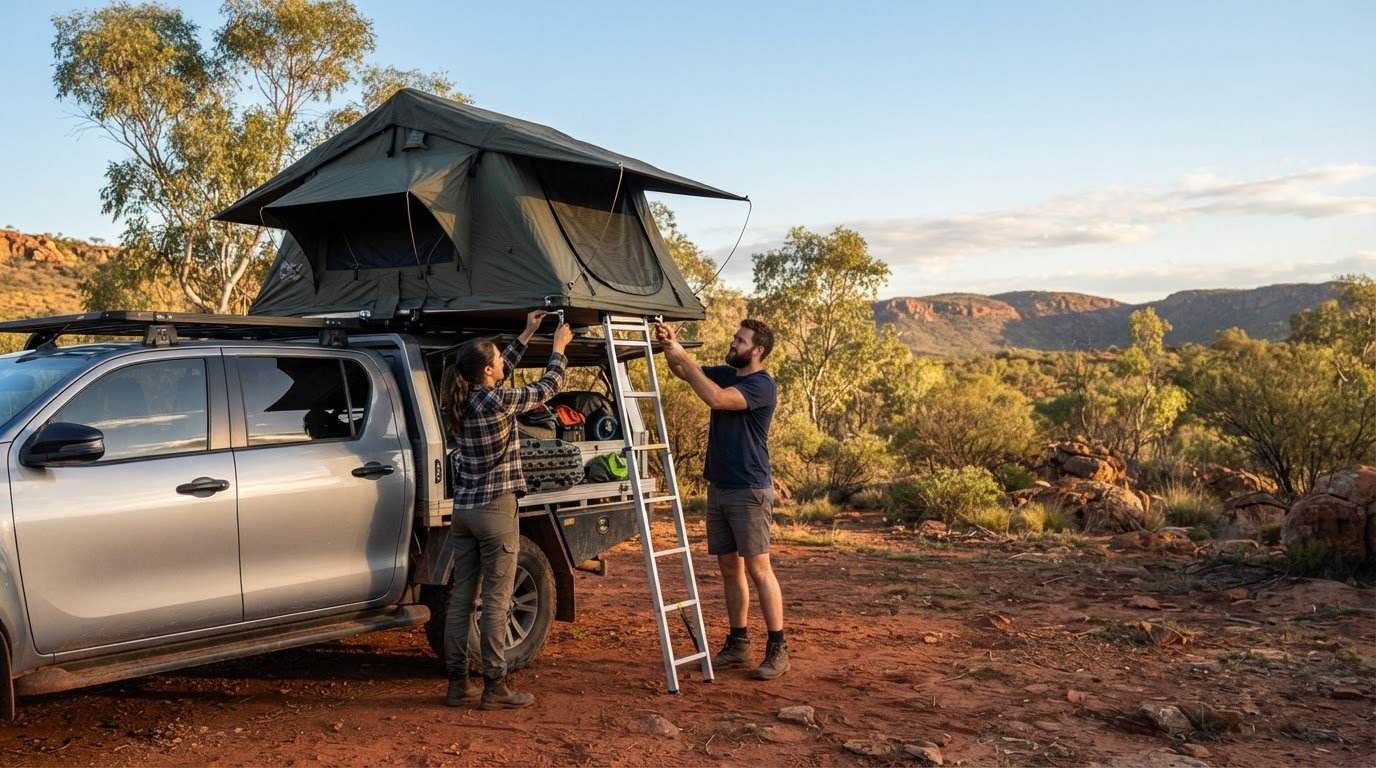
When you commit to roof top tent living full time, your gear stops being “camping equipment” and becomes your life’s infrastructure. We’ve found that durability is the only metric that matters after six months on the road. This is why hard shell tents are the preferred choice for full-timers in 2026. They offer superior weather protection and can be stowed in under a minute. This speed is vital when you’re moving frequently to stay within BLM long-term camping regulations, which often limit stays to 14 days in a single area. Fast setup times reduce daily fatigue and keep you ready for the next adventure.
We advocate for a strict “Basecamp” philosophy. Treat your roof top tent as a sanctuary for sleep, not a storage unit. If you start piling recovery tracks or dirty laundry in your bed, your comfort and sleep hygiene will plummet. Instead, invest in a high-density mattress upgrade and a quality anti-condensation mat. These aren’t optional extras. They are essential for preventing the moisture buildup that leads to mould in tight spaces. To make the space functional at night, we recommend integrating 12V power for dimmable LED strips and USB charging. It transforms a dark nylon box into a warm, functional home.
Climate Control and Ventilation Strategies
Condensation is the primary enemy of any full-time nomad. Even in the dry Australian interior, a single person exhales enough moisture overnight to soak a mattress if airflow is restricted. We recommend a combination of permanent ventilation and active air movement. While diesel heaters are fantastic for freezing nights in the High Country, a simple 12V fan is often more practical for humid coastal stays. Awnings are also crucial. They create a thermal buffer zone, keeping the sun off the tent walls during the day and providing a dry entry point during a downpour.
Storage Solutions: Where Does the Rest of Your Life Go?
Mastering roof top tent living full time is as much about what you leave behind as what you bring. Living small requires a “one-in, one-out” rule for your belongings. If you buy a new pair of boots, an old pair has to go. We rely on 4WD drawer systems to keep our kitchen and tools organised, leaving the roof rack for bulky items like water jerry cans and spare tyres. Quality 4WD awnings are non-negotiable here. They expand your usable living space, providing a sheltered outdoor kitchen and dry storage for gear that doesn’t fit inside the vehicle. If you’re still choosing your shelter, check out our comprehensive roof top tent reviews to find a setup built for permanent residency.
Managing the Logistics: Hygiene, Cooking, and Weather
Logistics are where the dream of roof top tent living full time meets the reality of the dirt. If you don’t have a system for your basic needs, the romance of the road will vanish within a week. We view a 12V fridge as the absolute heart of a nomadic kitchen. In the Australian heat, where temperatures regularly climb above 40 degrees Celsius, relying on ice is a losing battle. A dedicated fridge allows you to store fresh proteins and vegetables safely, reducing your reliance on expensive roadhouse meals and keeping your nutrition on track. It is a non-negotiable investment for anyone moving beyond the weekend warrior phase.
Waste management is our collective responsibility as Adventurerz. We follow a strict “Leave No Trace” mandate to ensure these remote tracks remain open for everyone. This means packing out every scrap of rubbish and managing your impact on the soil. When it comes to hygiene, a gym membership is your secret weapon for hot showers and a sense of normalcy. We also rely on portable solar showers for remote stretches. For responsible camping, remember the Grey Water Rule: dispose of all soapy water at least 60 metres away from any natural water source to protect local ecosystems and prevent contamination.
The Daily Routine: Setup, Pack-down, and Site Selection
Fatigue is the silent killer of the nomadic lifestyle. To combat this, we developed a 15-minute “drift” routine. Every item in your vehicle must have a dedicated home. If you can’t pack your tent and secure your kitchen in 15 minutes, your setup is too complex. When selecting a site, we look for natural windbreaks and position the tent to catch the morning sun, which helps dry out any overnight condensation. While “stealth camping” is sometimes necessary in urban areas, we always prefer designated bush camps where we can stay within BLM long-term camping regulations. These rules generally allow for 14-day stays before requiring you to move at least 25 miles away, a cycle that keeps the land healthy and your journey moving.
Hygiene and Sanity: The Bathroom Situation
The bathroom situation is the most common question we get about roof top tent living full time. While digging a hole is the traditional method, it must be done ethically. This involves digging at least 20 centimetres deep and staying 100 metres from water and tracks. However, as more people hit the road, portable toilets are becoming the gold standard for environmental ethics. Managing laundry is equally methodical. We utilise local laundromats in regional hubs to reset our gear every 10 to 14 days, using that time to catch up on vehicle inspections and route planning. It’s about finding a rhythm that prioritises both your sanity and the environment.
Sustainability and Community for the Modern Nomad
After the initial six months of roof top tent living full time, the novelty fades and the lifestyle becomes a true test of character. We believe that being a nomad is a privilege that carries a heavy responsibility toward the environments we explore. It isn’t just about avoiding damage; it’s about active stewardship. In 2026, with the overlanding market projected to reach $24.33 billion, our collective footprint is larger than ever. We must move beyond the “tourist” mindset and become part of the landscapes we inhabit. This involves a deep respect for the land and the people who have cared for it for millennia.
For many of us, remote work is what makes this life possible. Managing Starlink and 12V power systems is a daily ritual that requires precision. We’ve found that a robust lithium battery setup is essential to keep the laptop running while the fridge stays cold. However, being a digital nomad isn’t just about connectivity. It’s about respecting the Traditional Owners of the land. We always seek permission where required and follow local protocols to ensure we aren’t intruding on sacred or private spaces. Reliability in your gear and your ethics is what defines a successful long-term nomad.
The Ethics of Long-Term Remote Travel
Minimising our carbon footprint is a challenge when driving a rigged 4WD. We advocate for slow travel. Stay longer in one place rather than rushing between sites. This reduces fuel consumption and allows you to truly connect with the region. Conscious spending is another pillar of our ethics. We buy our supplies in small regional towns to support local economies that often struggle with seasonal tourism. Remember, “Pack it in, Pack it out” is only the baseline. We often find ourselves picking up rubbish left by others to leave the bush better than we found it.
Mental Health and Social Connection
Road loneliness is a real hurdle when you’re roof top tent living full time. Finding your tribe is vital for safety and emotional well-being. We encourage joining the Adventurerz community to share tips and meet up at campfires. It’s important to balance your time. Schedule “on-grid” days for socialising and “off-grid” weeks for solitude. Decision fatigue can also wear you down after months of constant movement. We’ve found that using the ultimate adventure travel planner helps streamline your route and logistics, leaving more mental energy for the actual experience.
Ready to take the plunge into a life of responsible exploration? Check out our expert roof top tent recommendations to find the right home for your sustainable journey.
Your Full-Time Roof Top Tent Checklist
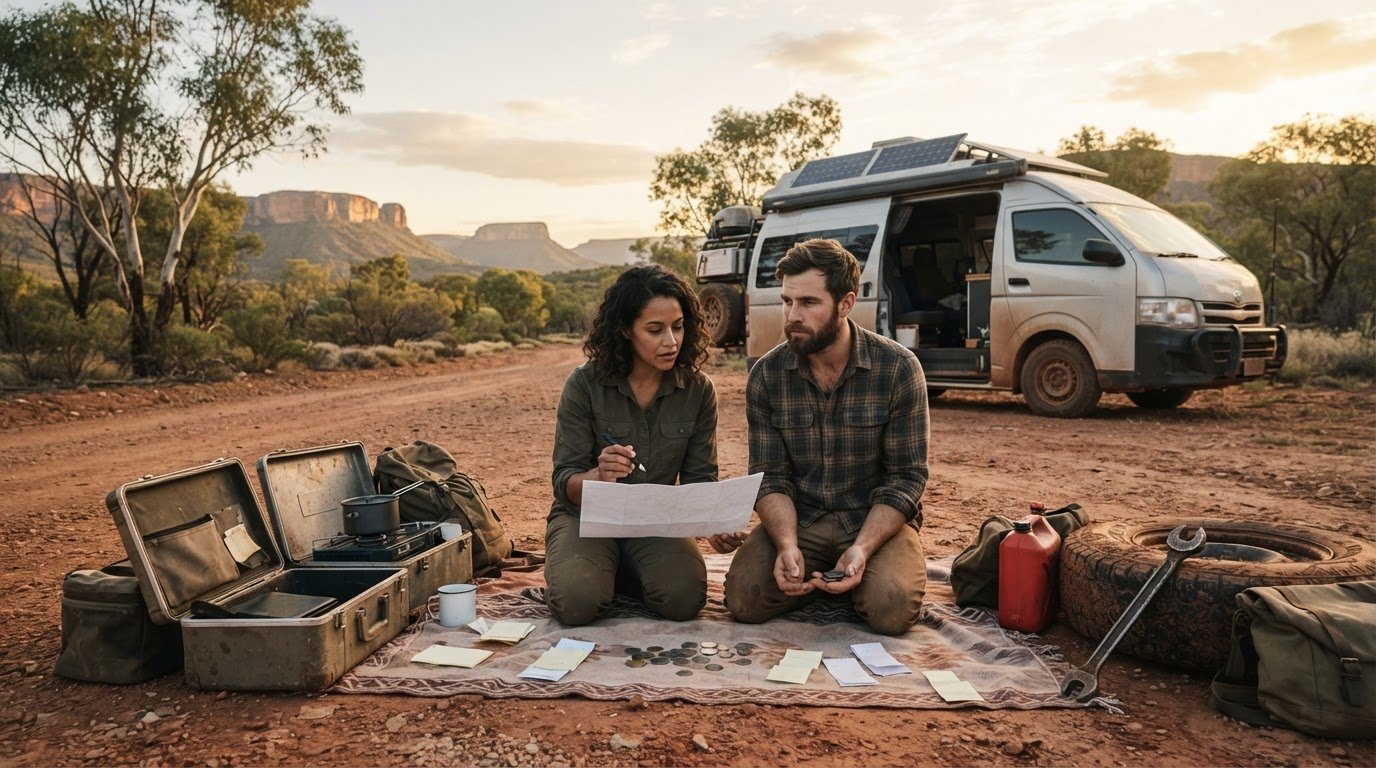
Preparing to launch into roof top tent living full time is the ultimate test of your organisational skills. We’ve covered the mental shifts and the technical setups, but now it’s time to consolidate that knowledge into a final, actionable plan. Success on the road depends on your ability to balance your budget against the harsh realities of the Australian outback. We recommend setting aside a mid-range monthly budget of $2,800 to $4,000. This should cover your food, campsite fees, and the increased fuel costs caused by that 10-17% aerodynamic drag from your home. Don’t forget a “rainy day” fund for vehicle maintenance; corrugations are relentless on suspension and tyres.
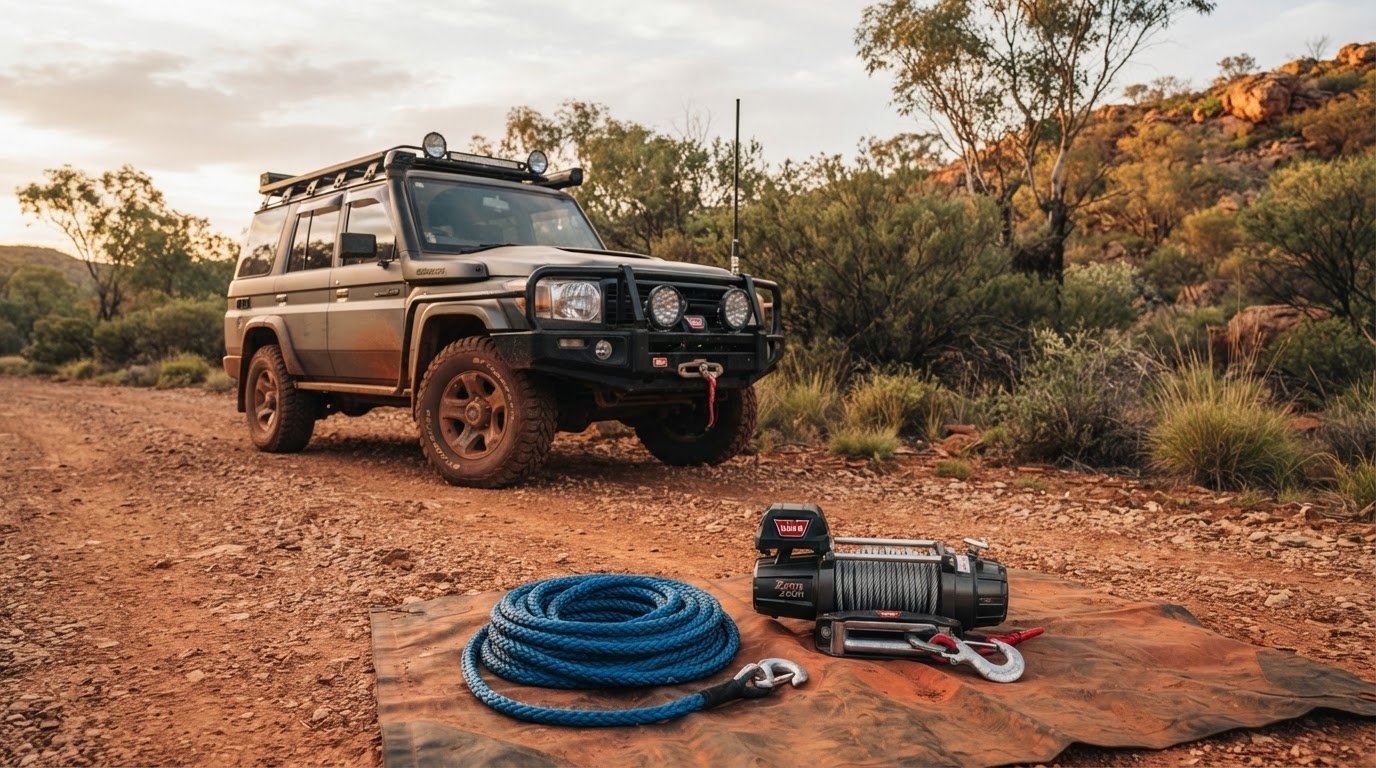
Safety is the cornerstone of our community. When you’re hundreds of kilometres from the nearest town, self-reliance is your only insurance policy. A registered Personal Locator Beacon (PLB) is a non-negotiable item in your kit. Alongside this, you must carry a high-quality vehicle recovery kit and a trauma-informed first aid kit. We don’t just carry gear; we master it. Take the time to practice a snatch-block recovery or a tyre plug repair before you actually need to do it in the red dust. This proactive approach is what separates a prepared nomad from a stranded traveller.
The Essential Gear Audit
Before you commit to the track, perform a deep-dive audit of your equipment. Inspect every seal and zipper on your tent. A single failed entry point can let in the dust and flies we discussed earlier. Your 12V power system needs to be bulletproof. Verify that your lithium setup can power your fridge and Starlink for at least three days of stationary camping without sun. If your batteries dip below 20% after one night, you need more solar or a better DC-DC charger. Refer back to our roof top tent recommendations to ensure your base unit is up to the task of permanent residency.
Final Steps Before Going Full-Time
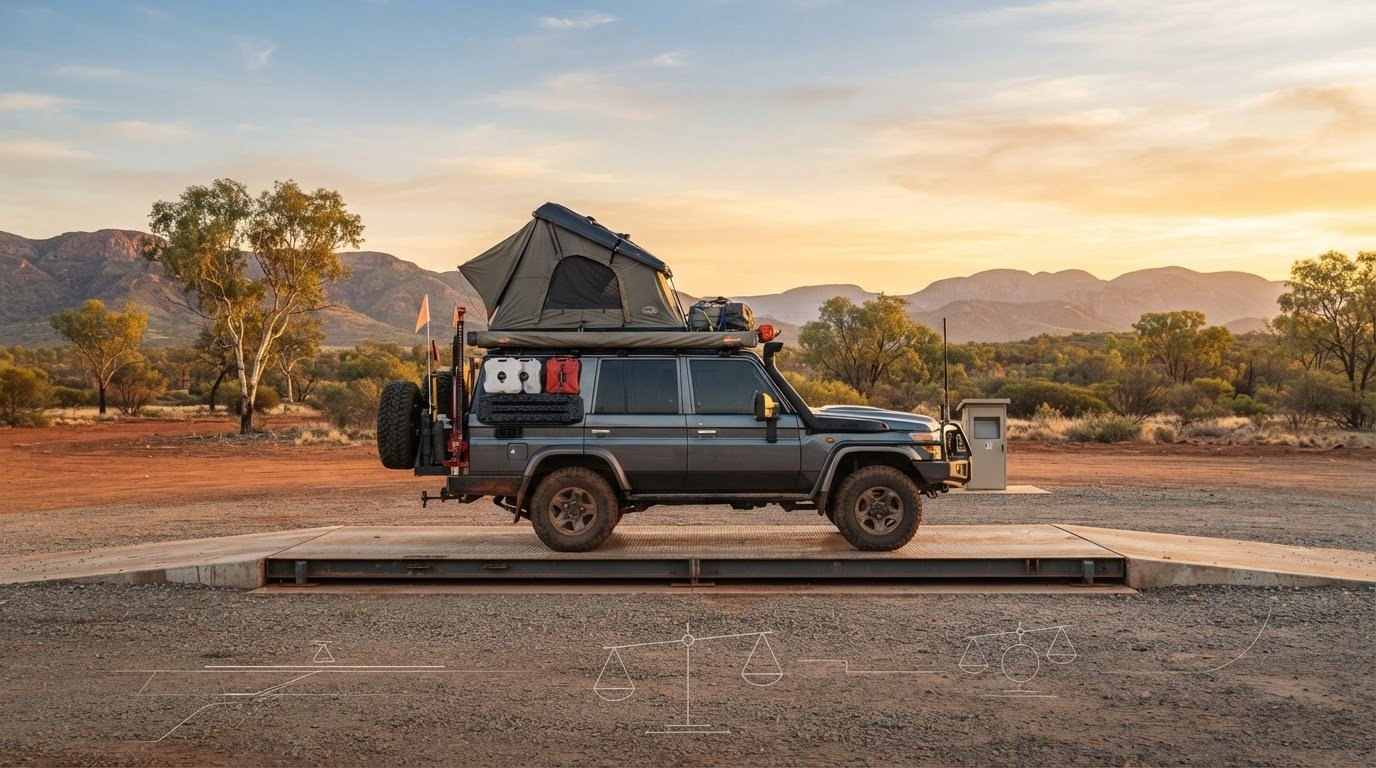
The transition from a house-dweller to a full-time adventurer shouldn’t happen overnight. We always advise a one-month “shake-down” trip. This trial run reveals the flaws in your storage systems and the items you simply don’t use. While you’re out, focus on downsizing your physical belongings and digitising your important documents. Once you’ve refined your kit, consider consulting with an expert to finalise your vehicle and tent integration. This final check ensures your Gross Vehicle Mass (GVM) is within legal limits and your setup is balanced for the long haul. We’re ready when you are. Let’s see you out there.
Launch Your Journey into Responsible Exploration
Transitioning to roof top tent living full time is a massive shift that demands more than just a sense of adventure; it requires a disciplined “Basecamp” mindset and a setup built for the long haul. We’ve explored the necessity of a durable hardshell home, the critical nature of 12V power systems, and the daily rhythms that keep burnout at bay. Your success on the road is tied to your respect for the land and the community you join. By mastering your logistics and adhering to “Leave No Trace” principles, you’ll ensure these wild Australian tracks remain open for everyone.
We’re proud to guide you through these challenges with expert community-vetted gear reviews and a deep focus on the unique conditions of Australian remote travel. Our mission is to provide the sustainable and ethical travel guidance you need to thrive in the red dust. Are you ready to find your perfect permanent home? Find your perfect permanent home with our Roof Top Tent recommendations. The road is calling, and we can’t wait to see you out there!
Frequently Asked Questions
Is it legal to live in a roof top tent full time in Australia?
Yes, it’s legal provided you comply with local council bylaws and national park stay limits. Most public lands and designated dispersed camping areas enforced a 14-day stay limit in 2026 to manage the increased number of nomads. You must move your camp frequently and ensure you aren’t overstaying in one region, as authorities have increased patrols to protect sensitive environments.
How do you handle extreme heat inside a roof top tent during summer?
Positioning your tent for maximum airflow and using 12V fans are the most effective ways to manage the Australian heat. We also recommend using high-quality awnings to create a thermal buffer zone that shades the vehicle and tent walls. Many successful nomads plan their routes to follow the cooler weather, heading south or to higher altitudes when the mercury rises.
Can I work remotely while living in a roof top tent?
You can definitely maintain a career on the road by integrating a robust 12V lithium power system and satellite internet like Starlink. The key is managing your power budget so your fridge and work equipment don’t compete for limited amp-hours. It’s a common practice among our community to schedule “on-grid” days in regional hubs for high-bandwidth tasks and battery top-ups.
What is the best way to prevent mould and mildew in a roof top tent?
Installing an anti-condensation mat under your mattress and ensuring constant ventilation are your best defences. Moisture is a constant challenge for roof top tent living full time, so you should never leave your tent packed away while damp for more than a few hours. If you’re forced to pack down in the rain, open the tent to dry at the very next sunny opportunity.
How much does it cost to live in a roof top tent full time?
Monthly living costs in 2026 typically range between $1,800 for budget-conscious travellers and $4,000 for those who prefer more amenities. Fuel is your largest variable expense, often costing more due to the 10-17% drop in fuel economy caused by the tent’s drag. We suggest a mid-range budget of $2,800 to $4,000 to cover fuel, food, insurance, and the inevitable vehicle maintenance.
What happens if my vehicle needs repairs while I am living in the tent?
You’ll need a backup plan, such as staying in a motel or a caravan park cabin, because your vehicle is your entire home base. Mechanical issues can be stressful when your bedroom is attached to the roof, so a “rainy day” fund is essential. We always carry a comprehensive recovery kit and basic tools to handle minor repairs ourselves, which keeps us moving between major service intervals.
How do I manage my mail and permanent address while on the road?
Most nomads use a mail-forwarding service or a trusted family member’s address to maintain a legal point of contact. You can digitise almost all your correspondence by switching to paperless billing and using scanning services for physical mail. For receiving parts or gear, Australia Post’s Parcel Lockers and “Poste Restante” services in regional towns are reliable options for those without a fixed address.
Is a hard shell roof top tent better than a soft shell for full-time living?
Hard shell models are usually the better choice for roof top tent living full time because they offer superior durability and much faster setup times. While they often require a larger initial investment, the ability to pack your home away in under a minute significantly reduces daily fatigue. They also provide better insulation and structural integrity during the high winds and storms common in the Australian interior.