The most reliable partner you’ll ever have in the bush isn’t a person; it’s the high-performance solo camping gear Australia requires for total self-reliance! We’ve all felt that sudden prickle of nerves when the engine cuts and the vast silence of the outback settles in for the night. It’s an incredible thrill, but it often comes with a side of anxiety about equipment failure or whether we’ve overpacked our rigs to the point of exhaustion while trying to stay safe.
We share your passion for these remote corners and understand the weight of being your own backup. This guide promises to help you master the art of solo exploration with our expert-vetted list of essential, safe, and sustainable gear specifically tailored for our unique, rugged environment. We’ll preview the latest 4WD-integrated solutions, navigate 2026 safety protocols like updated PLB requirements, and ensure every one of our Adventurerz is ready for the new tiered camping regulations. Let’s get you prepared for the ultimate solo mission!
Key Takeaways
- Learn to prioritize your kit using a safety-first hierarchy so you’re never left vulnerable when exploring remote tracks alone.
- We’ll help you identify the most reliable solo camping gear Australia offers by selecting shelter systems that are easy to pitch in unpredictable weather.
- Master resource management by calculating critical water requirements for desert stays and choosing streamlined kitchen setups for efficient travel.
- Secure your 2026 expedition with expert navigation tips and bedding recommendations designed specifically for the unique Australian climate.
- Utilize our specialized travel planner to map your escape and implement the essential “Check-In” protocol to keep our community safe and connected.
Table of Contents
The Solo Camping Hierarchy: Prioritising Gear for Self-Reliance
We believe solo travel is the ultimate test of character. When you’re out there alone, your gear choice becomes your primary survival strategy. We use a specific hierarchy to keep our Adventurerz safe. It starts with a solid foundation of safety, followed by reliable shelter, and only then do we focus on comfort. This isn’t just about packing light. It’s about packing smart for the unique, often unforgiving challenges of the Australian bush. Before you start loading the rig, consult a comprehensive guide to camping to understand the basics of outdoor survival.
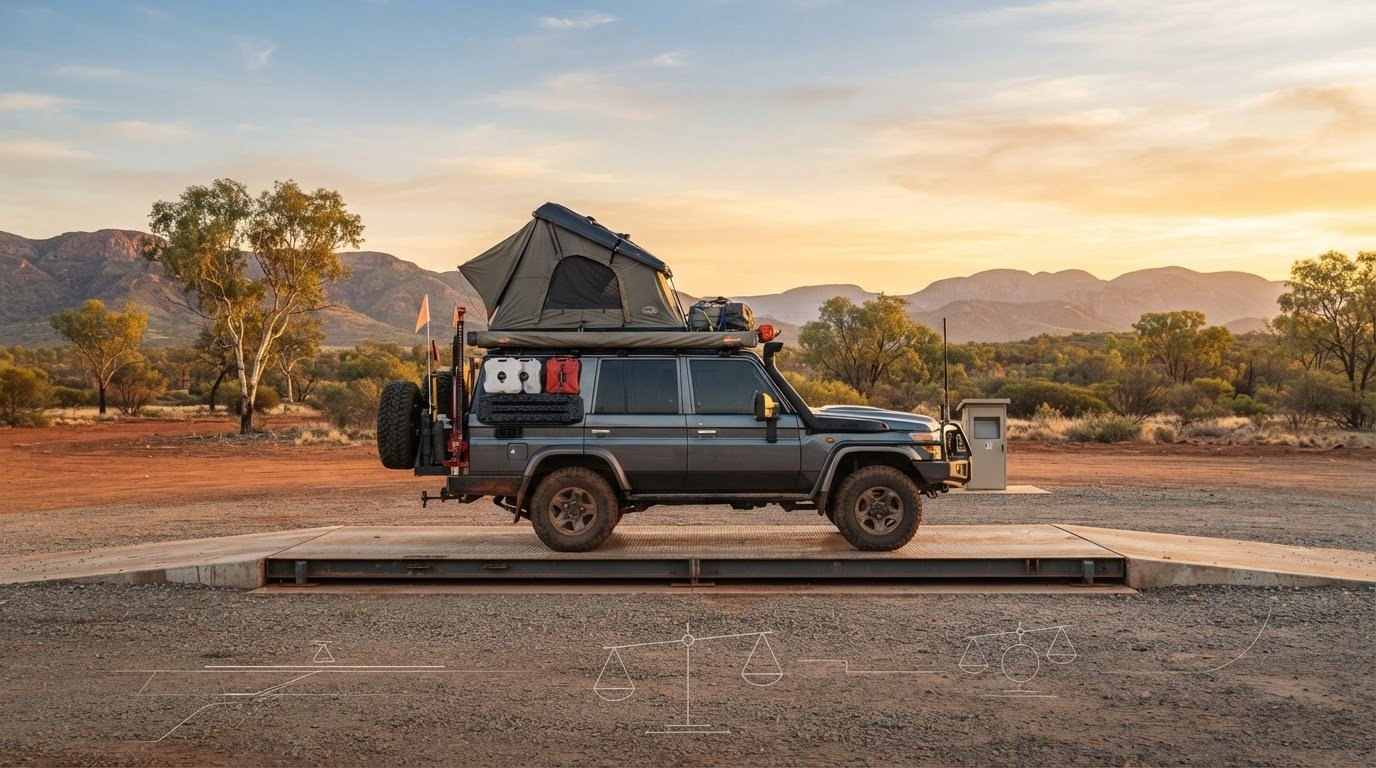
Group trips allow for shared redundancy. One person brings the heavy-duty stove while another carries the massive first aid kit. When selecting solo camping gear Australia explorers must balance weight with the “Single Point of Failure” rule. If a piece of equipment is critical to your life or your return, you need a backup or a way to fix it. This is why we advocate for high-quality, durable components that won’t quit when the mercury hits forty degrees. Investing in premium roof top tents or rugged canvas can be the difference between a successful mission and a dangerous equipment failure in the middle of nowhere.
The Safety Baseline: Communication and First Aid
A Personal Locator Beacon (PLB) is non-negotiable for solo missions. In 2026, you must ensure your registration is current with the Australian Maritime Safety Authority (AMSA) before heading off-grid. While UHF radios are great for convoy chatter, a satellite communicator is your true lifeline in a black spot. Your first aid kit needs to be solo-specific. We recommend kits designed for self-administration, focusing on heavy bleed control and snake bite treatment. Can you reach your bandages if you’ve injured your dominant arm? That is the standard we set for solo readiness.
The Mental Weight of Gear
Gear reliability isn’t just about function; it’s about your headspace. We’ve all experienced “bush anxiety” when a strange noise echoes outside the tent at 2 AM. High-performance lighting is the best cure for these jitters. A powerful headlamp and strategically placed area lights, like those integrated into modern 4wd awnings, create a secure and visible perimeter. Always park your vehicle facing the exit. Knowing you can depart quickly if conditions change provides immense peace of mind. It allows you to relax and truly enjoy the isolation of the wild.
Shelter Systems for the Lone Australian Traveller
Choosing your home for the night is a high-stakes decision when you’re flying solo. The Australian landscape is incredibly diverse, and your choice of solo camping gear Australia must reflect that. You might be dealing with the sticky coastal humidity of Northern NSW one week and the fine, pervasive red dust of the Simpson Desert the next. Your shelter needs to breathe while keeping the grit out. Before you commit to a purchase, we always recommend the “Solo Setup Test.” Can you realistically pitch your tent alone during a sudden gale at sunset? If the answer is no, it’s not the right fit for a self-reliant adventurer. We need gear that works with us, not against us, when the weather turns sour.
We are big believers in leaving no trace. Using a heavy-duty groundsheet or footprint under your ground tent is a small step that makes a massive difference. It protects fragile vegetation from being crushed and ensures your equipment lasts for years of rugged use. For those staying in our beautiful protected areas, always check the official camping safety guidelines to stay compliant with local regulations and ensure you’re camping responsibly. Proper ventilation and midge-proof mesh are also essential. Australian summers are brutal, and there’s nothing worse than a sleepless night spent battling heat and insects in a poorly designed shelter.
Rooftop Tents: The Solo Advantage
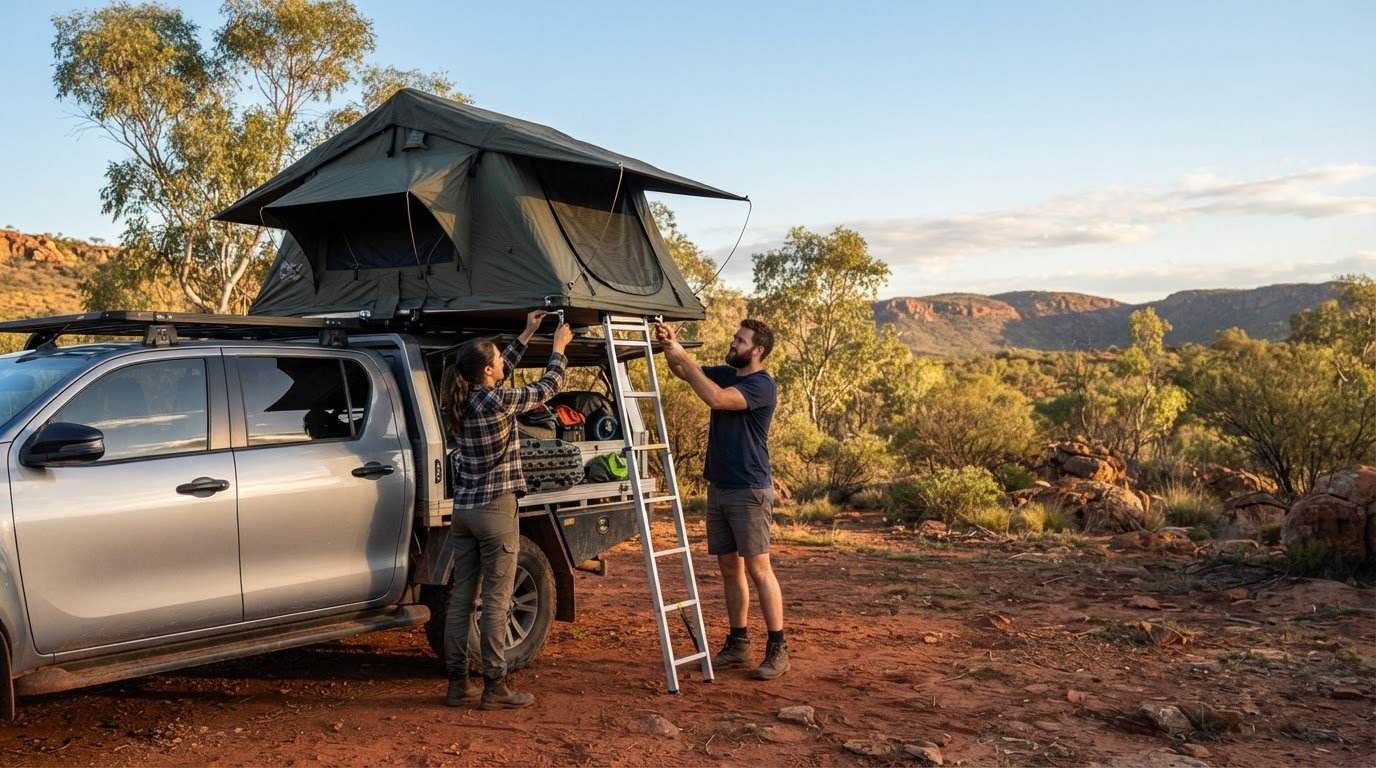
Being elevated isn’t just about catching a better sunrise. It’s a massive safety win for the solo traveller. Getting yourself off the ground keeps you away from curious dingoes, snakes, and damp earth. We love the speed factor too. Many modern hardshell models allow you to move from driving to sleeping in under two minutes. This rapid deployment is a game changer when you’re tired after a long day behind the wheel. If you’re looking to upgrade your rig, check out our expert roof top tents reviews for the best solo-friendly models on the market today.
The Traditional Swag vs. Lightweight Tents
The iconic Aussie swag is legendary for a reason. It’s a “toss and go” system that handles rough treatment and offers incredible durability. However, if your adventure involves hiking into remote spots where your vehicle can’t go, a lightweight 1-person tent is the way to go. These tents offer maximum mobility without sacrificing protection. Regardless of your choice, always keep your sleep system zipped up. It’s the only way to prevent morning dew and that relentless red dust from ruining your bedding. We want you to wake up refreshed and ready for the next track, not shaking out your sleeping bag at dawn!
Managing the Elements: Shade, Water, and Sustenance
We’ve secured our sleeping quarters, but surviving the Aussie sun and staying hydrated requires a different level of tactical planning. Managing your resources effectively is what separates a seasoned adventurer from a novice. When you are the only person responsible for your survival, every litre of water and every watt of power counts toward your success. Water is your most precious resource. For remote solo stays, we recommend calculating 5 to 7 litres per day. This covers drinking, basic hygiene, and cooking. Being alone means you can’t borrow a litre from a mate if you run short; over-calculating is a necessity, not a luxury.
One-pot meals and compact jet-boil systems are the gold standard for the lone camper. They minimize washing up and save precious cargo space. Remember, your supplies are a magnet for local wildlife. Dingoes and possums are notorious for raiding poorly secured campsites. Store your food in hard-shell containers or inside your vehicle to avoid unwanted midnight visitors. Keeping your fridge running and safety devices charged is also critical. A dual battery system paired with a portable solar blanket ensures your solo camping gear Australia setup remains functional even during extended stationary stays in the outback.
Vehicle-Mounted Shade and Protection
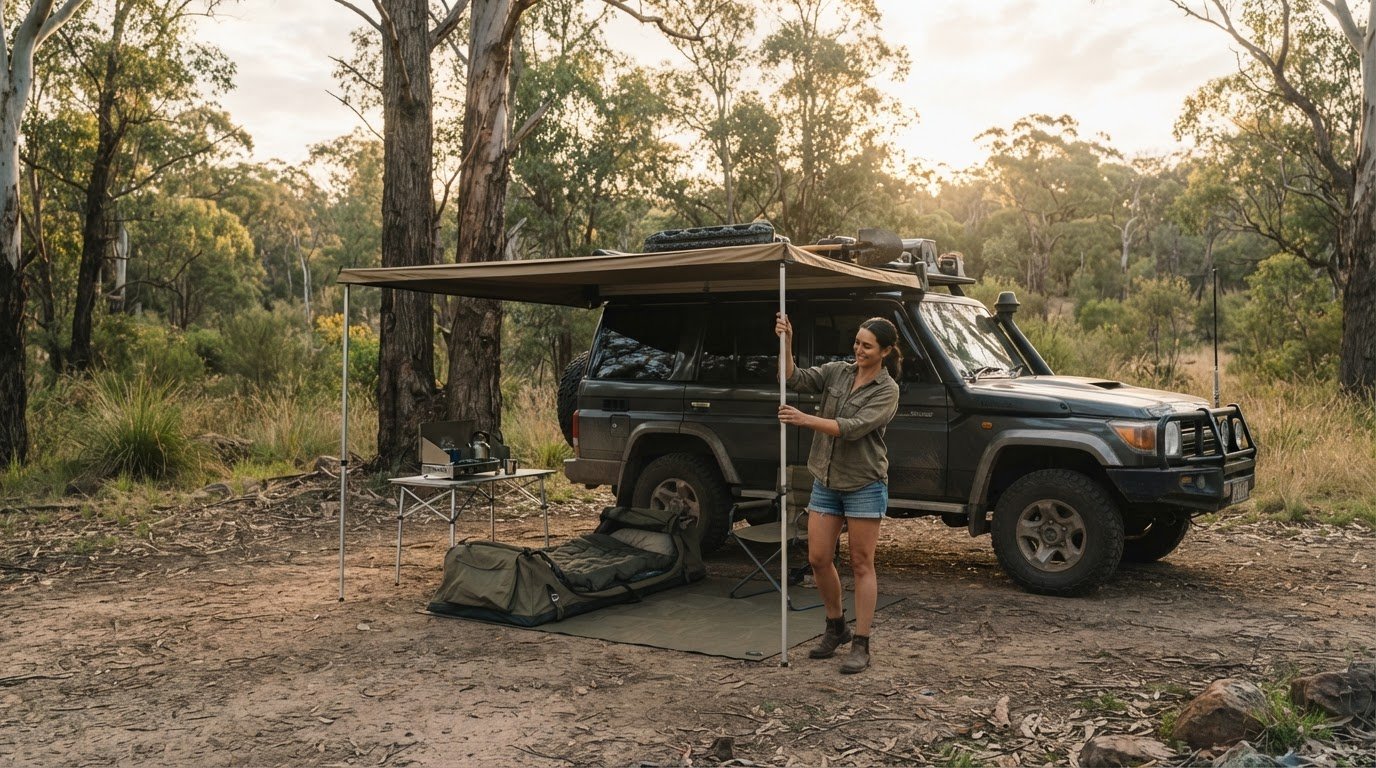
A 270-degree awning is a solo camper’s best friend. It provides massive coverage that wraps around the side and rear of your vehicle, creating a protected “living room” in seconds. The challenge for the lone traveller is handling wind during setup. We recommend choosing models with integrated poles and high-quality tensioning straps. Always secure your pegs immediately; you don’t have a partner to hold the frame while you hunt for the mallet. Explore our guide on the best 4wd awnings for solo setups to find a system that prioritizes ease of use.
Sustainable Cooking in the Bush
In 2026, navigating fire bans is a critical skill. During a total fire ban, solid fuel fires like wood or charcoal are strictly prohibited. We use commercially manufactured gas stoves instead. Ensure your stove is stable and placed in an area cleared of flammable material for a 2 to 3 meter radius. Always keep at least 10 litres of water on hand for immediate extinguishment. To minimize your footprint, consider freeze-dried meals. They reduce weight and significantly lower the amount of grey water and food scraps you need to manage alone. It’s about keeping our tracks pristine for the next generation of Adventurerz.
The 2026 Solo Camping Essential Checklist
We’ve covered the major systems, but your success often hinges on the smaller items in your pack. This 2026 checklist ensures you have the right solo camping gear Australia requires for total independence. Start with navigation. While digital GPS units with offline maps are incredible, they can fail. We always carry a paper backup and a compass. For bedding, don’t just look at weight. You need an R-value rated mat of at least 4.0 to handle those biting cold desert nights when the temperature drops to zero. A good night’s sleep is a safety requirement, not a luxury!
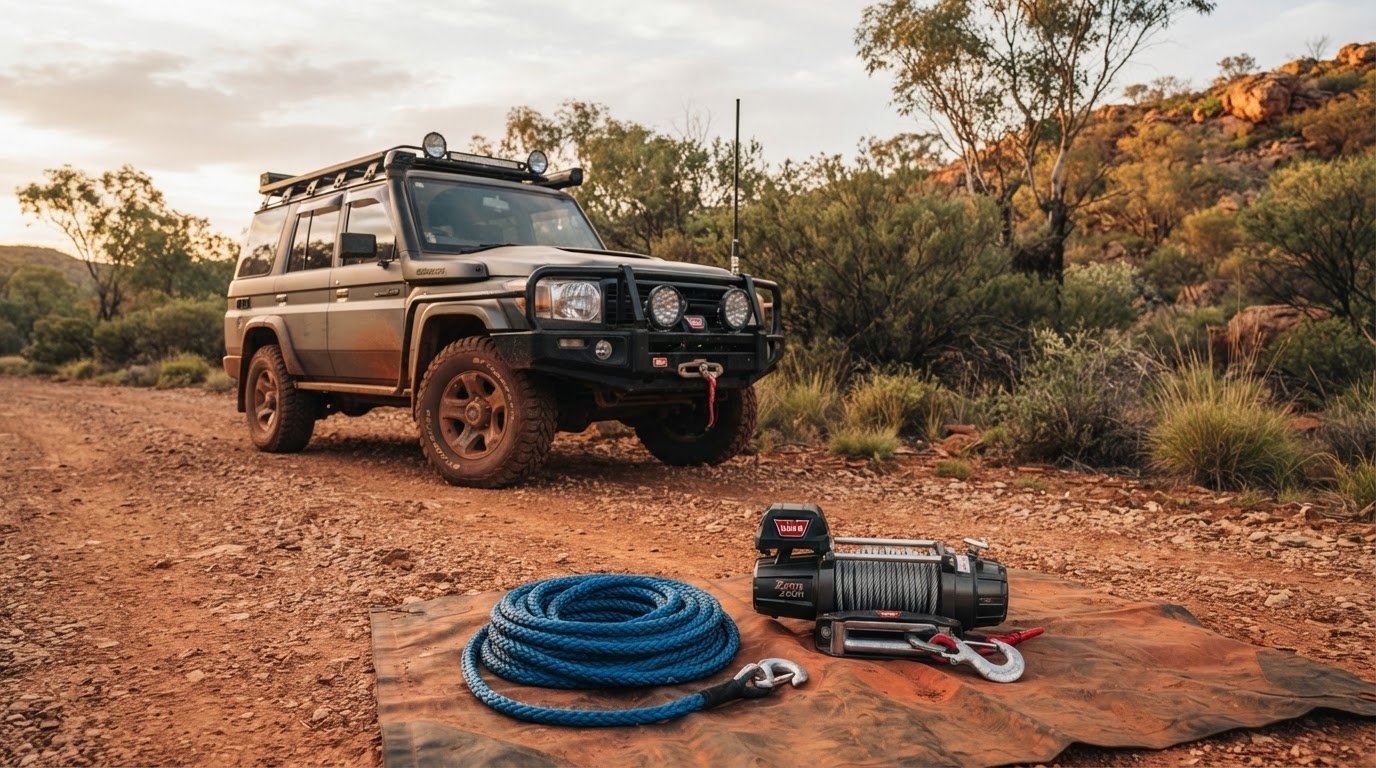
Your tool kit is your mobile workshop. A high-quality multi-tool, heavy-duty duct tape, and basic vehicle recovery gear are non-negotiable. For personal care, we prioritize environmental ethics. Use biodegradable soaps and carry a dedicated waste management kit to ensure you leave no trace. Clothing is all about the layers. You’ll face 40-degree heat in the sun and near-freezing winds at night. Moisture-wicking base layers and a windproof outer shell are essential for managing these wild temperature swings.
The “Ten Essentials” Adapted for Australia
The Ten Essentials are the bedrock of solo survival, representing a universal collection of tools designed to prevent emergencies and manage them if they occur. In our harsh environment, sun protection is a top priority. Use broad-spectrum SPF and UPF 50+ clothing to avoid heat exhaustion. For hydration, carry a portable filtration system. This allows you to treat emergency water sources if your primary supply is compromised. It’s about having layers of safety that give you the confidence to push further into the unknown.
Minimalist vs. Luxury Solo Kits
Cutting weight is vital for hiking, but for vehicle-based missions, comfort is a mental health asset. A high-quality camp chair might seem like a luxury, but it’s essential for solo mental well-being during long stretches of isolation. It gives you a place to sit, reflect, and enjoy the silence. If you want to see what we recommend for your setup, check out our best 4wd awnings recommendations to build your perfect kit. We want every one of our Adventurerz to feel prepared and empowered on the track!
Planning Your First Solo Expedition with Adventurerz
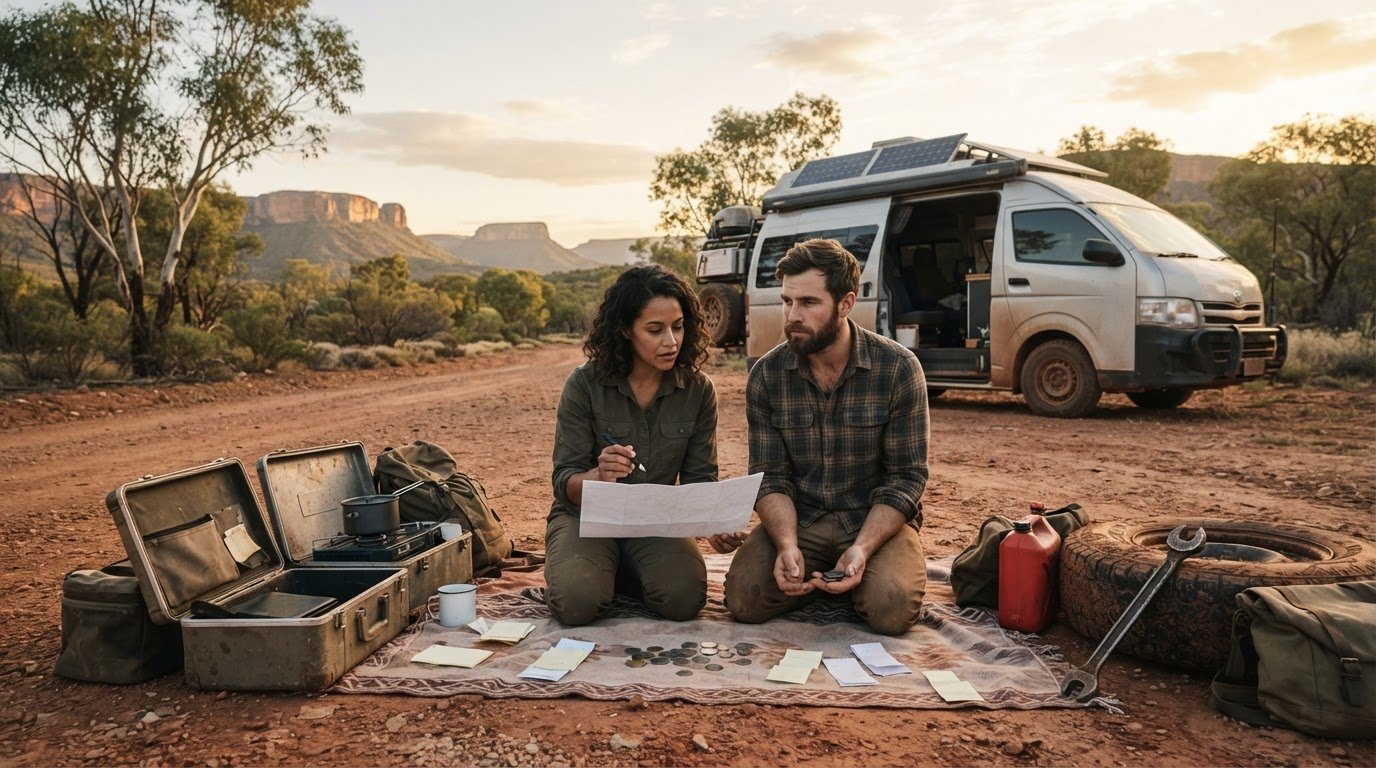
You’ve curated the ultimate kit and mastered your systems; now it’s time to put that solo camping gear Australia depends on to the test. Preparation is the bridge between a nervous first night and a lifetime of confident exploration. We recommend using our travel planner to map every leg of your journey. This tool helps you identify fuel stops, water sources, and potential black spots before you ever turn the key. For your debut mission, start small. Choose a destination within two hours of home. This “shakedown” trip allows you to identify any gaps in your setup without the high stakes of a remote desert crossing.
Responsible Exploration and Ethics
Solo travel offers a deep connection to the land, but it comes with a responsibility to protect it. Many of our favourite remote spots are on Traditional Owner lands. We always seek proper permits and respect restricted areas; it is a fundamental part of being a responsible explorer. Minimising your footprint means more than just taking your rubbish home. It involves staying on existing tracks to prevent erosion and being mindful of where you wash. We also urge caution with geotagging. Sharing a precise location on social media can lead to “over-tourism” in fragile ecosystems. Consider sharing the beauty of the region without pinpointing the exact, sensitive coordinates.
Beyond Camping: Luxury Stops
Even the hardiest solo travellers need a reset. Mid-expedition, we often trade the rooftop tent for a real bed to recharge our mental batteries and deep-clean our equipment. Finding the best resorts in australia allows you to enjoy a bit of adventure luxury while your dual battery system gets a full top-up from a 240V hookup. It’s a chance to scrub the red dust out of your clothes and reflect on the miles you’ve conquered. Ready to start your journey? Join our community of fellow adventurers today and let’s get you out on the track with total confidence!
Ready Your Rig for the Lone Track
We believe every solo trip is a chance to rediscover your own resilience and deepen your connection with the Australian wilderness. By following a strict safety hierarchy and selecting the high-performance solo camping gear Australia demands, you’re not just surviving; you’re thriving in total isolation. Throughout this guide, we’ve highlighted the importance of rapid-setup shelters, critical water security, and the essential 2026 check-in protocols that keep our community safe. These systems allow you to face the silence of the outback with total confidence.
Our mission is to empower you with expert gear reviews from real Australian explorers and sustainability-focused adventure guides. We’ve built a comprehensive 4WD and camping resource hub to ensure you’re never truly alone on your journey toward self-reliance. If your plans include moving to Australia to explore these landscapes more permanently, you can visit Aura Visas for professional migration assistance. Don’t let the fear of the unknown hold you back from your next great mission. It’s time to pack the rig, check your PLB registration, and head off-grid.
Join the Adventurerz community and plan your 2026 solo escape today! We can’t wait to hear about the tracks you conquer and the sunrises you’ll have all to yourself. We’ll see you out there!
Expert Advice for Your Solo Australian Missions
Is solo camping safe in the Australian Outback?
Solo camping is remarkably safe provided you have the right preparation and equipment. Your safety depends on your communication tools, vehicle reliability, and a deep understanding of local conditions. We always advise checking fire danger ratings and park closures before departure. Self-reliance is the core of our community, so ensure you have a strict check-in protocol with someone back home before you head off-grid.
What is the most important piece of gear for a solo camper?
A Personal Locator Beacon (PLB) is the single most critical item in your solo camping gear Australia kit. If you’re injured or stranded without mobile reception, this device is your only direct link to emergency services. In 2026, you must ensure your PLB is registered with the Australian Maritime Safety Authority (AMSA) to guarantee a rapid response. It’s the ultimate insurance policy for the lone traveller.
Do I need a 4WD for solo camping in Australia?
You don’t strictly need a 4WD, but it significantly expands your options for reaching remote, isolated locations. Many coastal national parks have accessible campgrounds for 2WD vehicles. However, a 4WD allows you to explore soft sand tracks and rugged inland routes safely. For solo missions, a 4WD also offers the added benefit of being a sturdy base for integrated shelter systems like rooftop tents.
How much water should I carry when camping alone?
We recommend carrying 5 to 7 litres of water per person, per day, for remote stays. This volume covers drinking, cooking, and basic hygiene. In our harsh climate, dehydration is a major risk, so always carry a surplus. If you’re heading deep into the outback, aim for at least 20 litres of emergency backup storage. It’s better to bring it back home than to run dry in the bush.
What is the best tent for a solo female camper in Australia?
A hardshell roof top tent is often the best choice for solo female campers because it offers elevated safety and a 2-minute setup time. Being off the ground provides peace of mind and protection from ground-dwelling wildlife. We look for models that are easy to close without assistance. This ensures you can break camp quickly and move on if you ever feel uncomfortable at a specific site.
Can I use a swag for solo camping in the winter?
A high-quality canvas swag is excellent for winter provided you use an R-value rated sleeping mat. The heavy canvas provides great insulation against the wind, but you need that thermal barrier underneath to stop the ground from leaching your body heat. We suggest pairing your swag with a 0-degree rated sleeping bag. This setup keeps you toasty during those crisp, clear desert nights when the temperature plunges.
How do I handle emergency communications without mobile reception?
Use a satellite communicator or a PLB to bridge the gap when mobile towers are out of reach. Satellite units allow for two-way messaging, which is perfect for non-emergency updates to your family. For life-threatening situations, a PLB is the standard. It sends a distress signal to search and rescue teams via a dedicated satellite network that covers every square inch of the Australian continent.
What are the essential tools for a solo vehicle-based camping trip?
Your toolkit must include a high-quality multi-tool, a tyre pressure gauge, a portable air compressor, and basic recovery gear like traction boards. Since you don’t have a second vehicle for a snatch recovery, these self-recovery tools are vital for your solo camping gear Australia setup. We also suggest carrying a basic mechanical kit with duct tape and cable ties. These items are perfect for temporary bush fixes until you reach a town.