Your 4WD is packed, the tires are aired down, and the swell is perfect; yet, a single poorly tied knot is often all that stands between a fresh snapper dinner and a frustrating walk back to the dunes. We’ve all felt that sting of watching a prime bait fly off during a long power cast or reeling in a tangled mess of line from a heavy wash. Perfecting your surf fishing rigs australia wide is a common hurdle when you are hundreds of kilometers from the nearest tackle shop. Your gear needs to be as resilient as your vehicle to survive the rugged southern salt and spray.
We are here to ensure your next trip is defined by tight lines rather than lost tackle. We promise to help you master the most effective setups for 2026, ensuring you can target everything from beach salmon to trophy mulloway with total confidence. This guide breaks down the essential rigs that withstand turbulent conditions and keep your bait exactly where the fish are feeding. We will also show you how to read beach structure and integrate your fishing kit into your 4WD camping setup for a seamless, sustainable way to supplement your camp meals while exploring our rugged coastlines.
Key Takeaways
- Master the mechanics of the “Big Three” surf fishing rigs australia explorers rely on to keep baits secure in heavy wash and turbulent surf zones.
- Learn to identify high-yield beach structures like gutters and holes from the dunes to ensure we are casting exactly where the fish are feeding.
- Discover how to use circle hooks and follow the latest 2026 bag limits to ensure our coastal adventures remain sustainable and ethical.
- Optimize your remote travel setup by turning your 4WD awning into a specialized rigging station to streamline your beach sessions.
- Gain a strategic framework for matching your terminal tackle to iconic Australian species based on seasonal migrations and changing water temperatures.
Table of Contents
Understanding Surf Fishing Rigs: The Heart of Coastal Exploration
A surf fishing rig isn’t just a hook and a sinker; it’s a specialized piece of engineering designed to conquer the crushing energy of Australian swells. For those of us living the Adventurerz lifestyle, mastering these setups is about more than just catching dinner. It’s about self-reliance in remote coastal camps where the nearest supermarket is a three-hour beach drive away. Understanding Surf Fishing mechanics allows us to reach those deep, fish-holding gutters that sit just beyond the breaking white water. We need our terminal tackle to remain stationary in the strike zone while presenting bait in a way that looks natural to a passing predator.
To get a visual handle on how these components work together in the wash, check out this breakdown:
The core logic behind the surf fishing rigs australia anglers use involves a delicate dance between weight and movement. We need enough lead to anchor the bait against shifting sands and sweeping currents, yet enough finesse to let the bait move naturally. If the rig is too heavy, it buries in the sand; too light, and it washes back to your feet. It’s a balance of physics that changes with every tide, requiring us to be methodical in our preparation.
The Anatomy of a Surf Rig
Every component must be rugged. A shock leader is non-negotiable for the heavy power casts required in the 2026 surf scene. It absorbs the initial massive force of a 150g sinker being launched toward the horizon, protecting your main line from snapping. We also prioritize high-quality, salt-resistant stainless steel swivels. In remote environments, gear failure isn’t just an annoyance; it’s the end of your session. Your traces and sinkers must work as a unified system to prevent tangles in the turbulent wash.
Why Rigs Trump Lures for Most Australian Beach Scenarios
While lures have their place, bait rigs offer a massive advantage in the often-murky Australian surf. The scent trail created by a fresh bait rig draws fish from hundreds of meters away, something a plastic lure simply can’t match in white water. Rigs are also incredibly versatile, allowing us to target everything from whiting to mulloway on a single setup. Best of all, a well-set rig lets you enjoy the campsite. You can secure your rod in a sand spike and head back to the shade of your 4wd awning while waiting for that tell-tale rattle. It’s the ultimate strategy for a relaxed coastal adventure.
The 3 Essential Surf Fishing Rigs for Australian Beaches
To successfully navigate the diverse coastlines of our country, we rely on a trio of essential surf fishing rigs that cover almost every scenario from the Great Australian Bight to the tropical north. While many anglers get bogged down in complex knots, these three setups provide the mechanical reliability needed for the 2026 explorer. We’ve found that using fluorocarbon traces offers a distinct advantage in the clear, high-pressure waters of 2026 due to its near-invisibility, though monofilament remains the better choice for its abrasion resistance when fishing around reefy outcrops or heavy shell grit. Matching your sinker to the conditions is just as vital as the rig itself. We use star sinkers when we need to anchor in soft, shifting sand during a heavy swell, while pyramid sinkers are our go-to for staying put on firmer sandbanks with moderate currents. Getting this right prevents your line from bowing and dragging your bait into the weed.
The Paternoster (Dropper) Rig: Best for Distance and Multi-Species
The Paternoster is a multi-hook rig where hooks are suspended above the sinker on dropper loops. This “weight-at-bottom” design is the ultimate choice for distance casting because it prevents the hooks from helicoptering and tangling in flight. By tying a double-dropper setup, we can target different depths simultaneously; perhaps a piece of beach worm on the bottom hook for whiting and a larger bait on the top for a wandering salmon. It keeps your presentation crisp even in the heaviest white water wash. This rig is a staple in our surf fishing rigs australia toolkit because it rarely fails in turbulent conditions.
The Running Sinker Rig: Sensitivity for Fussy Feeders
When we encounter fussy feeders like bream or mulloway, the running sinker rig is our secret weapon. The sliding sinker design allows a fish to pick up the bait and run without feeling the immediate resistance of the lead. This is perfect for calmer days or prospecting shallow sandbanks where fish are more cautious. We always place a small plastic bead between the sinker and the swivel to prevent the lead from damaging our knot during those long, repetitive casts. It’s a simple but effective way to ensure our terminal tackle stays strong through a long session.
The Ganged Hook Rig: Perfect for Tailor and Salmon
For the annual tailor and salmon runs, nothing beats the ganged hook rig. This setup consists of three or four hooks linked together, allowing for a perfectly straight presentation of whole pilchards or garfish. It’s the gold standard for toothy predators because the hooks themselves act as a partial wire trace. If we’re in shark-heavy waters, we’ll step up to a short wire trace, but generally, a heavy 60lb mono leader is enough for most coastal sessions. Setting up these rigs is much easier when you have a stable base, and we often find that prepping our tackle under the shade of one of the best 4wd awnings makes the process faster while keeping our gear out of the sand.
Matching Your Rig to Iconic Australian Surf Species
Understanding the target species is the final piece of the tactical puzzle. We don’t just cast blindly into the blue; we adapt our surf fishing rigs australia wide to match the specific energy of the local ecosystem. In 2026, we’ve noticed seasonal migrations shifting with changing water temperatures, which means a rig that worked last season might need a slight adjustment today. Some fish are reaction hitters that chase fast movement in the foam, while others are methodical foragers. Your bait selection, whether it’s delicate pippies or oily pilchards, must balance perfectly with your rig’s weight to stay in the strike zone.
Southern Waters: Chasing Australian Salmon and Mulloway
Heavy-duty Paternoster rigs are our primary choice for the powerful Southern Ocean wash. This setup keeps the bait anchored while the hooks dance in the turbulent current, perfect for the aggressive strike of a salmon. If we’re chasing Mulloway, we apply a different logic: large baits, heavy leaders, and plenty of patience. These predators are cautious and often feed under the cover of darkness. For those of us camping near the shore, adding luminous beads to our traces during night sessions can be a game-changer. It provides just enough visual stimulus to draw a curious “jewie” toward your bait in the murky depths.
The Estuary Mouth: Bream, Flathead, and Whiting
Where the river meets the sea, we scale down our gear for a more refined approach. Light-weight running sinker rigs are essential here for finesse fishing. We prefer long traces, often exceeding a meter, to allow the bait to waft naturally in the tidal flow. This presentation is far more convincing to wary bream and flathead. “Matching the hatch” is selecting a rig and bait that mimics the size and movement of local prey like ghost shrimp. By observing the small crustaceans and baitfish in the shallows, we can tailor our presentation to what the fish are already hunting.
Tropical North: Dealing with Sharks and Giant Trevally
Heading into the tropical north changes our requirements completely. We transition to heavy-gauge hooks and reinforced swivels to withstand the sheer brute force of Giant Trevally. Wire traces become a vital part of the kit to protect our surf fishing rigs australia setups from the sharp teeth of local reef sharks and mackerel. Landing a massive fish from the beach without a gaff requires a methodical technique. We use the momentum of the waves to gently wash the fish onto the sand, timing our retreat with the receding surge. It’s a high-stakes way to supplement a camp meal while ensuring we respect the power of these northern predators.
The Sustainable Angler: Reading the Beach and Gear Ethics
Being a responsible explorer means our impact on the coastline should be as minimal as our tire tracks on the sand. In 2026, the community is moving rapidly toward lead-free sinkers and biodegradable lines to ensure our surf fishing rigs australia setups don’t leave a permanent footprint in the marine environment. We follow the Adventurerz ethos: take only what you need for a fresh camp meal and release the rest to fight another day. This commitment to sustainability ensures that the remote beaches we love remain pristine for the next generation of travelers. It’s about building a legacy of stewardship while enjoying the rugged beauty of the coast.
Reading the Surf: Finding Where the Fish Hide
Before we even unstrap the rods, we spend ten minutes on the dunes reading the water. We look for “dark water,” which indicates a deeper gutter where fish congregate to avoid the heavy surge. These gutters are the highways of the beach, providing a safe passage for species moving in with the tide. We also look for areas of “white water” or foam; this is where predators like salmon and tailor hide to ambush prey in the highly oxygenated wash. Timing is everything. We use our travel planner to align our arrival with the incoming tide, which pushes fresh bait and hungry predators into these shore-based structures.
Maintenance and Ethics in Remote Locations
Operating in remote coastal environments puts immense stress on gear. We’ve developed a strict ritual to ensure our equipment lasts for years. Rinsing every reel and terminal rig in fresh water immediately after a session is vital to prevent salt crystallization. Salt is the silent killer of bearings and drag systems; ignoring this step can lead to a seized reel when you’re days away from help. We also use circle hooks whenever possible. They are designed to hook the corner of the mouth, which significantly reduces deep-hooking and makes for a safer, faster release. This is especially important for the long-term survival of the fish we don’t keep for the pan.
Proper disposal of tangled line is another non-negotiable rule. Even a small piece of discarded monofilament can be fatal to local Australian birdlife, particularly shorebirds that forage in the dunes. When we land a larger species like a Mulloway that we intend to release, we take the time to revive it properly. Hold the fish upright in the wash, facing into the incoming waves, until it regains enough strength to swim away under its own power. It’s a rewarding moment that highlights our role as mentors of the coast. If you are ready to kit out your vehicle for the next coastal run, explore our top 4WD awning recommendations to create the ultimate beach base.
Integrating Fishing into Your Adventure Rig
We’ve spent years refining how our vehicles support our passions, and nothing tests a setup quite like a remote coastal expedition. Transporting 12-foot surf rods across corrugated tracks isn’t just about sticking them on the roof; it’s about ensuring they arrive without a snapped tip or a seized guide. We use secure, lockable rod holders mounted to our roof racks to keep our long-distance tools safe while we navigate toward the most isolated gutters in the country. Setting up our surf fishing rigs australia wide becomes a much more efficient process when our gear is organized and accessible from the moment we air down the tires.
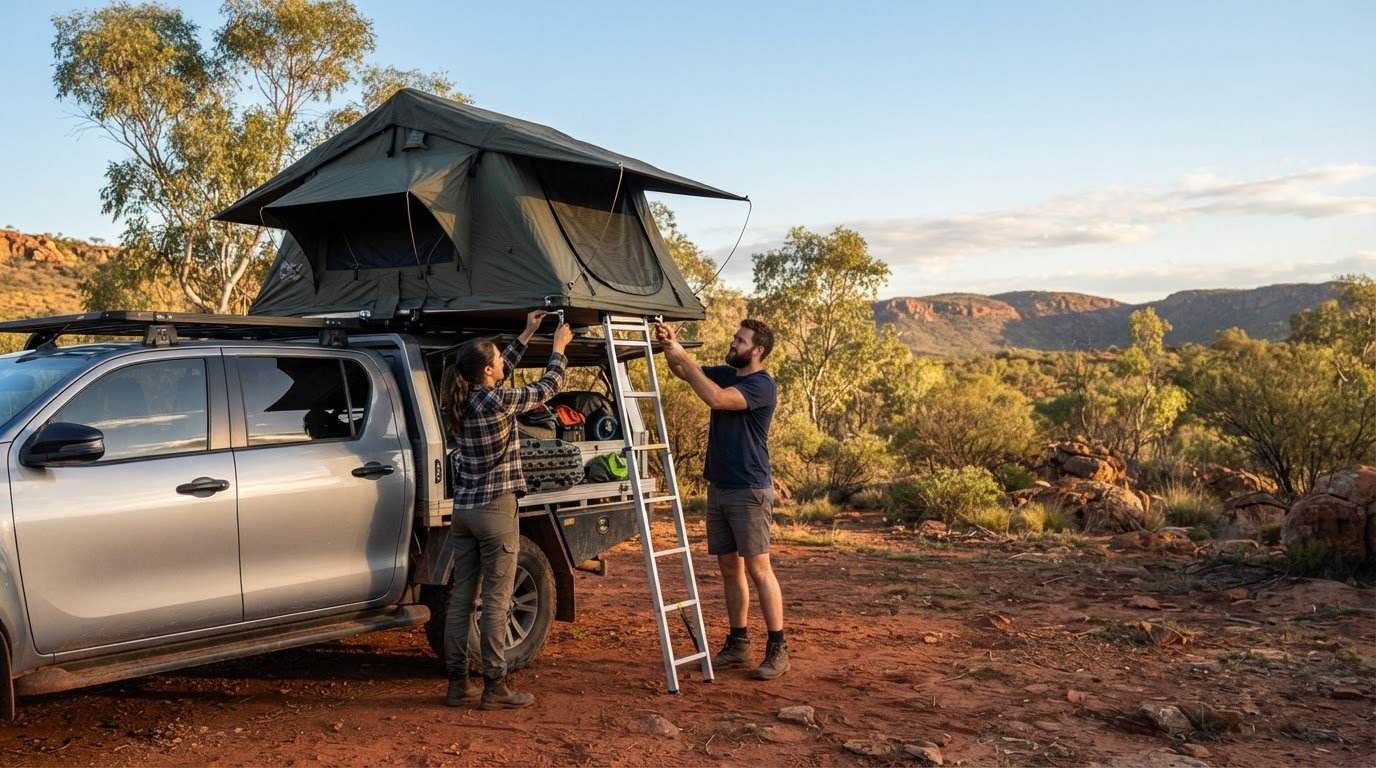
The synergy between our camp setup and our fishing success is undeniable. When we stay in a rooftop tent, we are positioned right on the dunes, ready to cast into the dawn gutter while the coffee is still brewing. This immediate access to the “golden hour” is often the difference between a successful hunt and a quiet morning. To stay prepared for any coastal scenario, we carry a dedicated “Remote Surf Kit” that includes:
- Spare 20lb and 40lb fluorocarbon leader for varying surf clarity
- Assorted star and pyramid sinkers ranging from 50g to 150g
- A selection of pre-tied Paternoster and running sinker rigs for quick changes
- Heavy-duty long-nose pliers and salt-resistant braid scissors
- An eco-friendly hook remover to support our release ethics
The Ultimate Beach Rigging Station
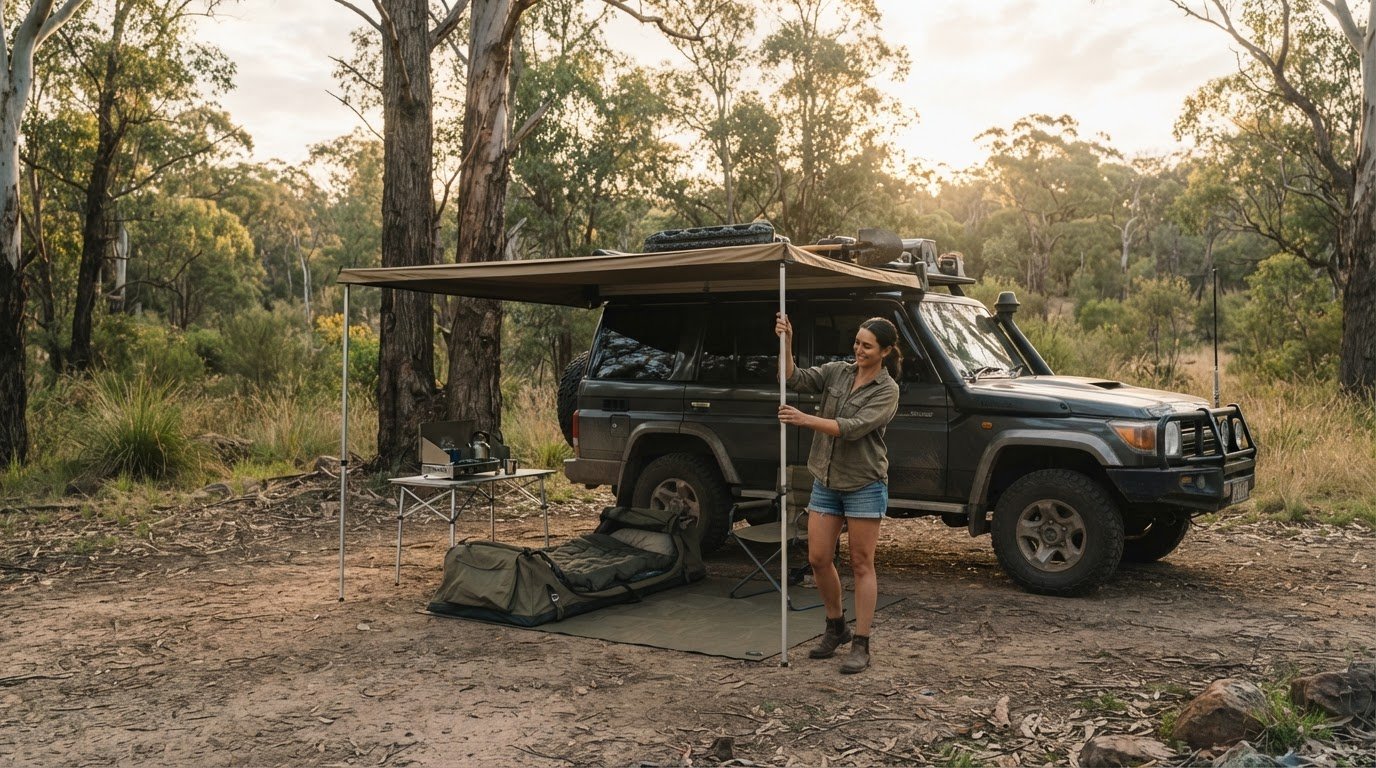
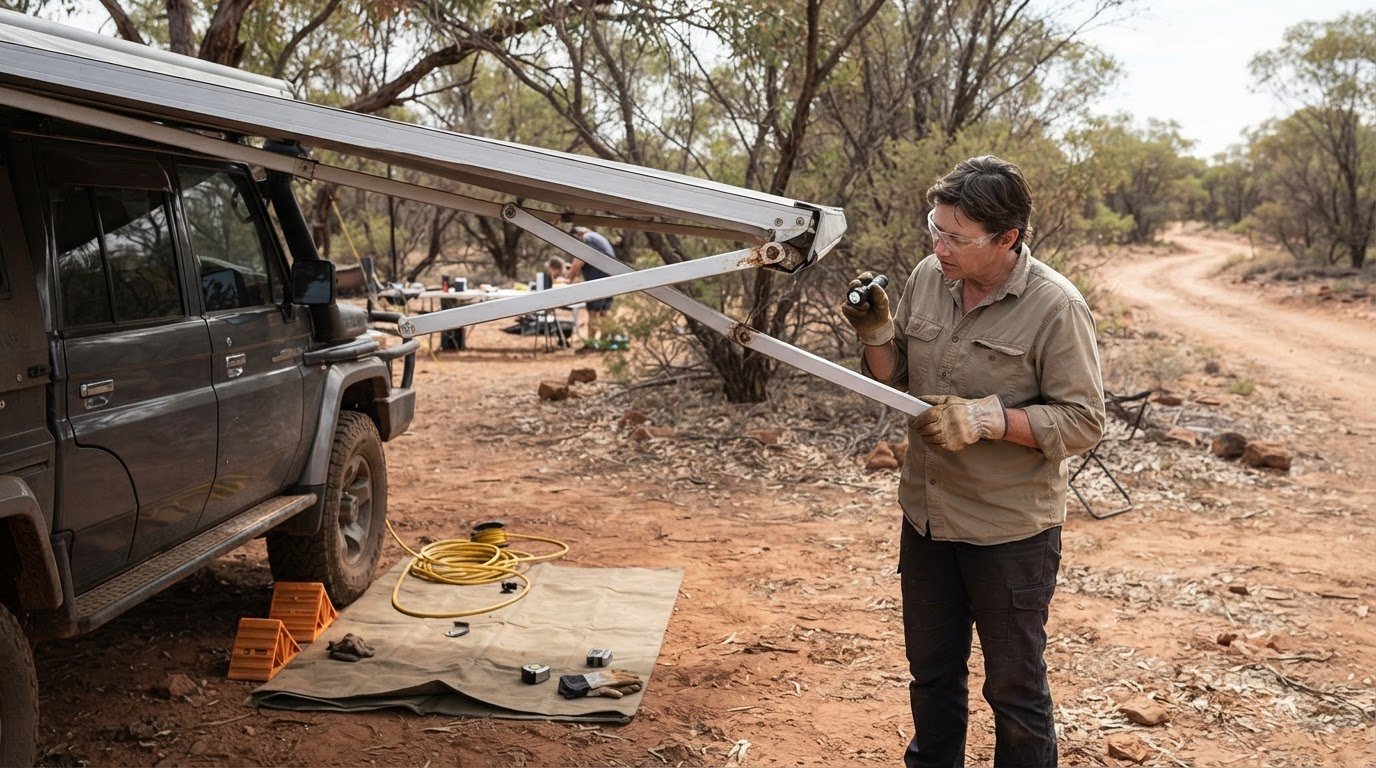
A 4WD awning is the unsung hero of a beach session. It creates a wind-protected, shaded workspace where we can tie complex knots without fighting the elements or getting sand into our reels. We often use our tailgate as a bench, keeping essential tools like pliers and spare hooks in a door pocket for rapid adjustments. Safety is paramount here; we always establish a clear casting zone away from the main campsite to manage our gear without endangering our community or our pets.
Planning for Success: Routes and Regulations
Success in the surf starts long before we hit the sand. We use digital maps to identify remote access points that are less pressured by crowds. In 2026, staying updated on regional rules is easier than ever. For example, we’ve seen Victoria offer a $2.50 saving on one-year licenses when purchased online, making it easier to stay compliant. We also keep a close eye on bioregion-specific rules, such as the demersal fishing regulations in Western Australia that were updated in June 2026. Being a methodical explorer means knowing these limits before the first cast. Join the Adventurerz community today to share your latest remote beach catch and help us map the best sustainable spots across the country!
Ready Your Gear for the Next Coastal Frontier
The journey doesn’t end at the high-tide mark. Success relies on a reliable vehicle setup that keeps your gear protected across thousands of kilometers of corrugated tracks. We’re committed to providing community-vetted gear recommendations and expert advice on remote gear maintenance to help you navigate every mile with confidence. Before you air down for your next beach run, check out our expert reviews on 4WD gear to complete your adventure setup and join a community focused on sustainable Australian travel. The gutters are calling; we’ll see you out on the sand!
Frequently Asked Questions
What is the best all-around surf fishing rig for Australian beaches?
The Paternoster rig is the undisputed champion for most Australian surf conditions. Its weight-at-the-bottom design allows for massive casting distances while keeping your baits suspended in the water column. We prefer this setup because it rarely tangles in heavy wash, making it the most reliable of all surf fishing rigs australia explorers use. Whether you’re targeting whiting on beach worms or salmon on pilchard chunks, this rig provides the versatility needed for a successful camp meal.
How much weight (sinker size) do I need for surf fishing?
Most beach sessions require sinkers between 85g and 142g, depending on the swell energy. If the current is sweeping your line down the beach, we step up to a 150g star sinker to anchor the bait in the sand. On calmer days in shallow gutters, a 50g pyramid sinker is often enough. We always carry a variety of weights in our 4WD kit to adapt as the tide and wind change throughout the day.
Should I use mono or braid line for beach fishing in Australia?
We recommend using a high-quality braid main line paired with a heavy monofilament shock leader for the surf fishing rigs australia anglers trust. Braid offers a thinner diameter for superior casting distance and zero stretch for detecting subtle bites in the surf. However, the mono shock leader is essential for its abrasion resistance against sand and shell grit. This hybrid approach gives us the best of both worlds, ensuring we don’t lose tackle to a large southern ray.
What is the best time of day to fish the surf?
Dawn and dusk remain the prime golden hours for beach angling across the country. These low-light periods trigger a feeding response in many predatory species that move into the shore-break to hunt. We always try to time our sessions to coincide with the top of a rising tide. When the high tide peaks during these transition periods, it creates the perfect storm of high water volume and active fish movement within the shore gutters.
How do I stop my fishing rig from tangling in the waves?
Reducing the length of your traces is the most effective way to prevent tangles in turbulent white water. Using a stiff fluorocarbon leader material also helps the rig maintain its shape against the swirling currents. We’ve found that the Paternoster design is naturally more tangle-resistant than a running sinker rig in heavy surf. Keeping a slight tension on your line after the cast ensures the rig settles correctly on the seafloor before the wash can tumble it.
Do I need a special rod to use these surf fishing rigs?
A dedicated surf rod between 10 and 14 feet is necessary to cast heavy rigs beyond the breaking waves. These rods are designed with a specific action to load up and launch 100g+ sinkers into the distance. It’s vital to check the casting weight rating on your rod blank; using a heavy setup on a light estuary rod can lead to a catastrophic failure during a power cast. Durable, salt-resistant guides are also a must.
How do I know if a beach gutter has fish in it?
Look for dark water that signals a deeper channel or hole between the shore and the outer sandbar. These gutters act as highways for fish. We also watch for where the waves stop breaking; this indicates the deeper water where predators wait to ambush baitfish. If you see birds diving or chopped water on the surface, it’s a sure sign that a school of salmon or tailor is active in that specific zone.
Are circle hooks better than J-hooks for surf fishing?
Circle hooks are significantly better for the sustainable angler because they are designed to hook fish in the corner of the mouth. This makes for a much easier release, as it prevents the fish from swallowing the hook deeply. They also boast a higher hook-up rate in the surf; you don’t need to strike to set the hook, as the fish’s own movement against the tension of the rig does the work for you.