What if that sleek hard-shell tent on your roof is actually charging you an “adventure tax” every single kilometer? We’ve all been there, Adventurerz; we fall in love with the dream of a 30-second setup under the stars, only to be blindsided by a 10% to 17% spike in our fuel bills on the highway. While the initial investment is a big step, the hidden costs of owning a roof top tent go far beyond the checkout counter. It’s about how that extra weight affects your vehicle’s center of gravity and your legal GVM limits when you’re loaded for a remote trek.
We understand the drive to explore the most isolated corners of Australia while keeping our environmental footprint small and our gear durable. That’s why we’re breaking down the real numbers for 2026, from specialized insurance premiums to the long-term maintenance of those hardworking zippers and struts. This guide ensures you can budget for your next expedition without any nasty surprises; giving you the knowledge to protect your vehicle and the confidence that you haven’t overlooked critical safety or legal requirements. Let’s get your rig ready for the long haul.
Key Takeaways
- Learn why the sticker price is just the beginning and how to budget for the full first-year investment, which often includes an extra 40% in integration costs.
- Understand the mechanical impact on your 4WD, including how to manage a 10-17% increase in fuel consumption and the added stress on your suspension system.
- Uncover the hidden costs of owning a roof top tent that many overlook, such as insurance premium adjustments and the logistics of off-season storage.
- Prepare for lifestyle adjustments like height clearances in urban areas and the “convenience tax” of daily pack-downs when exploring remote trailheads.
- Discover a seasonal maintenance checklist to protect your investment and ensure your gear survives the rugged Australian conditions for years to come.
Table of Contents
The Total Cost of Ownership: Why the Sticker Price is Only Step One
We’ve all seen those stunning photos of a 4WD perched on a remote cliffside with a tent deployed in seconds. It looks like the ultimate freedom. However, transitioning from a ground-dweller to a rooftop explorer involves more than just picking a model from a catalog. When we talk about the hidden costs of owning a roof top tent, we’re really discussing the Total Cost of Ownership (TCO). In the world of the Overlanding lifestyle, TCO is the sum of purchase, installation, and ongoing operational costs. For most of us, the sticker price we see online is actually only about 60% of what we’ll end up spending in that first year of ownership.
The ‘Buy Once, Cry Once’ Philosophy
Choosing a budget import might seem like a win for your wallet today, but it often leads to a cycle of waste that goes against our environmental ethics. Cheap tents frequently suffer from zipper failures, poor waterproofing, and hinges that buckle under the harsh Australian sun. We’ve found that high-quality gear is a long-term investment that keeps gear out of landfills and keeps you safe in remote areas. If a tent fails 400km from the nearest town, the “savings” vanish instantly. You can check out our expert reviews on roof top tents to see which brands actually stand up to the rigours of the bush and provide better value over time.
Initial Setup and Installation Costs
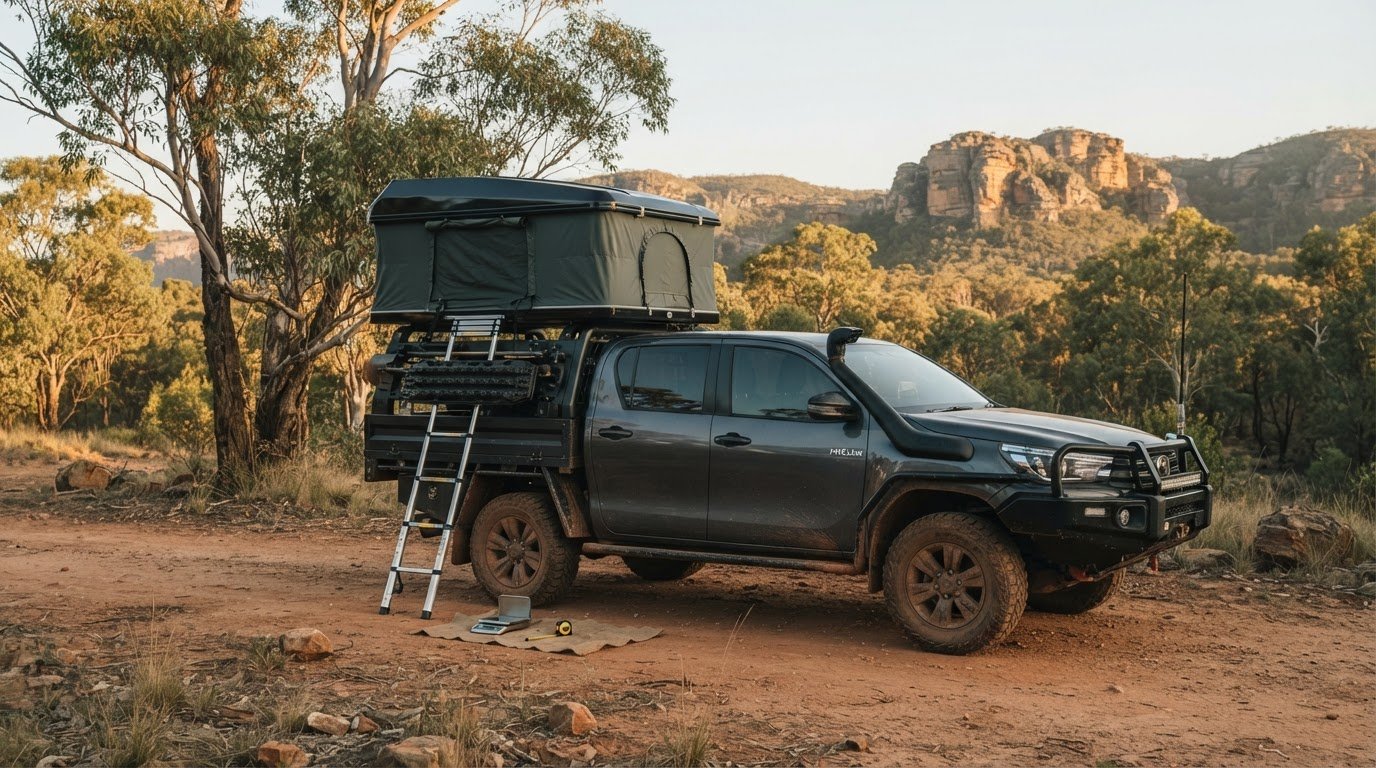
Your vehicle’s factory roof rails probably aren’t up to the task. Most standard rails are designed for light loads like surfboards, not a 70kg tent plus two adults. Upgrading to a heavy-duty platform or a specific crossbar system is a necessary part of the hidden costs of owning a roof top tent. You also need to decide between a professional install and a DIY weekend. While DIY saves money, a professional ensures your centre of gravity is balanced and the mounting is rock-solid. Safety isn’t an area where we should cut corners. Proper weight distribution keeps your handling predictable when the track gets technical. Consider these factors before you buy:
- Dynamic vs. static roof load ratings of your vehicle.
- The cost of a high-quality platform rack system.
- Potential need for upgraded suspension to handle the constant weight.
- Specialized tools or help required for a safe DIY installation.
By planning for these extras now, you ensure your rig is ready for the long haul without any mechanical heartbreaks down the road.
Vehicle Impact: The Mechanical ‘Tax’ on Your 4WD
We often focus on the luxury of a thick mattress, but we rarely talk about what that extra 80kg does to our shocks on a corrugated track. Mounting a tent isn’t just about having a place to sleep; it’s a permanent shift in your vehicle’s physics. It’s the literal definition of a mechanical tax. One of the most significant hidden costs of owning a roof top tent is the accelerated wear on your vehicle’s vital components. If we aren’t careful with our GVM (Gross Vehicle Mass), we risk more than just a fine. We risk the structural integrity of our rigs during a remote desert crossing.
The Fuel Economy Equation
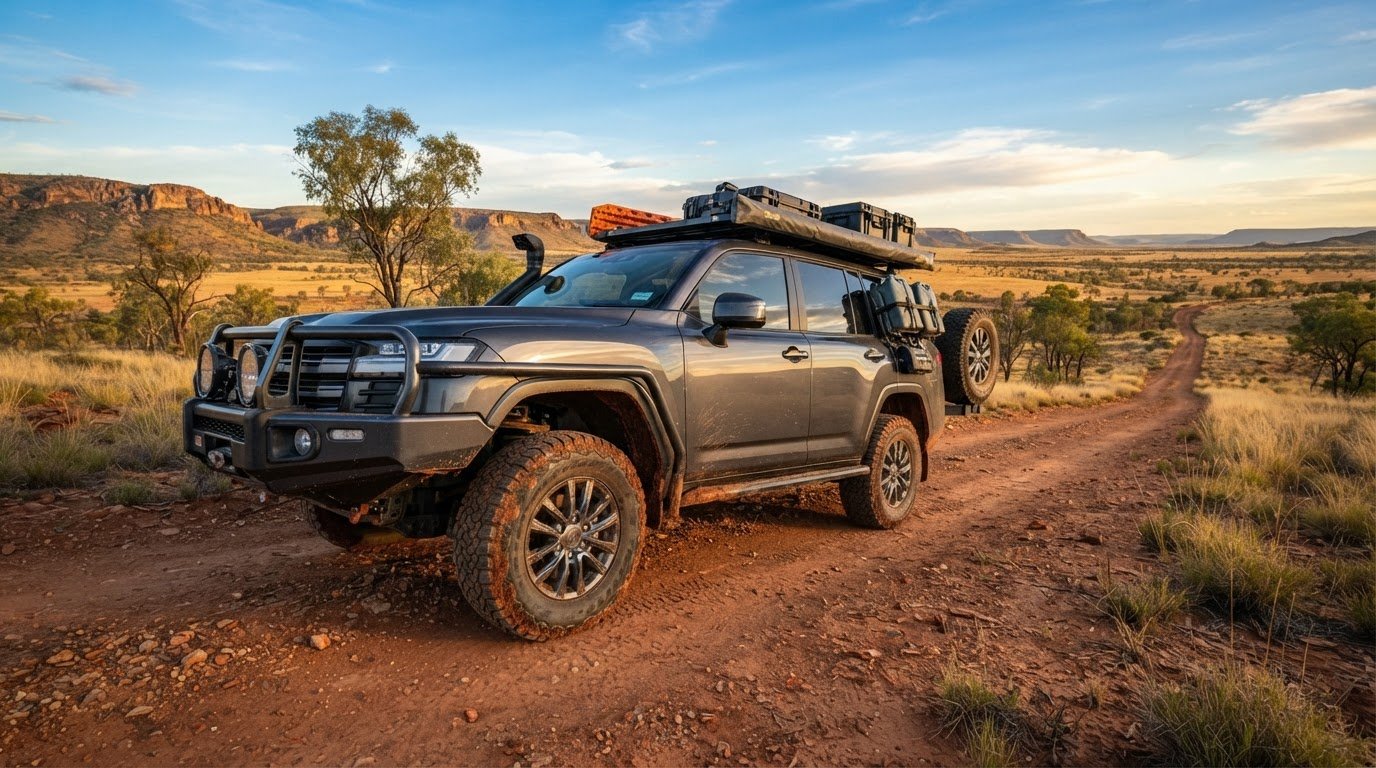
Hard shell tents typically offer a slimmer profile, but even the most aerodynamic designs create massive drag. Expect your fuel consumption to climb by 10% to 17% when cruising at 110km/h on the highway. The impact on fuel economy is a constant drain on your touring budget that never goes away as long as the tent stays mounted. For an average Aussie doing 20,000km a year, this adds hundreds of dollars to your annual fuel bill. We can minimize this by choosing low-profile mounting systems and keeping the tent cover tight to prevent wind-catching flaps. Every bit of drag reduced is a win for both your wallet and the environment.
Suspension and Handling Changes
Adding 60-90kg to the highest point of your 4WD changes how it corners. You’ll feel increased body roll and a “top-heavy” sensation during sudden maneuvers or on off-camber tracks. This often necessitates a suspension upgrade, which is another one of those hidden costs of owning a roof top tent. Standard factory springs aren’t tuned for a constant heavy load on the roof. Staying legal is also a priority for us. In Australia, exceeding your GVM can void your insurance and lead to expensive engineering certificates if you need a formal GVM upgrade. Checking out our roof top tents reviews can help you find weight-conscious models that keep your rig within legal limits while still providing the comfort you crave.
Don’t forget about your rubber. Constant weight means your tyres work harder and run hotter, especially on the rear axle. This leads to faster tread degradation and can shorten the life of a set of expensive all-terrains. We recommend rotating your tyres every 5,000km to manage this extra stress. It’s a small, proactive step that saves you from a premature $1,500 bill for a new set of tyres. Before you commit to a heavy setup, read our guide on best 4wd awnings to see how you can add shade and comfort without overloading your roof line.
The Hidden Logistics: Insurance, Storage, and Security
Once we’ve sorted the mechanical side of our rigs, we need to look at the administrative and logistical reality of our setups. The hidden costs of owning a roof top tent often show up in the fine print of an insurance policy or the cramped corners of a suburban garage. We aren’t just buying a tent; we’re managing a high-value asset that requires protection and proper care during the off-season. It’s about being methodical and prepared so we can focus on the trail ahead.
Protecting Your Investment and Your Vehicle
Insurance is a critical piece of the puzzle. Most of us assume our gear is covered under general contents, but a roof-mounted tent is legally considered a vehicle modification. Failing to declare a roof-mounted tent can void your entire vehicle insurance policy. If you’re involved in a roll-over or even a minor bingle, your provider might refuse the claim because the vehicle’s handling characteristics were altered by the unlisted weight. Expect a small surcharge on your premium to reflect the increased value of your rig. Security is another factor we can’t ignore. These tents are high-value targets for opportunistic thieves, especially in urban areas. We recommend investing in locking nuts for your mounting brackets or even a small GPS tracker tucked into the internal pockets. These small expenses prevent the massive heartbreak of a stolen setup and keep your investment safe.
Storage Solutions for the Urban Adventurer
Then there’s the question of where it lives when you aren’t chasing sunsets. Leaving it on year-round seems easy, but the environmental cost is real. Constant exposure to the harsh Australian sun leads to UV degradation of the cover and canvas, which can lead to leaks later. Dealing with storage is another one of the hidden costs of owning a roof top tent that people often forget until they get home from their first trip. If you decide to take it off, you’ll need a storage plan. A basic pulley system for your garage can cost a few hundred dollars, while specialized commercial racks are even more expensive. DIY options are great for the handy among us, but they require a solid afternoon of labor and some engineering know-how to ensure they don’t drop the tent on your car hood.
Don’t forget the ongoing maintenance supplies either. You’ll need specialized UV protectants, anti-mould treatments, and seam sealers to keep the water out. Budgeting roughly $30 to $50 for sealant every few years is a smart move to extend the life of your gear. By addressing these logistics early, we ensure our tents remain ready for the next remote expedition without becoming a burden on our daily lives. If you are still deciding on a model, our roof top tents reviews can help you find durable options that are worth the effort of protecting.
The ‘Convenience Tax’ and Lifestyle Adjustments
While we love the elevated view from our rooftop perches, there is a distinct lifestyle shift that happens the moment that tent is bolted on. It’s not just about the money spent at the mechanic or the insurer. One of the most significant hidden costs of owning a roof top tent is the “convenience tax” paid in time and restricted mobility. When we transition from a ground tent to a rooftop setup, we often trade one set of chores for another, and it’s vital to understand how this impacts our daily flow on a remote expedition.
The Time Cost of Mobility
Setup might be fast, but pack-down is mandatory every time you want to move your vehicle. If you’ve found the perfect campsite but realize you forgot ice or want to drive five kilometers to a specific trailhead, you have to fold up your entire home. This creates a psychological “locked-in” feeling. Even a high-end hard-shell tent takes 5 to 10 minutes to properly tuck in the canvas and secure the latches. Over a two-week trip, that’s hours of your holiday spent wrestling with gear just to run simple errands. Some of us solve this by investing in “quick-release” mounting systems, but these are yet more hidden costs of owning a roof top tent that can add hundreds to your initial budget. To create a more flexible basecamp feel without packing the tent every time, many in our community pair their setup with the best 4wd awnings to claim their space while keeping the vehicle mobile.
Navigating the Urban Jungle
Your 4WD’s utility as a daily driver changes the moment you add that extra height. In Australia, the standard clearance for most underground car parks and shopping centers is 2.1 meters. If you have a lifted rig with a 300mm thick tent sitting on a platform rack, you’re almost certainly going to exceed that limit. The cost of a single “ooops” moment with a low-hanging concrete beam or a thick tree branch on a tight track can be thousands in bodywork and tent repairs. We also have to live with the constant wind whistle and the reality that our rigs no longer fit in the home garage. It’s a trade-off that requires a methodical approach to route planning, both in the bush and in the city. Are you ready to commit to the rooftop life? Explore our full range of expert gear recommendations to find the setup that truly fits your lifestyle.
Maximising ROI: How to Minimise Hidden Costs
We’ve spent time dissecting the various “taxes” of rooftop living, but let’s shift focus to how we can actually win back some of that value. Minimising the hidden costs of owning a roof top tent starts with a proactive mindset. It’s about being an active steward of your gear rather than just a passive user. By matching the right tent to your specific touring style and vehicle capacity, you avoid the expensive cycle of buying gear, realizing it doesn’t work for your rig, and selling it at a loss. We want you to spend more time at camp and less time at the mechanic or the bank.
A Seasonal Maintenance Regimen
A little elbow grease goes a long way in protecting your investment. We recommend a full inspection at the start of every season to catch small issues before they become trip-ending failures. Mould is the number one killer of tents in our humid coastal regions; never pack your tent away wet for more than a day. If you have no choice, pop it open as soon as the sun comes out. Use this checklist to keep things running smoothly:
- Clean and re-proof: Every two to three years, apply a fresh seam sealer and UV protectant to keep the canvas breathable and waterproof.
- Check mounting bolts: Corrugations vibrate everything loose. A 10-minute check of your rack and tent bolts is a massive safety win.
- Lubricate hinges: Use a dry silicone spray on hinges and gas struts to prevent binding and squeaking.
- Zipper care: Keep zippers free of sand and salt. A quick brush and a bit of wax prevent expensive failures.
Spending $30 to $50 on sealant now is much cheaper than a $150 zipper repair or a $2,000 replacement tent down the road.
Investing in Quality for Long-Term Savings
In the Australian market, the “mid-tier” is often where you find the best balance of durability and price. While top-of-the-line models are impressive, a well-built mid-range tent from a reputable brand often holds 60% to 75% of its resale value if it’s been cared for properly. Weight is another factor that pays dividends. A lighter tent reduces that fuel penalty we discussed earlier, saving you money on every single trip. To get your budget fully dialed in for your next remote escape, use the ultimate adventure travel planner to map out your 2026 expenses. Joining the Adventurerz community gives you access to real-world feedback from peers who have tested this gear in the red dust. We’re all in this together, learning how to explore responsibly while keeping our rigs in peak condition. See you on the tracks!
Mastering the Art of Remote Exploration
Owning a rooftop tent is about more than just a quick setup; it’s a commitment to a specific way of touring. We’ve seen how the hidden costs of owning a roof top tent can stack up, from that 10% to 17% fuel penalty to the administrative necessity of updating your insurance. By understanding the mechanical stress on your 4WD and the logistical demands of storage, you transition from an impulse buyer to a methodical explorer. We believe in buying once and buying right to keep our environmental impact low and our safety high.
Our community thrives on shared knowledge and sustainable remote travel practices. We’ve done the hard yards with expert 4WD gear testing and community-led advice so you don’t have to learn the expensive way. Ready to make an informed choice for your next Australian expedition? Explore our expert Roof Top Tent reviews to find your perfect match. We’ll see you out there under the southern stars, fully prepared for whatever the track throws our way!
Frequently Asked Questions
How much does a rooftop tent actually affect fuel consumption?
Expect a 10% to 17% reduction in fuel economy at highway speeds when you have a tent mounted. This is a persistent reality because the aerodynamic drag remains constant regardless of your destination. While hard-shell models offer a slimmer profile, the added weight and wind resistance still force your engine to work harder. We recommend monitoring your consumption closely during your first few trips to adjust your touring budget accordingly.
Do I need to upgrade my suspension for a rooftop tent?
You will likely need to upgrade your suspension if you plan on permanent mounting or frequent remote travel. Adding 60kg to 90kg of static weight at the highest point of your vehicle significantly increases body roll and changes handling. Standard factory springs aren’t tuned for this constant load; especially when you add the rest of your camping gear. A heavy-duty kit ensures your rig remains stable and safe on off-camber tracks.
Will a rooftop tent void my vehicle’s warranty?
A rooftop tent won’t void your entire vehicle warranty, but it can affect claims related to roof structural integrity or suspension wear. Manufacturers generally won’t cover damage caused by exceeding the roof’s dynamic load rating. We suggest checking your owner’s manual for specific weight limits before installation. If a failure occurs specifically due to the weight or mounting of the tent, that repair cost is yours to carry.
Can I leave my rooftop tent on my car all year?
You can leave it on, but we don’t recommend it if you value the longevity of your gear. Constant exposure to the harsh Australian sun causes UV degradation of the cover and canvas, which can lead to leaks over time. Plus, you’ll be paying the “fuel tax” on every commute to work. If you have the space, removing it during the off-season preserves the materials and saves you money at the pump.
Is it hard to get insurance for a rooftop tent in Australia?
Getting insurance isn’t difficult, but you must declare the tent as a modification to your provider. Most Australian insurers will add it as an accessory for a small premium increase. One of the hidden costs of owning a roof top tent is the potential for a denied claim if you haven’t updated your policy. We always advise getting written confirmation that your specific setup is covered for both highway and off-road use.
What happens if my rooftop tent gets mouldy?
Mould is the primary threat to your tent’s lifespan, especially in our humid coastal regions. If you pack it away wet, you must open it to dry within 24 to 48 hours to prevent spores from taking hold. If mould does appear, you’ll need a specialized canvas cleaner and a soft brush to remove it without damaging the waterproofing. Prevention through proper ventilation and meticulous drying is always the most cost-effective strategy for us.
Do rooftop tents get stolen often?
While not extremely common, rooftop tents are high-value targets for opportunistic thieves because they are often held on by just a few standard bolts. Using security nuts or locking brackets is a smart, low-cost way to protect your investment. We’ve seen community members use everything from specialized locks to simple GPS trackers hidden inside the mattress. A little bit of prevention goes a long way when parking in urban areas or at trailheads.
How do I calculate if my car roof can handle the weight of a tent?
Look for your vehicle’s “dynamic roof load rating” in the owner’s manual, which is the limit while the vehicle is moving. This is usually much lower than the “static rating,” which applies when the car is parked and you are actually inside the tent. You must subtract the weight of your roof racks from this dynamic total to find your actual tent capacity. Understanding these hidden costs of owning a roof top tent ensures you stay within legal GVM and safety limits.