Your heavy steel winch cable and old-school D-shackles might actually be the biggest risks to your safety in today’s remote landscapes. Many of us grew up thinking more weight meant more strength, but as we push further into expansive wilderness in 2026, the philosophy has shifted toward lightweight, high-tech, and low-impact recovery. We all share that same flicker of anxiety when the tracks get technical and the mobile reception vanishes. It’s that classic fear of being stranded with a vehicle that’s over GVM and under-equipped. That’s why we’ve built the ultimate 4wd recovery gear checklist to give every Wild-Tracker the confidence to explore responsibly.
We believe that true peace of mind comes from knowing your systems are vetted and your environmental footprint is minimal. In this guide, we’ll show you how to master remote self-reliance by prioritizing gear that protects both your rig and our fragile tracks. You’ll get a prioritized look at the latest synthetic kinetic ropes and the game-changing satellite tech like the Garmin inReach Messenger Plus. We’re laying out a framework for responsible travel that ensures you have exactly what you need to get home safely, without the confusion of conflicting recommendations or the stress of unnecessary weight.
Key Takeaways
- Learn why a thorough pre-trip mechanical inspection is the true foundation of your safety, often outweighing the gear you carry.
- Master the art of self-reliance using our comprehensive 4wd recovery gear checklist, focusing on rated points and modern synthetic technology.
- Explore the critical need for communication redundancy and lithium power management to stay safe and powered in remote Australian environments.
- Discover how the “3-Minute Setup” rule for your shelter helps combat driver fatigue and ensures a stress-free arrival at camp.
- Understand how integrating Leave No Trace principles into your recovery process protects our tracks and preserves the bush for the whole community.
Table of Contents
Vehicle Reliability: The Foundation of Peace of Mind
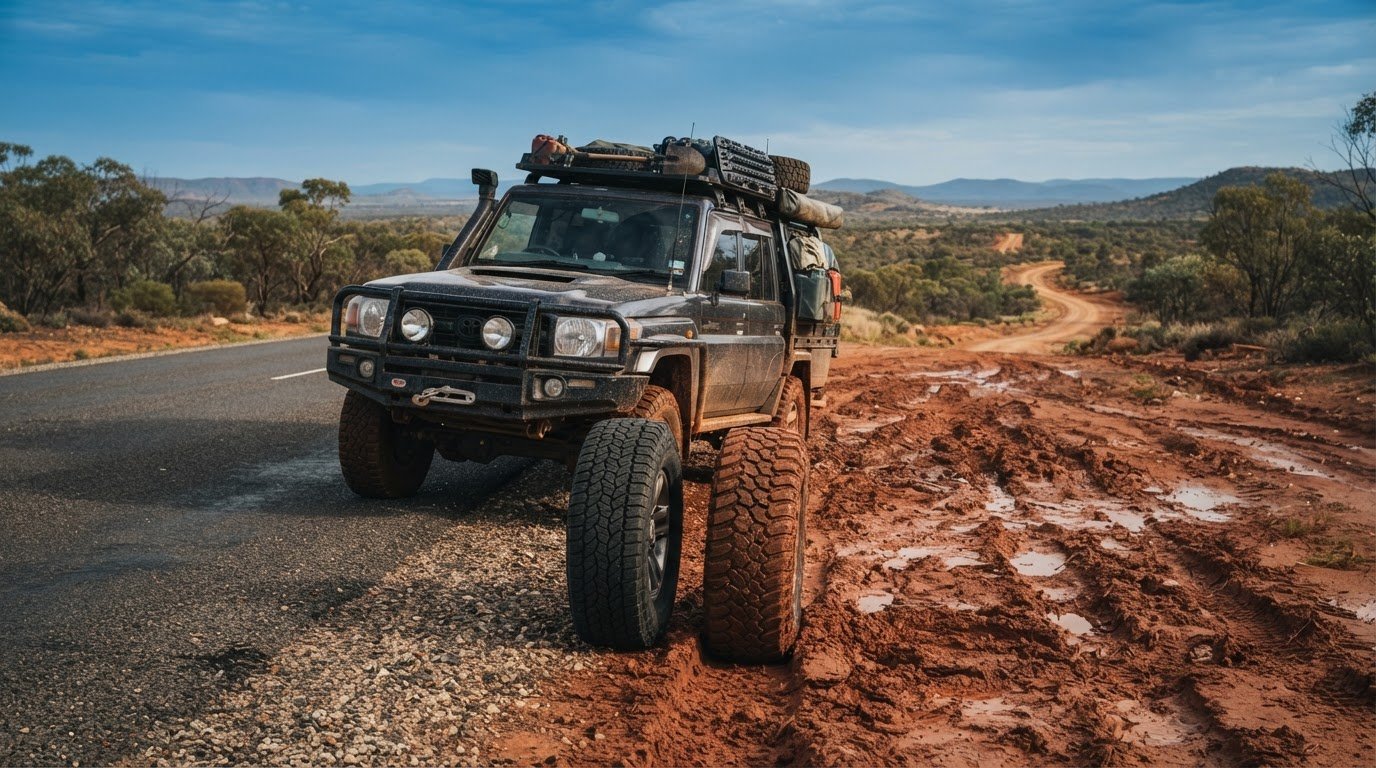
“Peace of Mind Touring” isn’t just a marketing buzzword; it’s the sweet spot where mechanical health meets driver confidence. We’ve all seen that rig on the side of the Oodnadatta Track, surrounded by thousands of dollars in gear but stopped dead by a split radiator hose. True self-reliance starts before you even latch the tailgate. While your 4wd recovery gear checklist is vital, it shouldn’t be a band-aid for poor maintenance. A rigorous “pre-flight” inspection ensures your vehicle is a reliable partner rather than a liability on the track.
While we focus on self-reliance, some situations are beyond the scope of a standard toolkit. In those cases, it is helpful to learn more about Done Wright Towing & Transport to understand how professional recovery and transport experts handle major vehicle failures in the field.
Upgraded suspension plays a massive role in this foundation. It isn’t just about fitting bigger tyres or looking tough at the local boat ramp. Quality shocks and springs manage the punishing weight of a fully loaded tourer, reducing driver fatigue and preventing the frame-cracking stress that corrugated tracks often inflict. When your vehicle handles predictably, you make better decisions. This proactive approach to vehicle health is just as important as mastering various vehicle recovery techniques when things go wrong.
Your choice of rubber is equally critical to your success. For Australian tracks, Light Truck (LT) construction is the non-negotiable standard. These tyres feature thicker sidewalls and tougher carcasses designed to withstand sharp gibbers and high heat. They’re built for the bush, not the highway, providing the durability needed to ensure you aren’t changing a flat in forty-degree heat.
The Under-Bonnet Essentials
Heat is the enemy of reliability in the outback. Before heading remote, we check every hose and belt for soft spots, cracks, or glazing. If they’re more than a few years old, replace them and keep the old ones as emergency spares. Your spare parts box should be a curated kit of “get-home” essentials including a variety of fuses, heavy-duty zip ties, and self-fusing rescue tape. Installing a secondary fuel pre-filter is your best defense against contaminated outback diesel, potentially saving your common-rail engine from a catastrophic and expensive failure.
Tyres and Pressure Management
Correct pressure is the most effective “tool” on your 4wd recovery gear checklist. A Tyre Pressure Monitoring System (TPMS) provides real-time peace of mind, alerting you to a slow leak before it becomes a shredded carcass. We treat a high-quality compressor and a rapid deflator as essential safety tools, allowing us to adapt to sand, mud, or rock instantly. While carrying two spares is ideal for the Canning Stock Route, a high-quality plug kit and the knowledge to use it can often save you the weight and space of a second wheel on less extreme adventures.
The Essential 4WD Recovery Gear Checklist
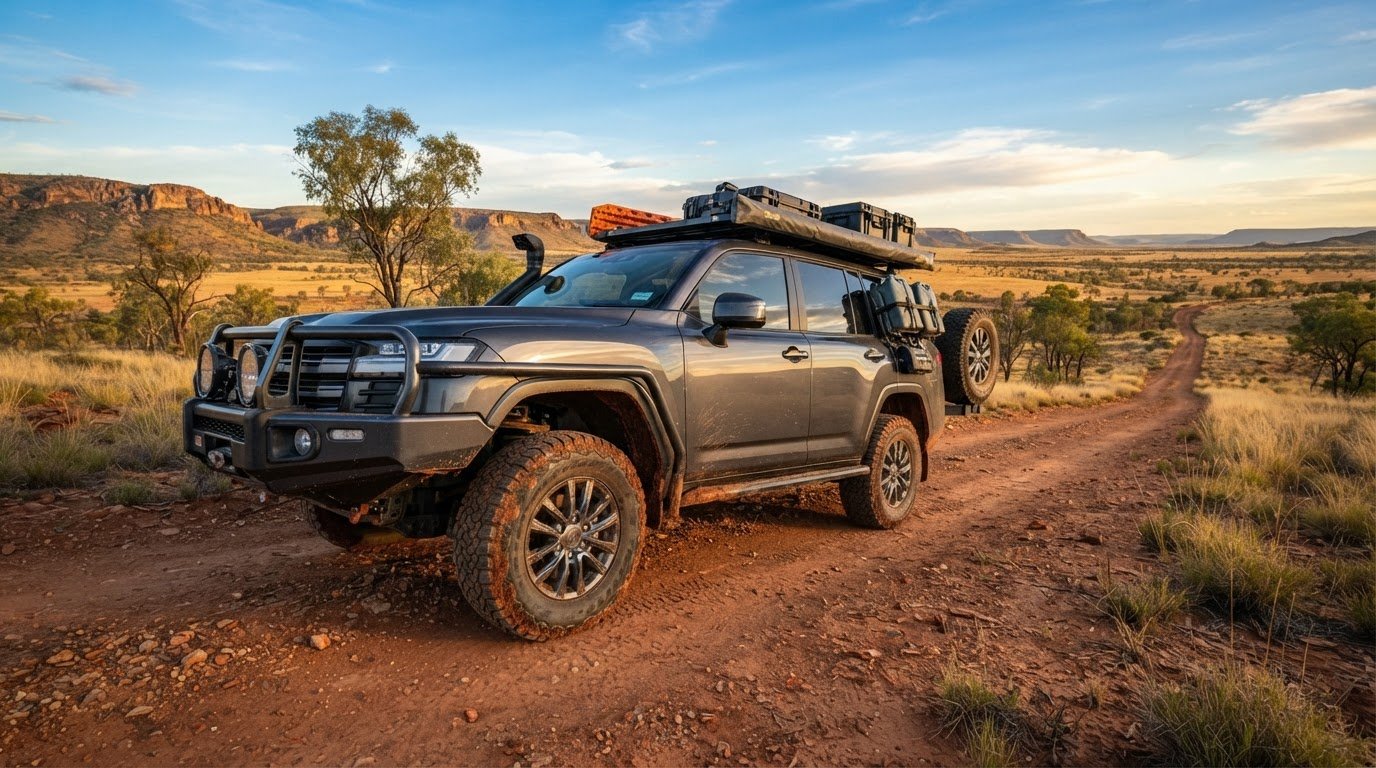
Self-recovery is the ultimate goal for every Wild-Tracker. While we love the fellowship of a group trip, true peace of mind comes from knowing you can extract your own rig when the sand gets soft or the mud gets deep. This is the heart of your 4wd recovery gear checklist. Before we even talk about straps, we need to talk about where they attach. Rated recovery points are non-negotiable. Using a tow ball or a non-rated tie-down point is a recipe for disaster; these parts can become lethal projectiles under tension. Following established off-road vehicle safety guidelines ensures we’re all playing by the rules that keep us and our passengers out of harm’s way.
In 2026, the shift toward soft shackles is nearly total among experienced tourers. They’re lighter, safer, and don’t hold the same dangerous kinetic energy as a traditional steel bow shackle if a failure occurs. We still carry a single steel shackle for specific vehicle-to-vehicle connections where sharp edges might exist, but for 90% of tasks, the soft shackle is our go-to. It’s a safer way to explore our rugged backyard while keeping vehicle weight down.
Traction boards are your first line of defense. They’re often the difference between a five-minute delay and a two-hour winch session. We always reach for these first in sand or mud because they’re low-impact and incredibly effective at getting you moving without high-tension loads. If you’re looking to upgrade your recovery kit, checking out our reviews of best 4wd awnings can help you stay cool while you’re working on the tracks.
The Mechanical Advantage: Winches and Straps
Winches require respect and regular maintenance. Before any remote trip, we spool the rope under load to ensure it’s seated correctly and check for any synthetic rope fraying. When using a snatch strap, remember it’s about kinetic energy, not brute force. Incorrect usage can damage vehicle frames or cause serious injury. A winch dampener blanket is a simple, life-saving addition to your 4wd recovery gear checklist that keeps every pull controlled and safe for everyone involved.
Manual Tools for the Long Haul
Never underestimate the humble long-handled shovel. It’s usually the first tool out of the bag to clear a path or dig out a differential. Digging is often the safest way to recover a vehicle, even if it requires a bit of sweat. A basic tool kit with a quality socket set, spanners, and a reliable multi-tool rounds out your manual essentials. These tools ensure you can make field repairs when the vibrations of the outback rattle things loose, keeping your journey moving forward.
Lifelines: Communication and Power Systems
We often focus on the heavy-duty hardware of a 4wd recovery gear checklist, but the most successful recoveries are those we avoid through better information. In 2026, staying connected in the most remote corners of Australia has evolved beyond simple radio chatter. We rely on a layered communication strategy because we know that out here, one device is never enough. There is a profound psychological comfort in looking at a screen and seeing your exact GPS coordinates, the current battery health of your auxiliary system, and a live weather overlay. This data transforms anxiety into actionable plans.
Our 12V power systems have undergone a similar revolution. The shift to lithium (LiFePO4) technology allows us to carry more usable energy with half the weight of traditional lead-acid setups. This isn’t just about luxury; it’s about reliability. We can now run critical systems for days while parked up, allowing solar to act as our silent partner. It keeps our batteries topped up without the need to idle the engine, preserving fuel and protecting the quiet of the bush we all love to explore.
Remote Communication in 2026
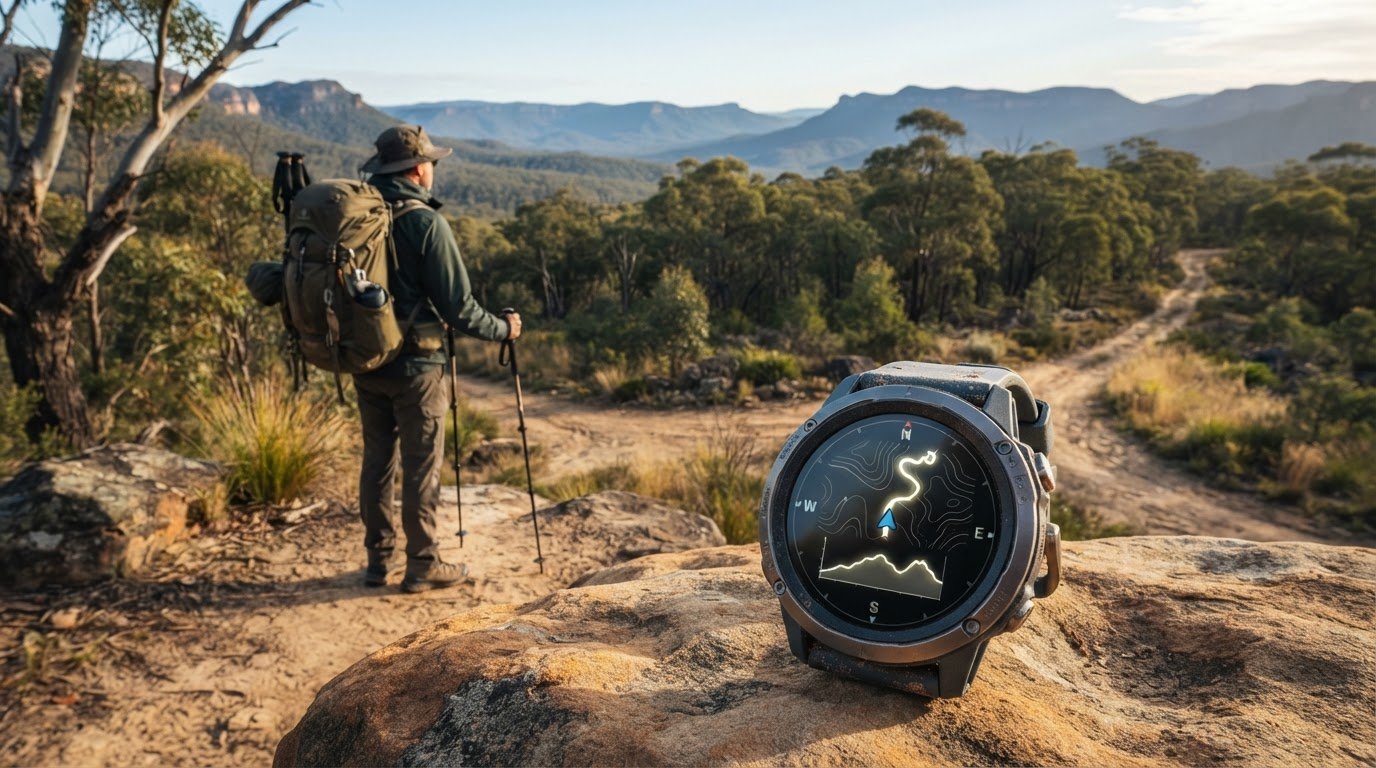
The Starlink Mini has completely changed the game for Wild-Trackers. We now have high-speed internet that fits in a backpack, allowing us to download detailed BOM weather updates or consult mechanical forums if a mystery rattle develops. However, we still carry a dedicated PLB (Personal Locator Beacon) for life-threatening emergencies. While satellite messengers like the Garmin inReach are fantastic for two-way check-ins with family, the PLB remains the “big red button” that links directly to search and rescue satellites. Don’t forget your UHF radio either; it is still the essential tool for convoy safety and hearing those critical warnings from oncoming road trains on narrow dusty tracks.
The 12V Power Setup
A robust DCDC charger is the heart of our electrical system, ensuring the auxiliary lithium bank receives the correct voltage from the alternator while we drive. We’ve moved away from guessing our battery levels; instead, we use smart monitoring Bluetooth apps to track our power consumption in real-time. We can see exactly how many amps the fridge is pulling or how much the solar panels are contributing. A reliable 12V fridge is a non-negotiable safety item for food preservation and preventing heat-related illness when the Australian sun pushes temperatures past 40 degrees. Adding these electrical monitoring tools to your 4wd recovery gear checklist ensures you aren’t just physically prepared, but mentally resilient for the long haul.
Basecamp Comfort: Shelter and Sustenance
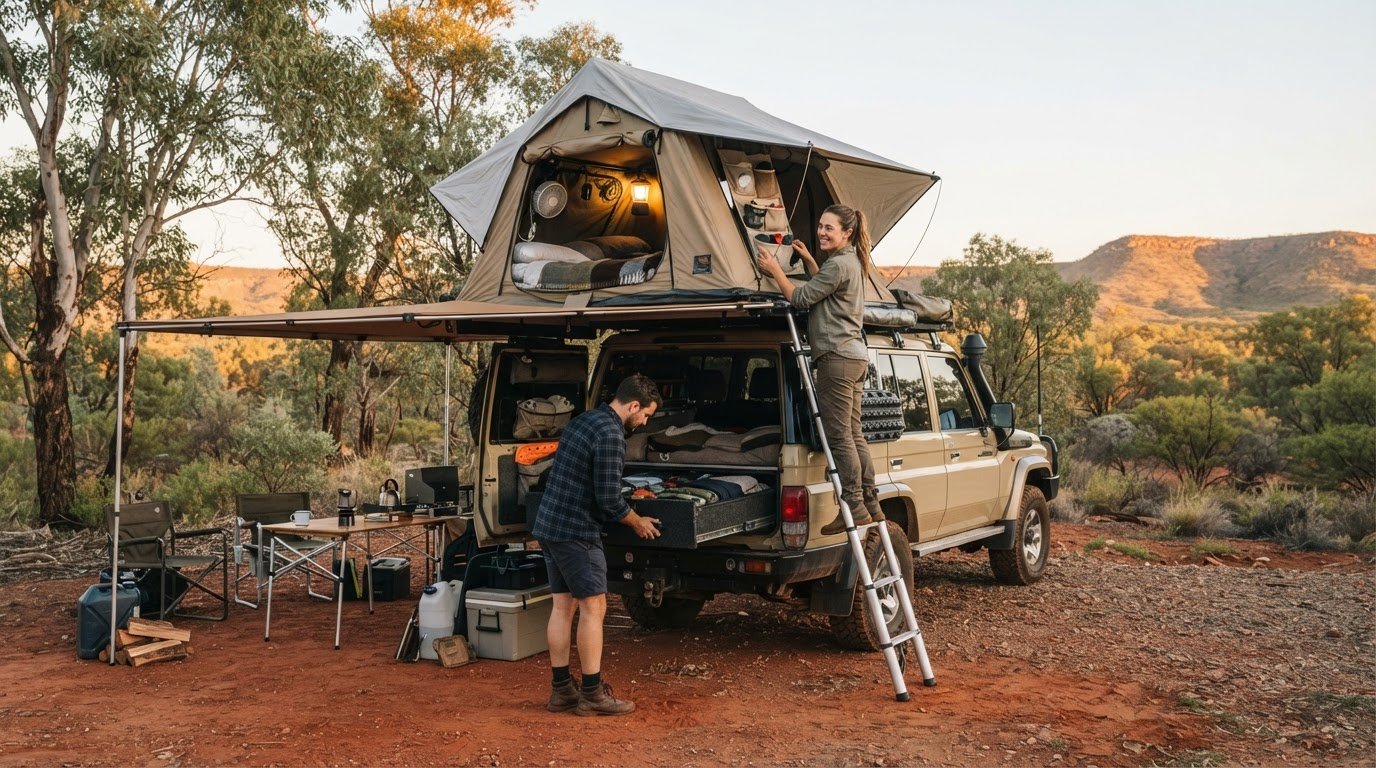
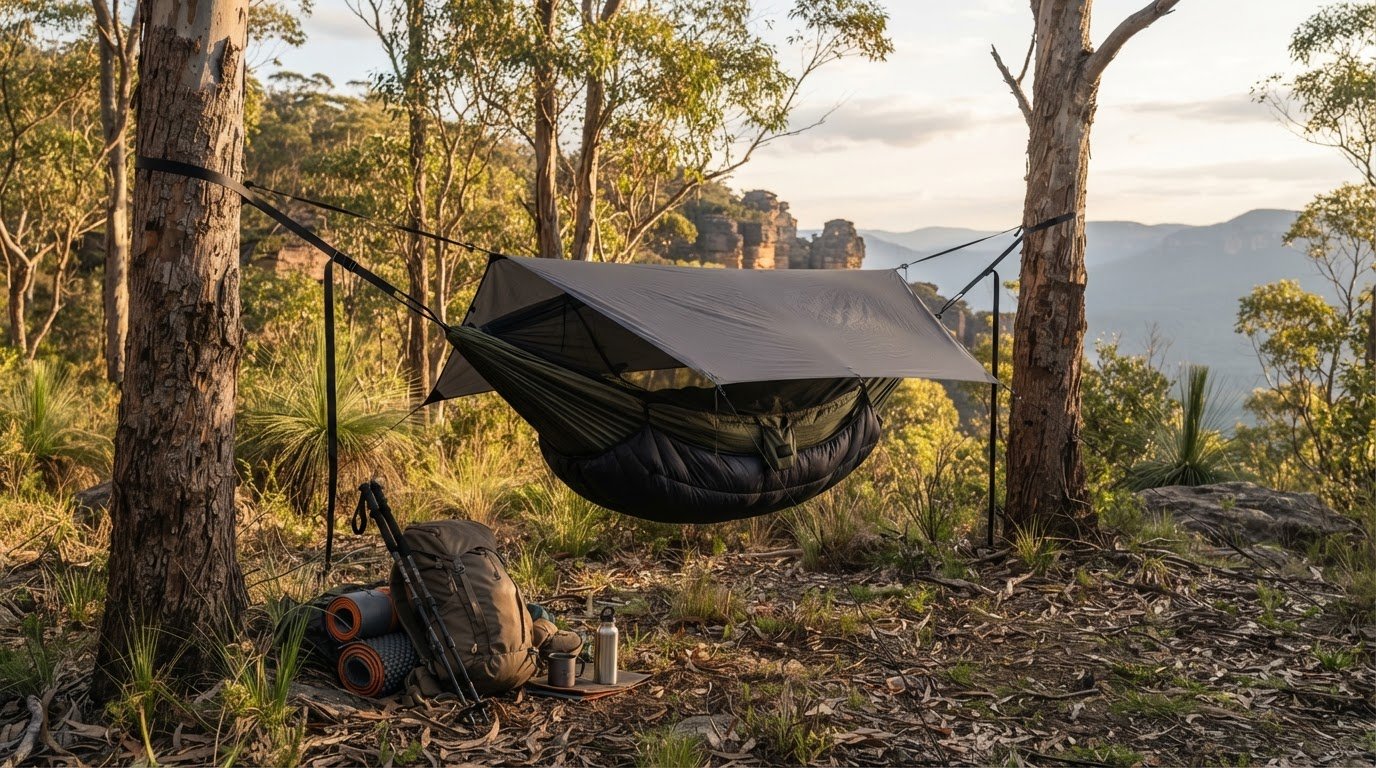
We often think of safety as something that happens only while we’re behind the wheel, but it actually starts with a solid night’s sleep. Fatigue is one of the greatest risks on remote Australian expeditions. A tired driver makes poor choices during a recovery or misses a critical track warning. That is why we swear by the 3-Minute Setup rule. When you arrive at camp late, exhausted, or in a sudden downpour, having a shelter that deploys instantly reduces stress and prevents the small mistakes that lead to accidents. While your 4wd recovery gear checklist handles the physical obstacles, your basecamp setup manages your mental endurance.
Preparation extends to what we consume and how we store it. We follow the 7-litres-per-person-per-day rule for water storage. This provides total peace of mind for remote desert crossings, accounting for drinking, cooking, and emergency reserves. Efficiency in the kitchen is equally vital. Integrated gas or induction setups are far superior to “roughing it” in the dust. They allow us to prepare nutritious meals quickly, keeping our energy levels high without the frustration of fighting a flickering fire in the wind. For those balancing specific health needs, Eating Well on a GLP-1 Journey provides expert guidance on managing your nutrition while on the road. Integrating these comfort items into your broader 4wd recovery gear checklist ensures you aren’t just surviving the trip, but thriving in every environment.
Elevated Living: Rooftop Tents
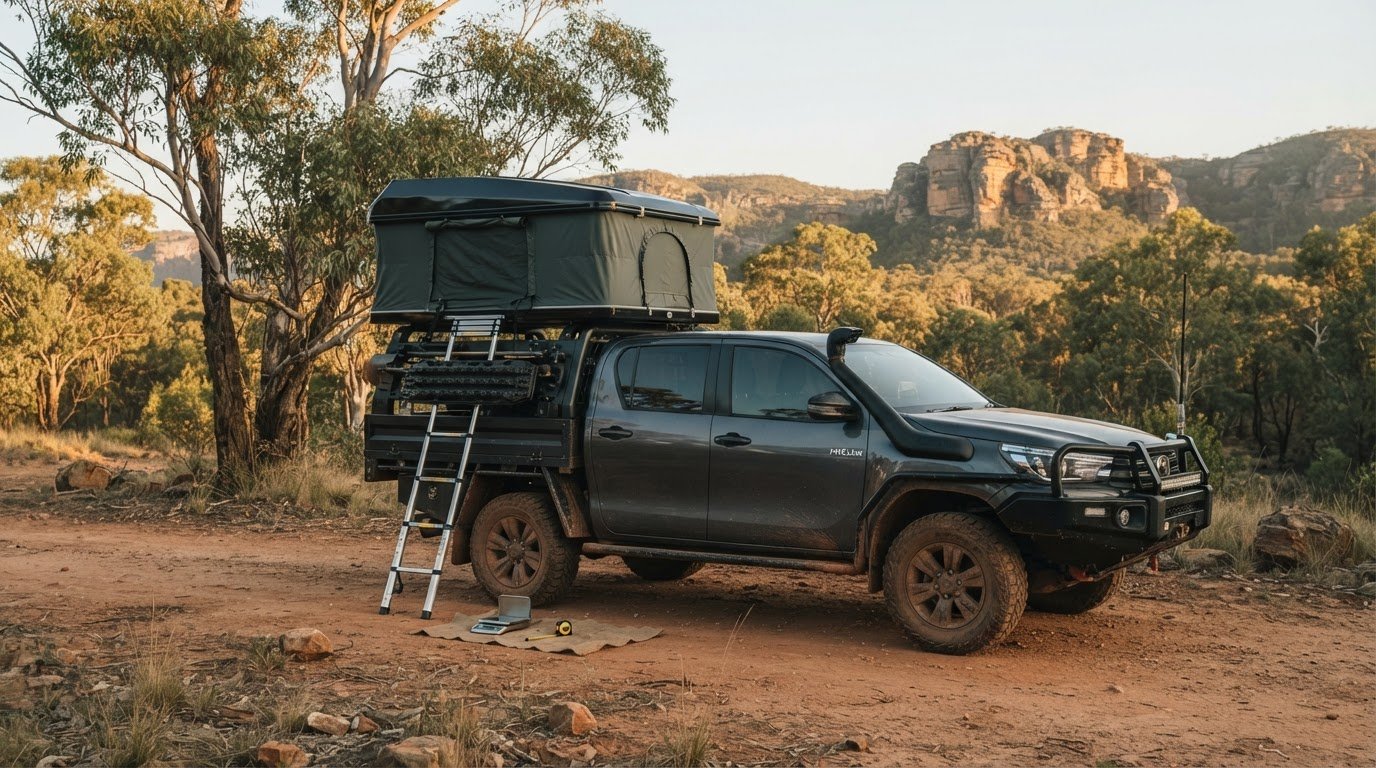
Getting off the ground is a game-changer for outback touring. We love the security of roof top tents because they keep us away from damp earth and wandering wildlife. In 2026, the debate between hard-shell and soft-shell continues. Hard-shell tents generally offer better peace of mind in high winds and are much faster to stow when you’re itching to hit the tracks. They provide a sturdy, quiet sanctuary that makes all the difference when a storm rolls across the plains. It’s about finding that perfect balance between durability and ease of use.
Creating a Protected Footprint
Our awnings are our primary defense against the harsh Australian sun and sudden squalls. They create a livable space where we can rest and regroup. Organising your kitchen with a dedicated drawer system is another way we prevent gear-creep stress; knowing exactly where your stove and coffee are makes every morning smoother. Finally, we never skimp on lighting. High-output LED camp lights are essential for safety and spotting snakes at night. If you’re looking to refine your setup, check out our guide to the best 4wd awnings to find your perfect shade solution.
The Ethical Adventurer: A Sustainable Checklist
True peace of mind isn’t just about surviving the track; it’s about ensuring the track survives us. We Wild-Trackers believe that our responsibility to the environment is just as critical as our 4wd recovery gear checklist. Adopting Leave No Trace principles protects the beauty of the outback for the entire community. It creates a sense of fellowship when we leave a campsite better than we found it. This ethical framework includes a strict “Take In, Take Out” waste management system. If you brought it into the desert, you carry it back to a town that can handle the disposal. We don’t leave our problems for the next traveler or the local wildlife to deal with.
Respecting traditional lands is a cornerstone of responsible touring. Many of our favorite remote routes cross through Indigenous Protected Areas or private stations. Obtaining the correct permits before you leave home is a sign of respect for the Traditional Owners of the land. It also ensures you aren’t trespassing on culturally sensitive sites or restricted areas. Fire safety is another vital component of our ethical stance. Carrying a dedicated, portable fire pit prevents scorching the earth and minimizes the risk of bushfires. We always keep a serviced fire extinguisher within arm’s reach of the driver’s seat for total peace of mind during those dry outback nights.
Waste and Water Ethics
The days of digging a hole in the bush are fading fast. Carrying a portable toilet is now mandatory in many remote parks and sensitive coastal areas across Australia. It’s a small change that makes a massive difference in keeping our waterholes and campsites pristine. We also focus on greywater management by using only biodegradable soaps and ensuring runoff stays well away from natural water sources. For managing rubbish on the go, a heavy-duty spare tyre bag is the best solution. It keeps smelly trash and dirty laundry outside the cabin, preserving your interior comfort while you move between remote camps.
Track Etiquette and Wildlife
Driving to the conditions is about more than just safety; it’s about track preservation. Speeding on heavy corrugations doesn’t just rattle your teeth; it destroys the track surface and puts immense stress on your vehicle’s suspension. We take it slow to protect the trails and our rigs. Wildlife awareness is equally important, especially at dawn and dusk. Avoiding travel during these peak times helps protect emus and kangaroos from collisions. Before you head out, check out The Ultimate Adventure Travel Planner to map your 2026 remote escape with precision. Integrating these ethical habits into your 4wd recovery gear checklist ensures you remain a welcome guest on every track you explore.
Ready for Your Next Great Escape?
Mastering the Australian outback isn’t about carrying the most gear; it’s about carrying the right gear and maintaining the right mindset. We’ve explored how a proactive mechanical inspection and a modern 4wd recovery gear checklist form the backbone of a successful remote trip. By embracing high-tech lifelines like satellite messaging and efficient lithium power, we ensure our safety without compromising the environment. Every Wild-Tracker knows that our adventures are only as good as the tracks we leave behind for those who follow.
Ready to dive deeper into the world of remote touring? Join the Adventurerz community for more expert 4WD guides and gear reviews! Our fellowship is built on expert recommendations from remote travel enthusiasts and community-driven reviews that prioritize sustainable outdoor practices. We’re here to help you navigate the technical jargon and find the equipment that actually works in our unique regional environments. The red dust is calling and the tracks are waiting for you. Let’s get out there, explore responsibly, and make 2026 the year of your most legendary remote escape yet!
Frequently Asked Questions
What are the absolute top 3 items for 4WD peace of mind?
The absolute top three items for peace of mind are rated recovery points, a high-quality tyre pressure management kit, and a reliable satellite communicator. These form the core of any 4wd recovery gear checklist because they address the most frequent issues: getting stuck, tyre damage, and the need for emergency contact. Without these three, you are significantly increasing your risk when traveling beyond the blacktop.
Do I really need a satellite communicator if I stay on the main tracks?
You absolutely need a satellite communicator even if you plan to stick to the main tracks. Mobile coverage in regional Australia is notoriously patchy; once you’re 50km from a major town, your phone is often just a paperweight. Having a device like a PLB or a satellite messenger ensures you can call for help if a mechanical failure or medical emergency occurs in a mobile blackspot.
How much water should I carry for a 7-day remote trip?
You should carry at least 49 litres of water per person for a seven-day remote trip. This follows our 7-litres-per-day rule, which covers drinking, basic hygiene, and a safety reserve for unexpected delays. We always recommend storing this in multiple containers to ensure a single leak doesn’t leave you completely dry in the middle of the desert.
Is a dual battery system necessary for a weekend trip?
A dual battery system isn’t strictly mandatory for a simple weekend trip, but it’s a massive upgrade for your comfort. If you’re only out for one night, a portable power station or a high-quality icebox might suffice. However, once you start using a 12V fridge full-time, a dedicated auxiliary battery becomes the best way to ensure your vehicle still starts in the morning.
What is the best way to handle a slow tyre leak in the bush?
The best way to handle a slow leak is to use a quality tyre plug kit while the tyre is still on the vehicle. This saves you the effort of a full wheel change in the dust. Simply find the puncture, clear the debris, and insert a plug before re-inflating with your compressor. It’s a vital skill for every Wild-Tracker to master before heading into the scrub.
Should I choose a rooftop tent or a ground tent for touring?
Choose a rooftop tent if you value quick setups and staying off the ground; choose a ground tent if you prefer to leave your camp set up while you explore local tracks. Rooftop tents are the gold standard for moving every day. Ground tents offer more living space for longer stays. Your decision should match your specific touring style and vehicle weight limits.
How do I know if my recovery points are actually rated?
You can identify rated recovery points by looking for a stamped Working Load Limit (WLL) or a specific rating in tonnes. These points are usually painted bright red and are bolted directly to the chassis with high-tensile hardware. If your vehicle only has small, thin loops, those are likely just tie-down points for shipping and are not safe for your 4wd recovery gear checklist.
What is the most common mechanical failure on remote Australian tracks?
Suspension failure and tyre punctures are the most common mechanical issues on remote Australian tracks. Corrugations can shake shocks to pieces or cause bushings to fail, while sharp gibber rocks easily slice through highway-terrain tyres. Keeping your speed down and your pressures correct is the most effective way to prevent these failures from ending your trip early.