Imagine the mercury hitting 45 degrees while red dust settles into every crevice of your rig, and suddenly, that “minor” engine rattle becomes the only sound for 200 kilometers. We’ve all felt that knot in our stomach when staring down a massive trek through the Simpson or across the Kimberley. It’s easy to get overwhelmed by conflicting advice on GVM limits or which “essential” gadgets actually earn their keep in the red center. This guide is here to replace that anxiety with absolute readiness. We’ll show you that comprehensive vehicle preparation for the outback is about more than just bolting on accessories; it’s a synergy of mechanical integrity, smart weight management, and ethical stewardship of the land we love.
We’re diving into everything from the latest 2026 Starlink Roam updates and UHF channel protocols to the mechanical checklists that keep our community moving safely through Australia’s most demanding environments. You’ll gain the confidence to balance off-road performance with remote comfort while ensuring your setup respects the fragile ecosystems and vibrant cultures we explore. Let’s get your vehicle ready for the adventure of a lifetime.
Key Takeaways
- Identify the specific suspension upgrades and tyre ratings required to withstand the punishing “Corrugation Factor” on remote tracks.
- Learn how a systematic approach to vehicle preparation for the outback ensures your mechanical, electrical, and survival systems work in perfect harmony.
- Optimize your 4WD living space by keeping heavy gear low and central while leveraging the benefits of elevated rooftop shelters.
- Establish a tiered communication strategy that distinguishes between essential convoy coordination and emergency satellite protocols.
- Adopt the mindset of an ethical explorer to protect fragile desert ecosystems and respect the cultural significance of the land.
Table of Contents
The Reality of Outback Travel: Why Preparation is Non-Negotiable
We all know that magnetic draw to the horizon, where the bitumen ends and the red dirt begins. But The Australian Outback is a beautiful, unforgiving beast that doesn’t care about your schedule or your budget. True vehicle preparation for the outback isn’t just about ticking a box at your local mechanic; it’s a comprehensive, multi-system audit of your mechanical, electrical, and survival gear. We view our rigs as life support systems. If one component fails in the middle of the Tanami, the consequences can shift from inconvenient to critical in a matter of hours.
One of the biggest shocks for newcomers is the Corrugation Factor. These relentless, bone-shaking ripples in the road act like a high-frequency jackhammer on your vehicle. Sub-standard builds, cheap roof racks, and loose wiring will literally vibrate apart. We’ve seen everything from snapped shock absorbers to cracked chassis rails because someone underestimated the power of constant vibration. It’s a harsh teacher, but it’s why we emphasize high-quality, durable equipment for every member of our community.
This is why we live by the 5,000km rule. Your trip actually begins 2,000km before you hit the dirt. You need time to stress-test every new modification and hear every new squeak while you’re still close to specialized help. Shifting your mindset is equally vital. You have to move away from being a city driver who calls a tow truck and become a self-reliant explorer who carries the tools and the knowledge to fix a split radiator hose at dusk. Self-reliance is the greatest asset you can pack.
The Environmental Toll of Remote Tracks
Heat, dust, and vibration are the triple threats facing modern 4WDs. Fine bull-dust finds its way into sensitive sensors and alternators, while 45-degree ambient temperatures push cooling systems to their absolute limit. Never assume a brand-new vehicle is ready. Factory components are often designed for suburban comfort, not for carrying a full load over thousand-kilometer stretches of washboard tracks. A pre-trip shakedown in local off-road conditions is the only way to confirm your setup actually works under pressure.
Defining Your Mission Profile
Are you planning a touring trip on maintained gravel or a full expedition across the Simpson Desert? Your mission profile dictates your fuel and water calculations. When we cross the Canning Stock Route, our point of no return is calculated with a 20% safety margin for fuel to account for soft sand and heavy winds. Ultimately, outback readiness is the hard-earned ability to solve your own problems without expecting external help.
Mechanical Foundations: Beyond the Standard Service
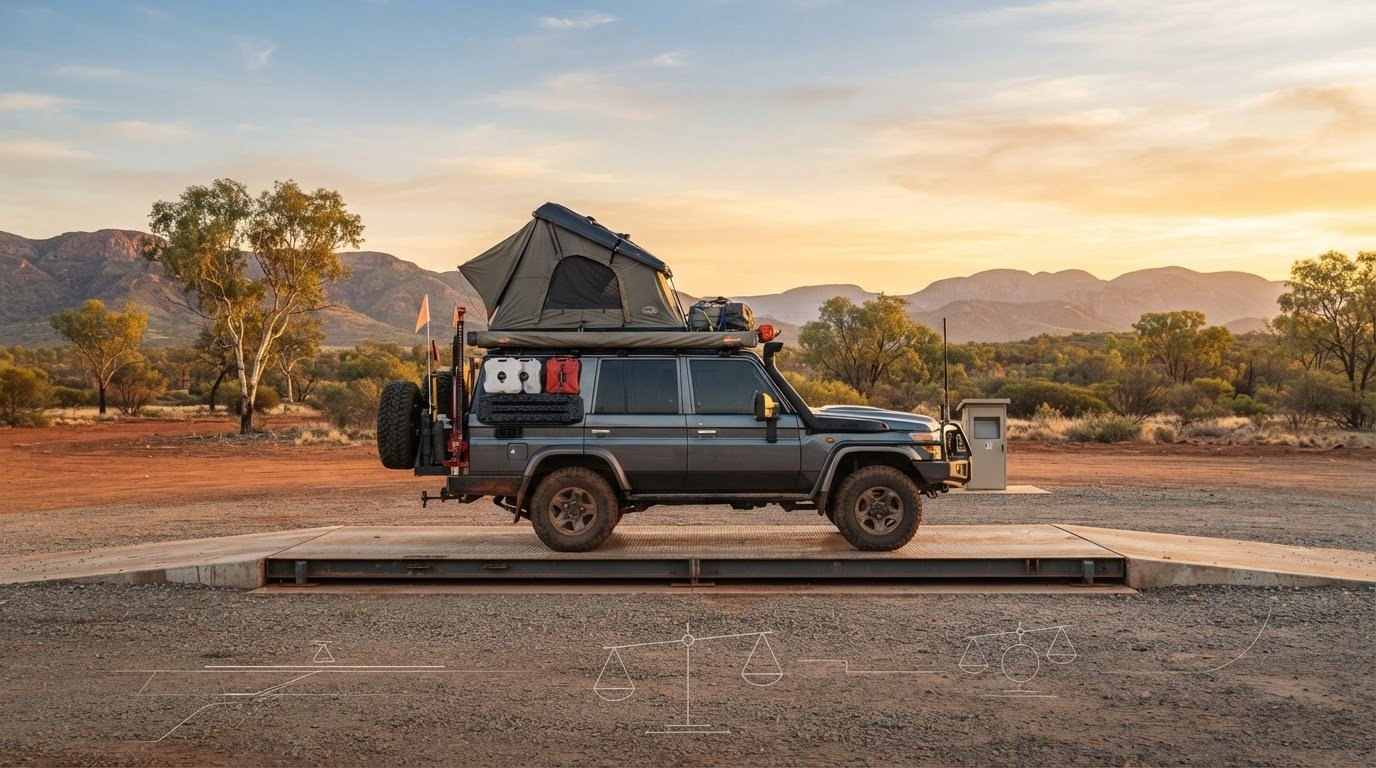
We’ve established the mental grit required for remote travel. Now, let’s talk about the steel and rubber that carries you there. Effective vehicle preparation for the outback demands we look past the odometer and focus on stress points that city driving never touches. A standard logbook service is merely your baseline. When we load up our rigs with hundreds of kilograms of water, fuel, and gear, the factory suspension often groans under the pressure. Upgrading to heavy duty shocks and springs isn’t about a lift for aesthetics; it’s about maintaining vehicle control and preventing bottoming out on those relentless washboard tracks. This ties directly into managing your Gross Vehicle Mass (GVM). Staying within legal weight limits ensures your brakes and chassis aren’t overstressed, keeping our community safe on shared routes.
Your tyre strategy is the next pillar of reliability. We always recommend an All-Terrain or Mud-Terrain tyre with a high load rating and, crucially, 3-ply sidewalls. Rocks in the Pilbara or sharp sticks on overgrown tracks will slice through standard passenger tyres like butter. Cooling system integrity is another non-negotiable. Radiators and hoses are the most common points of failure in the heat of the red center. Before you head off, consulting resources like the Outback NSW Safety Guide provides a solid foundation for your mechanical checklist. As you build out your living system with quality roof top tents, ensuring your suspension can handle the extra weight is the first step toward a balanced rig.
The Critical Spares Kit
We don’t leave home without a curated selection of “get home” spares. This includes essential fluids like brake fluid, coolant, and transmission oil. For those of us driving modern common-rail diesel engines, carrying at least two spare fuel filters is a non-negotiable. Contaminated fuel at a remote pump can shut your trip down instantly. Your “Bush Mechanic” toolkit should be lean but effective, featuring high-quality hand tools, heavy-duty race tape, and a generous supply of cable ties for those unexpected repairs.
Electrical and Battery Systems
Modern vehicle preparation for the outback requires a robust dual battery setup. This separates your cranking battery, used solely for starting the engine, from your accessory battery that powers the fridge and lights. Integrating solar panels allows us to keep the living system charged during multi-day stays without running the engine. A basic volt meter is the most important tool in your electrical kit because it provides the only real-time window into the health of your battery systems before a total failure leaves you stranded. Don’t wait for the lights to dim to check your charge.
Sustenance and Shelter: Optimising Your 4WD Living Space
While mechanical integrity gets us to the track, your “living system” is what keeps you there. We believe that effective vehicle preparation for the outback must integrate your shelter and sustenance into the vehicle’s physical dynamics. We always prioritize keeping heavy items, such as water tanks and toolboxes, low and central within the chassis. This lowers your center of gravity, which is vital when you’re navigating off-camber desert dunes or rocky washouts. Water security is our biggest logistical hurdle. We calculate a minimum of 5 to 7 litres per person per day for remote desert travel. This covers drinking, cooking, and basic hygiene, ensuring we have a safety buffer if we’re delayed by weather or track conditions.
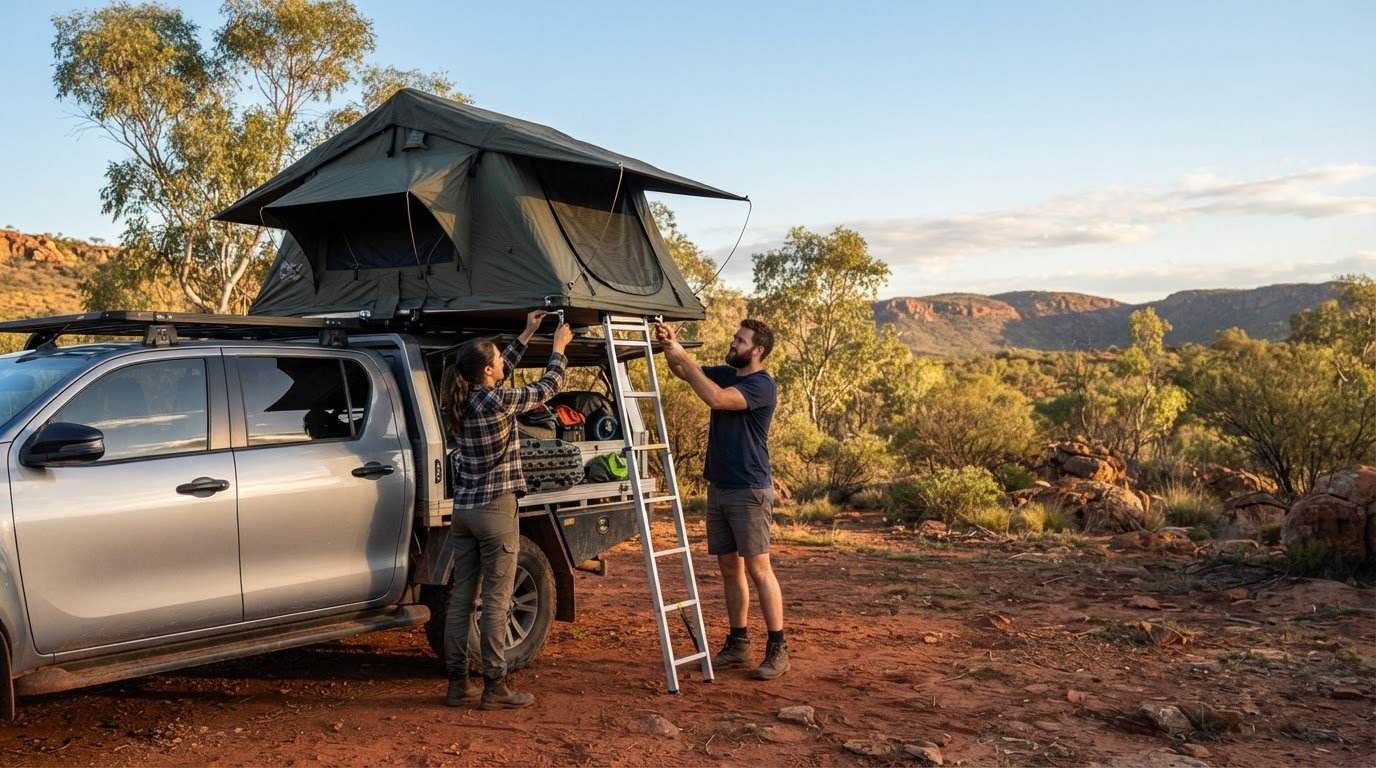
After a long day of navigating technical tracks, we aim for a 15-minute setup goal. Efficiency in camp saves precious energy and keeps morale high among our community. If your gear is buried under a mountain of loose bags, you’ll dread every camp stop. A well-organized rig allows us to transition from driving to relaxing almost instantly, which is the secret to sustainable long-term touring. This methodical approach to vehicle preparation for the outback ensures that your rig remains a sanctuary, not a source of stress.
Rooftop Tents and Awnings
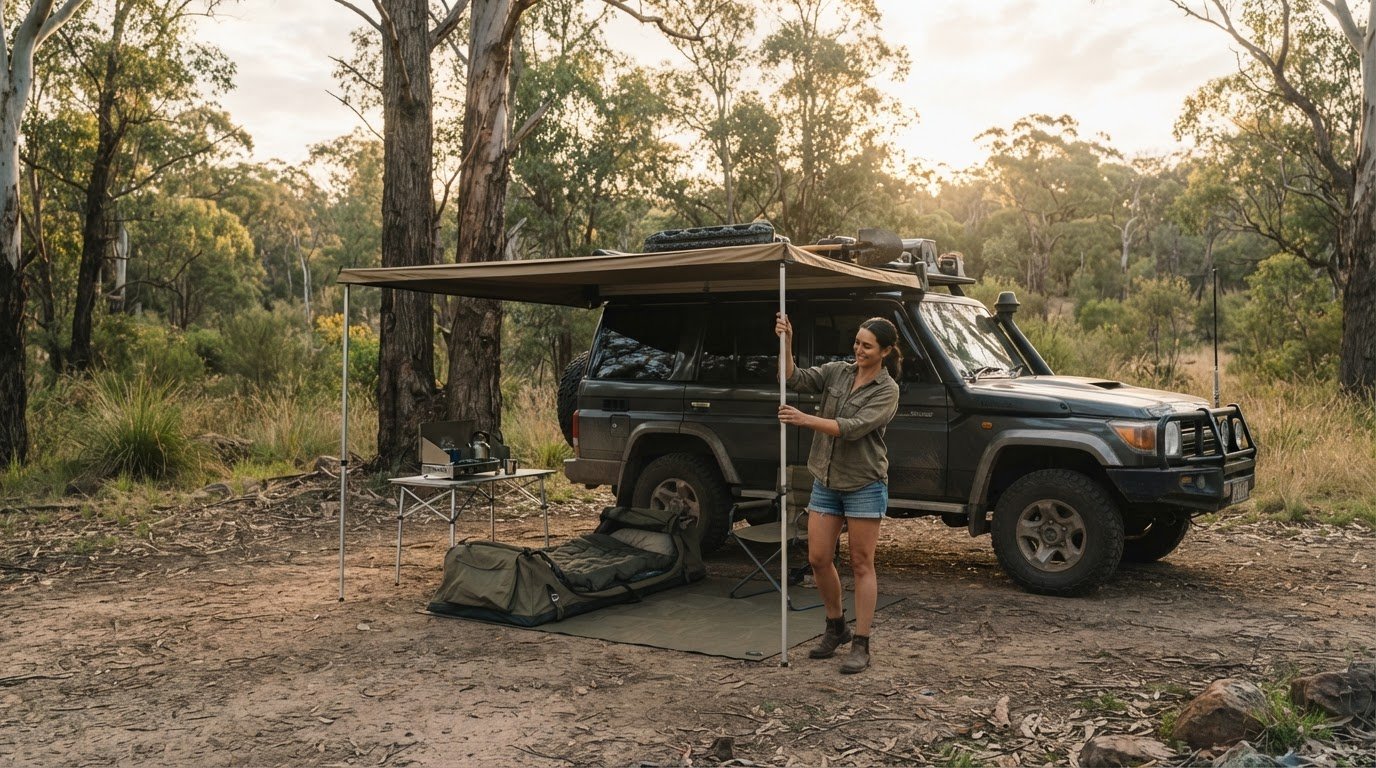
Elevated living is a game-changer in arid environments. It keeps us away from the radiant heat of the ground and provides a cross-breeze that ground tents often miss. When choosing between hard-shell and soft-shell roof top tents, consider your mission profile. Hard-shell models offer superior wind resistance, which is essential when the wind picks up across the Nullarbor. In treeless landscapes, high-quality 4wd awnings are your only defense against the midday sun. We always double-check our mounting brackets before every trip. Those relentless corrugations love to vibrate rooftop gear loose, so checking your bolts is a daily ritual for us.
The Remote Kitchen and Storage
A reliable 12V fridge is the heart of a successful trip. Ice is a luxury you simply can’t replenish in the middle of the Gibson Desert, making 12V refrigeration a non-negotiable for remote travel. We use dust-sealed drawers and heavy-duty boxes to protect our food and gear. Nothing ruins a meal faster than a thick layer of fine red bull-dust. For a deeper dive into organizing your gear and mapping your route, see our Ultimate Adventure Travel Planner. Proper storage isn’t just about neatness; it’s about protecting your investment from the harsh elements.
Recovery, Communication, and Emergency Protocols
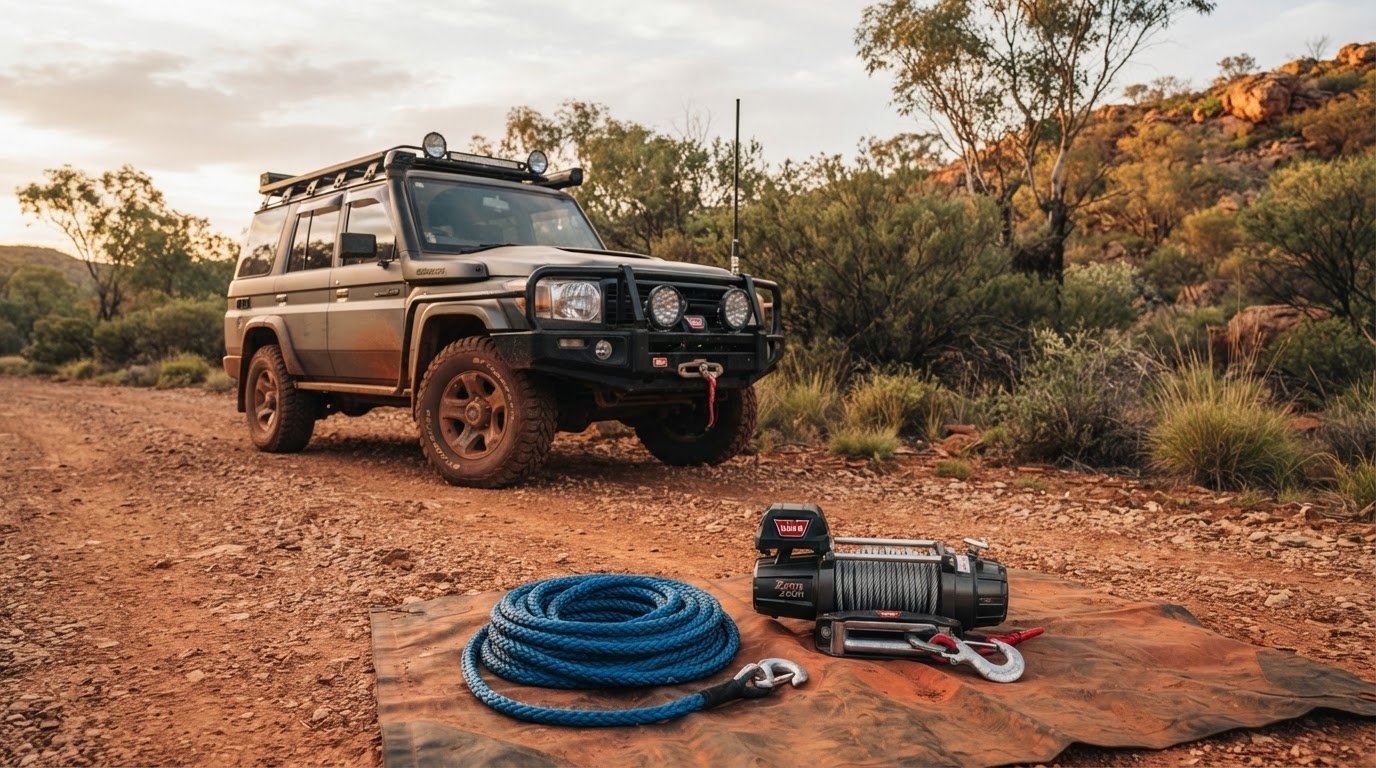
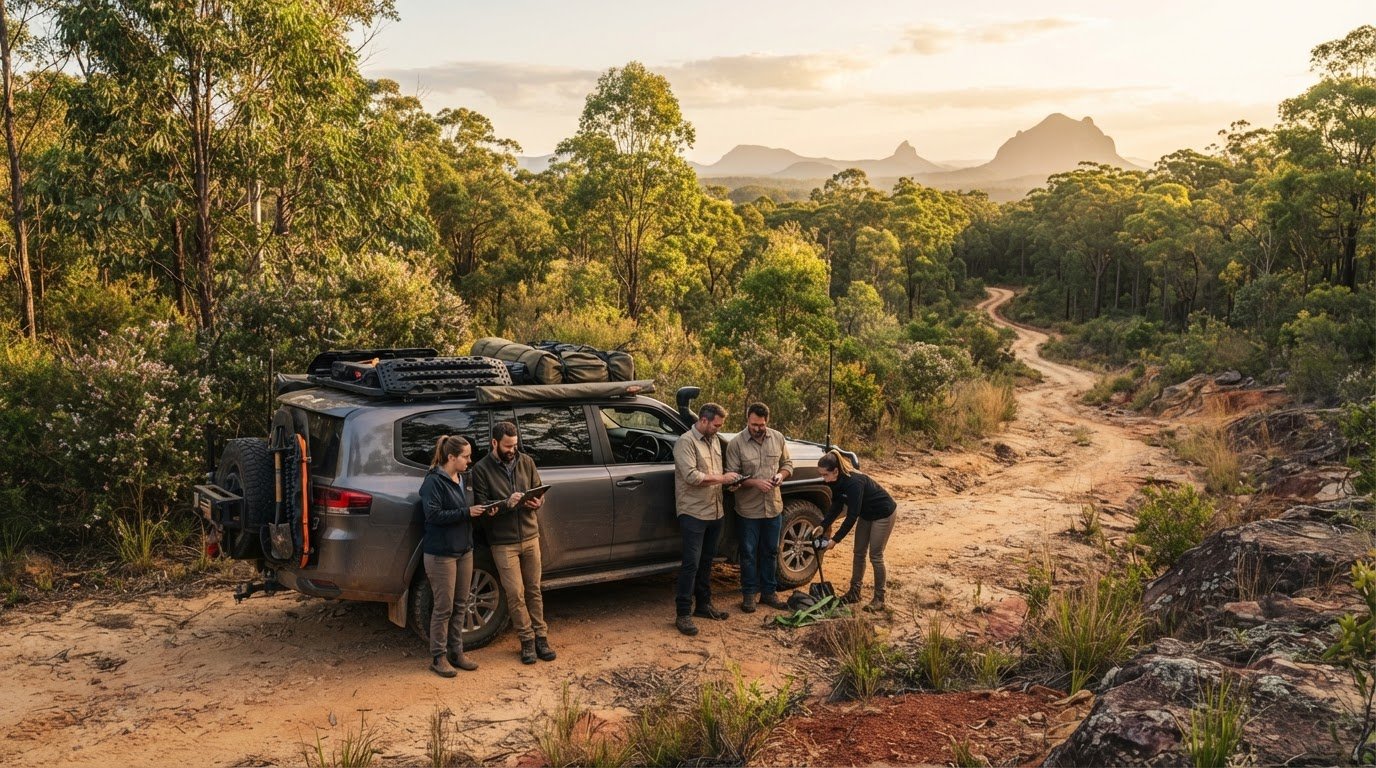
Even with the best mechanical prep, the terrain eventually wins a round. We follow a strict Recovery Hierarchy to minimize risk and vehicle damage. It begins with your most powerful tool: tyre pressure management. Dropping your PSI often provides enough surface area to crawl out of soft sand without ever touching a shovel. If that fails, we move to traction boards before even considering a snatch strap or winch. This methodical approach is a core part of vehicle preparation for the outback because it keeps you in control while reducing the massive kinetic forces involved in heavy recoveries.
Communication is your lifeline, but not all signals are equal. We use UHF radios for convoy chatter and talking to truckies on Channel 40, while keeping channels 5 and 35 strictly for emergency use. However, once you’re out of range, that radio won’t call for help. This is where satellite communicators or Starlink Roam plans become essential. For medical emergencies, your kit must be geared for remote trauma and environmental injuries like heatstroke or snake bites. Remember the golden rule of the red center: if the worst happens and you’re stranded, stay with your vehicle. It’s much easier for rescuers to find a 2.5-tonne rig than a lone person walking through the scrub.
Essential Recovery Gear
A high-quality compressor and accurate pressure gauge are the most used items in our recovery kit. We also carry Maxtrax MKII boards because they are the gold standard for solo vehicle recovery in sand or mud. When things get serious and you need to use a snatch strap or winch, safety is paramount. We only use rated recovery points and always employ a dampener to catch the line if a component fails. If you’re looking for more inspiration on where to take your fully equipped rig, check out our latest adventure ideas in Australia for your next remote escape.
Navigating the Unknown
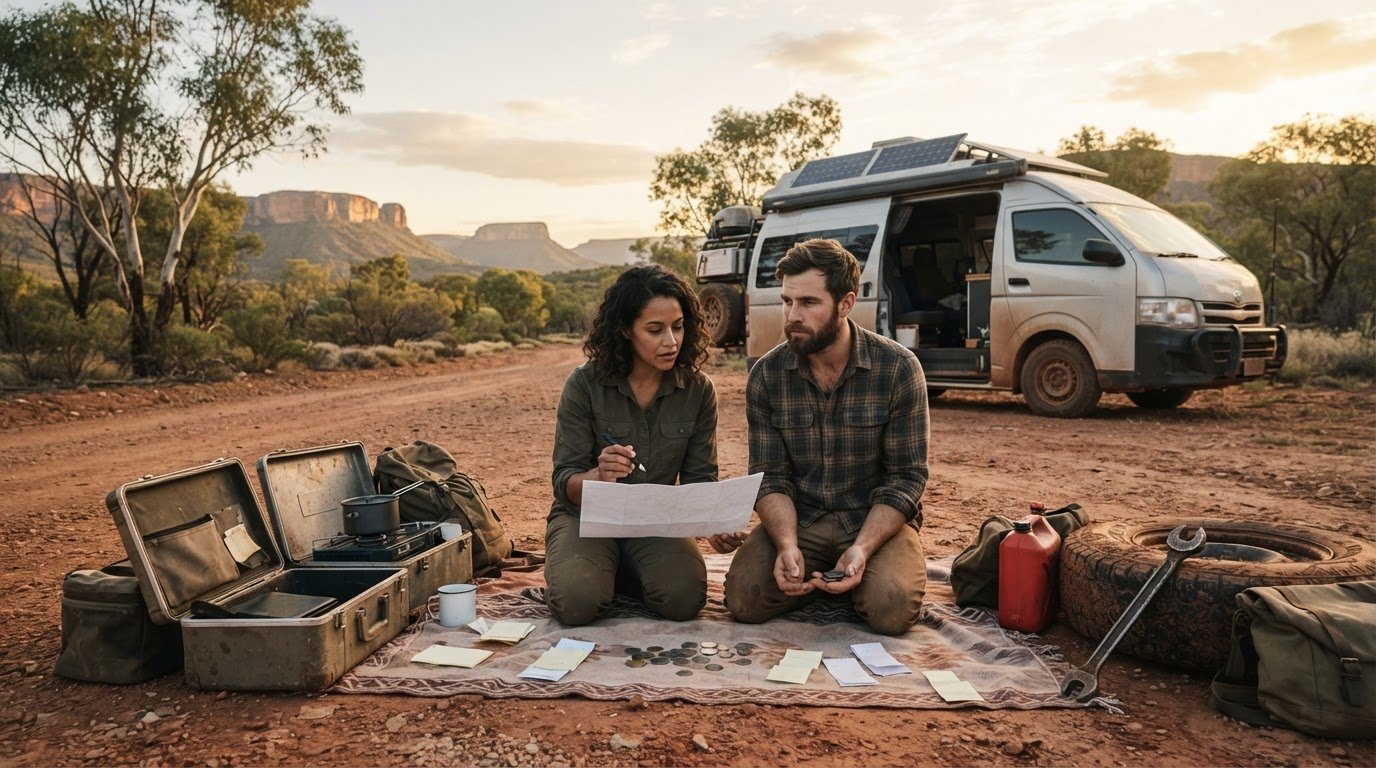
We love our digital GPS tablets, but they can fail. We always carry Hema paper maps as a fail-safe backup for when the electronics overheat or lose power. We also track our “Waypoints of No Return” by constantly measuring actual fuel consumption against the remaining distance to the next pump. Carrying a registered EPIRB or PLB is your only guaranteed way to alert emergency services when you are beyond the reach of mobile towers and traditional radio networks.
The Ethical Explorer: Sustainable Outback Practices
We’ve prepped the engine and organized the living space, but the final stage of vehicle preparation for the outback is preparing our mindset for stewardship. Sustainable travel isn’t just a buzzword; it’s the only way we keep these iconic tracks open for future generations. Desert ecosystems are incredibly fragile. A single set of tyre tracks across a pristine salt lake or clay pan can remain visible for decades, scarring the landscape. We always stick to designated tracks and avoid the temptation to “blaze a trail” just for a social media photo. Respecting the ground we drive on is just as important as the gear we bolt to our rigs.
Waste management is a massive part of our ethos. We carry everything out, including organic waste like fruit peels and coffee grounds. In arid environments, these items don’t break down quickly and can attract feral animals that disrupt local wildlife. We also practice a “Buy Local” approach. Supporting remote roadhouses and small communities by purchasing fuel and fresh supplies ensures these vital hubs stay open. It’s a simple way to give back to the regions that provide us with such incredible adventures. When we invest in the local economy, we’re investing in the future of outback travel itself.
Respecting Traditional Land
Much of the terrain we love is Aboriginal Land. Obtaining the correct permits is a legal requirement, but it’s also a mark of respect for the Traditional Owners who have cared for this country for millennia. We take the time to learn about the areas we visit. This cultural awareness helps us identify and respect significant landmarks and ancient art sites without disturbing them. For more context on eco-friendly touring, check out our Sustainable Travel Tips.
The Community Bond
Fellowship is what makes outback travel truly special. The “Outback Wave” is our silent handshake, a recognition of shared adventure and mutual respect. We always stop to check on someone with their bonnet up, and we expect the same in return. Sharing real-time road conditions or hazard reports with local stations and other travellers helps the entire community stay safe. It’s about being a responsible peer on the road. Ready to gear up? Check out our best 4wd awnings for your next trip to ensure you stay cool while respecting the environment.
Master the Horizon and Begin Your Journey
The red dust is calling and you now have the blueprint to answer it with confidence. We’ve explored the essential mechanical upgrades like heavy-duty suspension and 3-ply tyres that survive the relentless corrugations. You also understand the vital hierarchy of communication and recovery that keeps our community safe when the tracks get technical. Remember that thorough vehicle preparation for the outback is a holistic process. It balances your rig’s durability with a deep respect for the fragile desert environments and traditional lands we are privileged to visit.
Our mission is to help you explore responsibly while pushing your limits safely. We provide expert gear recommendations forged over thousands of desert kilometres and community-vetted survival protocols designed for real-world isolation. If you’re ready to turn your remote dreams into a reality, Explore the Ultimate Adventure Travel Planner for your 2026 trip. Our focus on sustainable exploration ensures these tracks stay open for everyone. We can’t wait to see your setup out there on the dirt!
Frequently Asked Questions
What is the most common mechanical failure in the Outback?
Tyre damage and cooling system failures are the most frequent issues we see on remote tracks. Relentless heat and sharp gibber stones push factory components to their breaking point. We recommend a full cooling system pressure test and upgrading to light-truck rated tyres to prevent these common trip-enders from happening to you.
Do I really need a second spare tyre for a desert trip?
We strongly advise carrying two spare tyres for any major desert crossing. While one spare might suffice for a highway puncture, remote tracks can easily claim multiple tyres before you reach the next service hub. Having that second spare provides the critical redundancy needed to keep our community moving safely through high-risk terrain.
How much water should I carry per person for a remote expedition?
You should carry a minimum of 5 to 7 litres of water per person for every day of your trip. This volume covers drinking, cooking, and basic hygiene needs. We always pack an additional two-day emergency reserve because water is your most vital survival asset when you are hundreds of kilometres from help.
Is a satellite phone necessary, or is a PLB enough?
A PLB is for life-and-death situations, but a satellite communicator is better for logistical support. While a PLB alerts emergency services to a catastrophe, a satellite phone or Starlink connection allows you to call for a mechanic or update your family. Both are key components of professional vehicle preparation for the outback.
What tyre pressure should I run on deep sand or heavy corrugations?
For deep sand, we typically drop our pressures to 16-20 PSI to maximize the tyre’s footprint. On heavy corrugations, 24-28 PSI usually provides enough cushion for the suspension while protecting the tyre sidewalls from overheating. Always remember to reduce your speed significantly whenever you lower your tyre pressures for the dirt.
Can I take a standard SUV into the Outback, or do I need a true 4WD?
A true 4WD with low-range gearing and high ground clearance is mandatory for most remote tracks. Standard SUVs are fine for well-maintained gravel roads, but they lack the durability and underbody protection required for deep sand or washouts. It is about choosing the right tool for the environment to ensure everyone’s safety.
How do I calculate my fuel range for a long-distance desert crossing?
Calculate your range by testing your vehicle under full load in soft sand before you leave. Off-road fuel consumption can be double your highway average. We always add a 20% safety margin to our final figures to account for unexpected detours, heavy headwinds, or long periods of low-range crawling through dunes.
What are the essential spares for a modern diesel 4WD?
You must carry at least two spare fuel filters and a spare serpentine belt. Contaminated fuel is a reality at remote outback pumps, and a clogged filter will stop a modern common-rail diesel instantly. Carrying these spares is a non-negotiable part of vehicle preparation for the outback that ensures you remain self-reliant on the track.