The moment your engine cuts out in the red heart of the Simpson Desert, you aren’t just a driver anymore; you’re the mission commander of a stationary survival pod. Knowing exactly what to do if your 4wd breaks down remotely is the difference between an uncomfortable story and a genuine emergency. We’ve all felt that cold spike of anxiety when the ignition clicks but doesn’t catch, especially when the nearest sealed road is hundreds of kilometers away. It’s a daunting feeling to realize that the vast, beautiful outback we love can turn unforgiving in a heartbeat.
We’re here to help you turn that uncertainty into a structured, professional response. This guide will empower you with the essential survival protocols, communication tactics, and recovery steps needed to stay safe and protect our fragile environment while you wait for help. We’ll explore the latest 2026 satellite tech, including the $400 Garmin inReach Messenger Plus and the ZOLEO systems, and lay out a clear plan for managing your water and heat exposure. You’ll walk away with the confidence to handle any mechanical crisis responsibly and keep our community of explorers moving forward.
Key Takeaways
- Master the “stop and breathe” protocol to manage adrenaline and prioritize your immediate safety before making any critical mechanical decisions.
- Learn why staying with your vehicle is the ultimate survival rule and discover how to turn your rig into a high-visibility beacon when figuring out what to do if your 4wd breaks down remotely.
- Explore the 2026 communication landscape, comparing the latest smartphone satellite features with dedicated PLBs to ensure we are never truly out of reach.
- Develop a systematic diagnostic mindset to troubleshoot common outback failures like electrical gremlins or cooling system issues using basic field tools.
- Understand the protocols for an ethical recovery, focusing on how to minimize our environmental footprint while coordinating with professional off-road rescue teams.
Table of Contents
Immediate Assessment: Safety, Shelter, and Situation
The silence that follows a remote engine failure is heavy. It’s easy for panic to set in, but our first move is simple: stop and breathe. We need to manage that initial adrenaline spike before we touch a single tool. Making rash decisions in the first five minutes often leads to bigger problems later. Once we’ve centered ourselves, we need to look at the immediate surroundings. If the vehicle has enough momentum, we’ll guide it to a safe, visible spot off the main track to avoid becoming a hazard for other travelers. Check for the smell of fuel or signs of smoke. We’re looking for immediate threats like fire or unstable terrain that could turn a mechanical issue into a life-threatening emergency. Knowing essential survival skills starts with securing our immediate environment before we worry about the engine.
Establishing our base camp is the next priority. Our vehicle is our best resource, acting as a beacon and a shield. We don’t want to wander; we want to consolidate every tool and drop of water we have. This methodical approach is the foundation of what to do if your 4wd breaks down remotely. By staying with the rig, we maintain access to our most sophisticated survival gear and remain much easier for search teams to locate in the vast Australian landscape.
Creating a Micro-Climate for Survival
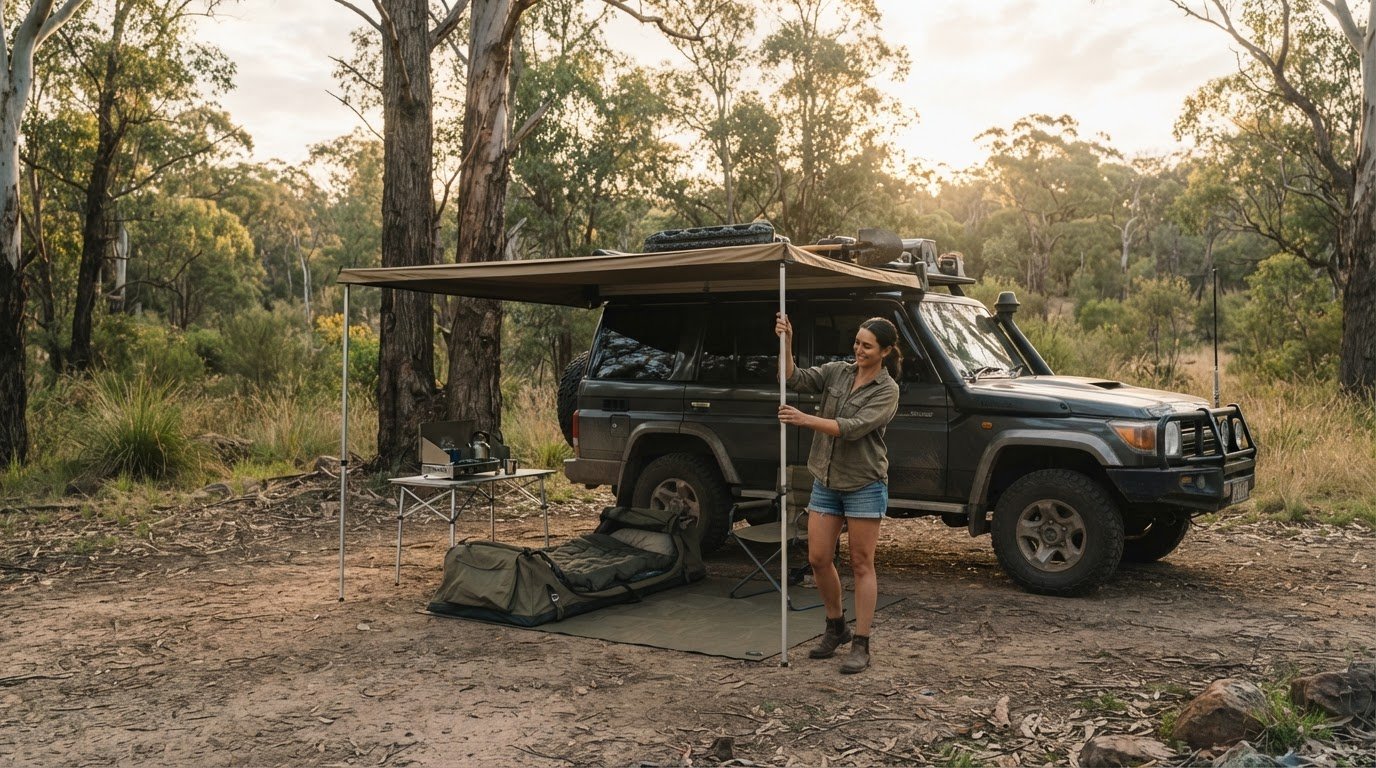
In the Australian outback, the sun is our biggest adversary. We must deploy our 4WD awnings as soon as the vehicle is stationary. This isn’t just for comfort; it’s about preventing heatstroke and rapid dehydration. Ground temperatures in desert regions can often exceed air temperatures by 20 degrees Celsius or more. We need to get off the hot dirt and under shade immediately. Use reflective sunshades or even emergency blankets on the windows to deflect heat away from the cabin. By creating this micro-climate, we preserve our energy and our vital water supplies for the long haul. We’re building a fortress against the elements, and shade is our primary defense.
The 10-Minute Situation Audit
Before any battery power fades or electronics overheat, we need to perform a rapid audit. We’ll record our exact GPS coordinates from our dash unit or handheld device immediately. Next, we’ll count every liter of water and every meal. We need to decide quickly if this is a “fix” situation where we can safely perform a repair, or a “stay” situation where we wait for rescue. If the mechanical failure involves a snapped chassis or a seized internal engine component, we shift our mindset to long-term survival. Don’t waste energy on impossible repairs. Instead, focus on signaling and resource management. This clarity of purpose is the core of what to do if your 4wd breaks down remotely in 2026. We stay calm, stay with the vehicle, and stay prepared for the wait.
The Golden Rule: Why You Must Stay With Your Vehicle
If there’s one piece of advice we can give to every member of our community, it’s this: never leave your vehicle. It is your most important survival tool. The “Walk-Out” impulse is a powerful psychological trap that has claimed too many lives in the Australian outback. When the engine stays silent, our brains scream at us to do something, anything, to escape the situation. We feel that if we just walk over that next ridge, we might find a farm or a main road. However, distances in the bush are deceptive, and the heat is a silent, relentless killer. Understanding what to do if your 4wd breaks down remotely involves accepting that the vehicle is your best chance at survival. A human on foot is almost invisible to a pilot; a two-tonne piece of metal is a beacon.
Our 4WD is a treasure chest of resources. It holds our water, our food, and our communication tech. It provides shelter from the wind and shade from the scorching sun. We can even strip it down for parts to aid our survival. Rear-view mirrors can be used as high-intensity signaling devices to catch the sun and alert aircraft. Seat upholstery can be repurposed as extra insulation if the night temperatures plummet. This is the core of what to do if your 4wd breaks down remotely; we use the vehicle as our base of operations and our primary life-support system. By staying put, we consolidate our resources and remain in a fixed, searchable location.
Maximizing Visibility from the Air
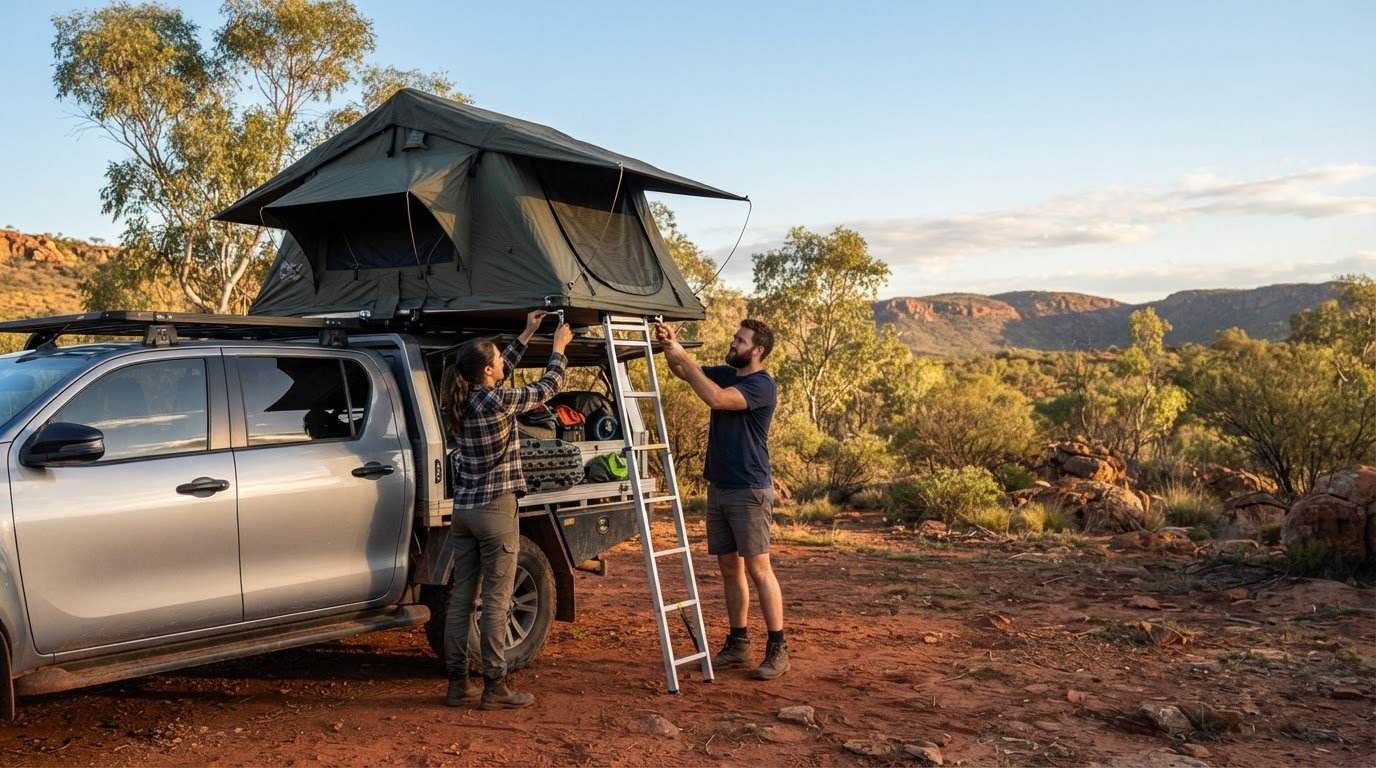
We need to make our rig as loud as possible to a search pilot’s eyes. If we have a roof top tent, we should deploy it immediately. Not only does it provide a comfortable place to rest away from ground-dwelling critters, but it significantly increases the vehicle’s visual footprint from above. We can also arrange our spare tires or bright recovery boards in a large “V” or “X” on the ground nearby. These are international signals for “Require Assistance” that are easily recognized from the air. In a dire emergency, we can even burn a spare tire to create thick, black smoke; just ensure we clear a large area around the vehicle first to prevent a dangerous bushfire.
Mental Fortitude and Routine
Survival is as much a mental game as a physical one. We keep our spirits high by establishing a daily routine. Chores are essential for maintaining morale. Whether it’s checking the water supply, cleaning the solar panels, or maintaining our signaling devices, these tasks keep our minds occupied and prevent panic from creeping in. If we are traveling in a group, we look out for each other. We talk, we plan, and we maintain the fellowship that makes our community so strong. Before you head out on your next trek, check out our latest adventure ideas in Australia to ensure you’re always prepared for any unexpected turns in the road.
Signaling for Help: 2026 Tech vs. Traditional Methods
Once we’ve secured our base camp and stabilized our situation, the focus shifts to reaching out across the void. In 2026, our ability to signal for help has evolved significantly, merging high-tech digital links with time-tested analog methods. Knowing what to do if your 4wd breaks down remotely now includes navigating a sophisticated communication hierarchy. We no longer rely solely on luck or a passing traveler; we have the power of orbiting constellations in our pockets. However, tech can fail, and our community knows that a multi-layered strategy is the only way to ensure we get home safely. We don’t just carry one tool; we carry a suite of options that work from the ground up to the stars.
Traditional tools like UHF and HF radios remain vital for local coordination. If a fellow explorer is within 10 to 20 kilometers, a UHF call is often the fastest way to get a message to a nearby station or another convoy. But for true isolation, the 2026 landscape is dominated by integrated satellite SOS and portable data terminals. These tools have revolutionized how we handle crises, providing real-time text communication with emergency dispatchers and allowing us to provide specific details about our mechanical status and medical needs. This level of detail helps rescue teams prepare the right equipment before they even leave the hangar.
The 2026 Communication Hierarchy
Most modern smartphones now feature integrated satellite messaging, such as the T-Mobile T-Satellite service launched in mid-2026. For dedicated reliability, many in our community carry specialized devices like the Garmin inReach Messenger Plus or the ZOLEO Satellite Communicator. These allow us to send text updates when we’re hundreds of kilometers from the nearest tower. The Starlink Mini has also become a game-changer, providing portable data that lets us maintain contact with our support networks or even download technical manuals for field repairs. However, we must understand when to trigger a Personal Locator Beacon (PLB). A PLB is our final line of defense. It’s a dedicated emergency signal that initiates a high-stakes search and rescue response. We only activate this when there’s an immediate threat to life.
Analog Signaling Techniques
If our batteries die or the sky is obscured, we fall back on the “Rule of Three.” This universal distress signal involves three of anything: three whistle blasts, three flashes of a mirror, or three small, controlled signal fires. A signal mirror is one of the most effective tools in our kit. By catching the sun and reflecting it toward the horizon, we can create a flash visible for over 40 kilometers to a passing pilot. If we’re on a sandy track or clay pan, we can stomp out a massive “SOS” or “X” in the ground. We ensure these letters are at least 6 meters long and use shadows or contrasting materials like rocks to make them visible from the air. These skills are essential chapters in the manual of what to do if your 4wd breaks down remotely.
Field Repairs and Mechanical First Aid
Once our signals are out and we’ve established our base camp, we turn our attention back to the machine. Adopting a diagnostic mindset is the first step in deciding what to do if your 4wd breaks down remotely. We don’t just start turning bolts; we look for the “Big Three”: fuel, spark, and air. Most remote failures aren’t catastrophic engine meltdowns. They’re often simple gremlins like a clogged fuel filter from dusty outback diesel or a loose battery terminal vibrated free by thousands of kilometers of corrugations. We systematically check each system to determine if we can perform a “bush mechanic” fix or if we need to hunker down for a professional recovery.
We must be ruthless with our battery management. In 2026, our vehicle’s electrical system is the lifeline for our satellite communication devices and Starlink setups. If the engine won’t start, we stop trying after a few attempts to preserve whatever juice is left for emergency lighting and SOS signals. We prioritize the starter battery above all else. If we have a dual battery system, we isolate the auxiliary to keep our fridge and lights running without draining our only chance at a self rescue. Every amp counts when you’re waiting for a response from the digital void.
Systematic Troubleshooting
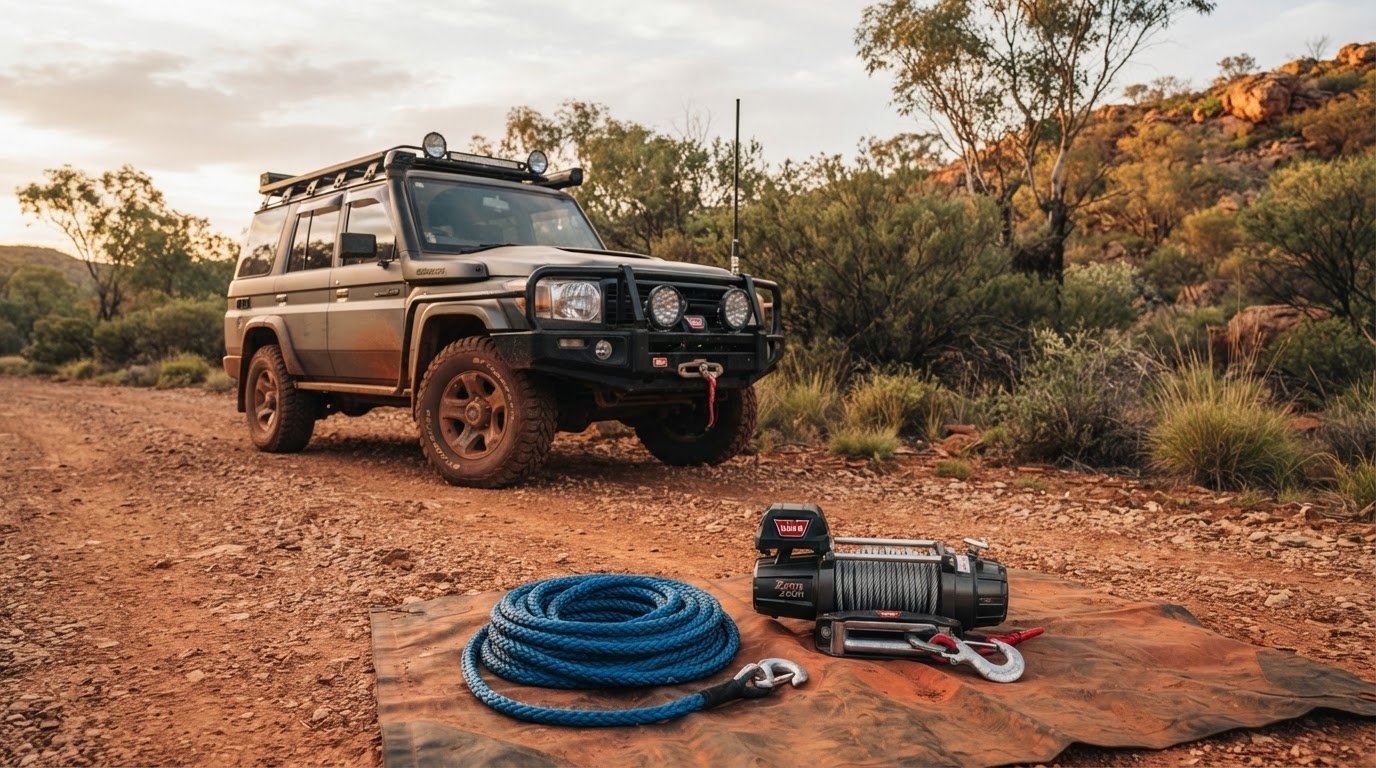
Start with the basics. We check every fuse in the box and inspect the wiring for signs of heat or rodent damage. If the issue is overheating, we perform cooling system triage. Never open a hot radiator; wait for it to cool completely. We look for burst hoses that can be temporarily patched with high pressure tape or bypassed if the heater core is the culprit. When it comes to tires, the red dirt of the interior is notorious for shredded sidewalls. We use our plug kits and internal patches to get the tire holding air again, knowing these are temporary measures to reach the next station. For the best gear to handle these situations, check out our camping equipment reviews and recommendations to keep your workspace shaded and organized.
Preserving the Vehicle’s Integrity
We also need to know when a repair is too dangerous to attempt. Jacking a heavy 4WD on unstable sand or soft clay is a recipe for disaster. If we can’t create a solid, level base using recovery boards or heavy timber, we don’t go under the vehicle. Forcing a broken rig can also turn a minor fix into a total engine replacement. We document the fault carefully, taking photos and notes to relay to remote technicians via our satellite links. This data is invaluable for recovery teams, helping them bring the right parts the first time. For more expert advice on preparing your rig, explore our information on 4wding before you head into the unknown.
The Ethical Exit: Responsible Recovery and Planning
The arrival of a recovery team is a moment of immense relief, but it marks the beginning of our most important environmental duty. We are part of a community that thrives on the beauty of the Australian wilderness, so we must ensure our exit is as quiet as our entry. The final stage of what to do if your 4wd breaks down remotely isn’t just about getting the rig to a workshop; it’s about preserving the land for the next explorer. Heavy vehicle recoveries can be incredibly invasive to fragile ecosystems. We must work closely with recovery experts to minimize track damage and ensure we don’t leave a permanent scar on the landscape. This is the hallmark of a truly responsible adventurer!
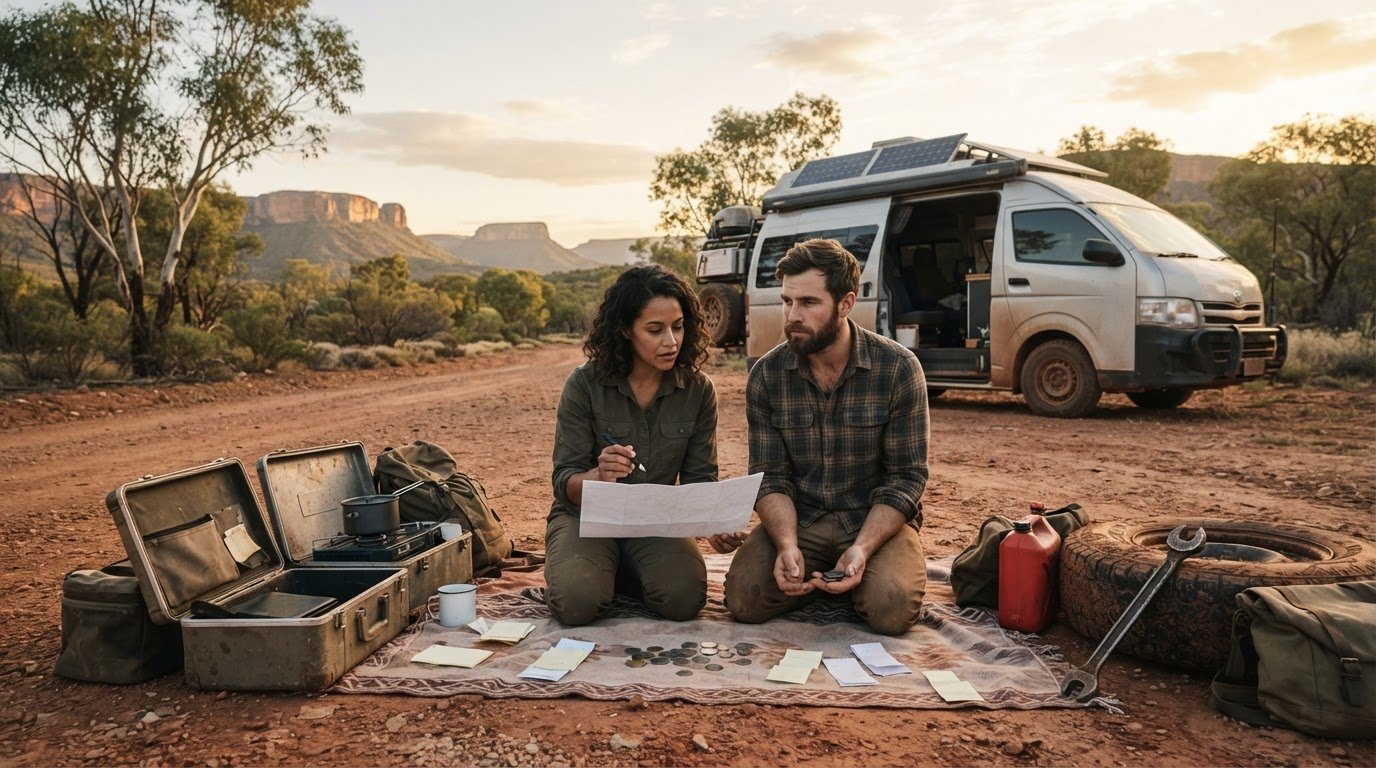
Coordinating a remote extraction requires precision. Before the recovery team leaves their base, they need a comprehensive data package from us. We provide our exact GPS coordinates, a detailed description of the mechanical failure, and an honest assessment of the surrounding terrain. Are we bogged in soft “bull dust” or perched on a rocky ledge? This information determines if they bring a standard tilt-tray or a specialized 4WD recovery beast. In 2026, the logistics of these operations are significant. Market data shows that complex off-road recoveries often exceed $1,000, with even basic service calls starting around $500 in remote regions. We prepare for these costs as part of our expedition planning, ensuring we have the means to settle the bill for a professional, ethical extraction.
Responsible Breakdown Management
During our wait and the subsequent recovery, we manage our waste with absolute discipline. We never allow oil, coolant, or brake fluid to soak into the red dirt. If we’ve performed field repairs, we use catch pans or heavy-duty tarps to contain any spills. Vehicle abandonment is never an option for our community. Leaving a dead 4WD in a National Park isn’t just an environmental hazard; it’s a legal nightmare that carries heavy fines. Once the vehicle is hooked up, we spend ten minutes restoring our campsite. We fill in any holes we dug, scatter local leaf litter over our footprints, and ensure every scrap of rubbish is packed away. We leave only tire tracks, and even those will eventually fade.
Future-Proofing Your Next Expedition
Every breakdown is a masterclass in preparation. Once we’re back in civilization, we perform a deep post-incident analysis. Why did the component fail? Was it a maintenance oversight or a part that reached its limit? We use these insights to update our travel planner for future escapes, adjusting our pre-trip checklists and spare parts kits. We also share our stories with the community. By discussing what worked and what didn’t, we help our fellow adventurers refine their own protocols for what to do if your 4wd breaks down remotely. This shared knowledge makes us all stronger, safer, and more resilient explorers. We don’t just survive the outback; we learn from it!
Master the Outback and Explore with Confidence
We have navigated the critical protocols of staying with your rig and leveraging 2026 satellite technology to stay connected. True survival is a methodical management of your resources and your visibility. Knowing exactly what to do if your 4wd breaks down remotely transforms a potential crisis into a manageable hurdle on your journey. By prioritizing your safety, mastering field repairs, and committing to an ethical recovery, you protect both your team and the rugged Australian environments we cherish. It’s about being prepared for the worst so you can enjoy the very best of the bush.
Our mission is to provide national coverage for Australian adventurers through expert 4WD community insights and a steadfast focus on sustainable exploration. We are here to guide you toward self-reliance and durability in the most isolated locations. Ready to hit the tracks with total peace of mind? Plan your next remote escape with our Ultimate Adventure Travel Planner today. Let’s keep exploring responsibly and making every outback memory a safe and successful one. We’ll see you out on the tracks!
Frequently Asked Questions
How much water should I carry for a remote 4WD trip in Australia?
We recommend carrying at least 7 to 10 liters of water per person per day for any remote outback travel. This volume covers basic hydration, cooking needs, and a vital safety margin for unexpected delays. It’s best to store your supply in multiple smaller containers rather than one large tank. This strategy ensures that a single leak or contamination event won’t leave us completely without water in a crisis.
Is it better to use a PLB or a satellite phone for emergencies?
We suggest a multi-layered approach that includes both devices for the highest level of safety. A Personal Locator Beacon (PLB) is a rugged, long-life tool that alerts search and rescue services directly via satellite. While a satellite phone or a 2026 satellite messenger allows for two-way communication to relay specific details, the PLB remains our ultimate fail-safe. It works when other batteries die or systems fail.
What are the most common mechanical failures in the Australian outback?
Cooling system failures and shredded tires are the most frequent issues our community encounters on remote tracks. The relentless outback corrugations can also vibrate battery terminals loose or cause electrical wiring to chafe and short circuit. Dust ingress is another major culprit, often clogging fuel filters and causing engines to stall. Knowing these common failures helps us focus our pre-trip maintenance on the most vulnerable components.
Can I use my mobile phone’s GPS if I have no service?
Yes, your phone’s GPS will function without cellular service as long as you have downloaded offline maps before leaving the grid. Most modern smartphones have a dedicated GPS chip that works independently of the mobile network. However, we must be careful with battery management and device heat. We always carry a dedicated handheld GPS unit and paper maps as reliable backups for when the digital tech lets us down.
What should be in a basic 4WD emergency mechanical kit?
A reliable kit features a high-quality tire plug set, a comprehensive socket set, and various heavy-duty tapes and adhesives for temporary patches. We also pack spare fuel and air filters, serpentine belts, and basic electrical repair tools like wire strippers. Having these items ready is a core part of knowing what to do if your 4wd breaks down remotely. It gives us the best chance to perform a successful field repair.
How do I signal a rescue plane if I’m stranded?
The most effective way to catch a pilot’s eye is by using a signal mirror to flash sunlight toward the aircraft. We can also arrange bright recovery gear, spare tires, or rocks in a large “V” or “X” pattern on the ground. These are recognized international distress signals. If we have a UHF radio, we monitor channel 5 or 35 to attempt direct voice communication with pilots flying overhead.
Is it legal to leave my broken-down 4WD in a National Park?
No, it is generally illegal to abandon a vehicle in a National Park, and doing so can result in heavy fines. We have a clear ethical and legal duty to recover our vehicles and minimize environmental impact. If we must leave the rig temporarily to seek help, we notify the local park rangers or police immediately. We provide our exact coordinates and a clear timeline for a professional recovery.
What is the “Stay with the Vehicle” rule and are there any exceptions?
The rule is to never leave your rig because it serves as your primary shelter, water store, and a high-visibility beacon for searchers. The only exceptions are when the vehicle is in immediate, life-threatening danger, such as an approaching bushfire or rapidly rising floodwaters. In almost every other situation, staying put is the most responsible choice for what to do if your 4wd breaks down remotely and staying safe.