Your dream of waking up to a sunrise over the Simpson Desert shouldn’t be overshadowed by the constant fear that your heavy hard-shell tent is about to crush your roof pillars. We’ve all seen the horror stories on community forums where a budget setup fails halfway through a 1,200km trek. When you’re choosing the right roof rack for a heavy roof top tent, you’re not just buying a piece of metal; you’re investing in the structural integrity of your rig and the safety of everyone on the road. We understand the confusion around GVM, roof load limits, and those cryptic dynamic versus static ratings that leave even seasoned Adventurerz scratching their heads.
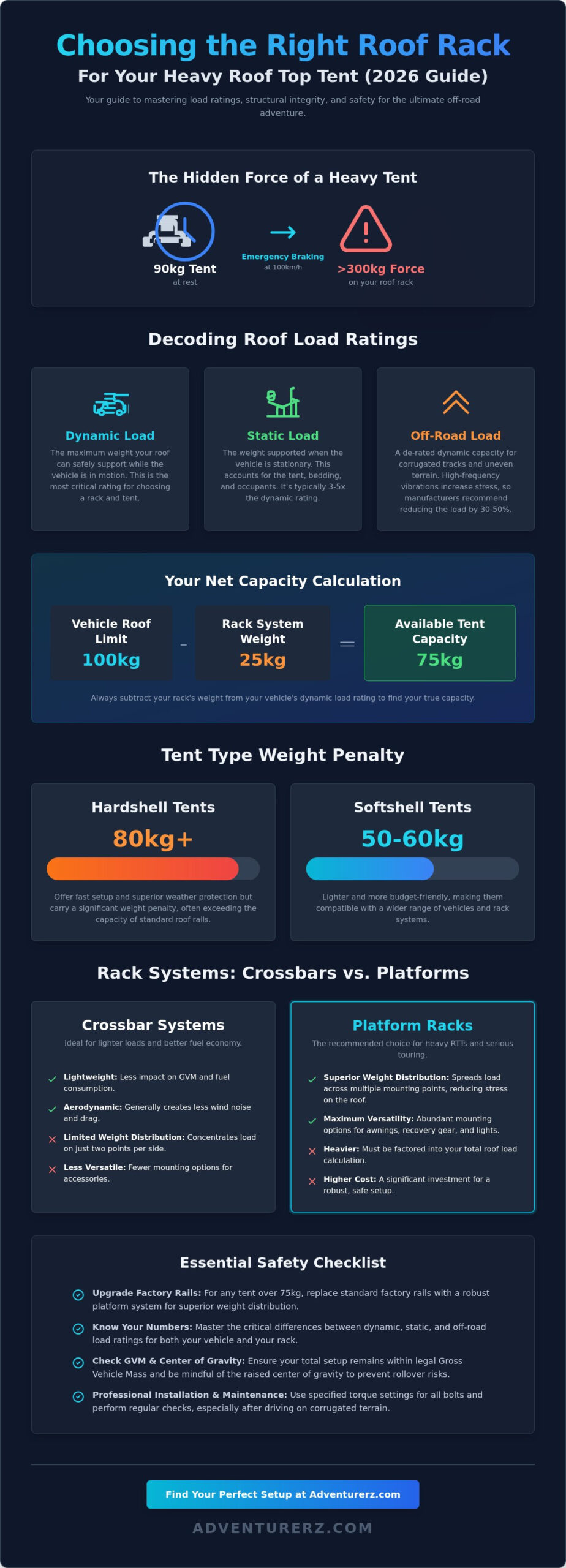
It’s a fact that a 90kg tent can exert over 300kg of force during a sudden braking maneuver at 100km/h. We’ve put together this 2026 guide to help you master the technical requirements and safety standards needed to securely mount your gear without compromising performance. You’ll gain the confidence to tackle corrugated tracks and off-road obstacles while keeping your vehicle legal and fuel-efficient. We’ll break down the latest Australian-tested mounting systems, explain why your vehicle’s manual might be lying to you, and show you how to minimize wind noise for a peaceful journey to your next secret camp spot.
Key Takeaways
- Join the ranks of prepared Adventurerz by mastering the critical differences between dynamic, static, and off-road load ratings for your heavy RTT.
- Learn why choosing the right roof rack for a heavy roof top tent often means upgrading from standard factory rails to robust platform systems for superior weight distribution.
- Discover how to calculate your vehicle’s Gross Vehicle Mass (GVM) and centre of gravity to maintain legal compliance and prevent roll risks during off-the-grid travel.
- Compare the fuel-saving benefits of lightweight crossbars against the heavy-duty mounting versatility of platform racks to find your ideal expedition setup.
- Get expert tips on professional installation and ongoing maintenance, including the specific torque settings needed to keep your gear secure across corrugated Aussie terrain.
Understanding the Weight Challenge of Heavy Roof Top Tents
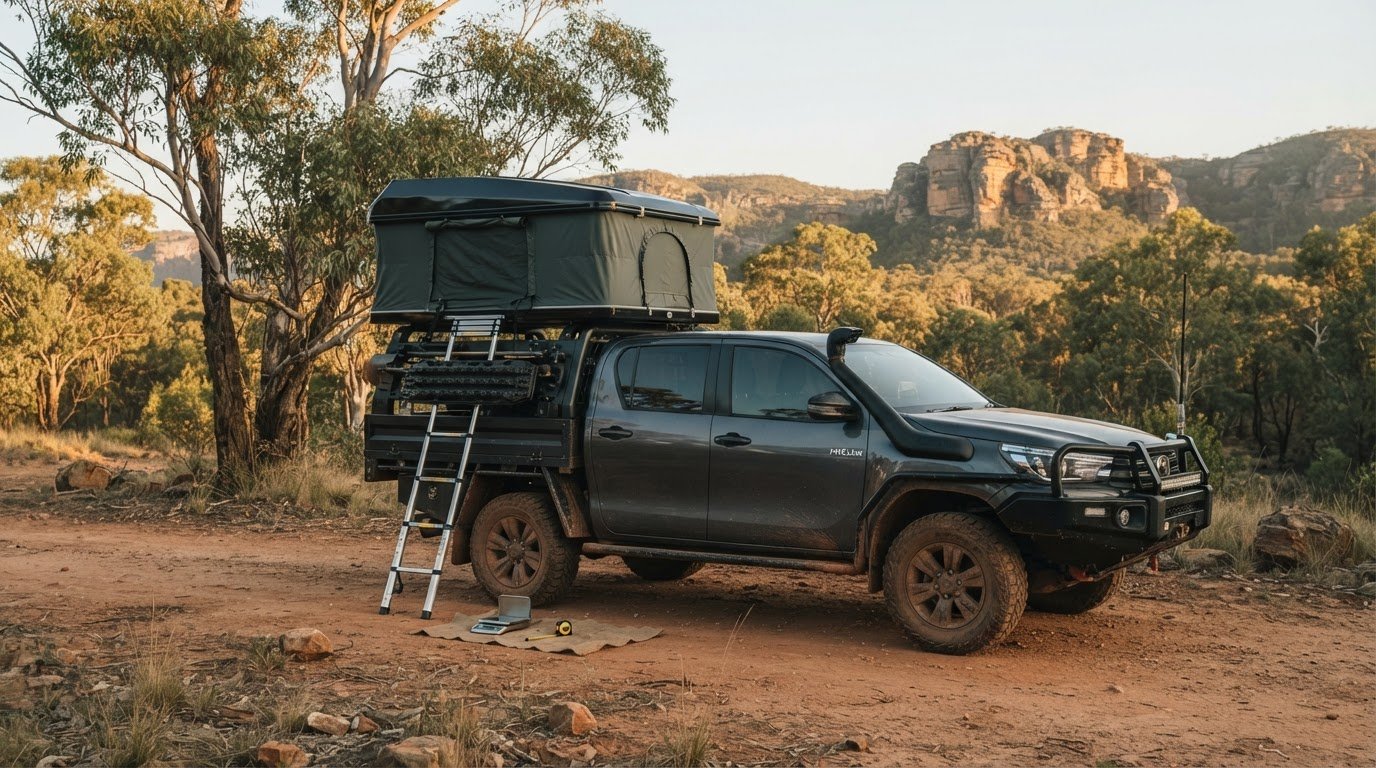
As we head into 2026, the gear we carry into the Australian bush has evolved significantly. While we all love the comfort of a solid night’s sleep, the shift toward premium hardshells has introduced a serious weight challenge for modern rigs. In the current market, a “heavy” RTT is defined as any unit weighing 75kg or more. Some of the latest 2026 hardshell models, packed with integrated solar and internal gas struts, now reach 92kg before you even add your bedding. Choosing the right roof rack for a heavy roof top tent isn’t just a matter of convenience; it’s the most critical safety decision you’ll make during your build.
Standard factory roof rails often fail because they’re designed for light luggage, not a permanent 85kg fixture. Most stock rails on popular SUVs are rated for a maximum 75kg dynamic load. If your tent exceeds this, you risk structural failure during emergency braking or high-speed maneuvers. The physics are simple but unforgiving. Placing heavy weight high above the vehicle raises the center of gravity. On a lifted 4WD, this can drastically increase body roll and affect electronic stability control systems when you’re navigating off-camber tracks or sharp highway bends.
A reliable system relies on four main components: the vehicle’s internal mounting points, the feet or legs, the crossbars, and the rack itself. High-quality truck bed rack systems provide an excellent example of how distributed load points manage weight, and your roof setup must follow the same logic. If your mounting feet aren’t spaced correctly to distribute the mass, the roof skin can flex. This leads to permanent “oil-canning” or even pillar cracks over thousands of kilometers of corrugated outback roads.
Hardshell vs Softshell: The Weight Penalty
Modern 2026 hardshell models offer incredible convenience, but they carry a significant weight penalty compared to traditional softshells. A standard folding softshell usually weighs between 50kg and 60kg, whereas hardshells frequently start at 80kg. This extra mass creates intense wind shear at 110km/h on the highway, putting immense leverage on your rack’s mounting hardware. In the context of Australian 4WDing, heavy-duty gear refers to a system with a certified dynamic rating of at least 100kg that’s specifically engineered to withstand the constant high-frequency vibration of corrugated tracks.
The Role of the Adventurerz Community
We believe that sustainable exploration starts with gear that lasts. As Adventurerz, we prioritize safety and structural integrity to ensure our rigs survive the toughest environments from the Simpson Desert to the Victorian High Country. We always encourage a “buy once, buy right” mentality. Investing in a high-spec rack prevents the environmental waste of broken gear and ensures your vehicle remains safe for years of discovery. You can compare different weights and specs across our curated list of roof top tents to find the perfect balance for your specific vehicle setup.
Decoding Load Ratings: Dynamic, Static, and Off-Road
We’re all about that sunrise view from the roof, but getting there safely is priority one for every Adventurerz member. The secret to choosing the right roof rack for a heavy roof top tent lies in understanding three critical numbers: dynamic, static, and off-road ratings. These aren’t just suggestions; they’re the engineering boundaries that keep your rig in one piece when you’re 400 kilometres from the nearest mechanic.
The dynamic load rating is the maximum weight your roof can safely support while the vehicle is in motion. This figure accounts for the massive forces generated by emergency braking, cornering, and wind resistance. Once you’ve parked up at your favorite secret spot, the static rating takes over. This is usually three to five times higher than the dynamic limit because the vehicle is stationary. It’s the rating that supports you, your partner, and the tent while you sleep. Staying within these bounds ensures you don’t exceed your vehicle’s gross vehicle weight rating (GVWR), which is vital for maintaining stability and braking performance.
To calculate your net capacity, you must subtract the weight of the rack itself from the vehicle’s dynamic limit. If your 4WD has a 100kg roof limit and your platform rack weighs 25kg, you only have 75kg left for your tent. Many modern hardshell tents weigh 80kg or more, meaning you’re already over the limit before you’ve even packed a sleeping bag.
The Math Behind the Mount
Your vehicle’s limit lives in the owner’s manual. It is often tucked away in the “Specifications” or “Loading” section. Neglecting these numbers risks more than just a bent roof; it can lead to catastrophic structural failure. Insurance companies in Australia are notorious for knocking back claims if they find a vehicle was overloaded at the time of an accident. Always ensure: Tent Weight + Rack Weight < Vehicle Dynamic Limit.
Navigating Corrugated Tracks
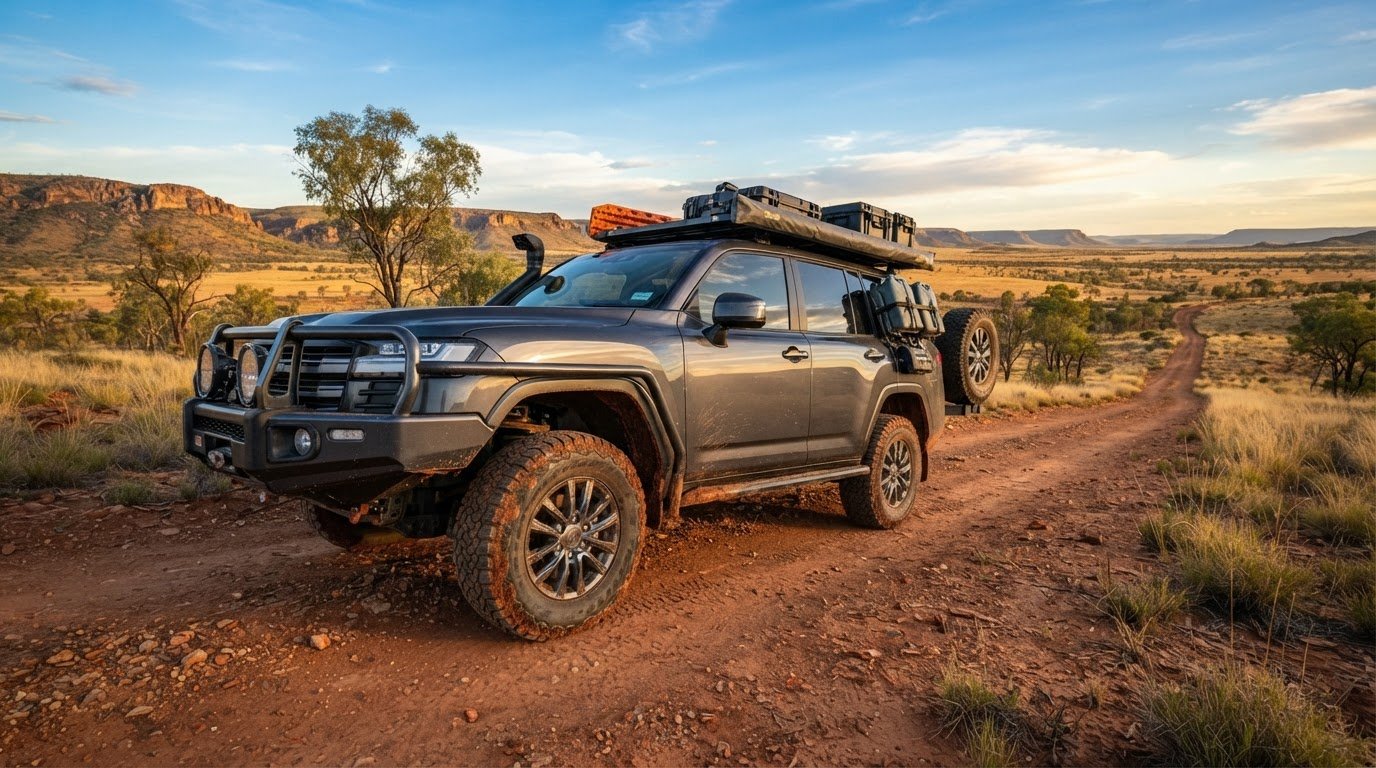
The Oodnadatta Track or the Gibb River Road will test every bolt on your rig. Constant vibrations act like a jackhammer on your mounting feet and roof channels. Most manufacturers apply a 33% “off-road penalty” to their ratings to account for this stress. A rack rated for 100kg on the bitumen is only safe for about 66kg on unsealed roads. We recommend heavy-duty bars with reinforced legs for these environments to prevent the mounting points from shearing off. If you’re still looking for the perfect gear for your next trip, check out our range of roof top tents to find a weight-matched option for your vehicle.
Choosing Your Setup: Crossbars vs. Platform Racks
Deciding between crossbars and a platform is the biggest hurdle when choosing the right roof rack for a heavy roof top tent. In 2026, aluminium alloy has become the absolute industry standard for these setups. We prefer aluminium because it offers a high strength-to-weight ratio; it handles the 75kg to 90kg weight of a modern hardshell tent without adding unnecessary bulk to your GVM. Unlike older steel racks, aluminium won’t rust after a salty weekend at K’gari, making it the smarter long-term investment for Australian Adventurerz.
The Case for Platform Racks
Platform racks are the heavy lifters of the off-road world. Systems like the Rhino-Rack Pioneer or the Yakima LockNLoad are designed to spread the static and dynamic loads across the entire length of the vehicle’s roof ditch. This distribution is vital when you’re hauling a heavy tent over corrugated outback tracks. It prevents localized stress points that can lead to roof turret damage.
Beyond sheer strength, platforms offer unmatched versatility for your campsite setup. We love them because they provide a flat, stable base that makes mounting 4WD awnings, shovel holders, and high-lift jacks incredibly simple. If your tent is wider than your roofline, a platform provides the extra surface area needed to ensure the base is fully supported, preventing the tent floor from flexing when you climb inside.
Crossbars: The Minimalist Approach
If you want to keep your centre of gravity low and your fuel bills manageable, a minimalist crossbar setup is a solid choice. However, you must distinguish between “Aero” bars and “Heavy Duty” (HD) bars. Aero bars are designed for bicycles and kayaks; they often have a slight curve and a thin internal wall that can’t handle the crushing force of a 90kg tent. For choosing the right roof rack for a heavy roof top tent, we always recommend square or HD profiles. These bars have a flat top surface, which ensures the tent’s mounting clamps have 100% contact, preventing the tent from sliding forward during sudden braking.
- 3-Bar Systems: For long hardshell tents exceeding 2.1 metres, we suggest a three-bar setup. This adds a central support point to stop the tent base from bowing in the middle.
- Noise Reduction: To stop the dreaded wind whistle, ensure your HD bars have rubber infill strips installed in the accessory channels.
- Wind Fairings: Adding a small wind deflector to the front bar can improve fuel efficiency by up to 5% on highway stretches.
While crossbars are cost-effective, they offer fewer mounting points for extra gear. If you plan on adding solar panels or extra fuel cans later, the platform is usually the better path. We always tell our community to think two years ahead; don’t just buy for the tent you have today, buy for the full touring setup you want tomorrow!
Vehicle Compatibility and Legal Considerations
Setting up your rig for the long haul is about more than just aesthetics; it’s about staying safe and legal on Australian roads. Choosing the right roof rack for a heavy roof top tent requires a deep dive into your vehicle’s engineering limits. If we ignore these numbers, we risk dynamic instability or even insurance claims being denied after a mishap on the Gibb River Road. We want every Adventurerz member to feel confident that their setup is bulletproof before they leave the bitumen behind.
Legal implications in Australia are strict regarding roof loads. If your tent overshoots the roofline significantly or blocks your line of sight, you could face hefty fines from state transport authorities. More importantly, every setup must adhere to Australian Standard AS 1235:2000. This standard ensures the rack can withstand the specific forces encountered during Australian transit, including the relentless vibrations of corrugated tracks that can snap inferior mounts.
GVM and Payload Management
Gross Vehicle Mass (GVM) is the maximum weight your vehicle can legally carry, including passengers, fuel, and gear. We often forget that every kilo we bolt to the roof is a kilo we lose from our payload in the tray or boot. A heavy RTT, often weighing 80kg or more, significantly raises your centre of gravity. This shift increases the risk of a rollover during sudden maneuvers or off-camber technical driving. To stay safe, we recommend visiting a local weighbridge once your rig is fully loaded. You can use our travel planner to map out your weights and ensure you aren’t pushing the limits of your GVM before hitting the red dirt.
Mounting Systems: Gutters vs. Tracks vs. Fixed Points
Different vehicles offer different mounting strengths, and matching them to your tent is vital. The strength hierarchy generally looks like this:
- Gutters: Found on the 70 Series LandCruiser or older Patrols, these provide a solid continuous mounting surface.
- Fixed Points: Pre-drilled holes in the roof frame, common on the Hilux, which offer high security but less adjustability.
- Tracks: These allow for adjustable leg positioning, providing better weight distribution for long tents.
For modern dual-cabs like the Ford Ranger or Toyota HiLux, we consider “backbone” systems the gold standard. These systems replace traditional feet with a solid plate that runs the length of the roof, distributing the weight of a heavy tent across the strongest parts of the vehicle’s pillars. Always check your owner’s manual before choosing the right roof rack for a heavy roof top tent to confirm your vehicle’s dynamic roof load limit, which is often much lower than the static limit used when you’re actually sleeping in the tent.
Installation Best Practices and Ongoing Maintenance
Setting up your rig isn’t just about the gear; it’s about the precision of the build. When choosing the right roof rack for a heavy roof top tent, the installation phase determines whether your setup lasts one season or a decade of Aussie bush bashing. We’ve seen too many adventurers rush the process only to face rattling hardware or roof damage 500 kilometres from the nearest town.
Before you lift that 80kg hardshell into place, scrub your roof channels with a stiff brush and soapy water. Dirt and old leaf litter trap moisture against the paint, which leads to visible rust in as little as 6 months in humid coastal regions like Northern NSW or Queensland. Once the channels are bone dry, inspect the factory mounting points for any signs of fatigue or existing corrosion. Starting with a pristine surface ensures the rubber gaskets on your rack feet create a watertight seal, protecting your vehicle’s interior from the unpredictable tropical downpours we love to chase.
Precision is your best friend when it comes to torque settings. Don’t just “guess” how tight the bolts should be. Under-tightening allows the tent to shift during emergency braking, while over-tightening can crush the internal structure of the rack or even deform your vehicle’s gutters. Most heavy-duty systems require between 4Nm and 9Nm of torque. Use a calibrated torque wrench to hit these numbers exactly. We also swear by the “First 100km” rule. After your first drive on a corrugated track, pull over and re-check every bolt. Vibrations settle the hardware, and that initial 100km is when a loose bolt is most likely to reveal itself.
Step-by-Step Mounting Guide
Balance is everything for vehicle dynamics. Ensure your tent is perfectly centred to distribute the weight evenly across your suspension, which prevents uneven tyre wear and keeps your handling predictable on tight tracks. Use 304-grade stainless steel hardware and apply a dab of anti-seize lubricant to every thread to prevent galling in salty environments. Always verify that your mounting brackets have at least 20mm of clearance above your sunroof to prevent the glass from shattering when the chassis flexes over technical obstacles. If you’re looking for more gear to complete your setup, check out our range of roof top tents designed for the Australian climate.
Long-term Care for Your Rack
Heavy-duty users should perform a monthly inspection to maintain structural integrity. Look for “spider-web” cracks in the powder coating, as these are often the first signs of stress fractures in the aluminium feet before a total failure occurs. If you’ve been camping near the ocean, rinse the entire rack with fresh water to stop salt from eating into the metal. Sustainable maintenance means catching these small issues before they require a full replacement. Ready to level up your outdoor skills? Join the Adventurerz community for more expert gear tips and shared stories from the track!
Gear Up for Your Next Australian Expedition
Choosing the right roof rack for a heavy roof top tent isn’t just about extra storage; it’s about ensuring your safety on the corrugated tracks of the Outback. We’ve explored why mastering your vehicle’s roof load limits is vital, especially since many popular 4WDs feature a dynamic limit of 100kg or less. Whether you settle on a rugged platform rack or heavy duty crossbars, prioritize systems that meet Australian Standard AS1235;2000 for total peace of mind. Our team at Adventurerz lives for these off-the-grid escapes. We’ve spent 500+ hours testing 4WD gear against the harshest conditions in the Kimberley and the Victorian High Country to bring you community vetted recommendations. We’re here to ensure your setup is as resilient as the landscapes you’re exploring. Don’t risk your vehicle’s integrity with guesswork or subpar hardware. Join our tribe of savvy Adventurerz and make an informed choice for your 2026 travels.
Explore our expert reviews of the best Roof Top Tents for 2026
Let’s hit the tracks responsibly and see what this beautiful country has to offer!
Frequently Asked Questions
How much weight can a standard roof rack really hold?
Most standard factory roof racks are rated for a dynamic load of 75kg. When you’re choosing the right roof rack for a heavy roof top tent, you’ll likely need an aftermarket system. These heavy duty setups often handle 100kg or more. Always check your vehicle’s manual because the car’s roof itself often has a lower limit than the rack rating.
Do I need three crossbars for a heavy hardshell roof top tent?
We recommend three crossbars for hardshell tents that weigh over 80kg or exceed 2.1 metres in length. This extra point of contact prevents the tent floor from flexing and distributes the weight more effectively across your roof’s internal structure. It’s a smart move for Adventurerz who plan on tackling rough Australian terrain where vibrations are constant.
Can I mount a heavy tent on a vehicle with a glass sunroof?
You can mount a tent on a vehicle with a glass sunroof, but you must use a mounting system that anchors to the structural pillars or roof tracks. Never let any part of the rack or tent rest on the glass itself. Many modern 4WDs have a 0kg load rating for the glass panel. Ensure your rack height provides at least 50mm of clearance so the sunroof can still vent without hitting the tent base.
What happens if I exceed my vehicle’s dynamic roof load limit?
Exceeding your dynamic roof load limit can lead to structural pillar failure or a vehicle rollover. When you’re moving, the weight of a 90kg tent can feel like 300kg during a sharp turn or sudden braking. Safety tests show that overloading your roof by just 15% can increase your stopping distance and negatively impact your electronic stability control systems.
Will a heavy roof top tent affect my car insurance coverage?
A heavy roof top tent can definitely affect your car insurance if the total weight exceeds your vehicle’s legal limits. In Australia, insurers may void your policy if an accident occurs while the vehicle is overloaded or fitted with unapproved modifications. We suggest calling your provider to list the rack and tent as accessories to ensure you’re fully covered for off-grid missions.
How do I stop my roof rack from whistling at high speeds?
Stop the whistle by installing rubber wind noise strips in the accessory channels of your bars. If the noise persists, a wind deflector or a simple wrap of 6mm bungee cord around the front bar will disrupt the airflow. These small adjustments make a huge difference when we’re driving long stretches of the Stuart Highway toward our next campsite.
Is a platform rack better than crossbars for off-road use?
Platform racks are much better than crossbars for serious off-road use because they offer a larger surface area for weight distribution. While crossbars only have two or three points of contact, a platform uses a full perimeter frame to spread the load. This is essential when choosing the right roof rack for a heavy roof top tent to prevent the roof skin from flexing on bumpy tracks.
How often should I tighten the bolts on my roof rack?
You should tighten your roof rack bolts after the first 50km of installation and then every 1,000km of highway driving. If you’re hitting corrugated roads in the Outback, check them every morning before you head off. Vibrations can loosen even the most secure fittings, so keeping a 13mm spanner handy is a vital habit for every one of our Adventurerz.