That sleek, low-profile wedge you’ve been eyeing might actually be your biggest headache when the mid-winter wind picks up in the High Country. We’ve all been there, standing in the red dust, wrestling with a tent that refuses to close because the sleeping bags are just a fraction too thick. It’s frustrating when gear that’s supposed to simplify your life ends up adding stress to the camp setup. You deserve a setup that’s ready in under 60 seconds and doesn’t rattle like a tin shed on the highway. Deciding on a clamshell vs pop-up roof top tent is the most important choice you’ll make for your 2026 touring rig. We’re here to help you navigate these specialized designs so you can spend less time packing and more time exploring with the Adventurerz community. This guide breaks down exactly how each style handles the rugged Australian climate, from storage capacity to weather resilience. We’ll compare the latest hard shell innovations to ensure your next investment survives the corrugated tracks while keeping your fuel economy in check.
Key Takeaways
- Discover why the clamshell’s 30-second setup makes it the ultimate choice for mobile nomads who move camp every single day.
- Learn how the vertical pop-up design provides superior 360-degree ventilation and uniform headroom, making it a favorite for taller Adventurerz.
- Find out which design passes the “Bedding Test,” allowing you to leave your doona and pillows inside for a clutter-free 4WD interior.
- Evaluate the clamshell vs pop-up roof top tent based on aerodynamic performance and how each geometry handles notorious Australian crosswinds.
- Use our decision matrix to match your vehicle’s specific roof load rating and your travel style to the most sustainable hard-shell setup.
Table of Contents
Hard-Shell Roof Top Tents: Understanding the Mechanics
We’ve watched the Australian overlanding scene evolve rapidly over the last few years. Most of us are ditching the traditional soft-shell canvas in favor of something more resilient and efficient. Hard-shell units now command 48% of the global market share. This statistic doesn’t surprise anyone who has tried to pack away a wet canvas tent in a gale while the rest of the convoy is ready to move. When we look at Roof tent designs, two distinct mechanical systems emerge as the frontrunners for our rugged environment. The choice between a clamshell vs pop-up roof top tent ultimately dictates how you’ll interact with your rig every single day of your trip.
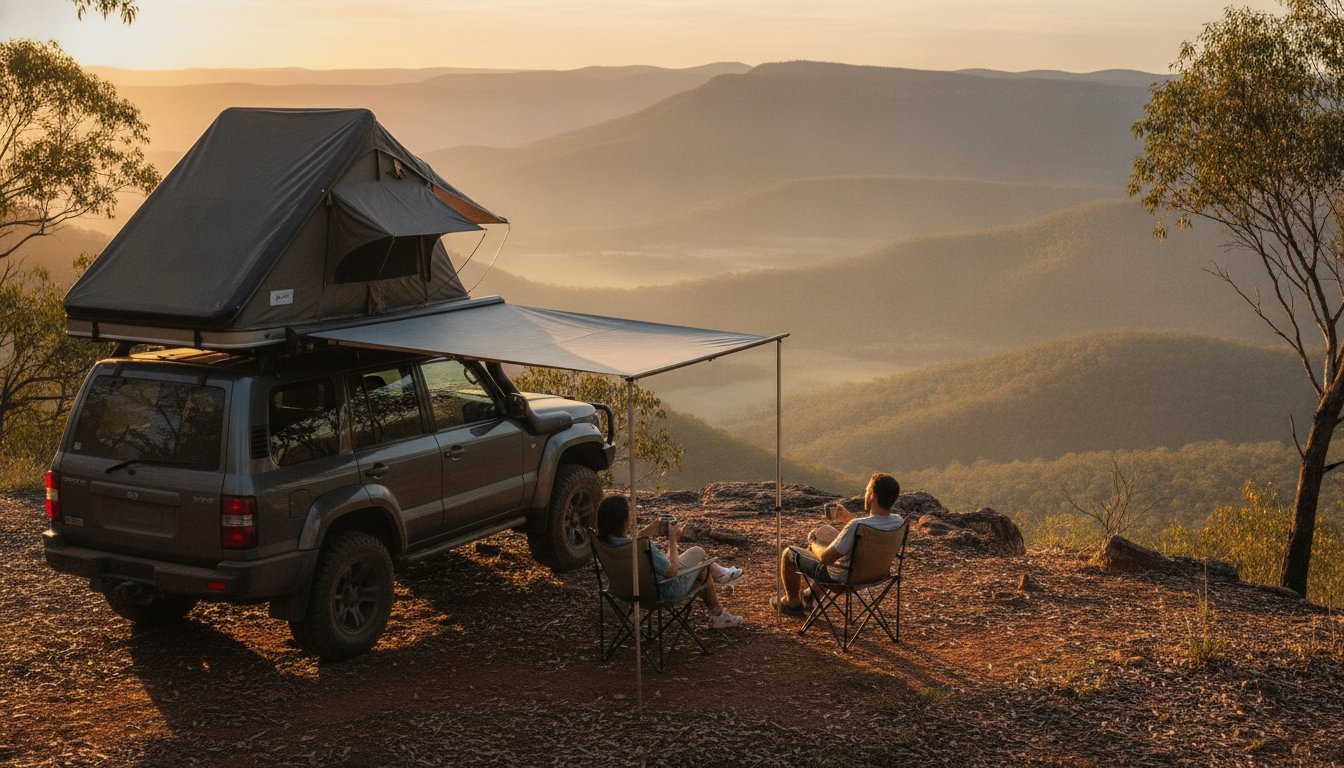
The Clamshell uses a single hinge point, usually at the front of the vehicle. It opens like a book to create a triangular living space. It’s the go-to for Adventurerz who value speed above all else. Conversely, the Pop-up uses four internal gas struts or a scissor-lift mechanism to raise the entire roof panel vertically. This creates a box-like room with equal sitting height across the entire mattress. Both designs offer significant upgrades over soft-shells, but their mechanical differences impact everything from your sleep quality to your fuel bill.
| Feature | Clamshell (Wedge) | Pop-up (Vertical) |
|---|---|---|
| Average Weight | 65kg – 85kg | 75kg – 95kg |
| Setup Time | Under 30 Seconds | 60 – 90 Seconds |
| Internal Height | Tapered (High at one end) | Uniform (Flat roof) |
| Bedding Storage | High (Fits thick doonas) | Moderate (Varies by model) |
Why Opening Style Matters for Your 4WD
Opening style impacts more than just your sleep. A wedge profile is inherently more aerodynamic when closed, which helps keep our fuel consumption manageable during long highway hauls. However, when open, the high side of a clamshell acts like a sail. We need to be mindful of vehicle orientation; always point the hinge into the wind to avoid unnecessary strain on the struts. Pop-ups offer a more compact footprint on the roof. This is ideal if you’re mounting gear like recovery boards or solar panels alongside the tent on a wide roof rack. We’ve found that the vertical lift also provides better stability in shifting crosswinds, as the profile is lower and more balanced.
Materials and Sustainability in 2026
In 2026, we’re seeing a shift toward more sustainable manufacturing. Many of the high-end roof top tents we review now incorporate recycled polycarbonate shells or eco-friendly composites. These materials offer the same impact resistance as traditional ABS plastic but with a smaller environmental footprint. Durability is the ultimate form of sustainability. Choosing a tent with high-quality, marine-grade aluminium and dust-sealed gas struts ensures your gear stays out of the landfill and on the tracks for years. We always recommend checking the seal quality, as the fine red dust of the Kimberley can wreak havoc on cheap internal mechanisms. When we select gear that lasts, we’re protecting both our investment and the wild places we love to visit.
The Clamshell (Wedge) Design: Built for Speed and Resilience
For those of us who live for the “one-night stand” camp, the clamshell is the undisputed king. We’ve all pulled into a remote site late at night, exhausted from a day of corrugated tracks, only to find the wind howling. This is where the wedge design shines. By releasing a few latches, the gas struts do the heavy lifting for you. You’re ready for bed in under 30 seconds. This mechanical simplicity is a major drawcard when comparing a clamshell vs pop-up roof top tent. With only one main hinge point and two struts, there are fewer components to fail when you’re hundreds of kilometers from the nearest workshop.
Many experienced user comparisons highlight that the wedge’s ability to shed wind is its greatest asset. If you point the solid hinge into the breeze, the tent acts like a shield. It provides a quiet night’s sleep while other campers are listening to flapping canvas or worrying about their frames. However, we have to be realistic about the internal volume. The triangular profile means your feet are often tucked into the narrow end. If you’re tall or prone to claustrophobia, that tapered ceiling can feel restrictive compared to a vertical lift. It’s a trade-off between lightning-fast efficiency and living room comfort.
Ideal Use Cases for the Clamshell
- Solo travellers or couples: Perfect for those who prioritize a fast getaway in the morning to hit the tracks early.
- High-clearance 4WDs: If you drive a lifted rig, a clamshell is easier to close because you only need to reach one side.
- Exposed environments: The best choice for coastal cliffs or alpine ridges where wind is a constant factor in a clamshell vs pop-up roof top tent decision.
Design Features to Look For
When we’re scouting for a high-quality wedge, we look for integrated roof rails. These allow us to mount solar panels or recovery boards directly to the tent shell. It’s an excellent way to keep your vehicle’s footprint compact while maintaining self-reliance. You should also prioritize hardened hinges and heavy-duty gas strut ratings. Struts need to be strong enough to hold the roof up even if you’ve mounted gear on top. Inside, look for headliner storage nets and organizer pockets. Since the floor space is tapered, utilizing the ceiling for storage is the smartest way to keep your sleeping area clutter-free. If you’re still weighing up your options, check out our latest roof top tents reviews to see which clamshells are currently leading the pack for Australian conditions.
The Pop-up (Vertical) Design: Maximising Internal Volume
While the clamshell wins on pure setup speed, the vertical pop-up is the undisputed champion of liveability. If you’ve ever spent a rainy afternoon stuck inside your rig in the Top End, you know that internal space is a luxury you can’t ignore. Vertical lift designs eliminate the cramped “coffin” feel often associated with wedge styles. When we weigh up the clamshell vs pop-up roof top tent for long-term touring, the ability to sit up at either end of the bed becomes a game-changer for overall comfort.
This design philosophy of maximizing vertical space isn’t limited to roof top tents; it’s also a core feature of high-end vehicle builds. For those exploring more integrated options, companies like Route 300 Campers specialize in premium VW campervan conversions that utilize similar pop-up roof mechanics to create a spacious and comfortable mobile living environment.
One of the most significant advantages of this design is the panoramic view. Most pop-up models feature massive windows on all four sides, offering a 360-degree perspective of your surroundings. This isn’t just about the scenery; it’s a vital part of our ventilation strategy. In humid Australian climates, having cross-flow at every corner is the best way to keep the interior cool and dry. It transforms your sleeping quarters from a simple bed into a breezy, elevated lounge room where you can actually enjoy the environment you’ve worked so hard to reach.
Living Space and Comfort
The volumetric difference between these two styles is massive. A typical pop-up provides a uniform height of roughly 120cm across the entire mattress. This means you and your partner can both sit up, change clothes, or read without competing for the “high spot” in the middle. We’ve found that this uniform clearance makes the tent feel twice as large as a wedge with the same footprint. To make the most of this space, many modern units now feature integrated LED lighting and USB power ports. These small technical touches, combined with the extra headroom, create a true “base camp” atmosphere that supports a more relaxed camping rhythm.
The Challenges of the Vertical Lift
Mechanical complexity is the main hurdle here. Unlike the clamshell, which uses a single pivot, the pop-up relies on four independent gas struts or a synchronized scissor lift. This requires a “walk-around” approach during pack-down. You’ll need to move around the entire vehicle to secure the latches at each corner. We also have to manage the “bellows effect,” where the canvas wants to billow out as the roof descends. Most of the roof top tents we recommend include internal bungee cords to pull the fabric inward, but it still requires more attention than a simple wedge.
Wind resilience is another factor in the clamshell vs pop-up roof top tent debate. Because the pop-up has four vertical walls, it doesn’t have a natural “point” to face into the breeze. It presents a larger profile to the wind from every direction, which can lead to more noise and movement during a storm. However, for Adventurerz who prioritize a comfortable, airy living space for multi-day stays, these minor trade-offs are usually worth the extra room. It’s about choosing the tool that matches your specific pace of exploration.
Clamshell vs Pop-up: Comparing Real-World Performance
Theoretical specs are fine on paper, but the real test happens at 4:00 PM on a dusty track in the Kimberley. We’ve spent years testing how these designs handle the grit and grime of remote travel. The most common question we get from the community isn’t about the fabric; it’s about the “Bedding Test.” This is where the clamshell vs pop-up roof top tent debate gets personal. Can you actually leave your doona and pillows inside without fighting the latches for ten minutes?
In our experience, clamshells offer a unique advantage here. Because of their wedge shape, there is a significant pocket of “dead space” at the high end when closed. You can often pile your pillows and a thick winter doona toward the opening side. However, you must be careful with the hinge side. If you shove a sleeping bag too deep into the hinge, the compression can strain the struts or even bend the frame. Pop-ups provide a more uniform depth across the entire mattress, but they are often shallower overall. This means you might fit a thin quilt, but those plush pillows will likely end up in the back of the car.
Storage and Payload Comparison
Setup and Pack-down Efficiency
The “Solo Camper” test is where we see the biggest divide. Closing a clamshell in a downpour is a one-handed job. You pull the strap, tuck the fabric, and click two latches. Pop-ups require a bit more “camp-fire cardio.” You’ll be walking around all four corners to ensure the canvas is tucked and the struts are locked. If you’re struggling with the logistics of your new setup, check our guide on installing roof top tents for safety tips and mounting advice. We’ve found that using internal bungee cords is essential for pop-ups to prevent the fabric from catching in the seals.
Dust ingress is the final boss of Australian touring. Look for automotive-grade bulb seals that run the full perimeter to keep that fine red dust out of your bed. Rain runoff is also more predictable with a wedge, as the water naturally flows down the hard shell. Pop-ups require a perfectly level vehicle to prevent water from pooling on the flat roof during a tropical deluge. Ready to see which rig fits your lifestyle? Compare our top-rated hard-shell tents to find your perfect match for your next remote adventure.
Choosing Your Adventure: Which Tent Fits Your 4WD Setup?
We’ve explored the mechanical guts, the storage trade-offs, and the real-world grit of these two designs. Now, the final decision on a clamshell vs pop-up roof top tent comes down to your personal touring rhythm. Are you the type of adventurer who is packed and moving before the sun hits the horizon, or do you prefer to find a pristine slice of paradise and stay a while? Your gear should be a tool that enables your lifestyle, not a chore that dictates your schedule. We’ve found that matching your tent to your specific travel persona is the best way to ensure long-term satisfaction on the tracks.
The Mobile Nomad (Clamshell Choice)
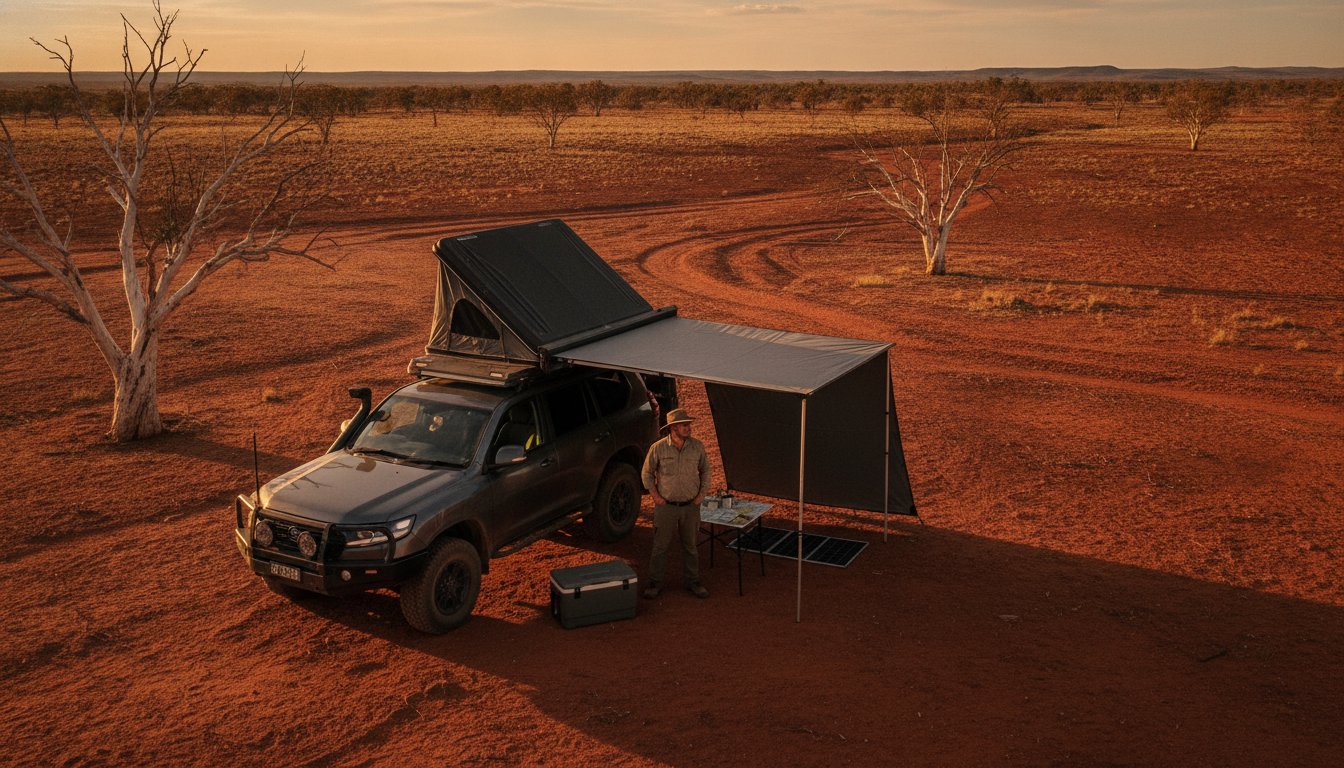
If you’re planning a “lap of Australia” or a fast-paced crossing of the Simpson Desert, the clamshell is your best friend. Its 30-second deployment means you can stop for a quick roadside rest without a second thought. Because the wedge design is so efficient, we often recommend pairing it with a high-quality 4WD awning. This combination gives you a rapid-fire sleep setup and a protected outdoor kitchen area in minutes. It’s the ultimate setup for the nomad who values momentum and wants to minimize the friction of daily camp chores.
The Base Camp Enthusiast (Pop-up Choice)
For those who love long weekends at a secret beach or setting up a week-long camp in the High Country, the pop-up offers unparalleled comfort. That extra vertical volume transforms your tent into a genuine living room in the sky. It’s perfect for those slower mornings where you want to sit up with a coffee and enjoy a 360-degree view of the scrub. If you’re ready to start mapping out your next multi-day stay, use our adventure travel planner to find the best remote escapes for 2026. This design supports a more relaxed pace where the extra 60 seconds of setup time is a small price for massive internal space.
Vehicle Compatibility and Longevity
Vehicle compatibility is about more than just physical dimensions; you must respect your roof’s dynamic weight rating. Clamshells often have a longer footprint, which might overhang the windscreen on shorter wagons. Pop-ups are usually more compact but can be heavier due to the extra lifting hardware. To keep your investment in peak condition, we suggest a simple maintenance routine. Regularly wipe down the gas struts to remove abrasive dust and ensure the canvas is bone-dry before long-term storage. In 2026, many of the recycled polycarbonate shells we see require nothing more than a quick rinse with fresh water to maintain their UV resistance.
The final step in your journey is tapping into community wisdom. We encourage you to join our forums and look at the shared rig photos from fellow Adventurerz. Seeing how a specific clamshell vs pop-up roof top tent looks on a vehicle similar to yours can provide the clarity no spec sheet can offer. Whether you choose the speed of the wedge or the volume of the vertical lift, you’re joining a community dedicated to responsible, rugged exploration of this incredible continent.
Gear Up for Your Next Remote Escape
Choosing between a clamshell vs pop-up roof top tent isn’t just about the mechanics; it’s about how you want to experience the wild. If your heart is set on fast-paced touring and shedding the wind on coastal cliffs, the clamshell wedge is your ultimate companion. For those who prioritize a breezy, panoramic base camp where comfort is king, the vertical pop-up is the way to go. We’ve seen both designs thrive on the most brutal Australian tracks when they’re built with durability and sustainability in mind. By selecting high-quality gear that lasts, we protect our investments and the pristine environments we love to explore.
Our expert-led gear reviews and community-driven insights are here to ensure you make the right call for your 4WD. We believe in peer-to-peer mentorship and sharing the wisdom gained from thousands of kilometers in the red dust. Ready to see how these tents look in the field? Join the Adventurerz community to see real-world member rig setups! We can’t wait to see where your new setup takes you on your next adventure across this incredible continent. See you on the tracks!
Expert Answers for Your Roof Top Tent Questions
Which is better in high winds, a clamshell or a pop-up roof top tent?
Clamshells are superior in high winds because their triangular geometry naturally sheds gusts when the hinge is pointed into the breeze. While a pop-up presents a vertical wall to the wind from every direction, the wedge profile of a clamshell acts as a shield. This makes the clamshell vs pop-up roof top tent choice easy for those camping on exposed coastal cliffs or alpine ridges.
Can I leave my pillows and sleeping bag inside a clamshell tent when it is closed?
You can leave your bedding inside most clamshells, provided you store items in the deeper section away from the hinge. The wedge design creates a natural pocket of space at the opening end for pillows and doonas. However, stuffing thick gear into the hinge side can bend the frame or damage the struts. Always test your specific setup carefully to ensure the latches close without excessive force.
Are pop-up roof top tents harder to close than clamshells?
Pop-up tents are generally more involved to close because they require a full walk-around of the vehicle. You need to secure latches at all four corners and carefully tuck the canvas to prevent it from catching in the seals. Clamshells are much simpler; you usually just pull a single strap and click two latches from the rear or side of your rig.
How much weight can I put on top of a hard-shell roof top tent?
Most quality hard-shell tents support an external payload of 20kg to 50kg, but this depends heavily on the gas strut rating. If you plan to carry solar panels or recovery boards, ensure the tent is designed with integrated roof rails. Always verify your vehicle’s dynamic roof load limit first. Exceeding these limits can compromise your car’s handling and safety on technical tracks.
Do hard-shell roof top tents affect fuel economy significantly?
Hard-shell tents do impact fuel economy, typically increasing consumption by 1 to 2 liters per 100km. However, they are significantly more aerodynamic than bulky soft-shell canvas tents. The low profile of a hard shell reduces drag on the highway, which is a major benefit for long-distance Australian touring where fuel stops are few and far between.
What is the lifespan of the gas struts on these tents?
High-quality gas struts typically last between 5 and 10 years, depending on how often you travel in dusty environments. Fine red dust can act as an abrasive on the internal seals, eventually leading to pressure loss. We recommend wiping your struts down regularly and choosing a tent with dust-sealed components to maximize their lifespan during remote desert expeditions.
Is a clamshell or pop-up better for a small SUV?
A pop-up tent is often the better fit for a small SUV because it has a shorter physical footprint that won’t overhang the windscreen. Clamshells are usually longer to accommodate the tapered roofline, which can look awkward on compact vehicles. When deciding on a clamshell vs pop-up roof top tent for a smaller rig, always measure your roof rack length to avoid interference with the rear hatch.
How do I prevent condensation in a hard-shell roof top tent?
Preventing condensation requires active ventilation, even on cold nights. You should keep at least two windows cracked to allow cross-flow air to move through the tent. Using an anti-condensation mat under the mattress is also vital; it creates an air gap that prevents moisture from being trapped against the cold floor. Pop-ups make this easier with their 360-degree window designs.