Did you know that 23% of touring vehicles failed Victorian Police weighbridge checks in 2026 because they were dangerously overloaded? It’s a sobering reality for our Adventurerz community when we realize that a heavy bull bar, canopy, and battery system can eat up 410kg of payload before we even pack a sleeping bag. Choosing between a roof top tent vs swag isn’t just about where you sleep; it’s a critical decision that impacts your vehicle’s Gross Vehicle Mass (GVM), your fuel economy, and your sanity after a ten-hour stint behind the wheel.
We understand the frustration of wrestling with poles in the mud or worrying about top-heaviness on a steep track. You want a setup that’s fast to deploy and kind to your wallet at the diesel pump. This guide promises to help you navigate these trade-offs by matching your touring style with the right gear for the rugged Australian terrain. We’ll break down the latest 2026 hard shell innovations, compare real-world setup times, and ensure your choice keeps you safe, legal, and comfortable under the stars.
Key Takeaways
- Understand the technical shifts in hard shell and soft shell designs to see which configuration best suits your vehicle’s dynamic load rating.
- Learn how elevating your sleeping quarters can offer better protection from damp ground and local wildlife in the deep outback.
- Discover the aerodynamic advantages of a low-profile swag and how it helps keep your fuel costs down on long-distance hauls.
- Apply our 2026 comparison framework for a roof top tent vs swag to find the right balance between setup speed and vehicle performance.
- Identify your touring persona to choose a setup that minimizes your environmental footprint while maximizing your comfort in the scrub.
Table of Contents
The Great Australian Debate: Roof Top Tent vs Swag
We’ve all stood around the embers of a dying fire at Birdsville or Alice Springs, listening to the eternal debate. Some of us swear by the elevated view of a rooftop setup, while others won’t trade their canvas cocoon for anything. In 2026, the roof top tent vs swag decision has moved beyond simple comfort. It’s now a strategic choice involving vehicle GVM limits, fuel efficiency, and how we respect the remote environments we love to explore. As we push further into the scrub, our gear needs to match our ambition without compromising our safety or our vehicle’s integrity.
The choice between these two setups defines your entire touring rhythm. Do you want to be packed and moving within five minutes of waking up? Or do you prefer the flexibility to set up camp and then take your vehicle out to explore a nearby gorge without hauling your bedroom along? We need to look at how these choices impact our footprint on the land. A heavier vehicle burns more fuel and exerts more pressure on fragile tracks. Every kilogram we save is a win for the environment and our hip pockets. We’re here to help you weigh the convenience of an integrated mattress against the raw, grounded experience of a traditional bedroll.
What is a Roof Top Tent (RTT)?
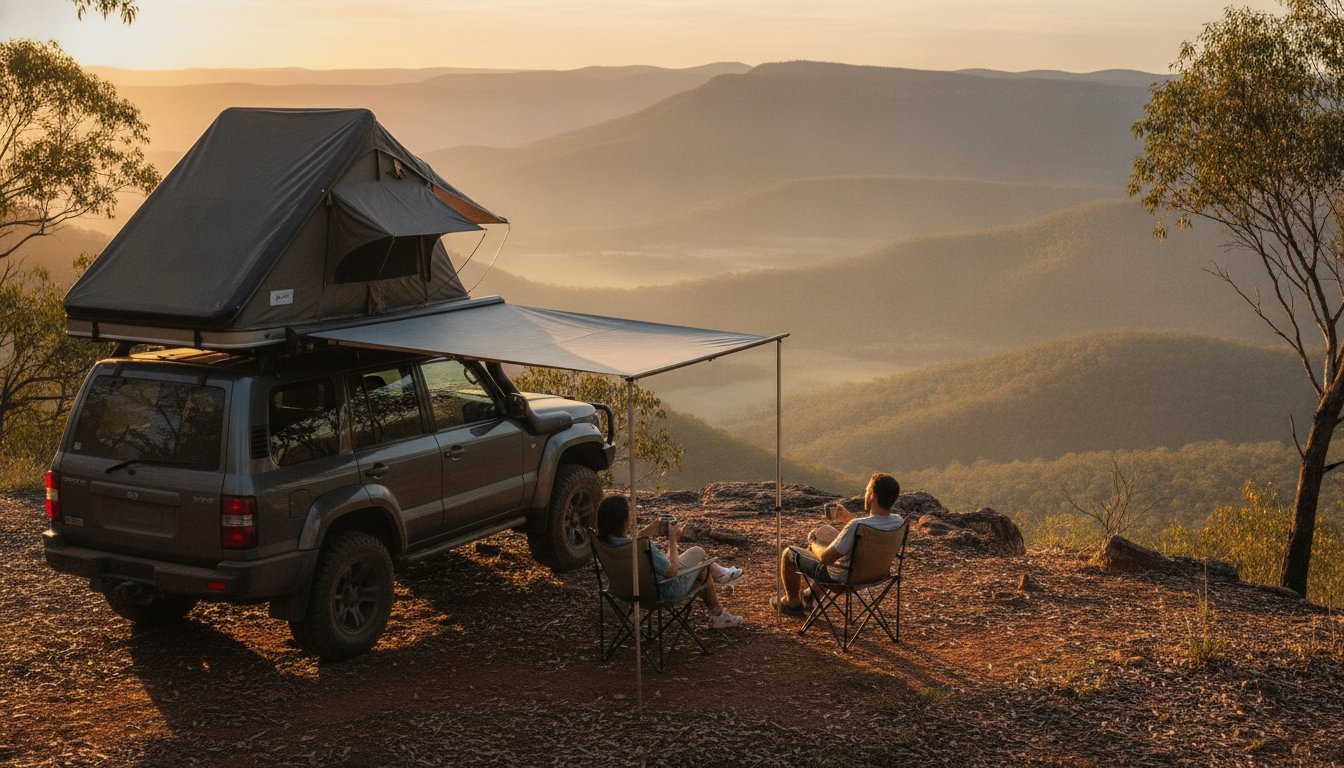
The modern RTT is a marvel of engineering designed for rapid deployment. You generally choose between a rigid hard shell and a folding soft shell design. Hard shells are winning the popularity contest in 2026 because they pop open in seconds, often using gas struts to do the heavy lifting. Soft shells still hold their own for those who need a larger footprint for the kids or a more compact folded size on the roof. We’ve spent years testing these in the field, and you can dive into our comprehensive RTT reviews to see which models survived the corrugated tracks of the Kimberley. The main draw is the integrated mattress and the ability to leave your bedding inside, making setup a breeze after a long day of driving.
What is a Traditional Swag?
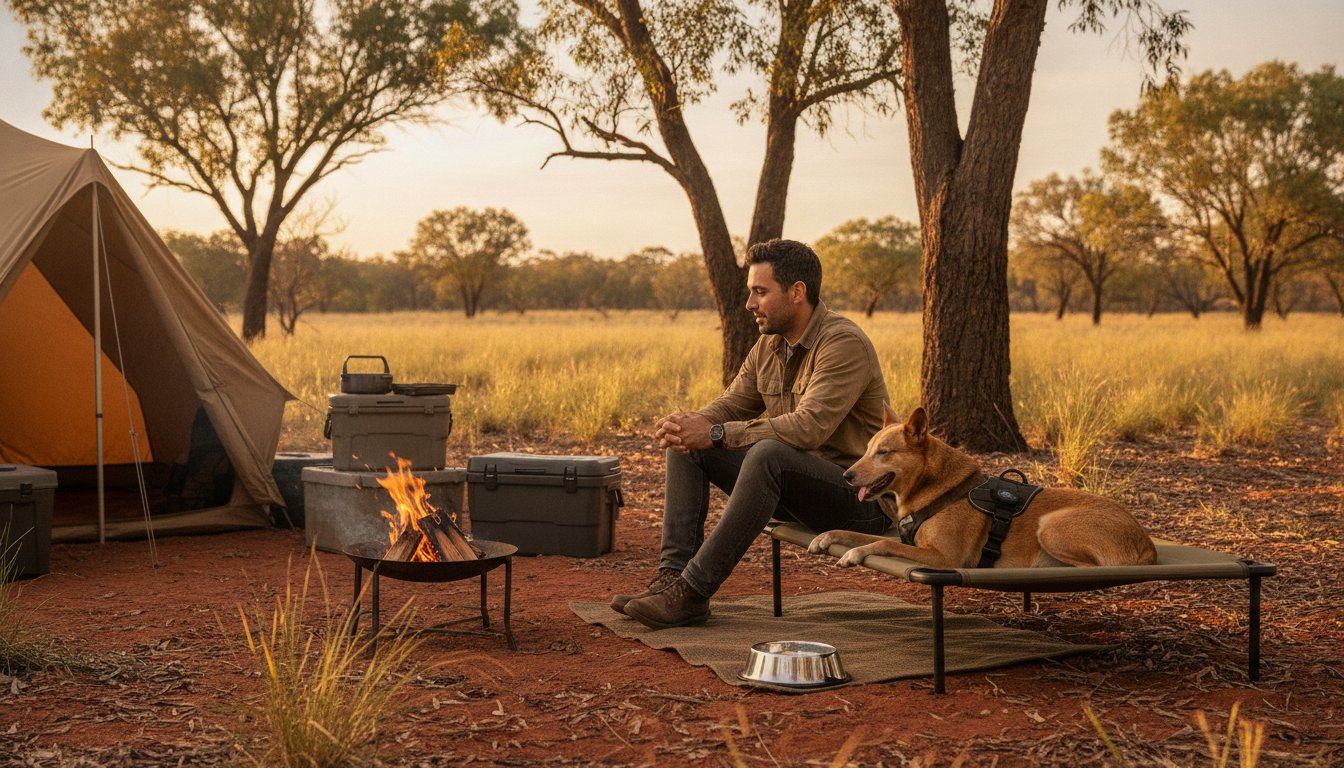
The swag is an Australian icon that embodies the spirit of self-reliance. The history of the Australian swag tells a story of survival and mobility, starting with itinerant workers and evolving into the deluxe domes we see today. Modern versions are a far cry from those basic bedrolls. We now enjoy 70mm high-density foam mattresses, heavy-duty 400gsm canvas, and insect-proof mesh that keeps the mozzies at bay. Many veterans in our community choose the swag because it goes where a vehicle can’t. If the track is too tight for a roof-mounted setup or you want to sleep under a low-hanging desert oak, you just roll out your swag and you’re home. It’s a low-profile, rugged solution that keeps your vehicle’s center of gravity exactly where it should be.
Roof Top Tents: Elevating Your Remote Experience
Climbing that ladder for the first time changes your perspective on the Australian bush. There is a distinct sense of security that comes with sleeping two metres above the track, away from the inquisitive reach of saltie crocodiles in the Top End or the midnight wanderings of a brown snake. When we weigh up the roof top tent vs swag debate, the “RTT” often wins on pure comfort and the psychological peace of mind that comes with being off the deck. You aren’t just buying a bed; you’re buying a high-rise sanctuary that keeps you dry when the tropical rains turn the ground into a bog.
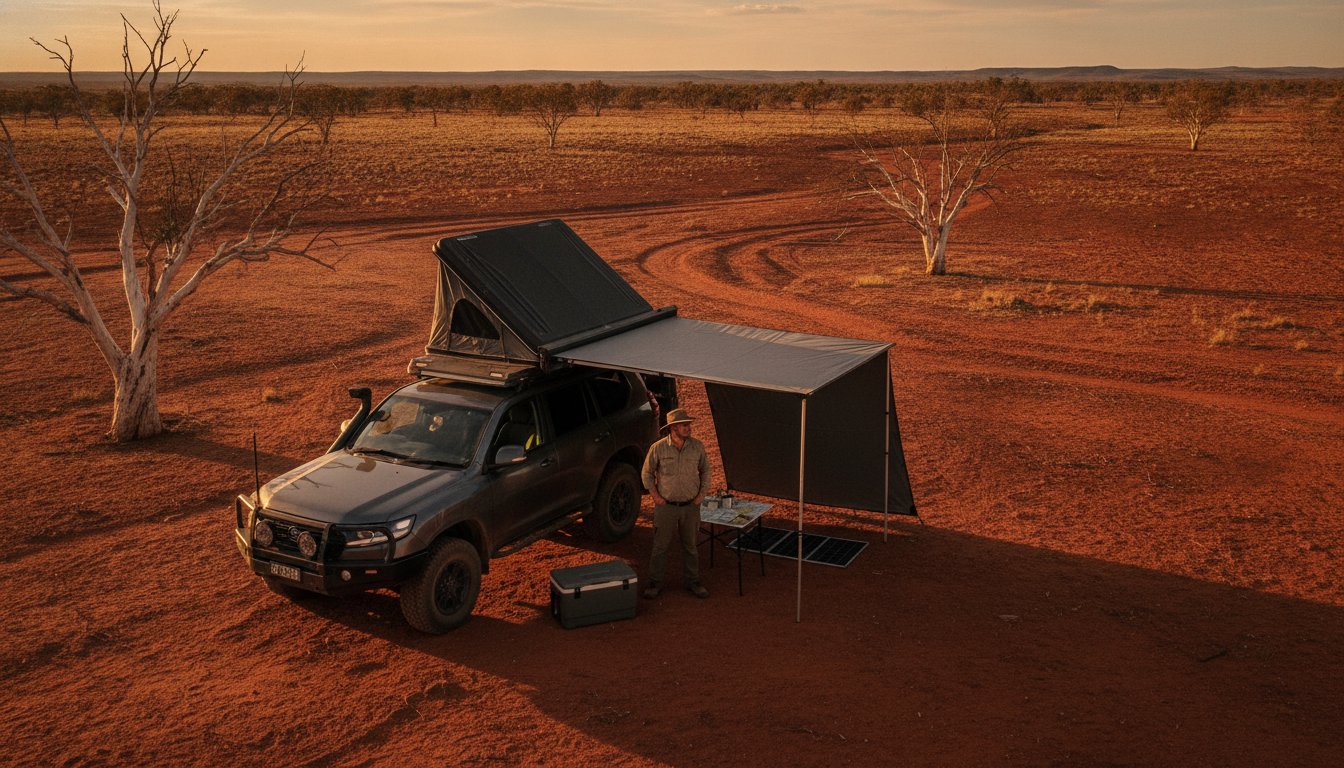
We need to talk about the setup speed because the “30-second” claim is often a bit of a stretch. If you’ve invested in a premium hard shell model like the SAN HIMA Kalbarri X, you really can pop the latches and be ready for bed in under a minute. Soft shell tents are a different story. You’ll be wrestling with a dusty PVC cover, unzipping stubborn tracks, and sliding out ladders. It’s still faster than a ground tent, but it requires more elbow grease. The real magic happens when you realize you can leave your sleeping bags and pillows inside. This clears up massive amounts of space in your wagon or canopy, which is a huge win for those of us trying to keep our cabins organized on long hauls.
The Convenience of the High-Rise
Your daily routine becomes much more streamlined with an elevated setup. You pull into camp, find a level spot, and your bedroom is ready before the kettle has even whistled. However, we have to address the elephant in the room. The basecamp dilemma is the frustrating necessity of packing away your entire sleeping quarters every time you need to move your vehicle for a quick wood run or a trip to a nearby trailhead. If you plan on staying in one spot for three days but want to explore local tracks, you’ll be packing and unpacking that tent constantly. It’s a trade-off that requires a bit of forward planning.
Weight and Vehicle Engineering
This is where things get serious for our community. Most modern 4WDs have a dynamic roof load rating between 75kg and 100kg. When you consider that a sturdy hard shell tent can weigh 80kg and your roof racks add another 20kg, you are already at the limit before you even climb inside. This extra weight sits at the highest point of your vehicle, which significantly impacts your stability on side-slopes. We’ve seen plenty of close calls on the tracks where a top-heavy rig almost tipped because the driver didn’t account for that “brick” on the roof. To balance out your camp, we recommend pairing your setup with a quality 4WD awning to create a functional living space on the ground. If you’re still undecided on which model fits your GVM, check out our latest roof top tents reviews for detailed weight specifications.
The Humble Swag: Rugged Versatility on the Ground
While the high-rise view of an RTT is tempting, the humble swag remains the backbone of our Adventurerz community for a reason. In the roof top tent vs swag showdown, the swag wins on pure, unadulterated flexibility. It doesn’t care if your vehicle is perfectly level or if you’re parked under a low-hanging canopy of River Red Gums. You just unroll it on a flat patch of dirt, and you’re home. This low-profile approach isn’t just about stealth; it’s a massive win for your fuel economy. By keeping the roof clear, you reduce wind drag significantly, which is a major consideration as we face the reality of 2026 fuel prices on long-distance hauls across the Nullarbor.
Managing the elements on the ground requires a bit more camp-craft. You’re closer to the earth’s moisture, which can lead to condensation if you don’t manage your ventilation flaps correctly. However, modern swags have come a long way. High-density foam mattresses and heavy-duty PVC floors have effectively solved the “damp back” problem of the past. The real challenge is packability. A deluxe double swag is a bulky beast that won’t easily fit inside a wagon already loaded with drawers and a fridge. Most of us end up strapping them to the roof or a rear tray, which means they still need a dust-proof bag to keep the grit out of your bedding.
Versatility Across Any Terrain
The beauty of the swag is its ability to adapt to the environment rather than forcing the environment to adapt to you. We’ve all found those perfect “secret” spots where the track is too tight for a 4WD to maneuver into a level camping position. With a swag, you can scout a sandy patch ten metres away from the vehicle and sleep soundly under the stars. For those who want the elevation without the roof weight, the “stretcher swag” hack is a game-changer. By placing your swag on a folding stretcher, you get off the damp ground and away from the crawlies while maintaining a modular setup. It’s the ultimate choice for the solo adventurer who values mobility and a minimal environmental footprint.
Durability and Maintenance
Canvas is a resilient, living material that rewards those who treat it with respect. Unlike the complex gas struts or electric motors found in high-end RTTs, a swag has almost zero mechanical failure points. If a pole snaps in a gale, you can usually lash it back together with some duct tape and a sturdy stick to get through the night. Before you head out on your first expedition, you must prepare the fabric. Seasoning your canvas is a non-negotiable ritual of soaking and drying the fabric to allow the threads to swell and permanently seal the needle holes against the elements. This simple act of preparation ensures your gear remains as hardy as the tracks you’re travelling.
Head-to-Head: The 2026 Comparison Framework
Deciding between a roof top tent vs swag often comes down to the cold, hard reality of your daily touring rhythm. We’ve spent enough time on the corrugated tracks of the Canning Stock Route to know that what feels like a minor inconvenience on day one becomes a major frustration by day fourteen. If you’re moving every single morning, the efficiency of your setup dictates how much time you spend enjoying the sunset versus wrestling with canvas. We need to look past the marketing hype and examine the actual impact on your vehicle’s performance and your own physical fatigue levels.
The Real Cost of Touring
When we talk about cost, we have to look beyond the initial checkout price. Adding a hard shell tent to your roof racks creates a significant aerodynamic “brick” that forces your engine to work harder. Verified data for 2026 indicates that a roof-mounted tent typically increases fuel consumption by 10% to 15% at highway speeds. In contrast, a swag tucked inside your canopy or tray has a negligible impact on your range. While a premium swag like a Murchison River model might set you back $1,350, a top-tier hard shell RTT like The Bush Company TX27 MAX can reach over $10,950. However, the resale market for quality roof tents remains incredibly strong, often retaining 70% of its value after three years of careful use.
Touring Efficiency and Fatigue
Sleep quality is the secret weapon of the long-distance tourer. A roof setup usually offers a flatter, more consistent surface with a thicker mattress, which can be a lifesaver for your back after ten hours in a 4WD seat. Ventilation is also superior up high, catching those cross-breezes that a ground-level swag might miss. But consider the dust. While premium RTTs use automotive-grade rubber gaskets to seal out the grit, a swag relies on a heavy-duty bag. If that bag isn’t sealed perfectly, you’ll be sleeping in a dust bowl by the time you reach the Red Centre. We recommend using a remote travel planner to map out your expected campsites, as this will help you determine if you’ll have the level ground required for a swag or the overhead clearance needed for a high-rise tent. If you’re ready to upgrade your sleeping game, check out our latest roof top tents recommendations to see which models offer the best dust sealing for 2026 conditions.
The Verdict: Matching Your Setup to Your Journey
We’ve weighed the technical specs and debated the merits of elevation versus the grounded life. Now, the roof top tent vs swag decision comes down to your personal touring identity. Are you the “Weekend Warrior” who needs to maximize every second of a forty-eight-hour escape? Or are you the “Full-Time Tourer” planning a six-month odyssey where every litre of fuel and every kilogram of GVM is a calculated move? We’ve found that the most successful setups are those that acknowledge the reality of the journey rather than the fantasy of the catalogue. If your 2026 goals involve high-mileage days across the Tanami, the weight savings of a swag might be your best ally. If you’re hopping between coastal camps with the family, the comfort of a high-rise sanctuary is hard to beat.
We often see a hybrid approach winning for growing families. Parents enjoy the luxury and rapid setup of an RTT, while the kids learn self-reliance in their own swags on the ground. This keeps the vehicle’s centre of gravity manageable while providing everyone with a dedicated space. Before you commit to the big “Lap,” we encourage you to test your chosen gear on a local overnighter. Nothing reveals a setup’s flaws like a rainy night in the bush. Use our community insights and detailed roof top tents reviews to see how specific models handle the real-world vibration and dust of Australian tracks.
Ethical and Responsible Exploration
Our choice of gear is an extension of our respect for the Australian outback. When we choose a camping setup, we’re also choosing how we impact the soil and the local ecosystem. Swags require a flat, clear patch of ground, which means we must be extra vigilant about staying within designated camp zones to avoid crushing native flora. Conversely, while an RTT has a smaller physical footprint on the dirt, its impact on fuel emissions is a factor we must own. We advocate for supporting Australian-made gear whenever possible. Buying local often means your equipment is built to last a decade rather than a season, keeping broken poles and shredded canvas out of our landfills. Leave no trace isn’t just a slogan; it’s a commitment we make every time we roll out our beds.
Final Decision Matrix
To help you pull the trigger on your 2026 setup, we’ve distilled the roof top tent vs swag debate into a simple framework:
- Choose a Roof Top Tent if: You move camp daily, prioritize a thick mattress, want to stay clear of ground-dwelling wildlife, and your vehicle has the GVM capacity to carry the weight safely.
- Choose a Swag if: You frequently tackle tight, off-camber tracks, need to keep your roof clear for fuel or spare tyres, and value the flexibility to camp away from your vehicle.
- The Tie-Breaker: If you’re still torn, look at your storage. If your cabin is already at bursting point, the RTT’s ability to store bedding internally might be the deciding factor that saves your sanity.
Our Adventurerz community is here to help you refine your 4WD setup. Whether you’re chasing the sun across the Kimberley or finding peace in the High Country, the right gear ensures you’re focused on the horizon, not your equipment. Let’s get out there and explore responsibly.
Gear Up for the Horizon
Your choice in the roof top tent vs swag debate ultimately shapes how you interact with the wild heart of Australia. We’ve seen that while a high-rise setup offers unmatched speed and a sanctuary from the elements, the humble swag provides the ultimate low-profile versatility for those tight, off-road tracks. Balancing your vehicle’s GVM with your need for a restorative night’s sleep is the key to a sustainable touring setup that lasts for years. By choosing high-quality gear and staying mindful of our environmental footprint, we ensure these remote tracks remain open and pristine for the next generation of our community.
Our team of Australian touring veterans provides these insights to foster a culture of responsible exploration. We combine community-driven recommendations with a deep focus on sustainable adventure practices to help you build a reliable, ethical rig. Ready to elevate your camp? Explore our expert Roof Top Tent reviews to find your perfect match and join us on the road. The outback is calling; let’s make sure you’re ready to answer.
Frequently Asked Questions
Is a rooftop tent safer from wildlife than a swag?
Sleeping elevated in a rooftop tent provides a superior physical barrier against ground-dwelling wildlife like snakes, spiders, and crocodiles. While a zipped-up swag is secure against most insects, being two metres off the deck offers a psychological and physical safety net that ground camping simply can’t match. It’s a major reason why many of our community members choose this setup for travel through the Top End or other remote regions where crocodiles are a concern.
How much does a rooftop tent affect fuel consumption on a 4WD?
You can expect your fuel consumption to increase by 10% to 15% when mounting a rooftop tent due to the added wind resistance and weight. This aerodynamic “brick” on your roof forces the engine to work harder at highway speeds; a factor that becomes quite noticeable on long-distance hauls across the Nullarbor. If you’re comparing a roof top tent vs swag, the swag’s low profile is the clear winner for maintaining your vehicle’s range and keeping fuel costs down.
Can I leave my sleeping bag and pillows inside a swag when rolled?
You can certainly leave your bedding inside a modern swag, provided you have enough room to roll and transport the resulting bundle. Leaving your sleeping bag and a small pillow inside saves time during your afternoon setup, but it will significantly increase the diameter of the roll. Most of us find a happy medium by using a thin, high-density foam mattress and a compact sleeping bag to ensure the swag remains manageable on the roof rack.
Do rooftop tents make a vehicle more likely to roll over?
Adding 80kg or more to the highest point of your vehicle raises your centre of gravity and makes your rig less stable on steep side-slopes. We always advise checking your vehicle’s dynamic roof load rating before installation. Overloading the roof can lead to unpredictable handling during emergency manoeuvres or when navigating technical off-road tracks where the risk of a rollover is already heightened.
Are swags or rooftop tents warmer in cold Australian winters?
Swags are generally warmer in freezing conditions because their smaller internal volume is easier to heat with your own body warmth. Rooftop tents often suffer from “cold floor” syndrome where air circulates beneath the base, pulling heat away from your mattress. We recommend using a high-quality insulated mat or a thicker mattress if you’re taking your high-rise setup into the Victorian High Country during the winter months.
How much weight can a standard 4WD roof rack actually hold?
Most standard 4WD roof racks are rated for a dynamic load of 75kg to 100kg, which is the maximum weight they can safely carry while the vehicle is in motion. The static load rating, which applies when the vehicle is parked, is usually three times higher. This allows the rack to safely support the weight of the tent plus two adults while you sleep, even if the tent itself is near the dynamic limit.
What is the average setup time for a hard-shell rooftop tent?
You can usually have a hard-shell rooftop tent ready for bed in under 60 seconds once you’ve popped the latches. The gas-strut assistance does most of the heavy lifting for you, making it an ideal choice for those of us who move camp every single day. While soft-shell models take longer to unzip and fold out, the modern hard-shell designs are the gold standard for rapid deployment in the bush.
Can one person set up a double swag alone?
One person can set up a double swag alone, but it requires a bit of muscle to roll out and tension the poles correctly. Because a double swag is wider and heavier than a single, it can be awkward to handle in windy conditions or when trying to lift it onto a high tray. We suggest practicing your technique at home before you find yourself trying to beat a sunset in the scrub after a long drive.