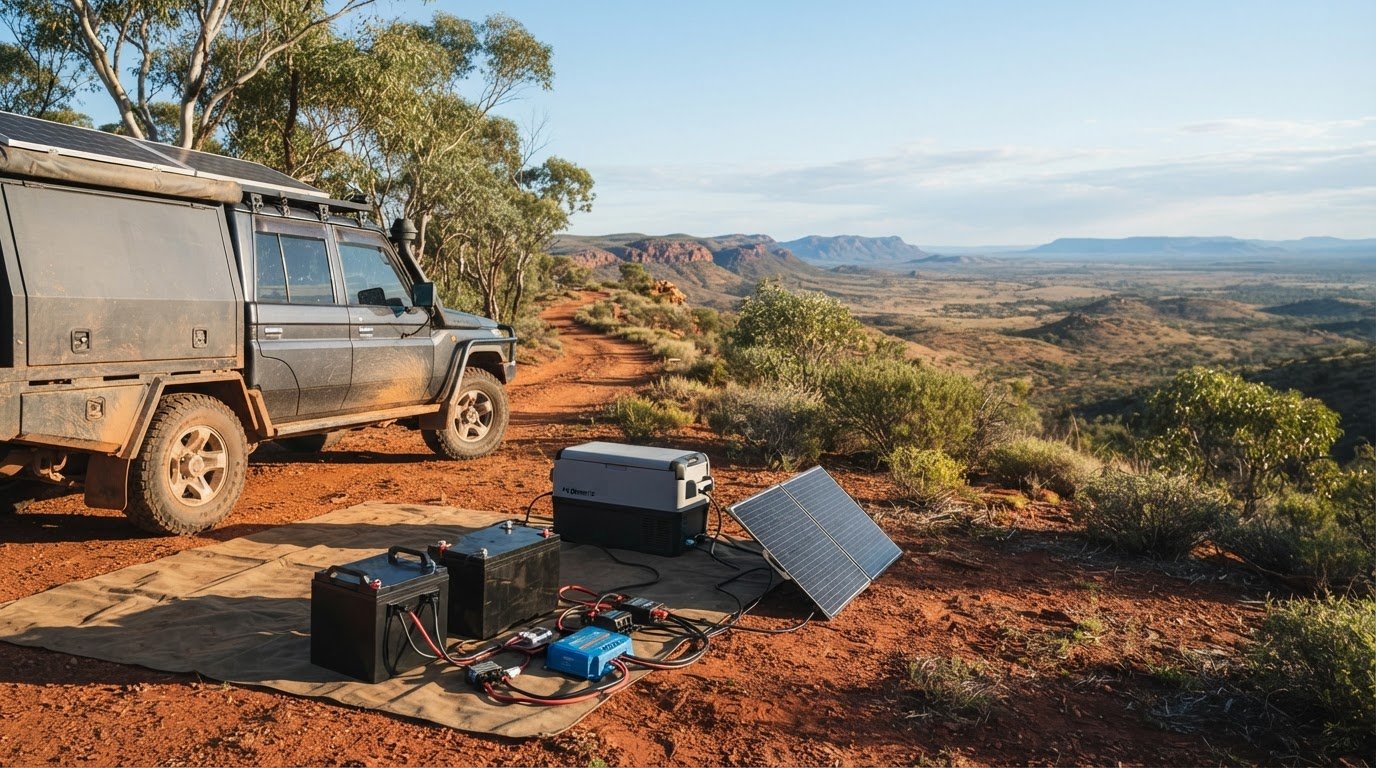
The lighter battery isn’t automatically the better touring choice. In this LiFePO4 vs AGM battery deep dive for touring, the decision comes down to how much energy you can use, how your vehicle and solar setup charge the battery, and the conditions you expect on your trips.
If you’ve compared battery labels and still aren’t sure what a 100Ah rating means for your fridge, lights or other touring gear, you’re not alone. Rated capacity and usable energy aren’t the same. And choosing a chemistry without checking charging compatibility can leave a carefully planned setup underperforming.
This guide compares LiFePO4 and AGM batteries across usable capacity, weight, resilience, maintenance and long-term value. It also covers the charging settings and system components to consider. You’ll get a practical way to match a battery to your power needs and travel style, whether you head out occasionally or rely on your setup day after day. The goal is dependable, self-reliant touring that supports responsible time outdoors.
Key Takeaways
- Estimate your energy needs from actual touring loads and daily habits, rather than choosing by battery capacity alone.
- Weigh usable energy, weight, maintenance and temperature considerations against your travel style.
- Map how power moves from your alternator or solar panels to the auxiliary battery, then match charging equipment and settings to the battery manufacturer’s requirements.
- Consider trip length and access to charging when choosing a chemistry. Frequent cycling and weight-sensitive travel can shift the balance.
- Before departure, review your loads, charging sources, battery settings, connections and monitoring so your power plan supports responsible, self-reliant travel.
Table of Contents
LiFePO4 vs AGM for touring: what are you really comparing?
AGM and LiFePO4 batteries both store energy for off-grid use, but they use different chemistries and suit different setups. AGM is a lead-acid battery; LiFePO4 is a lithium iron phosphate chemistry used for energy storage. To make a practical comparison, start with what your system can use, not just the capacity printed on the battery label.
Nominal capacity describes a battery’s rated storage capacity, but it doesn’t tell you how much energy is available for touring equipment. Usable capacity depends on the battery’s chemistry, manufacturer limits and how it’s used. Usable capacity is the portion of a battery’s rated capacity that your setup can draw on while staying within the battery’s operating limits.
How AGM and LiFePO4 batteries store and deliver power
In an AGM battery, the electrolyte is held in an absorbent glass mat between the lead plates. A LiFePO4 battery uses lithium iron phosphate as its cathode material. For a deeper chemistry overview, see Lithium iron phosphate battery (LiFePO4).
Both can provide auxiliary power, but touring batteries typically have a different job from a vehicle’s starter battery. A starter battery is designed to deliver a strong burst of power to crank the engine. An auxiliary deep-cycle battery is intended to provide power over a longer period and be recharged for continued use. In practical terms, deep-cycle use means drawing energy gradually to run equipment at camp, rather than using a brief burst to start the vehicle.
Keep these roles separate when planning your setup. Chemistry alone doesn’t tell you whether a battery suits a particular role, so follow the manufacturer’s guidance for its intended application.
What a touring battery may need to power
Estimate your needs from the gear you actually take, rather than choosing a battery around a vague idea of “camp power.” For each device, note its power draw and how long you expect to use it on a typical day. Include equipment that runs intermittently as well as items that stay on overnight.
- Essential loads: List equipment you rely on, such as a fridge, lighting or communications devices.
- Occasional comforts: Add items you use by choice, such as a fan or other camp appliances.
- Daily use: Record expected run time and frequency, including whether a device operates while you’re driving or only at camp.
This breakdown shows which loads shape the core system and which you could reduce if energy is tight. Shelter choices can also affect camp routines, from how much lighting you use to how long you spend under cover. Compare roof top tents for touring as part of planning how you’ll set up and live at camp. With a realistic load list, you can compare battery options against your actual travel needs instead of guessing.
How LiFePO4 and AGM behave in a touring charging system
A touring battery is one part of a larger power system. Energy travels from a source, such as the vehicle alternator or a solar panel, through charging equipment and wiring before reaching the auxiliary battery. Each component needs to suit the battery it’s charging. A mismatch can result in poor charging or operation outside the battery maker’s limits.
System compatibility depends on matching charger settings to battery specifications. Chemistry matters, but so do the manufacturer’s charging limits and the charger’s capabilities. Don’t assume a vehicle alternator or solar controller can safely charge every battery type. Check the full charging setup as part of your battery comparison.
Alternator charging, DC-DC chargers, and battery protection
In a typical vehicle-charging path, the alternator supplies power while the engine runs. A DC-DC charger sits between the vehicle’s electrical system and the auxiliary battery, managing the charge delivered according to its design and configured settings. The right setup depends on the vehicle, charger and battery specifications.
Many LiFePO4 batteries include a battery management system (BMS) to monitor and control battery operation, including protective functions. A BMS doesn’t make an incompatible charger or incorrect settings suitable. Before wiring or adjusting the system, consult the vehicle, charger and battery manuals for approved connections, charging profiles and limits. Follow the instructions for the exact equipment you’re using.
Solar charging and temperature limits on tour
With solar charging, power travels from the panel to the solar controller and then to the auxiliary battery. Available solar energy varies with conditions, panel angle and positioning, shade, and system configuration. A panel partly shaded at camp may deliver a different charge from one positioned in clear sun, so avoid basing a remote-trip plan on ideal conditions alone.
Temperature needs particular attention with LiFePO4. A battery’s permitted charging-temperature range may differ from its operating-temperature range. Cold-weather charging precautions and limits are specific to the battery, so check the manufacturer’s instructions rather than relying on a universal temperature threshold. Use the same manual-first approach for AGM charging limits.
- Trace the route: Identify whether power comes from the alternator, solar, or both, and note the charger between each source and the auxiliary battery.
- Match the settings: Compare the charger profile and limits with the battery’s specifications before departure.
- Plan for conditions: Account for shade, panel positioning and expected temperatures in your itinerary, especially if charging access will be limited.
Correct configuration is also part of responsible battery use. For broader context on battery-fire response, the CDC resource on battery fire suppression offers further reading. Focus on a properly matched, carefully installed system, and use the equipment manuals as your guide on the road.
LiFePO4 vs AGM: which touring trade-offs matter most?
Neither chemistry is the automatic winner for every 4WD. The right fit depends on what you carry, how often you cycle the battery, where it sits in the vehicle and whether your charging setup suits it. Compare the whole setup rather than focusing on one headline advantage.
Side-by-side touring comparison
Usable energy: AGM and LiFePO4 batteries with the same nominal capacity may not provide the same usable energy. Compare each battery’s limits with your system’s operating requirements.
Weight: Battery weight affects how you plan a touring vehicle’s load. LiFePO4 may suit a weight-sensitive build, but compare the actual dimensions and weight of each model instead of assuming every model offers the same advantage.
Charging needs: Both chemistries need charging equipment and settings suited to their specifications. LiFePO4 can be practical if your alternator and solar charging components are compatible. An existing AGM setup may be simpler to retain if it’s working within its intended limits.
Maintenance: Requirements vary by model. Follow the manufacturer’s instructions for inspection, storage and care rather than assuming either chemistry is entirely maintenance-free.
Temperature: Each battery has its own operating and charging limits. Check the specific model’s guidance against the conditions expected on your trips, including cold-weather charging precautions.
Weight, usable energy, and space in a touring vehicle
Battery weight and usable energy affect a touring build in different ways. Usable energy helps you judge how much equipment the battery can support within its limits. Weight and physical dimensions affect where it can be secured and how it contributes to the vehicle’s load. Compare specifications for the exact models you’re considering, not chemistry labels alone.
For example, a compact build where payload is a priority may favour a lighter option if its usable capacity and charging requirements suit the trip. A vehicle with an existing battery compartment and modest loads may have different priorities. Actual usable energy depends on the battery specifications and the operating limits of the whole system.
Lifespan, upkeep, and value over time
Don’t compare expected service life using broad chemistry claims alone. Look at model-specific cycle-life information and the conditions used for testing, including discharge depth. Real-world longevity can also be affected by charging conditions, storage and how regularly the battery is used. Manufacturer guidance gives you a more relevant basis for comparing particular batteries.
Consider value in the context of your travel pattern. Frequent trips and regular cycling may make replacement planning more important than it is for occasional touring. If a suitable AGM battery and compatible charging setup already meet your needs, changing chemistry may not improve the overall system enough to justify a redesign. If weight, usable energy or repeated use are limiting your plans, compare LiFePO4 options alongside any required system changes. Match the battery to your loads, vehicle constraints and travel habits, then plan for responsible care and end-of-life handling.
How to choose the right touring battery for your setup
Make the decision in order: start with what you need to power, then check how your system can recharge it. This comparison is most useful when it reflects real trip habits, not a generic load estimate or a battery’s headline capacity.
- List your loads. Write down every device you plan to run from the auxiliary battery. Check its label or manufacturer documentation for power draw, and separate essential equipment from occasional comforts.
- Estimate daily use. Note how long and how often you expect to use each device. Consider whether loads run while driving, at camp or overnight. A short trip with regular driving may offer different opportunities to recharge than an extended stay away from charging sources.
- Check charging access. Identify whether the battery will receive charge from the alternator, solar, or both, and how often those sources will be available. Use the vehicle and charger manuals alongside the battery manufacturer’s charging specifications.
- Compare your constraints. Consider available battery space, the vehicle’s payload requirements, expected temperatures, and the charging equipment already installed. A heavier battery may be acceptable in one build but a limiting factor in another.
- Select for the whole trip. Choose the chemistry and model that meet your realistic energy needs and work with your system. Avoid relying on broad assumptions about runtime or capacity. Actual performance depends on the devices, battery specifications and charging conditions.
Match battery choice to your touring style
For frequent off-grid travel, prioritise usable energy, a practical load plan and reliable access to charging. If you tour occasionally, first assess whether a suitable AGM battery and compatible charging setup already meet your needs. For a weight-sensitive build, compare the actual weight and dimensions of candidate batteries against your vehicle’s payload requirements. Your travel pattern matters as much as the chemistry.
For example, someone who spends several days camped away from charging may need to plan loads and charging opportunities more carefully than a traveller who drives regularly between stops. Neither scenario automatically points to one battery type. Each changes which trade-offs deserve the most attention.
Check the complete system before changing chemistry
Before replacing a battery or changing chemistry, take stock of the battery, alternator, DC-DC charger, solar controller, inverter and connected loads. Compare each component’s voltage profile and settings with the chosen battery manufacturer’s requirements. A component that suited the previous battery may not suit a different chemistry, so review the manuals rather than assuming the system can remain unchanged.
Keep the process safe and methodical. For wiring, protective equipment or vehicle-system changes, use qualified installation support. Once the system is matched, record its settings and keep the manufacturer instructions accessible for future checks. If you’re also planning the vehicle layout around camp gear, explore rooftop tent options for touring as part of your broader setup planning.
Prepare a dependable, responsible touring power setup
A good battery choice is only one part of a dependable touring setup. Before you head out, check that your loads, charging sources and battery settings suit one another, then test how the system behaves. This turns a battery comparison into a practical plan for the road.
A practical pre-departure battery checklist
Work through the setup before packing the vehicle. Use the battery, charger and vehicle manuals as your reference for settings, installation and care. Test the equipment you’ll actually use instead of relying on a runtime estimate that hasn’t been checked against your system.
- Review your loads: Confirm which devices draw from the auxiliary battery and that your daily-use plan reflects how you expect to travel.
- Map charging sources: Check the alternator and solar charging path, including the relevant chargers and controller settings.
- Confirm battery settings: Compare the configured charging profile and temperature limits with the battery manufacturer’s guidance.
- Inspect the installation: Check that the battery is securely mounted and that connections and protective devices follow the equipment instructions.
- Test typical use: Run normal camp loads before departure and note how the battery monitor and system respond. This gives you a more useful baseline than an assumed runtime.
- Keep information handy: Carry relevant manuals or save them for offline access, and make sure you can read the battery monitoring information during the trip.
Plan charging around your itinerary, too. Think about when you’ll be driving, when solar may be available and how long you expect to stay away from charging sources. If conditions or daily use differ from your plan, adjust loads early instead of treating an unverified estimate as a promise.
Choose gear with the whole camp setup in mind
Power planning connects to the rest of camp. Shelter, cooking choices and how you arrange your site all influence the equipment you use and the time you spend at camp. Consider these together rather than sizing a battery in isolation. If shade and camp layout affect where you can position solar panels, a 4WD awning guide can help you think through shelter and setup as part of the wider touring plan.
Before departure, care for and secure the battery according to its manufacturer’s instructions. At end of life, use an appropriate battery recycling or disposal option rather than placing it in general waste. Responsible handling helps reduce the impact of touring gear beyond the trip itself.
Adventurerz equipment guides and reviews can help you plan the broader camp setup alongside your power needs. Match each choice to your travel style, pack thoughtfully, and leave campsites as you found them.
Make your next trip the test
Your power plan can evolve with the way you travel. After each trip, note which devices you used most, when charging was available and whether your setup matched your routine. Those observations give you a better starting point for future changes than guesswork, especially as you add gear or plan longer stays away from regular charging.
Use this comparison as a guide, not a fixed formula. The best setup is the one that supports your travel habits, works as a complete system and helps you explore with care. Keep learning, make changes thoughtfully and take only what you need into the places we all value.
Adventurerz brings together outdoor gear guides and reviews with practical adventure advice grounded in responsible exploration. Explore Adventurerz equipment guides for your next outdoor adventure, and start planning a trip that’s ready for the road and respectful of the landscapes along the way.
Frequently Asked Questions
Can I replace an AGM battery with LiFePO4 without changing my charger?
Possibly, but it depends on whether each charger’s chemistry settings and voltage profile match the LiFePO4 battery’s specifications. Review the manuals for the alternator charging equipment, mains charger and solar controller, as well as the battery itself. For example, a solar controller may have a selectable profile while a mains charger may use a fixed one. Don’t assume existing settings are suitable just because the battery connections fit.
Is LiFePO4 better than AGM for 4WD touring?
Neither chemistry is automatically best for every 4WD touring setup. LiFePO4 may suit travellers who value usable energy and lower battery weight, provided their charging system is compatible. AGM can remain practical for occasional trips if an existing suitable setup meets the loads. Consider how often you travel, charging access, expected temperatures and the devices you rely on. The decision is about matching those needs, not picking a universal winner.
How do I calculate the battery capacity I need for touring?
List each device, note its power draw from the label or manual, and estimate how long you’ll use it each day. Total the expected energy demand, including intermittent use such as a fridge cycling on and off. Then account for the battery’s usable capacity, conversion losses from equipment such as an inverter, available charging opportunities and a sensible reserve. Use the battery and device documentation to refine the plan, not a generic capacity or runtime estimate.
Can I charge a LiFePO4 battery from my vehicle alternator?
Alternator charging can be part of a LiFePO4 touring system, but suitability depends on the vehicle’s electrical system and the battery’s requirements. A DC-DC charger is one possible way to manage charging between the alternator and auxiliary battery; it isn’t a universal requirement for every setup. Follow the vehicle, charger and battery manufacturers’ guidance for installation, wiring and configuration, especially before changing an existing system.
What happens if a LiFePO4 battery gets too cold to charge?
LiFePO4 batteries have model-specific charging temperature limits, and charging outside them may damage the battery. Those limits aren’t necessarily the same as the permitted temperatures for discharging or storing it, so don’t treat “too cold to charge” as meaning the battery can’t be used or stored. Check the exact battery manual and any built-in protection features before travelling in cold conditions. Avoid relying on a generic temperature threshold.
Can AGM and LiFePO4 batteries be connected in the same battery bank?
Combining AGM and LiFePO4 batteries in one bank can create charging and balancing problems because their voltage behaviour and charging requirements differ. Connecting them in parallel shouldn’t be treated as a general solution, even if their nominal voltage appears compatible. Before combining batteries, review the battery and charger manufacturers’ instructions and get qualified advice on the complete system. A configuration that works for one model combination may not suit another.
Does a solar panel charge AGM and LiFePO4 batteries differently?
Both can be solar-charged when the controller and its settings suit the selected battery. The controller must use a charging profile that follows the battery manufacturer’s specifications; a generic setting may not be appropriate for both chemistries. Solar input also changes with shade, panel angle and system configuration, while your devices continue drawing power. Plan around those real conditions rather than assuming the panel will always restore the battery fully.