Gas strut replacement for hardshell roof top tents starts with matching the strut’s dimensions and force rating, not simply choosing one that looks similar. If the force does not suit the load, the tent lid may be difficult to close.
If your lid is getting harder to lift or will not stay in position, a straightforward fix may be on your mind before your next trip. This guide covers compatibility between tent models and key safety considerations for removing and installing struts, helping you make an informed decision before heading out.
Key Takeaways
- A complete kit may suit a tent when its struts need replacing together, but the right choice depends on how the tent is set up and used.
- Strut dimensions and force ratings help identify a suitable replacement; matching appearance alone isn’t enough.
- Struts aren’t automatically interchangeable between rooftop tent brands or models, and mismatched force can make a lid difficult to close.
- Support the tent lid securely before removing a strut, then work methodically through the replacement.
- Use Adventurerz roof top tent reviews and recommendations to inform your wider gear decisions for Australian trips.
Table of Contents
Complete gas strut kits
A complete kit groups replacement parts for a tent’s strut setup. Before choosing one, check that its contents and fit match the tent’s existing arrangement.
Replacement Kit Components
Read the kit listing as an itemised parts list. It should identify the replacement struts and say whether end fittings or mounting hardware are included. “Complete” can describe different packages, so do not assume every kit contains the same items. Compare each listed component with the struts and fittings currently attached to your tent.
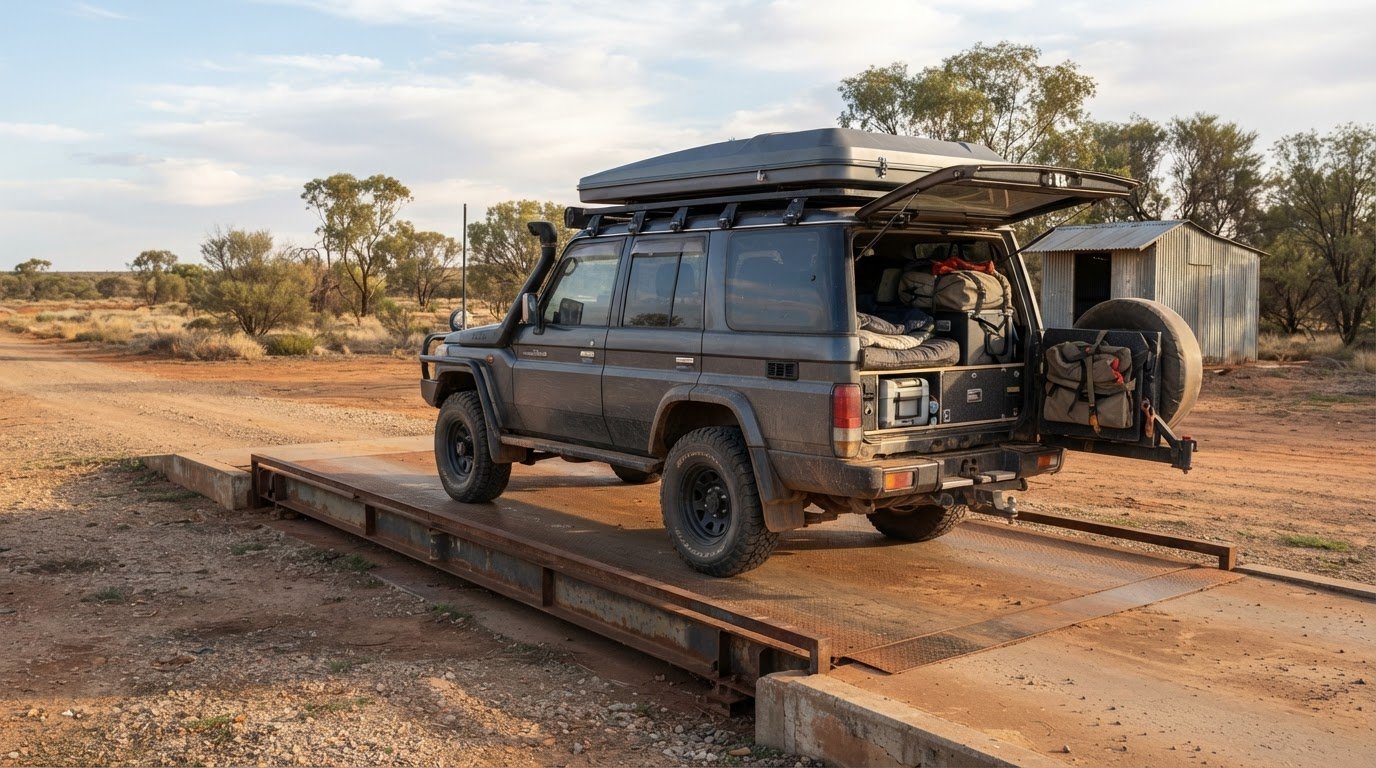
Consider how the tent is loaded, too. Replace rooftop-tent gas struts only when cargo mounted on top will remain there permanently. A load that changes between trips changes the conditions the struts must support. For example, a tent carrying permanent rooftop cargo differs from one carrying removable gear. That distinction matters when deciding whether a complete replacement set suits your setup.
Safe Strut Removal and Installation
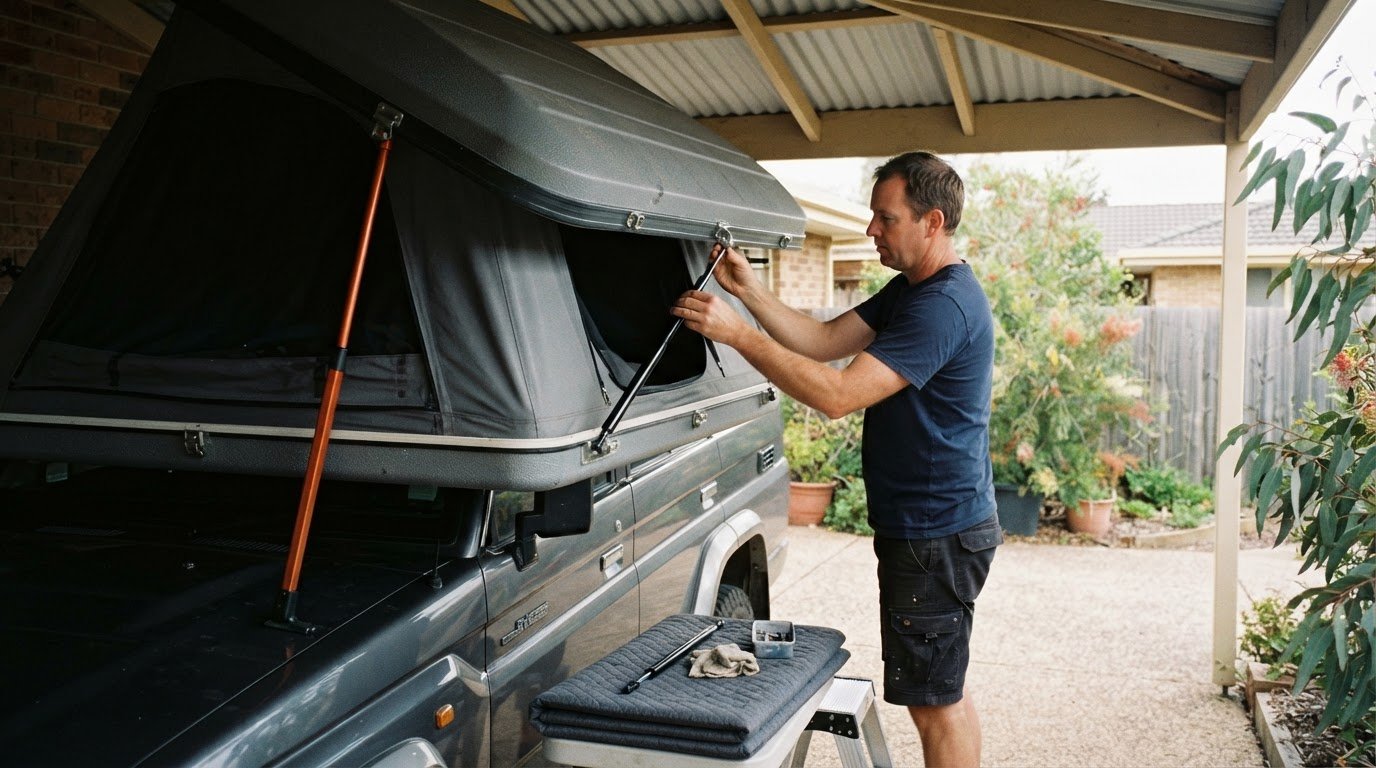
Start with the lid fully open and securely supported. The support must hold the lid in place before you remove an old strut. Gas struts help lift or support the lid, so removing one can change how it behaves. Keep your hands clear of moving joints, and do not rely on a strut you are removing to hold the lid.
Work on one side at a time, unless the tent’s instructions specify another method. Before detaching each strut, note its orientation and connection points. Fit the replacement to the same mounting points, then check that its ends are seated. Keep the lid supported throughout. After installation, test its movement carefully before packing for a trip.
Required Tools and Fittings
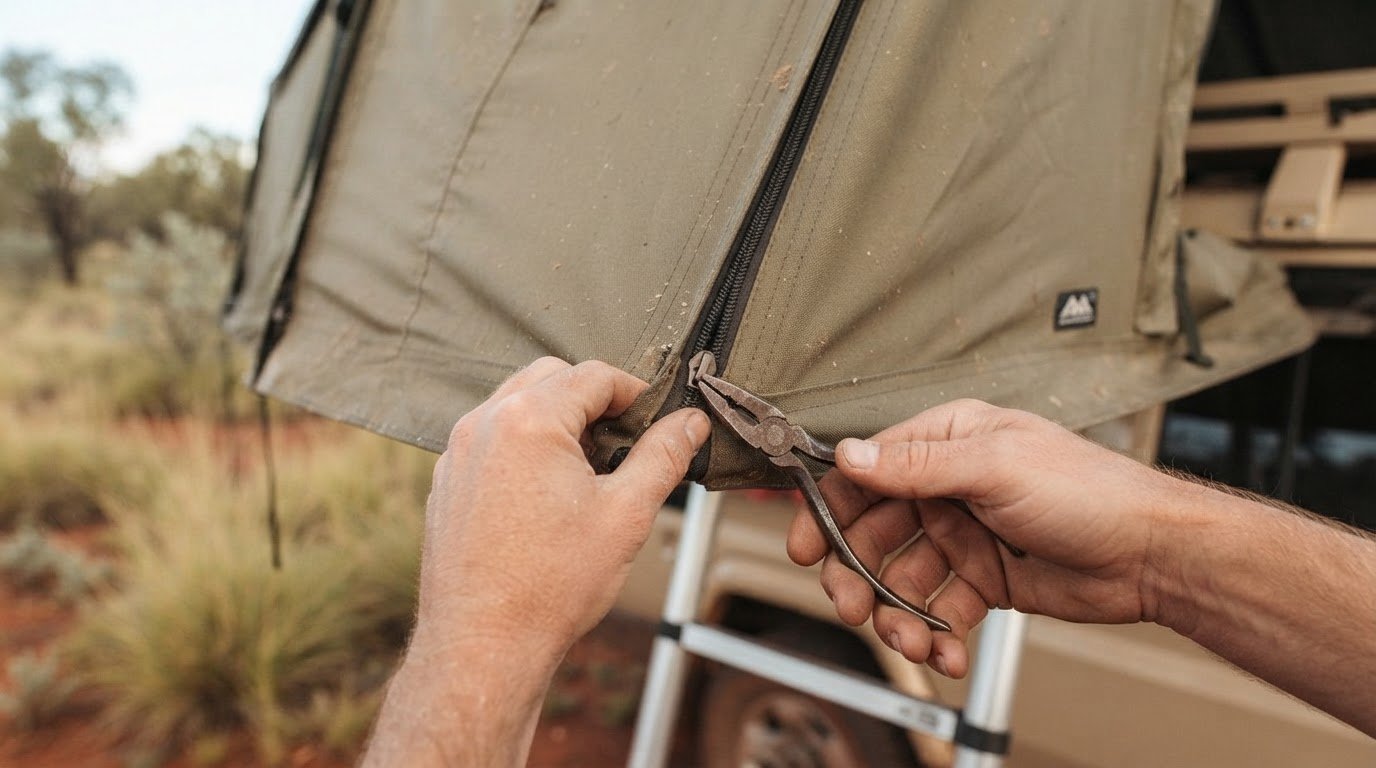
The tools you need depend on your tent’s fasteners and fittings. Before starting, identify whether the mounts use screws, bolts, clips, or another connector. Choose a tool that fits the fastener securely, and keep removed hardware together. A small container helps prevent loose fittings from getting lost at camp.
Check whether the replacement kit includes compatible end fittings or expects you to reuse the existing hardware. Compare the connection style and mounting points, not just the strut body. A different fitting may not attach correctly to the tent. Keep the lid support in place throughout the job, and do not force a connector into position.
Signs that struts may need attention include a lid that no longer stays raised or requires noticeably more effort to lift. A change in movement on one side can also signal uneven support. Inspect the struts and their connections before your next departure. For broader tent selection considerations, explore roof top tent reviews and recommendations.
Gas strut prices in AUD
Treat that figure as the strut price, not the cost of a complete kit or installation.
Before budgeting, identify what you are comparing. A single replacement strut and a kit containing multiple components are not equivalent purchases. A listed strut price does not establish the cost of a complete kit, fittings, or installation. Separating these items helps prevent a part price from being mistaken for the total cost of a repair.
Use these steps to assess a quoted or listed price:
- Identify the item. Check whether the amount covers one strut, a pair, or a kit.
- Read the included-parts list. Note whether end fittings or mounting hardware come with it.
- Match the specification. Compare the replacement’s dimensions and force rating with your tent’s requirements.
- Separate parts and labour. A strut’s purchase price doesn’t describe installation work.
Each step clarifies what the amount covers. For example, a listing for one strut cannot be compared directly with a package containing two struts and fittings. An installation quote also covers a different scope from a part-only listing. Keep these categories separate when planning the repair.
Compatibility also affects the value of a replacement. A low-priced strut that does not match the tent’s force requirement or mounting points may be unsuitable. The lid’s load and the strut’s designated force both matter. Price alone cannot show whether a part will support the lid properly. Confirm the specification before comparing alternatives.
For a complete kit, review each component rather than relying on the word “complete.” Check whether the package covers the struts needed for your setup and the fittings required at the mounting points. If you need to reuse hardware, that changes what the kit provides. A clear parts list makes comparisons more useful than a headline price.
Installation is a separate cost consideration. A part-only figure does not include the time or work involved in fitting it. When comparing a self-install purchase with a supplied installation service, compare the same scope: parts, fittings, and labour.
Keep the product description and tent details together while comparing options. This helps you distinguish a strut price from a kit price and assess whether the listed parts suit your hardshell rooftop tent.
Gas strut sizes and designations
The right replacement must match the strut’s length, fittings, and force rating. Gas strut replacement for hardshell roof top tents depends on these specifications working together. A force mismatch can push the lid upward so strongly that closing the tent becomes difficult or impossible. Australian suppliers can assess custom struts using the measurements and fittings your setup requires.
Start by recording any markings on the existing strut. They may show its force rating or part designation. Photograph the label before removal, and note the tent’s make and model. If the markings have worn away, use measurements and connection details to describe the part. Keep the old strut as a reference while comparing replacement specifications.
Measure the strut when fully extended and fully compressed, using the same points at both ends for each measurement. The difference between these lengths is the stroke, or travel. For example, a replacement with insufficient stroke may limit how far the lid opens. One that is too long may prevent the lid from closing fully.
Record both end fittings separately. Check their connector type, direction, and mounting position. For example, a ball socket and an eyelet attach differently, even when the strut bodies look alike. Note whether the fittings point in the same direction or sit at different angles. These details help you avoid ordering a part that cannot attach to the tent.
Find the force rating on the strut or in its product information. The rating describes the force the strut applies to the lid. It needs to suit the lid and any cargo that remains on top. Too much force can make closing difficult; too little can leave the lid poorly supported. Do not estimate force from the strut’s appearance.
Gas strut replacement for hardshell roof top tents may require custom manufacture if standard options do not match. Give an Australian supplier the extended and compressed lengths, end-fitting details, and required force rating. Include the tent model and describe any permanent rooftop cargo. These specifications help assess whether a custom strut suits the mounting arrangement and operating load.
Before choosing a replacement, compare all the specifications together. Check the length, stroke, force, and both end fittings against the original setup. Matching just one detail is not enough. Keep the measurements with your tent details for future reference. This record makes it easier to describe the correct part if markings fade or another replacement is needed.
Are gas struts interchangeable between rooftop tent brands and models?
Not automatically. A strut from another brand or model suits your tent only if its force, length, stroke, and fittings match. Similar-looking parts can behave differently once installed. Match specifications, not appearance.
Start with the tent’s make and model. Then compare the old strut’s markings and connection points with the replacement details. For example, a strut that attaches to a different mount will not fit properly, even if its body looks alike. The lid’s load matters, too, including any cargo that remains on top.
James Baroud warns that a force rating that does not match the cargo weight may make a rooftop tent impossible to close. Excess upward force can work against the lid as you bring it down. An unsuitable force rating can therefore affect operation as well as compatibility.
Use a simple comparison before selecting a part:
- Brand and model: Record the tent identification and model name.
- Strut markings: Note any force or part designation printed on the existing unit.
- Dimensions: Compare extended length and compressed length.
- End fittings: Match each connector and its mounting orientation.
- Load setup: Include cargo that stays on the tent during use.
One matching detail is not enough. A replacement could have the same fittings but the wrong force. Another could match the force yet have a different length. Compare the complete specification against your tent’s actual setup. If the markings are unreadable, measurements and fitting details can still help describe the original part.
Model changes can matter, too. A tent’s lid, mounting positions, or intended rooftop load may differ between versions. Do not assume a strut suits every model from the same manufacturer. For example, a part listed for one model may not match another model’s mounting points or lid requirements.
Before fitting a cross-brand replacement, check the manufacturer’s part information and the strut’s full specification. Keep the tent model, old strut, measurements, fittings, and rooftop cargo details together. These specifics make comparisons more reliable than a broad label such as “universal.” Treat that label as a starting point, not proof of fit.
Interchangeability depends on a complete match, not the badge on the strut. Confirm dimensions, connectors, force, and load conditions together. This careful comparison helps you avoid a part that will not mount correctly or makes the lid difficult to operate.
How to safely remove and install gas struts on a hard-shell rooftop tent?
Support the tent lid securely before removing an old gas strut. It must remain stable throughout the replacement. Gas struts assist the lid’s movement, so removing one can change how the lid behaves. Do not begin until the support is firmly in place.
Prepare the work area before touching the fittings. Park on stable, level ground and clear loose gear from around the tent. Keep the replacement strut and required tools within reach. Check the tent’s instructions for model-specific steps, since mounting arrangements can differ.
Use a deliberate sequence:
- Open and support the lid. Make sure the support holds it securely.
- Inspect the fittings. Note how the old strut connects at both ends.
- Remove the old strut. Keep the lid supported as you release its connections.
- Fit the replacement. Align its ends with the original mounting points.
- Check the installation. Confirm both fittings are seated before moving the lid.
Work on one strut at a time. This keeps the other side connected while you replace the first strut. Keep your fingers clear of hinges and connection points as the lid moves. If a fitting resists, stop and reassess its position. Forcing it can damage the fitting or mounting point.
Match the new strut’s orientation to the old one. Compare the end fittings and mounting positions before fastening anything. A connector that looks close may still sit incorrectly. Keep the lid supported during fitting, and do not use its movement to force a misaligned connection into place.
After installation, inspect the mounts and strut ends. Check that each connection is secure and does not appear twisted. Keep the support in place while assessing the fit. Then move the lid slowly through its normal range. Watch for binding, unusual movement, or a connection shifting from its mount.
If the lid does not move smoothly, stop the test. Recheck the strut’s orientation, fittings, and mounting points. Do not keep operating a lid that feels unstable or difficult to control. A mismatch in force or length can affect its movement, so confirm the replacement specification before trying again.
Only remove the lid support once the strut connections are secure and the lid moves as intended. Keep the removed strut and any loose fittings together for reference. A careful, controlled installation helps protect the tent and keeps the setup ready for the next Australian trip. For broader setup ideas, explore rooftop tent options before planning your next camp.
Adventurerz: Roof top tents reviews and recommendations
Adventurerz helps you make informed gear choices with roof top tent reviews and recommendations. Once you have compared gas strut specifications, explore how a tent fits your vehicle, travel style, and planned Australian routes. Our reviews can also help you assess related camping equipment before your next trip.
Turn to Adventurerz when you’re weighing tent options or planning a broader setup. Explore our 4wd awnings, camping equipment, and hiking equipment reviews and recommendations for more practical gear guidance. For ideas on where to go, find Australian camping and adventure inspiration, then plan responsibly around the places you visit. Have a question about our reviews or recommendations? Contact Adventurerz.
Get your setup ready for the next trip
Use your tent’s intended load and travel plans to guide your next gear decision. When planning gas strut replacement for hardshell roof top tents, consider how the replacement fits into your full camping setup, not just the immediate repair. A well-considered setup supports smoother trip preparation and helps you choose gear suited to your adventures.
If you are weighing rooftop tent options or related camping gear, Adventurerz offers reviews and recommendations to support your research. Explore our gear guides and reviews to plan your next Australian outdoor adventure with greater confidence.
Contact Adventurerz about your gear research, and keep building a setup that’s ready for the road ahead.
Frequently Asked Questions
How do I identify the correct gas strut size and force for a hard-shell rooftop tent?
Match the replacement specification to your tent model and its normal load. Photograph the existing strut’s markings before removal, including any force value or part code. Record whether rooftop cargo stays fitted during trips, since this affects the load the struts must support. Use the tent manufacturer’s replacement information to interpret the markings and choose a compatible part, rather than relying on appearance alone.
What measurements are needed to replace rooftop tent gas struts?
Record the existing strut’s extended length, compressed length, and end-fitting type. Note the mounting arrangement at both ends, along with any visible markings. Measure the old strut before disposal, and take clear photographs of its connections while it is still installed. These records help distinguish parts that look similar but differ in fit. Include the tent’s make and model when documenting the measurements.
What gas strut force rating (N) do rooftop tent manufacturers recommend?
There is no single force rating in newtons that suits every rooftop tent. The appropriate rating depends on the tent model, lid, and rooftop load. Use the rating specified for your setup, including any cargo that remains mounted. A force mismatch can make the lid difficult to close or leave it inadequately supported. Do not choose an N value simply because it matches another tent’s struts.
What is the price of rooftop tent replacement gas struts in Australia?
That is the price for the individual strut, not a complete kit or installation service. Before comparing listings, distinguish a single part from a package containing several components. Also make sure the strut’s specification suits your tent, because a low price does not make an incompatible part a useful replacement.
Where to buy replacement gas struts for rooftop tents in Australia?
Contact an Australian supplier with your tent model, strut measurements, end-fitting details, and required force rating to assess a suitable replacement.