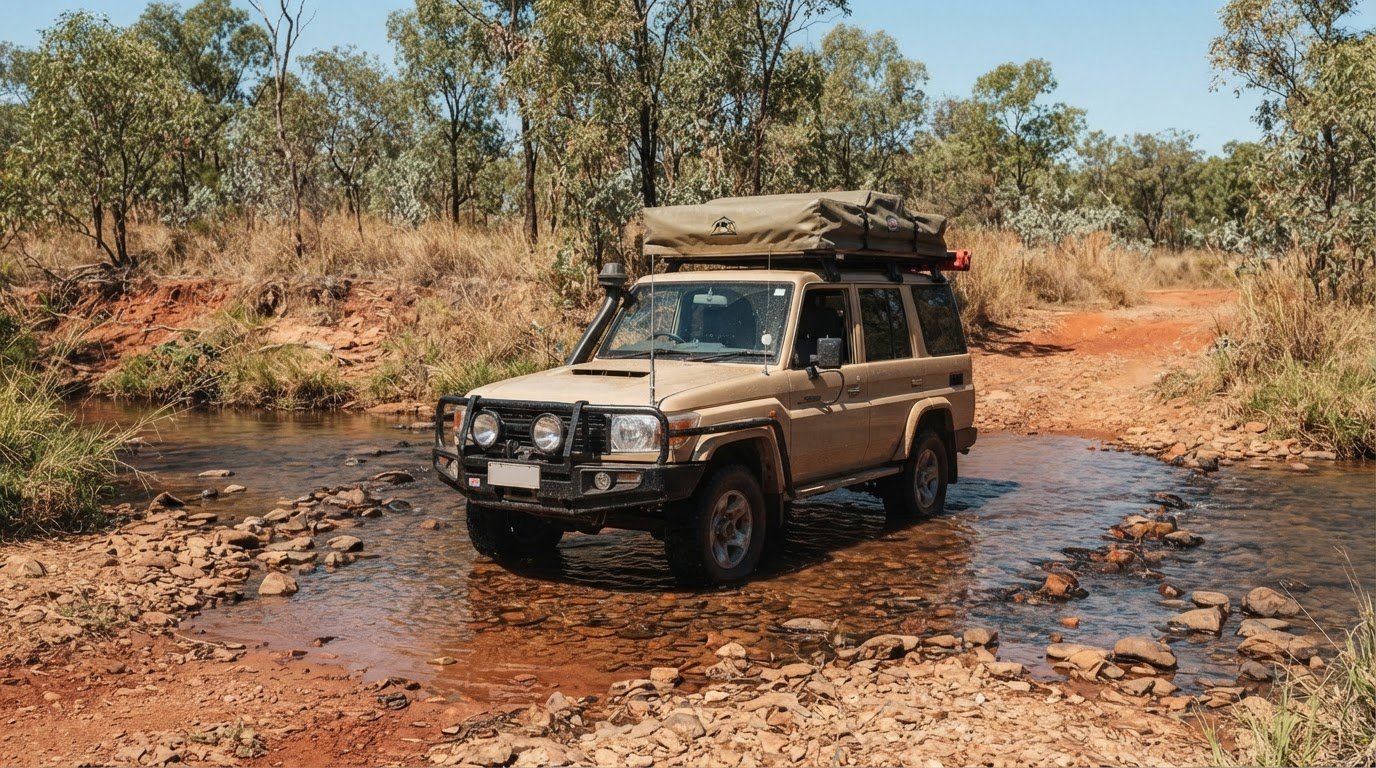
A longer ladder isn’t automatically a better fit. A roof top tent ladder extension for lifted 4WDs can help when the standard ladder no longer reaches firm ground at the tent’s intended setup angle, but it needs to suit the ladder system and tent attachment. The right fit depends on the installed entry height, campsite slope and ladder geometry, not lift height alone.
It makes sense to look for more reach after a suspension lift or larger tyres raise your tent entry. But adding length without checking compatibility and angle can leave the ladder awkward to climb or its feet poorly positioned. Reach and stability need to work together.
We’ll cover what to measure on your vehicle, how to assess a compatible extension and why setup angle matters. You’ll also learn when a replacement ladder may be a better option, and what to look for in the ladder’s locks, feet and other components before heading out. That way, we can make access to camp more practical without relying on a makeshift fix.
Key Takeaways
- Choose an extension designed for your ladder system; rail shape, rung spacing, locks, feet and hinge design all affect compatibility.
- Assess the ladder against the installed tent-entry height, including the vehicle setup and campsite slope.
- Set the ladder at the tent manufacturer’s intended angle, with both feet on firm, stable ground and every locking section engaged.
- Inspect locks, fasteners, hinge points, feet, rails and plastic parts for dirt or damage before relying on the ladder.
- Explore Adventurerz roof top tent reviews and recommendations to help inform your wider camping gear decisions.
Table of Contents
Access and comfort for tall vehicles
A lifted 4WD can raise your rooftop tent entry and make climbing less comfortable. Suspension changes and larger tyres both affect vehicle height. A longer ladder may restore practical access, but only if it suits the tent and ladder attachment. The key is usable reach, not extra length by itself. A ladder that feels awkward at camp can turn simple entry and exit into a careful, uncomfortable climb.
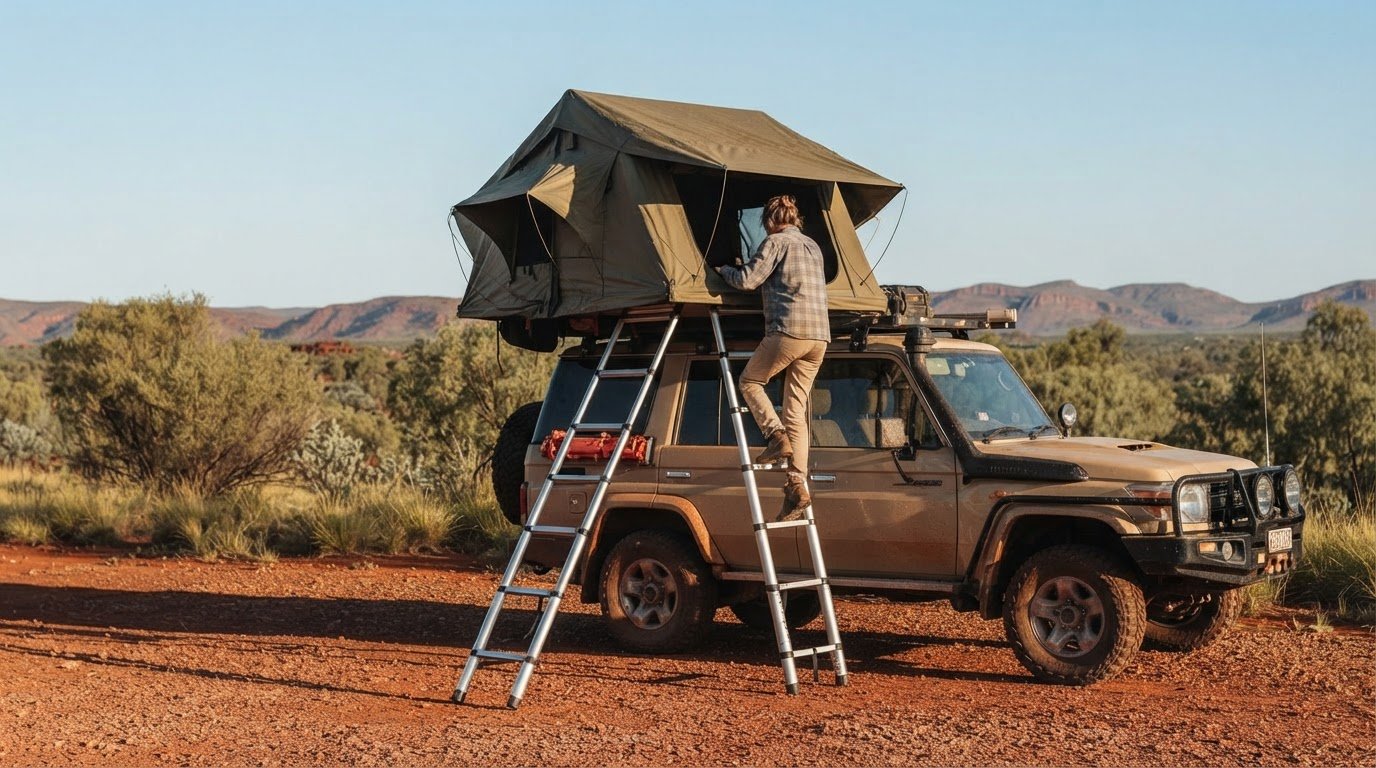
Assess the full access route, from the ground to the tent doorway. Each rung should be reachable as you climb, and the ladder must connect securely at its intended attachment point. A ladder might reach the ground beside a lifted vehicle yet sit poorly against the tent because its rails, feet or hinge don’t align with the deployed setup. A stable, well-matched ladder matters more than simply adding rungs.
A replacement ladder may suit your setup better than an extension, but it still needs to match the tent attachment and deployed geometry. Ladder systems can differ in rail profile, rung spacing, locking mechanism, foot shape and hinge design. A mismatch can prevent a secure fit or change how the ladder sits. Compare the connection points and deployed position with the tent’s intended arrangement before choosing a longer ladder.
Weight is another consideration when selecting gear for a touring setup. The Rough Country Roof Top Tent Ladder Extension weighs 5 lbs. That figure describes this named extension only; it doesn’t establish compatibility with another ladder system. Check how an extension attaches and locks, then consider the added gear alongside your existing tent setup. Avoid treating extra reach as a universal fit across different rooftop tents.
Regular inspection helps keep ladder components working as intended. Before a trip, check the moving parts and contact points. Dirt can interfere with telescoping sections, and visible damage can affect how parts fit together. Include these areas in your check:
- Telescoping locks, including their engagement and movement.
- Fasteners, hinge points and rails for dirt or damage.
- Feet and plastic parts for visible wear or damage.
Clean dirt from moving parts as appropriate for the ladder, and address damage before relying on it. A replacement roof top tent ladder should match the tent attachment, not just reach farther. With a lifted vehicle, consider entry height, connection design and component condition together. This helps you judge whether an extension could improve access or whether the ladder system needs a compatible replacement.
Compatible ladder extensions
A compatible extension must match the ladder’s design and intended attachment. For lifted 4WDs, extra reach is useful only when the joined ladder still deploys as intended. Compare the connection and locking arrangement, rather than relying on a similar appearance. A roof top tent ladder extension for lifted 4WDs should suit the specific tent ladder system and its setup.
Extension compatibility
An extension adds length through a connection designed for a particular ladder system. That matters because rooftop tent ladders can differ in rail profile, rung spacing, locking mechanism, foot shape and hinge design. A connector that looks similar may still fail to attach or lock correctly.
Compare the extension’s connection points with the ladder rails and locking parts, then consider how the joined ladder sits against the tent when deployed. A mismatch can affect the fit even if the extension reaches the ground. Choose an extension intended for that ladder system and follow its setup instructions.
A roof top tent ladder extension for lifted 4WDs isn’t automatically compatible with every tent. Brand names and rung sizes can help identify a system, but the connection and locking details determine whether the parts fit together as intended.
Alternatives for lifted 4WDs
An adjustable ladder or vehicle-side step can be an alternative when a fixed ladder doesn’t provide useful reach. An adjustable ladder changes its deployed length, while a side step provides another foothold before the climb. Whether either helps depends on how it fits the vehicle and tent arrangement.
A side step doesn’t replace the ladder’s tent connection. It may help with the first part of access, while the ladder provides the route to the doorway. An adjustable ladder still needs suitable attachment points and a stable deployed position. Assess the full route from ground to tent rather than treating a step as a substitute for ladder reach.
Cost and warranty considerations
Extension prices in Australia vary with the model, materials, design and compatibility. Compare the included components and intended fit, not just the extra length. An extension designed for a particular ladder system may use a different connection or locking method from a generic option.
An extension can change how forces travel through the ladder, particularly if it changes the connection or setup. Don’t assume the original ladder’s load rating automatically applies to the modified assembly. Check the product information for the assembled setup and review the tent and ladder warranty terms. An unapproved modification may fall outside those terms.
Choosing a tent and ladder as a compatible system can make access planning more straightforward. Explore roof top tent reviews to consider tent design alongside your vehicle setup.
Does vehicle lift height matter?
Yes. A suspension lift can raise your rooftop tent entry, changing the ladder length needed. Larger tyres can raise it too, even without a suspension change. So the ladder that suited your standard 4WD may not reach properly after modifications. The useful comparison is the tent entry’s installed height before and after the changes, not the lift label alone.
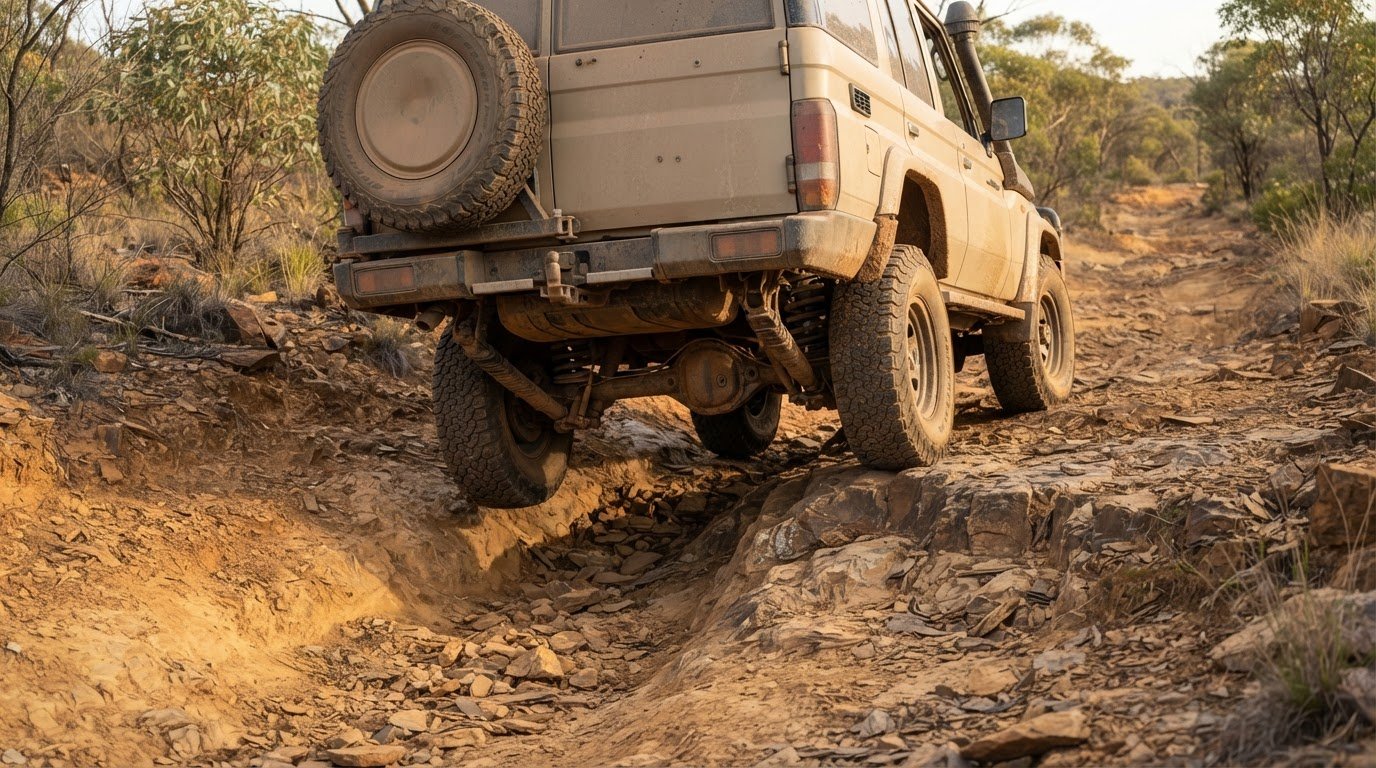
Consider a 4WD with a suspension lift and larger tyres. Each change can contribute to a higher entry point, so their combined effect matters. A tyre change alone may also alter access. The exact result depends on the vehicle setup and where the tent sits. Don’t assume two vehicles with similar modifications need the same ladder length.
Rack height also affects the installed setup. A tent mounted higher above the roof has a higher entry, even if the suspension and tyres are unchanged. Changing the rack or mounting arrangement can alter the distance between the doorway and the ground. Consider the complete vehicle-and-tent configuration when assessing ladder reach.
- Suspension: A lift can increase the height of the tent entry.
- Tyres: Larger tyres can raise the vehicle and entry point.
- Rack and mounting: The tent’s position above the roof affects its installed height.
- Campsite slope: Uneven ground changes the ground level beneath the ladder.
These factors combine. A suspension change may seem modest, but larger tyres or a higher rack can add more height. A sloping campsite can then change the distance from a ladder foot to the ground. Assessing the ladder based only on the vehicle’s lift leaves out important parts of the setup.
Reassess access whenever the vehicle or tent mounting changes. A new tyre size, suspension setup, rack, or tent position can change the entry height and required reach. Compare the ladder with the vehicle in its current touring configuration, rather than relying on measurements from before modifications. Include the campsite surface in the assessment, since the same 4WD can meet different ground levels at different sites.
Vehicle lift height matters, but it isn’t the only deciding factor. Suspension, tyres, rack position, tent mounting and campsite slope all influence the ladder’s reach. Treat the installed 4WD and rooftop tent as one setup. That gives a more useful basis for deciding whether an extension could suit your vehicle, instead of choosing by lift height alone.
Ladder angle and setup geometry
Reach alone doesn’t make an extension suitable. The ladder must meet firm ground at the angle specified by the tent manufacturer, with every locking section engaged. Both feet need stable contact before anyone climbs.
Follow the rooftop tent manufacturer’s guidance on ladder position and angle. A ladder set too steep can feel unstable and make the rungs awkward to reach. For example, feet positioned close to the vehicle may leave the rails rising sharply towards the doorway. Moving the feet outward changes the angle, but the ladder must still be positioned as intended.
A ladder set too shallow has different risks. Its feet may extend beyond their intended position, and the ladder can put greater leverage on its attachment point. This change in geometry can stress the connection. Don’t force an extension into a setup that makes the ladder lean far from its designed position.
Use an extension intended for the ladder system, attach it as directed and engage every locking section. Position the ladder according to the tent manufacturer’s instructions, with both feet on firm, stable ground. Avoid homemade joins, which can create a weak connection or change how the ladder transfers load.
Ground conditions can affect the setup even when the vehicle stays still. A ladder foot may sink into soft soil, or uneven ground may leave one foot higher than the other. Either can change the ladder’s angle or reduce stable contact. Reposition the vehicle or choose firmer ground if the feet can’t sit securely.
Don’t balance ladder feet on improvised blocks or unstable supports. A block can shift, tilt or sink, changing the ladder’s position during access. Use an approved extension or reposition the vehicle instead. Check the ground beneath both feet, not just the area under the ladder’s centre.
Consider the tent design, too. On some fold-out rooftop tents, the ladder contributes to structural support when deployed; on others, it mainly provides access. An extension may therefore affect more than climbing reach. Follow the instructions for the specific tent and ladder, and don’t treat an access ladder as structural support unless its design specifies that role.
Before climbing, confirm that the ladder is attached as intended, its locks are engaged and both feet are stable. If the extension changes the angle or shifts the feet from their intended position, adjust the setup. A secure connection, correct geometry and firm ground work together. Extra length can’t compensate for a poor setup.
Measuring installed tent-entry height
Measure the tent as installed, not on a showroom vehicle. The required ladder length depends on the vehicle, tent position and campsite slope. A roof-mounted tent’s doorway height can change when you fit a rack, change tyres or modify the suspension. Record the setup you actually travel with, then assess ladder reach against it.
Start with the tent fully deployed and the vehicle parked on firm, representative ground. Identify the doorway or ladder attachment point specified by the tent design. Measure from that point to the ground beneath the ladder’s intended position. This gives you the installed entry height to compare with the ladder arrangement. Don’t use roof height as a substitute, because the doorway may sit elsewhere.
Next, account for the ladder’s intended angle. The distance along the ladder from doorway to ground differs from a straight vertical height measurement. A longer ladder may be needed to reach the same ground while maintaining the manufacturer’s intended angle. Use the measured height as a reference, then assess deployed reach and position together.
Repeat the assessment on sloping ground. A campsite that rises or falls beneath the vehicle changes the distance to the ladder feet. For example, the ground beside a wheel may be higher than the ground beside the ladder. Check the actual position of the feet, not a convenient patch nearby. Both need to reach firm, stable ground.
Record the conditions alongside each measurement. Note the vehicle and tent setup, the ladder’s position, and whether the ground is level or sloped. These details help explain why the same ladder may fit differently at home and at camp. They also make comparisons useful after a change to the rack, tent position, suspension or tyres.
Use this sequence to make the comparison clearer:
- Deploy the tent on the vehicle in its touring configuration.
- Locate the intended ladder attachment and foot position.
- Measure from the attachment point to the ground beneath the feet.
- Assess the ladder at the tent’s recommended angle.
- Repeat on sloping ground, noting changes at both feet.
Compare your measurements with the ladder’s usable length and locking sections. The ladder needs to reach the ground at the intended angle, with every section properly engaged. Measurement alone can’t establish compatibility: the attachment, rails, feet and hinge must also suit the tent’s ladder system.
Measure again after changing the vehicle or mounting arrangement. A suspension lift, larger tyres, rack change or different tent position can alter the installed entry height. Campsite slope affects reach, too, so assess the terrain where the tent will stand. Together, these checks help you decide whether an extension suits your setup.
Adventurerz: Roof top tents reviews and recommendations
Adventurerz offers roof top tent reviews and recommendations to help you weigh tent choices alongside your vehicle setup. If you’re comparing options for touring in Australia, consider how the tent’s design and mounting position affect access on your lifted 4WD. The ladder, entry height and campsite conditions all shape how practical a setup feels.
Adventurerz also covers 4WD awnings, camping equipment and hiking equipment, helping connect gear decisions across your trips. Use these recommendations when planning a setup that suits your style of travel and the places you hope to explore.
Contact Adventurerz to discuss what outdoor gear information would help with your next decision.
Build a setup ready for the next trip
Choosing a roof top tent ladder extension for lifted 4WDs is part of planning a complete touring setup. Think beyond the driveway: the vehicle, tent and campsite all shape how access feels on a real trip. A setup that works for your usual routes can make camp routines easier, leaving more attention for the journey and the places you explore.
For your wider gear decisions, Adventurerz offers roof top tent reviews and recommendations, alongside 4WD awnings reviews and recommendations and camping equipment reviews and recommendations. These perspectives can help you consider how different parts of your touring kit fit together, rather than treating each choice in isolation.
Have a particular vehicle or tent arrangement in mind? Ask Adventurerz about your setup and keep planning with care. Here’s to a stable climb, a considered camp and many memorable kilometres ahead.
Frequently Asked Questions
Can I replace the ladder with a longer one?
Yes, if the replacement suits your tent’s ladder attachment and deployed arrangement. Match the connection, hinge and foot design, not just the ladder’s reach. A longer ladder that can’t sit as intended may create an awkward entry or interfere with tent deployment. For example, a roof top tent ladder extension for lifted 4wds should fit the ladder system, not simply add length.
Can I use blocks under the ladder?
No. Improvised blocks can shift, sink or tilt, changing the ladder’s position as you climb. A block on soft campsite soil may settle beneath one foot while the other stays put. Choose firmer ground or reposition the vehicle so both feet are stable. If you need more reach, use an extension intended for the ladder system instead.
Does the Ladder Support the Tent?
It depends on the rooftop tent design. On some fold-out tents, the ladder contributes to structural support when deployed; on others, it mainly provides access. That difference matters when changing the ladder or adding an extension. Check the instructions for your tent model and follow its setup guidance. Don’t assume the ladder is only for climbing unless the design indicates that.
What rooftop tent ladder extensions fit lifted 4WDs in Australia?
The suitable extension is one designed for your rooftop tent’s ladder system. A roof top tent ladder extension for lifted 4wds still needs to match the ladder’s connection and deployed position. Compare its attachment, rails, locks and feet with your current setup. Campsite surfaces also affect where the ladder lands, so consider the complete vehicle-and-tent arrangement rather than choosing by vehicle lift alone.
How do I measure the extra ladder length needed for a rooftop tent on a lifted 4WD?
Measure from the tent’s intended ladder attachment to the ground where both feet will sit, with the tent installed on your 4WD. Assess the ladder at its intended angle, then account for campsite slope. Compare the setup with the ladder’s usable deployed length, not just its full length. Also consider how the extension’s connection affects the reach of the assembled ladder.
What rooftop tent ladder extension lengths and weight ratings are available in Australia?
Available lengths and weight ratings depend on the extension and ladder system. There’s no single length or rating for every rooftop tent. Compare the product’s published deployed reach and stated rating with your installed setup. Check whether the rating applies to the assembled ladder with the extension, rather than assuming the original ladder’s rating carries over.
Are ladder extensions compatible with different rooftop tent ladder brands and rung sizes?
Not automatically. Ladder systems can differ in rail profile, rung spacing, locks, feet and hinge design, even when two ladders look similar. An extension made for one rail shape may not secure properly to another. Use the brand and rung size as identification clues, then compare the actual connection and locking arrangement. A close visual match alone doesn’t establish compatibility.