A diff lock can help a 4WD keep moving when a wheel loses traction, but it isn’t essential for every off-road trip. If you’re weighing up what a diff lock is and whether you need one, the key point is that it locks the axles together so both wheels turn at the same speed, helping the wheel with grip make use of the available torque.
It’s easy to assume more traction equipment is always better, but the right setup depends on where you drive, the terrain you tackle and how often a wheel loses grip. A diff lock can help on challenging tracks, but it adds complexity and affects how a vehicle behaves on sealed roads.
We’ll explain how a diff lock works, when it can help in Australian off-road conditions, and what to consider before choosing one. You’ll come away with a clearer sense of whether it suits your trips, or whether careful driving and your current 4WD setup are enough.
Key Takeaways
- Assess the terrain you regularly drive before deciding whether a locking differential belongs in your setup.
- Driver-selectable locks give you control over when the axles are locked, using a switch or, in some cases, a lever and cable.
- Consider how a locker may affect on-road handling, especially through corners and in slippery conditions.
- Think carefully about vehicle modifications when weighing up a lunchbox locker, as they can influence reliability.
Table of Contents
What is a diff lock and do I need one
A differential lets the left and right wheels on an axle turn at different speeds. That difference helps a 4WD travel through a corner, where the outside wheel covers more ground. On uneven tracks, however, one wheel can lose grip while its partner remains planted. An open differential can then struggle to deliver useful drive to the wheel with traction.
A diff lock, or locking differential, changes that behaviour. When engaged, it locks the axle shafts together, making both wheels rotate at the same speed. A locking differential can send 100% of available torque to the wheel with traction. That can help a vehicle keep moving when a wheel lifts, spins on loose ground, or has less grip than the opposite wheel.
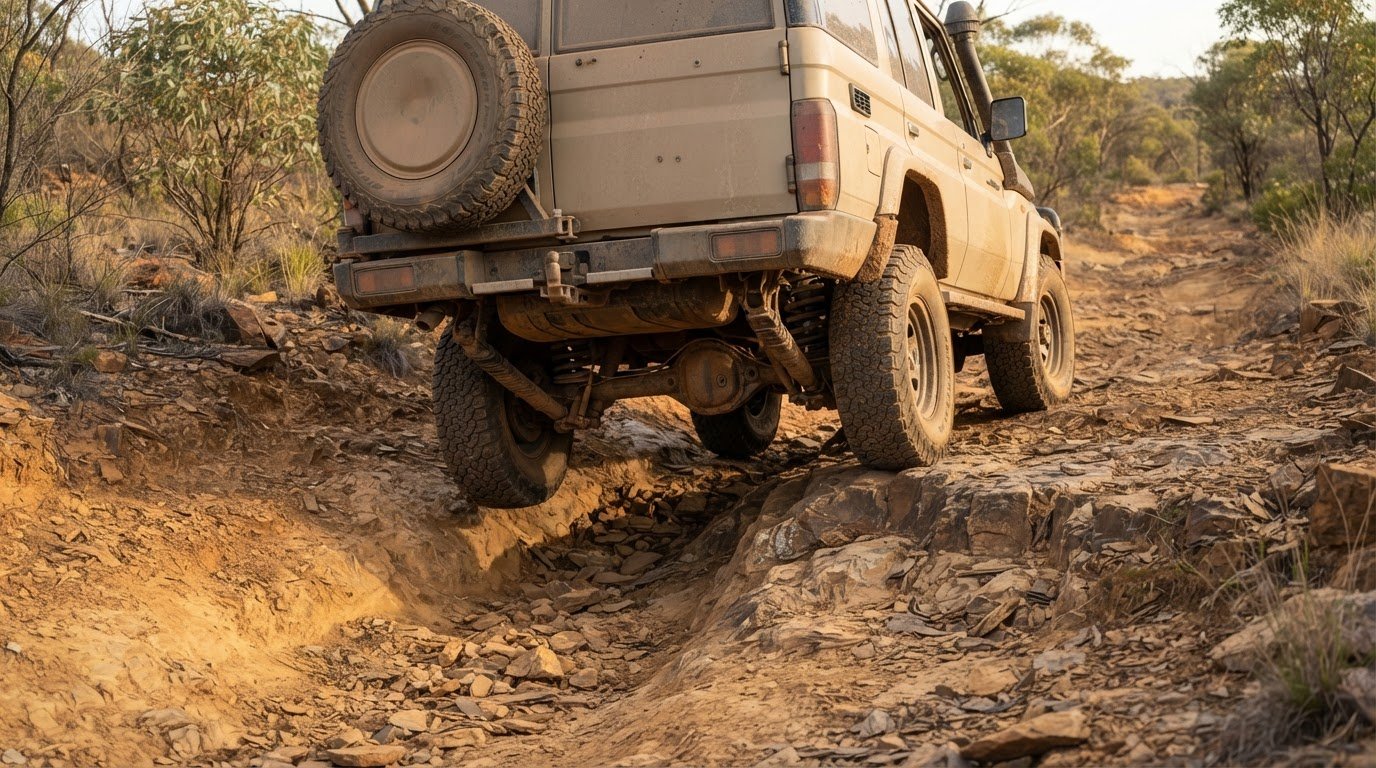
That figure describes available torque, not guaranteed forward movement. A locked axle cannot create grip where the tyres have none. Tyre choice, ground conditions, vehicle position and smooth throttle control still matter. On a rutted Australian track, for example, a lock may help a wheel keep driving when the opposite wheel crosses a softer patch.
How you engage a lock
Some locking differentials are driver-selectable, activated with a switch or, in some cases, a lever and cable. Others engage automatically under particular conditions. Follow the vehicle or locker manufacturer’s operating instructions, because activation methods and limits vary between setups.
Think about where you’re likely to lose traction rather than treating a locker as a general upgrade. A selectable lock may suit regular trips over uneven, loose or heavily rutted terrain, where a wheel can lose contact or grip. If you mostly drive on sealed roads and maintained access tracks, you may rarely use a diff lock. Your usual routes and recovery needs are more useful guides than the label “off-road”.
For example, picture a 4WD crossing a rocky section with one wheel climbing while another drops into a rut. If the unloaded wheel spins, locking the axle can help the wheel with grip receive available drive. On soft sand, a lock may also help when the wheels encounter different levels of resistance. But line choice, steady momentum and avoiding unnecessary wheelspin remain important on both surfaces.
What to weigh before choosing
- Terrain: Note whether your regular routes include uneven ground, loose surfaces or obstacles that regularly leave a wheel spinning.
- Road use: Some lockers can feel noisy or harsh on streets and affect handling, particularly in corners and slippery conditions.
- Control: A driver-selectable system lets you choose when to lock the axles. Automatic designs behave differently.
- Vehicle setup: Consider existing modifications before choosing an aftermarket locker, especially a lunchbox type.
A lunchbox locker replaces the stock spider gears or limited-slip clutches while retaining the original equipment carrier. This design may have reliability issues with power adders, larger wheels and tyres, or other modifications. Your vehicle’s existing setup should therefore be part of the decision from the start.
So, what is a diff lock and do you need one for Australian off-roading? It’s a traction aid that locks both wheels on an axle so they turn together. It’s most useful when your regular terrain can leave one wheel without grip. For mostly sealed-road travel or straightforward tracks, the added capability may not justify the trade-offs. Match the system to your routes, driving habits and vehicle setup, then use it selectively and drive with care.
The practical question is whether the places you drive make the added capability useful often enough to justify a locker. Think about the situations you actually encounter: uneven ground, loose surfaces, ruts or a wheel losing grip while its partner remains planted. If those conditions are uncommon on your usual routes, the system may add little. If they’re routine, consider whether locking an axle fits your needs. Remember, a locker doesn’t replace suitable tyres, careful positioning or smooth throttle control.
When a locking differential is engaged, the axles are locked together and both wheels rotate at the same speed. That change is most relevant when differing wheel grip is limiting progress; it is not a reason to engage a lock without considering the surface and the vehicle’s instructions. Driver-selectable locking differentials require the driver to activate a switch or, in some cases, use a lever and cable to lock the axles together. Before choosing one, consider whether you want to make that decision yourself and whether its operating method suits your driving. A locker is best weighed against your routes and recovery needs, rather than treated as an essential feature for every 4WD.
Adventurerz
Adventurerz helps you connect your 4WD setup with the kind of Australian trips you want to take. Its information on 4WDing and adventure in Australia can help you think through where you drive, what conditions you encounter and which equipment choices support your plans. That broader view matters: a diff lock is only one part of preparing a vehicle for remote or challenging tracks.
As you plan, Adventurerz also offers reviews and recommendations across camping and hiking equipment, roof top tents and 4WD awnings. Use that guidance to consider your wider setup, from travelling comfortably to choosing gear suited to your style of exploration. Thoughtful preparation helps us enjoy the outdoors while treating tracks and campsites with care.
For questions about Adventurerz’s information and recommendations, contact Adventurerz.
Plan Your Next Track With Purpose
Make your next outing a chance to learn how your 4WD responds across different ground. After each trip, note where you felt confident, where you had to change your approach, and what conditions affected your progress. Those observations can make future equipment decisions more practical and help you build sound judgement over time.
Understanding what a diff lock is and whether you need one is part of responsible travel. Choose routes that match your experience, drive with care, and minimise your impact on tracks and campsites. Preparation isn’t only about vehicle capability; it’s also about making thoughtful choices before heading into remote country.
Ready to shape your next adventure? Contact Adventurerz for advice and keep planning for the journeys ahead.