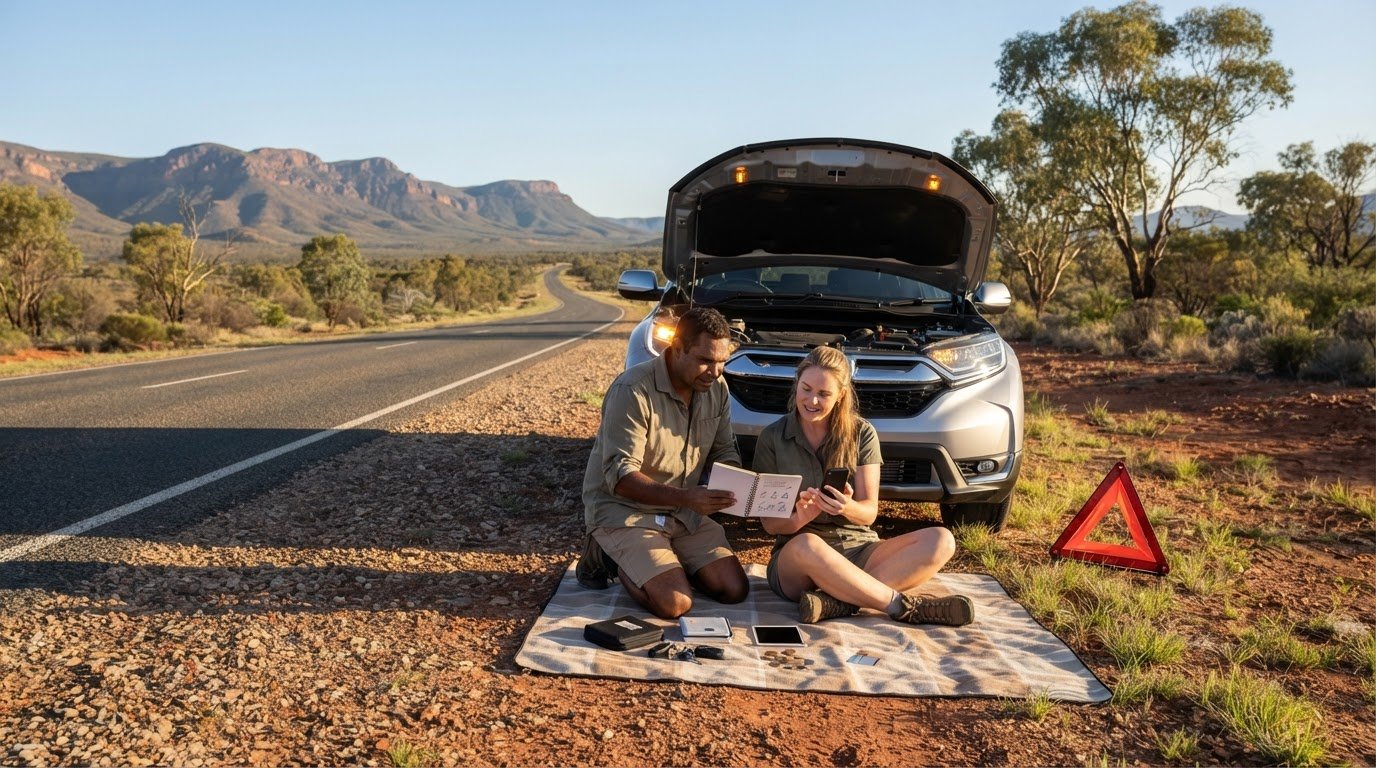
What if your dream of crossing the Simpson Desert in 2026 costs A$15,000 more than it did just three years ago? We all feel the sting of rising prices when looking at the latest showroom stickers and high-end lithium systems. It’s easy to get lost in a sea of “essential” bolt-ons and worry that cutting corners will leave you stranded in the red dust of the Kimberley. Understanding the total cost of a 4wd touring setup Australia 2026 demands is the only way to ensure your bank account survives the build. We believe every one of our fellow Adventurerz deserves a rig that’s both capable and sustainable without breaking the bank.
We’ve crunched the numbers to reveal every dollar you’ll spend for a safe, off-the-grid journey. We’ll show you exactly where to invest your hard-earned cash and where you can keep things simple. This guide provides a clear, tiered budget framework, a breakdown of where to save versus splurge, and a realistic timeline to get your build trail-ready. Let’s get your preparation started so you can hit the tracks with confidence.
Key Takeaways
- We’ll help you navigate the 2026 market to secure the perfect foundation, ensuring you account for those sneaky “hidden” costs like stamp duty and initial major services.
- Learn why prioritizing quality suspension and protection is the smartest way for Adventurerz to safeguard their rigs against the brutal Australian corrugations.
- Get a clear breakdown of the total cost of a 4wd touring setup Australia 2026, comparing everything from A$25,000 budget builds to A$90,000 ultimate touring machines.
- Master the essentials of off-grid living by balancing high-tech 12V lithium systems with the right shelter choice, whether it’s a roof top tent or a classic swag.
- Protect your investment and your peace of mind by understanding specialized 4WD insurance and the essential maintenance routines required for safe, remote exploration.
The Foundation: Vehicle Purchase and Initial Outlays in 2026
Starting your journey toward the ultimate remote escape begins with one big decision: the rig. For us Adventurerz, the vehicle is more than just transport; it’s a mobile basecamp that must survive the harshest conditions on the planet. Calculating the total cost of a 4wd touring setup Australia 2026 requires looking past the sticker price. We need to factor in the reality of a market still recovering from years of supply chain volatility. Whether you’re eyeing a brand new 300 Series or a seasoned Hilux, your choice of base vehicle dictates every following cent of your build budget.
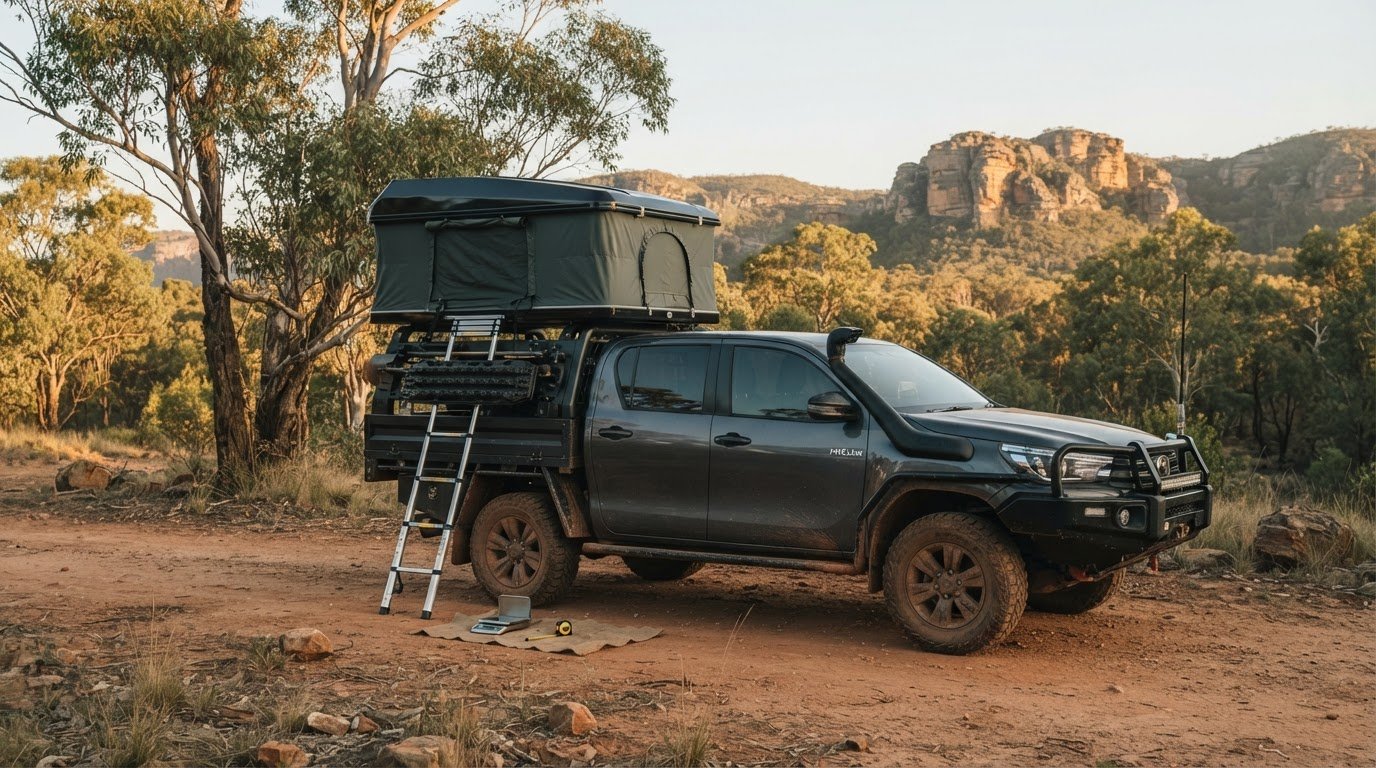
Before we talk dollars, we need to understand what is a four-wheel drive vehicle and why the mechanical foundation matters for your safety. A true 4WD system provides the traction needed for sand, mud, and rock, but the weight of touring gear adds immense stress to these components. Choosing a Ute often means a lower entry price, but you’ll immediately face the A$4,000 to A$6,000 cost of a quality canopy. Conversely, a Wagon like a Prado offers better security and dust sealing out of the box, though it limits your ability to carry dirty gear or large fuel drums externally.
New vs. Used: The 2026 Price Reality
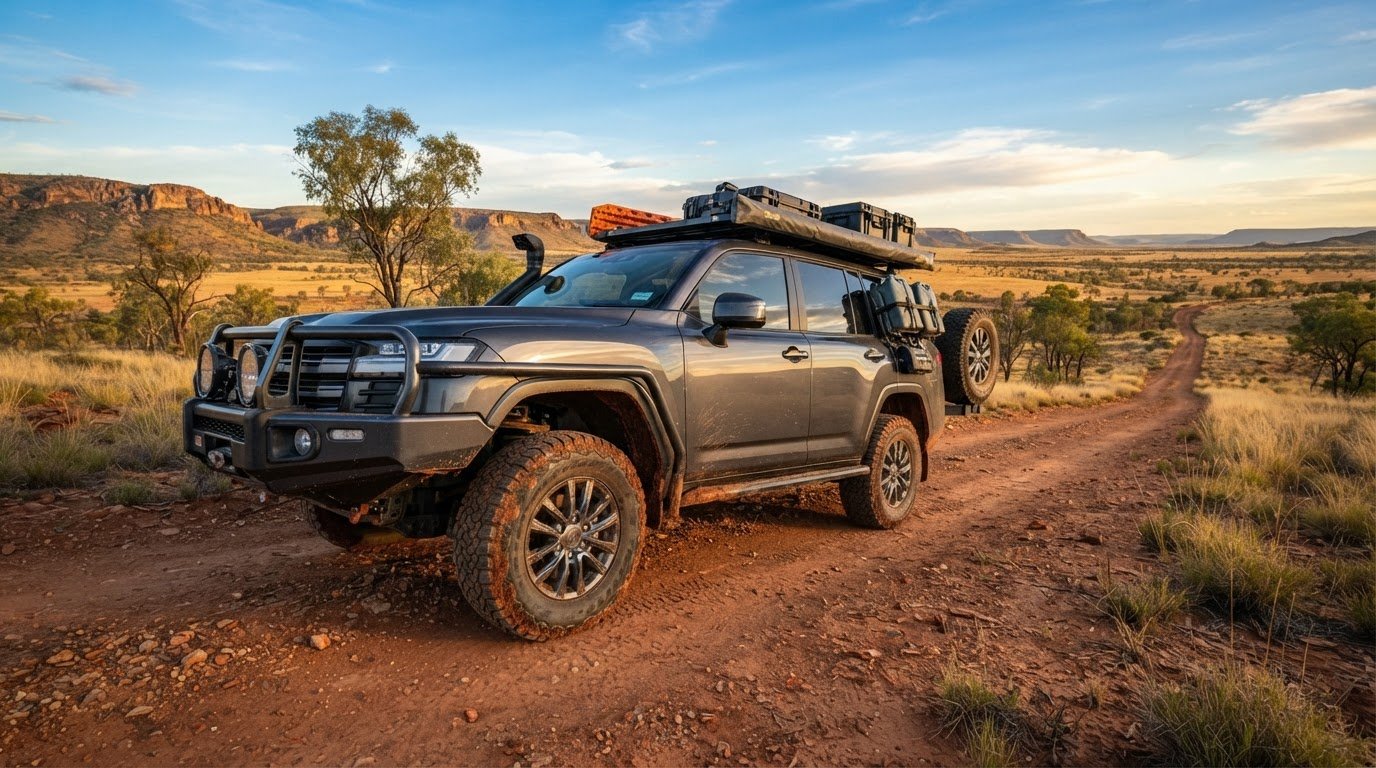
The 2026 market shows that “Touring Icons” hold their value with incredible tenacity. We’re seeing used 2021-2023 LandCruiser 79 Series still fetching between A$85,000 and A$115,000 depending on the existing tray setup. If you’re looking at a used Y62 Patrol, expect to pay A$70,000 for a well-maintained Series 5. New vehicle wait times for popular models still hover around 6 to 12 months, which keeps the secondary market prices inflated. When buying used, we always budget an extra A$3,500 for “Day One” reliability items like new belts, hoses, and a heavy-duty cooling system flush to ensure the rig is actually outback ready.
Administrative and Legal Entry Costs
Don’t let the “hidden” costs catch you off guard. In 2026, Australian stamp duty averages roughly 4% of the purchase price across most states. On an A$80,000 vehicle, that’s an immediate A$3,200 hit to your savings. We also insist on a PPSR check; it only costs about A$2 but confirms the vehicle has no financial encumbrances or a write-off history. A specialist pre-purchase inspection is your best insurance policy. Spending A$500 on a 4WD expert who knows where Toyota chassis crack or where Nissan electronics fail can easily save you A$5,000 in catastrophic repair bills three months down the track. It’s about being responsible Adventurerz and starting your build on a platform that won’t let the community down in the middle of the Simpson Desert.
- Stamp Duty (Avg): A$2,400 – A$4,500
- Specialist Inspection: A$450 – A$600
- Initial Baseline Service: A$1,200 – A$2,200
- Transfer & Rego Fees: A$400 – A$900
Getting the foundation right ensures your total cost of a 4wd touring setup Australia 2026 stays predictable. Once the keys are in your hand and the paperwork is filed, we can move on to the exciting part: turning that stock machine into a sustainable, off-the-grid home.
Performance and Protection: The Essential 4WD Modifications
We’ve all seen a loaded rig sagging at the rear while bouncing along the Oodnadatta Track. It’s a recipe for disaster and expensive mechanical failure. When calculating the total cost of a 4wd touring setup Australia 2026, your first dollars must go where they matter most: keeping your wheels on the ground and your panels straight. The Australian Outback is unforgiving; it’ll find every weakness in your vehicle’s factory setup within the first hundred kilometers of corrugations.
Suspension and GVM Upgrades
Factory suspension is designed for comfort on bitumen, not for carrying 300kg of camping gear, extra fuel, and water. A basic 2-inch lift kit from reputable Australian brands starts around A$2,200 installed. However, for serious touring, a GVM (Gross Vehicle Mass) upgrade is the gold standard. This modification increases your legal carrying capacity, which is vital for staying within the law when fully loaded. You can expect to pay between A$4,500 and A$7,500 for a GVM kit including heavy-duty shocks, springs, and installation. It’s a legal requirement to follow the national vehicle modification guidelines to ensure your rig remains insured. Engineering certification for these upgrades typically adds another A$600 to A$1,200 to your 2026 budget.
Protection and Recovery Hardware
Animal strikes in remote areas can end a trip instantly. A quality winch-compatible bullbar is your best insurance policy. Steel bars offer maximum protection for roughly A$2,800 to A$4,200, but they’re heavy. Alloy bars are lighter and help preserve your front-end suspension life, though they often cost A$500 more than steel equivalents. We recommend adding rock sliders for A$1,100 to protect your sills from track damage; they’re much cheaper than a trip to the panel shop.
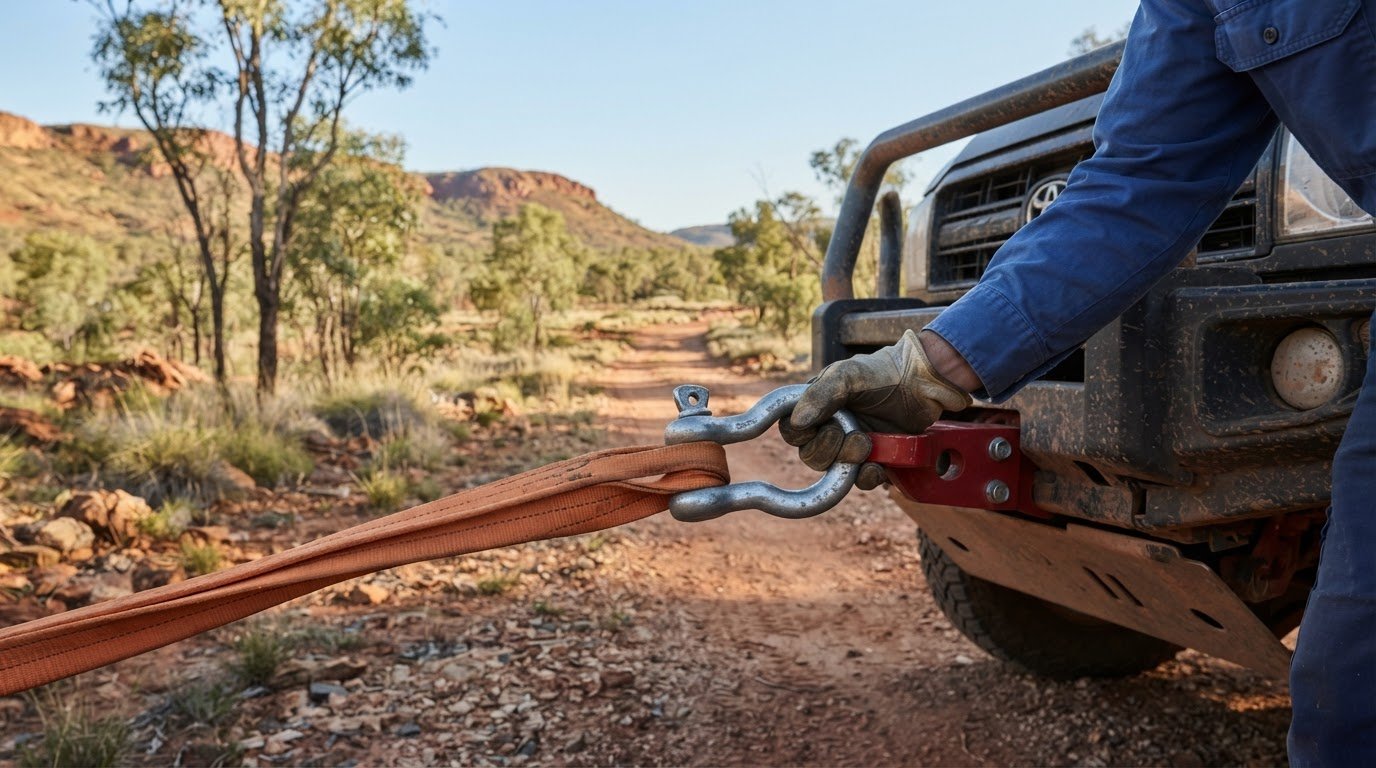
Recovery gear is where we never compromise on quality. A reliable 12,000lb winch is a core investment, with prices ranging from A$950 for solid entry-level units to A$2,700 for premium brands with synthetic ropes. You’ll also need a set of recovery tracks, which typically cost between A$180 and A$450. Don’t forget a rated recovery kit containing soft shackles and a kinetic snatch strap for about A$380. These tools ensure we can help ourselves and our mates when the mud gets too deep.
Tyres are your only contact point with the terrain. Budgeting A$380 to A$580 per tyre for high-quality All-Terrains or Mud-Terrains is standard for 2026. Choosing “cheap” rubber is the most expensive mistake you can make; a single sidewall failure in the middle of the Kimberley can cost you a whole day and the price of a full replacement at remote-area premiums. Before you finalize your protection plan, take a look at our community’s preferred roof top tents to see how that extra weight might impact your suspension choice.
The Living Setup: Off-Grid Comfort and Power Systems
Creating a home on the tracks is where the magic happens. We know that the leap from a weekend warrior to a long-term tourer depends entirely on your ability to stay comfortable and powered up in the middle of nowhere. Calculating the total cost of a 4wd touring setup Australia 2026 requires looking beyond the bull bar and focusing on the systems that keep your food cold and your bed dry. Before you drop ten grand on a lithium fit-out, ensure your base vehicle is solid by understanding your consumer rights when buying a car. Once the foundation is set, it’s time to build your ecosystem.
12V Power and Solar Integration
The 2026 market has seen Lithium (LiFePO4) batteries become the absolute standard for Adventurerz. You can expect to pay between A$800 and A$1,400 for a reputable 100Ah lithium battery, though many of us are now opting for 200Ah units to run induction cooktops. We recommend integrated DCDC chargers with built-in MPPT controllers; these units manage your alternator input and solar intake in one box. High-end integrated systems from brands like Redarc or Victron usually range from A$600 to A$1,200 depending on the amperage.
- Solar blankets: These offer incredible flexibility for A$400 to A$800. You can chase the sun while your rig stays in the shade.
- Fixed panels: A more “set and forget” approach, costing roughly A$200 to A$500 for a 200W setup on your roof rack.
Shelter and Lifestyle Accessories
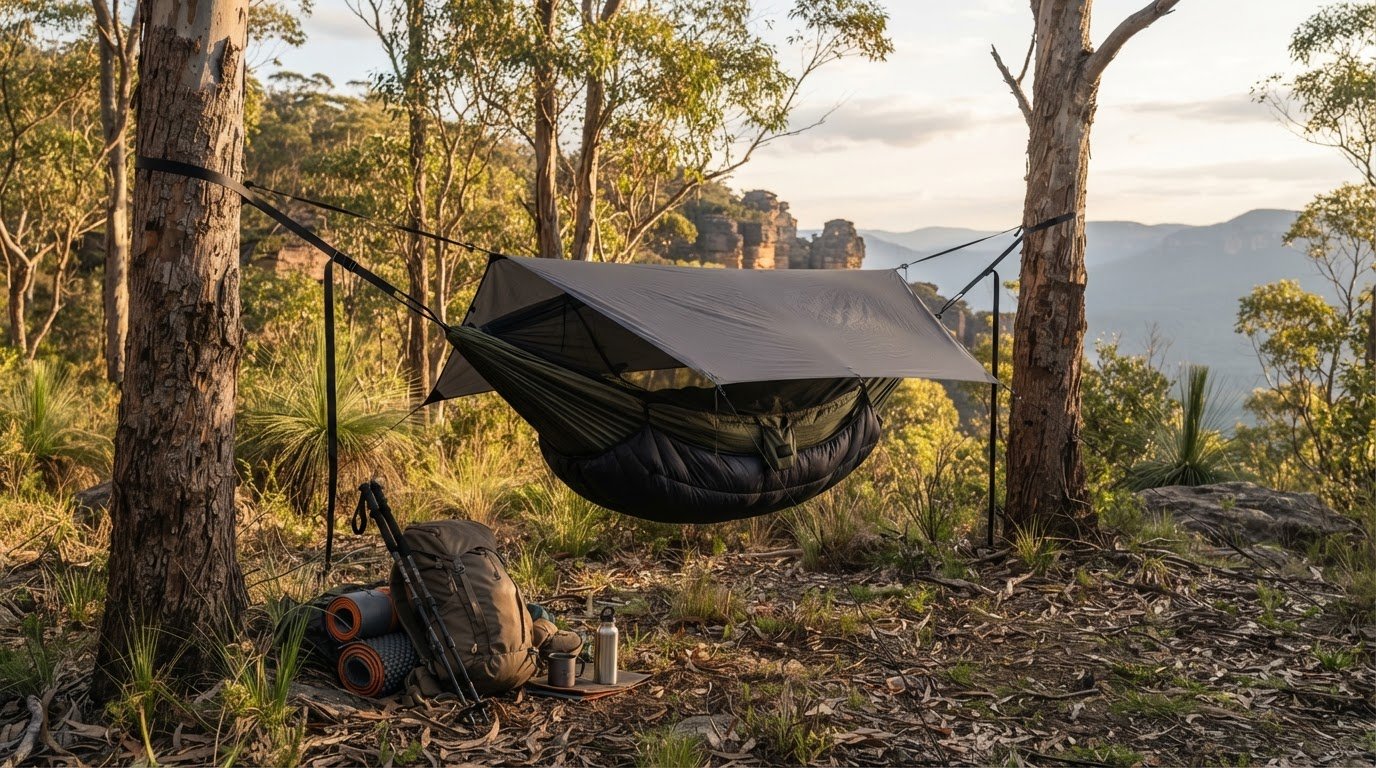
Your choice of shelter is the biggest lifestyle decision you’ll make. We’ve seen a massive shift toward hardshell roof top tents because they set up in seconds. A quality hardshell will set you back between A$3,500 and A$6,000, while traditional softshell versions remain a budget-friendly entry point at A$1,200 to A$2,500. If you prefer staying grounded, a heavy-duty double swag costs between A$500 and A$900.
Protection from the harsh Australian sun is a health requirement, not a luxury. Reliable 4WD awnings, especially 270-degree wrap-around models, typically cost between A$800 and A$1,800. These provide vital shade for the kitchen area. Speaking of the kitchen, a 40L to 60L fridge/freezer is essential for those 40-degree days in the Kimberley. Budget A$1,100 to A$1,800 for a unit that won’t quit when the corrugated roads get rough.
Connectivity is the final piece of the 2026 puzzle. Starlink has changed the game for remote work and safety. The hardware usually costs around A$599, but we suggest factoring in another A$400 for a dedicated 12V conversion kit and a flat-mount roof bracket. When you add up these components, the total cost of a 4wd touring setup Australia 2026 for the living area alone typically sits between A$8,000 and A$15,000. It’s a significant investment, but the freedom it buys is priceless.
Hidden Australian Costs: Compliance, Insurance, and Maintenance
Building your dream rig is one thing; keeping it legal and running across the Simpson Desert is another. Many Adventurerz focus on the initial purchase price, but the total cost of a 4wd touring setup Australia 2026 includes substantial ongoing protection and compliance fees. Standard insurance policies often fail our community here. They typically cap accessory coverage at A$3,000 to A$5,000, which is useless if your A$30,000 in modifications gets written off in a remote river crossing. You’ll need specialized enthusiast insurance to cover the full replacement value of your specific gear.
Insurance and Legal Compliance
Opting for “Agreed Value” over “Market Value” is essential for modified vehicles. This ensures your bull bar, winches, and lithium power systems are fully protected. If you’ve pushed your weight limits with heavy gear, factor in A$2,500 to A$4,500 for a GVM (Gross Vehicle Mass) upgrade and engineering sign-off. This keeps you legal and ensures your insurance remains valid during a claim. Don’t forget premium roadside assistance; top-tier plans like NRMA Premium Care or RACV Total Care cost roughly A$360 per year but save you thousands in remote towing fees.
The Maintenance and Spares Budget
We call it the “Dust Tax.” Remote touring effectively doubles your service frequency because fine red dust is a relentless engine killer. Expect to change air filters and oil every 5,000km rather than the standard 10,000km interval. A “Bush Spares” kit is non-negotiable for any serious trip. Budget A$650 for a basic kit containing a serpentine belt, radiator hoses, two fuel filters, and essential fluids. For safety, a quality UHF radio (A$450) and a PLB (A$380) are vital investments that provide a lifeline when mobile reception vanishes.
Fuel is your biggest variable when calculating the total cost of a 4wd touring setup Australia 2026. A stock LandCruiser might sip 11L/100km, but a fully loaded rig with a 4WD awning and heavy roof racks often climbs to 16L/100km. For a 10,000km lap in 2026, estimating diesel at A$2.25 per litre with remote premiums, your fuel budget should sit around A$3,600. Factoring in these hidden expenses ensures your journey remains about the scenery, not the stress of an empty wallet.
The 2026 Touring Tiers: What Can You Get for Your Money?
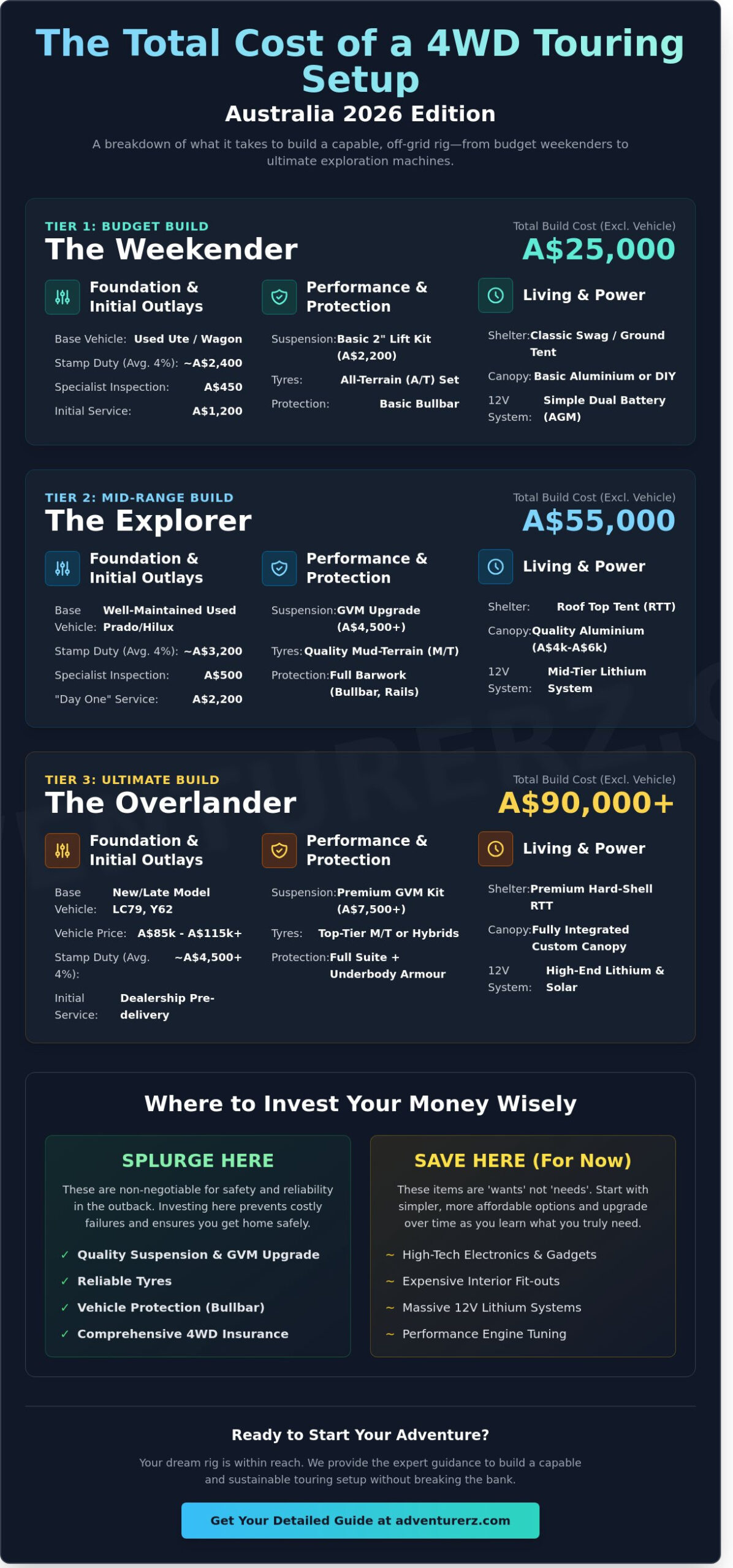
Choosing your path depends on where you want to wake up. We’ve analyzed the current market trends to help you understand the total cost of a 4wd touring setup Australia 2026 based on three distinct levels of adventure. Whether you’re chasing a weekend escape or a year long lap, your budget dictates your boundaries.
- The Budget Weekender (A$25,000 – A$40,000): This tier focuses on high value second hand rigs. You’re likely looking at a 2016-2018 Mitsubishi Triton or Isuzu D-Max with roughly 150,000km on the clock. Modifications remain minimal; we recommend prioritizing quality all-terrain tires, a basic dual battery system, and a reliable swag for simplicity.
- The Capable Tourer (A$60,000 – A$90,000): This is the sweet spot for most Adventurerz. This budget secures a low kilometer used vehicle or a mid-spec new ute. It covers a professional suspension upgrade, a bullbar for animal strike protection, and a 100Ah lithium power setup to keep the fridge running indefinitely.
- The Ultimate Expedition (A$150,000+): This is the “no compromise” build. Think a new 300 Series LandCruiser or a 79 Series with a custom canopy. This price includes a GVM upgrade to stay legal, premium off-grid electronics, and high end living quarters for long term remote travel.
Don’t let the big numbers stall your engine. We suggest using our travel planner to map out your journey and phase your spending over 18 months to make the dream manageable.
Building in Phases: The Smart Way to Spend
We believe in building a rig that grows with your skills. Start with Phase 1: Safety and Reliability. This involves a heavy duty service, upgrading the cooling system, and investing in rated recovery gear. These are the non-negotiables that ensure you actually make it back from the bush.
Phase 2 focuses on Self-Sufficiency. This is where you add fixed solar panels and 12V water pumps. Once you can stay remote for five days without needing a town, you’re ready for Phase 3: Comfort and Luxury. This includes items like 4WD awnings or premium roof top tents that turn a rugged campsite into a sanctuary.
Final Value Checklist
The true total cost of a 4wd touring setup Australia 2026 includes the purchase price, all modifications, and a 15% contingency buffer to cover unexpected mechanical repairs or shipping delays.
- Source gear locally: Stick to reputable Australian retailers to ensure you get full warranties and gear designed for our harsh conditions.
- Maximize savings: Bundle your purchases at single workshops to negotiate better labor rates on installations.
- Join the community: Jump into our forums to find gear swaps and get real world advice from fellow Adventurerz who’ve already done the hard yards!
Gear Up for Your 2026 Australian Expedition
Building a dream rig for the year 2026 requires more than just a passion for the bush; it demands a clear-eyed look at the numbers. We’ve seen that while vehicle prices continue to shift, the core of a reliable build remains rooted in quality suspension and smart off-grid power systems. Whether you’re aiming for an entry-level weekend warrior or a top-tier remote explorer, understanding the total cost of a 4wd touring setup Australia 2026 is the first step toward a responsible and safe journey. Don’t forget that compliance with Australian GVM standards and updated insurance premiums are non-negotiable for 2026 travel.
At Adventurerz, we believe that every footprint we leave should be a light one. Our community thrives on sharing expert reviews on 2026 gear and community-vetted Australian itineraries that help you explore the Red Centre or the Top End with confidence. We provide specialist advice on sustainable remote travel to ensure our wild places stay wild for the next generation of explorers. It’s time to stop dreaming and start prepping for the dust and the stars.
Start planning your 2026 remote escape with our Ultimate Travel Planner!
We can’t wait to see you out there on the tracks!
Frequently Asked Questions
How much does a basic 4WD touring setup cost in 2026?
A basic setup starts around A$25,000 to A$35,000 when calculating the total cost of a 4wd touring setup Australia 2026. This budget covers a reliable used vehicle for A$20,000 and roughly A$5,000 in essential modifications. We recommend prioritizing a quality 12V system and a durable swag to keep you comfortable. Buying high-quality gear the first time reduces waste and saves money on future replacements.
Is it cheaper to buy a pre-built 4WD or build it myself?
Buying a pre-built vehicle is typically 30% cheaper than building one from scratch. You benefit from the previous owner’s investment in bull bars and canopies, which often sell for cents on the dollar. However; building it yourself ensures every piece of gear meets your specific sustainable travel goals and off-grid needs. We love the satisfaction of knowing exactly how every bolt was tightened on our rigs.
Do I really need a GVM upgrade for Australian touring?
You likely need a GVM upgrade if your fully loaded vehicle exceeds its original manufacturer’s weight limit, which occurs in 85% of touring builds. Adding a steel bull bar, winch, and 60 litres of water quickly consumes your legal payload. Staying legal ensures your insurance remains valid. It also keeps your vehicle handling safely on corrugated outback tracks while protecting the tracks from excessive damage.
What are the most important 4WD modifications for the outback?
Quality all-terrain tyres, a reliable dual battery system, and a snorkel are the three most critical modifications for the Australian outback. These upgrades protect your engine from dust and water while powering your fridge for eco-friendly food storage. We suggest focusing on these essentials before spending money on aesthetic upgrades like LED light bars. Safety and self-sufficiency are the foundations of every successful Adventurerz journey.
How much should I budget for 4WD insurance with modifications?
Expect to pay between A$1,500 and A$2,800 annually for comprehensive insurance that covers off-road recovery and all your modifications. Standard insurers often cap accessory cover at A$2,000, so specialized 4WD policies are vital for protecting your total investment. Always disclose every bolt-on part to ensure you’re fully covered in remote regions. It’s the only way to travel with true peace of mind across our vast continent.
Can I tour Australia in a stock 4WD vehicle?
You can absolutely tour 70% of Australia’s main attractions in a stock 4WD vehicle. Modern rigs are incredibly capable right off the showroom floor for places like the Oodnadatta Track or K’gari. You’ll just need to drive more conservatively and carry basic recovery gear like Maxtrax to ensure you respect the delicate trail environments. Start with the basics and only upgrade as your skills and destinations demand.
What is the average fuel cost for a 4WD touring trip in 2026?
Budget approximately A$25 to A$35 per 100 kilometres based on 2026 diesel price forecasts of A$2.20 per litre. The total cost of a 4wd touring setup Australia 2026 must account for higher fuel consumption once you add heavy bar work and roof racks. Efficient driving habits can reduce your environmental impact and save you over A$500 on a typical 5,000 kilometre outback loop.
Should I buy a new or used 4WD for a touring build?
Buying a 3 to 5 year old used vehicle is the smartest financial move for most Adventurerz. You avoid the initial 20% depreciation hit and often find vehicles already fitted with expensive snorkels or tow bars. A new vehicle offers a full warranty and the latest fuel-efficient technology, which helps reduce your carbon footprint during long desert crossings. Both paths lead to incredible memories under the stars.