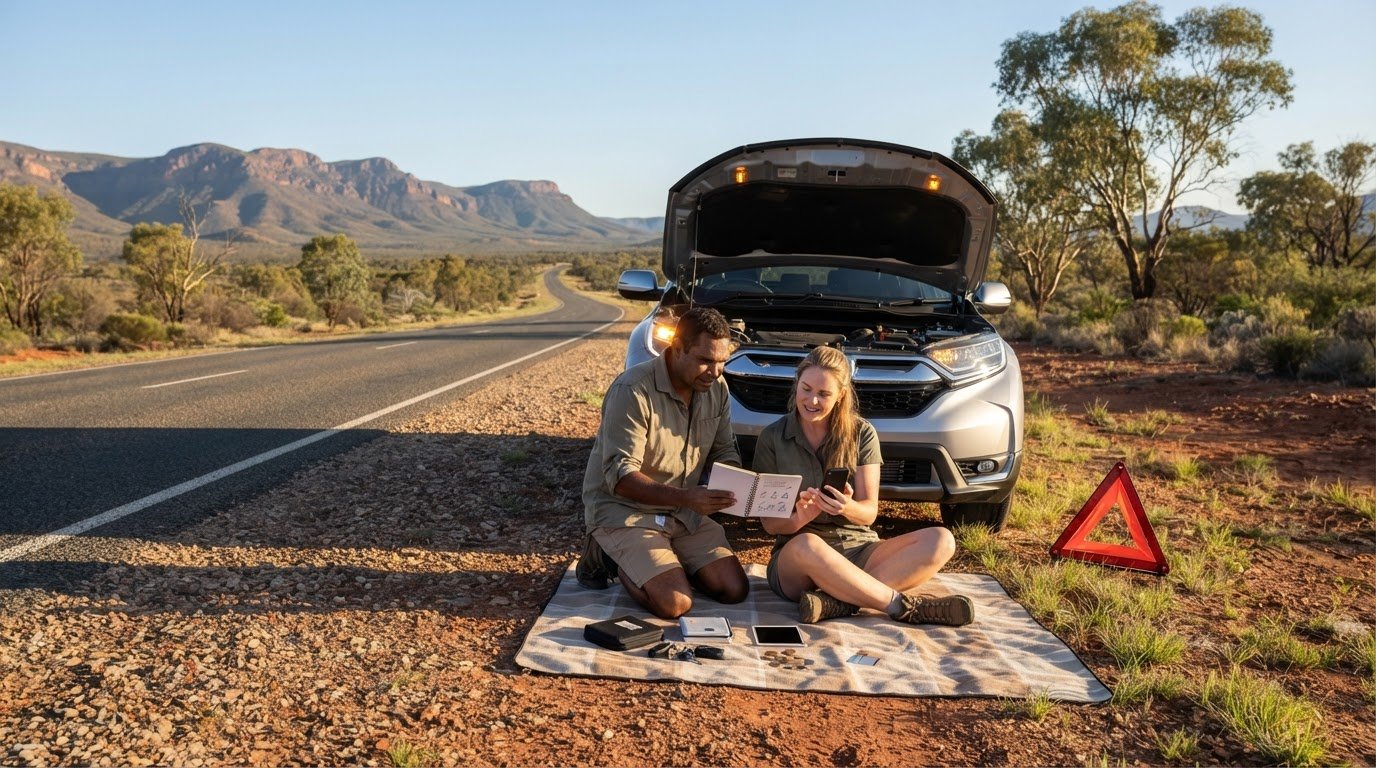
Imagine you’re pulling over for a quick lunch on the Oodnadatta Track, but instead of enjoying the view, you’re wrestling with tangled guy ropes and flimsy poles that snap the second a 20km/h desert breeze hits. Finding the best freestanding 4wd awning Australia has to offer isn’t just about luxury; it’s about reclaiming those precious minutes of your trip and ensuring your gear doesn’t end up in a landfill after one rough season. We know the frustration of heavy equipment dragging down your fuel economy or confusing wind ratings that simply don’t hold up in real outback conditions.
As fellow Adventurerz, we believe your rig should be a tool for freedom, not a source of stress. We’ve all felt the sting of gear failure in remote areas, so we’re here to help you find a setup that offers up to 14 square meters of coverage and survives a decade of touring. This guide promises to reveal the toughest, most reliable shelters on the market while teaching you exactly how to balance weight and durability. We’ll preview the top performers for 2026, including the Darche Eclipse and Bushwakka Extreme Darkness, so you can achieve a 60 second setup and get back to what matters: the journey ahead.
Key Takeaways
- Learn how a true freestanding design can slash your setup time to under 60 seconds, making those quick roadside lunch stops effortless for every Adventurerz member.
- Discover why the hinge point is the heart of your shelter and how to spot the reinforced engineering that prevents sagging in the harsh outback wind.
- Compare the coverage benefits of 180° and 270° designs to help you choose the best freestanding 4wd awning Australia offers for your specific touring setup.
- Master our 5-point checklist for Australian conditions, focusing on high UV ratings and the importance of choosing gear that is fully serviceable for a decade of use.
- Identify which top-rated brands provide the perfect balance of weight and durability so you can protect your vehicle’s fuel economy without sacrificing shade.
Why Freestanding 4WD Awnings are the Gold Standard for 2026
We’ve all been there: the sun is beating down at a rest stop near Coober Pedy, and you just want a sliver of shade to boil the billy. In the past, this meant five minutes of faffing with poles and guy ropes. By 2026, the game has changed. A freestanding awning is a self-supporting shelter that uses reinforced hinges and high-tensile arms to hold its own weight. It eliminates the need for vertical poles in most conditions, allowing you to deploy your shade in under 60 seconds. When you’re searching for the best freestanding 4wd awning Australia can provide, you’re looking for gear that respects your time and your energy.
Modern engineering has finally solved the weight problem that plagued earlier designs. By using materials like carbon fibre and T6 grade high-tensile alloys, manufacturers have managed to reduce the weight of these units by approximately 15% compared to 2022 standards. This is a massive win for Adventurerz who are conscious of their GVM and fuel economy. Vehicle and camping awnings have evolved from simple canvas flaps into sophisticated cantilevered structures that can handle a surprising amount of outback wind without a single pole touching the ground.
We also need to talk about the shift from disposability to durability. For too long, the camping industry was flooded with cheap, “throwaway” gear that ended up in a skip after one bad storm. In 2026, the gold standard is serviceability. We advocate for units where every arm and hinge is replaceable. If you clip a low-hanging branch on a tight track, you shouldn’t have to replace the whole unit. Investing in a serviceable, premium awning is a commitment to the environment and your long-term travel budget. You can find more in-depth reviews on our best 4wd awnings page to see which models prioritize this repair-over-replace philosophy.
Freestanding Awning vs. Camping Gazebo: Which is Right for You?
Gazebos are fantastic for a three-day base camp at the beach, but they are bulky, heavy, and a nightmare to set up alone. If you’re touring and moving to a new spot every day, a gazebo is your enemy. Freestanding 4WD awnings are permanently mounted to your roof rack, meaning they take up zero internal storage space. Choose a gazebo if you need a massive, static communal area; choose a freestanding unit if you value mobility and instant protection from the elements.
The ‘Solo Traveler’ Advantage
Setting up a traditional awning by yourself in a crosswind is a recipe for a bent pole or a scratched door. Freestanding units remove this stress entirely. Because the arms lock into place as you walk the awning around the vehicle, you never have to balance the weight of the canvas while searching for a peg. This keeps you close to the safety of your vehicle in remote areas and ensures you aren’t fighting the wind with both hands tied. A solo setup is the benchmark for modern 4WD gear.
The Engineering of ‘True’ Freestanding: What to Look For
The secret to a reliable setup lies in the metallurgy and geometry of the frame. When you’re hunting for the best freestanding 4wd awning Australia has to offer, the hinge is the heart of the machine. It takes every ounce of leverage when those arms are fully extended. While some brands use cast aluminium, the most resilient options for 2026 feature CNC-machined steel or heavy-duty alloy blocks that won’t crack under the vibrational stress of corrugated roads. A high-quality hinge allows the awning to maintain its shape without the “sad sag” that plagues cheaper imitations. You can see how these mechanical components stack up in 4X4 Australia’s best 270-degree awning review, which highlights construction quality across the major players.
Arm geometry is the next critical factor. We look for trussed arms or box-section alloys because they provide superior rigidity compared to flat bar designs. This engineering prevents the canvas from pooling water during a sudden tropical downpour. Speaking of canvas, the 2026 standard for the outback is 280gsm+ Ripstop polycotton. This material offers a 1500mm waterhead rating and UPF50+ protection, which are essential for surviving the intense Aussie sun. Integrated LED lighting has also become a baseline feature for high-end rigs. Having dimmable, dual-colour (white and amber) lights built into the arms means one less thing to pack and keeps the bugs away from your midnight snack.
The Role of Mounting Brackets
Heavy freestanding units put immense strain on your roof rack. Generic L-brackets often fail because they concentrate the load on a tiny surface area. We recommend spreading the weight across at least three mounting points to ensure your rack doesn’t twist or fatigue. This is especially vital if you are also carrying a heavy load up top. Check our guide on roof top tents for more weight distribution tips to keep your rig balanced and safe on the tracks. Before you commit, explore our top-rated awning list to see which models include heavy-duty brackets as standard.
Wind Ratings: Fact vs. Fiction
Marketing claims about wind ratings can be misleading. Most “true” freestanding awnings are rated for 30 to 50km/h winds. However, a sudden gust in the Simpson Desert can easily exceed these limits. Think of the freestanding capability as a convenience for quick stops, not a reason to be reckless. The best setups always include a “fail-safe” mechanism, such as integrated backup poles. If you’re settling in for an overnight blow, take the two minutes to drop the poles and secure the guy ropes. It’s a small task that protects your investment from becoming an expensive kite.
180° vs. 270° vs. 360°: Choosing Your Coverage
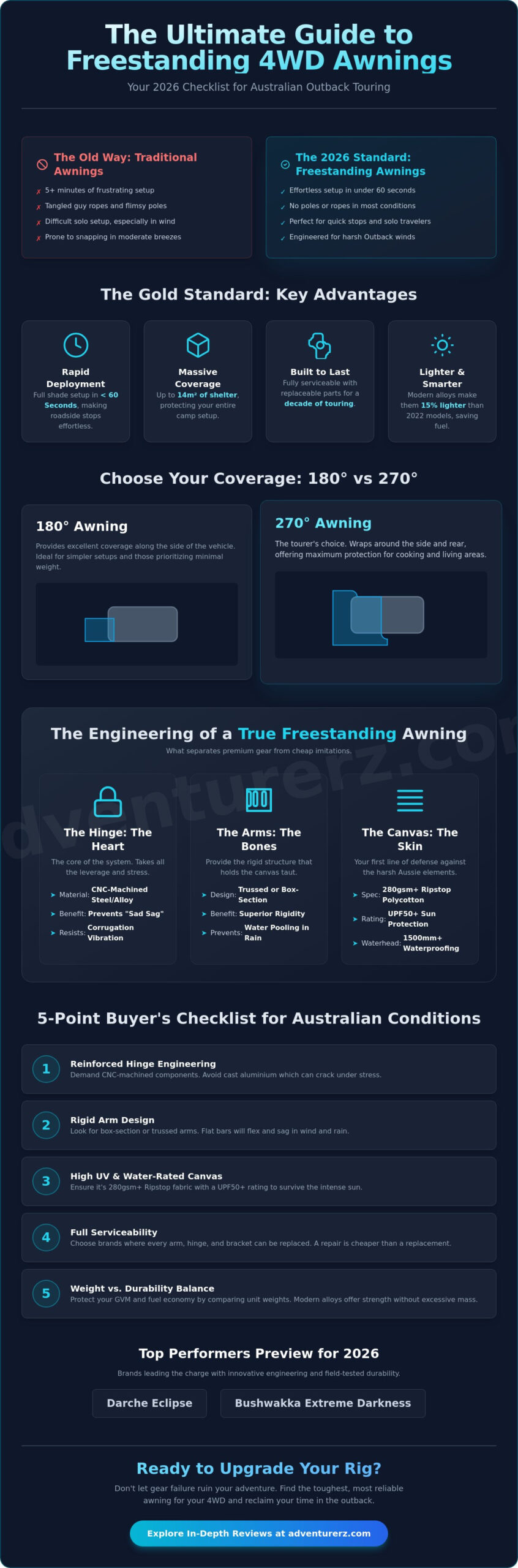
Selecting the right degree of coverage is about more than just the size of the shadow on the ground. It’s about how you use your rig and where you spend your time at camp. For dual-cab owners or those with smaller 4WDs, 180° awnings are a fantastic choice. They provide a linear strip of protection along the side of the vehicle, keeping weight down and setup simple. If you’re a dedicated tourer, the 270° model is likely your best bet. These wrap around the side and the rear, shielding your kitchen setup and fridge slide from the midday sun or a sudden downpour. For large families or Adventurerz planning long-term base camps, 360° awnings offer the most massive footprint of protection available. To help you decide, see our top 4WD awning picks for specific model comparisons.
When you are looking for the best freestanding 4wd awning Australia has to offer, remember that more coverage usually equals more weight. A high-quality 270° unit typically provides between 10 and 14 square meters of shade. This is a significant amount of “real estate” that allows you to cook, clean, and relax without constantly repositioning your chair to follow the shadow. We’ve found that the extra coverage at the rear is often the difference between a comfortable lunch stop and a sweaty, rushed meal in the sun.
Vehicle Compatibility and Rear Doors
Your vehicle’s rear door design is a critical factor that many people overlook until they’re out on the tracks. If your 4WD has a vertical-lift tailgate, you must ensure the awning arms are mounted high enough to allow the hatch to open fully. Swing-out doors are generally more flexible, but they can sometimes block access to the rear mounting brackets. You’ll also need to choose between “Square Edge” and “Radius” designs. Square edges provide better protection for your rear drawers by eliminating gaps. Radius designs inherently struggle with rain runoff because the curved canvas creates a natural valley that traps water if not tensioned perfectly.
Weight and Roof Load Limits
Installing a heavy freestanding unit requires a solid understanding of your vehicle’s roof load limits. Most premium freestanding awnings weigh between 25kg and 35kg. It’s vital to distinguish between “static” load (when you’re parked) and “dynamic” load (when you’re moving). A 30kg awning on a budget rack can cause serious stress to your roof gutters or rails during a 5,000km trip over corrugated roads. We always recommend a high-quality, full-platform rack system to distribute this weight safely. From a sustainability perspective, choosing lighter high-tensile alloys helps reduce your top-heavy load, which improves vehicle handling and lowers fuel consumption on those long desert crossings.
The Buyer’s Checklist: 5 Critical Factors for Australian Touring
Choosing the best freestanding 4wd awning Australia has to offer requires a discerning eye for detail. It’s easy to get distracted by flashy marketing, but the outback is a brutal testing ground. First, consider the UV rating. While black canvas is a popular aesthetic choice, it can trap significantly more heat. Testing has shown that lighter grey or tan fabrics can be up to 10 degrees Celsius cooler underneath during a mid-summer day in the Kimberley. We always prioritize comfort over looks when the mercury hits 40.
Serviceability is our second non-negotiable factor. As Adventurerz, we hate seeing gear in the bin. Ensure your chosen brand offers individual replacement arms and hinge pins. If you misjudge a gap on a tight track, you want to be able to fix it with a few bolts. Third, look for integrated water runoff solutions. High-end units feature built-in “rain poles” or tensioning straps that create a peak in the canvas, preventing water from pooling and stretching the material during a tropical deluge. Fourth, check your mounting height. If you’re running a roof top tent, ensure the awning doesn’t block the tent’s opening or ladder. Finally, consider the weight. A 30kg unit needs a rack that can handle the dynamic load.
Managing Your Roof Rack Real Estate
Your roof is a finite space. When you add a heavy freestanding awning, you’re competing for room with solar panels and recovery boards. For solo travelers, mounting safety is paramount. Never attempt to bolt a 30kg+ awning on alone; get a mate to help support the weight while you secure the brackets to avoid injury or vehicle damage. The “Driver’s Side” vs. “Passenger Side” debate is also crucial. We generally recommend the passenger side for roadside stops so you’re away from passing traffic, but your specific kitchen layout should dictate the final choice. Check our top 4WD awning picks to see which models offer the most versatile mounting options.
Maintenance for Longevity
A premium awning should last a decade, but only if you look after it. Salt spray from a beach trip at Fraser Island will corrode even the best alloys if left unwashed. Give your hinges a fresh water rinse after every coastal run. The “Dry Before You Pack” rule is the golden law of camping. Packing a damp awning for more than 48 hours is a guaranteed way to invite mold into the canvas. Lastly, corrugated roads are famous for rattling bolts loose. Make it a habit to check your T-bolts and mounting brackets every morning before you hit the tracks. To keep your whole rig in top shape, explore our guide on roof top tents and weight management.
The Best Freestanding 4WD Awnings in Australia for 2026
Choosing the best freestanding 4wd awning Australia has to offer comes down to how you travel and the values you hold as an explorer. Our community of Adventurerz has put these units through the wringer, from the salt spray of K’gari to the red dust of the Tanami. We’ve seen which hinges hold true and which fabrics fade after a single season. In 2026, the market has split into clear leaders that prioritize either extreme durability, lightweight versatility, or ethical manufacturing. We’ve gathered the top performers that balance these needs without compromising on that essential 60 second setup.
For those who live on the road full-time, the “Heavy Duty King” remains the go-to choice. These units often feature thicker alloy extrusions and reinforced gussets at every pivot point. However, we are also seeing a massive surge in “Eco-Choice” models. These brands prioritize sustainability by using recycled poly-cotton blends or by guaranteeing lifetime serviceability. Choosing a unit that you can repair yourself is the ultimate act of environmental responsibility. It keeps high-quality materials out of Australian landfills and ensures your gear stays on your rig for a decade of touring rather than just a single trip to the Cape.
Top Recommendations by Category
The Destination4WD D270 stands as our top pick for Best 270° Freestanding coverage. Its Australian-made excellence is evident in the precision of its square-edge design, which provides superior rear protection for your kitchen. If you need versatility and widespread brand support, the Darche Eclipse series remains the Best 180° Freestanding option. It’s a favorite for dual-cab owners who need to keep their GVM in check. For those seeking the Best Value, the Supa Peg Outbound delivers incredible ruggedness. It skips the boutique price tag while maintaining the heavy-duty construction required for remote outback travel.
Final Thoughts: Buy Once, Not Often
We’ve seen too many cheap, “disposable” awnings fail when the wind picks up at 2:00 AM. Investing in a premium freestanding unit is a commitment to better adventures and a healthier planet. Real-world testing and community reviews are your best tools for avoiding a costly mistake. Don’t just take the marketing claims at face value; look for the gear that the Adventurerz community actually uses in the field. When you choose quality, you spend less time fixing gear and more time soaking in the silence of the bush. Ready to show off your new setup? Join the Adventurerz community today to share your photos and swap track notes with fellow travelers!
Gear Up for a Decade of Outback Discovery
You’ve seen how the right engineering transforms a stressful roadside stop into a moment of pure relaxation. By choosing a setup with reinforced hinges and high-tensile alloys, you’re investing in gear that survives the 5,000km corrugated tracks of the outback. We’ve explored how a 60 second setup allows you to focus on the landscape rather than wrestling with poles. Finding the best freestanding 4wd awning Australia offers is about more than just shade; it’s about building a rig that respects your time and the rugged environments we love to explore.
Our mission is to provide expert reviews from real Australian tourers who value sustainable and durable gear over cheap, disposable alternatives. We believe in equipment that you can service and repair, keeping your gear out of landfills and on your vehicle for a decade of remote touring. This community-driven advice ensures you’re never alone on your journey toward off-the-grid freedom. Let’s get out there and explore this beautiful country responsibly.
Join the Adventurerz community and find your next remote destination!
Frequently Asked Questions
Can one person set up a 270-degree freestanding awning alone?
Yes, the ability for a single traveler to deploy shade is the primary reason these units exist. Because the arms are designed to support their own weight, you simply unclip the bag and walk the awning around the vehicle until it locks into place. We’ve found that most Adventurerz can complete a full setup in under 60 seconds without needing a second set of hands to hold the canvas or adjust poles.
Do I really need poles for a freestanding awning in high wind?
Yes, you should always deploy your integrated poles if wind speeds exceed 30km/h. While these awnings are incredibly strong, they act like a massive sail in the outback. Using the backup poles and guy ropes protects your hinge points from extreme leverage forces. It’s a small task that ensures your investment doesn’t suffer structural damage during a sudden desert squall or an overnight blow in the Kimberley.
Will a freestanding awning fit on any roof rack?
No, these heavy units require a robust platform rack or high-quality load bars with a sufficient dynamic weight rating. Because a 30kg awning exerts significant leverage on its mounting points, we recommend using at least three heavy-duty brackets. Standard thin-walled crossbars often lack the rigidity needed to prevent the awning from bouncing, which can lead to rack failure or roof damage on corrugated roads over long distances.
What is the average weight of a freestanding 4WD awning?
Most 270-degree freestanding models weigh between 25kg and 35kg. This is roughly double the weight of a traditional pole-supported awning because of the reinforced alloy arms and heavy-duty steel hinge blocks. When searching for the best freestanding 4wd awning Australia has to offer, always factor this weight into your dynamic roof load limit to ensure your vehicle remains stable and safe during high-speed highway driving.
Are freestanding awnings waterproof or just for shade?
High-quality freestanding awnings are designed for both sun and rain, featuring a waterhead rating of at least 1500mm. Most manufacturers use 280gsm+ Ripstop polycotton canvas with sealed seams to ensure you stay dry during tropical downpours. We suggest checking for built-in tensioning straps, which help create a peak in the canvas. This engineering prevents water from pooling, which is the most common cause of stretched fabric and frame damage.
How do I calculate if my 4WD can handle the weight of an awning and a roof top tent?
You must subtract the combined weight of your rack, awning, and tent from your vehicle’s Dynamic Roof Load Limit, which is usually found in your owner’s manual. If your limit is 100kg and your rack weighs 20kg, you have 80kg left for accessories. Overloading your roof raises your center of gravity, which significantly increases the risk of a rollover during emergency maneuvers or while navigating steep off-road sidelings.
Can I add walls to a freestanding awning later on?
Yes, most premium brands design their awnings with integrated zippers or Velcro tracks for modular wall kits. Adding walls is a fantastic way to create a fully enclosed, weather-proof room for sleeping or cooking. However, once you attach walls, the awning is no longer truly freestanding. The extra weight and wind resistance mean you must use the vertical poles and pegs to keep the structure secure and stable.
Is it worth paying more for an Australian-made awning?
Yes, paying a premium for Australian-made gear often secures you better serviceability and local warranty support. Local manufacturers typically use 304-grade stainless steel for hinges and offer individual replacement parts for every arm. This long-term durability makes it the best freestanding 4wd awning Australia provides for serious tourers. Investing in a unit that you can repair rather than replace is both a financial win and a responsible choice for the environment.