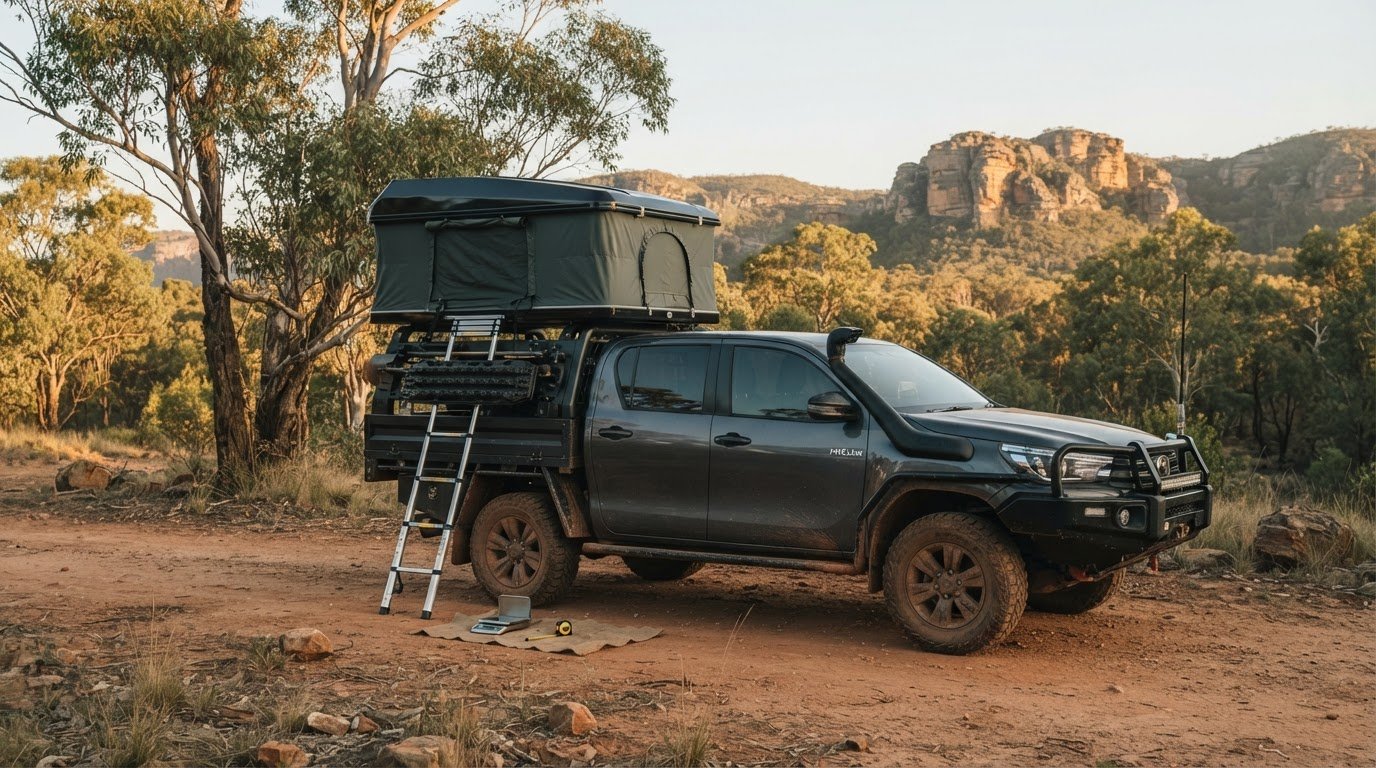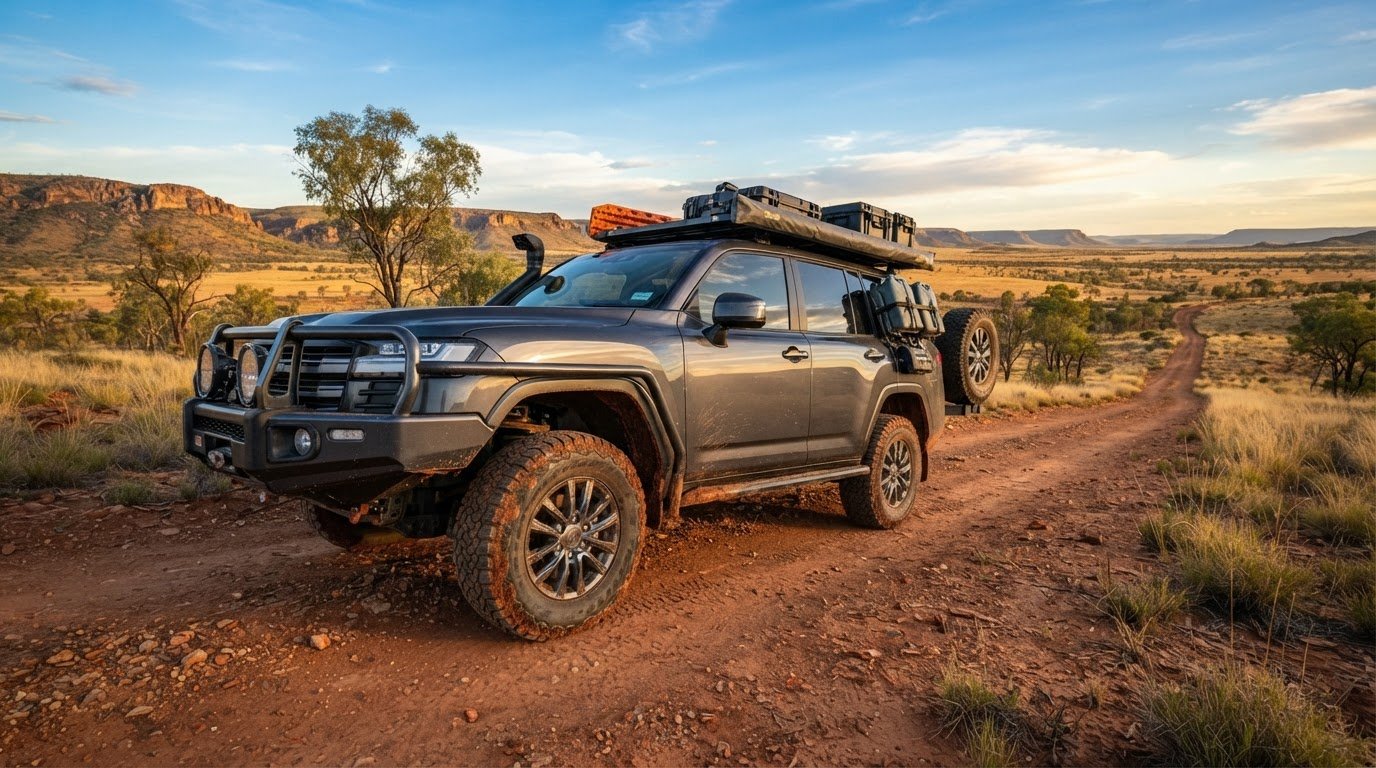
You are 400 kilometres deep into the Kimberley, the sun is dipping below the horizon, and a tropical storm is brewing. Will your gear hold up, or are you about to spend a sleepless night fighting a jammed zipper and a leaking canvas? We know that finding the best roof top tent for Australian conditions is the difference between a legendary trip and a remote area disaster. With Australians taking over 17.3 million camping trips in 2025, the demand for gear that survives our sun-scorched plains and corrugated tracks has never been higher!
In 2026, the hybrid revolution has completely changed the game for Adventurerz. These tents combine the aerodynamic, protective lid of a hardshell with the fold-out expansion of a softshell. This design allows you to fit a massive mattress on a short-bed dual-cab without the tent overhanging the windscreen. It is the ultimate middle ground for families who still want to tackle technical tracks without sacrificing sleeping space. This versatility makes them ideal for multi-day stays at Unpowered Campsites, where you can enjoy the extra space and comfort while remaining completely off-grid.
We understand the frustration of gear that fails when you need it most, especially when you are dealing with a tent that turns into an oven in the Queensland heat or a setup that is impossible to pack down in a gale. In this 2026 expert guide, we promise to help you navigate the technical world of dynamic roof loads and the 4.3 metre height limit so you stay safe and legal. We will review the latest high-performance models, from the $5,830.00 iKamper Skycamp 3.0 Mini to the versatile Thule Approach M, ensuring your next off-the-grid mission is defined by comfort and resilience. Let’s dive into the specs that make us Adventurerz!
Key Takeaways
- Understand why standard international designs often fail in our backyard and how to identify gear that survives the “Big Three” Australian stressors.
- Compare hardshell and softshell models to find the perfect balance between lightning-fast setup times and maximum living space for your crew.
- Master the 2026 technical benchmarks for canvas weight and ventilation to ensure your setup stays dry in downpours and cool in the heat.
- Learn how to choose the best roof top tent for Australian conditions by matching specific features like dust-proof seals to the unique biomes of your next adventure.
- Use our expert pre-trip checklist to verify your vehicle’s roof load limits and ensure your gear is track-ready for a safe, remote escape.
Table of Contents
- Why the Australian Environment Demands a Specialized Roof Top Tent
- Hardshell vs. Softshell: Deciding Based on Your Touring Style
- Critical Features for Survival in the Outback and Beyond
- Matching Your Tent to the Australian Biome You Explore Most
- Joining the Adventurerz: Planning Your 2026 Remote Escape
Why the Australian Environment Demands a Specialized Roof Top Tent
Australia is a land of beautiful extremes, but for the unprepared traveler, it is also a graveyard for inferior gear. We have seen it happen too often. A generic tent designed for a mild European summer arrives in the Kimberley and falls apart before the first campfire is lit. Finding the best roof top tent for Australian conditions means looking past the marketing gloss and focusing on the “Big Three” stressors: extreme UV radiation, relentless corrugations, and intense tropical humidity. These elements work together to destroy zippers, crack plastic fittings, and rot thin fabrics.
Most international designs fail because they treat a roof top tent as a seasonal accessory rather than a critical piece of survival equipment. At Adventurerz, our community standards for gear revolve around three pillars: reliability on the track, repairability in the bush, and environmental responsibility. We believe a tent should last a decade, not a single season! This starts with understanding Roof Top Tent Basics and how they translate to our unique biomes. For more detailed breakdowns, check out our community-vetted roof top tents reviews.
The Reality of UV and Heat Management
The 2026 sun intensity in the Australian Outback can reach UV indices that literally bake standard nylon fabrics until they become brittle and tear like paper. We recommend 320gsm+ poly-cotton ripstop canvas because it breathes while reflecting heat. A quality “tropical fly” is essential; it creates a crucial air gap that prevents the sun’s energy from transferring directly into your sleeping quarters. Thermal equilibrium in a camping context occurs when the internal temperature of the tent matches the external ambient temperature through efficient passive ventilation and radiant heat barriers.
Corrugations and Structural Integrity
If you are planning to tackle the Oodnadatta Track or the Gibb River Road, your mounting hardware is your weakest link. Relentless vibrations will shake loose any component made of cheap plastic or thin-gauge steel. We always advocate for aluminium or reinforced stainless steel components that can handle the constant rattling. You must also be mindful of your vehicle’s roof load limits. Most modern 4WDs have a dynamic rating between 50kg and 100kg. Exceeding this limit while moving doesn’t just damage your gutters; it can void your insurance and dangerously alter your vehicle’s center of gravity. Stay safe, stay legal, and keep your total height under the 4.3 metre regulatory limit!
Hardshell vs. Softshell: Deciding Based on Your Touring Style
Choosing the best roof top tent for Australian conditions isn’t just about picking the toughest fabric; it’s about how you move through the landscape. Your touring style dictates whether you need a lightning-fast clamshell or a palatial softshell. If you’re constantly on the move, jumping from one remote camp to the next, a hardshell is your best friend. However, if you’re setting up a base camp for a week at a stunning location found through Official National Parks Camping Information, the extra room of a softshell is hard to beat.
In 2026, the hybrid revolution has completely changed the game for Adventurerz. These tents combine the aerodynamic, protective lid of a hardshell with the fold-out expansion of a softshell. This design allows you to fit a massive mattress on a short-bed dual-cab without the tent overhanging the windscreen. It is the ultimate middle ground for families who still want to tackle technical tracks without sacrificing sleeping space.
Weight is where many people get caught out, and it is a critical safety factor. Every kilogram on your roof affects your vehicle’s Gross Vehicle Mass (GVM) and center of gravity. Most modern 4WDs have a dynamic roof load rating between 50kg and 100kg. If your tent weighs 85kg and your rack weighs 20kg, you are already over the manufacturer’s limit before you even hit the highway! Exceeding these specs can void your insurance and make your vehicle feel unstable during emergency maneuvers. Always remember that the total height of your vehicle, including the closed tent, must stay under the 4.3 metre legal limit.
Speed of Setup: The Marriage Saver
We’ve all been there. You roll into camp at dusk, the mozzies are thick, and the kids are hungry. A 30-second clamshell setup is a genuine marriage saver! Most hardshells also allow you to leave your bedding and pillows inside, which means you’re ready for sleep the moment the latches click. Softshells usually take 5 to 8 minutes to deploy, but they offer that classic treehouse feel with significantly more undercover living space for the whole crew.
Footprint and Vehicle Compatibility
Aerodynamics play a massive role in your fuel economy over a 5,000-kilometre trek. A low-profile hardshell might sit only 160mm to 200mm high, while a bulky softshell with a thick PVC cover can act like a sail. We recommend matching your tent’s footprint to your vehicle platform. Wagons handle long hardshells beautifully, while dual-cabs often benefit from the compact stowed size of a hybrid. For a deep dive into which models fit your specific rig, check out our latest roof top tents reviews. If you’re looking to complete your outdoor setup, we also have great advice on how to pair these with the best 4wd awnings for total campsite protection.
Critical Features for Survival in the Outback and Beyond
When you are thousands of kilometres from the nearest gear shop, the small details become the most important factors in your survival and comfort. We believe the best roof top tent for Australian conditions is one that prioritizes high-quality components over flashy accessories. In 2026, the benchmark for a rugged, reliable shelter is 320gsm poly-cotton ripstop canvas. This weight provides the perfect balance of breathability and brute strength, ensuring your walls won’t flap incessantly in the wind or tear when brushed by an overhanging acacia branch. It is about building a sanctuary that stands up to the elements while you Explore Australian Destinations that others might avoid.
Ventilation is your primary defense against the stifling humidity of the Top End. Look for tents featuring midge-proof mesh on every opening. These ultrafine screens are essential because standard mosquito netting won’t stop the tiny biting midges found in coastal and tropical regions. We also look for oversized, heavy-duty zippers with weather-shielding flaps. Dust is a silent killer for gear; a “closed” tent that isn’t properly sealed will be filled with fine red bull-dust after a day on the Tanami Track. High-quality rubber bulb seals are non-negotiable for keeping your bedding clean and your zippers functional over the long haul.
We are passionate about moving away from the “disposable gear” culture. A truly sustainable roof top tent is one that can be repaired rather than replaced. We prioritize brands that offer replaceable covers, spare mounting hardware, and eco-friendly, PFC-free waterproofing treatments. Choosing a tent with a modular design means that if a single pole bends or a zipper fails, you can fix it yourself and keep that equipment out of the landfill. This commitment to longevity is a core part of what it means to be one of the Adventurerz community!
The Anatomy of a Great Mattress
Sleep is fuel for the next day’s drive. While many competitors claim 100mm memory foam is the standard, we find that high-density open-cell foam often provides better support for your back after 8 hours of technical driving. However, the mattress is only half the story. Anti-condensation mats prevent mold growth by creating an essential air gap between the mattress and the tent floor, allowing moisture to evaporate before it can settle. Without this mat, the temperature difference between your body and the cold roof rack will turn your mattress into a sponge within two nights of coastal camping.
Hardware and Mounting Systems
Salt air is a constant companion on Australian tracks, so we always look for 304 or 316-grade stainless steel fittings. Galvanized steel might look okay at the showroom, but it will eventually succumb to rust in our harsh coastal environments. Universal mounting tracks are our preferred choice as they allow for greater flexibility when positioning the tent on your rack. This versatility also makes it easier to integrate a complementary shade setup like the best 4wd awnings, creating a cohesive and protected living area for your off-the-grid basecamp.
Matching Your Tent to the Australian Biome You Explore Most
Australia isn’t a single environment; it is a collection of vastly different biomes that each demand something unique from your gear. We often see travelers buy a tent based on a glossy photo of a beach camp, only to find it suffocating in the humid Top End or rattling apart in a desert windstorm. The best roof top tent for Australian conditions is the one tailored to where you spend 80% of your time. Whether you are chasing the red dust of the Arid Centre or the crisp air of the Alpine South, your choice needs to reflect the specific stressors of that region. We believe in preparation over luck!
- The Arid Centre: Focus on reflective outer coatings and industrial-grade dust seals. When the mercury hits 42°C in the Red Centre, a tent without a silver-lined fly becomes an oven.
- The Alpine South: Look for internal heating ports and insulated flooring. In the Victorian High Country, snow-loading capability is vital to prevent the roof from bowing under a heavy winter dusting.
- Coastal Touring: Prioritize wind stability and salt-spray resistance. Beach camping often means constant 30-knot winds; a tent with external gas struts or a rigid clamshell design will be much quieter than a flapping softshell.
Before you commit to a specific style, we recommend checking out our community-tested roof top tents reviews to see how specific models performed in these varied climates.
Top End Performance: Managing Humidity
In the Tropical North, 360-degree ventilation is your best friend. We look for tents with dual-entry points and massive side windows to encourage cross-flow. While dark-out fabrics are popular in 2026 for sleeping in, they can be a double-edged sword in the tropics. They often trap more heat than lighter-colored canvases, making the tent unbearable once the sun hits. If you have to pack away a wet tent during the ‘Build-up’ season, ensure you open it back up within 24 hours. Even the highest quality 320gsm poly-cotton can develop mildew if left damp in 90% humidity!
Desert Touring: The Dust Battle
Red bull-dust is the ultimate test for any hardshell. To identify a truly dust-sealed gasket, look for a thick, compressible rubber bulb seal rather than a simple foam strip. Foam eventually degrades and lets the dust pass through, coating your bedding in a layer of grit. We also suggest carrying a small brush and dry silicone spray for your zippers. Never use oil-based lubricants in the desert; they attract sand and create a grinding paste that will destroy your zipper teeth in days. To keep internal temperatures manageable during 40°C+ days, always orient your vehicle so the tent’s smallest profile faces the sun and make use of your best 4wd awnings to create a shaded microclimate around the base of your vehicle.
Joining the Adventurerz: Planning Your 2026 Remote Escape
You have done the research, compared the specs, and understood the technical demands of our unique landscape. Now comes the most exciting part of the journey: hitting the track! Choosing the best roof top tent for Australian conditions is more than just a gear upgrade. It is a commitment to a lifestyle of discovery and self-sufficiency. We believe that the right equipment doesn’t just protect you from the elements; it gives you the confidence to push further into the unknown and stay there longer. Whether you are a solo explorer or a family of four, your setup is the foundation of every memory you’ll make in the bush.
We’ve seen that the Australian community is our greatest resource. Real-world feedback from fellow travelers who have dragged their gear through the deep sand of the Simpson Desert or the salt air of the Eyre Peninsula is worth more than any laboratory test. When you invest in high-quality equipment, you aren’t just buying canvas and aluminium. You are buying peace of mind. Investing in a tent with a local Australian warranty and a proven track record for repairability ensures that a minor mishap doesn’t end your trip prematurely. We always advocate for brands that value longevity over “fast camping” trends that result in broken gear in landfills.
As Adventurerz, we have a collective responsibility to protect the wild places we love. With over 17.3 million camping trips taken across the country in 2025, our environmental footprint is significant. We follow ‘Leave No Trace’ principles religiously. This means choosing gear that doesn’t require permanent modifications to the environment and ensuring we leave every campsite better than we found it. A roof top tent is a fantastic tool for this; it keeps you off the ground, reduces your physical impact on the soil, and allows you to camp in designated areas without the need for large clearings.
The Adventurerz Community Perspective
There is nothing quite like the feeling of sharing a sunset photo from a remote camp with people who truly get it! Sharing trip reports and gear tweaks helps our whole tribe explore better and safer. We encourage you to document your experiences and the performance of your setup. If you’re still in the planning phase, we recommend using The Ultimate Adventure Travel Planner to map out your 2026 routes. It is a great way to ensure your vehicle and your best roof top tent for Australian conditions are perfectly matched for the terrain you intend to tackle.
Your Next Steps for 2026
Before you point the bull-bar toward the Nullarbor, we strongly suggest a DIY “shake-down” trip. Spend two nights at a local spot within two hours of home. This is the time to find out if your bedding fits when the tent is closed or if your roof rack bolts need a final tighten. Check your vehicle’s GVM and ensure your total height stays under that 4.3 metre limit! Maintaining your gear is a lifelong habit. Clean your zippers, dry your canvas, and check your seals after every trip. For more advice on rounding out your kit, take a look at our guides for roof top tents and the best 4wd awnings. Prepare well, explore often, and always respect the wilderness. We’ll see you on the track!
Gear Up for Your 2026 Australian Odyssey
The journey across the Australian wilderness is as demanding as it is beautiful. We’ve explored why structural integrity and biome-specific features like 320gsm poly-cotton canvas are non-negotiable for long-term survival. Remember that your setup must strictly adhere to the 2026 vehicle manufacturer dynamic roof load ratings and the 4.3 metre height limit to stay safe and legal on the track. Choosing the best roof top tent for Australian conditions means prioritizing repairability and sustainability so your gear lasts for a lifetime of exploration rather than just one dusty season.
We’re here to help you make the right choice for your specific touring style and vehicle GVM. Our community-driven reviews focus on gear that can be serviced in the bush, ensuring you never get stranded by a simple hardware failure. Explore our curated reviews of the best roof top tents for 2026 to find recommendations that have been pushed to their limits by the Adventurerz tribe. Whether you’re chasing the red dust of the Centre or the humidity of the North, we’ll see you out there under the stars. The track is calling, and it’s time to answer!
Frequently Asked Questions
How much weight can my car’s roof actually hold while driving?
Finding the best roof top tent for Australian conditions starts with knowing your vehicle’s dynamic roof load limit, which is typically between 50kg and 100kg. This rating applies while the car is moving. Static limits are much higher, often exceeding 300kg to support occupants while parked. Never exceed these manufacturer specifications, as doing so can dangerously affect handling and void your insurance.
Are roof top tents waterproof enough for an Australian East Coast low?
High-quality tents with 320gsm poly-cotton ripstop canvas easily withstand the intense rain of an East Coast low. The key is ensuring your tropical fly is tensioned correctly to create a water-shedding barrier. We recommend checking your seams annually for any wear to maintain total waterproof integrity during heavy tropical downpours. Proper maintenance ensures your shelter stays bone-dry in the wildest weather.
Do roof top tents significantly increase fuel consumption on 4WDs?
You can expect a fuel consumption increase of 10% to 15% depending on your tent’s profile and driving speed. Low-profile hardshells are the most aerodynamic choice for long highway stretches. Softshells create more drag, which can hit your wallet harder during a 5,000-kilometre trek across the Nullarbor. Keeping your speed down is the easiest way to offset this extra wind resistance.
Can I leave my sleeping bags and pillows inside the tent when it’s closed?
Most modern hardshell and hybrid models allow you to leave a slim double sleeping bag and two pillows inside. This is a massive time-saver for Adventurerz who move camp daily! Softshell designs often require you to remove bulkier bedding to allow the hinges to close properly without straining the fabric. Always check that the latches engage easily without forcing them against the bedding.
What is the best way to prevent mold and condensation in an RTT?
Airflow is the only way to beat condensation. Always leave at least two windows slightly cracked, even in cold weather, to allow moisture to escape. Using an anti-condensation mat is an essential strategy to prevent moisture from being trapped under your mattress and causing mold. This is a non-negotiable step for anyone camping in humid coastal regions or during cold desert nights.
Is it worth paying extra for an Australian-made roof top tent in 2026?
Paying more for Australian-made gear in 2026 is a smart move for those seeking the best roof top tent for Australian conditions. These models are built to handle our extreme UV and corrugations better than generic imports. Plus, having a local warranty means you get parts and support much faster when you are out on the track. It’s an investment in long-term reliability and local jobs.
How do I secure my roof top tent against theft while traveling?
Use security mounting nuts that require a specialized key to remove the tent from your roof rack. Many Adventurerz also add locking latches to hardshell models to prevent unauthorized access to the interior while the vehicle is unattended. Ensure your tent is specifically listed on your 4WD insurance policy to cover you in the event of a theft or accidental damage.
Can one person safely set up and pack down a hardshell RTT?
One person can easily set up a hardshell tent in under 60 seconds thanks to integrated gas struts that do the heavy lifting. Packing down is also straightforward, though you might need to walk around the vehicle once to tuck in the excess canvas. Softshells are more labor-intensive for a solo traveler but are still manageable with a bit of practice and a sturdy ladder.