Did you know that a single person can release over a litre of water vapour through breathing alone during just one night in the bush? We have all experienced that dreaded feeling of waking up with sore hips from “bottoming out” on a thin factory mattress, only to find mould-inducing condensation hiding underneath. It is a common struggle for our community; we want a roof top tent mattress upgrade Australia conditions demand without the headache of a tent that won’t latch shut. We believe your sleep in the wild should be just as restorative as your bed at home.
This guide will help you master the art of turning a rugged camp into a luxury sanctuary. You will learn how to build a mould-free, supportive environment that does not compromise your tent’s closing mechanism. We explore the specialized “sandwich” system of anti-condensation layers and high-density support to ensure you sleep deeply and pack up your gear quickly every single morning. Are you ready to wake up feeling refreshed for the track ahead?
Key Takeaways
- Learn the precise method for measuring your tent’s internal void so you can maximize comfort without straining your hinges or gas struts.
- Discover why a 10mm anti-condensation mat is the essential foundation for any roof top tent mattress upgrade Australia explorers use to prevent mould.
- Compare the long-term durability of high-density foam against the modern, adjustable firmness of self-inflating mattresses (SIMs) to find your perfect fit.
- Identify the signs of “foam fatigue” in factory mattresses and why the standard 50mm depth often fails the Australian comfort test.
- Decide between the cost-effective DIY route of custom-cut foam or the convenience of professional, pre-shaped upgrade kits from local experts.
Table of Contents
- Why the Factory RTT Mattress Fails the Australian Comfort Test
- Upgrade Technologies: High-Density Foam vs. Self-Inflating Mattresses (SIMs)
- The Closing Gap Challenge: Measuring Your Tent’s Tolerance
- Managing the Australian Climate: Condensation and Breathability
- DIY Customisation vs. Professional Upgrade Kits
Why the Factory RTT Mattress Fails the Australian Comfort Test
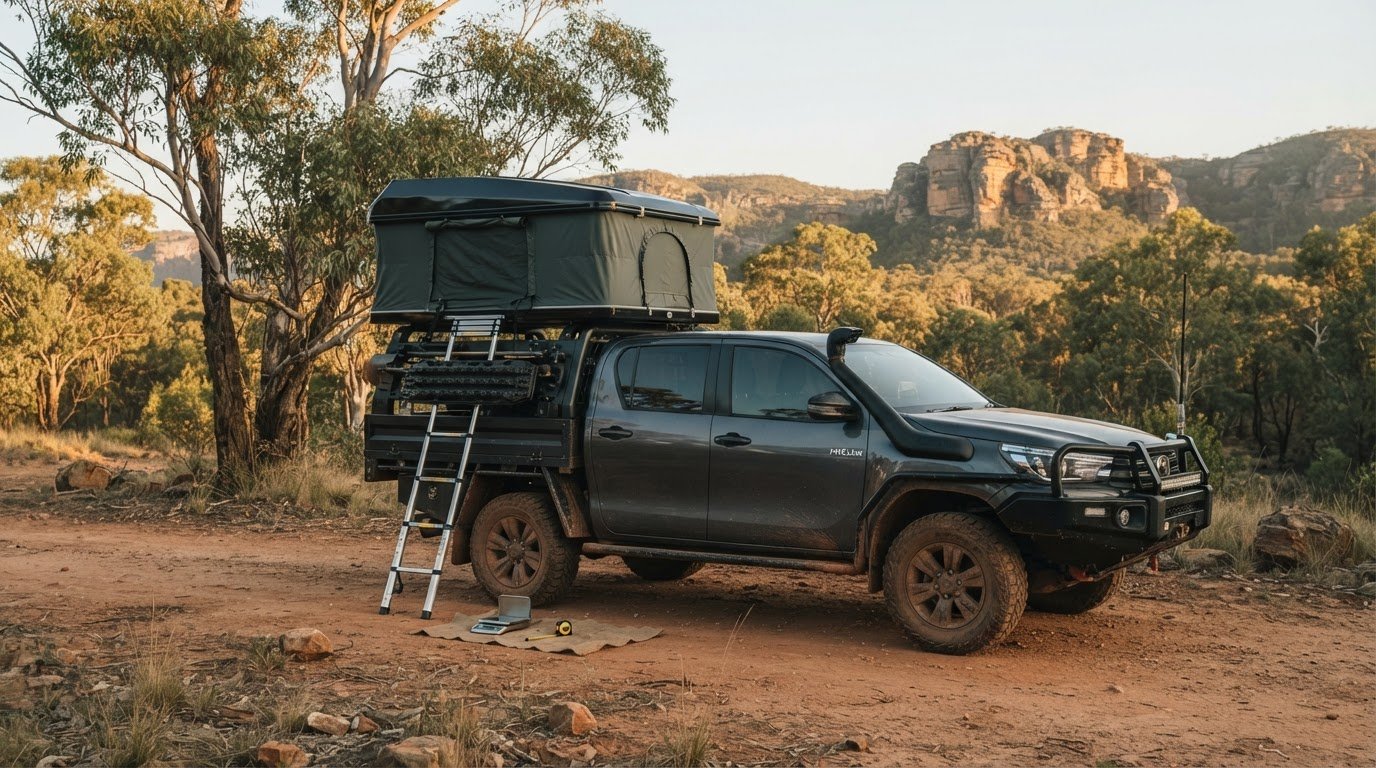
We have all felt that surge of excitement when first mounting a new rig to the roof racks. But after a few nights in the Simpson Desert or along the Gibb River Road, that excitement often turns into a literal pain in the neck. Most manufacturers stick to a standard 50mm mattress to keep the tent’s profile slim and aerodynamic. While this looks great in the showroom, it rarely accounts for the reality of human spinal health or the rugged conditions we face in the bush. For those just starting their journey, understanding What is a Roof Top Tent? involves recognizing that it is an integrated system where the mattress is just as vital as the canvas itself.
Foam fatigue is a real problem for our community. Most factory mattresses use low-density, open-cell foam that feels acceptable for the first weekend but loses its “rebound” after just one season of use. This leads to “bottoming out,” where your hips and shoulders press straight through the foam and onto the hard base of the tent. If you’re a side-sleeper, you know this pain well. When we evaluate the latest roof top tents, we look beyond the shell to see if the internal void allows for a proper sleep setup. As we move through 2026, we see a massive shift toward “Touring Grade” sleep systems. A high-quality roof top tent mattress upgrade Australia explorers rely on is no longer a luxury; it is a necessity for anyone spending more than a few days in remote areas.
The Science of Sleep in the Outback
Our vast environment presents unique challenges for foam. Extreme temperature fluctuations in the desert can cause standard foam to become rock-hard in the freezing early hours and overly soft during a midday nap. We believe that getting eight hours of quality sleep is a critical safety requirement for 4WD touring, not just a comfort choice. Fatigue on the tracks leads to poor decision-making and slower reaction times. Creating a home-away-from-home sleep sanctuary provides a psychological boost that keeps our community spirit high during long expeditions.
Identifying the “Bottom-Out” Point
Is your current mattress functionally dead? Try the simple “knee test” next time you are at camp. Place your knee in the centre of the mattress and apply your full weight. If you can feel the hard base of the tent through the foam, your mattress is no longer providing support. Watch for warning signs like a “musty” smell or visible sagging; these suggest the foam is absorbing moisture rather than providing a lofted cushion. A simple topper might seem like a quick fix, but it rarely solves the problem if the base layer has already collapsed.
Upgrade Technologies: High-Density Foam vs. Self-Inflating Mattresses (SIMs)
Choosing the right technology for your roof top tent mattress upgrade Australia project depends entirely on how you travel. We generally see two camps in our community: the traditionalists who value the “set and forget” reliability of foam, and the modern explorers who crave the adjustable luxury of air-integrated systems. High-Density (HD) foam remains a staple because it is nearly indestructible. It won’t puncture, it doesn’t require a pump, and it provides consistent support across years of rugged use. However, it can be bulky, which often makes it difficult to close the tent if you choose a thickness over 75mm.
Self-inflating mattresses (SIMs) have become the modern gold standard for a reason. These systems use a clever combination of open-cell foam bonded to an airtight skin. When you open the valves, the foam expands and draws in air, allowing you to fine-tune the firmness to your exact preference. While memory foam overlays are popular for their “cloud-like” feel, we suggest caution if you frequently visit humid regions. Memory foam tends to trap body heat and can become quite “boggy” in the tropics. If you are still deciding on your base setup, check out our latest reviews on roof top tents to see which models offer the most internal space for these upgrades.
The Case for Self-Inflating Mattresses (SIMs)
The “air plus foam” combo provides superior insulation, which is vital for those frosty nights in the Victorian Highlands. This insulation is measured by an R-value; the higher the number, the better the mattress keeps your body heat from escaping into the cold tent base. One of our favourite community secrets is the “deflate-to-close” trick. By using a small 12v pump to actively suck the air out of a SIM, you can compress a 100mm mattress down to a fraction of its size, making it much easier to latch your tent shut. Brands like Outback Tourer have pioneered this tech with models like the OT 1.2, which is specifically designed for the Australian touring market.
Convoluted vs. Flat Foam
If you prefer sticking with a pure foam setup, the shape of the material matters just as much as the density. Convoluted foam, often called “eggshell” foam, provides better pressure point relief because the peaks and valleys allow the material to contour around your hips and shoulders more effectively than a flat block. This structure also promotes better airflow. Scientific research on thermal regulation in foam shows that surface geometry significantly impacts how heat is dissipated. This is a game-changer during those sweltering Queensland summers where “hot-back” syndrome can ruin a night’s sleep. While flat foam is often more durable over 100+ nights of folding, convoluted foam offers a level of breathability that is hard to beat in our climate.
The Closing Gap Challenge: Measuring Your Tent’s Tolerance
We have all seen it at the campsite: someone hanging off their RTT latches, desperately trying to force the shell closed over a bulky new mattress. This is the cardinal sin of the roof top tent world. Forcing a tent closed puts immense pressure on hinges, mounting points, and gas struts; this often leads to bent frames or failed seals that let in dust and rain. Before you commit to a roof top tent mattress upgrade Australia adventures require, you must determine exactly how much room you actually have to play with. We want to ensure your setup remains durable for years of remote travel.
The “Internal Void” is the secret measurement most manufacturers don’t list in their spec sheets. It is the physical space between the base and the ceiling when the tent is fully latched. While foam has a certain “squish” factor, you cannot rely on infinite compression. A premium high-density foam mattress might only compress by 10 or 20 percent before it starts resisting the shell. If you want to leave your doona and pillows inside, that space must be subtracted from your total available thickness. Balancing a luxury mattress against the convenience of leaving your bedding in place is the ultimate goal for any touring setup.
Step-by-Step: The “Crush Test” Method
Do not guess and end up with a piece of foam that doesn’t fit. We recommend using a stack of towels to simulate your proposed mattress thickness. Fold the towels to your desired height, place them in the centre of your roof top tents, and attempt to close the shell. If the latches require more than a firm click or if you see a “bulge” along the tent seal, your stack is too high. Hard shell tents are notoriously unforgiving in this regard, whereas soft shell “fold-over” models usually offer a bit more flexibility in the fabric and hinges.
Managing Hinge Stress
Listen to your gear during the pack-down process. Warning signs like creaking, misaligned latches, or a shell that won’t sit flush indicate your upgrade is too thick. If you have added a significantly heavier premium mattress, you may need to consider upgraded gas struts to help manage the extra weight when opening the tent. We always suggest distributing your bedding as flat as possible. Avoid lumping doonas or sleeping bags in the centre, as this creates a pivot point that places unnecessary stress on the hinges. Spreading the load ensures a smooth, secure closure every single time.
Managing the Australian Climate: Condensation and Breathability
Camping in Australia means facing everything from humid coastal mornings to freezing desert nights. One of the most frustrating issues we face is “mattress rain.” This happens when your warm body heat meets the cold aluminium or plastic base of the tent, creating a layer of moisture that soaks into your bedding. A proper roof top tent mattress upgrade Australia explorers invest in must address this moisture before it turns into a mould problem. We have found that a single person can release over a litre of water vapour overnight through breathing alone, and that moisture needs somewhere to go if it isn’t to be trapped against your mattress base.
The material of your mattress cover also plays a massive role in your comfort. While polyester is durable, it often feels like sleeping on a plastic bag in the heat. We always recommend cotton or bamboo covers for better sweat management. These natural fibres allow your skin to breathe, which is essential for those sweltering nights in the Top End. Maintaining your setup is just as important as the gear itself. We make it a habit to lift the mattress and let the base dry out every few days during a long trip, especially in high-humidity areas. This simple routine prevents the buildup of spores and keeps your sleeping environment fresh.
Why Anti-Condensation Mats are Non-Negotiable
If you want to protect your investment, a 10mm anti-condensation mat is the most important comfort upgrade you can buy. These mats, often made from 3D-woven 530gsm polypropylene, create a permanent air gap beneath your mattress. This gap allows for ventilation that prevents “cold-seep” and keeps the bottom of your bed bone-dry. Beyond the hygiene benefits, that extra 10mm of mesh adds a subtle bit of “spring” to the mattress, improving the overall feel. To keep the mat from sliding during the fold, we suggest using a few small strips of heavy-duty hook-and-loop tape to secure it to the tent base so it stays perfectly aligned.
Cooling Technologies for Summer Camping
When the mercury rises, traditional foam can act like a heat sponge. Gel-infused memory foam is a fantastic alternative as it is designed to dissipate heat more effectively than standard open-cell foam. However, the best way to keep your sleeping area cool is to prevent the tent from heating up in the first place. Setting up a 4WD awning to shade the side of your vehicle can significantly reduce the internal temperature of your tent. We also suggest using a breathable, non-plastic mattress protector to shield your upgrade from dust without trapping heat. Ready to see which setups we recommend for your next trip? Explore our latest roof top tent reviews to find your perfect match.
DIY Customisation vs. Professional Upgrade Kits
Deciding between building your own sleep system or buying a pre-made solution is a rite of passage for many in our community. If you enjoy the process of tinkering with your gear, the DIY route offers total control over every millimetre of your setup. You can visit local foam suppliers to source specific densities, creating a custom “sandwich” of support foam and comfort layers tailored to your body weight. On the other hand, off-the-shelf kits from trusted Australian names like Drifta or TJM provide pre-shaped solutions that take the guesswork out of the internal void measurements we discussed earlier. While a DIY roof top tent mattress upgrade Australia project can be more labour-intensive, it often allows you to reuse your factory cover, saving money and reducing waste.
When we look at the cost analysis, the gap between DIY and professional kits is often smaller than you might think. Sourcing high-quality high-density foam and a separate topper can easily cost upwards of $150. In contrast, a premium self-inflating mattress (SIM) might sit around the $300 mark. While the initial investment is higher, a SIM offers adjustable firmness on the fly and superior packability. We believe the choice should align with your long-term goals. Are you planning a quick weekend getaway or a massive trek? Matching your upgrade to your 2026 travel planner ensures you don’t over-engineer a simple setup or under-equip for a remote escape.
How to Custom Cut Your Own Foam
If you choose the DIY path, precision is your best friend. We recommend using an electric carving knife to get professional, clean edges; a standard utility knife often leaves the foam looking ragged. Use your old factory mattress as a “template” to trace the exact dimensions onto your new HD foam block. This ensures the new piece fits perfectly into the corners of your roof top tents. If your factory cover is still in good condition, you can often slide the new foam inside, though you might need to upgrade to a heavy-duty canvas bag if your new “sandwich” is significantly thicker.
When to Invest in a Premium SIM
For those of us spending 100+ nights a year on the road, a premium SIM is a game-changer. It provides a “luxury resort” feel that is hard to replicate with pure foam. In fact, many of our members report that their upgraded RTT sleep is more restorative than staying in some of the best resorts in Australia. The ability to bleed air out for a softer feel or pump it up for extra support is a massive advantage. Furthermore, a high-quality SIM often comes with a better warranty and better longevity than cheap, open-cell foam. We always say: buy once, cry once. Investing in a durable, high-performing mattress ensures you stay focused on the trail rather than your sore back.
Elevate Your Bush Sleep Sanctuary
We’ve explored the essential steps for transforming your rig into a high-performance sleep system. A successful roof top tent mattress upgrade Australia project relies on finding the perfect balance between comfort and your tent’s unique “internal void.” Never overlook the importance of an air gap; that 10mm anti-condensation mat is your primary defence against mould and moisture. Whether you opt for the hardy reliability of custom-cut foam or the adjustable luxury of a modern SIM, your health and safety on the track depend on restorative sleep.
Our team has spent countless nights testing gear in the harshest corners of the Outback to bring you community-driven recommendations. We prioritize durable, sustainable equipment that respects our environment while standing up to the rigours of the trail. Ready to refine your touring setup for the year ahead? Explore our expert reviews of the best Roof Top Tents and accessories for 2026. We are all on this shared journey toward responsible exploration. Gear up, stay methodical, and we will see you out under the stars!
Frequently Asked Questions
Can I put a memory foam topper on my existing roof top tent mattress?
You can certainly add a memory foam topper, but you must measure your tent’s internal void first. While memory foam adds great pressure relief, it often traps body heat in humid Australian climates. We suggest choosing a gel-infused option to help with cooling. If your base mattress is already sagging, a topper won’t fix the underlying support issue. Always ensure the extra height doesn’t strain your tent’s hinges when you latch it closed.
What is the best mattress thickness for a hard shell roof top tent?
Most hard shell tents comfortably accommodate a mattress thickness between 70mm and 100mm. Because hard shells have a fixed internal height, there is very little room for error compared to soft shell models. We recommend using the “Crush Test” with towels to find your specific limit. If you want to leave bedding inside, you might need to stick to a 75mm high-density foam or a compressible self-inflating mattress to avoid damaging your gas struts.
How do I stop my roof top tent mattress from getting mouldy underneath?
Installing a 10mm anti-condensation mat is the most effective way to prevent mould. This mesh creates an air gap that allows moisture from your body heat to evaporate rather than soaking into the mattress base. We also recommend lifting your mattress to air it out every few days during long trips. This routine is vital in coastal areas where humidity is high. Keeping the environment dry protects your health and the longevity of your gear.
Will a self-inflating mattress (SIM) fit inside my RTT?
Most modern SIMs will fit perfectly as long as you match the mattress dimensions to your tent’s floor plan. A self-inflating mattress is a popular roof top tent mattress upgrade Australia wide because it can be deflated for a flatter profile during pack-down. We suggest using a 12v pump to suck the air out completely. This allows you to fit a thicker, more comfortable mattress into a slim tent shell without forcing the latches shut.
Do I need to remove my pillows and sleeping bag to close the tent with an upgraded mattress?
Whether you can leave bedding inside depends entirely on your tent’s internal clearance. If you have maximized your mattress thickness to the shell’s limit, you will likely need to store pillows and heavy doonas in the car. We suggest spreading your sleeping bags flat across the surface rather than bunching them up. This avoids creating a high point that puts uneven pressure on the hinges. Don’t guess; testing your specific setup is the only way to be sure.
How much does a typical roof top tent mattress upgrade cost in Australia?
Costs vary depending on the technology you choose. A high-quality self-inflating mattress like the Outback Tourer OT 1.2 is priced at $329.00, while a basic anti-condensation mat from Adventure Kings is around $89.00. If you prefer a DIY foam approach, you can expect to spend between $150 and $200 for high-density materials and a new cover. Investing in quality components now prevents the need for frequent replacements after just one season of rugged use.
Is an anti-condensation mat really necessary for comfort?
We believe an anti-condensation mat is a non-negotiable part of a roof top tent mattress upgrade Australia explorers need. While its primary job is preventing mould, the 3D-woven mesh also adds a final 10mm of “spring” to your bed. This extra layer of suspension prevents you from feeling the hard base of the tent if you move around at night. It transforms a standard foam block into a much more supportive and hygienic sleep system for long-term touring.
What density of foam is best for a 4WD roof top tent mattress?
High-density (HD) foam is the best choice for providing long-term support without “bottoming out.” We recommend looking for a foam with a high rebound rating so it returns to its original shape after being compressed all day. A common setup involves a 50mm base of firm HD foam topped with a 25mm layer of convoluted “eggshell” foam for pressure relief. This combination offers a professional feel while remaining slim enough to allow your tent to close securely.