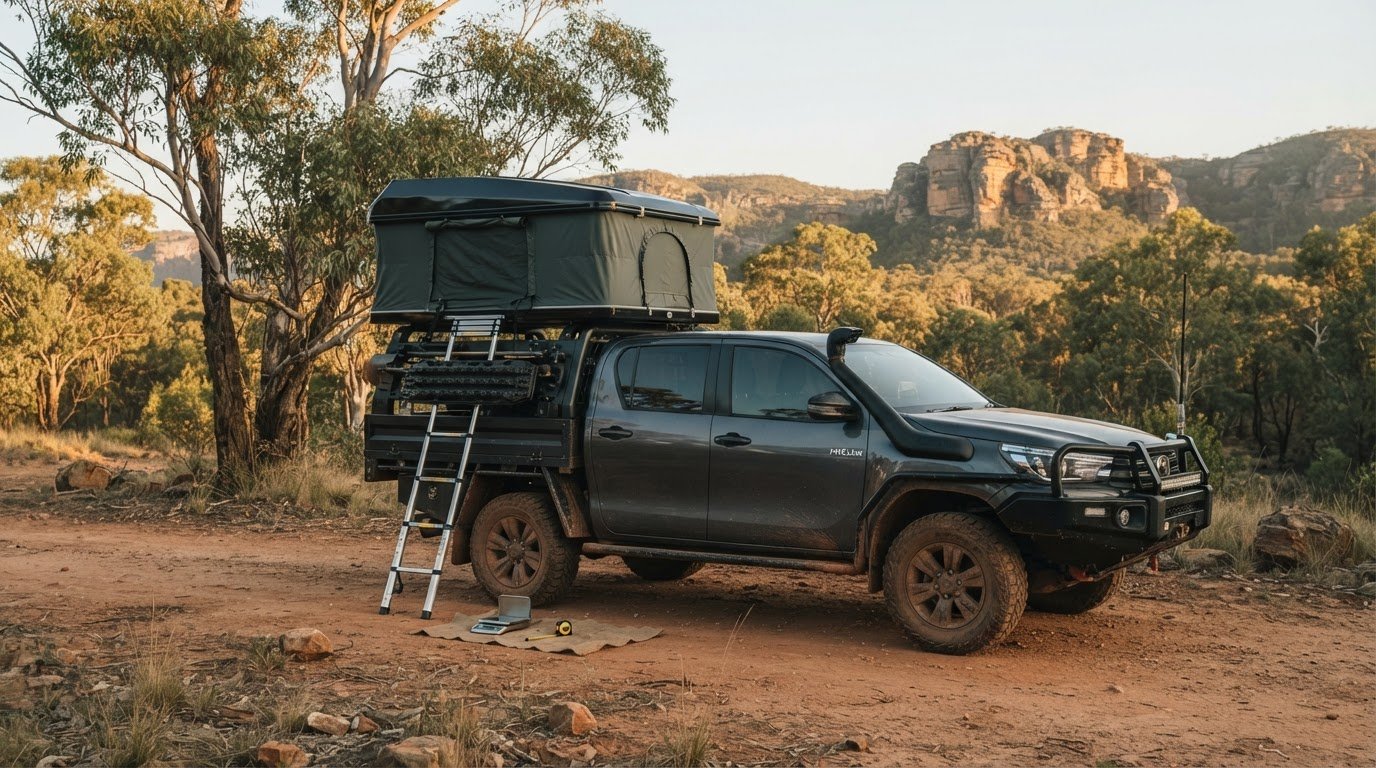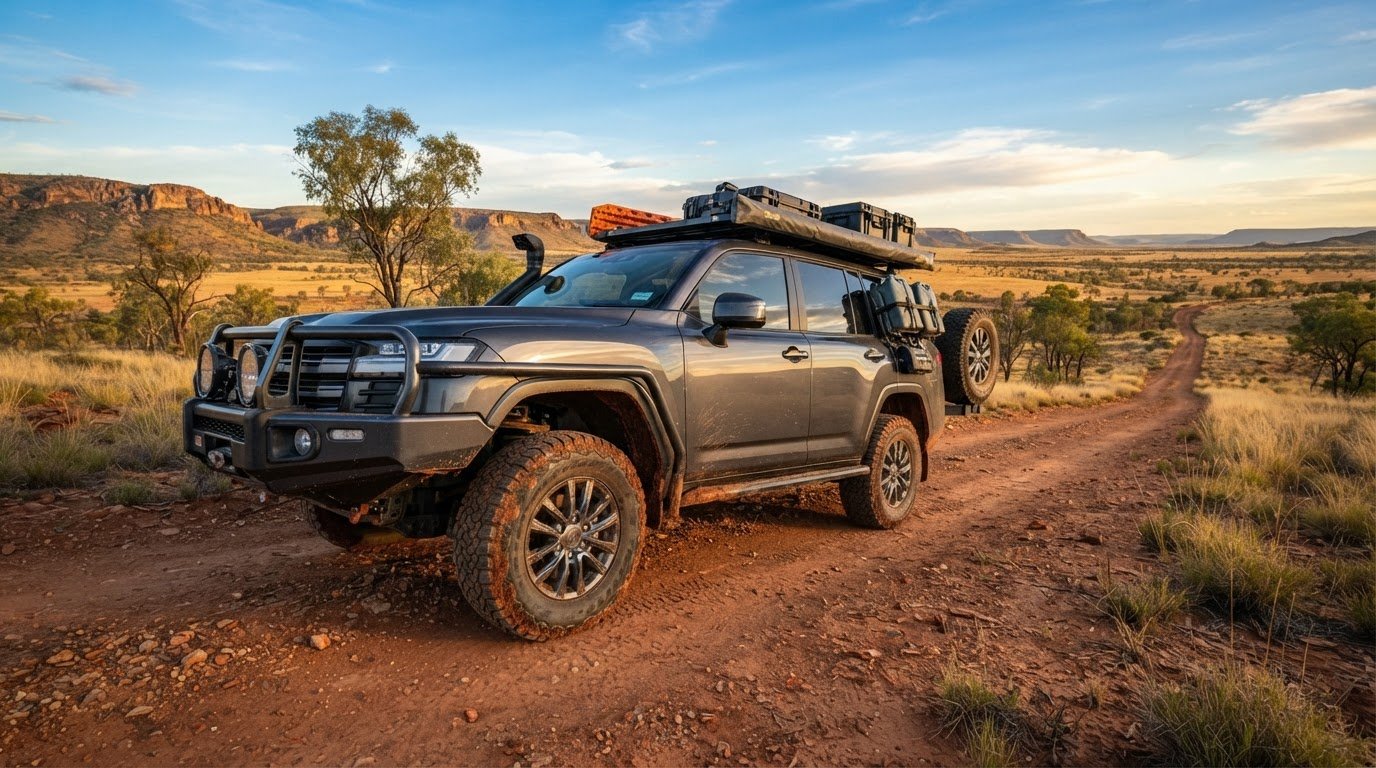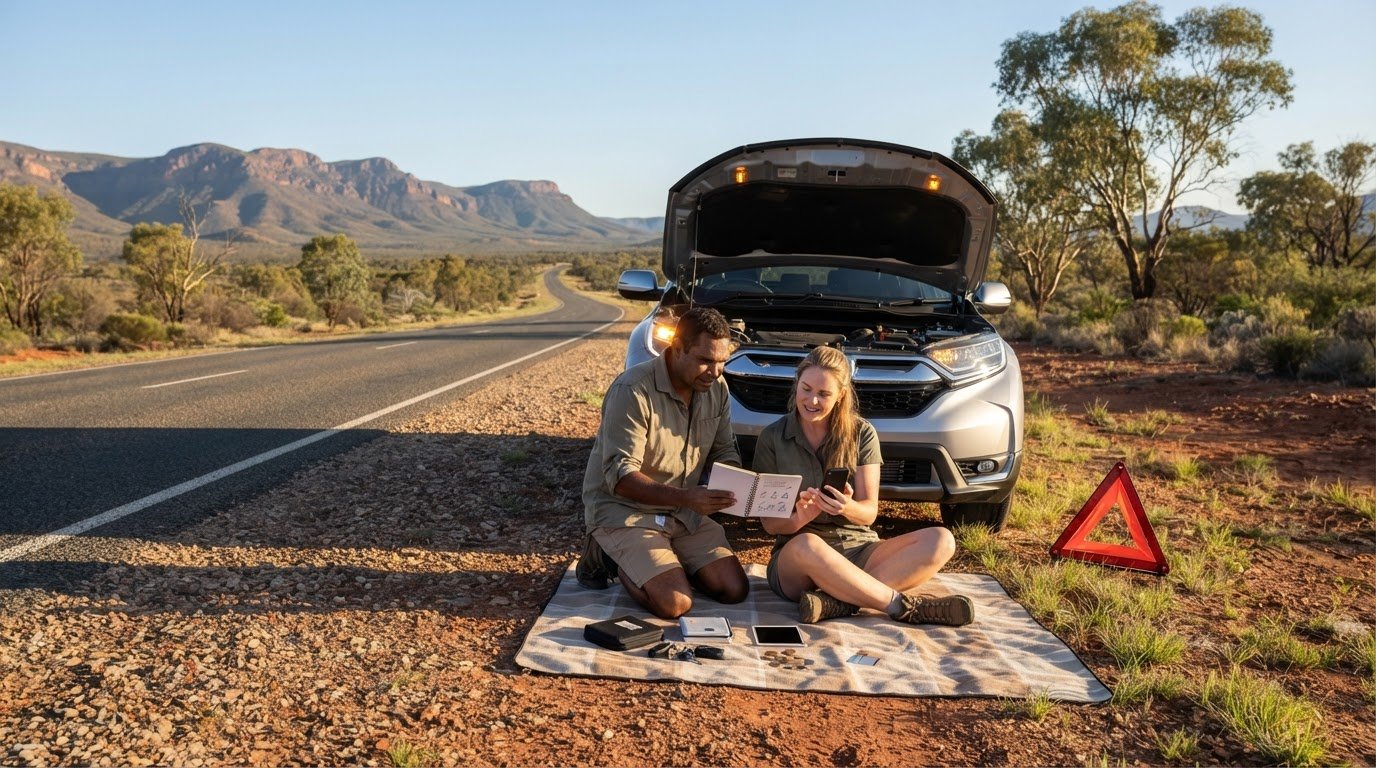
A 4-person rooftop tent is more than just a place to sleep; it’s a significant vehicle modification that demands a careful balance between massive interior volume and strict roof load safety. When searching for 4 person roof top tent reviews, most families want that dream of waking up to a sunrise over the Flinders Ranges with the whole crew tucked in comfortably. But we also understand the anxiety of watching your roof racks flex or wrestling with a complex setup while the kids are losing patience. It’s a common struggle for our community of adventurers who want a reliable “home away from home” without compromising vehicle integrity.
Securing the perfect 4-person rooftop tent is about more than just finding a mattress; it’s about ensuring your vehicle remains safe and your footprint stays light. Every kilo counts when you’re navigating technical tracks. We’ve explored how balancing dynamic load limits with interior volume makes the difference between a stressful trek and a seamless escape. By following these 4 person roof top tent reviews, you’re choosing gear that has been community-tested in the harshest Australian conditions. For families looking to deepen this connection to nature, CampoAventuras offers immersive 30-day programs designed to build confidence and adventure skills in young explorers. Our team draws on over 10 years of remote travel expertise to ensure every recommendation supports sustainable and ethical exploration.
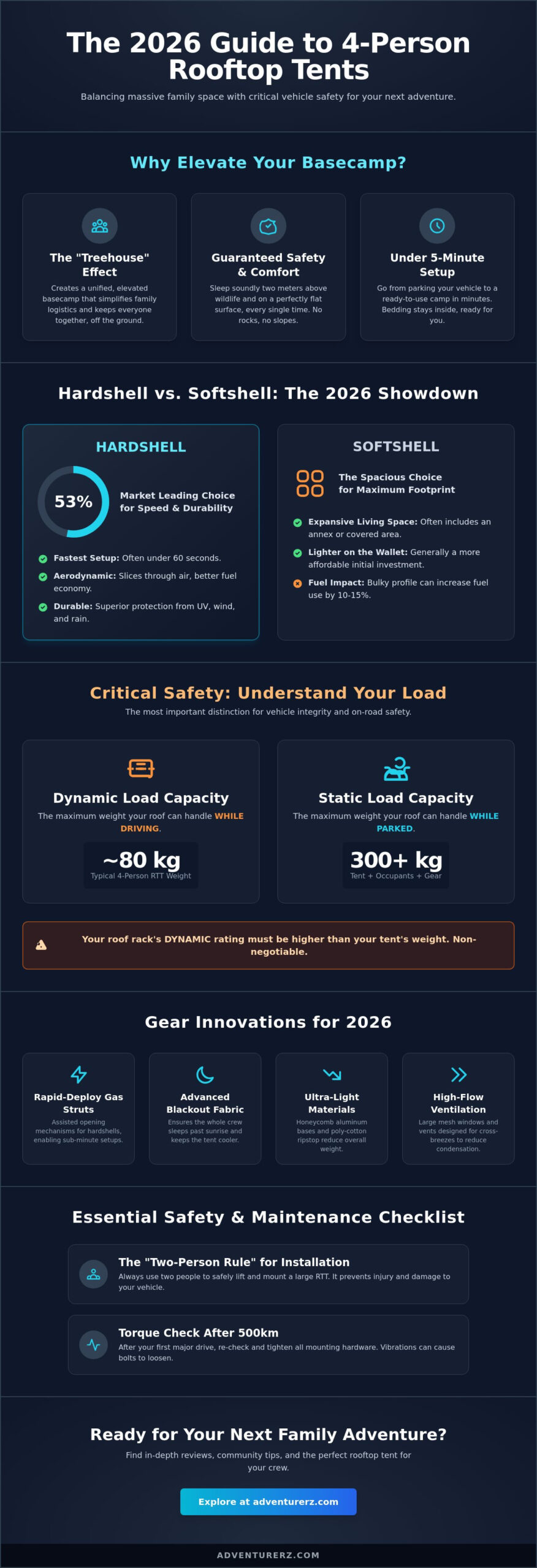
That’s why we’ve compiled this 2026 guide, focusing on the most durable, spacious, and easy-to-set-up options tested specifically for Australia’s rugged conditions. Whether you’re eyeing the 53% market-leading hardshell models for their speed or need the expansive footprint of a traditional softshell, we’ve done the hard yards for you. We’ll help you understand the critical differences between dynamic and static weight capacities to ensure your setup survives our harsh UV and wind. You’re about to discover which tents provide the ultimate sleeping comfort for your next group adventure into the wild.
Key Takeaways
- Understand how elevating your basecamp creates a “treehouse” effect that simplifies family logistics and offers a better footprint than managing multiple smaller tents.
- Master the vital distinction between dynamic and static load ratings found in our 4 person roof top tent reviews to keep your vehicle stable on rugged Australian tracks.
- Explore the latest 2026 gear innovations, ranging from rapid-deploy hardshell designs to advanced blackout fabrics that ensure the whole crew sleeps past sunrise.
- Learn the essential “Two-Person Rule” for safe installation and why performing torque checks after your first 500km is non-negotiable for long-term mounting security.
- Discover how adopting an elevated camping setup protects fragile Australian ecosystems while connecting you with the shared wisdom of our Adventurerz collective.
Why Choose a 4 Person Roof Top Tent for Your Next Adventure?
Imagine the look on your kids’ faces when you tell them the car is their bedroom. We call it the “treehouse” effect. Elevating your entire crew off the red dirt of the Outback or the damp grass of the Otways changes the camping vibe instantly. It’s about more than just a view; it’s about creating a unified basecamp for the whole family. While the history of roof top tents began with rugged solo explorers, the 2026 market is built for the Adventurerz collective. We’ve found that one large RTT often beats two smaller ones because it keeps everyone together and simplifies your roof rack layout. You only have one set of mounting brackets to worry about and one ladder to manage.
Security is a massive win here. Sleeping two metres above the ground provides peace of mind when you’re in croc country or simply want to avoid the local spider population. You’re also guaranteed a flat sleeping surface. No more clearing rocks or hunting for a patch of ground that isn’t sloped. Modern 2026 materials like ultra-light poly-cotton ripstop and honeycomb aluminium bases have slashed the weight of these massive units. This means you get the space you need without turning your 4WD into a top-heavy liability. When searching for 4 person roof top tent reviews, look for those that highlight this balance of durability and weight.
4-Person RTT vs. Traditional Ground Tents
Setup speed is the ultimate game changer. We’ve timed setups where we go from parking the rig to having a cold drink in hand in under five minutes. Ground tents often involve wrestling with poles and flysheets in the wind. With a large RTT, your bedding stays inside. You just unlatch, fold out, and your pillows are already waiting. Being elevated also provides a natural vantage point against rain. You’ll never wake up in a puddle because you didn’t dig a trench around your tent.
The Reality of Group Living in an RTT
Living in close quarters requires a bit of strategy. Most 4-person models now feature a mattress roughly equivalent to a King size, which is plenty for two adults and two children. To keep things organized, we recommend using internal gear lofts and side pockets for headlamps and snacks. Ventilation is your best friend. With four people breathing in an elevated space, you need high-flow mesh windows to manage condensation. We’ve reviewed the best roof top tents that prioritize cross-flow breezes to keep the interior fresh even on humid Queensland nights. Our community relies on detailed 4 person roof top tent reviews to navigate the growing market of family-sized shelters and find that perfect home away from home.
Critical Factors for Large RTTs: Weight, Footprint, and Vehicle Safety
When you transition from a solo setup to a family-sized rig, the physics of your 4WD change dramatically. A massive tent isn’t just a sleeping space; it’s a significant piece of cargo that alters your centre of gravity. Most 4 person roof top tent reviews focus on mattress comfort, but we prioritize how that weight affects your ability to navigate a technical track safely. You’re mounting a unit that can weigh upwards of 80kg, which places immense stress on your roof gutters or rails. This is why investing in high-quality, heavy-duty roof racks is non-negotiable. If your mounting hardware fails at 100km/h, the results are catastrophic for both your gear and your vehicle’s occupants.
Aerodynamics play a huge role in your long-distance touring efficiency. A bulky softshell tent acts like a sail, catching the wind and potentially increasing your fuel consumption by 10 to 15 percent. Hardshell models, which now hold a 53% market share as of early 2026, offer a slimmer profile that slices through the air with less resistance. While you’re exploring remote tracks or following Forest Service dispersed camping rules in international parks, every litre of fuel counts. We always recommend pairing a large tent with one of our best 4wd awnings to create a streamlined, functional basecamp that doesn’t feel like a brick on your roof.
Calculating Your Vehicle’s Roof Capacity
You must check your vehicle manufacturer’s manual for two distinct figures. Dynamic Load Rating is the weight limit while the vehicle is in motion. Static load rating refers to the weight the roof can support when the vehicle is parked. For a family of four, your static load includes the tent, the rack, and all four people. It’s common for 4-person tents to push the boundaries of standard SUV limits. Always position the tent as centrally as possible over the load-bearing pillars to ensure optimal vehicle handling on corrugated roads.
Hardshell vs. Softshell for 4 People
Which architecture wins for a group? Hardshell tents are the gold standard for setup speed, but they often come with a higher price tag and more weight. Softshell tents usually provide a larger interior volume for the same footprint, making them feel less cramped for four adults. However, they involve more “faff” with heavy PVC covers and zips. If you need extra “downstairs” living space for the kids to change or play out of the rain, a softshell with a zip-on annex is often the superior choice for group living. Our community’s 4 person roof top tent reviews consistently highlight that while hardshells are trendy, the humble softshell still offers incredible value for growing families.
Top-Rated 4 Person Roof Top Tents for 2026: Our Expert Recommendations
Choosing the right shelter is where the excitement really builds. We’ve spent months digging through 4 person roof top tent reviews to find the gear that actually survives a month in the Kimberley. It’s not just about finding the biggest mattress. It’s about how the hinges hold up after five hundred opens and how the fabric breathes on a humid night in the Daintree. We’ve narrowed the field to four standout models that cater to different budgets and styles of travel. Every recommendation here comes from a place of shared experience on the tracks.
Best Premium Option: iKamper Skycamp 4-Person
The iKamper Skycamp 3.0 remains the undisputed gold standard for family hardshells. Starting at $4,195.00, it’s a serious investment in your comfort. Its clever fold-out design provides a massive King-size sleeping area while maintaining a compact footprint on your roof. The floor is made of fibre-reinforced honeycomb aluminium panels, providing incredible strength without the weight penalty of solid metal. Owners in our community rave about the 2026 model’s refined latches and improved weather seals. It’s a “buy once, cry once” piece of gear that holds its value remarkably well over years of exploration.
Best for All-Season Comfort: 23 Zero Dakota 2200
If you have kids who wake up at the first hint of light, the 23 Zero Dakota 2200 is your best friend. Their Light Suppression Technology (LST) keeps the interior pitch black even in the midday sun. This 2.2m wide beast offers enough room for four adults to stretch out without bumping elbows. The heavy-duty 400gsm poly-cotton ripstop canvas is legendary for its durability against wind and rain. To create a truly liveable family space, we recommend seeing how this pairs with the best 4WD awnings for a full camp setup that protects your crew from the elements.
Best Value for Large Groups: Darche Hi-View 2200
For those who prioritize raw interior volume, the Darche Hi-View 2200 is hard to beat. The 2.2m width provides genuine real-world space for four people. What sets this apart is the ventilation. The ‘Sky Window’ allows for incredible stargazing while letting heat escape through the roof. It’s an excellent way to manage condensation when the whole crew is tucked in for the night. Explore our full range of roof top tents for more options that suit your specific vehicle setup.
The Kings Grand Tourer: Evaluating the Budget Entry
The Kings Grand Tourer represents the entry point for many families getting into large-scale RTTs. It’s a hardshell that offers a surprisingly fast setup for its price point. While it lacks the premium canvas and refined finishes of the iKamper, it gets families off the ground and into the wild. We’ve seen these survive some tough tracks, provided you keep an eye on the mounting bolts and seals. It’s a solid way for the Adventurerz community to start their journey without a massive initial outlay, allowing you to spend more on the trip itself.
Installation and Maintenance: Managing a Large Roof Top Setup
Getting your new home-on-wheels onto the roof is the first real challenge of family overlanding. Mounting a 4-person RTT is a team sport; these units usually weigh between 70kg and 95kg. You need at least one other person to lift it onto your rack safely. Trying to solo this task is a recipe for a slipped disc or a ruined door panel. We always suggest using a set of sturdy sawhorses to prep the mounting rails and hardware before the final lift. It’s about being methodical and daring enough to do it yourself, but wise enough to ask for a hand.
Once the tent is secure, the first 500km are the most critical. Corrugations and highway vibrations cause new bolts and brackets to settle. We’ve seen mounts loosen just enough to rattle, which eventually leads to hardware fatigue. Carry a 13mm spanner or the specific tool provided by the manufacturer in your glovebox. Check every nut at every fuel stop during that first trip. It’s a small habit that prevents a massive disaster on the tracks. Our community’s 4 person roof top tent reviews often highlight that the best gear is only as good as the person maintaining it.
Step-by-Step Mounting Safety
Don’t trust “universal” crossbars for an 80kg load. Verify that your rack system is explicitly rated for the dynamic weight of a large family tent. Position the unit so it’s centered between the front and rear axles to maintain a balanced center of gravity. This prevents the vehicle from feeling “nose-heavy” or “tail-happy” during emergency braking or sharp turns. We also recommend installing anti-theft nuts. High-value gear can attract unwanted attention in busy caravan parks, so a simple locking nut provides essential peace of mind.
Long-Term Care for Canvas and Zips
You must prepare your canvas before the first big storm hits. Seasoning involves soaking the canvas to let the threads expand and seal needle holes. Do this in your driveway with a garden hose and let it dry completely. Once you’re out in the red dust, your zips will take a beating. Use a dry silicone lubricant rather than grease to keep them sliding smoothly. Grease attracts grit, which acts like sandpaper on the zip teeth and leads to premature failure. If you’re still deciding which mount suits your rig, explore our detailed roof top tents recommendations to find the perfect match for your vehicle’s load capacity.
Mould is the silent killer of expensive canvas investments. If you’re forced to pack up in the rain, you must open the tent to dry within 48 hours of returning home. For off-season storage, a ceiling-mounted pulley system in the garage is the gold standard for the Adventurerz collective. It keeps the 70kg+ tent off the floor and allows two people to lower it back onto the car with minimal effort when the next adventure calls. Proper storage ensures your tent is ready for years of reliable service in the wild.
Responsible Remote Travel: Getting the Most from Your 4-Person RTT
Our journey into the wild is a privilege that carries a deep responsibility. While we’ve discussed the technical side of weights and models, the true heart of the Adventurerz collective lies in how we treat the land. Elevating your family in a rooftop tent isn’t just a matter of comfort or avoiding uneven ground. It’s a conscious choice to minimize our physical impact on fragile Australian ecosystems. Traditional ground tents can crush native grasses and disturb delicate topsoil. An RTT keeps your footprint limited to the exact area where your tyres rest, leaving the surrounding environment untouched for the next explorer.
Sustainability in the outdoor industry starts with the gear we choose to buy. We encourage our community to invest in durability rather than “fast-fashion” camping equipment that ends up in a landfill after just two seasons. The models featured in our 4 person roof top tent reviews are selected because they are built to be repaired, not replaced. High-quality poly-cotton canvas and replaceable hardware mean your tent can serve your family for a decade of exploration. This methodical approach to gear selection reflects our commitment to environmental mindfulness and self-reliance.
The Adventurerz Ethics of Exploration
Respecting the land means acknowledging we are visitors on traditional lands and remote pastoral leases. A crew of four people generates a significant amount of waste in a very short time. We advocate for a strict “carry-in, carry-out” policy. This includes everything from food scraps to hygiene products. Being elevated also provides a unique perspective on local wildlife. Staying off the ground keeps us safe from snakes and spiders while ensuring we don’t inadvertently block the natural paths of nocturnal wanderers. It’s about coexisting with the environment rather than conquering it.
Final Thoughts and Next Steps
Selecting the perfect shelter is only the first chapter of your story. Once you’ve balanced your roof loads and seasoned your canvas, the real magic happens on the track. We invite you to join our community and share your travel tips or photos of your setup in the wild. Sharing your 4 person roof top tent reviews and experiences helps other families make safer, more sustainable choices. If you’re ready to plot your course, start your journey with The Ultimate Adventure Travel Planner to map out your 2026 remote escape. We’re here to guide you every step of the way as we explore this rugged continent together. See you on the tracks!
Ready to Launch Your Next Group Adventure?
Securing the perfect 4-person rooftop tent is about more than just finding a mattress; it’s about ensuring your vehicle remains safe and your footprint stays light. Every kilo counts when you’re navigating technical tracks. We’ve explored how balancing dynamic load limits with interior volume makes the difference between a stressful trek and a seamless escape. By following these 4 person roof top tent reviews, you’re choosing gear that has been community-tested in the harshest Australian conditions. Our team draws on over 10 years of remote travel expertise to ensure every recommendation supports sustainable and ethical exploration.
Now that you understand the technical requirements and the “treehouse” benefits, it’s time to find your specific match. Explore our expert-vetted Roof Top Tent recommendations to see the gear we trust for our own families. We’re proud to be your peers on this shared path toward responsible exploration. Pack the rig, gather the crew, and we’ll see you out where the bitumen ends!
Frequently Asked Questions
Can a 4-person roof top tent fit on a small SUV?
Generally, a family-sized tent is too heavy for a small SUV. Most compact SUVs have a dynamic roof load limit between 50kg and 75kg; however, a typical 4-person unit weighs between 70kg and 95kg. You’ll find that 4 person roof top tent reviews often warn against this because the large footprint and high centre of gravity can make a small vehicle unstable on the highway. We recommend using a mid-sized or large 4WD to ensure you stay within manufacturer safety ratings.
How much weight can a roof top tent actually hold while parked?
Most modern 4WDs can support a static load of 300kg to 400kg while parked. This static rating is significantly higher than the dynamic limit because the vehicle isn’t subjected to cornering forces or wind resistance while stationary. It’s designed to support the tent, the rack, and a family of four safely. Just make sure your specific roof rack system is also rated to handle the combined weight of your entire crew.
Is it hard to fold away a 4-person tent with sleeping bags inside?
It depends entirely on the clearance of your specific model. Softshell tents generally offer more internal “give” for pillows and sleeping bags, whereas hardshell models have strict internal dimensions. If you leave too much bulky gear inside, you might strain the hinges or latches during pack-down. We find that using low-profile sleeping bags or compression straps helps keep the process smooth for the whole collective.
Are 4-person roof top tents safe in high winds?
Yes, they are remarkably safe if you park the vehicle facing into the wind. Because of their height and large surface area, these tents can act like a sail if caught from the side. We always suggest using every provided guy line and tensioning the fabric to prevent noisy flapping. If a storm is particularly severe, the structural integrity of your mounting brackets is the most critical safety point to monitor.
Do I need to upgrade my vehicle’s suspension for a 4-person RTT?
Upgrading your suspension is a wise move for any rig carrying a heavy family setup. Adding a constant load of 80kg or more to the roof increases body roll and changes how your vehicle handles during emergency manoeuvres. A heavy-duty spring and shock package helps manage that extra weight effectively. It ensures your family stays level and comfortable when the track gets rough and the corrugations start to bite.
What is the best mattress upgrade for a family roof top tent?
A high-quality self-inflating mat (SIM) is the gold standard for family comfort in the wild. While the stock foam mattresses found in many 4 person roof top tent reviews are decent, they can feel thin during extended trips. Swapping to a 10cm SIM provides superior support and better thermal insulation from the cold baseplate. It also lets you adjust the firmness to suit everyone’s sleeping style, which is vital for keeping the peace.
Can I leave the ladder attached while driving?
Your ladder must be secured exactly as the manufacturer intended for travel. In most folding RTT designs, the ladder stays attached and simply folds flat against the base or inside the shell while you’re on the move. If your tent uses a separate telescopic ladder, never leave it loose on the roof racks. Store it securely inside the vehicle or within the tent to prevent it from becoming a dangerous projectile.
How do I prevent condensation with four people sleeping in the tent?
Maximising airflow is the only effective way to stop moisture buildup. Four people can exhale several litres of water vapour overnight, which quickly turns into condensation on cold canvas surfaces. Keep your mesh windows open even in cool weather and use an anti-condensation mat under the mattress. These mats allow air to circulate beneath you, preventing dampness from soaking into your bedding and protecting your investment from mould.