The Australian outback doesn’t care about your good intentions; it only respects your level of preparation. We’ve all felt that familiar prickle of adrenaline mixed with a hint of dread as the bitumen ends and the red dust takes over. It’s natural to worry about a mechanical failure in the middle of nowhere or wonder if your water reserves will actually last through a sudden heatwave. We understand that anxiety because we’ve lived it too. That’s why we’ve built this definitive outback trip preparation checklist to ensure you’re ready for the most remote tracks our continent has to offer in 2026.
Our guide moves beyond basic gear lists to help you master the art of self-reliance and environmental stewardship. You’ll gain total confidence in your vehicle’s readiness and the peace of mind that comes from knowing exactly how to handle an emergency without mobile reception. We’re diving deep into the latest safety protocols, including mandatory AMSA beacon registrations and the specific UHF channel designations you need to stay connected. From expert-vetted shelter recommendations like rooftop tents and awnings to sustainable waste management, we’ll show you how to explore the heart of Australia while leaving it exactly as you found it.
Key Takeaways
- Adopt the Adventurerz mindset by balancing rugged self-reliance with deep respect for the fragile remote ecosystems we explore.
- Secure your vehicle’s mechanical resilience by prioritizing suspension, cooling, and filtration inspections before hitting the red dust.
- Master your outback trip preparation checklist by calculating essential water reserves and establishing a triple-redundant communication plan using UHF, satellite, and PLB systems.
- Build a sustainable basecamp using expert-recommended rooftop tents and awnings designed to withstand extreme temperature shifts and high winds.
- Execute a rigorous final walkaround protocol to verify load security, tyre pressures, and the necessary permits for Indigenous Protected Areas.
Table of Contents
The Responsible Adventurer’s Mindset: Preparation as a Priority
The red dust of the interior demands more than just a capable 4WD. It requires a fundamental shift in how we perceive our role as travelers. We’ve all seen the images of sun-drenched dunes, but the reality of remote travel is a serious undertaking. We call this the Adventurerz Mindset. It’s a unique blend of uncompromising self-reliance and deep environmental respect. Your outback trip preparation checklist starts long before you pack the first crate. It begins with a psychological transition from the safety of coastal caravan parks to the isolation of remote expeditions.
Preparation is your primary survival tool. In the outback, help can be days away. At 400 kilometers from the nearest service station, your outback trip preparation checklist becomes the difference between a minor hiccup and a life-threatening situation. We live by the ‘One is None, Two is One’ rule for critical supplies. If a piece of equipment is essential for your safety, having only one means you have zero when it fails. Redundancy isn’t overkill; it’s a commitment to coming home safely.
Sustainable Exploration and Leave No Trace
In the arid interior, biological processes are incredibly slow. A simple scrap of food or a piece of ‘biodegradable’ paper can last for years in the dry heat. Our community leads the way by carrying every scrap of waste out. We don’t just bury it; we pack it. This mindset extends to our campfires. While a fire is the heart of a camp, we must be conscious of our impact. Never collect wood from standing dead trees, as these are vital homes for local wildlife. If wood is scarce, we use our gas stoves instead. Most importantly, we acknowledge that much of the outback is Indigenous land. Respecting these sites and sticking to designated tracks ensures these culturally significant areas remain protected for future generations.
Understanding the Remote Australian Environment
The 2026 season brings new tools for tracking weather, but the ancient landscape remains unpredictable. You need to understand the reality of ‘remoteness’ on your chosen track. This means calculating exact distances between fuel and water points with a safety margin of at least 25 percent. Flash flooding can turn a dry creek bed into a raging river in minutes, even if it hasn’t rained where you are. Track conditions can degrade rapidly after a single vehicle pass in wet weather. Use The Ultimate Adventure Travel Planner to map your route and cross-reference current track reports before you depart.
Mechanical Resilience: Preparing Your 4WD for the Long Haul
The Australian interior is a relentless testing ground that exposes every weakness in a vehicle. Thousands of kilometers of relentless corrugations can shake even the most rugged 4WD to pieces if it isn’t prepared. Mechanical resilience is the backbone of our outback trip preparation checklist. While we love the thrill of the track, we respect the reality that a breakdown here is more than an inconvenience. Before we point the bullbar toward the horizon, we focus on the “big three” systems: suspension, cooling, and filtration.
Your suspension carries the entire weight of your life-support system. We inspect every bush, shackle, and shock absorber for signs of leaking or fatigue. In the extreme heat of the desert, your cooling system is under constant duress. We recommend a full flush and pressure test of the radiator. Dust is the silent killer of engines, so we ensure our filtration is top-notch. A high-quality snorkel and spare air filters are non-negotiable for our community. When it comes to tyres, we opt for Light Truck (LT) rated rubber for their thicker sidewalls. Managing tyre pressure is your most powerful tool for navigating sand, sharp gibber rocks, and bone-jarring corrugations. We also never guess our fuel range. We calculate our consumption based on a fully loaded vehicle in soft terrain, then add a 25 percent safety margin in secondary reserves.
Critical Spare Parts and Tool Kit
Our “Hard” checklist includes the spares that can actually get you moving again. We carry a full set of drive belts, radiator hoses, and a diverse selection of fuses. High-vibration failures are common, so our tool kit is built to handle loose bolts and cracked brackets. We include heavy-duty cable ties, a variety of adhesives, and thread locker. Most importantly, we carry both a digital and a physical workshop manual for our specific vehicle. If your electrical system fails, that paper manual becomes the most valuable book in your possession.
Recovery Gear and Under-Vehicle Protection
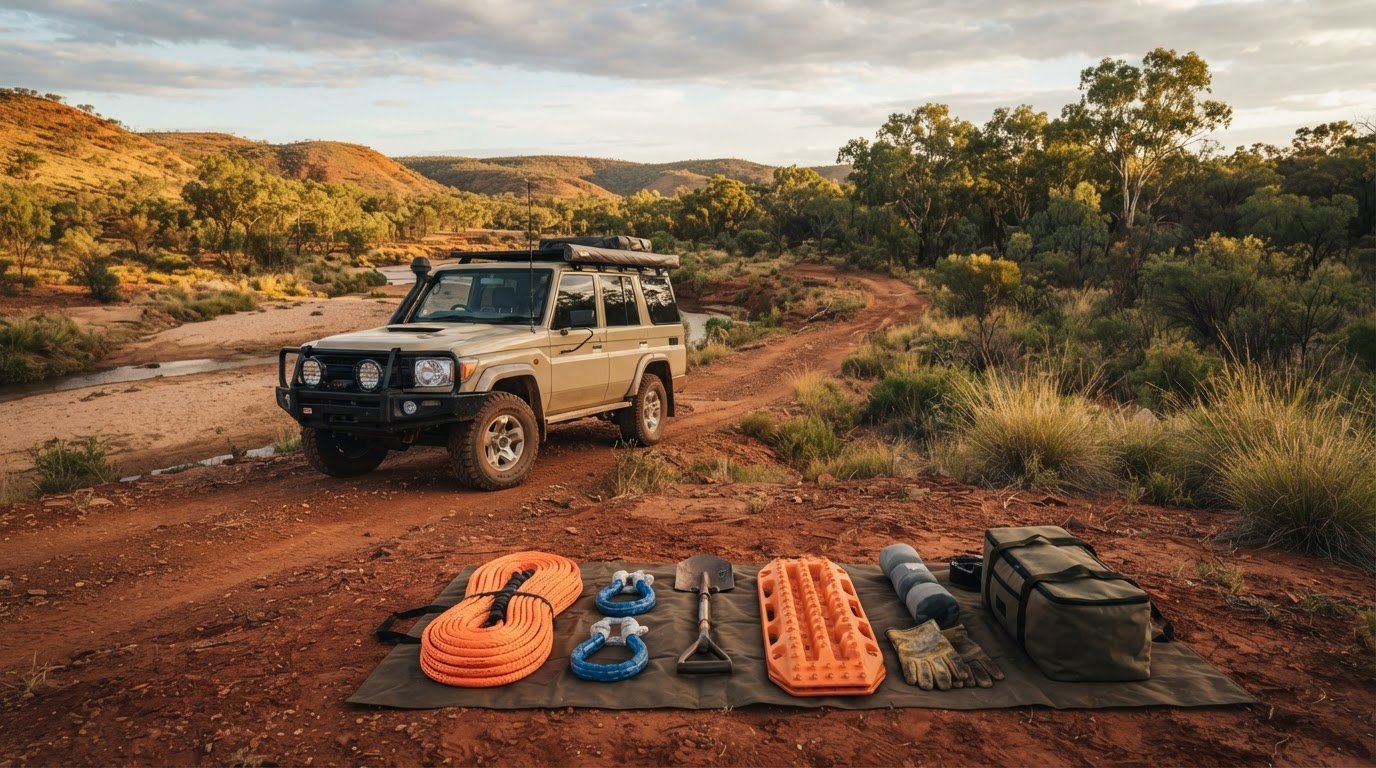
Getting stuck is part of the adventure, but staying stuck is a choice. Our recovery kit includes rated snatch straps, a long-handled shovel, and Maxtrax for quick extractions. If you have a winch, spool it out and inspect the line for frays before you depart. Trackside repairs often happen in the punishing midday sun. Enhancing your setup with high-quality 4WD awnings provides essential shade during these moments, keeping you and your tools cool while you work. We believe that being prepared means having the gear to handle the worst-case scenario with a level head. To ensure your gear is up to the task, we recommend you browse our community-tested equipment reviews for reliable remote travel solutions.
The Survival Essentials: Water, Communication, and Medical
If your vehicle is the vessel that carries you, then your water and communication systems are your life support. Your outback trip preparation checklist isn’t complete until you’ve addressed the harsh reality of the Australian climate. We don’t take chances with hydration or isolation. In the remote interior, a simple mistake becomes a crisis without the right gear and protocols. We’ve seen how quickly conditions change, and we prepare accordingly.
Step one is non-negotiable: calculate your water requirements at 10L per person per day for survival. This covers drinking, basic hygiene, and a buffer for unexpected delays. We always split our water storage across multiple containers or tanks. A single stone chip can drain a chassis-mounted tank in minutes, leaving you with nothing if you haven’t diversified your supply. For desert environments, the survival water ratio is ten liters per person per day to account for extreme heat and physical exertion.
Water Storage and Filtration Systems
Modern 2026 filtration methods have changed the game for remote travel. We no longer rely solely on what we carry. High-flow hollow fiber filters and UV purification pens allow us to safely source water from artesian bores or cattle tanks if our primary supply is compromised. These tools are compact and provide an essential backup layer to your outback trip preparation checklist. Always treat unknown water sources, even if they look clear, to avoid debilitating stomach issues in the scrub.
Remote Communication Technology for 2026
Communication requires a triple-redundant approach. We rely on UHF CB radios for vehicle-to-vehicle talk, but they’re useless once you’re out of range. A PLB (Personal Locator Beacon) is non-negotiable for remote solo travel because it functions as a one-way emergency signal that works where nothing else does. For checking in with the community or family, we compare satellite messengers against traditional satellite phones. Messengers like the Garmin InReach or Zoleo offer cost-effective two-way texting and tracking. We also emphasize the role of offline maps and GPS redundancy. When mobile data fails, having maps downloaded on a dedicated tablet or GPS unit ensures you stay on track.
Medical readiness goes beyond a standard box of adhesive strips. Your remote-area first aid kit must include trauma supplies like heavy compression bandages for snake bites, wound closure strips, and saline for irrigation. We also suggest including a thermal blanket and a high-intensity torch. Finally, never leave without registering your trip. Give a detailed itinerary to a trusted emergency contact and check in with local authorities when crossing restricted lands. This ensures that if you don’t show up at your next waypoint, the search starts exactly where you were last seen.
Sustainable Basecamp Setup: Shelters, Power, and Comfort
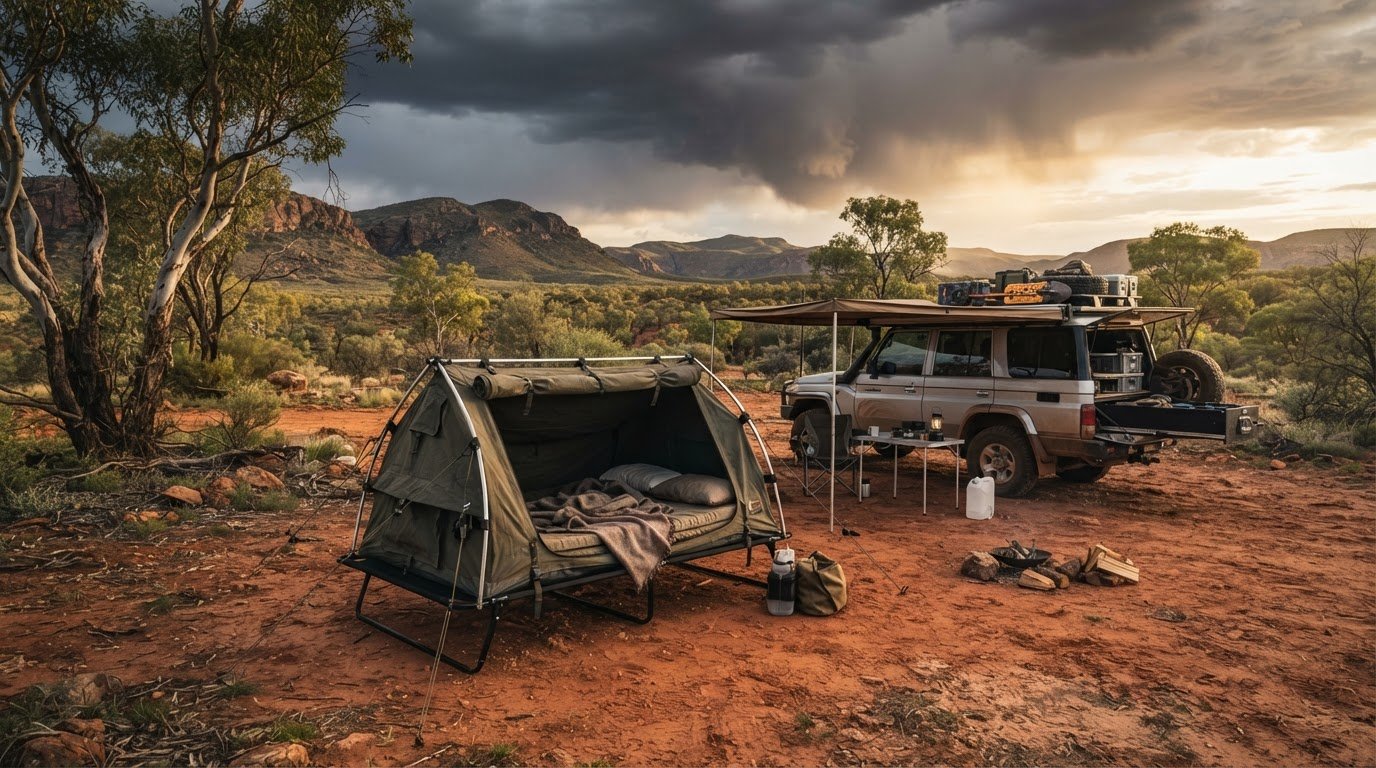
Once the dust settles and the engine cools, your basecamp transforms from a simple stopover into a vital recovery zone. Setting up a sustainable home in the bush requires gear that handles the extremes without leaving a permanent scar on the landscape. We prioritize equipment that balances rugged durability with a low environmental footprint. A critical part of any outback trip preparation checklist is ensuring your living space can withstand sudden 50-knot wind gusts and the massive temperature swings of the desert night.
We’ve found that dust-proofing is the greatest challenge for any remote kitchen or storage system. The fine red bull-dust of the interior finds its way into every zipper and seal. We use heavy-duty, gasket-sealed storage boxes and ensure our kitchen modules are accessible without exposing the entire vehicle interior to the elements. By keeping our systems organized and sealed, we reduce waste and protect our gear from the abrasive effects of the environment.
Shelter Systems: Rooftop Tents vs. Ground Tents
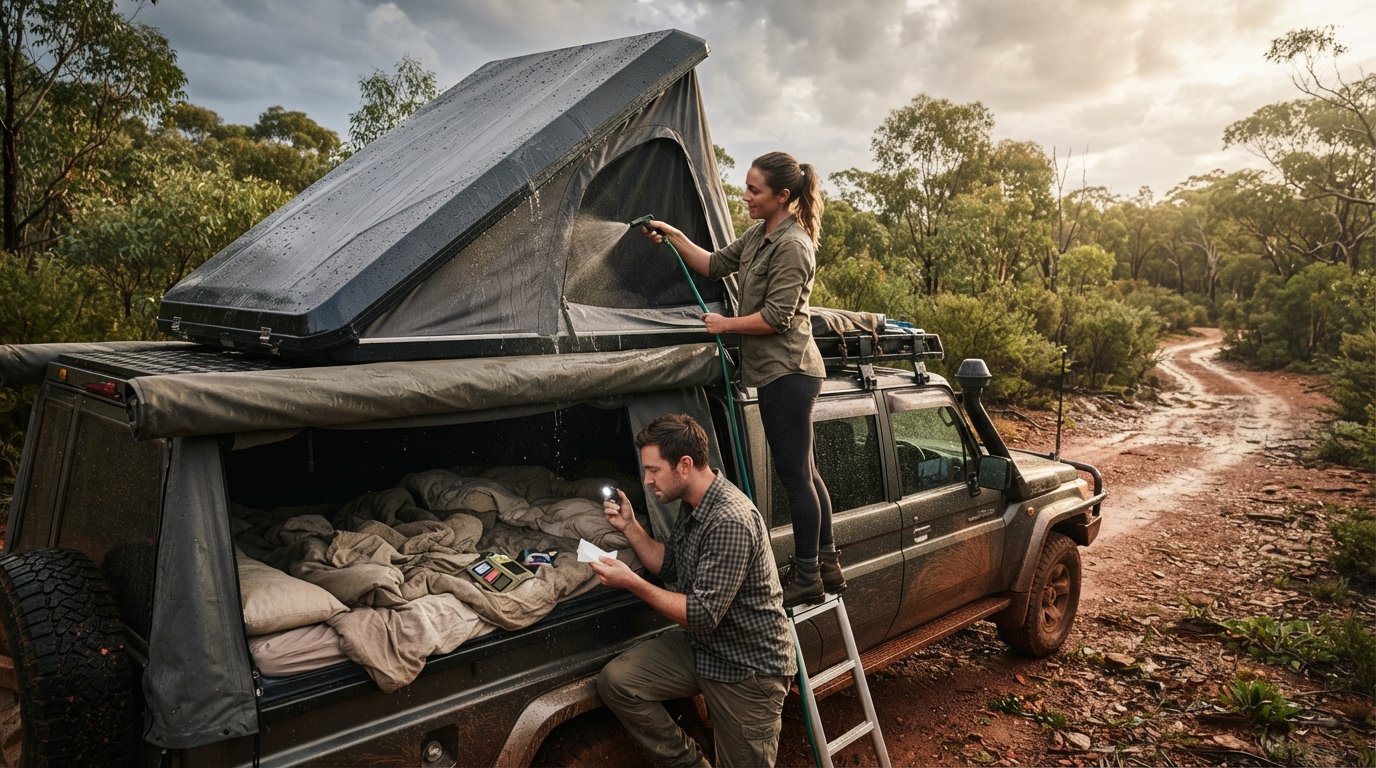
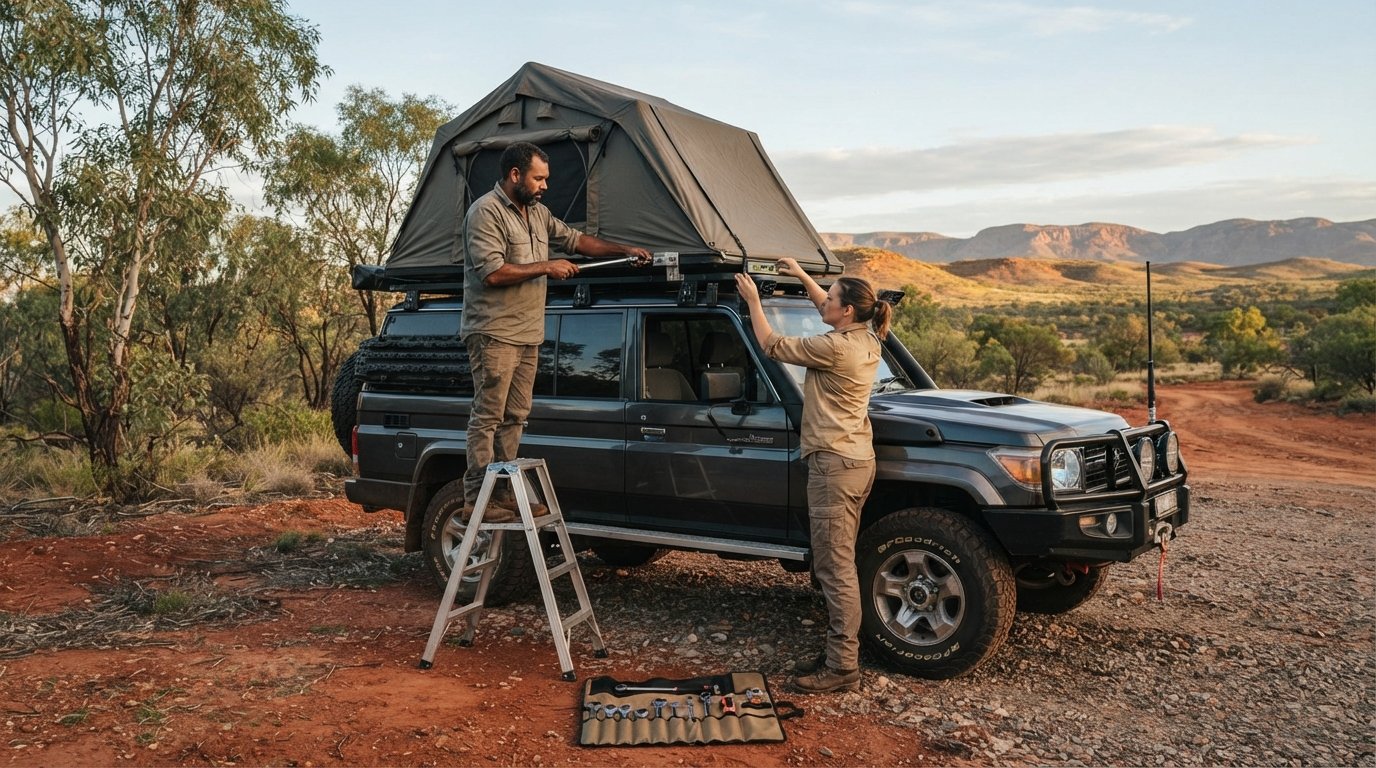
For most of our community, rooftop tents are the gold standard for remote travel. They offer a significant advantage by keeping us away from ground-dwelling critters and providing superior airflow during stifling nights. When choosing between hard-shell and soft-shell models, we lean toward hard-shell designs for their superior dust-sealing capabilities. They snap shut with a weather-tight gasket that keeps your bedding clean even after a day of following a convoy through a dust storm. Proper ventilation is key; we look for tents with high-quality midge-proof mesh to keep the bugs out while allowing the evening breeze to cool the cabin.
Remote Power and Lighting Solutions
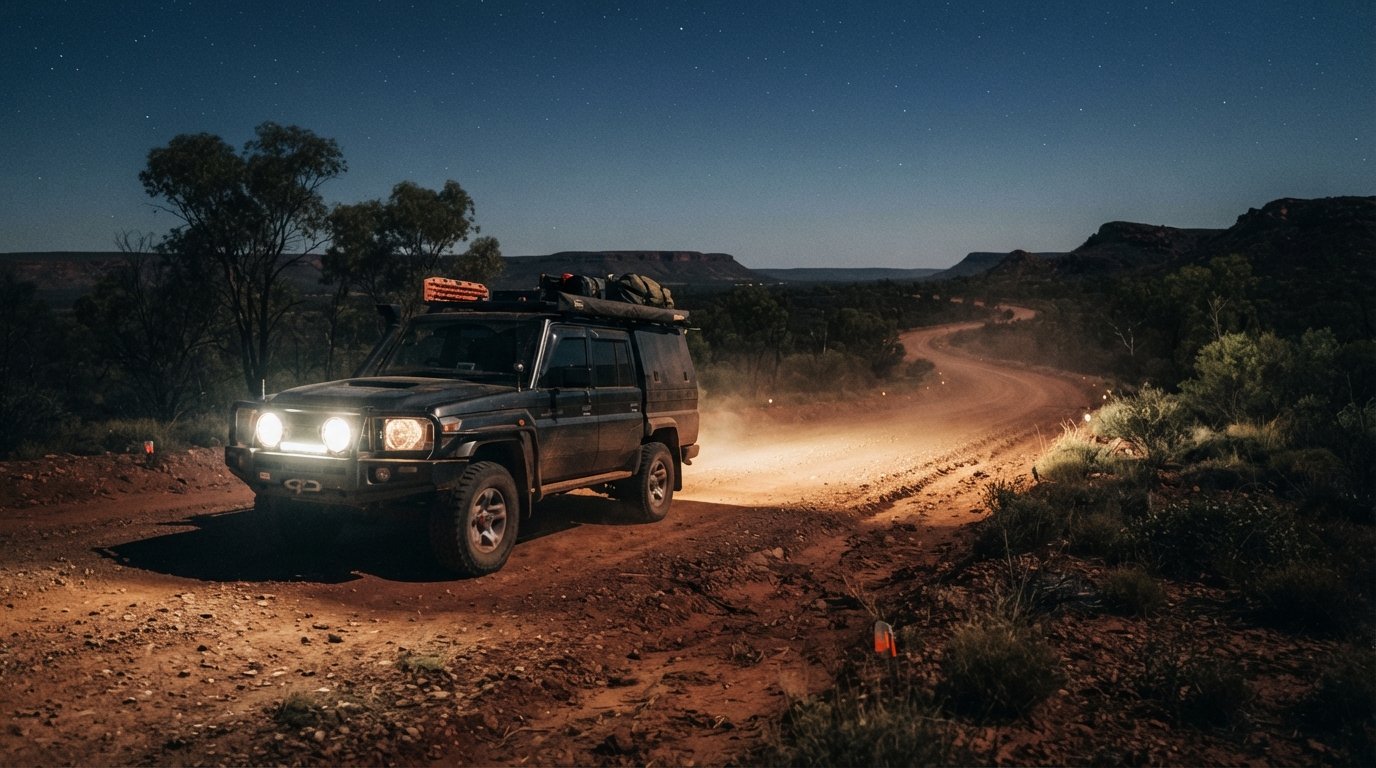
Managing power in 2026 has become more efficient thanks to advanced lithium battery systems and portable solar technology. We size our solar blankets to ensure our fridges stay at a safe temperature even when the mercury hits 40 degrees. Portable power stations have revolutionized how we manage campsite lighting; they allow us to move our light source exactly where it’s needed without messy wiring. However, we’re mindful of our impact on the environment. We minimize light pollution by using warm-toned LEDs and turning off external lights when they aren’t in use. This simple act allows us to enjoy the outback’s famous ‘Dark Skies’ responsibly, preserving the view of the stars for everyone. To find the right setup for your next expedition, explore our latest camping equipment reviews to see what gear survives the rigors of the bush.
Pre-Departure Protocols: Final Checks for a Remote Escape
The morning of departure brings a unique mix of high-energy excitement and focused discipline. Your vehicle is packed, your route is planned, and the horizon is calling. However, the most critical stage of your outback trip preparation checklist happens in these final hours. We treat this phase as a ritual of readiness. It’s the moment we transition from planners to explorers, ensuring every system is primed for the challenges ahead. We don’t rush this process; we embrace it as part of the adventure.
Every member of our community knows the value of the ‘Final Walkaround’. We move around the vehicle with a methodical eye, checking that every load is secure and every shackle is tight. We verify fluid levels one last time, looking for fresh leaks under the chassis that might have appeared after a final test drive. We also adjust our tyre pressures for the first leg of the journey, whether that’s a long highway stretch or the immediate start of a sandy track. This is also when we finalize our ‘Flight Plan’. We ensure a trusted contact has our exact itinerary, including GPS coordinates for planned camps and a hard ‘overdue’ time. Trip registration is the most vital safety step because it provides emergency services with a definitive starting point if you fail to check in.
Permits and Legal Responsibilities
Navigating the 2026 permit systems is a key responsibility for any modern explorer. Whether you’re crossing the Simpson Desert or traversing the Kimberley, you’ll likely need access permits for National Parks or Indigenous Protected Areas (IPAs). We respect these requirements as a way of supporting the traditional owners and land managers who maintain these tracks. When crossing pastoral leases, we remember that we’re guests on a working property. Leave every gate exactly as you found it and stick strictly to the main tracks to avoid damaging fragile grazing lands. Confirming these documents are downloaded or printed is a non-negotiable final step before you lose mobile reception.
Engaging with the Adventurerz Community
The best intel doesn’t come from a map; it comes from the people who were on the track yesterday. We leverage our community forums to source real-time updates on fuel availability at remote stations and the location of recent washouts. This collective knowledge allows us to adjust our plans based on current conditions rather than outdated guidebooks. As you head out, remember that your journey adds to this shared pool of expertise. By documenting track conditions and sharing your experiences, you help future explorers travel more safely and responsibly. Join the community and share your 2026 outback photos with us! We can’t wait to see where your preparation takes you. If you need to upgrade your setup before you go, check our latest reviews to ensure your gear is up to the task.
Ready Your Rig for the Red Dust
Mastering the Australian interior isn’t just about the gear you pack; it’s about the mindset you carry into the scrub. By working through this outback trip preparation checklist, you’ve laid the groundwork for a journey defined by rugged self-reliance and deep respect for the land. You now possess the protocols to ensure your 4WD is mechanically resilient, your communication lines are triple-redundant, and your basecamp leaves no trace on the fragile ecosystems of the desert. These steps aren’t just about safety; they’re about the freedom that comes from being truly prepared for anything the track throws your way.
We believe that the most rewarding adventures are built on a foundation of expert knowledge and community support. Our collective mission is to empower you with expert-vetted 4WD equipment guides and real-world insights that make remote travel both accessible and sustainable for years to come. The tracks are calling, and the 2026 season promises to be an incredible year for exploration. We’re here to guide you every step of the way with community-led travel insights focused on low-impact adventure.
Plan your 2026 escape with our expert gear reviews! We’ll see you out there where the bitumen ends and the real story begins!
Frequently Asked Questions
How much water should I carry for an outback trip?
We recommend carrying 10L per person per day for survival. This volume accounts for drinking, basic hygiene, and a safety buffer for unexpected delays or sudden heatwaves. We always split our water storage across different containers or tanks. This ensures that a single stone chip or tank leak doesn’t leave our community stranded without any life-saving reserves.
Do I really need a satellite phone for the Australian outback?
A satellite phone is excellent for voice communication, but we consider a PLB or a satellite messenger like a Garmin InReach more essential for safety. These devices offer reliable emergency signaling and two-way texting where mobile towers don’t exist. We prioritize these for their compact size and long battery life, which are vital when traveling far from help.
What are the most common vehicle failures in remote areas?
Suspension failure, cooling system leaks, and tyre damage are the most frequent issues we see on remote tracks. The relentless vibration of outback corrugations can shake brackets loose, crack welds, and cause electrical shorts. We recommend a full mechanical check of your shock absorbers and radiator hoses to prevent these common failures before you leave the bitumen behind.
Is a 4WD mandatory for all outback trip preparation?
A high-clearance 4WD is essential for any serious outback trip preparation checklist because it provides the durability and low-range gearing required for sand and rocky tracks. While some main outback roads are graded for 2WD vehicles in dry weather, they don’t offer the safety margin or recovery options needed if track conditions suddenly deteriorate or you encounter deep washouts.
How do I manage human waste sustainably in the outback?
We believe in carrying everything out using a portable toilet system or dedicated waste bags to protect the fragile desert environment. If burial is the only permitted option, we dig at least 20cm deep and stay 100m away from water sources. We never leave toilet paper behind, as it doesn’t break down in arid climates and damages the local ecosystem.
What permits do I need to travel through remote Indigenous lands?
You’ll often need specific transit permits from organizations like the Central Land Council or state-based authorities for Indigenous Protected Areas. Most of these permits can be secured through online portals in 2026, but we recommend organizing them at least four weeks before your departure. Respecting these legal requirements ensures we maintain access to these culturally significant and beautiful remote regions.
Can I use a standard camping tent in the outback?
You can use one, but standard camping tents often struggle with the high winds and abrasive bull-dust found in the interior. We prefer rooftop tents or heavy-duty swags because they offer better protection from ground-dwelling critters and handle extreme temperature swings more effectively. A robust shelter is a critical part of your basecamp setup when you’re days away from the nearest town.
What should be in a remote-area first aid kit?
Your kit must focus on trauma and remote emergencies rather than just minor scrapes. We include heavy compression bandages for snake bites, saline for wound irrigation, and large sterile dressings for significant injuries. We also suggest adding a thermal blanket and a high-intensity torch to your medical kit to handle emergencies that happen after the sun goes down.