If you think a standard setup will survive 500 kilometres of relentless Gibb River Road corrugations, your first breakdown is already scheduled. With over 901,000 registered recreational vehicles now hitting Australian tracks, the remote bush is more demanding than ever. We’ve all felt that familiar knot in the stomach when red dust starts swirling through the vents or the battery monitor dips toward zero while we’re days away from help. Choosing the right off road caravan accessories isn’t just about comfort; it’s about ensuring your home on wheels can withstand the brutal vibrations and isolation of the deep outback.
As a community of Adventurerz, we’re here to help you filter through the retail noise and build a truly “bush-ready” setup for 2026. You’ll learn how to bulletproof your caravan against mechanical failure and dust ingress while maintaining a sustainable, self-sufficient camp that respects our fragile environment. We’ll preview the latest in high-capacity lithium power, updated Starlink connectivity for remote safety, and the essential hardware required to tackle Australia’s toughest roads with absolute confidence. Let’s get your rig ready for the journey ahead.
Key Takeaways
- Understand why the “corrugation tax” destroys standard gear and how to prepare your plumbing and latches for the brutal vibrations of the outback.
- Discover why articulation hitches are non-negotiable for rugged terrain and how the right jockey wheel keeps you moving through soft sand.
- Learn to bulletproof your self-reliance by selecting the best off road caravan accessories like lithium batteries and high-performance dust reduction systems.
- Find out which heavy-duty recovery tracks and wind-rated awnings are essential for staying safe and secure when you’re days from help.
- Master the “less is more” philosophy to keep your setup under weight while choosing durable gear that respects our remote natural environments.
Table of Contents
Why Standard Caravan Gear Fails in Remote Australia
Off-roading in Australia isn’t just about finding a scenic spot; it’s a brutal test of engineering. When we talk about the outback, we mean the relentless corrugations of the Tanami, the deep washouts of the Kimberley, and the fine, invasive bulldust of the Simpson. Standard caravans are often built for bitumen and the occasional smooth gravel road. Taking them beyond the blacktop without the right off road caravan accessories is a recipe for expensive disaster. We’ve seen cabinets shaken off walls and copper piping snapped like twigs because the van wasn’t prepared for the “Corrugation Tax.”
This “tax” is the literal price you pay for adventure. Every kilometre on a corrugated track delivers thousands of micro-impacts to your chassis and interior. Standard hinges and plastic latches simply aren’t designed for this level of stress. Even your hitch plays a critical role in survival. A standard 50mm ball is fine for the highway, but it lacks the necessary range of motion for deep washouts. Without proper off-road vehicle modifications like an articulation hitch, you risk snapping the coupling or flipping the van when the terrain gets twisted.
We also need to consider weight distribution. Hanging heavy gear off the rear bumper might seem convenient, but it creates a dangerous pendulum effect. This instability leads to life-threatening sway at highway speeds. Proper accessory placement is vital for maintaining a balanced Gross Trailer Mass (GTM) and ensuring your suspension can actually do its job. If the weight isn’t centered, your off-road journey will end before it truly begins.
Understanding the Impact of Corrugations
Constant vibration leads to what we call “bolt-shake.” Over time, nuts and bolts literally unwind themselves from the chassis. We recommend a strict routine of checking torque settings on all external gear before and after every major track. Don’t assume that because a component is “off-road rated” it is maintenance-free. Even the toughest gear requires a watchful eye to prevent structural fatigue and catastrophic failure in isolated areas.
Dust: The Silent Caravan Killer
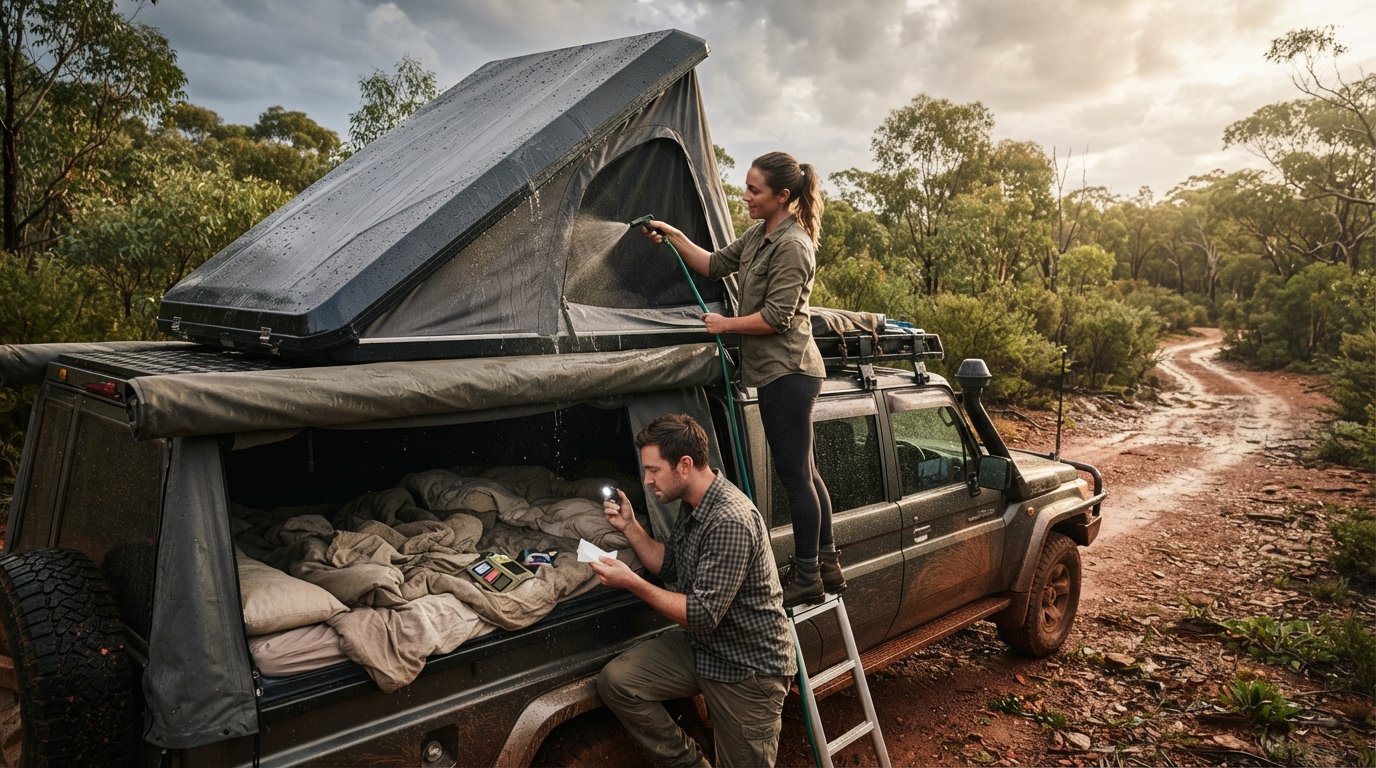
Bulldust is a unique Australian nightmare. It’s finer than talcum powder and finds its way through standard door seals and fridge vents. It doesn’t just make a mess; it ruins sensitive electronics and can even contaminate your drinking water. There’s a heavy psychological toll to opening your van after an eight-hour drive only to find every surface covered in red grime. To protect your investment, we must identify weak points in the sealing early. Start by checking the gaps around wheel arches and gas bottle lockers where dust loves to congregate.
Mechanical Must-Haves for Rugged Terrain
We know the outback isn’t just a place; it’s a personality. To survive it, our gear needs to be just as tough. When we’re prioritizing off road caravan accessories, we always start where the rig connects to the tow vehicle. The most critical mechanical upgrade you can make is moving away from a standard 50mm ball. While fine for the highway, these hitches bind up and can snap when forced into the extreme angles found in creek crossings or steep washouts. We recommend a high-articulation coupling like the Cruisemaster DO35. These hitches offer 360-degree rotation, which is a massive win for remote travel safety. If your caravan tilts sharply on a technical track, the hitch rotates freely, preventing that rolling force from flipping your 4WD along with it.
Beyond the hitch, we have to look at how we manage the van when it’s uncoupled. Standard jockey wheels are notorious for sinking into soft pindan or sand. We use heavy-duty, wide-tread jockey wheels to avoid the dreaded “sand-bog” when setting up camp. It’s also vital to protect the A-frame and your tow vehicle’s rear glass from the “rooster tails” of gravel thrown up by your tyres. A quality mesh stone guard acts as a shield, deflecting rocks downward rather than allowing them to ricochet into your window or puncture a gas bottle. Finally, ensure your chassis has rated recovery points. If you find yourself truly stuck, you need a safe place to attach a snatch strap. Pulling from a non-rated bumper is dangerous and can cause structural damage to your van.
Couplings and Hitches: Beyond the Ball
Drop-on hitches make life much easier when you’re trying to hitch up on uneven, dusty ground. You don’t need to be perfectly level; the design guides the pin home securely every time. Just remember that these precision tools require love. We keep ours grit-free by wiping them down and applying a small amount of dry lubricant to ensure the articulation remains smooth. We’ve spent years testing these setups, and you can find our detailed expert gear reviews to help you make the right choice for your specific rig.
Chassis and Suspension Protection
Protection under the van is where many travellers cut corners, but it’s where the most damage happens. We use heavy-duty mudflaps on both the tow vehicle and the caravan to minimize stone spray. Inside the chassis rail, we prioritize shielding for water tanks and gas lines. Puncturing a water tank in the middle of the desert isn’t just an inconvenience; it’s a survival risk. Shielding your grey water tank is also a matter of environmental ethics. It ensures we don’t accidentally leak waste into the pristine environments we’ve come to explore. Check that your off road caravan accessories include bash plates for any low-hanging plumbing or electrical looms.
Off-Grid Independence: Power, Water, and Air
True self-reliance means more than just surviving the track; it’s about thriving in the silence of the scrub. When we’re deep in the Gibson or the Great Sandy, our off road caravan accessories must work as a cohesive system to keep us comfortable without a power cord in sight. We’ve moved past the days of heavy, inefficient AGM batteries. For 2026, lithium (LiFePO4) is the undisputed king of remote reliability. While a budget 100Ah lithium battery starts around $479, premium models with Bluetooth connectivity can reach $1,149. The weight savings and depth of discharge mean we can run our fridges and lights longer without the anxiety of a dead system. Combined with solar panels that now range from $80 to over $300 depending on wattage, we can easily calculate a daily power budget that keeps us off-grid indefinitely.
However, power is only half the battle. We also need to manage the very air we breathe inside our vans. We’ve all seen the old-school trick of taping up every vent before hitting a dirt track, but it’s rarely enough. Modern Dust Reduction Systems (DRS) have changed the game by using the van’s forward motion to create a pressurized environment. By filtering incoming air and pushing it into the cabin, these systems prevent fine bulldust from being sucked in through the floor and door seals. It’s a cleaner, healthier way to travel that protects our sensitive electronics and bedding from the red grime of the interior.
The Dust Reduction Revolution
A DRS works by creating positive pressure. As we drive, the unit draws in air, filters it, and forces it into the van. Because the pressure inside is higher than outside, dust can’t find a way in. It’s a far more effective solution than tape, which often peels off under the heat of the sun. We make sure to clean or replace our filter units after any major track use to maintain peak performance. This simple maintenance ensures our “bush-ready” setup remains a sanctuary at the end of a long day.
Water Security in the Bush
Water is our most precious resource. We recommend using separate tanks for drinking and general washing to prevent cross-contamination. To ensure your water sources and fill points are always clearly identified, you can visit DymoOnline for professional labeling solutions designed to withstand the elements. Outback bore water is often heavy with minerals that can ruin standard pumps, so inline filters are essential. For those of us exploring the most remote corners, UV sterilization offers an extra layer of protection against pathogens. We always carry a dedicated emergency water supply, separate from the main tanks, just in case a stray rock manages to puncture a line despite our best shielding efforts. This methodical approach to water management is what defines a truly sustainable and responsible explorer.
External Setup and Recovery Essentials
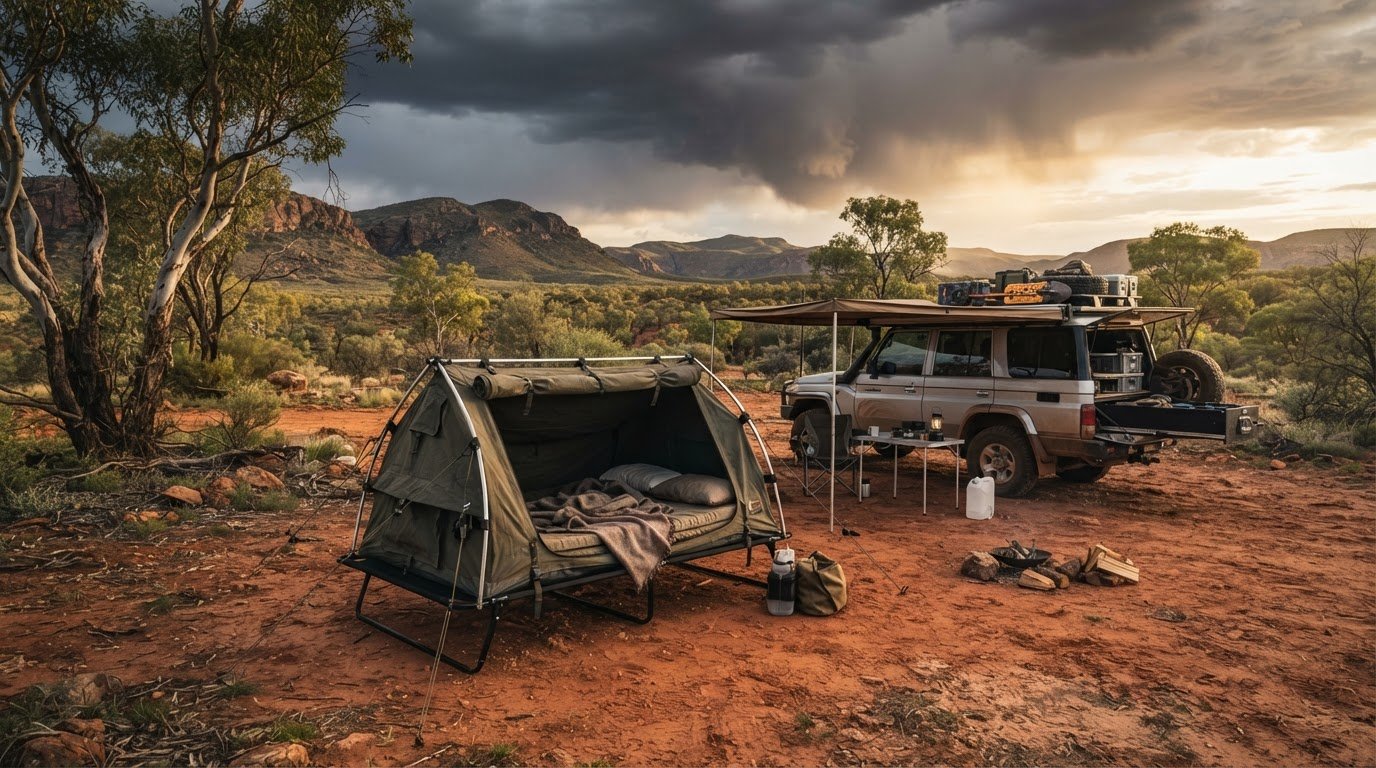
Once we’ve navigated the technical tracks and found that perfect remote campsite, the focus shifts to our external environment. Selecting the right off road caravan accessories for your exterior setup is a balance between quick deployment and rugged durability. We’ve all seen a sudden outback gust turn a flimsy awning into a tangled mess of aluminium. That’s why we emphasize wind ratings and the use of heavy-duty tie-downs with sand pegs. It’s not just about shade; it’s about protecting your home while respecting the silence of the bush. We prioritize gear that works with the landscape, not against it.
External lighting is another area where a small change makes a massive difference. Standard white LEDs are great for visibility but they attract every insect in the territory. We use bug-reducing amber lights for our external setup. This choice keeps the swarms away and minimizes our light footprint on the surrounding environment, allowing us to enjoy the stars without a cloud of moths in our faces. It’s a simple way to practice environmental ethics while improving our own comfort levels.
Awnings and Shade Solutions
When it comes to the “corrugation tax” we discussed earlier, your awning is a prime target for vibration damage. We often prefer bag awnings or heavy-duty roll-out models that feature reinforced mounting points. Bag awnings are particularly resilient on rough roads because they don’t have the heavy internal rollers that can rattle themselves to pieces over thousands of kilometres. If you’re looking to match your caravan setup with your tow vehicle, learn more about our expert 4WD awning reviews for the best recommendations in the 2026 market.
Recovery and Tyre Safety
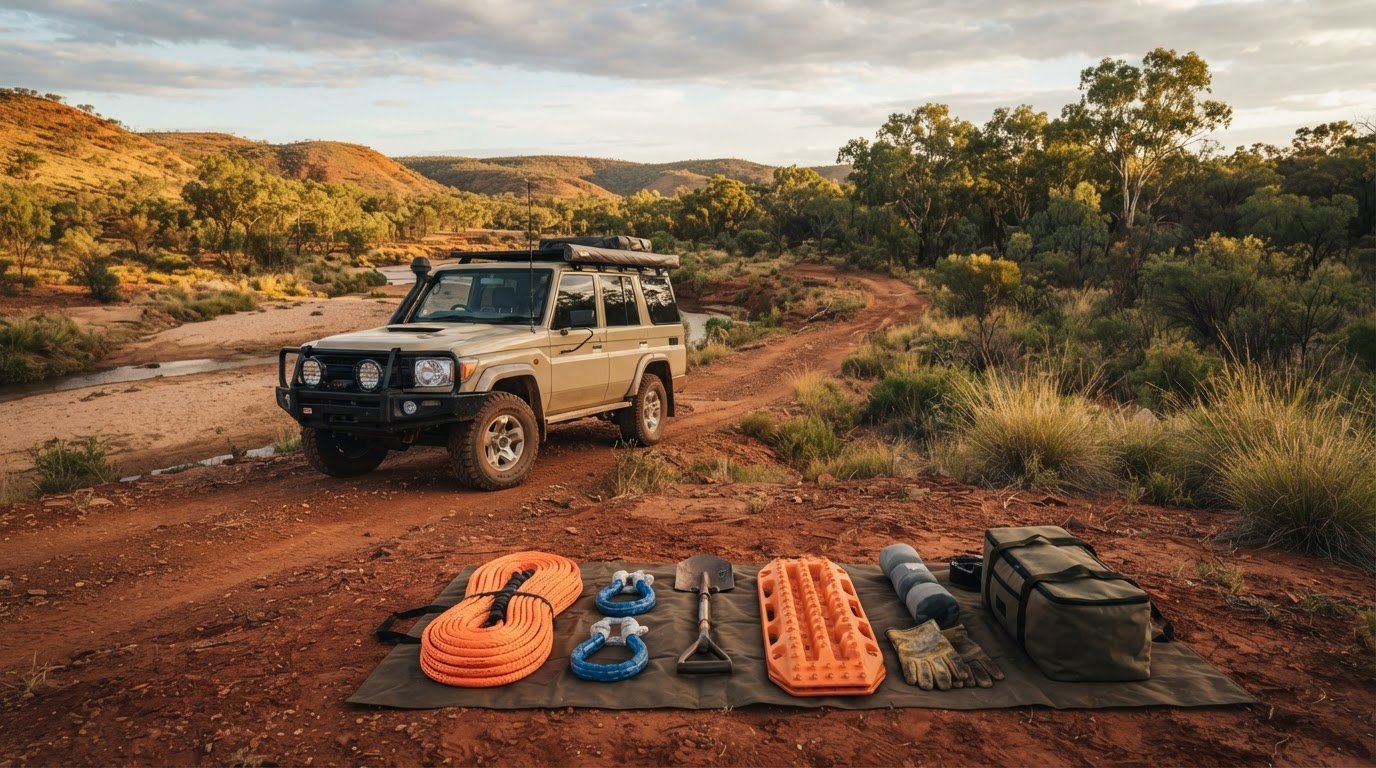
Recovery isn’t just for the 4WD. If your caravan’s wheels find a soft patch of sand or bulldust, you’ll need a set of recovery tracks dedicated to the van’s weight. We mount our tracks externally on the rear or the A-frame for easy access. Searching for gear in a dusty tunnel boot while you’re bogged is a mistake you only make once! Tyre safety is equally critical. We use a Tyre Pressure Monitoring System (TPMS) on all caravan wheels to provide an early warning for slow punctures. Catching a leak early prevents a catastrophic blowout that could damage your wheel arches or suspension. For remote desert crossings, we always stick to the ‘two spare’ rule, ensuring we have enough rubber to get back to the blacktop safely. To see which recovery gear we trust most, take a look at our latest gear recommendations.
Curating Your Off-Road Kit Responsibly
Building the ultimate rig isn’t just about ticking off a shopping list; it’s about balance. Every piece of off road caravan accessories we choose to bolt on adds weight and complexity. We advocate for a “Less is More” philosophy. Overloading your Gross Trailer Mass (GTM) is one of the most common mistakes we see in the community. It doesn’t just put a strain on your suspension; it fundamentally changes how your vehicle handles on loose outback surfaces. A heavy van increases your braking distance and makes every washout a potential disaster. We prioritize durable, multi-purpose gear that serves our needs without turning our caravans into overweight liabilities.
Responsibility also extends to how we treat the land. As explorers, we’re the stewards of the remote tracks we love. This means choosing sustainable gear over disposable plastic items and managing our waste with precision. In 2026, we’re seeing stricter regulations across the country. For example, Tasmania’s Central Coast now requires a $15 per night permit for freedom campers, and this is strictly for self-contained vehicles only. We use high-quality portable toilets and strictly biodegradable chemicals to ensure we leave no trace in these sensitive ecosystems. Our goal is to ensure these tracks remain open and pristine for the next generation of Adventurerz.
Weight Management and Safety
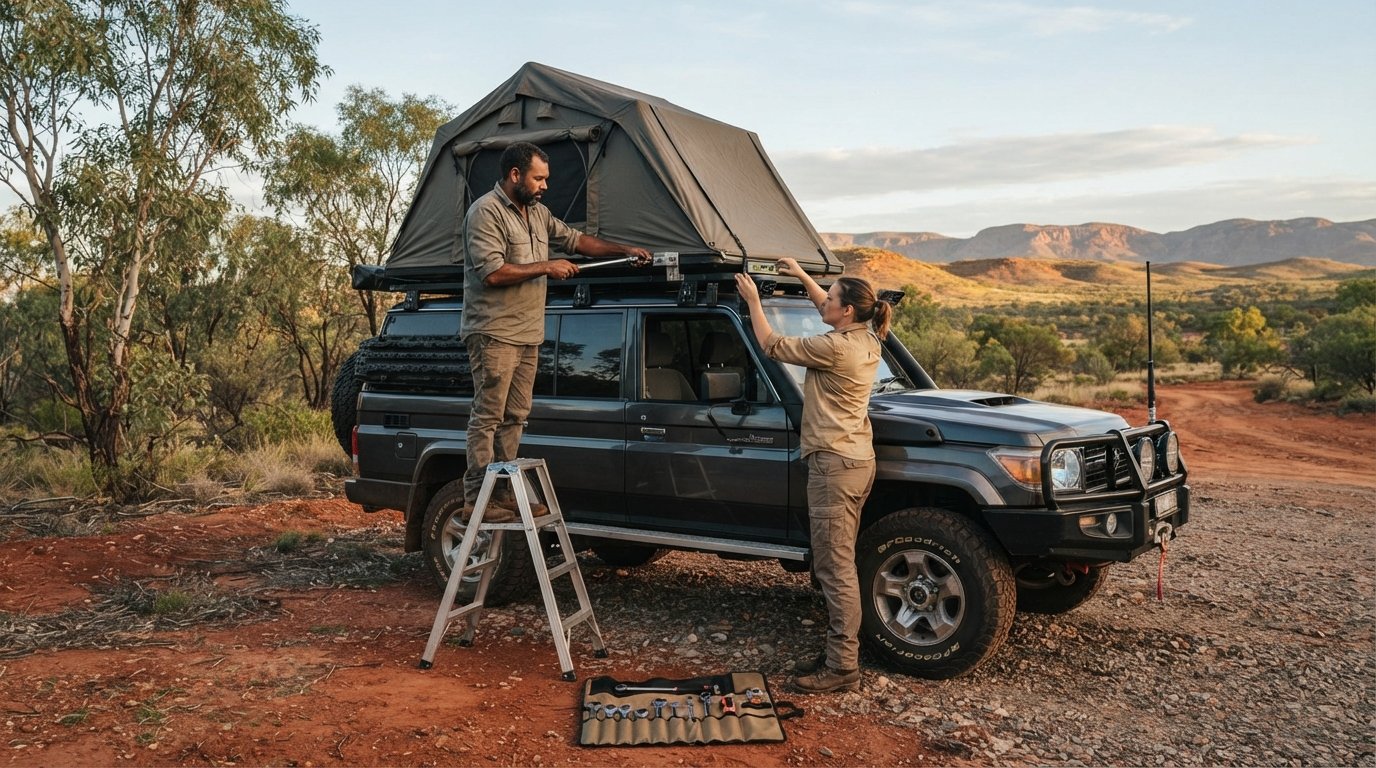
We’ve all been victims of “accessory creep.” It starts with a second spare tyre and ends with a heavy tool chest on the A-frame. To stay safe, we recommend a DIY weight check before any major expedition. Use a tow ball weight scale and visit a local weighbridge to confirm your GTM. If your van is pushing its limits, consider shifting some load to your tow vehicle. A well-chosen rooftop tent on your 4WD can provide extra sleeping space while keeping the caravan’s profile lean and manageable on corrugated roads. This strategic distribution improves stability and gives you better control when navigating technical terrain.
Environmental Stewardship in the Outback
Minimizing our impact means maximizing our self-reliance. We lean heavily on the lithium and solar systems we discussed earlier to avoid the noise and pollution of petrol generators. Silence is a gift in the bush; let’s keep it that way. We also practice responsible grey water management by using dedicated tanks, especially when camping near inland water sources. We encourage you to join the Adventurerz community to share your own sustainable travel tips and learn from others on the same path. Before you head out, use our comprehensive travel planner to map your route and test your setup against the realities of remote travel. It’s the best way to ensure your kit is truly “bush-ready” and respectful of the wild places we call home.
Mastering the Remote Track
Navigating the vastness of the Australian outback requires more than just a sense of adventure; it requires a rig that’s as hardy as the tracks themselves. We’ve explored how a methodical approach to mechanical upgrades, like high-articulation hitches and stone protection, prevents the corrugation tax from ending your trip early. By prioritizing advanced off-grid systems like lithium power and dust reduction, we ensure our remote camps are as comfortable as they are sustainable. Every choice we make, from managing our GTM to disposing of grey water responsibly, reflects our commitment to preserving the wild places we love.
Selecting the right off road caravan accessories is a journey of refinement and expertise. You don’t have to do it alone. Whether you’re prepping for your first Simpson crossing or your tenth lap of the map, our community is here to guide you toward gear that lasts. We provide expert 4WD and caravan gear recommendations with a focus on responsible exploration. Connect with us and tap into the knowledge of our active community of outback enthusiasts today.
Join the Adventurerz community for expert gear reviews and remote travel tips. The tracks are calling, and with the right preparation, you’re ready to answer. We’ll see you out there!
Frequently Asked Questions
What are the most important off road caravan accessories for beginners?
We recommend starting with the foundations: a high-articulation hitch, a reliable Tyre Pressure Monitoring System (TPMS), and a set of quality recovery tracks. These items ensure you can navigate technical tracks safely while protecting your rig from the most common outback failures. We always suggest focusing on mechanical reliability before adding luxury gadgets to your setup.
Do I really need a Dust Reduction System (DRS)?
A DRS is essential if you plan on tackling iconic dirt tracks like the Oodnadatta or the Tanami. These systems create positive pressure inside your van, which actively pushes air out and prevents fine bulldust from entering through seals. Without one, you’ll spend your evenings cleaning red grime off every surface, including your bedding and sensitive electronics.
Can I use a standard 50mm ball hitch for off-road towing?
We strongly advise against using a standard 50mm ball for anything beyond light gravel roads. These hitches don’t have the 360-degree rotation required for steep washouts or creek crossings, which can lead to hitch binding or even a rollover. Upgrading to a specialized off-road coupling is one of the smartest safety moves you can make for your rig.
How much solar power do I need for a caravan in remote Australia?
Most remote travellers find that 400W to 600W of solar is the sweet spot for maintaining self-sufficiency. This capacity usually covers a 12V fridge, lighting, and water pumps even during overcast days. It’s vital to match your solar output to your battery’s storage capacity to ensure you don’t run dry when the sun goes down in the scrub.
What is the best way to protect my caravan from stone damage?
Installing a high-quality mesh stone guard on the A-frame is the most effective way to deflect flying rocks. We also recommend fitting heavy-duty mudflaps to both your tow vehicle and the caravan. This dual-layered protection keeps your van’s front panel pristine and prevents stones from ricocheting into your tow vehicle’s rear window during transit.
Is Lithium better than AGM for off-road caravans?
Lithium (LiFePO4) is significantly better for remote travel because it offers a higher depth of discharge and much lighter weight. You can use almost 100% of a lithium battery’s capacity compared to only 50% for an AGM. While the upfront cost is higher, the long-term reliability and weight savings make it a superior choice for our community members.
How do I manage grey water when camping in national parks?
You must use a permanently fitted grey water tank to meet the self-containment rules now enforced in many national parks across Australia. We collect all our sink and shower water and carry it out to a designated dump point. This practice protects the fragile ecosystems we visit and ensures we remain welcome in these beautiful, isolated locations.
What recovery gear should I carry specifically for my caravan?
You need a dedicated set of recovery tracks that can support the weight of your fully loaded van. It’s also critical to ensure your caravan has rated recovery points on the chassis. Never attempt to snatch a bogged caravan from the rear bumper or a non-rated point, as this can cause catastrophic structural damage to your off road caravan accessories and the van itself.