A fan isn’t always the fix for a rooftop tent that feels like an oven. In hot Australian conditions, airflow, shade and smart setup habits can matter just as much as powered cooling. The best roof top tent ventilation systems for hot climates work with your tent’s vents and mesh, helping warm, humid air escape without leaving you exposed to insects, dust or rain.
If stagnant air has left you tossing and turning, you’re not alone. It’s fair to wonder whether passive vents can do enough or a fan is worth the extra gear. This guide compares passive, powered and hybrid ventilation options using practical criteria: airflow, weather protection, power needs and setup complexity. Then it brings the pieces together into a simple approach: encourage cross-ventilation, make the most of shade and breezes, and manage moisture so the tent feels more comfortable overnight. The aim is to find a setup that suits your conditions and keeps your camp lighter on the landscape.
Key Takeaways
- Compare passive vents, powered fans and hybrid setups to find the best roof top tent ventilation systems for hot climates and your camping style.
- Learn how cross-ventilation can help move warm, humid air, and why actual airflow depends on wind, temperature and campsite exposure.
- Use a pre-sleep routine to position openings, check insect mesh and test airflow while keeping weather protection in mind.
- Reduce heat build-up by considering shade, vehicle orientation and daytime exposure alongside your ventilation choices.
- Before adding a fan, check that it suits your tent’s design, power access and noise preferences, and confirm compatibility with the manufacturer.
Table of Contents
Why Rooftop Tent Ventilation Matters in Hot Climates
A hot, stuffy night can make a rooftop tent feel far less inviting after a full day outdoors. The answer isn’t automatically a bigger fan: comfort depends on how air moves through the tent, how much heat it has absorbed and what the weather is doing outside. Understanding those factors helps you choose the best roof top tent ventilation systems for hot climates without expecting one device to solve every problem.
Ventilation exchanges indoor air for outdoor air. In a tent, that means giving warm, moisture-laden air a way out and allowing fresh air to enter. It’s different from air conditioning: ventilation can help clear stale air and encourage evaporation, but it doesn’t actively cool incoming air or guarantee a particular temperature.
That distinction matters on an Australian summer trip, especially when the air outside is also hot or humid. A fan may move air across your skin and make the space feel less stagnant, but it can’t remove heat stored in sun-warmed fabric or make outdoor air cooler. Think of ventilation as one part of a comfort plan, alongside reducing daytime sun exposure and choosing a well-shaded campsite where permitted.
How heat and moisture build up inside a rooftop tent
Sunlight warms the tent’s outer fabric and can leave the interior holding heat into the evening. Once you settle in, body heat, breathing and warm bedding add to the warmth. Each breath also releases moisture. In humid conditions, or when tent surfaces cool overnight, water vapour can condense on fabric, windows or other cooler surfaces. Air movement can carry some moisture out, but it won’t prevent condensation in every condition.
What effective ventilation can and cannot do
Cross-ventilation is airflow through a space from an opening where air enters to another opening where it exits. In a rooftop tent, openings on different sides can create that pathway when wind and campsite exposure support it. The principles of ventilation include natural forces such as wind pressure and temperature-driven movement, but their effect varies with conditions.
With a clear entry and exit path, fresh air can help move warmer, stale air out instead of simply circulating it in place. If openings are blocked, positioned on the same sheltered side or closed against rain, airflow may be limited. A powered fan can assist movement, but ventilation is not refrigeration: it improves air exchange, not the outside temperature. Keep that in mind when comparing passive and powered options, and balance airflow with insect and weather protection.
How Rooftop Tent Ventilation Systems Move Air
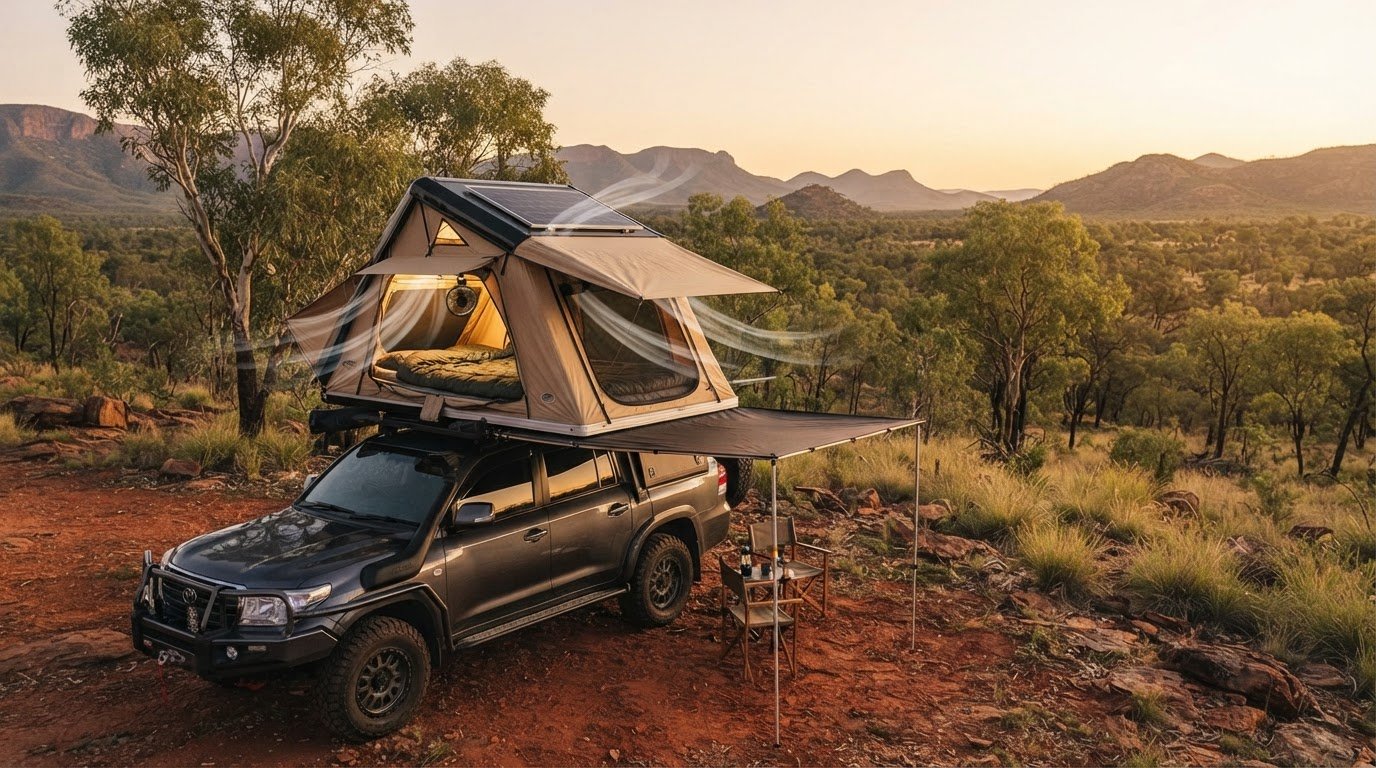
Air needs a route through your tent. Windows, roof vents and mesh panels let outdoor air enter while warmer, more humid air escapes. The amount of movement depends on the tent’s design and conditions around camp. A breeze may help drive airflow, while still air or a sheltered position can leave passive vents doing less.
Temperature differences can also encourage convection. Warm air tends to rise, so a higher vent may give it a path out as cooler air enters through a lower opening. This natural movement can support ventilation, but it doesn’t guarantee strong airflow. Wind direction, tent orientation and whether openings are exposed all make a difference.
Passive vents, mesh panels and cross-ventilation
Open mesh-covered panels on opposing sides to create an entry point and an exit point across the sleeping area. Mesh helps keep insects out, but it doesn’t block wind-blown dust or rain like a sealed panel might. Choose openings with privacy and weather exposure in mind, and check the tent maker’s guidance before changing how a panel, rainfly or vent is secured.
Simple airflow path: outdoor air enters through a wind-facing mesh opening → moves across the sleeping area → warm, humid air exits through an opposing or higher vent. This is a useful way to picture the route, not a promise that air will always move in that direction.
Powered fans and rooftop tent airflow
A powered fan can help move air when natural airflow is weak, but its effect depends on placement. Set to exhaust, a fan near an opening can push interior air out, provided another opening allows replacement air in. Set to circulate, it moves air around inside the tent and may improve the sensation of airflow without exchanging much air with outside.
Neither approach suits every tent or campsite. Before choosing a fan, verify its airflow capacity, noise level, power requirements and mounting compatibility against the tent manufacturer’s instructions. Check that cables won’t be pinched by doors or moving parts, and protect the battery and connections from moisture and damage. Don’t modify the tent or its panels unless the manufacturer says the setup is suitable.
For a broader look at tent styles and features that can affect your ventilation options, explore our roof top tent guide. When comparing the best roof top tent ventilation systems for hot climates, identify the air-entry point, the exit path and how weather protection fits around both.
Passive Vents vs Rooftop Tent Fans: Which Setup Suits Hot Weather?
There isn’t one ventilation setup that suits every tent or trip. Passive openings are simple and don’t need power, while a fan gives you more control over air movement at the cost of battery use, noise and compatibility checks. Remember, a fan moves air but doesn’t cool hot air coming in from outside.
| Consideration | Passive ventilation | Powered fan |
|---|---|---|
| Airflow method | Air enters and exits through vents, windows or mesh openings; wind and temperature differences influence the flow. | A fan extracts air or circulates it inside, depending on placement and direction. |
| Power needs | None. | Requires a suitable battery or other compatible power source; check the fan’s power draw. |
| Noise | Silent in operation. | Creates operating noise, which may affect light sleepers. |
| Setup | Open suitable vents and panels; performance varies with tent layout and conditions. | Needs secure placement or mounting, safe cable routing and a compatible power connection. |
| Weather and insects | Mesh can help keep insects out, but open panels may expose the tent to wind-driven rain or dust. | Still needs a suitable air-entry path and weather-aware openings; a fan doesn’t replace insect mesh or rain protection. |
When passive ventilation may be enough
Start with the tent’s built-in vents and mesh panels. In mild conditions, at a shaded campsite or with well-positioned openings, panels on opposing sides may provide a useful airflow path without adding equipment. Check the layout and test how air moves at camp. Still air, shelter from the breeze or a hot, humid night can limit the benefit, so passive ventilation can’t guarantee a comfortable sleep.
When to consider a powered fan or hybrid setup
If you’ve used the available openings and airflow still feels inadequate, a fan may help, provided you have a suitable power source. A hybrid setup combines passive openings with powered airflow. Keep an entry path open if the fan is extracting air, and remember that neither setup lowers the temperature of hot incoming air.
Before buying, verify the fan’s fit, mounting method, power draw and operating noise against the tent and fan manufacturers’ instructions. Plan cable routing so it won’t be pinched or create a trip hazard, and protect the battery and connections from moisture. These checks help you compare the best roof top tent ventilation systems for hot climates by real-world suitability, not fan power alone.
Set Up Rooftop Tent Ventilation for a Hot Night
A few checks before bed can help you make better use of your tent’s ventilation without trading airflow for a wet sleeping area or a bug-filled night. Start with shade and site conditions, then open and test the airflow path. Keep the tent manufacturer’s instructions close, especially if the weather changes or your setup includes a fan.
A practical ventilation setup checklist
- Choose your position. Use a stable, permitted campsite and available shade where practical. Consider the breeze and orient the vehicle so the tent’s openings can make use of it, without driving or parking over vegetation to reach shade.
- Reduce daytime heat exposure. If campsite conditions and rules allow, use shade or an appropriate awning to limit direct sun on the tent. This can reduce heat absorbed during the day, though it won’t remove heat already held in the fabric.
- Open suitable vents. Unzip mesh-covered openings on different sides to provide potential entry and exit paths. Keep insect mesh in place, and follow the manufacturer’s guidance on vents, rainfly settings and panel fastenings.
- Check the weather exposure. Before leaving openings unattended, consider wind direction, rain risk, dust and insect activity. Close or adjust panels as needed to protect the interior, while maintaining only the airflow your tent’s design and conditions safely allow.
- Test the airflow. Feel for movement from one opening across the sleeping area to another. If a fan is fitted, check its direction and placement: an exhaust fan needs a separate air-entry path, while a circulation fan may move air inside without drawing much fresh air through.
Safe, low-impact adjustments for changing conditions
If airflow feels weak, troubleshoot before adding more gear. Check that mesh panels and vents aren’t blocked by bedding, bags or the rainfly. Confirm that a fan is pointing the way you intend, and make sure there’s a clear exit route for air. A fan running without an effective air path may simply circulate air around the tent.
Recheck conditions before settling in and if you wake during the night. Wind can shift, rain can reach a previously sheltered opening, and insects or dust may become more noticeable. Secure fan cables away from sharp edges, hot components and walkways, and follow the fan and tent manufacturers’ instructions. Stay at established campsites where possible, and don’t damage vegetation to improve shade or airflow.
These practical steps can help you get more from the best roof top tent ventilation systems for hot climates while balancing comfort, weather protection and campsite care. For broader help comparing tent styles and features, explore our roof top tent guide.
Choose the Best Roof Top Tent Ventilation Systems for Hot Climates
The right setup depends on your tent, the conditions where you usually camp and how much extra gear you want to manage. Before choosing among the best roof top tent ventilation systems for hot climates, check what your tent already supports. A well-designed passive setup may be all you need on some trips; a fan may be worth considering if airflow is often limited and you can power it safely.
Questions to ask before choosing a system
- What does the tent support? Check for built-in roof vents, mesh panels and designated fan mounting points. Don’t assume a fan will fit or that a panel can be left open in every weather condition.
- What are your usual campsite conditions? Consider whether you’re often in still, humid conditions or can position the tent to make use of a breeze and shade. Conditions change, so no setup guarantees comfort every night.
- Will you have suitable power? If you’re considering a powered fan, check its electrical requirements against your available power source and the tent manufacturer’s guidance.
- How sensitive are you to noise? Fan operating noise can affect sleep. Look for verified noise information and consider whether you’ll be comfortable with it running overnight.
- Can it be fitted safely? Confirm dimensions, mounting compatibility, cable routing and any effect installation may have on the tent warranty directly with the relevant manufacturers.
Compare specifications rather than relying on a general claim that a fan is suitable for rooftop tents. Compatibility, power draw and mounting options can vary, so verify each detail for your tent and the exact fan model before buying.
Build a balanced setup and plan your next step
Start with the basics: reduce direct sun exposure where practical, use suitable mesh-covered openings and create an airflow path. Add powered equipment only if those measures don’t suit your conditions and the extra power, noise and setup are acceptable. A fan moves air, but it won’t cool hot outdoor air.
Consider durability and repairability, too. Check whether components can be maintained or replaced, and consider responsible disposal at the end of their useful life. A simple setup that fits your trips may be more useful than extra equipment you rarely need.
Adventurerz publishes rooftop tent reviews and recommendations; it doesn’t sell physical camping equipment. Where a product recommendation includes an affiliate relationship, that relationship should be clearly disclosed beside the recommendation. For broader tent-selection context, explore the rooftop tent guide and compare features against your own travel needs.
Make Your Next Hot-Weather Camp More Comfortable
The best roof top tent ventilation systems for hot climates aren’t necessarily the most powerful. Start by using shade and suitable mesh-covered openings to create an airflow path, then consider a fan if passive ventilation doesn’t suit your usual conditions. Check the weather before leaving vents open, and confirm a fan’s fit, power needs and mounting requirements with the manufacturers.
Ventilation moves air; it doesn’t cool hot air from outside. A setup that balances airflow, insect and weather protection, and the realities of your trips is more useful than relying on a single device to fix every stuffy night.
Ready to weigh tent features alongside ventilation? Explore Adventurerz’s rooftop tent guide for reviews and recommendations to help you plan your next setup.
Frequently Asked Questions
Do rooftop tents get too hot to sleep in?
Yes, a rooftop tent can become uncomfortably hot, especially after sitting in direct sun or during a warm, still night. Sun-heated fabric, warm bedding and body heat can all add to the interior warmth. Shade and airflow may improve comfort, but neither guarantees a cool sleeping space when outdoor air is hot. Reduce daytime sun exposure where practical, then use suitable vents and mesh to exchange air while protecting against weather and insects.
Are rooftop tent ventilation fans worth it?
A rooftop tent fan can be worthwhile if passive airflow doesn’t suit your typical campsites and you have a compatible power source. It can move air and help reduce that stagnant feeling, but it won’t cool hot air coming into the tent. Before choosing one, check its fit, mounting method, power requirements and operating noise against the fan and tent manufacturers’ instructions. Weigh those trade-offs against how often you expect to use it.
How do you keep a rooftop tent cool in hot weather?
Reduce heat before bedtime: park in available shade where permitted, orient the tent to make use of a breeze, and limit direct sun exposure during the day when practical. At night, open suitable mesh-covered vents to create an entry and exit path for air, checking the weather first. The best roof top tent ventilation systems for hot climates combine these habits with tent features that suit your trips, rather than relying on a fan alone.
Can you leave rooftop tent windows open overnight?
You can leave suitable windows or vents open overnight if the tent manufacturer’s guidance and conditions allow it. Keep insect mesh secured, and check for wind-driven rain, dust and changing wind direction before settling in. An opening that helps airflow in calm weather may expose the interior when conditions shift. If rain protection or security is a concern, adjust or close panels as instructed instead of assuming every window is designed to stay open all night.
Does a rooftop tent fan need a separate battery?
Not always. The power source depends on the fan design: some fans use rechargeable batteries, while others need a compatible external supply. Check the specific model’s power requirements, expected operating needs and charging method, then confirm they suit your setup. Don’t assume a vehicle battery connection or a particular battery type will work. Follow the fan manufacturer’s instructions, protect connections from moisture and damage, and route cables clear of sharp edges and walkways.
How do you prevent condensation in a rooftop tent?
You can reduce condensation, though it may not be possible to prevent it in every condition. Breathing and damp gear add moisture, which can collect on cooler tent surfaces overnight. Use suitable ventilation to encourage moist air to escape, keep wet clothing and equipment outside the sleeping area where practical, and wipe interior surfaces in the morning. Air the mattress and tent when conditions allow so trapped moisture can dry before packing away.
Is passive ventilation enough for a rooftop tent in hot climates?
It can be enough when conditions are mild, the campsite offers shade or a breeze, and the tent’s vents allow useful airflow. Opening mesh-covered panels on opposing sides may create an air path without adding powered gear. Still, humid weather or a sheltered campsite can limit natural movement, so comfort varies. Try the tent’s built-in ventilation first, then consider a compatible fan if airflow remains insufficient and power is available.