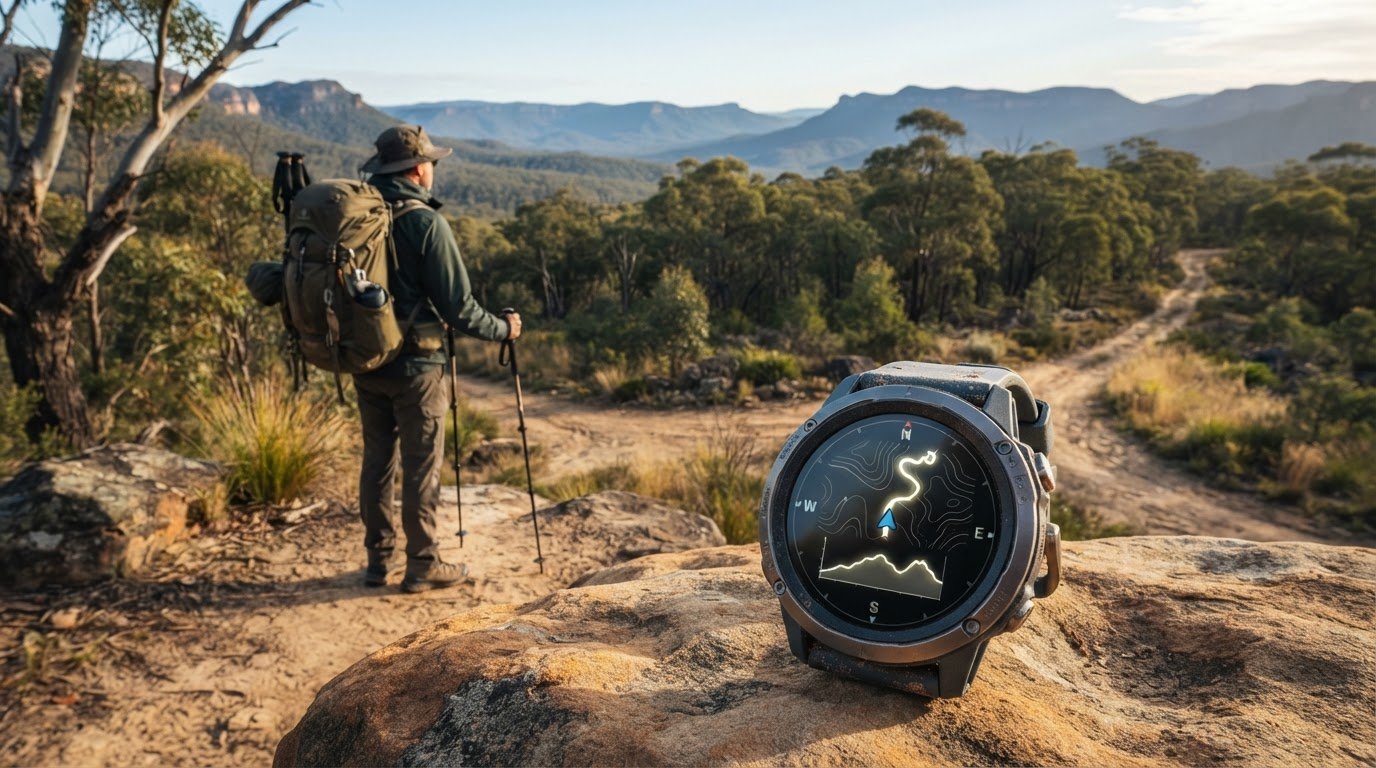
What if the watch with the longest battery life still leaves you second-guessing at a trail junction? Choosing the best gps watch for hiking australia isn’t just about GPS accuracy or a long battery estimate. It’s about having navigation you can rely on when the route gets confusing, the hike runs longer than planned or mobile reception disappears.
Compare the features that support the decisions you’ll make on the trail. GPS accuracy helps track your position, but it isn’t the same as offline maps or turn-by-turn route guidance. And a safety feature is useful only if it suits the places you hike and the way you prepare.
In this guide, we compare navigation, mapping, battery and safety features, then match leading GPS watches to different hiking styles and trip lengths. You’ll also learn how to assess optional extras, prepare for limited reception and changing conditions, and choose a watch that supports confident, responsible exploration without relying on a feature list alone.
Key Takeaways
- Find the best gps watch for hiking australia by matching navigation resilience and battery needs to your trip, not by counting features.
- Learn how satellite positioning, route guidance and offline topographic maps serve different purposes on the trail.
- Compare current watch options by intended hiking style, navigation strengths, battery considerations and trade-offs.
- Decide which features suit a day walk, a multi-day hike or a remote trip with limited mobile reception.
- Use a practical pre-hike checklist to review watch fit, map access, battery settings and current model details.
Table of Contents
What makes the best GPS watch for hiking in Australia?
A hiking GPS watch uses satellite signals to record your position and track, and may offer route guidance, offline maps and activity data. The best gps watch for hiking australia depends on what you need it to help you do: stay on a planned route, check your progress or send an emergency message when other communication options are unavailable.
Satellite positioning and phone connectivity are separate capabilities. A watch can use signals from global navigation satellite systems to estimate and record your position without a mobile connection. Learn more about how satellite navigation works. Notifications, connected apps and some data-sharing features, by contrast, may depend on a paired phone and network access.
For a quick visual look at a current outdoor watch, this review explores the Suunto Vertical 2:
Australian walks can take you beyond reliable mobile reception and through quickly changing conditions. That makes battery endurance, usable navigation and a clear understanding of emergency functions more valuable than a crowded menu of smartwatch extras. Satellite reception can also be affected by your surroundings, so treat the watch as one part of a considered kit, not a substitute for preparation.
GPS watch, multisport watch or smartwatch: what is the difference?
A GPS watch centres on recording position and outdoor activity. A multisport watch adds profiles and tracking for different activities, while a smartwatch prioritises everyday functions such as notifications and connected apps. The categories overlap: some smartwatches include hiking tools, and outdoor watches can handle basic smart features. Compare each model’s maps, route tools, battery options and connectivity rather than relying on its label.
What can a GPS watch do when phone reception is limited?
Without mobile reception, a compatible watch can still record a satellite-derived position and breadcrumb track. To follow a route, it needs a compatible map or a route loaded in advance. Sending messages or an SOS is different: satellite communication is a separate capability, available only on compatible devices and potentially subject to a service subscription.
A watch alone doesn’t guarantee rescue, contact with emergency services or a safe outcome. Share your trip plan, carry suitable navigation backups and learn how to use your equipment before setting out. Use the watch to support sound judgement, not replace it.
- Position: Satellite tracking can work without mobile reception.
- Navigation: Route guidance needs a loaded route or compatible map.
- Communication: Emergency messaging is distinct from GPS tracking.
- Preparation: Keep backup navigation and a trip plan in place.
Which navigation, mapping and battery features matter on Australian hikes?
The best gps watch for hiking australia should support the kind of navigation you’ll actually use, not just display a GPS label. Multi-constellation GNSS support lets a watch receive signals from more than one satellite navigation system. It’s one factor in positioning, but terrain, tree cover, device settings and the watch itself also matter. It doesn’t guarantee accuracy.
Navigation tools do different jobs. A breadcrumb trail records where you’ve been and can help you retrace your steps. Route guidance follows a course loaded before the walk, often signalling when you move away from it. Onboard topographic maps show surrounding features, helping you understand terrain beyond your planned line.
Do you need offline maps or is route tracking enough?
For a familiar, straightforward walk, a breadcrumb trail or preloaded route may be enough to keep track of your progress. Maps add context: they can show nearby trails and terrain, rather than only the line you’re following. Offline maps are map data stored on the watch that can be viewed without an internet connection, provided the relevant region is downloaded and the watch supports offline use. Download maps and routes before leaving reception, carry a suitable backup map and learn how to use it.
Navigation is only one part of remote-trip preparation. Bushwalking Australia’s guidance highlights safety planning for visitors to Australian trails. Its safety recommendations include carrying a personal locator beacon (PLB) or satellite device. A watch with GPS tracking isn’t automatically a communication or rescue device.
How much GPS watch battery life is enough for hiking?
Start with your longest planned day or trip, then allow for tracking time beyond the expected schedule. Manufacturer battery estimates depend on the selected mode. Frequent location updates and demanding navigation features can use more power, while power-saving settings may extend runtime but reduce tracking detail or feature access. Real-world duration varies with settings and use.
For perspective, manufacturer-rated GPS-mode estimates cited here include up to 320 hours for the Garmin Enduro 3 with solar charging, up to 118 hours for the Coros Vertix 2S, and up to 35-38 hours for the Apple Watch Ultra 3. These figures use different conditions and modes, so compare like with like and check current, model-specific manufacturer specifications before choosing.
For a day walk, choose a watch with enough charge for the outing plus a sensible reserve. Multi-day hikers should consider total tracking hours, charging access and whether solar claims apply to their intended use. Test your chosen settings before heading out, and don’t plan around the maximum figure alone.
How to compare the best GPS watches for hiking in Australia
Compare watches against your route, trip length and safety plan, not a single headline feature. For regular day hikes, dependable route recording, controls you can use on the move and enough battery for the outing matter most. Longer or more remote trips call for closer attention to offline maps, power-saving options and emergency communication planning. Health metrics, music and notifications are useful extras only if they solve a real need for you.
Which GPS watch features should you prioritise?
Start with navigation and endurance, then consider comfort and everyday functions. A capable watch can still be the wrong choice if its controls are awkward for you or its maps don’t cover the area you need. For remote walks, treat emergency communication as a separate safety decision, not an automatic benefit of GPS tracking.
| Model | Best suited to | Navigation and battery snapshot | Standout trade-off |
|---|---|---|---|
| Garmin Enduro 3 | Hikers prioritising long GPS tracking time | Manufacturer-rated GPS battery life is up to 320 hours with solar charging. | The headline estimate is tied to solar charging and specified test conditions; actual runtime varies. |
| Coros Apex 4 (46mm) | Regular hikers wanting offline map options | Free downloadable global offline maps; up to 65 hours of GPS battery life. | Battery figure is a manufacturer estimate, not a guarantee of use time on every hike. |
| Suunto Vertical 2 | Hikers who value offline topographic mapping | Free high-detail offline maps; up to 95 hours in performance mode. | Performance mode is a specific setting, so compare it with equivalent modes on other watches. |
The models above have different strengths, and their battery figures are manufacturer-rated estimates, not results from a shared test. Conditions and modes differ, so don’t read the numbers as a direct, like-for-like ranking. Map availability and features can also vary by model and setup. Check current manufacturer specifications for the exact version you’re considering.
How should you judge a hiking-watch shortlist?
A useful shortlist weighs practical navigation and battery claims, while making each model’s compromise clear. Treat manufacturer estimates as estimates, not field-test results. Where a review includes an affiliate link, consider the watch against your own needs rather than assuming a recommendation is right for every hiker. That’s a practical way to find the best gps watch for hiking australia: match the available information to your trip, then choose the trade-off you can live with.
How to choose a GPS watch for your hiking style
Choose from your trips outward, not from a feature list. The best gps watch for hiking australia will look different for a half-day walk than for a remote, multi-day journey. Use this simple sequence:
- Define your trip type: Note your usual walk length, whether you hike overnight and how often you expect to be beyond mobile coverage.
- Rank your needs: Decide whether you value route recording, offline maps, battery endurance, everyday smartwatch features or emergency communication most.
- Compare model details: Use current specifications and compare equivalent battery modes where possible.
- Check the fit: Try the watch on and assess comfort, screen readability, button operation and the stated weather resistance for your intended use.
What should day hikers look for in a GPS watch?
For day walks, prioritise clear tracking, straightforward route-following and a comfortable fit you can wear all day. Offline maps may be valuable on unfamiliar or complex trails, but aren’t essential for every familiar walk if a simpler route tool meets your needs. Consider whether notifications and connected apps are genuinely useful. Frequent screen use or connected features can affect battery life, so test your preferred setup before setting out.
Usability matters on the move. Check that you can read the display in the light you expect, operate physical buttons with cold or gloved hands if needed, and navigate menus without a long pause on the trail. Review the watch’s weather-resistance information against the conditions you plan to encounter.
What changes for multi-day or remote hiking?
Longer trips raise the stakes for battery planning. Give greater weight to realistic tracking duration, power-management options, offline navigation and controls that remain practical in poor weather. Plan charging around your actual itinerary rather than relying on a maximum battery estimate.
Pair the watch with a shared itinerary, suitable backup navigation and emergency equipment appropriate to the trip. A GPS track isn’t a substitute for a message or rescue device. Before departure, check current conditions and relevant access or safety guidance, and prepare for limited reception. For broader preparation, use this Australian outdoor travel planning guide alongside your watch checklist.
Choose your hiking GPS watch and prepare for the trail
The right watch depends on the trips you take. Occasional walkers may need clear track recording, simple route-following and a comfortable fit more than a large suite of advanced tools. Regular hikers can benefit from offline maps and flexible battery settings. For remote-trip planners, prioritise endurance, dependable navigation options and a separate plan for emergency communication.
Use this final check before choosing the best gps watch for hiking australia: focus on features you’ll use, and confirm they suit your actual trip rather than relying on category labels or headline claims.
A final checklist before buying a hiking GPS watch
- Navigation: Confirm the watch supports the route recording, route guidance or offline mapping you intend to use.
- Fit and readability: Check that the display is easy to read and the controls are comfortable to operate. Wear the watch long enough to assess its fit.
- Battery: Compare the manufacturer’s estimate for the mode you’ll use with your expected tracking time, allowing for changes in settings and conditions.
- Current details: Verify the exact model’s features against current manufacturer information.
Use your watch as one part of a safer trip plan
Learn how to load a route, read the map and use the watch’s controls before you leave. Carry appropriate backup navigation, and make sure someone knows your itinerary, especially if your walk takes you beyond mobile coverage.
Keep the capabilities distinct: satellite positioning records location, maps provide navigation context, and emergency communication requires compatible equipment or services. A watch can support good decisions, but it can’t replace preparation or judgement.
As you plan, check current conditions and applicable access or safety guidance. Follow permitted routes, respect closures and leave natural places as you found them. For more help matching equipment to your plans, explore our Australian hiking gear recommendations.
Choose your watch, then get ready to explore
The best gps watch for hiking australia is the one that fits your walks and helps you make sound decisions on the trail. Match battery life and navigation tools to your trip length, and remember that satellite positioning, offline maps and emergency communication are different capabilities. A watch can support your preparation, but it doesn’t replace a trip plan, backup navigation or good judgement.
Before heading out, check the exact model’s current features, practise using its route tools and plan for limited reception where relevant. Staying on permitted routes and caring for the places we visit are part of a well-prepared adventure, too.
Adventurerz shares outdoor gear reviews and recommendations for Australian hiking and responsible exploration. Explore Australian hiking gear recommendations and choose equipment thoughtfully for the journey ahead. Get out there prepared, curious and ready to tread lightly!
Frequently Asked Questions
Is a GPS watch worth it for hiking in Australia?
A GPS watch can be useful if you want to record your route, follow a loaded track or view maps from your wrist. The best gps watch for hiking australia depends on the walks you take and the specific functions you’ll use. Compare navigation and battery features with your usual trips. A watch doesn’t replace preparation, navigation skills or backup equipment, particularly when mobile reception is limited.
Can a GPS watch work without phone reception?
Many GPS watches can record satellite positioning without mobile reception, but functions vary by model. Route guidance or maps may also work offline if the watch supports them and you’ve loaded the relevant route or map data in advance. Calls, notifications and connected services may still rely on a paired phone or network access. Check current manufacturer specifications for each function, rather than assuming every feature works independently.
Do I need offline maps on a hiking watch?
Offline maps are useful when you want to view mapped terrain without an internet connection, but they aren’t necessary for every walk. A recorded breadcrumb trail or loaded route may be enough for some familiar hikes. Before relying on maps, check which map types the watch supports, how to download them and whether they work offline. Carry suitable backup navigation, and practise using it before your trip.
How long should a GPS watch battery last for hiking?
There’s no single battery-life target for every hiker. Runtime depends on the watch, tracking mode, location-update frequency and other active features. Compare the manufacturer’s estimate for the specific mode you expect to use with your trip’s total tracking time. For a multi-day hike, include charging options and a backup plan. Don’t rely on the headline battery figure alone, since actual duration can vary with use.
Are GPS watches accurate enough for hiking?
A GPS watch can help record your position and follow a route, but performance varies with the device, satellite reception and surrounding conditions. Multi-constellation support is one specification to compare, not a promise of perfect accuracy. Learn how your watch displays and records location, check route information before setting out, and keep backup navigation available. Treat the watch as a helpful tool, not a replacement for good judgement.
Can a GPS watch call for help if there is no mobile reception?
Don’t assume a GPS watch can send an emergency message just because it can determine your position. Location tracking and two-way emergency communication are different capabilities, and availability depends on the model and any associated service. Check the exact device specifications and coverage conditions. Plan communication and emergency equipment to suit your trip, and share your itinerary before leaving, especially if you expect to be outside mobile coverage.
What should I look for in a GPS watch for multi-day hikes?
Start with battery life in the navigation mode you plan to use, then assess offline maps, route guidance, readable displays and controls you can operate comfortably. Consider how you’ll recharge the watch and what backup navigation you’ll carry. Match features to your expected trip length instead of choosing by the longest specification list. Before buying, verify the exact model’s current features and battery claims against manufacturer information.