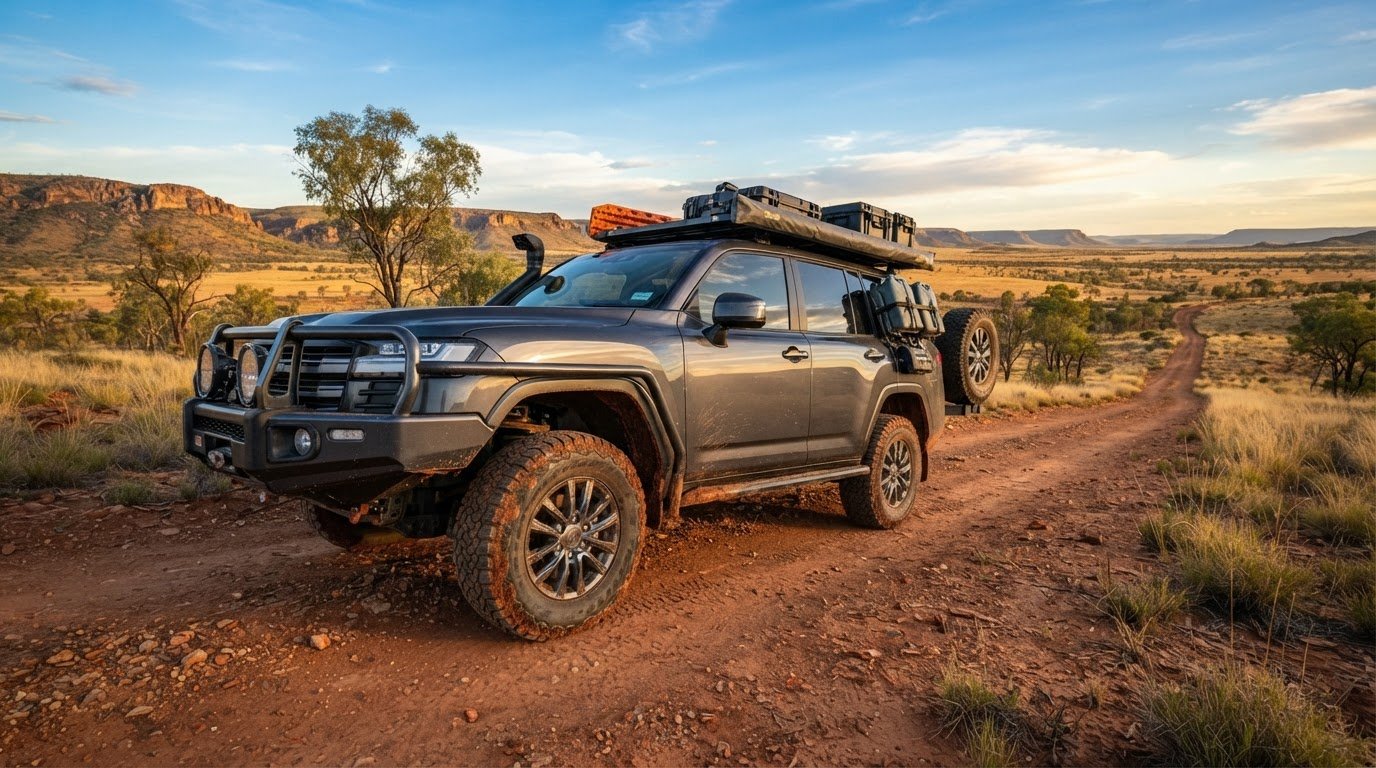
The toughest-looking tyre isn’t automatically the safest choice for a long outback run. The best all-terrain tyres for Australian outback travel depend on your vehicle, the weight you’re carrying, the surfaces you’ll cover and how much bitumen lies between you and the tracks. An aggressive tread can bring trade-offs in noise, comfort and everyday handling without eliminating puncture risk.
Rough surfaces, heat and long distances make tyre preparation important, especially when help is far away. But all-terrain and mud-terrain tyres aren’t interchangeable, and load rating and construction matter as much as tread pattern. This 2026 shortlist compares options by intended use and outlines the strengths and compromises to consider, from touring-friendly road manners to more robust light-truck construction for heavier loads and tougher routes. You’ll also find practical checks for fitment and pre-trip preparation, so you can choose for your vehicle and journey rather than chasing the most impressive-looking specifications.
Key Takeaways
- Choose the best all-terrain tyres for Australian outback travel by matching tread and construction to your route, vehicle and intended load, not by looks alone.
- Start with your vehicle’s tyre placard and approved fitment details, then compare load index and speed rating with the weight you’ll carry.
- Understand how all-terrain tyres differ from mud-terrain tyres, and why rough, hot or changing surfaces demand more than an aggressive tread pattern.
- Compare shortlisted models by intended use and verified specifications to weigh off-road capability against everyday road manners.
- Before departure, inspect your tyres, check spare compatibility and prepare pressures and repair gear for the conditions ahead.
Table of Contents
- What makes an all-terrain tyre suitable for the Australian outback?
- How to assess all-terrain tyre specifications for an outback trip
- Best all-terrain tyres for Australian outback travel: compare the shortlist
- How to choose and prepare your tyres for a remote Australian trip
- Choose your outback all-terrain tyres with an evidence-led shortlist
What makes an all-terrain tyre suitable for the Australian outback?
An all-terrain tyre is a compromise between road and track use. Its tread is generally more open and rugged than a highway-terrain design, while remaining more road-oriented than a mud-terrain tyre. That balance can suit mixed touring, but the label alone doesn’t make a tyre suitable for remote travel. As the all-terrain tyres overview explains, these designs bridge on-road and off-road use. For our shortlist, the best all-terrain tyres for Australian outback trips are those that also match the vehicle, carried load, route and driver.
Different surfaces place different demands on tyres. Heat can add stress over long drives, while corrugations and rough gravel bring repeated vibration and impact. Sand calls for suitable flotation and considered driving. Sealed-road transit requires predictable handling and tolerable noise over distance. No tread pattern removes these challenges. Tyre condition, correct fitment and appropriate driving technique all affect how a vehicle performs.
All-terrain, highway-terrain and mud-terrain tyres: what changes?
Highway-terrain tyres usually prioritise sealed-road comfort and handling, with tread suited to occasional unsealed roads. All-terrain patterns use more pronounced blocks and grooves to offer a broader mix of road and track capability. Mud-terrain designs typically have more aggressive, widely spaced tread aimed at loose or muddy ground. These are broad categories, not guarantees of performance.
More aggressive tread can mean extra noise, a firmer feel or different behaviour on sealed roads, so it isn’t automatically the best choice for touring. Compare the specific model’s construction and credible test evidence, not just its category badge. Two tyres labelled all-terrain can have different strengths and trade-offs.
Which outback conditions should shape your shortlist?
Consider the whole route, not only its roughest section. Gravel can expose tyres to sharp stones; corrugations increase vibration and impact; and sand requires a suitable setup and smooth, deliberate driving. Sealed-road kilometres matter too, particularly on long transit legs. A tyre that performs well on one surface may involve compromises on another.
When you’re far from assistance, preparation is part of tyre suitability. Inspect for damage and wear before departure, carry a compatible spare and pack repair equipment suited to your vehicle and plans. Reassess pressures for changing conditions using reliable guidance, and don’t drive beyond your or your vehicle’s limits. A useful shortlist balances traction and durability with load needs and road manners, while making room for sound preparation and responsible travel.
How to assess all-terrain tyre specifications for an outback trip
A tyre’s category won’t tell you whether it’s a safe fit for your loaded 4WD. Work through the specifications in order, and separate manufacturer data from reviews and editorial recommendations. For a shortlist of the best all-terrain tyres for Australian outback travel, check every model-specific claim about size, load and construction against current manufacturer information for the exact tyre variant.
How do tyre size, load index and speed rating affect fitment?
Start with the vehicle’s tyre placard and owner’s manual. They identify the recommended fitment and provide baseline guidance on pressure and load. Replacement sizes can affect vehicle fitment and may be subject to state or territory requirements, so don’t assume a tyre is suitable just because it fits the rim. The Tyre and Rim Association of Australia provides technical tyre and rim reference information.
- 1. Check the placard: Record the recommended tyre size and the vehicle’s specified load and pressure guidance.
- 2. Confirm the size: Match the full size marking, not just the wheel diameter, and verify that the replacement is an appropriate fitment.
- 3. Compare load index: This code indicates the maximum load assigned to an individual tyre under specified conditions. Check it against vehicle requirements. A higher number doesn’t permit you to exceed the vehicle’s limits.
- 4. Check speed rating: This rating is a tyre’s coded speed capability under specified conditions. Ensure the replacement meets applicable fitment requirements and vehicle guidance.
- 5. Account for the trip load: Passengers, water, recovery gear and touring equipment all contribute to the vehicle’s loaded weight. Stay within vehicle limits and consider how the weight is distributed.
Include a rooftop tent in your touring load plan. Our rooftop tent guide can help you consider that equipment alongside the rest of your vehicle setup.
What do all-terrain construction and tread details tell you?
Tread blocks and grooves can indicate a design’s intended balance between sealed roads and loose surfaces, but they don’t prove puncture resistance or durability. Light Truck (LT) construction generally refers to a tyre built for heavier-duty applications. Compare the exact load data and construction for the size you’re considering rather than relying on the label alone. Sidewall features and puncture-protection claims are model-specific, so look for clear manufacturer descriptions or relevant test evidence.
Use each kind of evidence for what it can tell you: a manufacturer specification states what the maker lists, a user review reports an individual experience, and an editorial recommendation weighs evidence against a use case. None substitutes for the others. Marketing phrases such as “tough” or “reinforced” need supporting detail. For pressures, follow vehicle and tyre manufacturer guidance for the load and conditions. There’s no single setting that suits every vehicle, tyre and route.
Best all-terrain tyres for Australian outback travel: compare the shortlist
Our Adventurerz editorial shortlist considers Australian availability, intended use and the need to verify each tyre’s exact size and load specification. It isn’t a laboratory ranking: fit and performance can vary by size, vehicle and conditions. Use the table to narrow your options, then confirm the precise variant against current manufacturer information before deciding which of the best all-terrain tyres for Australian outback travel suits your trip.
| Model | Use-case context | Australian size availability | Load data | Evidence to check |
|---|---|---|---|---|
| Continental CrossContact A/T2 | Designed for a 50:50 on-road and off-road balance, according to Continental’s launch information. | Launched in Australia in September 2026; available in over 30 sizes for 15-, 16-, 17-, 18- and 20-inch wheels. | Varies by size and construction. Match the exact variant’s load index to your vehicle requirements. | Continental’s current Australian product and size specifications. |
| BFGoodrich All-Terrain T/A KO3 | A current all-terrain option to compare against your route, load and preferred road manners. | Available in 2026; verify the required size in current Australian listings. | Size-specific. Confirm load index and construction in BFGoodrich’s specification data. | BFGoodrich’s current specifications for the exact size. |
| Falken Wildpeak AT4W | A current all-terrain candidate; assess its listed specifications against your intended touring use. | Available in 2026; confirm Australian size availability for your vehicle. | Varies by size. Check the manufacturer’s load data before comparing. | Falken’s current product and size specifications. |
| Bridgestone Dueler All-Terrain A/T002 | A newly released all-terrain option for comparison with your fitment and trip needs. | Check current Australian availability by size. | Size-specific; verify the exact load index and construction. | Bridgestone’s current product specifications. |
Which shortlist candidates suit mixed touring and remote-road use?
The CrossContact A/T2 is the clearest match here for drivers seeking a stated equal on-road and off-road design balance. The other models are also worth comparing, but their names alone don’t show which will suit a particular outback route. The Wildpeak AT3W rating sometimes shown in user-review listings isn’t an outback test result. Don’t confuse it with the AT4W model or transfer ratings between versions.
How should readers compare ratings, tests and owner reviews?
Controlled tests compare tyres under defined conditions. Aggregated ratings combine user responses, while owner reviews describe individual experiences that may involve different vehicles, sizes and surfaces. Before drawing a conclusion, check the test date, sample size, tyre size and conditions. A single score can prompt further research, but it isn’t a universal verdict. For every candidate, confirm the exact model name, Australian availability and load figures against current primary specifications.
How to choose and prepare your tyres for a remote Australian trip
A shortlist only becomes trip-ready when the tyres, spare and gear suit your vehicle and planned route. Before heading remote, follow a simple sequence: confirm fitment, inspect every tyre, check the spare, pack suitable tools and a compressor, then set pressures using vehicle and tyre manufacturer guidance. If you’re unsure about damage, wear or suitability, arrange a professional inspection before departure.
What tyre checks and recovery gear belong on the preparation list?
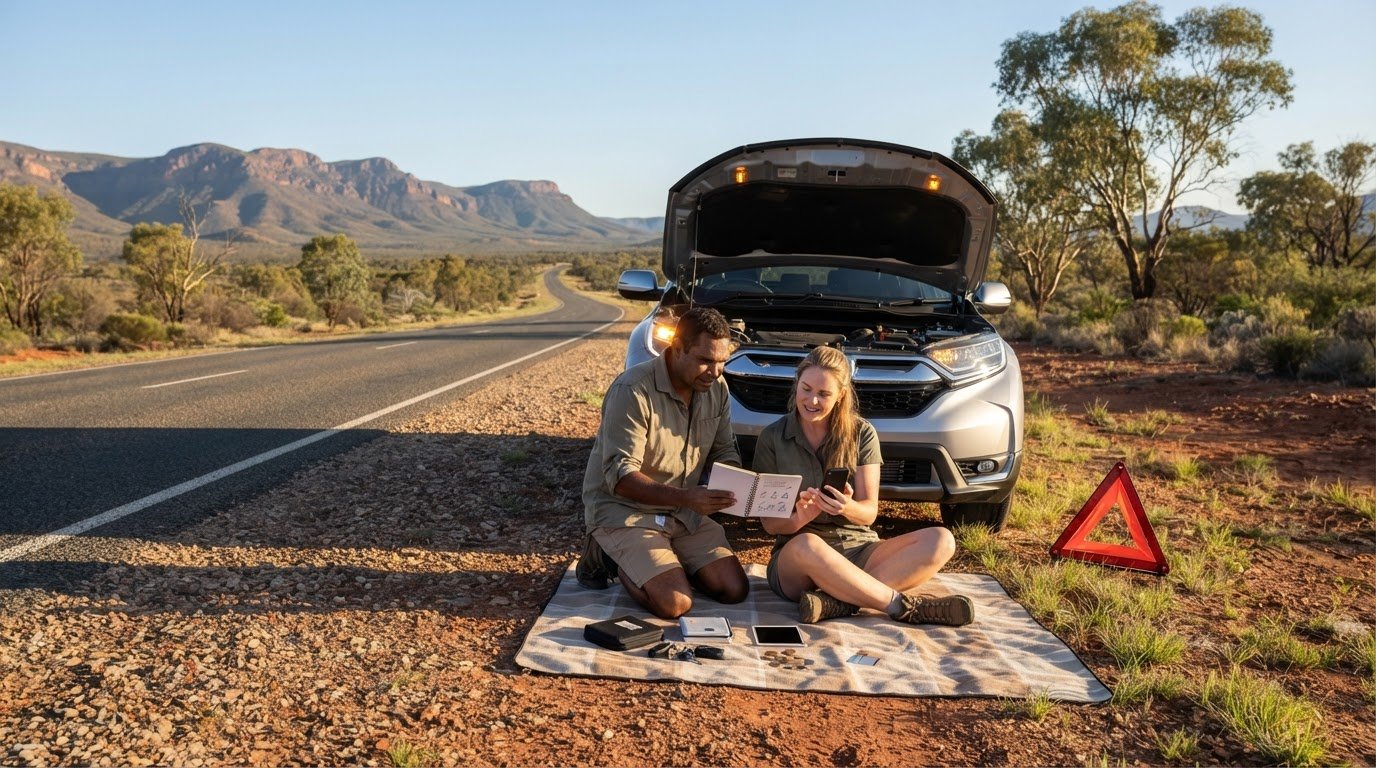
Inspect each tyre’s tread and sidewalls for cuts, bulges, cracking, embedded objects or uneven wear. Check that the spare is serviceable and compatible with the vehicle’s fitment. Make sure you can access and use the jack and wheel tools, and pack a reliable pressure gauge, compressor and repair equipment suited to your vehicle. A repair kit can help with some punctures, but not every tyre can be safely repaired.
Preparation goes beyond tyres. Understand your vehicle’s recovery limits, carry recovery equipment you know how to use, and plan communications appropriate to the remoteness and duration of your trip. Follow closures and local access guidance. Driving around a barrier can put people and fragile environments at risk.
How should load and tyre pressure be managed?
Use vehicle and tyre manufacturers’ recommendations as your starting point. Pressure decisions depend on the vehicle, tyre, load and surface, so one setting won’t suit every touring setup. Passengers, water, food and equipment change the load the tyres carry. Recheck your setup when the load or conditions change, and take care not to exceed the vehicle’s limits.
Some drivers adjust pressures for different surfaces, but do so only with appropriate guidance and a plan to reinflate. Before returning to sealed roads or higher-speed travel, restore pressures to the relevant manufacturer-recommended setting. Check pressure with a gauge rather than relying on appearance, and adjust your driving to the surface. On fragile ground, use established routes and avoid unnecessary wheelspin. Responsible travel helps protect the places we’re here to explore.
Ready to build a more complete touring setup? Explore Adventurerz 4WD and camping guides for more preparation ideas.
Choose your outback all-terrain tyres with an evidence-led shortlist
There’s no single all-terrain tyre that’s best for every vehicle, load and route. Use the comparison table to match verified specifications to your own driving mix, then confirm the exact tyre size and variant before deciding. This shortlist is an editorial guide, not a universal ranking. The evidence supports different levels of confidence for different claims.
Which tyre is the best fit for your driving mix?
If you want a documented starting point for balancing sealed-road and off-road travel, Continental describes the CrossContact A/T2 as designed for a 50:50 on-road and off-road balance. Treat that as the manufacturer’s stated design intent, not proof that it will perform equally well on every route or vehicle. The BFGoodrich All-Terrain T/A KO3, Falken Wildpeak AT4W and Bridgestone Dueler All-Terrain A/T002 are current shortlist candidates, but the available comparison data doesn’t establish a specific outback advantage or compromise for each. Compare the exact size, load data and supporting evidence before choosing.
For predominantly sealed-road touring with occasional gravel, weigh everyday road manners alongside the unsealed sections of your route. If remote roads make up a larger part of the trip, focus on verified construction and load specifications rather than assuming a model name or tread appearance proves durability. Compare each option against the same criteria, and don’t treat availability alone as a performance recommendation.
How can we travel more responsibly with the right setup?
Before you settle on a tyre, run through this final check:
- Fitment: Does the exact size suit your vehicle and approved fitment?
- Load: Does the tyre’s verified load data suit your fully equipped touring setup?
- Evidence: Are claims supported by current manufacturer specifications or relevant tests, rather than an isolated rating?
- Trade-offs: Have you considered road comfort and noise alongside the surfaces you expect to drive?
- Preparation: Are your tyres, compatible spare, pressure gauge and repair gear ready for the trip?
Good equipment works best with thoughtful decisions behind the wheel. Check current conditions and access information before setting out, obey closures and track rules, and avoid driving off established routes or damaging sensitive ground. Let’s explore Australia with care, preparedness and respect for the places and communities that make these journeys possible.
Keep planning with more Australian adventure gear guidance from Adventurerz.
Choose tyres that fit your trip, then travel thoughtfully
The best all-terrain tyres for Australian outback travel aren’t simply the most aggressive-looking. Match the exact tyre size and load rating to your vehicle and touring setup, then weigh manufacturer specifications and relevant test evidence against your route and everyday road needs. There’s no universal winner for every vehicle, load and journey.
Before setting out, inspect your tyres and compatible spare, prepare suitable repair and pressure-checking gear, and follow manufacturer guidance as conditions and loads change. Preparation supports self-reliance, but responsible driving matters too: check access information, obey closures and protect fragile ground.
Adventurerz shares outdoor gear reviews and recommendations with a focus on Australian adventure travel and responsible exploration. Explore more Australian adventure gear guides to plan a capable, considered journey.
Frequently Asked Questions
Are all-terrain tyres suitable for long Australian outback trips?
Yes, all-terrain tyres can suit long outback trips if their size, load rating and construction match your vehicle, load and route. They’re designed as a compromise between sealed-road and off-road use, not as a guarantee against damage or loss of traction. Compare manufacturer specifications for the exact tyre size, inspect your tyres before departure, and plan for changing surfaces, long distances and limited assistance.
What is the difference between all-terrain and mud-terrain tyres?
All-terrain tyres generally balance road use with capability on unsealed surfaces, while mud-terrain tyres typically have more aggressive, open tread aimed at loose or muddy ground. That extra aggression can bring trade-offs in road noise, comfort and sealed-road behaviour. Neither category is automatically best for every trip. Consider your usual surfaces, how much bitumen you’ll cover and the specifications of each model and size.
Can I use all-terrain tyres for everyday driving as well as outback travel?
Yes. All-terrain tyres are designed for mixed use, so they can be a practical option if your 4WD travels on sealed roads as well as gravel or tracks. Road noise, ride comfort and handling vary between models, so compare credible evidence and manufacturer information for the exact tyre. Check that the fitment suits your vehicle and load, and follow recommended maintenance and pressure guidance.
How do I know what tyre size and load rating my 4WD needs?
Start with the tyre placard and owner’s manual, which give your vehicle’s recommended size and load guidance. Match the full tyre size and check the load index for the exact variant against vehicle requirements. Passengers, water and touring gear affect the load your tyres carry, so consider the fully equipped vehicle, not just its empty weight. Replacement sizes may have fitment requirements; check applicable rules for your state or territory.
Do all-terrain tyres prevent punctures on outback roads?
No tyre can guarantee protection from punctures. Construction and sidewall details vary by model, but sharp stones, impacts, wear and driving conditions can still cause damage. Treat claims about toughness or puncture resistance as model-specific, and look for supporting manufacturer information or relevant test evidence. Before a remote trip, inspect tread and sidewalls, check your spare and carry suitable repair gear, while recognising that some damage can’t be repaired roadside.
Should I lower tyre pressure on gravel or sand?
Pressure adjustments may be suitable for some vehicles and surfaces, but there’s no universal setting. Base decisions on vehicle and tyre manufacturer guidance, the load you’re carrying and the conditions underfoot. If you adjust pressures, use a reliable gauge and monitor how the vehicle behaves. Recheck after the load or surface changes, and reinflate to the appropriate guidance before returning to sealed roads or higher-speed travel.
How many spare tyres should I carry on a remote Australian trip?
There’s no single spare-tyre number that suits every route. Plan to carry a serviceable spare compatible with your vehicle’s fitment, and consider whether an additional spare is prudent for your route, vehicle, load and distance from assistance. Check the spare’s condition and pressure before leaving, and make sure you can access and change it with your tools. Include repair equipment, but don’t rely on it for every puncture.