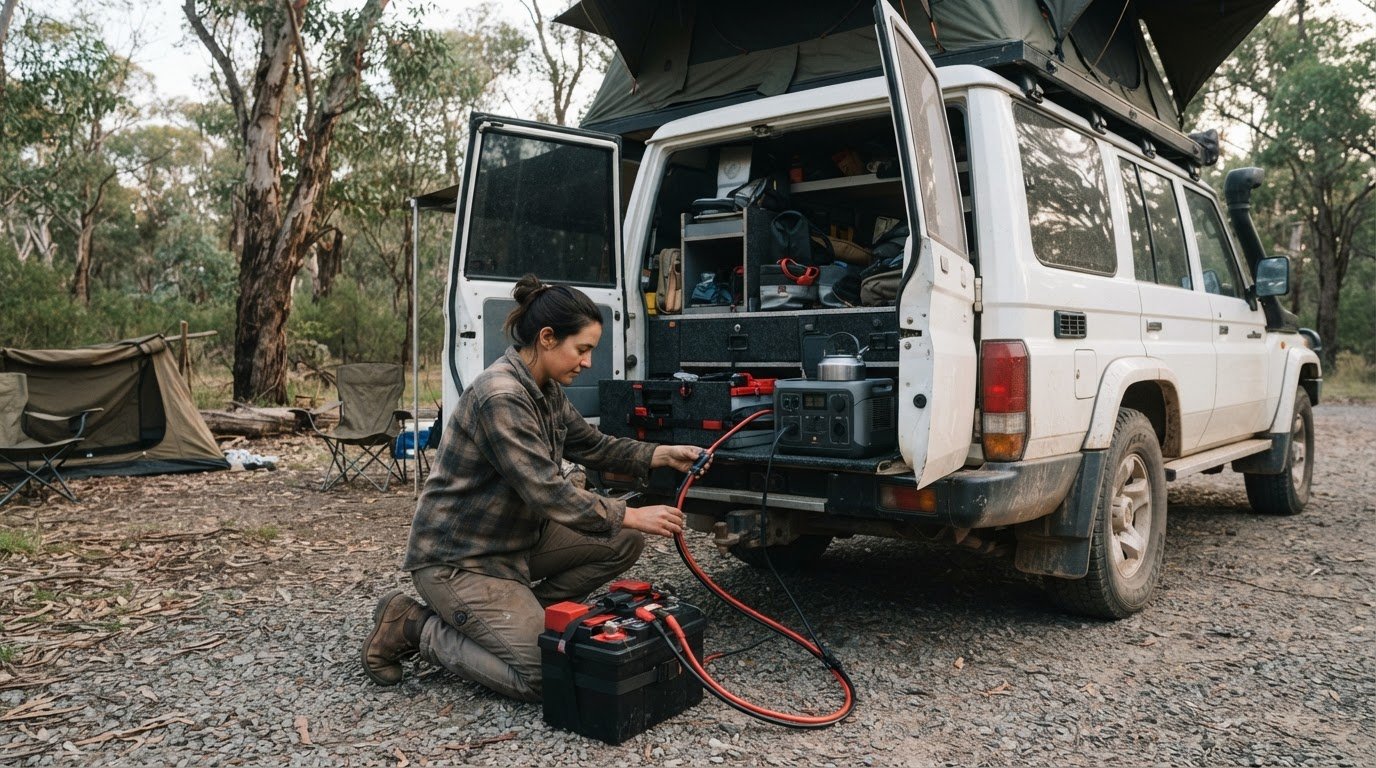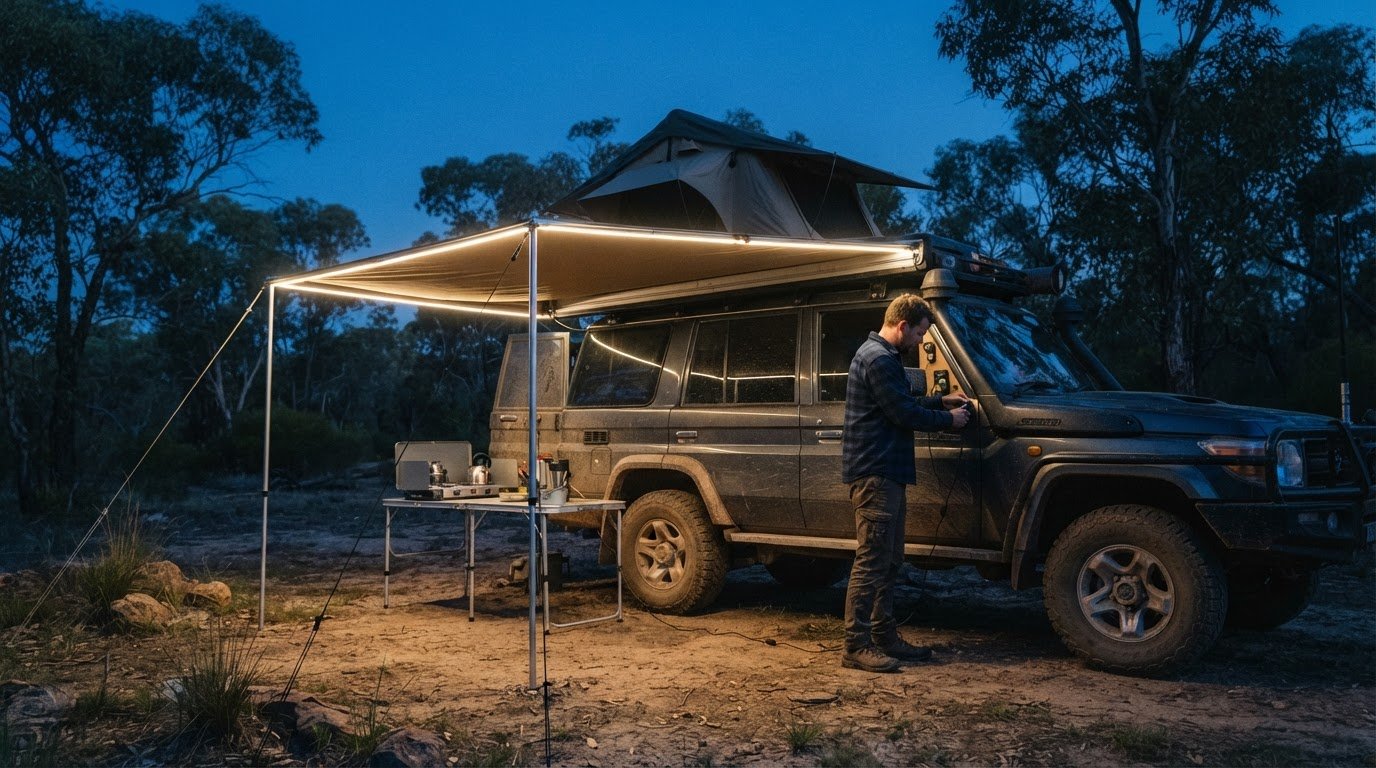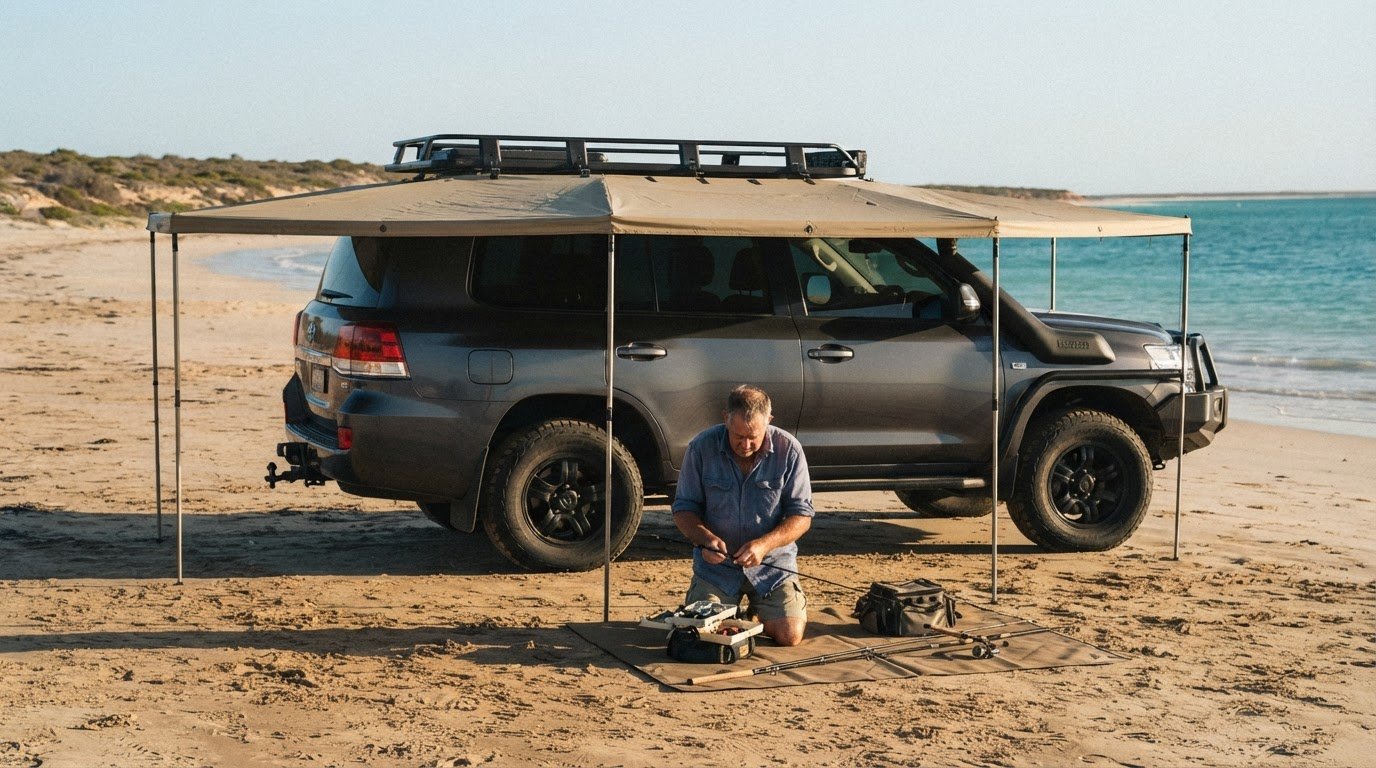
The cheaper power setup can be the one that needs more parts. A battery box holds a separate 12V battery and can help protect it from rain and dirt, stop it shifting and cover its terminals; a portable power station combines a battery with outputs for 12V and 240V equipment.
Choosing between them isn’t just about the upfront cost. You’ll also want to match the available outputs and protection to what you plan to run at camp, from lights and device charging to appliances that need 240V. This portable 12V battery box review for Australia explains how the two options differ, what connections and safety features to look for, and how to weigh the cost against the setup you’ll need. We’ll finish with a practical decision guide to help you choose a power source that suits your trips and keeps your gear working reliably.
Key Takeaways
- Match battery capacity to your trip: a 100Ah battery can suit weekend camping needs such as lights, a camping fridge or device charging.
- Map your appliances to the available connections. Battery boxes may offer USB ports, cigarette lighter sockets and Anderson plugs, while 240V appliances generally need a separate inverter.
- Look beyond the enclosure: terminal coverage, a secure fit and appropriate fuse protection all contribute to a safer, more practical setup.
- Compare the full setup, not just the main unit. A separate battery or inverter can affect what you need to power your gear.
- Use the comparison and decision guide to narrow down the setup that best suits your camp loads and travel style.
Table of Contents
12V battery box uses and protection
A 12V battery box contains and organises a battery for portable power in a 4WD or caravan. Its practical value comes from securing the battery, shielding its terminals and providing a defined layout for connections.
Battery Protection and Organisation
A box can protect a battery from rain and dirt, prevent it shifting during travel, and cover its terminals to reduce short-circuit risk. That makes it different from using a loose battery, which lacks the same enclosure and organisation. For example, a 100Ah battery can support weekend camping essentials such as LED lights, a camping fridge or device charging. The box holds the battery; it doesn’t determine how long those appliances will run.
Fuse Protection and Wiring Layout
Fuses interrupt a circuit when current exceeds the fuse rating, helping limit damage from electrical faults. In the Thunder Auto battery box, the wiring used two inline 40-amp MIDI fuses. A separate battery-box setup uses a 5-amp fuse for short-circuit protection. These are examples of different layouts, not interchangeable ratings. Match a fuse to the wiring and connected equipment, and follow the box’s wiring diagram rather than changing fuse ratings by guesswork.
Safe Installation, Charging and Use
To use a portable 12V battery box in a 4WD or caravan, place it on a stable surface and secure it so it can’t move during travel. Keep the terminals covered, connect equipment according to the wiring layout, and use a charger suitable for the battery. A 240-volt battery charger can be part of a portable battery setup for recharging; follow its instructions and the battery maker’s charging guidance. Inspect the enclosure, cables and connections before use. The UK Government notes that visual inspection matters because testing alone may miss some electrical safety defects.
Overload and Short-Circuit Risks
Overloading occurs when connected appliances demand more power than the setup can supply. A short circuit can happen if exposed terminals or damaged wiring create an unintended connection. Either fault can heat components or cables, so stop using the setup if you notice damage, unusual heat or a tripped fuse. The battery must also fit securely and suit the box’s connections, making correct battery selection essential for safe installation.
Before setting off, check that the battery is secure, terminals are covered, wiring is intact and fuse ratings suit the installed layout. At a remote campsite, a loose battery or damaged cable can interrupt lighting and fridge power when you need them. A tidy arrangement also makes it easier to identify each socket and connection, and isolate a faulty lead without disturbing other equipment.
12V, AC and USB output options
Output sockets determine which camp devices a power setup can run without extra conversion gear. A battery box may provide 12V connections, USB ports and a cigarette lighter socket, while portable power stations combine outputs for 12V and 240V equipment. Match each appliance’s plug and power requirement to the available connection before packing for an outdoor trip.
12V connections for camping gear
A 12V output suits compatible camping equipment, including devices designed to connect directly to a vehicle-style socket. Battery boxes may also use Anderson plugs, a different connection often chosen for compatible portable power equipment. These options aren’t interchangeable: the plug must match the device or its lead. For example, a fridge with a cigarette lighter plug needs that socket, while gear with an Anderson connection needs a matching outlet. Count the connections your setup uses, not just the number of appliances you own.
Some boxes include a display or indicator for battery charge and power use. That can help you see what the setup is doing while lights or other 12V equipment are connected. A display doesn’t add another output, though, so keep the connection list separate from monitoring features. If you’re considering a lithium battery, check compatibility with the box and its charging arrangement before building your setup around it.
240V appliances and AC output
Portable power stations are all-in-one units for powering 12V and 240V equipment. Battery boxes don’t usually include an inverter, so running a 240V appliance from one requires a separate inverter. That extra component changes the setup: allow for its connection, placement and compatibility as well as the battery box itself. A camp appliance with a standard 240V plug won’t connect directly to a 12V socket.
Start with the appliances you plan to use. If your camp routine depends on 240V equipment, an integrated station may mean fewer separate components. If your gear uses 12V connections, a battery box may offer the outlets you need without an inverter. Check appliance labels and equipment instructions to identify the required supply before choosing.
USB charging and a practical outlet check
USB ports make it easier to charge compatible personal devices alongside camp lights or other equipment. A USB port is not the same as a cigarette lighter socket or Anderson plug, so match the device’s cable and connection to the outlet. For a kickass, low-clutter camp setup, list each device, its plug type and whether it needs 12V, USB or 240V power.
Then compare the list with the box or station’s stated outputs. Consider where the unit will be placed, whether its handles make carrying practical, and how cables will reach each device. A 300-500Wh portable power station may suit basic needs such as charging phones and running camp lights. For longer adventures or additional appliances, the right choice depends on their power needs and how you’ll use them together.
Battery box and portable power station costs
Those broad ranges reflect different kinds of setups, not a like-for-like price comparison. A battery box houses a separate battery; a portable power station combines the battery and power outputs in one unit. Compare what each option includes before judging its upfront cost.
A lower-priced battery box may still need a battery to provide portable power. If your plan also needs a separate inverter for 240V appliances, include that component when comparing the full setup. The battery’s capacity and the connections you need affect which box suits your campsite routine. A lithium battery box setup should also be assessed as a complete system, including the compatible battery and charging equipment.
Compare the complete setup, not just the enclosure
A portable power station has a higher starting range in the market figures, but it brings a battery and outputs together. That can simplify a setup for devices needing both 12V and 240V power. A battery box can suit a 12V-focused arrangement, especially when you already have a compatible battery. Its total cost changes if you need to add that battery, an inverter or other charging equipment.
Use this simple comparison before choosing:
- Battery box: Compare the box cost with the separate battery and any inverter your appliances require.
- Power station: Compare its included outputs with the devices you intend to run.
- Either option: Account for charging needs and the capacity required for your camping routine.
A dual-battery arrangement adds another consideration: the box may be only one part of the overall power system. Consider how the second battery will be charged and connected, then compare the complete arrangement with a station’s integrated setup. Don’t treat “dual battery” as a fixed package or price category; the required components depend on the vehicle and intended use.
How to make a fair cost comparison
Start with your appliances and required outputs, then list the components each option needs. For example, a 12V-only campsite setup may not need an inverter, while a 240V appliance changes the battery-box calculation. Next, compare battery capacity and charging arrangements. A station’s upfront price can cover more components, but its outputs still need to suit your devices.
Finally, weigh portability against the number of separate parts. A single station can consolidate equipment, while a battery box can suit a modular setup with separately chosen components. The Australian market ranges above help frame the budget, but the key figure is the cost of the complete setup that meets your power needs. Choose based on the total and the connections you’ll use, not the enclosure or station alone.
What are the best-reviewed portable 12V battery boxes available in Australia?
The best fit depends on the battery, connections and monitoring you need, rather than a single “best” label. A portable 12V battery box review in Australia should compare practical features, not claim a top-rated model without clear criteria. Start your shortlist with the battery and camp equipment you plan to use, then assess how each box protects, connects and monitors that setup.
Choose the box around your battery
First, match the enclosure to the battery you plan to use. A box should hold the battery securely and cover its terminals, especially in a 4WD or caravan travelling over uneven ground. Consider the battery’s dimensions, connection positions and cable routes. A poor fit can make it harder to keep the battery stable and the wiring organised.
Next, decide whether you need a basic enclosure or built-in features. Some battery boxes include a voltmeter, wattmeter or LED indicators to show charge levels and power use while equipment is running. These displays can be useful, but they don’t replace matching battery capacity and connections to your gear.
Compare connection layouts
List the plugs your equipment uses. Battery boxes may have USB ports, cigarette lighter sockets and Anderson plugs. Compatible outlets can connect directly to more of your devices; a different layout may require extra leads. Treat the outlet arrangement as a key feature, not a minor extra.
For example, USB-charged devices and Anderson-compatible gear need different connections. Compare each box’s outlets with the equipment you’ll bring. If you need 240V appliances, factor in that battery boxes don’t usually include an inverter. That requirement changes the complete setup, not just the enclosure.
Use a consistent review checklist
For a portable 12V battery box review in Australia, compare each option against the same practical criteria:
- Battery fit: Does the enclosure suit your battery and hold it securely?
- Terminal coverage: Does the box cover exposed terminals?
- Connections: Do the outlets match your equipment?
- Monitoring: Would a voltmeter, wattmeter or LED indicator help you?
- Fuse layout: Does the wiring arrangement suit the intended setup?
A 100Ah battery can suit weekend camping essentials, but capacity alone doesn’t make one box better. Pair the battery with an enclosure that fits and provides the connections your equipment uses. If you need an all-in-one option for 12V and 240V equipment, compare portable power stations as a separate category.
Use the checklist to find the best match for your setup. A feature-rich box makes sense when its displays and outlets meet practical needs; a simpler enclosure may be enough for secure battery storage. Judge each option by fit, protection and usable connections, not by a “best” claim alone.
How do popular Australian 12V battery boxes compare for price, capacity, and features?
Compare battery boxes by the system they support, not just by model name. Capacity, included outputs and monitoring features help show where an option fits. The table separates these categories so you can assess the advertised unit alongside the setup it requires.
| Option | Capacity comparison | Australian cost range | Feature focus |
|---|---|---|---|
| Battery box with separate battery | Choose battery capacity for your equipment and trip | Varies by brand and component quality | Enclosure, battery fit, connections and possible monitoring |
| Portable power station | Basic-use examples include 300-500Wh | All-in-one pricing for unit and internal chemistry | Integrated power for 12V and 240V equipment |
| 100Ah battery setup | Often suits weekend essentials, such as lights or a camping fridge | Depends on the full setup | Separate battery capacity paired with a suitable box |
Read capacity units carefully. A battery’s rating in amp-hours and a station’s capacity in watt-hours aren’t the same unit, so don’t compare the numbers as though they were interchangeable. Start with the equipment you’ll run, then consider how long you need it powered and which outputs it uses. A 100Ah battery may suit weekend essentials, while a 300-500Wh station may cover basic phone charging and camp lights.
Features can distinguish boxes in the same broad category. Built-in voltmeters, wattmeters and LED indicators can display battery charge levels and power use. These monitors help you track the setup, but they don’t replace matching battery capacity to your equipment. Compare the outlet layout too, including whether the box has connections your devices use. A feature adds value only if it supports your camp routine.
Make the comparison useful for your trip
Use a consistent checklist for each option: total setup cost, battery capacity, required outputs, monitoring and extra components. For a box, include the separate battery and any inverter needed for 240V appliances. For a station, assess whether its integrated outputs suit your equipment. This side-by-side approach reveals whether a lower-priced enclosure remains economical after building the complete system.
Choose by use case, not by the highest capacity or most features. A weekend setup focused on lights and device charging has different needs from a trip relying on several appliances. Compare your equipment list against each option’s capacity and connections, then select the simplest complete setup that meets those needs. For help pairing power choices with your broader camp kit, explore Australian camping equipment recommendations.
Adventurerz
Adventurerz helps you make informed choices through reviews and recommendations for camping equipment, hiking gear, rooftop tents and 4WD awnings. Turn to these resources when you’re planning a trip and want to consider how your power setup fits with the rest of your equipment, from camp essentials to vehicle-based travel. A well-matched kit can support practical, self-reliant adventures while helping you pack with purpose.
Use this article’s comparisons to identify your power needs, then explore relevant gear guidance as you plan your Australian camping setup. Whether you’re refining a weekend kit or preparing for a longer route, Adventurerz offers information to help you make informed equipment choices.
Contact Adventurerz to discuss your outdoor equipment questions.
Plan a power setup that fits your next trip
Before packing for your next Australian adventure, picture the camp routine you want to support. Consider how long you’ll be away from powered facilities, which devices you’ll use each day and how much room your vehicle has for gear. This helps you plan a practical setup without adding equipment you won’t use.
Use this portable 12V battery box review for Australia as a planning aid, then revisit your choices as your route and camping style take shape. Think about where you’ll stop, how you’ll organise your camp, and what you can do to minimise waste and disturbance along the way. A considered kit supports self-reliance and more mindful travel.
Adventurerz’s camping equipment reviews and recommendations, along with rooftop tent and 4WD awning guidance, can help you consider how power fits into your wider camp setup. Keep your plans flexible, pack with purpose, and make room for the experiences that drew you outdoors in the first place.
Contact Adventurerz for advice as you shape your setup. Here’s to a well-prepared trip and a great stretch of Australian outdoors ahead!
Frequently Asked Questions
What’s a Battery Box?
A battery box is an enclosure that holds a battery and provides an organised way to use it as a portable power source. For a touring setup, think of it as the battery’s housing, not necessarily a complete power system. The battery, charger and any additional equipment remain important parts of the setup. Check how the enclosure secures the battery and routes its connections.
Is a 100Ah battery enough for camping?
A 100Ah battery can often suit a weekend camping trip or essentials such as LED lights, a camping fridge and device charging. Whether it works for your trip depends on which appliances run, how often they operate and how you recharge. Make a list of your daily loads before choosing capacity. A setup for occasional phone charging has different demands from one running a fridge overnight.
What is a portable 12V battery box and what features should Australian buyers look for?
A portable 12V battery box holds a battery and provides a practical enclosure for using it away from mains power. Australian buyers can compare battery fit, secure placement, terminal coverage, fuse protection and outlet types. Think about dust and rain exposure at camp, plus how the box will be restrained during travel. A tidy connection layout also helps keep cables organised in a crowded vehicle.
Which 12V battery boxes support lithium batteries, and which support AGM or lead-acid batteries?
Battery chemistry support depends on the box’s electrical components and charging arrangement, not its label or appearance alone. Match the battery type to the box instructions and the charger’s supported chemistry. For example, don’t assume a box designed for one charging setup will suit a different lithium or lead-acid battery. Confirm compatibility among the battery, charging source and any built-in electronics before assembling the system.
What battery sizes and capacities fit common portable battery boxes sold in Australia?
There isn’t one universal battery size that fits every portable box. Check the enclosure’s internal dimensions against the battery’s physical measurements, then allow for terminal position and cable access. Capacity is a separate consideration: a 100Ah battery may suit weekend essentials, but that rating doesn’t tell you whether it fits a particular enclosure. Match both the battery’s shape and its capacity to your setup.
Which battery boxes include Anderson plugs, USB ports, cigarette sockets, USB-C, or DC-DC charging?
Battery-box layouts vary. Common options include Anderson plugs, USB ports and cigarette lighter sockets, while USB-C and DC-DC charging depend on the specific setup. Compare the listed connections with your equipment’s plugs; an Anderson outlet won’t directly replace a USB port. Distinguish an output socket from a charging input, as each serves a different role in a camp power system.
How much do portable 12V battery boxes cost in Australia, excluding or including the battery?
A battery box and its battery may be separate parts of a purchase, so compare the complete setup rather than assuming the enclosure includes a battery. Include any inverter or charging equipment your plan requires. The right comparison depends on the components your appliances need.
What are the pros and cons of a battery box compared with a portable power station?
A battery box suits a modular setup where you choose the battery and, if needed, add equipment separately. That flexibility can mean more components to organise. A portable power station combines a battery with outputs for 12V and 240V equipment, which can simplify packing, though its outputs still need to suit your devices. Choose based on your appliances, preferred setup and willingness to manage separate parts.