Have you ever reached a stunning remote campsite at sunset only to find yourself wrestling with a dust-caked zipper while your fuel light blinks a warning about your increased wind resistance? It’s a common frustration for our community when the gear we’ve chosen doesn’t quite match the harsh reality of the Australian bush. Choosing between a hardshell and a softshell isn’t just about the initial price tag; it’s about finding the best roof top tent accessories Australia offers to protect your GVM and your sanity on those long, multi-stop treks across Australia’s varied landscapes.
We understand the anxiety that comes with calculating static versus dynamic roof loads or worrying about fine bull-dust ruining your expensive bedding. You want a setup that feels like a sanctuary, not a chore. In this 2026 comparison, we’ll help you decide which tent style truly fits your vehicle’s capabilities and your specific travel rhythm. We’ll also dive into the essential gear upgrades you need to master the outback, ensuring you spend less time on setup and more time soaking in the silence of the scrub.
Key Takeaways
- Understand the fundamental design differences between canvas fold-out footprints and vertical wedge deployment to perfectly match your touring rhythm.
- Learn why softshell tents are the ultimate choice for families who prioritise internal volume and need a lighter setup for their roof racks.
- Explore the aerodynamic benefits and lightning-fast setup of hardshell tents, specifically designed for multi-stop trips and fuel efficiency.
- Discover how to select the best roof top tent accessories Australia provides to seal out invasive bull-dust and manage high-temperature conditions.
- Gain the confidence to calculate your vehicle’s GVM and roof load limits so you can explore the bush safely and legally.
Table of Contents
Understanding the Rooftop Tent Divide: Hardshell vs Softshell
The choice between hardshell and softshell tents is the first major hurdle for any Australian tourer. We see it as a clash of philosophies. Do you prioritise a massive footprint or a lightning-fast deployment? Australian remote touring has exploded lately. With 17.3 million caravan and camping trips taken in 2025 alone, rooftop tents have become the primary choice for those of us venturing into the red dust. To get a handle on the history and types of rooftop tents, you have to look at how they’ve evolved from heavy canvas bags to the sophisticated engineering we see today.
Your choice dictates everything else in your build. It determines your fuel consumption and which of the best roof top tent accessories Australia has available will actually fit your rig. In 2026, we’re seeing a massive shift toward hybrid designs. These attempt to offer the speed of a hardshell with the expanded living space of a softshell. This middle ground is perfect for those who can’t decide between a compact roof footprint and a king-sized bed.
To better understand how these different styles come to life with the right gear, watch this helpful video:
The Anatomy of a Softshell Tent
We often call these “taco” tents because of their traditional fold-out mechanism. They use heavy-duty poly-cotton canvas that breathes well in our humid tropical north. The unsung hero here is the PVC travel cover. It’s your first line of defence against the brutal Australian UV rays. These rays can perish cheaper materials in a single season. If you need a massive mattress for the whole family, softshells still hold the crown for internal real estate. Check out our latest roof top tents reviews to see which canvas models are surviving our community’s track tests this year.
The Anatomy of a Hardshell Tent
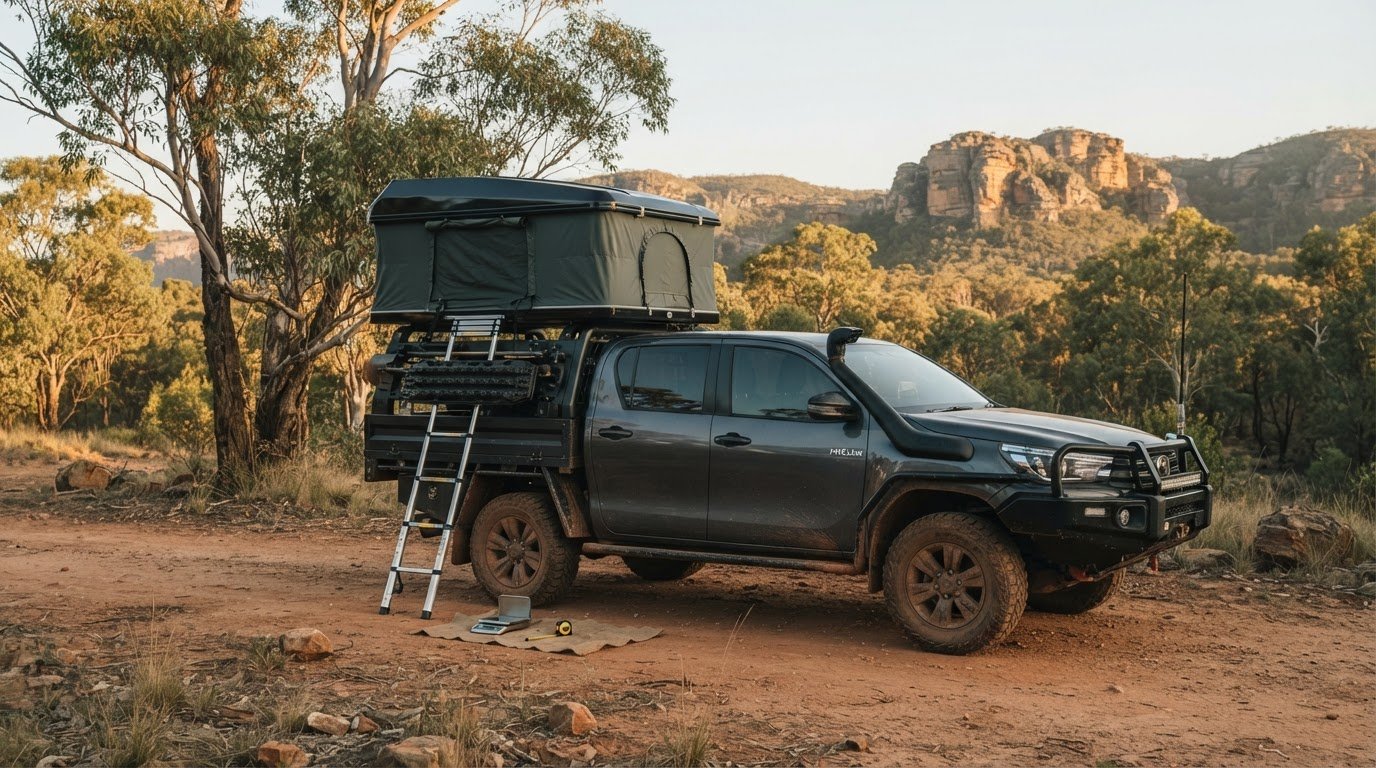
These are the speed kings of the bush. Whether it’s a wedge-style clamshell or a vertical pop-up, the goal is getting you from parked to pillowed in under a minute. We’ve moved beyond basic plastics. 2026 models frequently use aluminium honeycomb shells for incredible strength without the weight penalty. High-pressure gas struts have revolutionised this space. They make the setup effortless even when you’re exhausted after a ten-hour stint behind the wheel. They’re also much more aerodynamic. This is a clear win for your wallet at the diesel pump during those long highway hauls.
Softshell Rooftop Tents: Maximum Space for the Modern Nomad
We often call softshells the “Family Room” of the 4WD world for a reason. While hardshells are sleek and aerodynamic, they simply can’t compete with the massive internal volume of a fold-out canvas design. If you’re touring with kids or just appreciate enough room to sit up and play a game of cards during a downpour, the softshell footprint is hard to beat. Because they don’t require heavy lifting mechanisms or a rigid outer lid, they’re often significantly lighter. This makes them a perfect match for smaller SUVs or vehicles with lower dynamic roof load ratings that can’t handle a 100kg hardshell.
They also provide the most accessible entry point for our community members who are just starting their journey. With reliable options like the OZtrail Kakadu Birdsville often found for around $1,799 AUD, you can get off the ground without a massive financial hurdle. To truly master this setup, you’ll need the best roof top tent accessories Australia has to offer. We always suggest adding an anti-condensation mat under your mattress. It’s a small investment that prevents moisture from soaking into your bedding during those chilly desert nights in the Red Centre. Another essential is a set of exterior shoe bags. Keeping your muddy boots out of your sleeping area is the first rule of maintaining a clean camp.
Why Families and Basecampers Choose Softshells
The magic of the softshell lies in its overhang design. This creates a sheltered entry zone right over your ladder, giving you a dry place to kick off your boots before climbing inside. If you’re staying in one spot for more than a night, adding an annex is a game-changer. It creates a private room for changing or even extra beds for the kids. You can also leave your sleeping bags and pillows inside while in transit. This frees up vital space in your boot for other gear, which is a massive win for GVM management.
The Softshell Struggle: Maintenance and Pack-up
We have to be honest about the trade-offs. Wrestling with a heavy PVC cover in a howling coastal wind isn’t everyone’s idea of a good time. Maintenance is also critical for these models. If you’re forced into a “wet pack-up” after a tropical storm, you must open the tent to dry as soon as you reach your next stop. Mould is the enemy of longevity. We’ve found that tent quality and usability often come down to how well you care for the hardware. Keep your zippers clean of abrasive Australian sand by using a dry silicone spray, and they’ll serve you for years of exploration.
If you’re looking for more ways to expand your campsite living area and create some much-needed shade, take a look at our guide to the best 4wd awnings for your rig.
Hardshell Rooftop Tents: The Pinnacle of Speed and Durability
We’ve all been there. It’s late, you’ve just crawled through a technical track in the Victorian High Country, and the last thing you want is a 15-minute wrestling match with canvas and poles. This is where the hardshell shines. With a deployment speed often clocked at under 30 seconds, these tents are the ultimate choice for multi-stop touring. They turn a daily chore into a simple flick of a latch, allowing us to spend more time around the fire and less time tensioning ropes.
Beyond speed, hardshells offer a level of “rugged” protection that softshells can’t match. When you’re pushing through tight tracks with low-hanging branches, that rigid outer shell acts as a shield for your sleeping quarters. Whether it’s an ABS plastic or a premium aluminium honeycomb lid, your bedding stays protected from tears and abrasions. To make the most of this setup, you should look into the best roof top tent accessories Australia offers for power integration. Many modern hardshells now feature internal LED lighting and 12V power kits as standard, allowing you to charge your devices without trailing cables across the campsite. Searching for the best roof top tent accessories Australia has available often leads to hardshell-specific mounting brackets that let you bolt recovery boards or solar panels directly to the lid.
Touring Efficiency and Fuel Economy
The low-profile silhouette of a hardshell is a massive advantage on the highway. Unlike the bulky, boxy shape of a folded softshell, a hardshell cuts through the air with much less resistance. By reducing aerodynamic drag, you significantly extend your 4WD’s fuel range during those massive trans-continental hauls. This lower profile also keeps your vehicle’s centre of gravity closer to the roofline. It’s a critical safety factor when you’re tilting through off-camber sections or navigating windy coastal roads where top-heavy rigs can feel unstable.
Weather Resistance and Insulation
When the wind howls across the plains, you’ll appreciate the quiet. Hardshells are significantly more stable in high-wind conditions, eliminating the annoying “canvas flap” that keeps softshell campers awake. The shells themselves act as a thermal barrier. During freezing desert winter nights, an insulated hardshell retains heat far better than a single layer of canvas. If you’re still weighing up which style suits your rig, check out our comprehensive roof top tent reviews for a deep dive into the latest 2026 models. We’re seeing a huge trend in mounting slimline solar panels directly to the hardshell lid, which is a clever way to stay self-reliant while keeping your footprint small.
The Head-to-Head: Performance in Rugged Australian Conditions
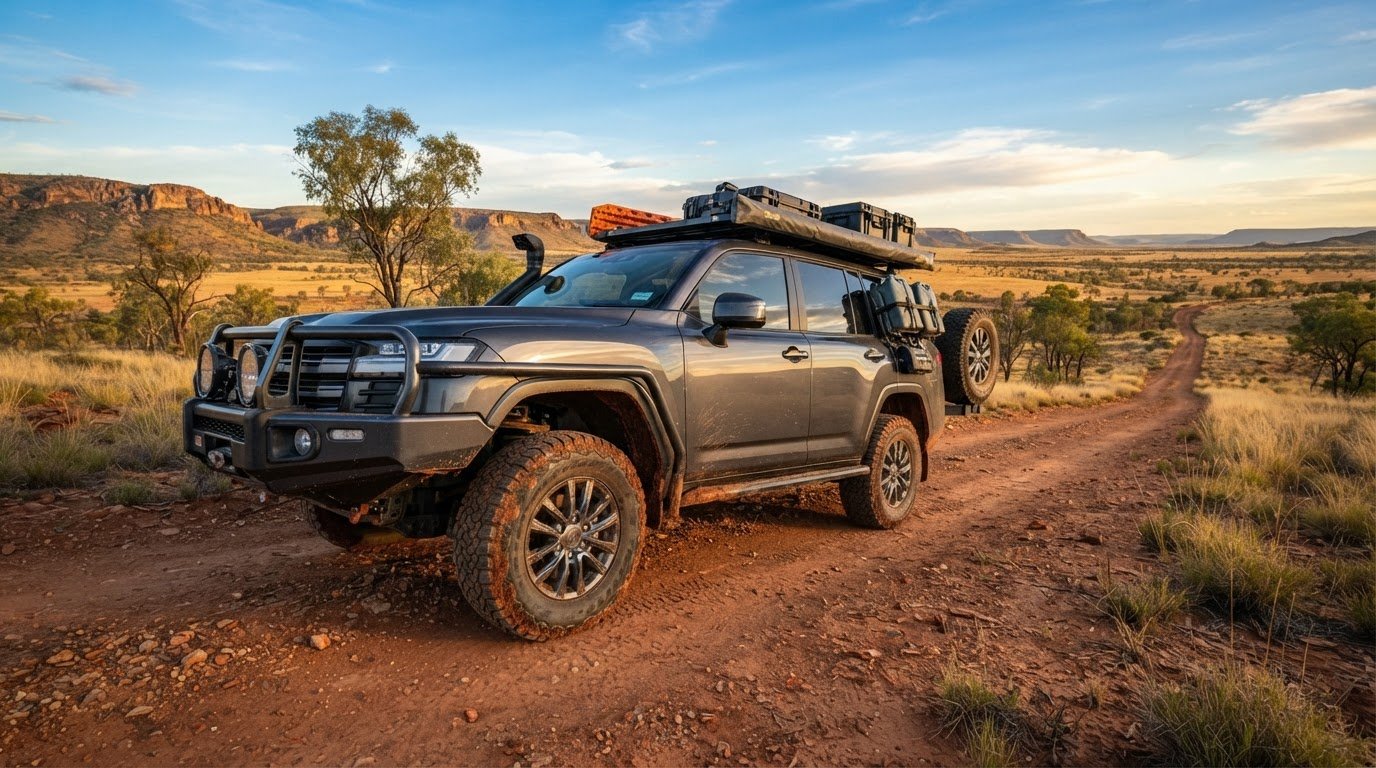
Surviving the outback requires more than just a place to sleep; it demands gear that won’t vibrate apart on the first corrugated track. When we’re pushing through the Pilbara or the Kimberley, the real test isn’t just the setup time, but how the unit handles the elements. Heat management is a massive factor for us. While hardshells with aluminium lids reflect a fair amount of radiant heat, they can become heat sinks if they aren’t properly insulated. Conversely, high-quality canvas in a softshell offers better breathability in humid tropical zones, though it struggles to keep the interior cool when the mercury hits 40 degrees in the shade. Finding the best roof top tent accessories Australia offers, like thermal liners or reflective fly-sheets, becomes essential for getting a decent night’s sleep in these extremes.
Corrugations are the ultimate gear-shredder. We’ve seen countless mounting systems fail on the Oodnadatta Track because they weren’t rated for the relentless vibration of a heavy tent. Choosing the right brackets for your 4WD awning and tent setup is vital to ensure your rig stays intact. You need hardware that distributes the load across your roof racks rather than concentrating it on a few weak points. This is where specialized, community-vetted mounting kits prove their worth over generic hardware store bolts.
The Red Dust Reality
Dust ingress is a silent gear killer. Hardshell designs with high-quality automotive rubber seals are generally superior for desert crossings because they lack the vulnerable zipper systems found on softshells. Fine bull-dust acts like sandpaper on zippers, leading to premature failure if you don’t stay on top of your maintenance. We recommend a strict cleaning protocol: vacuum your zippers after every dusty leg and apply a dry silicone lubricant to keep them gliding. For softshell owners, wrapping the folded canvas in a secondary internal dust cover can save your bedding from that pervasive red grit that seems to find its way through every gap.
Roof Load and GVM Considerations
We need to talk about the legalities of your setup. Every vehicle has a specified dynamic roof load limit, which is the maximum weight it can safely carry while moving. A heavy 90kg hardshell, plus your racks and a 4WD awning, might push you dangerously close to your legal GVM (Gross Vehicle Mass). Remember that in Australia, your total vehicle height including the tent must not exceed 4.3 metres. To stay safe and legal, look for weight-saving accessories like lightweight telescopic ladders or minimalist mounting kits that don’t compromise on durability. Managing your weight distribution isn’t just about insurance; it’s about making sure your vehicle handles predictably when you’re dodging a kangaroo at twilight.
Ready to build the ultimate touring rig? Explore our community-vetted gear reviews to find the perfect balance of weight and durability for your next expedition.
Choosing Your Throne: Which Tent Wins for Your Setup?
Choosing the right throne for your rig comes down to an honest look at how you actually spend your time in the bush. Are you a Weekend Warrior who sets up a basecamp at a coastal caravan park for three days? Or are you a Full-Time Tourer tackling a new campsite every single evening on a trek across the Nullarbor? If you move daily, the setup fatigue of a softshell will eventually wear you down. However, if you’re traveling with a partner and two kids, the cramped quarters of a hardshell might lead to some very long, restless nights. We’ve found that the best setup is the one that actually gets used, not the one that looks the flashiest on social media.
The “Bedding Test” is often the deal-breaker for our community. There is nothing more satisfying than popping your tent and having your bed already made. While many modern hardshells claim to have room for bedding, the reality of slimline 2026 designs often means you’re still stuffing pillows into the back seat to get the latches to close. Softshells generally win this round, as they can usually swallow a thick doona and multiple pillows without a fuss. To round out either setup, you’ll need to source the best roof top tent accessories Australia provides to maximize your comfort. Think about internal organizers to keep your phone and torch handy, or high-output 12V fans for those humid nights in the tropics.
The 5-Step Decision Framework
Before you commit to a purchase, run through these essential checks. First, calculate your total dynamic roof load. This must include the tent, your racks, and any extra gear like recovery tracks or solar panels. Second, measure your garage or carport clearance with the tent installed. We’ve heard too many stories of brand-new tents being scalped by a low garage beam on the way home. Third, be honest about your patience. If the thought of tucking in canvas and wrestling with a heavy PVC cover every morning makes you groan, a hardshell is your only logical choice. Remember, your vehicle height must stay under the 4.3 metre legal limit in Australia.
Adventurerz Community Recommendations
For solo adventurers, we almost always suggest a compact hardshell. The speed and security are worth the higher initial investment. For families, a high-quality softshell with an annex provides the vital living space you need to keep the peace. We also champion sustainable camping practices. This means investing in durable, repairable gear that will last a decade of exploration rather than a single season of use. To help you prepare for the long haul, take a look at our Ultimate Adventure Travel Planner to ensure your rig and your itinerary are perfectly synced for your next remote escape.
Master Your Outback Setup
We’ve explored the technical divide between rapid-deploy hardshells and the expansive living space of traditional softshells. The right choice ultimately hinges on your personal touring rhythm and your vehicle’s specific limits. It’s about finding that sweet spot where setup speed meets campsite comfort without compromising your safety on the tracks. Remember that your adventure is only as good as your preparation, and selecting the best roof top tent accessories Australia offers will ensure your gear survives the relentless corrugations and fine bull-dust of the red centre.
Our community values self-reliance and durability. We believe in investing in gear that lasts a decade, not just a single season. If you’re still weighing up the options for your 2026 expeditions, we’re here to guide you. Explore our expert Roof Top Tent reviews to find your perfect match. These guides are expertly vetted by Australian 4WDers and community-tested in remote outback conditions to ensure they stand up to the real-world rigours of the bush. Get your rig ready, respect the environment, and we’ll see you out there under the stars.
Frequently Asked Questions
Is a hardshell rooftop tent too heavy for a standard SUV?
It certainly can be, so you must check your vehicle’s dynamic roof load rating before buying. Most standard SUVs have a limit between 60kg and 100kg. Since many premium hardshells weigh upwards of 80kg, adding racks and the best roof top tent accessories Australia offers can easily push you over the legal limit. Always calculate the total weight of your tent, racks, and internal bedding to ensure your rig remains safe and insured.
How do I prevent mould from growing in my softshell rooftop tent?
The only way to stop mould is to ensure your canvas is completely dry before you store it. If you’re forced into a “wet pack-up” during a tropical storm, you must reopen the tent as soon as the sun comes out or when you get home. Using an anti-condensation mat under your mattress is also vital. This accessory creates a small air gap that prevents body heat from turning into moisture against the cold tent floor.
Do hardshell tents really save money on fuel compared to softshells?
Yes, hardshells offer better fuel economy because their low-profile, aerodynamic shape creates far less wind drag. A folded softshell is bulky and boxy, often increasing fuel consumption by 10% to 20% during high-speed highway hauls. If you’re planning massive trans-continental trips across the Nullarbor, the reduced drag of a hardshell lid will lead to noticeable savings at the diesel pump over thousands of kilometres of travel.
Can I leave my sleeping bag and pillows inside a hardshell tent when closed?
It depends on the internal clearance of your specific model, but many slimline hardshells require you to remove bulky bedding to close properly. While some 2026 designs allow for a thin doona and flat pillows, forcing a shell closed against thick bedding can damage your gas struts or latches. We recommend using compressed sleeping bags if you want to keep your bedding inside without compromising the seal of your hardshell lid.
Which type of rooftop tent is quieter during high winds?
Hardshell tents are significantly quieter because their rigid outer shells don’t flap or vibrate like canvas does. In the Victorian High Country or on exposed coastal cliffs, softshell tents can be quite noisy as the wind catches the fabric. The solid lid of a hardshell acts as a windbreak, providing a much more stable and silent environment. This makes them the superior choice for light sleepers who don’t want to be kept awake by rustling canvas.
Are hardshell rooftop tents worth the extra cost for occasional campers?
Probably not if you only head out once or twice a year to a single basecamp. If your camping style involves staying in one spot for three days, the lower price of a softshell represents much better value. However, if your occasional trips involve moving to a new campsite every single morning, the 30-second setup speed of a hardshell might still be worth the extra investment for the time and energy you’ll save.
How does a rooftop tent affect the handling of my 4WD on corrugated roads?
Adding a rooftop tent raises your vehicle’s centre of gravity, which increases body roll and makes the car feel more top-heavy in corners. On corrugated roads, this extra weight puts massive stress on your roof gutters and rack mounting points. It’s critical to use the best roof top tent accessories Australia has for mounting, such as load-spreading brackets. We always suggest checking your mounting bolts daily when travelling on high-vibration outback tracks.
Can I mount solar panels to the top of a hardshell roof top tent?
Yes, most modern hardshells are perfectly suited for mounting slimline or semi-flexible solar panels directly to the lid. This is a brilliant way to maintain your house battery while you’re parked up in remote locations. You just need to ensure the wiring is neatly routed so it doesn’t snag on branches. Just remember to include the weight of the panels and cables in your total roof load calculations to stay within legal limits.