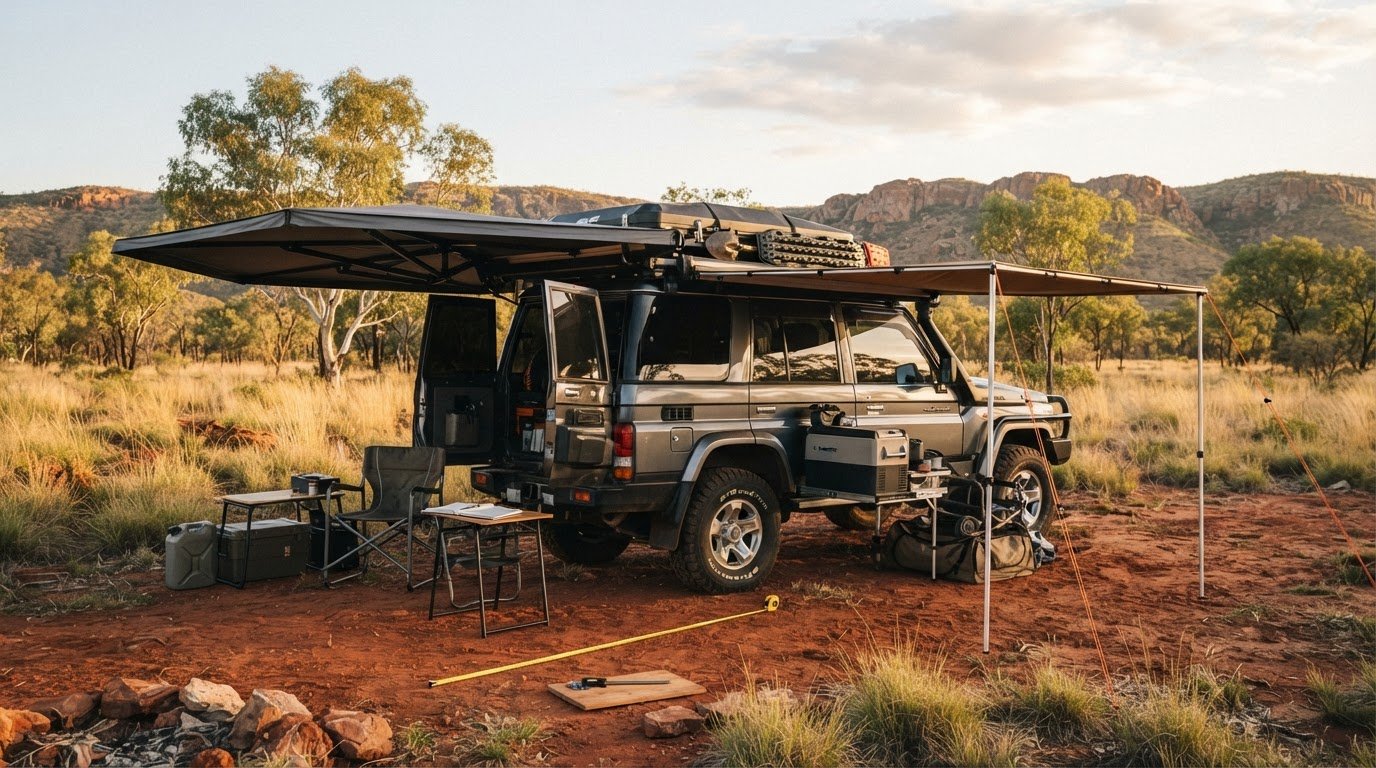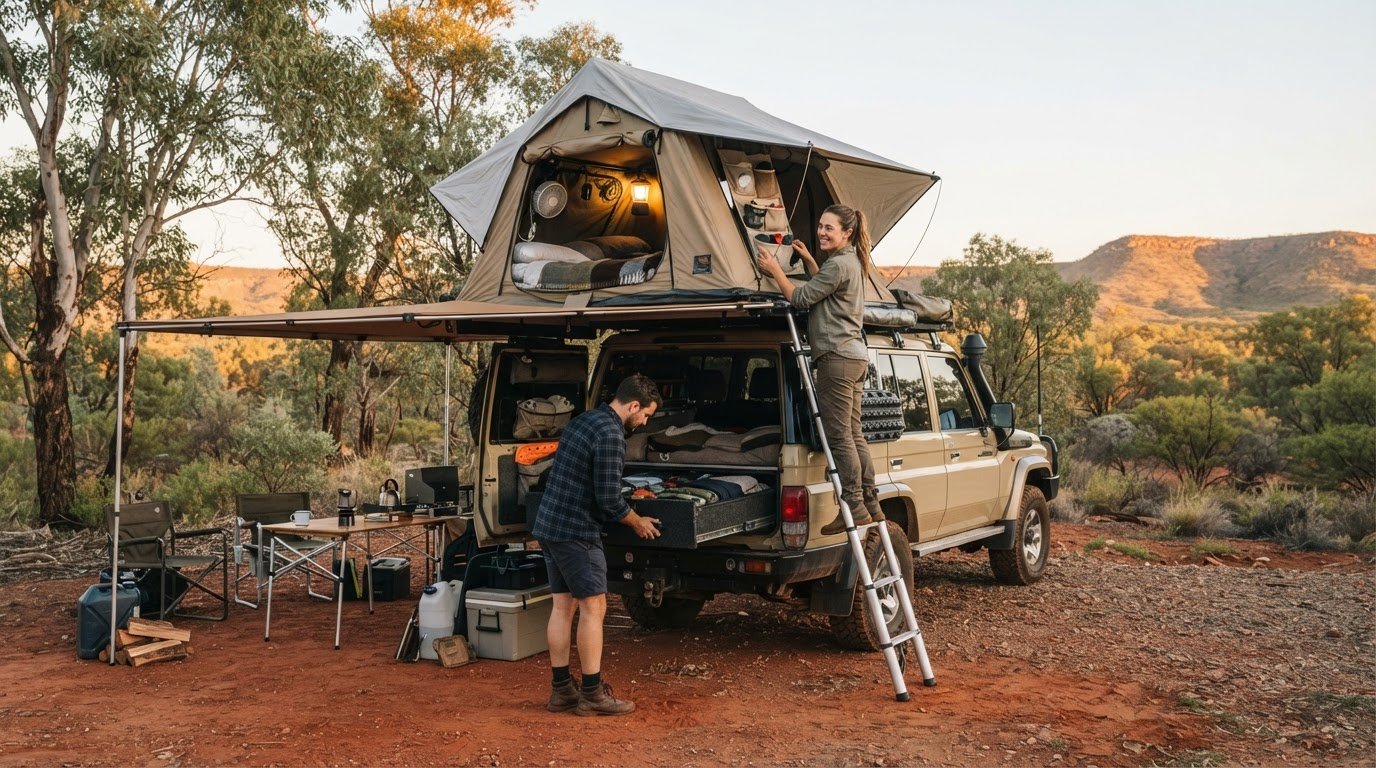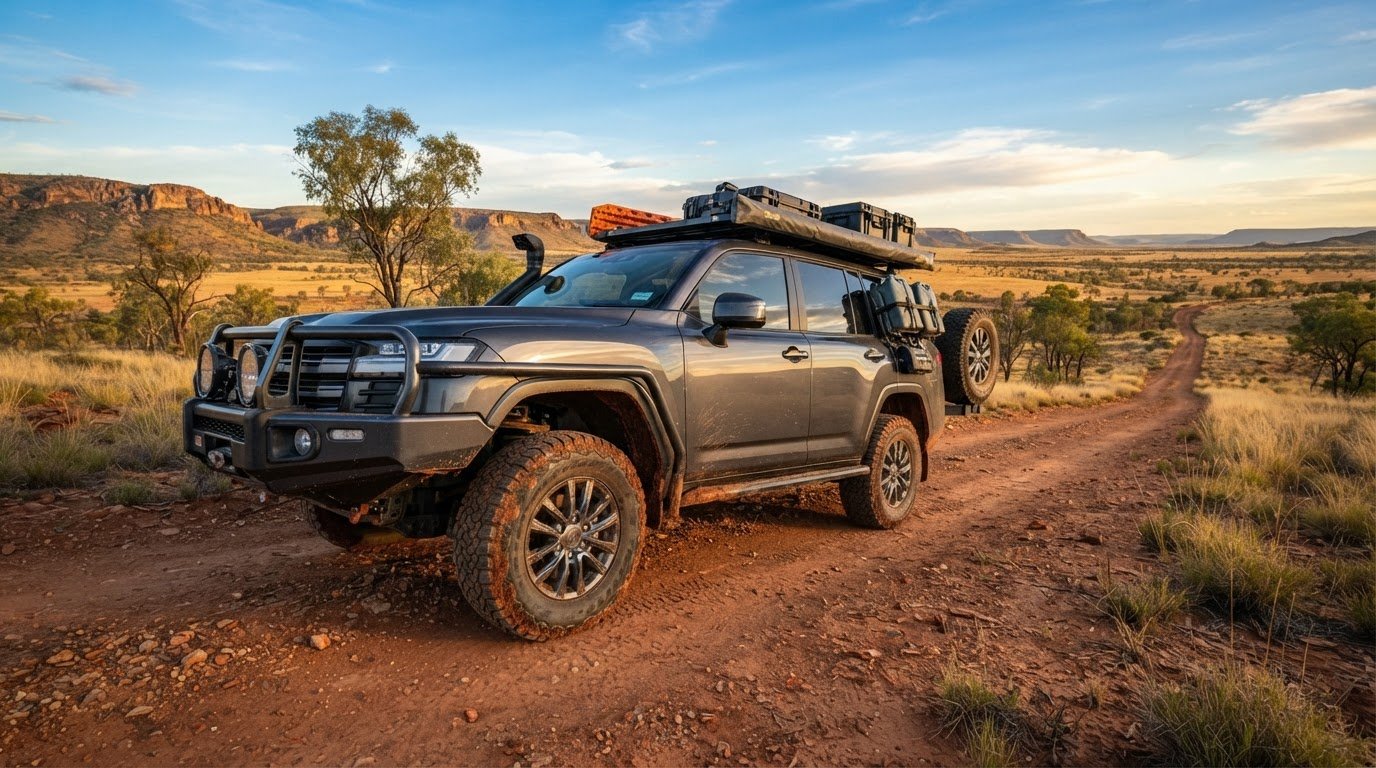
The fastest awning to open isn’t automatically the best fit for your next campsite. In this pole-less 4wd awning vs traditional awning review, we look beyond the quick-deploy appeal to the practical trade-off: pole-less designs use integrated arms and may need fewer separate parts during setup, while traditional awnings use separate support poles that can offer flexibility in how you position the shelter.
Wanting less setup hassle makes sense, especially when you arrive at camp tired or the weather is changing. But “freestanding” doesn’t mean an awning should be left unsecured in a breeze. Pole-less models may still need poles and guy ropes for stability, while a large 270-degree canopy can add weight and take up more room on your vehicle and at camp. To choose between them, compare the actual setup steps, coverage, support requirements and mounting specifications. Your vehicle, roof-rack space, campsite access and travel routine matter as much as the design label. This guide includes a practical checklist for matching an awning to your vehicle and camping habits, without assuming one design suits every touring crew.
Key Takeaways
- Integrated arms and separate support poles affect deployment, pack-down and how each awning fits into your camp routine.
- Use this pole-less 4wd awning vs traditional awning review to compare coverage, vehicle fit and support needs against your touring habits.
- Compare measurable specifications, such as packed dimensions and weight, separately from personal preferences like setup feel and campsite workflow.
- Match your choice to how often you move camp, whether you set up solo and how much flexibility you need across different sites.
Table of Contents
- Pole-less vs Traditional 4WD Awnings: What the Design Difference Means
- How Pole-less and Traditional 4WD Awnings Differ in Camp
- Which 4WD Awning Suits Your Touring Style? A Fair Comparison
- A Practical Checklist for Comparing Pole-less and Traditional Awnings
- Final Verdict: Choose the 4WD Awning That Fits Your Trips
Pole-less vs Traditional 4WD Awnings: What the Design Difference Means
The first distinction is how the awning is supported: does it have articulated arms built into the frame, or does it use separate poles to hold up the canopy? That affects deployment and support, but it doesn’t tell the whole story. Coverage, mounting arrangements, fabric and setup steps can vary between models in either category. For general background on types of awnings, it helps to distinguish the canopy from the mechanism that holds it open.
A pole-less awning uses integrated arms to support its deployed canopy without requiring separate upright poles for the initial setup. A traditional pole-supported awning uses separate poles to hold up at least part of the canopy. This is a useful distinction, not a guarantee of identical performance across models. “Freestanding” generally describes an awning that can support itself once opened, not one that never needs extra support. Adventurerz’s 4WD awning reviews and recommendations can help you compare specific designs and their stated components.
What does pole-less mean on a 4WD awning?
With a pole-less design, you extend or unfold the canopy, then articulate its connected arms into position. Those arms support the canopy, so you generally don’t need to place separate upright poles just to create the initial shelter. This can reduce the loose components you handle during deployment, but it doesn’t guarantee that every model is quicker to set up or easier to pack away.
Support arrangements still vary. Some awnings can be pitched without poles in suitable conditions but allow, include or recommend poles and guy ropes for added stability. Don’t assume “pole-less” means “pole-free in every situation.” Compare the model specifications and instructions to distinguish included components from optional accessories, and follow the manufacturer’s directions for securing the awning as conditions change.
How does a traditional pole-supported awning work?
A traditional pull-out awning commonly follows a straightforward sequence: extend the fabric from its housing, position the support poles, then secure them as directed. Depending on the design, poles may attach to the outer edge of the canopy or support other points. Some are adjustable, allowing you to change the height or placement of support within the intended setup.
There’s no single pole arrangement shared by every model. Pole length, attachment points, guy lines and pack-down steps differ, so use the instructions for the specific awning rather than making assumptions based on another design. This style has separate components to place and manage, while a pole-less design connects its arms to the canopy. In this pole-less 4wd awning vs traditional awning review, that mechanical difference is the starting point for a fair comparison, not a verdict on which option suits every touring setup.
How Pole-less and Traditional 4WD Awnings Differ in Camp
At camp, the practical difference is how many steps sit between parking and having usable shelter. A pole-less design may unfold through connected arms, while a pole-supported model typically involves placing separate supports. Fewer loose parts can simplify a solo setup, but they don’t guarantee faster deployment. Latches, fabric tensioning, access and pack-down all affect the routine. The useful comparison is how each model works at your campsites, not what its label promises.
Setup speed, pack-down, and campsite access
Think about arriving after dark or moving camp each morning. An integrated-arm awning can mean fewer separate components to handle, while traditional poles add steps to place and stow. A stiff cover, awkward mounting height or unfamiliar arm sequence can also affect setup. If you often camp solo, consider whether you can reach the release points and manage the canopy safely without a second person.
Site layout matters, too. If the awning side of your vehicle is close to a tree, another vehicle or a sloping edge, there may not be room to extend the canopy or position poles. Check clearance for a rear-opening tailgate, side doors and your cooking area as well. Before choosing a model, compare its deployed footprint with the vehicle’s access points and the kinds of pitches you use.
Support, weather exposure, and sheltered space
Depending on the design, separate poles may allow adjustments to height or support placement. Integrated arms reduce the need to position supports for initial deployment, but some models still call for poles and guy lines in particular conditions. Neither arrangement makes an awning storm-proof. Wind exposure, rain, orientation, anchoring and the structure itself all affect how the shelter behaves.
Read the manufacturer’s operating limits and securing instructions, and act early if conditions change. A canopy that looks larger doesn’t necessarily provide more usable space: headroom, vehicle position, arm geometry and access around the perimeter all matter. The RVIA standards and regulations resource offers broader recreational-vehicle context, but model-specific awning instructions should guide setup and use.
| Camp criterion | Typical design tendency | Model-specific caveat |
|---|---|---|
| Deployment | Integrated arms may reduce separate components; pole-supported designs involve placing supports. | Steps and pack-down can vary; compare the actual instructions. |
| Adjustment | Separate poles may offer options for support placement or height. | Adjustment range depends on pole design and attachment points. |
| Shelter and access | Both styles can suit different vehicle-side or wraparound layouts. | Check dimensions, headroom and clearance around doors and the tailgate. |
| Weather support | Either design may need additional securing as conditions demand. | Follow the manufacturer’s limits and anchoring guidance. |
Awning performance depends on the design, setup and conditions, not the label alone. Compare the details that shape your camp routine, then explore Adventurerz’s 4WD awning reviews for model-focused guidance.
Which 4WD Awning Suits Your Touring Style? A Fair Comparison
There’s no universal winner in the pole-less 4wd awning vs traditional awning review. The better fit depends on how often you move, how long you stay, who sets up camp and what your vehicle can safely carry. Consider a typical trip, not just an ideal campsite. A quick overnight stop has different demands from several days in one spot, and a compact vehicle has different mounting constraints from a larger touring setup.
When a pole-less design may fit your setup
If you change camps often or usually set up solo, integrated arms may suit you by reducing the number of separate pieces to handle. That streamlined routine can be appealing after a long drive, but it doesn’t guarantee effortless deployment. The awning still needs room to open, and a broad footprint can be difficult to manage near trees, neighbouring sites or uneven ground.
Check the full vehicle setup before deciding. Note where roof racks, rooftop tents, solar panels and other mounted gear sit, then compare that layout with the awning’s mounting position and opening path. Account for the awning’s weight alongside the rack and vehicle roof-load limits, including other carried equipment. A design that looks suitable on paper still needs compatible mounting points, adequate clearance and room to deploy.
When traditional poles may be useful
Depending on the design, separate poles can offer flexibility if the campsite calls for a particular support position or height. That may appeal to campers who stay put longer and are happy to spend extra time arranging shelter around the site. It can also suit a camp layout where the vehicle can’t be parked in the ideal orientation.
The trade-off is more gear to carry, position and secure. Poles and other support components need to fit your storage plan, and their placement can be less convenient on cramped or irregular pitches. Longer stays may make setup effort feel less important, while frequent movers may prefer to reduce repeated assembly steps. Neither preference makes one awning type right for every crew.
Use your touring rhythm as the tie-breaker. Frequent movers and solo campers may value a simpler deployment routine, provided the awning fits their vehicle and campsite footprint. Longer-stay campers may appreciate the support flexibility of a pole-based design. If your sites vary, prioritise the setup that works across the layouts you actually encounter instead of choosing by design label alone.
Before settling on a style, compare the manufacturer’s specifications for mounting, weight, deployed dimensions, included supports and setup instructions. Then consider how those details work with your other roof-mounted gear and the way you use camp. Adventurerz’s 4WD awning reviews and recommendations can help you assess individual options against those practical needs.
A Practical Checklist for Comparing Pole-less and Traditional Awnings
A useful comparison starts with your vehicle and ends with how the awning feels to use. Keep measurable specifications separate from personal preferences: dimensions and weight can be recorded, while setup comfort depends on your routine and campsite workflow.
Check vehicle fit and mounting compatibility
Measure the available mounting length and consider clearance around doors, roof racks and accessories. Compare the awning’s mounting requirements with your rack and vehicle documentation before selecting hardware. Check its weight against the load guidance from both manufacturers, allowing for other roof-mounted gear. If you carry a rooftop tent, account for shared mounting space and review these roof-top tent setup considerations alongside your awning layout.
Compare specifications and what comes in the package
Use the same checklist for every model so you’re comparing like with like. Separate included components from optional accessories, and record figures from current manufacturer specifications rather than relying on broad style labels.
- Fit: Note mounting length, mounting points, open dimensions and packed dimensions. Consider clearance for doors, tailgates and other equipment.
- Load: Record the awning and mounting component weights, then compare the combined roof setup with vehicle and rack guidance.
- Shelter: Compare stated coverage, height or headroom details, and the space left to move around the vehicle.
- Operation: Write down the deployment and pack-down steps. Decide whether you prefer integrated arms or separate supports, and whether you’ll often set up alone.
- Package contents: Check whether poles, pegs, guy lines, brackets and a storage cover are included or optional.
- Support and care: Review securing instructions, operating limits, care guidance, replacement-part information and warranty terms.
Keep the facts and the feel in separate columns. Weight, packed size, mounting requirements and listed components are measurable. How intuitive the setup feels, whether pole placement suits your pitch and how the shelter fits your camp routine are personal judgments. When comparing options, follow each manufacturer’s setup sequence rather than assuming two designs with similar labels work alike.
Finish by reviewing the vehicle and awning documentation together. Confirm the specified mounting arrangement and use compatible hardware; don’t choose fittings based on appearance alone. A comparison sheet makes differences easier to spot and keeps the decision grounded in your touring setup.
To compare specific options against your checklist, browse Adventurerz’s 4WD awning reviews and recommendations for practical guidance on Australian touring setups.
Final Verdict: Choose the 4WD Awning That Fits Your Trips
The fairest verdict is that neither design wins for every traveller. Choose based on the routine you want at camp: integrated arms may reduce separate setup components, while traditional poles can offer flexibility in support placement. Then check that the specific awning suits your vehicle, roof load and usual campsite layouts. A convenient design on paper is only a good match if it works with the gear and conditions you actually travel with.
Quick verdict by camper and setup
Use your trip pattern to narrow the choice. Frequent movers may prefer fewer separate components to handle at each stop. Longer-stay campers may value the ability to adjust pole position to suit the pitch. Solo campers should focus on whether they can safely manage the full deployment and pack-down routine themselves.
- Frequent stops: Favour the setup sequence you can repeat easily, and check how components stow between camps.
- Longer stays: Consider whether adjustable support helps you arrange shelter around your established camp layout.
- Variable sites: Compare the awning’s actual footprint with the space and vehicle orientation you’re likely to have.
- Exposed conditions: Prioritise documented operating guidance and secure setup. A design label alone doesn’t indicate how an awning should be used in changing weather.
Make your shortlist and compare with confidence
Before shortlisting, confirm mounting compatibility, roof-load guidance, clearance and storage space. Compare each model’s included components and instructions rather than assuming similarly named designs come with the same supports or setup requirements. Keep unanswered specification questions with your comparison notes so they don’t get lost among subjective preferences.
Use the comparison table as a final filter. Does each option fit your vehicle and other mounted gear? Can you store its components without disrupting your touring setup? Does its support method suit the way you use campsites? If a specification is unclear, review the current manufacturer documentation before deciding. This final check helps separate a genuine fit from an attractive feature that won’t matter on your trips.
For our touring community, the right awning supports a practical, responsible camp routine without asking your vehicle or setup to do more than it’s suited for. Compare 4WD awning options in Adventurerz’s awning review guide to weigh specific designs against your shortlist.
Take Your Awning Shortlist Into the Field
Before choosing, picture your next trip from arrival to pack-up. Where will the vehicle sit? What needs to remain accessible, and who will handle the setup? Those details can bring the pole-less 4wd awning vs traditional awning review into focus, helping you choose for the camp routine you want rather than an abstract idea of convenience.
Compare suitable options against your vehicle and touring plans. Adventurerz publishes 4WD awning reviews and recommendations for Australian outdoor and remote-travel enthusiasts, with practical considerations for touring in mind. Explore our 4WD awning reviews and find your touring fit.
Frequently Asked Questions
Are pole-less 4WD awnings better than traditional awnings?
Neither type is automatically better; the right choice depends on your vehicle, touring routine and preferred setup. If you move camp often, an integrated-arm design may suit a routine with fewer separate components to manage. If you value changing support positions to suit a particular pitch, poles may be useful. Compare the complete setup, including pack-down, storage and how the awning works alongside your other vehicle gear.
Do pole-less awnings need support poles in windy weather?
They may, so follow the instructions and operating limits for the exact model rather than relying on the “pole-less” label. Some designs can stand without poles in suitable conditions but still require added support or anchoring as conditions change. If gusts begin to lift or strain the canopy, secure it as directed or pack it away. Don’t treat any awning type as storm-proof.
Can one person set up a pole-less 4WD awning?
Some models are designed for solo deployment, but one-person setup depends on the awning’s size, mechanism, mounting height and the user’s ability to control the canopy. Before relying on it for solo trips, practise in calm conditions and follow the manufacturer’s sequence. Check whether you can reach each latch, guide the arms without forcing them and stow the cover securely on your own.
Is a traditional 4WD awning more stable than a pole-less awning?
Not by category alone. Stability depends on the particular frame, attachment points, support arrangement, anchoring and exposure at the campsite. Separate supports can allow placement adjustments on some models, while integrated arms are designed to hold the canopy in a specified configuration. For a useful comparison, review each model’s setup guidance and conditions of use rather than relying on assumptions about its design.
How do I choose an awning that fits my 4WD?
Start with your vehicle and roof-rack documentation, then compare the awning’s mounting system, packed length and weight with the available space and stated load guidance. Check that it won’t obstruct doors, a tailgate, rooftop tent access or other mounted equipment. For example, a rear-opening tailgate may need extra clearance from a wraparound canopy. Confirm compatible mounting hardware before fitting the awning.
What should I compare in a pole-less versus traditional awning review?
Compare deployed coverage and headroom, packed dimensions, weight, mounting requirements, setup steps and the supports supplied with each model. Note which accessories are optional and whether the instructions explain anchoring, care and operating limits. Keep measurable details separate from subjective points such as how intuitive the mechanism feels. This makes it easier to identify genuine differences and shortlist awnings for your vehicle and trips.