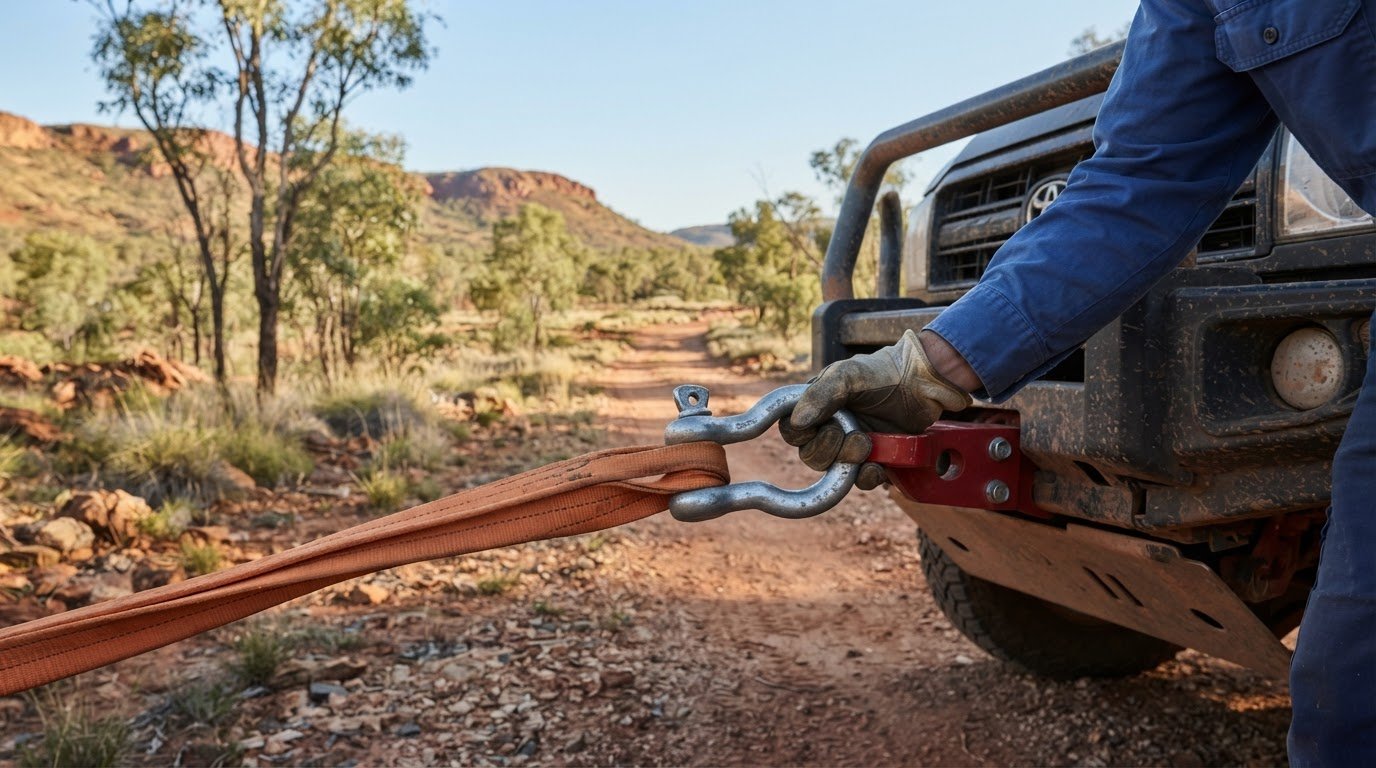
Could the strongest-looking hook on your 4WD be the wrong place to attach a recovery strap? It’s an easy assumption to make, especially when factory tie-down points and purpose-designed recovery points can look similar. Understanding 4wd recovery points starts with knowing that appearance alone doesn’t confirm a point is rated for recovery loads. Before heading off-road, check what the manufacturer says, how the point is installed, and whether the rest of the setup is compatible.
This guide explains how to distinguish rated recovery points from ordinary vehicle fittings and what documentation to check for your vehicle and points. It also covers how ratings for points, shackles, straps and ropes work together, and why each connection matters. Just as important, you’ll find warning signs that mean it’s time to pause and get experienced recovery help. A dependable recovery setup isn’t one impressive-looking component. It’s a verified, compatible system used with care, helping you explore Australia’s tracks while looking out for your travel mates and the places you visit.
Key Takeaways
- Understanding 4wd recovery points starts with checking their intended purpose and documentation, not judging by how a hook or bracket looks.
- Assess the point’s rating alongside its installation and the vehicle structure it attaches to. One rating alone doesn’t confirm a suitable setup.
- Check that recovery points, shackles, soft shackles and recovery hitches are compatible and used according to manufacturer instructions.
- Use a pre-trip check to identify approved points, verify ratings, inspect condition, match equipment and reassess if circumstances change.
- Plan the recovery as a whole: communicate clearly, keep bystanders away, prepare in a controlled way and stop if the method or setup is uncertain.
Table of Contents
- What 4WD recovery points are, and why appearance is not proof
- How recovery-point ratings, installation, and vehicle structure fit together
- Recovery points and connectors: compare the whole connection, not one component
- How to check 4WD recovery points before heading off-road
- Use verified recovery points as part of a safer 4WD recovery plan
What 4WD recovery points are, and why appearance is not proof
A 4WD recovery point is a vehicle attachment intended for a specified recovery load, as confirmed by the vehicle or component manufacturer. Its purpose and rating can’t be established by looks alone. A heavy-looking hook, loop or bracket may be designed to secure a vehicle during transport, or for another purpose entirely. Understanding 4wd recovery points means checking documentation and intended use, not guessing from shape or size.
A recovery load, particularly during a dynamic recovery, can place different forces on a vehicle and its attachment than ordinary towing or transport restraint. The component must suit the intended load, and its connection to the vehicle matters too. For background on how towing hardware connects to a vehicle, see this explanation of a vehicle chassis attachment. It doesn’t establish that any particular fitting is suitable for recovery, so check vehicle-specific guidance.
See why choosing the right attachment point matters:
Recovery points, tow points, and tie-down points: what is the difference?
Similar-looking fittings can serve different purposes. Transport tie-downs secure a vehicle during transport, while ordinary towing attachments are designed for the use specified by their manufacturer. Neither should be assumed suitable for recovery. A tow ball is not a general-purpose recovery attachment and must not be used as one. Use a fitting for recovery only if the vehicle or component documentation explicitly confirms that purpose and the intended conditions.
Where recovery-point information may be documented
Start with your owner’s manual and the vehicle manufacturer’s guidance. Then check the point for labels or markings, review any supplied instructions, and look for installation records. If an aftermarket point is fitted, verify its rating and fitment against the point manufacturer’s documentation for your exact vehicle. A label alone may not tell the whole story, so confirm what the rating applies to and how the component is intended to be loaded.
If the paperwork is missing, markings are unclear, or you can’t confirm how a point attaches to the vehicle, don’t test it with a recovery load. Ask a qualified 4WD professional to help identify the fitting and check the documentation. Pausing to verify the setup can prevent a wrong connection from becoming a bigger problem on the track.
How recovery-point ratings, installation, and vehicle structure fit together
A rating is meaningful only in context. It applies to a particular component and the loading conditions its manufacturer specifies, not automatically to every direction of pull, recovery method or vehicle. Check the manufacturer’s wording: does it describe a recovery load, and are there conditions or limitations? A number found in a forum post or inferred from a product’s appearance isn’t a substitute for documentation.
A recovery setup is only as dependable as the compatibility of its rated components, their installation, and the vehicle structure carrying the load. A point’s published rating can’t confirm that it’s fitted correctly or approved for your exact vehicle configuration. Understanding 4wd recovery points means checking more than a figure stamped on the component.
What a recovery-point rating can and can’t tell you
Start with the vehicle and point manufacturers’ guidance. Confirm what the rating refers to and any stated conditions for use. Don’t assume one rating suits every 4WD or recovery method. You also can’t add ratings together: two points each marked with a particular rating don’t automatically create a combined rating of double that figure. How a load is shared depends on the design, installation, connection method and direction of pull, so follow the manufacturers’ instructions for using single or paired points.
Why fitment and chassis attachment matter
Recovery loads pass from the point through its fasteners and mounting surfaces into the vehicle structure. A mismatch, incorrect installation or altered configuration may prevent the system from performing as intended. Confirm that the point is listed for your exact vehicle and relevant configuration, then check the installation records and instructions. If the manufacturer specifies specialist installation, use a qualified installer rather than improvising.
Check that the vehicle and recovery setup are in suitable condition before use. Look for visible damage or changes that could affect fitment, and follow the vehicle and component manufacturers’ maintenance and operating instructions. For Australian trips, rely on the relevant manufacturers’ guidance and reassess the setup if parts have been changed, damaged or removed.
Before relying on a recovery point, make sure its documented rating, fitment and intended loading conditions all match the recovery you’re planning. If any part of that chain is unclear, pause and seek experienced advice.
Recovery points and connectors: compare the whole connection, not one component
A rated recovery point is only one link in the setup. The connector must suit the point’s shape and intended loading, and the recovery equipment must be appropriate for the method being used. A shackle that fits through an opening isn’t automatically compatible. Understanding 4wd recovery points means checking how every component connects and what its manufacturer permits.
Use this comparison as a starting point, then confirm details in the instructions for your specific equipment and vehicle.
| Component | Purpose | Checks and compatibility questions |
|---|---|---|
| Rated recovery point | Attaches recovery equipment to the vehicle for specified recovery loads. | Is it approved for the exact vehicle and recovery method? Is its installation documented? |
| Recovery-rated bow shackle | Connects compatible recovery components using a rated metal link. | Are its markings and rating legible? Does its shape and pin suit the point and strap or rope connection? |
| Soft shackle | Provides a flexible connection where the point and equipment allow its use. | Do the manufacturers approve this connection? Is the line free from damage, and does the fit avoid sharp edges or pinching? |
| Recovery hitch | Provides a receiver-style connection when the hitch and recovery insert are designed for recovery. | Is the hitch specifically approved for recovery, correctly fitted, and compatible with the connector? |
Choosing a compatible shackle or connector
Check the markings, rating terminology and instructions on each component. Fit matters: a connector that binds, loads at an unintended angle, or bears against an unsuitable edge may not behave as intended. Don’t assume a particular shackle type or rating works with every recovery point. Confirm the permitted connection and loading conditions with the point, connector and recovery-equipment manufacturers. If the markings are unreadable or the fit is uncertain, set that combination aside.
Why a winch recovery can require a different setup
A winch recovery and a kinetic recovery don’t load equipment in the same way. A winch pulls through its line and associated hardware under the winch manufacturer’s specified operating conditions. A kinetic rope or strap is designed to stretch and transfer energy between vehicles. Gear suited to one method isn’t automatically suitable for the other. Follow the winch and vehicle manufacturers’ instructions for attachment points, connectors and use. Don’t improvise a connection or treat ordinary towing hardware as recovery gear.
Before setting up, trace the connection from vehicle to recovery equipment and verify every interface. If a rating, fit or approved use can’t be confirmed, stop and seek experienced recovery assistance.
How to check 4WD recovery points before heading off-road
A quick pre-trip check can catch uncertainty before you’re on a remote track and under pressure to act. Use this sequence to check the vehicle, attachment points and recovery equipment. Understanding 4wd recovery points means confirming what each component is approved to do, not relying on memory or appearance.
A practical pre-trip recovery-point checklist
- Identify: Locate the intended recovery points and confirm their purpose in the owner’s manual or vehicle-specific manufacturer guidance. Don’t assume a fitting is approved because it sits at the front or rear of the vehicle.
- Verify: Check the recovery-point manufacturer’s documentation for the exact vehicle and configuration. Review labels, supplied instructions and installation records, and note any stated limits or conditions.
- Inspect: Look for visible damage, corrosion, cracks, deformation, loose fasteners or missing markings. Check the accessible installation area without dismantling safety-critical components. If you can’t assess a concern safely, leave it for a qualified professional.
- Match: Confirm that each shackle, soft shackle, hitch, strap, rope or winch component is intended for the planned recovery method. Check markings, fit and instructions across the complete connection, not just the point.
- Reassess: Consider what has changed since your last trip. New accessories, repairs, modifications or an impact may affect access to the points or how the setup is configured. Recheck rather than assuming an earlier inspection still applies.
Checklist in brief: identify the approved points, verify their documentation, inspect their condition, match the equipment, then reassess anything that has changed.
When to pause and ask an experienced professional
Stop if a point is unmarked, damaged, loose, modified or undocumented, or if you can’t confirm that the equipment suits its intended use. Vehicle accessories such as a bull bar or other front-end changes may obscure or alter access to an attachment arrangement. Don’t remove parts or make assumptions to force a connection. Have the setup checked by a qualified 4WD professional before relying on it.
Build familiarity before a recovery is needed. Training and supervised practice give you time to understand equipment instructions and communication procedures without the urgency of a vehicle stuck on the track. If the recovery plan, attachment or any component remains uncertain, don’t proceed. Pause, keep the group clear of the setup, and seek experienced assistance.
Use verified recovery points as part of a safer 4WD recovery plan
Verified recovery points are an important part of the setup, but they don’t make every recovery method safe. Ground conditions, vehicle position, available equipment and the group’s experience all matter. Good understanding 4wd recovery points includes knowing when a planned recovery is beyond your skills or the equipment’s intended use. Pause to reassess if you’re unsure.
Before connecting recovery equipment
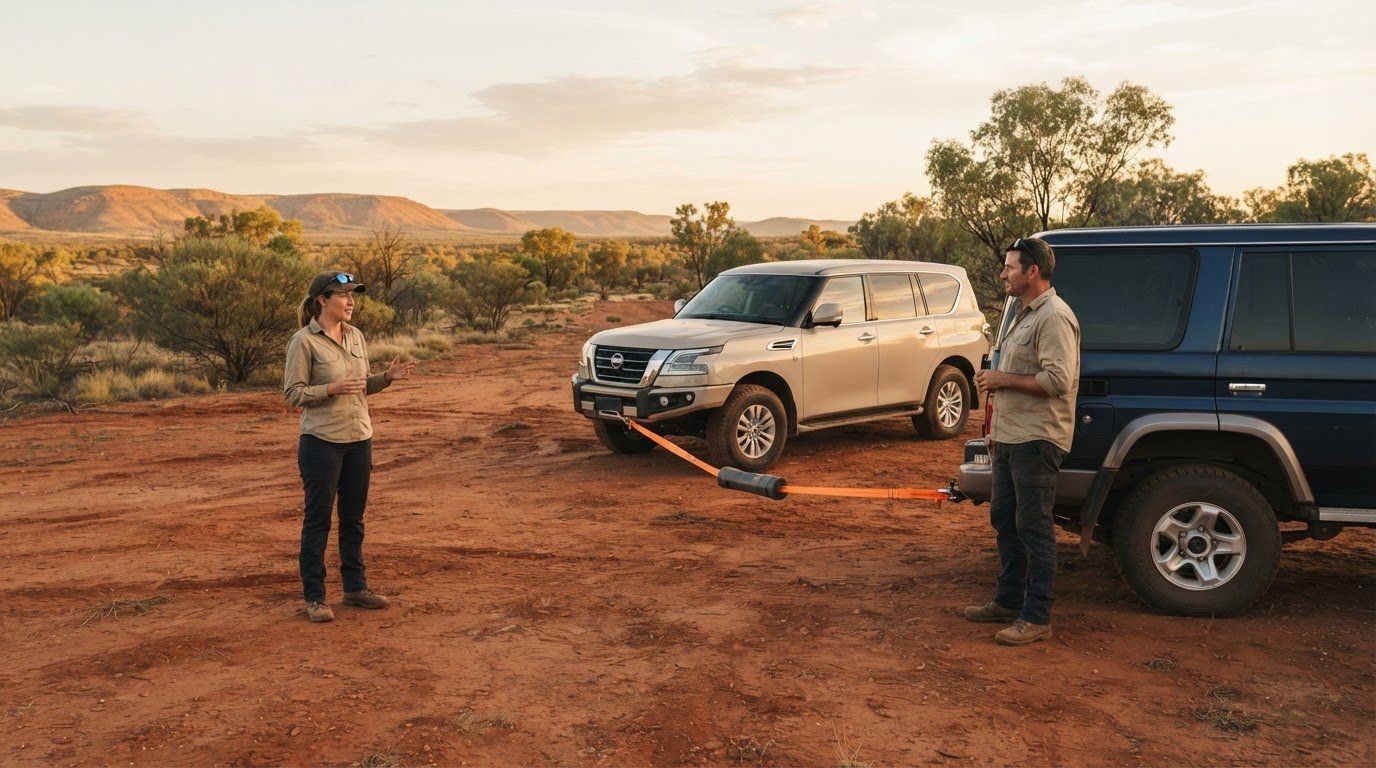
Before anyone connects gear, agree on the plan. Choose one person to coordinate, clarify everyone’s role, and settle on simple signals the whole group understands. Keep people clear of tensioned recovery equipment and follow the safety guidance supplied by the manufacturers. Don’t let time pressure turn an uncertain setup into a rushed attempt.
Check that the proposed method suits the terrain and the equipment available. A kinetic vehicle recovery and a winch recovery involve different equipment and procedures, so don’t swap methods or components without confirming they’re suitable. If the attachment, connection, expected loads or recovery method is unclear, stop. Keep the group at a safe distance and seek experienced assistance rather than improvising.
Build knowledge before remote travel
Learn recovery fundamentals in a suitable training environment, with supervision and time to understand equipment instructions before you need to use them. Preparation also means packing equipment that’s compatible with your vehicle and knowing its limits. Check instructions and condition before a trip, and make sure everyone travelling with you knows the basic communication plan.
Responsible recovery includes caring for the place you’ve come to explore. Where possible, avoid creating new tracks or disturbing vegetation to position vehicles. Choose an approach that limits unnecessary ground disturbance. Protecting the track and surrounding environment is part of travelling well, alongside looking after your crew and vehicle.
For more preparation ideas, explore Adventurerz’s Australian 4WD and outdoor guidance. Learning before the tough moment arrives, travelling thoughtfully and knowing when to call on experienced help all contribute to better preparation.
Prepare your 4WD recovery setup before the next trip
Understanding 4wd recovery points comes down to checking evidence, not appearance. Confirm that a point is approved for your vehicle and intended recovery use, then verify its documentation, fitment and condition. A rated point is only one part of the setup: connectors and recovery equipment must also be compatible and used as their manufacturers direct.
Before travelling, inspect your equipment and agree on a recovery plan with your group. If a point, connection or method is uncertain, pause and seek experienced help rather than improvising under pressure. Good preparation helps protect people, vehicles and the places you explore.
Adventurerz shares Australian outdoor, camping and 4WD information, including gear guidance and ideas for responsible exploration. Explore Adventurerz’s 4WD and outdoor guidance as you plan your next adventure. Travel prepared, look out for your crew and leave the track with care.
Frequently Asked Questions
What is a recovery point on a 4WD?
A 4WD recovery point is an attachment intended by its manufacturer for specified vehicle recovery loads. Its suitability depends on more than its shape: the point must be approved for your vehicle, installed as specified and used under the stated conditions. It connects the vehicle to compatible recovery equipment, but it doesn’t make every recovery method safe. Check vehicle and component documentation before relying on a fitting.
How can I tell if my 4WD recovery points are rated?
Check the point’s label or markings, supplied instructions and installation records, then confirm the rating and intended use in the recovery-point manufacturer’s documentation. Verify vehicle-specific fitment against both the point and vehicle manufacturers’ guidance. A visible stamp or online claim alone may not explain the rating’s conditions, and appearance can’t confirm suitability. If the information is missing or unclear, don’t use the point until you’ve verified it.
Can I use a tow point for vehicle recovery?
Only if the vehicle or component manufacturer explicitly confirms that the particular point is designed and approved for the recovery method you plan to use. “Tow point” can describe different fittings, so the name alone doesn’t establish its purpose or rating. A tow ball is not a general-purpose recovery attachment and must not be used for recovery. If you can’t confirm the point’s intended use, stop and seek experienced advice.
Are recovery points and tie-down points the same thing?
No. Recovery points are intended for specified recovery loads, while transport tie-down points are designed to secure a vehicle during transport. They can look similar, but their purpose and loading conditions differ. Don’t assume a tie-down is safe for vehicle recovery, even if a connector fits through it. Check your owner’s manual and the component documentation to identify approved recovery points for your specific vehicle.
Do recovery points need to be installed in pairs?
Not necessarily. Follow the vehicle and point manufacturers’ instructions for whether one or two points are required or recommended for the intended recovery. If using two points, don’t assume their individual ratings can simply be added together. The load shared between them depends on the setup, connection and direction of pull. Use only a compatible arrangement specified by the manufacturers, and get advice if the instructions aren’t clear.
Can I attach a snatch strap to any rated recovery point?
No. A rated point isn’t automatically approved for every strap, connector or recovery method. Confirm that the point’s intended use, the strap, the shackle or soft shackle, and their connections are compatible under their manufacturers’ instructions. Check that the fittings connect without binding or bearing against unsuitable edges. If you can’t verify the combination or the correct procedure, don’t attempt a kinetic recovery. Seek experienced assistance.
What should I check before using 4WD recovery points?
Before use, confirm the points are approved for your vehicle and recovery method, then check their documentation, installation and visible condition. Look for damage, corrosion, loose fasteners or missing markings without dismantling safety-critical parts. Match every connector and recovery item to the manufacturers’ instructions, and agree on roles and signals with your group. Understanding 4wd recovery points also means knowing when to pause: if suitability or the recovery plan is uncertain, stop and get experienced help.