What if you could witness a 40-tonne humpback whale breaching just a few hundred metres away without ever stepping foot on a crowded tour boat? With an estimated 35,000 to 50,000 individuals pulsing through the “humpback highway” in 2026, our nation’s coastlines are currently staging one of nature’s most spectacular shows. We know the feeling of staring at the blue for hours, wondering if you’ve missed the action or if your eyes are just playing tricks on you. It’s tough when poor visibility or a lack of shade turns a dream outing into a test of endurance.
At Adventurerz, we’re here to help you master whale watching from shore by transforming your coastal setup into a professional-grade observation post. You’ll discover the precise timing for the 2026 migration peaks, from the northward surge in July to the nursery return in September and October. We’ll also share our expert gear recommendations, including the high-quality 4WD awnings and rooftop tents that create a perfect mobile lookout for long days on the headland. Get ready to learn the specific spotting techniques that turn a distant blow into a confirmed sighting, ensuring your next trip to the coast is a resounding success.
Key Takeaways
- Master the 2026 migration timeline by targeting the July peak for northward travel and September for mothers returning south with newborn calves.
- Elevate your visibility by choosing 8×42 or 10×50 optics, providing the perfect balance of magnification and field of view for scanning the horizon.
- Create a comfortable coastal basecamp for whale watching from shore qld using 4WD awnings to provide essential UV protection during extended spotting sessions.
- Identify specific humpback behaviours from a distance, such as the distinct vertical mist of a blow or the massive white splash of a 40-tonne breach.
- Contribute to marine research by using citizen science platforms to report your sightings, helping track the health of the record-breaking 2026 population.
Table of Contents
Shore-Based Whale Watching in Queensland: 2026 Must-Do
Shore-based whale watching is the art of witnessing the world’s most magnificent migration without ever leaving solid ground. It’s about finding that perfect coastal vantage point, setting up your gear, and scanning the horizon for the telltale signs of life. In 2026, this experience has reached a new peak. The eastern Australian humpback population is currently estimated to be between 35,000 and 50,000 individuals. This massive recovery from just 150 whales in the 1960s means the “humpback highway” is busier than we’ve ever seen it. Mastering whale watching from shore qld allows us to participate in this spectacle with zero impact on the marine environment. We aren’t adding engine noise to the underwater acoustic landscape; we’re just quiet observers on the edge of the continent.
To better understand this concept, watch this helpful video:
We believe in the power of slow travel. Instead of a three-hour boat sprint where you’re dictated by a captain’s schedule, land-based watching offers total immersion. You can spend a full day watching the light change over the Pacific while waiting for that one explosive breach. It’s a tactical hunt that rewards patience and preparation, making whale watching in Australia a deeply personal adventure.
The Humpback Highway: Queensland’s Coastal Advantage
Queensland has a unique geographical edge. In many areas, the continental shelf sits close to the coast, forcing thousands of whales into a narrow corridor. For the 2026 season, you’ll want to target July for the peak northward migration. If you’re keen to see mothers with newborn calves, plan your trips for September and October when they hug the shoreline on their way south. There’s a specific thrill in the “find” that you just don’t get on a tour. When you’re the one to spot that first distant puff of mist, the reward feels earned.
Shore vs. Boat: Choosing Your Experience
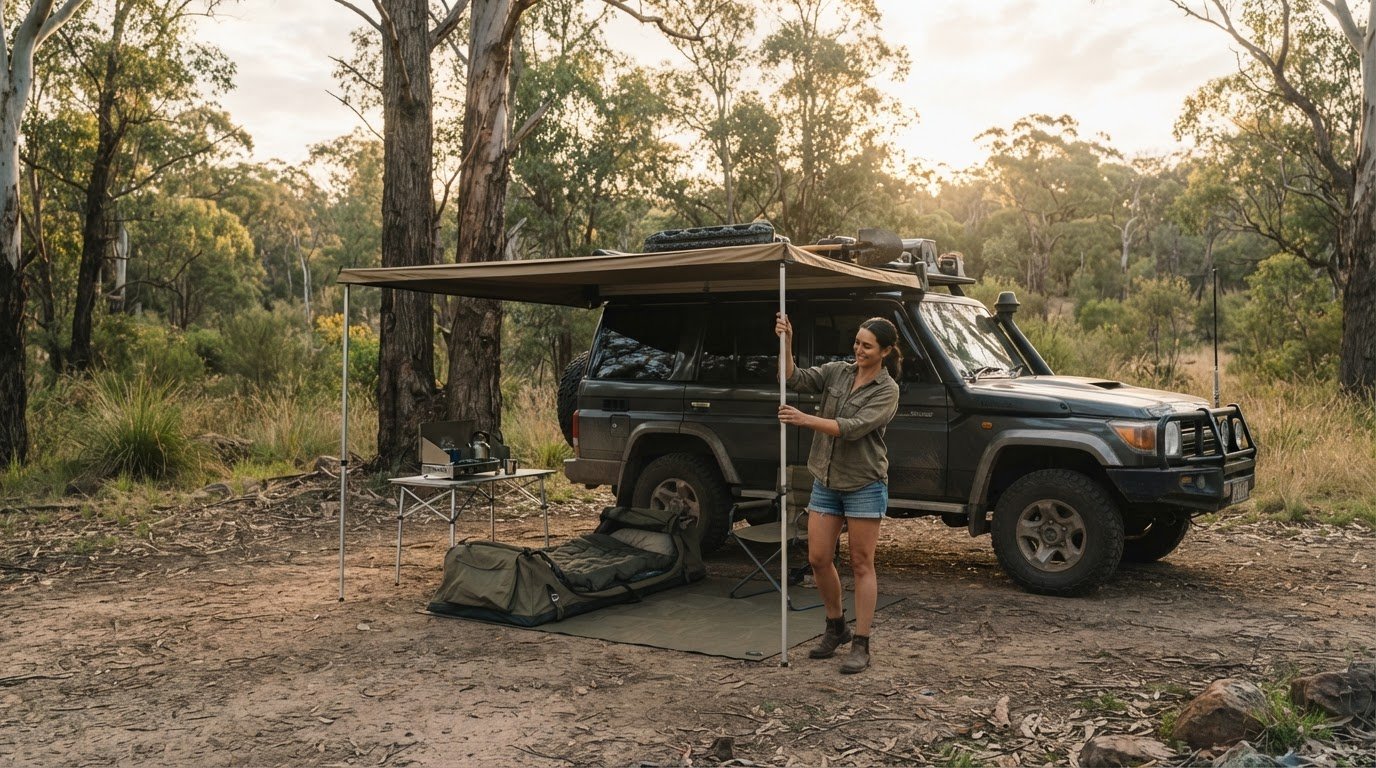
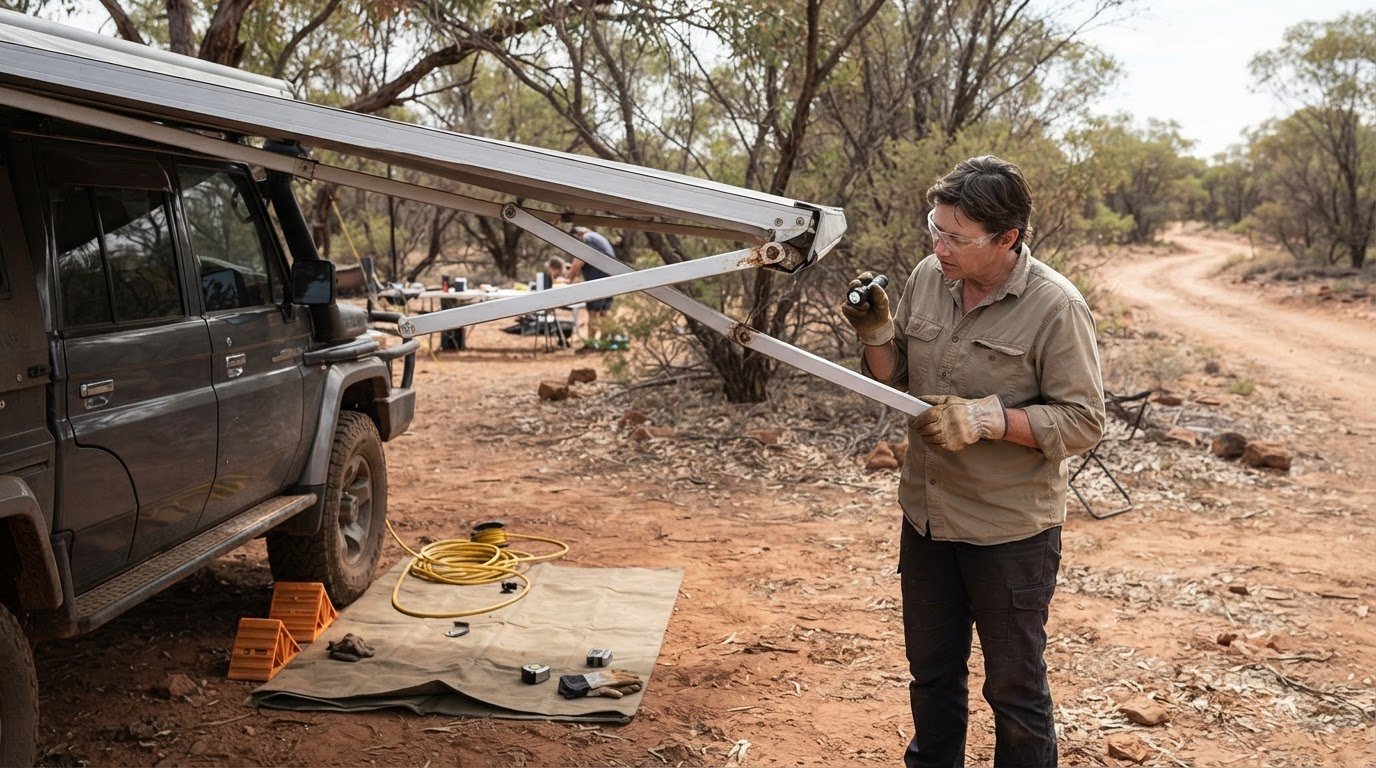
Choosing the shore over a boat isn’t just about saving money, though being budget-friendly is a great perk. It’s about freedom. You have total control over your schedule and zero risk of seasickness. For self-reliant adventurers, the challenge of the land-based hunt is part of the appeal. We often use our vehicles to reach remote headlands, setting up a professional-grade basecamp. Deploying one of our recommended 4wd awnings provides the necessary UV protection for long stints behind the binoculars. It turns a simple outing into a community event where we share sightings and tips with fellow explorers along the track.
Essential Gear for the Ultimate Land-Based Whale Watch
Success in whale watching from shore qld isn’t just about luck. It’s about having the right kit to stay out longer and see clearer. While tour boats provide the platform, we prefer building our own mobile observation deck. This self-reliant approach requires a tactical selection of optics and shelter to handle the raw conditions of the Queensland coastline. When you’re perched on a windswept headland for six hours, the difference between a frustrating day and a legendary sighting often comes down to the quality of your basecamp.
Optics and Vision: Seeing the Details
We’ve found that 8×42 or 10×50 binoculars are the absolute “sweet spot” for coastal scanning. An 8×42 pair offers a wider field of view, which is vital for tracking a fast-moving pod, while 10×50 glass provides the extra magnification needed to identify distant spouts. If your budget allows, image-stabilised binoculars are a game changer for cutting out the micro-shakes caused by high coastal winds. Don’t forget a pair of high-quality polarized sunglasses; they are essential for stripping away the harsh ocean glare that hides “the blow” against the afternoon sun.
Eye fatigue is the physical strain and blurred vision caused by the ocular muscles overworking during repetitive, high-contrast scanning. You can easily avoid this by taking “horizon breaks” every fifteen minutes, allowing your eyes to reset on a fixed point without the aid of glass.
Comfort and Protection: The Basecamp Setup
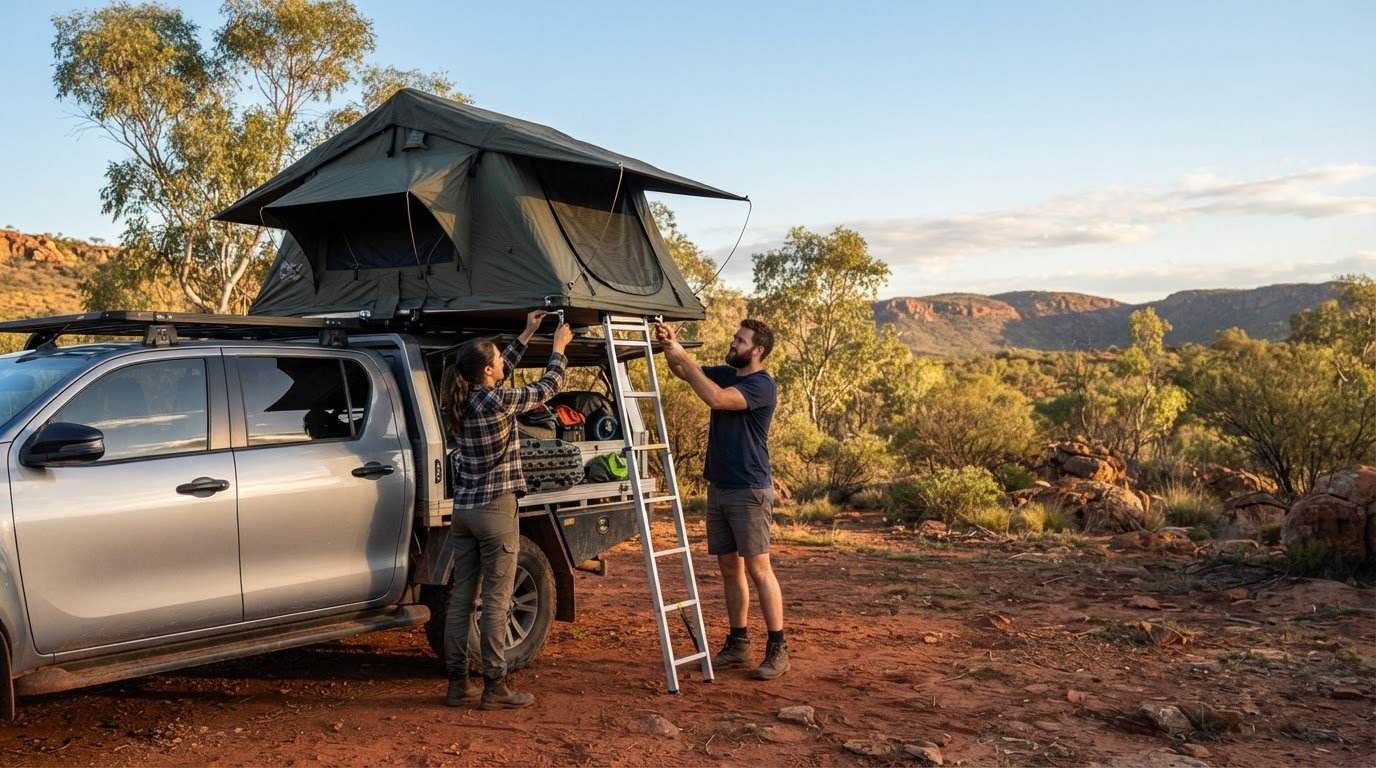
The secret to a successful day is endurance. We recommend setting up your vehicle as a professional-grade lookout. Using high-quality 4WD awnings is non-negotiable for long watches. They provide critical UV protection and a necessary windbreak against the salt-laden gusts common at spots like Point Lookout or Cape Moreton. If you want the ultimate advantage, rooftop tents serve as a superior, stable lookout point, elevating you above the scrub and salt spray for a clearer line of sight to the horizon.
Your basecamp should also include:
- Hydration and Nutrition: Pack at least three litres of water per person and high-energy snacks to maintain focus during the “midday lull.”
- Photography Kit: A sturdy tripod is essential for supporting 400mm+ telephoto lenses, as even the steadiest hands will struggle with the weight during a breach sequence.
- Thermal Layers: Even in Queensland, a winter morning on a headland is biting. Pack a windproof shell to stay comfortable until the sun does its work.
By investing in a durable setup, you ensure that you’re ready when the action happens. If you’re looking to upgrade your rig for the 2026 season, take a look at our community-tested rooftop tent reviews to find the perfect mobile lookout for your next coastal expedition.
The Spotter’s Guide: Identifying Whale Behaviors from a Distance
Success in whale watching from shore qld depends on your ability to decode the horizon. From a kilometre away, a 40-tonne humpback doesn’t look like a whale; it looks like a sequence of anomalies on the water’s surface. We need to look past the waves and focus on specific disruptions that signal a pod’s presence. Whether you’re scanning from the height of a headland or the comfort of your rooftop tent, these visual cues are your primary data points. Learning to distinguish animal movement from the natural swell is what separates the experts from the tourists.
- The Blow (Spout): Look for a vertical puff of white mist. Unlike a breaking wave that rolls with the swell, a blow is a sudden, upward burst that lingers for a second or two before dissipating. Against a dark sea or at sunrise, these spouts are the easiest way to track a pod’s direction.
- Breaching: This is the Holy Grail of shore spotting. From a distance, you’ll see a massive, chaotic explosion of white water that’s much larger and more sustained than any whitecap. It often looks like a distant depth charge going off.
- Pectoral Slapping: Watch for rhythmic, bright white flashes on the surface. Humpbacks have exceptionally long white pectoral fins; when they slap them against the water, they create a distinct “strobe” effect that’s visible for kilometres.
- Tail Slapping: This looks like a sharp, vertical splash followed by the dark silhouette of the fluke. It’s often repetitive and can be a sign of social interaction or a warning to other whales.
Reading the Ocean Surface
Distinguishing between whitecaps and whale activity is the first hurdle for any new spotter. Whitecaps move with the wind and have a predictable rhythm. Whale activity is localized and often creates “whale footprints”-these are smooth, circular slicks on the water caused by the turbulence of a whale’s tail as it dives. If you see a group of gannets or terns diving frantically in one spot, keep your glass fixed there. Whales are often feeding or moving just below those bait balls, using the same schools of fish as the birds.
Behavioral Patterns: What the Whale is Telling You
Understanding the pace of the migration helps you predict where to look next. Traveling whales move with purpose, usually surfacing in a relatively straight line every few minutes as they head north in July or south in September. Resting whales, often found in the lee of headlands, might stay down longer and surface in unpredictable spots. If you see a large blow followed immediately by a much smaller, thinner spout, you’ve found a mother and calf. The “15-minute rule” suggests that if a whale disappears, you should maintain your gaze on that specific area for at least fifteen minutes before assuming the pod has moved on, as humpbacks often take deep dives before resurfacing nearby.
Optimal Conditions and Timing for Coastal Spotting
Success on the headland requires more than just a good pair of binoculars. We’ve learned that the most rewarding sessions for whale watching from shore qld are dictated by the interplay of light, wind, and tide. Timing your arrival with the sunrise isn’t just about catching the “golden hour” for photos; it’s a tactical choice for superior visibility. When the sun is low and at your back in the morning, it illuminates the whales’ blows against the darker western horizon, making them visible from kilometres away.
Tidal influence also plays a significant role in how close these giants come to the coast. High tides often bring the “humpback highway” closer to prominent headlands like Point Lookout or Cape Moreton, as whales navigate the deeper channels. During these windows, you might witness a breach so close you can hear the impact of the splash before the sound dissipates in the wind.
Weather Patterns to Watch
A light offshore breeze, typically a westerly or south-westerly in Queensland, is a spotter’s best friend. It flattens the ocean’s surface, creating that “glassy morning” effect where even the smallest disturbance becomes obvious. While we all love a clear blue sky, don’t be deterred by light cloud cover. Overcast conditions can actually reduce the harsh glare on the water, providing better contrast to spot the dark silhouettes of whales. However, safety is our priority. If the wind picks up beyond 25 knots or you see lightning on the horizon, it’s time to pack up the basecamp and seek shelter. Exposed coastal points are no place to be during a storm.
Seasonal Nuances in 2026
For the 2026 season, we’re tracking a population of up to 50,000 humpbacks, which makes the migration windows more reliable than ever. The Northern Run peaks in July, and this is when you’ll see high-energy displays from younger whales and males competing for attention. By contrast, the Southern Run in September and October is a slower, more intimate affair. This is the prime time to spot mothers and newborn calves resting in sheltered bays as they build strength for the journey back to Antarctica. We recommend using digital migration trackers and local community social groups to get real-time data on pod locations before you head out.
If you’re planning a multi-day coastal expedition to track these giants along the coast, check out our reviews for the best rooftop tents to ensure you always have the highest vantage point in camp.
Elevating Your Adventure: Sustainable Practices and Community Insights
Being part of the Adventurerz community means we value the environment as much as the gear we use to explore it. When we head out for whale watching from shore qld, we’re entering a delicate ecosystem that requires our respect and protection. It’s our job to ensure our presence doesn’t degrade the very beauty we’ve come to witness. By adopting a stewardship mindset, we transform from simple spectators into active guardians of the Queensland coastline. This commitment to sustainable exploration is what defines us as modern adventurers and responsible explorers.
Responsible Exploration on the Coast
Coastal headlands are often home to sensitive coastal heath and nesting shorebirds. We always stick to designated paths, such as the North Gorge Walk at Point Lookout, to avoid eroding fragile cliff edges or disturbing local fauna. Managing waste is equally critical. We pack out everything we pack in, and we often go a step further by picking up any stray plastic we find along the way. If you’re using a drone to capture that perfect breach, remember that strict CASA regulations apply. Drones must not approach within 100 metres of a whale. For special individuals like Migaloo, the white humpback, vessels must stay 500 metres away; aircraft must maintain a 610-metre buffer. Following these rules ensures the migration remains a safe journey for every pod.
Joining the Community of Spotters
Your 2026 sightings can contribute directly to marine research. We encourage everyone to use citizen science platforms like Happywhale to submit photos of whale flukes. These unique patterns act like fingerprints, allowing researchers to track the movements and health of the 35,000 to 50,000 humpbacks currently in our waters. If you happen to encounter a stranded or distressed animal, use the QWildlife app or call 1300 130 372 to report it immediately. This rapid response can be the difference between a successful rescue and a tragedy. It’s a vital part of being a self-reliant and aware member of the outdoor community.
We love seeing the shots our community members capture from the elevated safety of their rooftop tents or the shade of their awnings. Sharing collective knowledge about timing and vantage points helps us all become better spotters. It’s about building a fellowship of explorers who are as hardy as they are contemplative. Ready to take your coastal setup to the next level? Share your 2026 sightings with us and explore more adventure gear guides to map out your next remote escape. We’ll see you on the headland.
Master the Humpback Highway in 2026
We’ve explored how to transform a simple day at the beach into a professional-grade observation mission. By mastering the 2026 migration timeline and refining your spotting techniques, you’re no longer just guessing at the horizon. You’re now equipped to identify breaches and blows with the confidence of a seasoned pro. Successful whale watching from shore qld is all about that perfect intersection of patience, specialized gear, and an ethical approach to the environment. We’ve seen how a well-positioned coastal basecamp can turn a long watch into a comfortable, high-reward experience.
Our team is dedicated to responsible Australian exploration and providing the community-vetted advice you need to thrive in the wild. Whether you’re looking for expert reviews on 4WD awnings or the latest in rooftop tents to elevate your vantage point, we’ve got you covered. It’s time to pack the binoculars and head for the headlands. Find the best gear for your next coastal adventure at Adventurerz and join our network of remote explorers. The whales are waiting; we’ll see you out there!
Frequently Asked Questions
Is it really possible to see whales from the shore in Queensland?
Yes, it’s absolutely possible to see humpbacks from the Queensland coastline without ever boarding a boat. Locations like Point Lookout on North Stradbroke Island are world-famous because they sit directly on the “humpback highway.” You can often witness breaches and blows just a few hundred metres from the rocks. This makes whale watching from shore qld a highly rewarding experience for those who prefer to stay on solid ground.
What is the best time of day for shore-based whale watching?
Early morning is the prime time for spotting activity from the coast. We’ve found that when the sun is low and behind you, it illuminates the whale’s blow against the water, making it much easier to see. Additionally, morning winds are usually lighter, resulting in a glassy sea surface where any disturbance stands out clearly. This visibility usually peaks before the midday sun creates a harsh glare.
Do I need expensive binoculars to see whales from land?
You don’t need top-tier professional gear, but a decent pair of 8×42 or 10×50 binoculars will drastically improve your success. These provide the right balance of magnification and light gathering for coastal scanning. While naked-eye spotting is possible for large breaches, binoculars are essential for identifying the subtle mist of a blow or tracking a pod’s movement across the horizon. We suggest investing in a pair with good lens coatings.
When is the peak whale watching season in QLD for 2026?
The peak season for whale watching from shore qld in 2026 runs from June to November. For the northward migration, July is the busiest month when numbers are at their highest. If you’re hoping to see mothers with newborn calves, the southward return peaks in September and October. With an estimated 35,000 to 50,000 individuals migrating this year, sightings during these peak windows are incredibly reliable.
Can I use a drone to watch whales from the beach?
Yes, but you must strictly follow CASA regulations to protect the animals and avoid heavy fines. Drones must not approach within 100 metres of a whale at any time. For special white whales like Migaloo, the legal approach limit increases to 610 metres. We always prioritize the whale’s safety over getting a close-up shot; disturbing their natural behaviour is illegal and can cause significant stress to the pods.
What should I wear for a day of coastal whale spotting?
Layering is key for the exposed Queensland coast during the winter months. Even on a sunny day, a winter morning on a headland is biting, so pack a quality windproof shell to stay warm. We also suggest wearing polarized sunglasses to cut through ocean glare and a broad-brimmed hat for UV protection. Staying comfortable allows you to stay out longer, which significantly increases your chances of a spectacular sighting.
How do I know if I’m looking at a whale or just a wave?
Waves roll rhythmically with the swell, but whale activity is usually vertical or chaotic. Look for a sudden puff of white mist that lingers for a few seconds before dissipating. You can also look for “whale footprints,” which are smooth, circular slicks left on the surface after a whale dives. If you see a massive splash that looks like a distant explosion, you’ve likely just witnessed a 40-tonne humpback breaching.
Are there any specific safety tips for watching from high headlands?
Always stay on designated tracks and behind safety barriers at all times. Coastal cliffs can be unstable, especially after recent rain or in high winds, so don’t be tempted to lean over the edge for a better look. We recommend setting up your basecamp away from the immediate cliff face. If you see lightning or the wind exceeds 25 knots, it’s time to pack up your vehicle and head for safer ground.