What if the very gear that grants us ultimate freedom is actually an open invitation for a thief with a simple wrench? It’s a chilling thought for any of us in the Adventurerz community. We spend thousands on high-quality setups to explore the most remote corners of our rugged landscape, yet many of us still feel that nagging anxiety when parking in urban transit areas. Learning how to secure a roof top tent from theft is no longer optional; it’s a necessity for anyone who values their mobile basecamp. You shouldn’t have to choose between a good night’s sleep and the safety of your equipment.
We understand that the high replacement cost and the sheer bulk of these units make them a prime target. That’s why we’ve compiled this 2026 security guide. You’ll discover the most effective physical, electronic, and strategic methods to protect your investment. We’re diving into everything from specialized security nuts and GPS tracking to the habits that make your rig a “hard target.” We want to help you build a robust, set and forget security system that lets you focus on the horizon instead of your rearview mirror. Let’s get your gear locked down for the long haul.
Key Takeaways
- Identify why our mobile basecamps are prime targets and learn to recognize high-risk zones, from suburban driveways to remote trailheads.
- Discover how to secure a roof top tent from theft by replacing vulnerable standard nuts with specialized security fasteners and locking straps.
- Implement a multi-layered defense using vibration-sensing alarms and hidden GPS recovery systems to stay one step ahead of sophisticated thieves.
- Adopt strategic parking habits and cover-up techniques that minimize your gear’s visibility in transit or urban areas.
- Ensure long-term peace of mind by performing monthly hardware tension checks and verifying your insurance policy’s specific coverage for external accessories.
Table of Contents
Understanding the Threat: Why Roof Top Tents Are High-Value Targets
We’ve all seen the heartbreaking posts in our community forums. A traveler wakes up at a transit hotel or returns from a coastal hike to find their roof racks empty. The second-hand market for quality outdoor gear is red hot right now. Thieves know they can flip a used tent for quick cash on social media marketplaces with almost zero traceability. It’s a sad reality that our mobile basecamps are viewed as high-value currency by opportunistic criminals. Whether you’re parked in a suburban driveway or at a remote trailhead, your setup is vulnerable if you haven’t considered how to secure a roof top tent from theft. We need to move beyond the “it won’t happen to me” mindset and embrace a “Deter, Delay, Detect” framework for 2026.
The Vulnerability of Standard Mounting Hardware
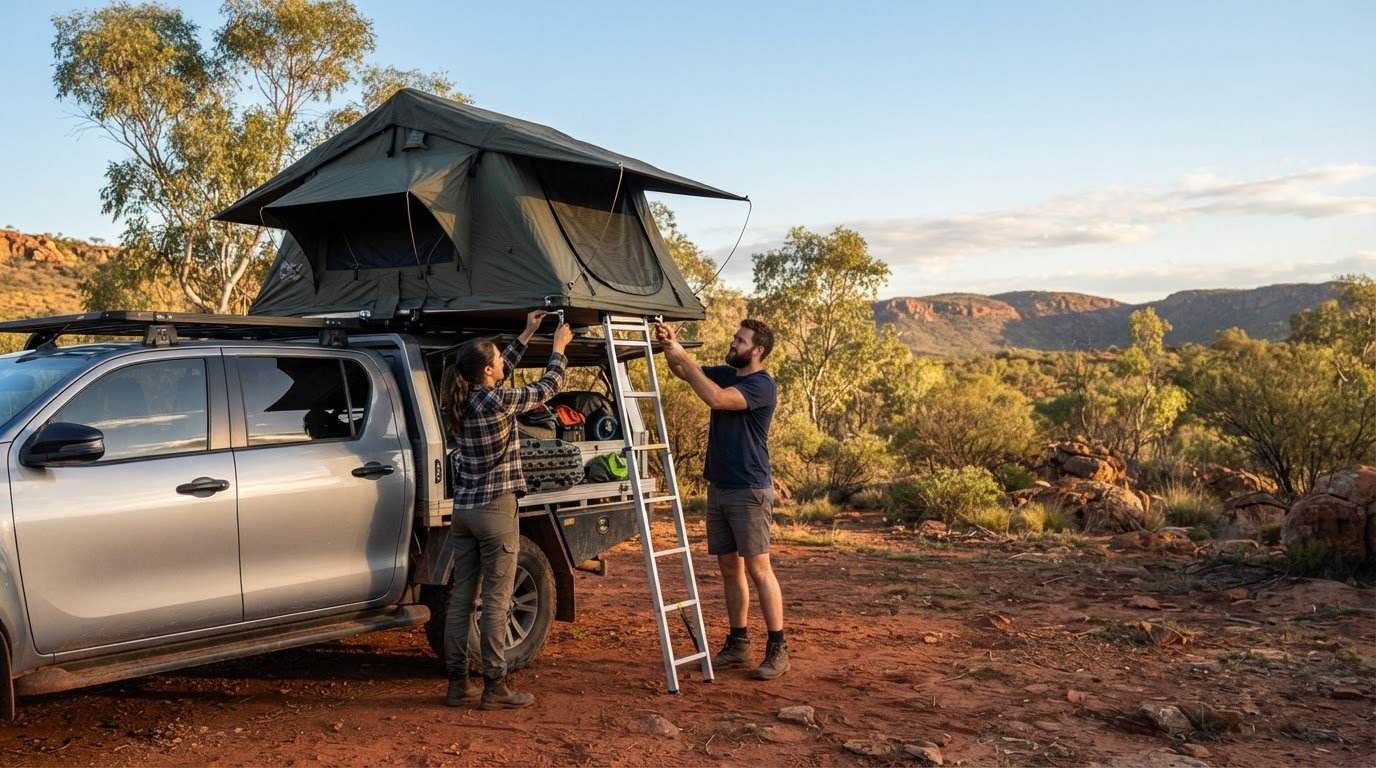
Most manufacturers ship their units with standard 13mm or M8 nuts. These are a thief’s best friend. Why? Because every basic tool kit in the country includes a 13mm wrench. With modern cordless power tools, a “snatch and grab” takes less than sixty seconds. We often hear people say their tent is too heavy or too high to steal. That’s a dangerous myth. Thieves don’t care about the weight; they’ll slide it off the side of your rig or work in pairs to drop it onto a waiting mattress in a pickup truck. They aren’t worried about damaging your racks; they just want the prize. Your standard mounting brackets are the weakest link in your entire setup.
The Psychological Deterrent: Making Your Vehicle a ‘Hard Target’
Professional gear thieves look for the path of least resistance. If your vehicle shows visible signs of security, they’ll likely move on to an easier target. Just as electronic engine immobilisers became the standard for vehicle safety, layered security is becoming the standard for 4WD accessories. Visual cues like security nuts, locking straps, or even alarm decals signal that you’re a methodical owner who prioritizes protection. Understanding how to secure a roof top tent from theft isn’t just about hardware; it’s about shifting the thief’s risk assessment. By making your rig a “hard target,” you force them to spend more time and make more noise. Most won’t take that risk. When you check out our expert reviews on roof top tents, we always emphasize choosing gear that integrates well with these security layers to ensure your investment stays right where it belongs.
Physical Deterrents: Essential Hardware for RTT Security
Once we understand the threat, it’s time to build our first line of defense. Physical hardware is about creating friction. We want to turn a sixty-second job into a loud, frustrating ordeal that forces a thief to give up. When researching how to secure a roof top tent from theft, many of us start with the basics, but the quality of your hardware determines whether that security is real or just for show. Standard bolts are easy to bypass. We need to upgrade to specialized components that require unique tools to remove.
Security Nuts and Specialized Fasteners
Replacing your standard M8 nuts with “T-Bolt” or “Tri-Groove” security fasteners is the most effective low-cost upgrade you can make. These nuts feature a tapered, smooth exterior that a standard wrench or pliers simply can’t grip. They require a specific, coded socket key to tighten or loosen. We recommend keeping your unique socket key in a hidden, secure location inside the vehicle, away from the glovebox where thieves often look first. For Australian 4WDers in 2026, brands offering stainless steel, tamper-resistant kits are the gold standard because they resist both the elements and the bolt cutters. While some consider welding their brackets for a permanent solution, we generally advise against it. Welding makes it impossible to remove the tent for maintenance or storage and can weaken the structural integrity of your roof racks through heat stress.
Locking Cables and Perimeter Security
Secondary security measures like braided steel cables add another layer of delay to the thief’s timeline. By tethering the tent frame directly to the main roof rack assembly, you ensure that even if the mounting nuts are defeated, the unit remains attached. Use heavy-duty cables with integrated padlock protectors to prevent easy access for bolt cutters. We’ve found that roof top tents with integrated rail systems often provide superior security because the mounting points are less exposed than older, universal bracket designs. Combining these hardware upgrades with general NHTSA vehicle theft prevention tips, such as parking in well-lit areas, creates a formidable barrier. For those of us using soft-shell models, implementing locking straps for the outer cover is a final touch that prevents prying eyes from seeing what’s inside before they even start. If you’re looking for gear that’s built for these conditions, check out our latest recommendations on the best roof top tents for secure travel.
Electronic Security: Alarms and GPS Recovery Systems
Physical locks are your first line of defense, but electronic measures act as your silent sentry. They bridge the gap between a “hard target” and a “monitored target.” If you’re researching how to secure a roof top tent from theft, you need to consider what happens when you aren’t within earshot of your vehicle. Electronic systems provide real-time alerts that can stop a theft in progress or help you recover your gear if the worst happens. These tools add a layer of “Detection” to our security framework that hardware alone cannot provide.
Vibration Alarms and Motion Sensors
Vibration-sensing alarms are a cost-effective way to scare off opportunistic thieves before they can loosen a single bolt. We recommend mounting these units in a concealed spot, such as tucked under the tent base or inside the hard shell. In 2026, the best tech includes Bluetooth-linked alarms that alert your smartphone the second they detect tampering. This is vital for those nights spent in transit hotels or busy urban areas. You must spend time adjusting the sensitivity settings. A well-tuned alarm ignores a curious possum or a heavy gust of wind but screams the moment a metal tool strikes your mounting brackets. Many modern units also integrate with your vehicle’s existing alarm system using magnetic reed switches, ensuring that if the tent moves, the car horn sounds.
GPS Trackers for High-Value Gear Recovery
If a thief manages to bypass your physical locks and alarms, a GPS tracker becomes your final line of defense. For roof top tents, battery-powered trackers are often superior to hard-wired versions because they don’t require complex integration into your vehicle’s electrical loom. High-end 2026 models offer multi-year battery life and utilize LTE-M networks for reliable tracking even in regional areas. While these systems usually involve a small annual subscription cost, the peace of mind is worth it when protecting a high-value investment. If your tracker sends a “movement alert” and shows your tent is on the move, contact the authorities immediately. Never attempt to recover the gear yourself; your safety is more important than any equipment. When you look through our reviews of the latest roof top tents, look for models with internal cavities that make hiding these trackers much easier.
When you’re parked at home, consider extending your security bubble with smart-home technology. AI-powered cameras can now distinguish between a neighbor walking their dog and a stranger lingering near your roof racks. This creates a comprehensive monitored environment that protects your gear 24/7. Combining these electronic alerts with the physical deterrents we discussed earlier makes your setup incredibly difficult to target. If you’re still in the preparation phase of your journey, checking out our guide on best 4wd awnings can help you plan a cohesive, secure setup for all your exterior accessories.
Strategic Prevention: Situational Awareness for Campers
While heavy-duty bolts and alarms are essential, we believe the smartest defense is often invisible. Strategic prevention isn’t about buying more gear; it’s about situational awareness and outthinking the opportunistic thief. When we travel, we’re constantly assessing our surroundings to minimize risk. Understanding how to secure a roof top tent from theft involves a mix of where you park and how you present your vehicle to the world. It’s about being a “hard target” through clever positioning and camouflage. We want to make the thief’s job so difficult that they don’t even bother trying.
Parking Strategies for Maximum Security
Your parking choice can be your best free security feature. Backing your rig tightly against a solid wall or into a low-clearance corner physically blocks access to your mounting hardware. If a thief can’t fit their body or their tools between your vehicle and a brick wall, they’ll likely move on. We also suggest being wary of “Trailhead Profiling.” Thieves often scout popular hiking start points because they know owners will be gone for hours or even days. In these remote locations, try to park near other groups or in areas with natural surveillance. A quick chat with your neighbors at a campsite creates an informal neighborhood watch. We’ve found that a simple “G’day, we’re heading out for a few hours” makes people much more likely to notice if someone suspicious is hanging around your roof racks.
Stealth and Camouflage Techniques
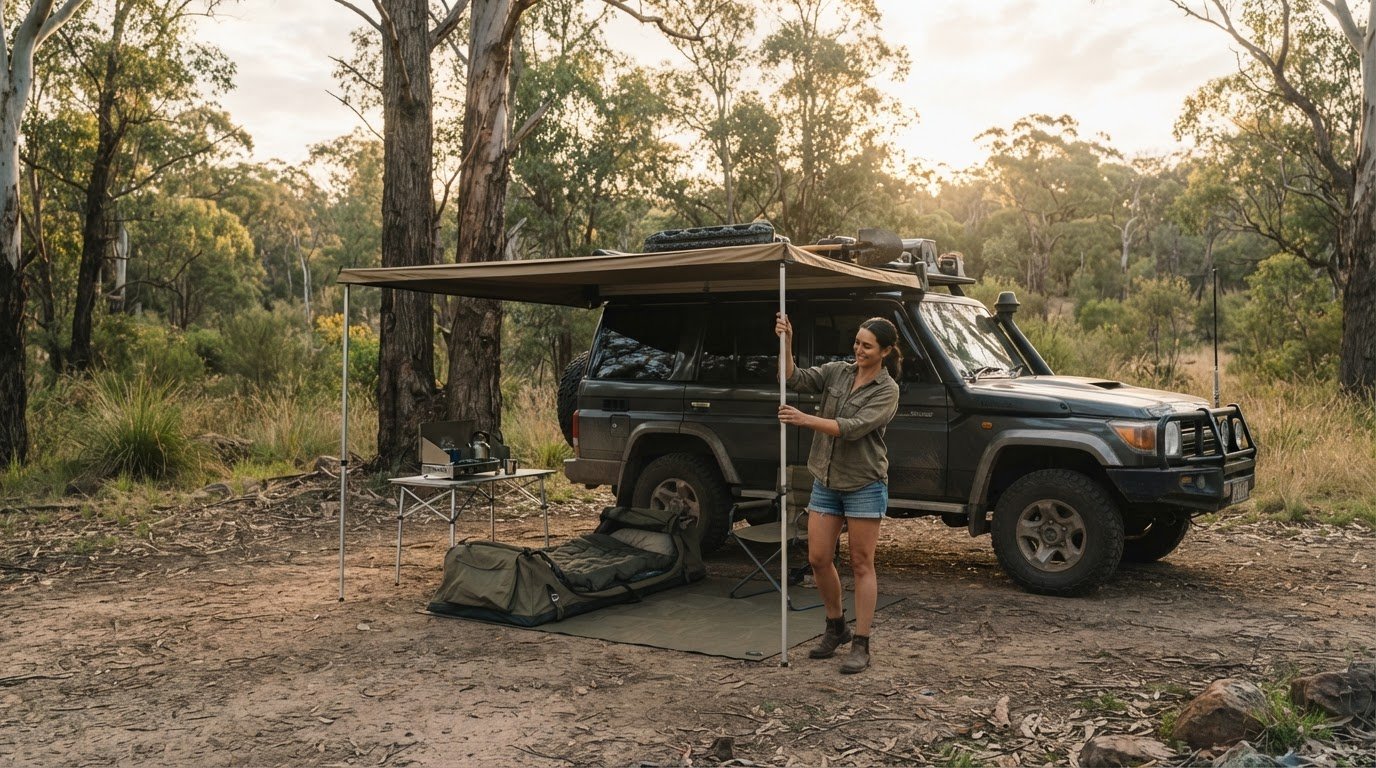
One of the most overlooked strategies in our community is “Stealth Security.” A bright, branded cover on a premium tent is a high-visibility target. You can drastically reduce this risk by making your gear look less valuable. We recommend removing prominent brand-name patches from your tent cover or using a generic, slightly weathered tarp to mask the entire unit. This simple trick hides a premium investment, making it look like a pile of old tarpaulins or generic storage. It’s a highly effective way to avoid drawing unwanted attention in urban transit areas. Along with this, remember that your entire roof setup works as a system. If you leave your 4wd awning unlocked, you’re providing a thief with a built-in step-ladder or a leverage point to reach your tent brackets. Keeping all your accessories secured creates a seamless perimeter that is much harder to breach. If you’re looking to upgrade your entire outdoor living space with security in mind, take a look at our expert recommendations for the best 4wd awnings currently on the market.
The Complete Security Audit: Protecting Your Investment Long-Term
Security isn’t just about the gear we install; it’s about the discipline we maintain. Even the most expensive hardware can fail if it’s neglected or if your paperwork isn’t in order. We believe that a regular audit is the only way to ensure your setup remains a “hard target” through years of rugged travel. This final step in learning how to secure a roof top tent from theft transforms a one-time installation into a lifelong habit of gear protection. We need to be as methodical with our security as we are with our recovery gear.
Insurance and Documentation
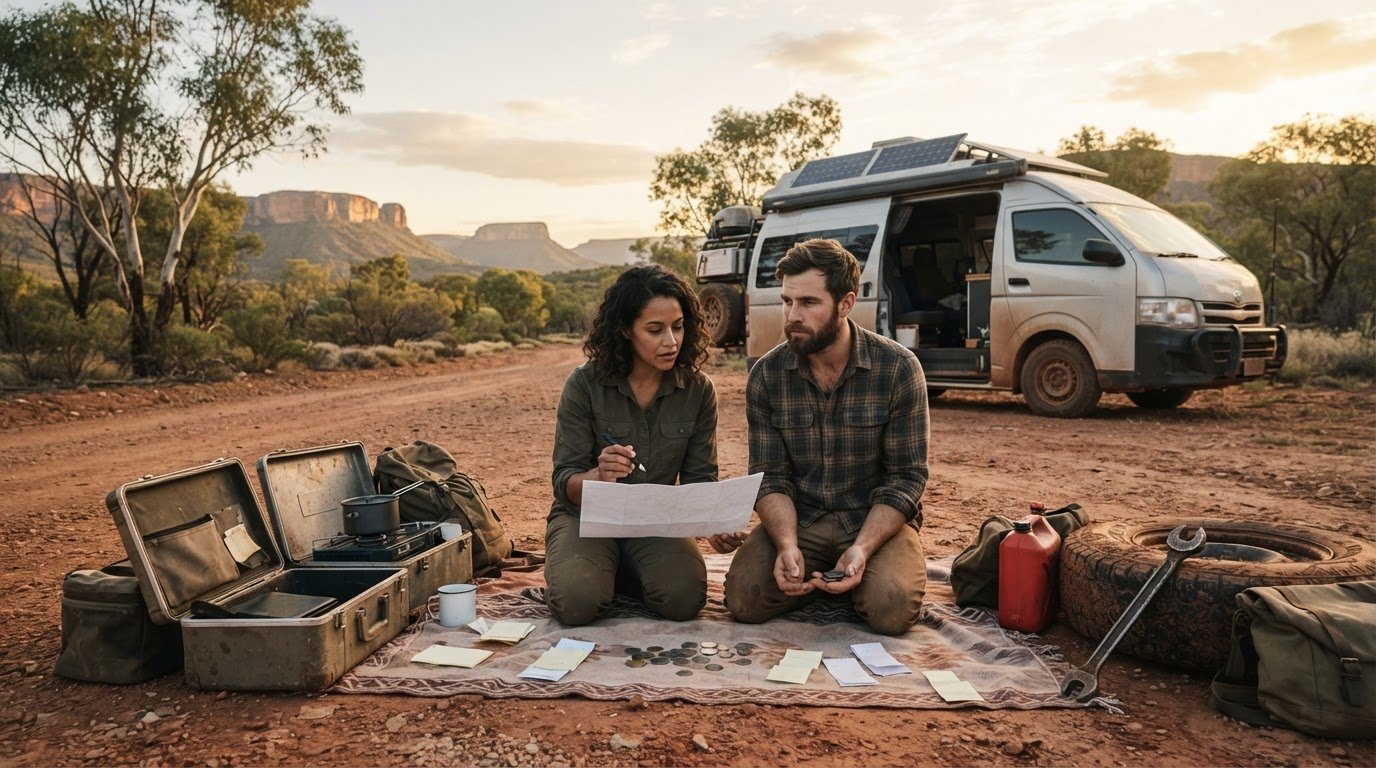
In the Australian context, you must understand the distinction between “Accessories” and “Contents” in your insurance policy. Most standard car insurance treats a roof top tent as an accessory bolted to the vehicle. If you haven’t specifically listed the tent and its value on your policy, you might face a nasty surprise during a claim. We always recommend reviewing your Product Disclosure Statement (PDS) to confirm that external accessories are covered for theft while the vehicle is parked in public spaces. Document everything. Keep a digital folder with your serial numbers, purchase receipts, and high-resolution “Proof of Security” photos showing your locks and trackers in place. These photos prove to your insurer that you took reasonable steps to prevent the loss.
Maintenance of Security Hardware
Our harsh environments are tough on moving parts. If you spend time near the coast, salt air can quickly seize up high-quality padlocks and security nuts. We suggest a monthly maintenance routine where you apply a dry graphite lubricant to all keyholes and check for “tamper evidence.” Look for scratches or tool marks on your mounting bolts; these are signs that someone has already tested your defenses. Part of your travel planning should always include a firmware update for your GPS trackers and a fresh set of batteries for your vibration alarms. A dead tracker is just extra weight on your roof.
Before you head out on your next mission, run through the Adventurerz 5-minute security checklist:
- Tension Check: Ensure all mounting nuts are tight and haven’t vibrated loose on corrugated roads.
- Visual Inspection: Check steel cables for fraying and ensure padlock protectors are seated correctly.
- Alarm Test: Arm your vibration sensor and give the tent a firm shake to confirm the siren and phone alerts are active.
- Tracker Signal: Open your tracking app to verify the unit has a clear GPS lock and sufficient battery.
- Key Location: Confirm your security socket key is in its hidden spot inside the vehicle, not left at home on the workbench.
By staying vigilant and keeping your hardware in peak condition, you protect your freedom to roam. We’ve seen that the most prepared travelers are the ones who enjoy the greatest peace of mind. Let’s keep our gear safe so we can keep the focus on the destination.
Lock Down Your Freedom and Hit the Tracks
Protecting our mobile basecamps is a shared responsibility in the Adventurerz community. We’ve explored how a robust defense relies on more than just a single lock. By combining specialized security hardware with smart electronic monitoring and a bit of stealthy situational awareness, we create a setup that’s simply too much trouble for a thief to tackle. Mastering how to secure a roof top tent from theft is about building a system that works while you sleep, ensuring your gear is always ready for the next sunrise.
We advocate for self-reliance and durability because we know how much these investments mean to your journey. Our community-tested security methods and focus on sustainable AU exploration ensure you’re always one step ahead. Ready to choose a rig that’s built to last? Explore our expert reviews of the most secure Roof Top Tents for 2026 for vetted gear recommendations you can trust. Let’s keep our equipment safe so we can keep the focus on the horizon. We’ll see you out there!
Frequently Asked Questions
Will security nuts fit any brand of roof top tent?
Most security nuts are designed for standard M8 threads, which fit the vast majority of tents on the Australian market. However, some premium racks use M10 bolts or specialized channel nuts. We suggest measuring your existing hardware before ordering. If your setup uses a unique mounting channel, you’ll need to find a fastener compatible with that specific rail profile to ensure a snug, tamper-resistant fit.
Does my car insurance automatically cover my roof top tent if it’s stolen?
It is rarely automatic. Most AU insurers require you to list the tent as a specified accessory on your policy to ensure full coverage. If you leave it as general contents, you might be limited by a much lower payout cap. We recommend calling your provider to confirm it’s listed by name and value. This simple step prevents a massive financial loss if your mobile basecamp goes missing.
Can I use a bike lock to secure my roof top tent?
While a bike lock adds a layer of visible friction, it isn’t a primary solution for how to secure a roof top tent from theft. Thieves can bypass most cables in seconds with a pair of bolt cutters. We see them as useful secondary tethers for ladders or awnings, but they can’t replace the robust protection of security fasteners. Use them as a visual warning, not your only defense.
What is the best GPS tracker for a roof top tent in 2026?
For 2026, we recommend trackers that utilize LTE-M or NB-IoT networks for reliable coverage across regional Australia. Look for a unit with a long-life internal battery, ideally lasting over two years, to minimize maintenance. The best models provide instant geofencing alerts to your smartphone. This tech ensures you’re notified the moment your gear leaves its designated area, allowing for a rapid response and recovery through the authorities.
Are hard-shell tents harder to steal than soft-shell tents?
Generally, yes, because their mounting points are often more recessed and harder to reach with power tools. Soft-shell tents often have exposed rails that are easier to access once the cover is removed. However, the shell itself doesn’t stop a thief from unbolting the whole unit. Both styles require the same “Deter, Delay, Detect” framework we’ve discussed to stay truly safe during your travels.
What should I do first if I discover my RTT has been stolen?
Contact the police immediately to file a report and obtain a case number. This number is essential for your insurance claim. If you have an active GPS tracker, provide the live location data to the authorities right away. Check nearby businesses for CCTV footage and post a “Stolen” alert in local 4WD community groups. This makes the gear much harder to resell on the second-hand market.
Is it worth removing my RTT when I’m not using it for long periods?
Removing the tent is the only 100% effective way to prevent theft while parked at home. It also protects the fabric from UV damage and improves your vehicle’s fuel economy. If you have the garage space and a simple pulley system, taking it off between trips is a smart move. This practice is a key part of learning how to secure a roof top tent from theft long-term.