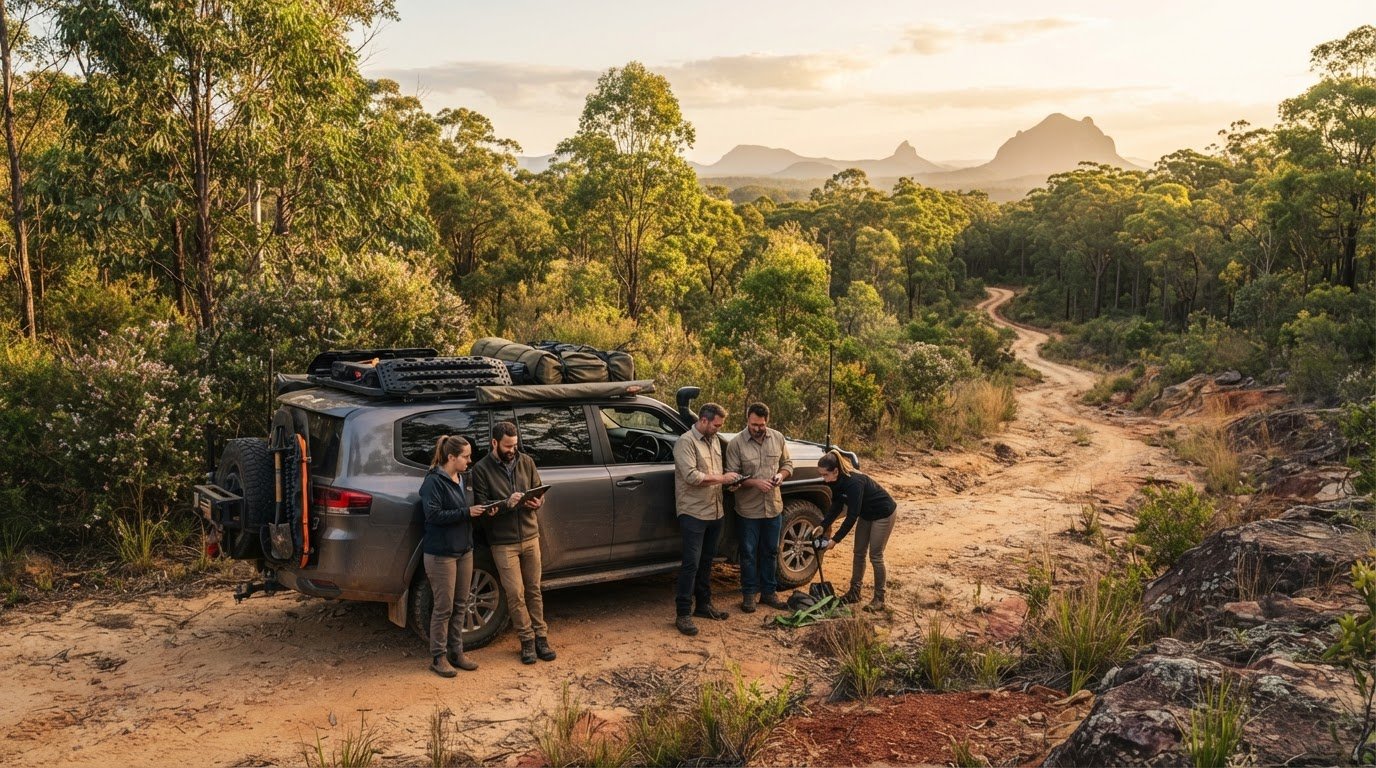
Building a reliable, bush-ready tourer for under A$20,000 in 2026 isn’t just a challenge; it’s a strategic exercise in discipline. We know the feeling of staring at inflated used car listings and wondering if a capable budget 4wd touring setup is still within reach without risking a breakdown in a remote, challenging landscape. It’s easy to feel overwhelmed by the endless sea of aftermarket accessories and the fear that a cheaper rig means compromising on safety. We’ve all been there, weighing the cost of a high-kilometre Triton against the dream of remote exploration while keeping our environmental impact low.
We’re here to show you that a limited budget doesn’t have to mean limited horizons. This guide provides a clear roadmap to help you allocate every dollar effectively, ensuring your hard-earned cash goes toward reliability and durability rather than just shiny gear. You’ll learn exactly how to split your A$20,000 between a solid vehicle purchase and the essential, high-impact modifications needed for the Australian outback. We’ll walk through vehicle selection, prioritised mechanical upgrades, and how to stay compliant with the latest 2026 GVM regulations. Let’s get your rig ready for the dirt.
Key Takeaways
- Master the 75/25 rule to balance your initial vehicle purchase price with essential maintenance and touring-ready modifications.
- Identify the most reliable used platforms in the 2026 market, focusing on high-value models like the Mitsubishi Pajero and Toyota Prado 120.
- Prioritise your A$5,000 modification budget on all-terrain tyres, suspension, and recovery gear to create a truly capable budget 4wd touring setup.
- Adopt a weight-conscious building philosophy to improve fuel economy and maintain compliance with strict Australian GVM regulations.
- Learn how to validate your build with a local shakedown trip to ensure self-reliance and safety before heading into remote regional environments.
Table of Contents
The $20,000 4×4 Build Challenge: Setting Realistic Goals
A A$20,000 budget for a full touring rig in 2026 is a serious challenge, but it’s entirely achievable with the right mindset. We define this total project cost as the sum of the vehicle purchase price, essential modifications, and the initial maintenance required to make it trail-ready. Our goal is to build a budget 4wd touring setup that balances affordability with the mechanical reliability needed for the Australian bush. We don’t want a rig that just looks the part; we want one that survives the corrugations of the Oodnadatta Track.
Setting a “Touring Readiness” benchmark is our first step. This means your vehicle must be capable of handling remote beach runs and high-country tracks while carrying enough supplies to be self-sufficient. It isn’t about having the most expensive accessories. It’s about ensuring the foundation is solid enough to get you home safely without a costly recovery bill. Let’s look at how we split those funds to make it happen.
To see how a well-planned budget build comes together on an older platform, check out this walkthrough:
The 75/25 Budget Allocation Strategy
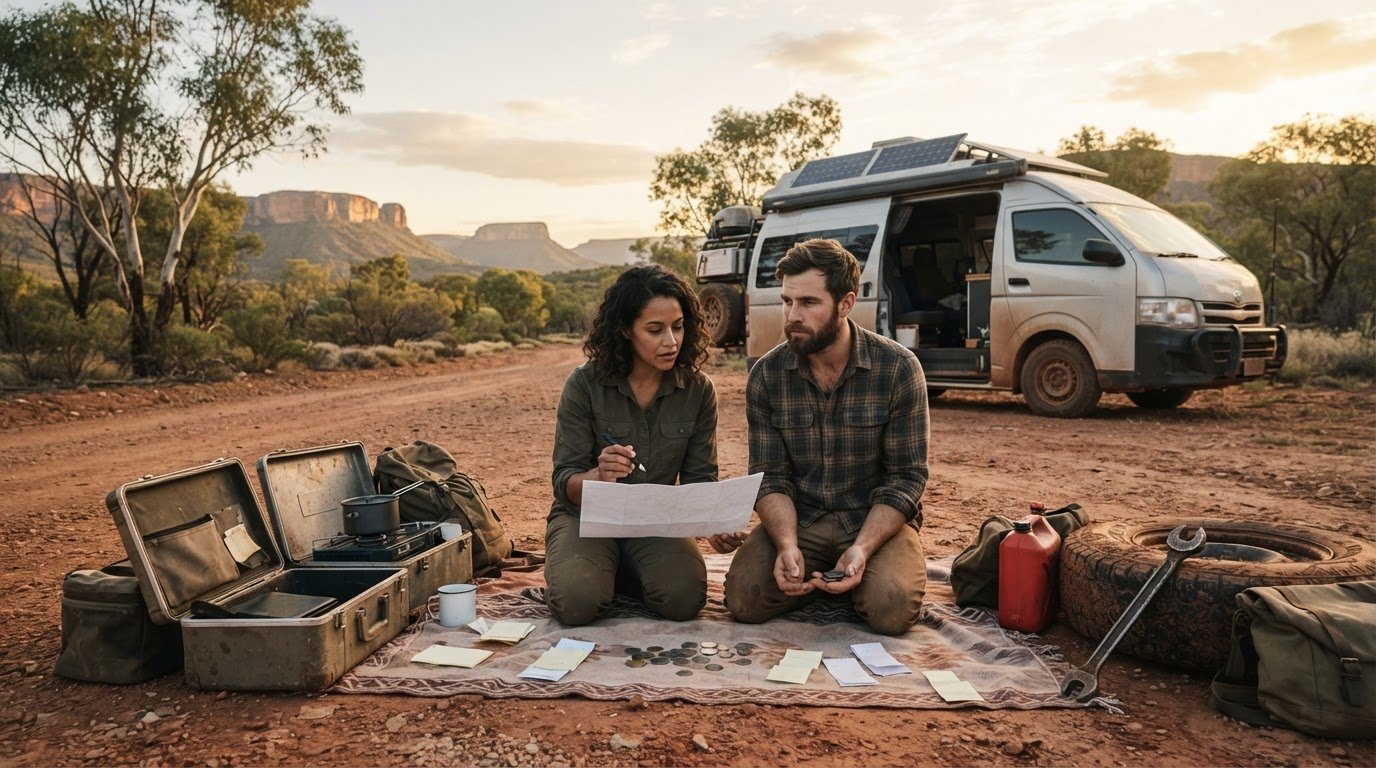
We rely on the 75/25 rule to maintain financial and mechanical sanity. This strategy allocates A$15,000 for the base vehicle and reserves A$5,000 for everything else. This remaining 25% is your lifeblood. It covers essential modifications like tyres and recovery gear, but it also funds a critical maintenance buffer. Spending your entire budget just to get the keys is a recipe for disaster in remote areas.
Skipping the maintenance fund is the most common mistake we see. An older vehicle will almost certainly need new belts, hoses, or a cooling system refresh. If you have no cash left after the purchase, you’ll be one worn-out alternator away from a ruined trip. We recommend prioritising these items first:
- Full fluid and filter replacement (engine, diffs, and gearbox).
- Cooling system pressure tests and hose inspections.
- Brake pad and rotor thickness checks.
Reality Check: What $20,000 Buys in 2026
The used 4WD market in 2026 has finally started to cool, but quality rigs still hold their value. While you won’t find a late-model Hilux for A$15,000, there are plenty of gems if you look beyond the odometer. We always prioritise a documented service history over a low kilometre count. A well-maintained engine with 280,000 kilometres is often a safer bet than a 150,000-kilometre vehicle with no records. It shows the previous owner cared about longevity as much as we do.
Keep in mind that insurance costs have risen by about 14% recently, and the average “loyalty tax” for existing customers is around A$312 per year. Shopping around for a new policy can save you money that’s better spent on your suspension. Finally, never skip a professional pre-purchase inspection. It’s a small upfront cost that prevents you from buying a mechanical nightmare. We want our budget 4wd touring setup to be durable and daring, not just a driveway ornament.
Best Base Vehicles for a Sub-$15,000 Purchase
Finding the right foundation for your budget 4wd touring setup requires looking past the flashy, late-model rigs. While the used market has finally seen some price adjustments in 2026, a A$15,000 limit means we’re hunting for value, mechanical history, and long-term durability. We often point our community toward “hidden gems” like older Isuzu-powered Holden Rodeos or Jackaroos. These platforms are often cheaper than their Toyota counterparts while offering legendary reliability. When choosing between petrol or diesel, don’t automatically assume diesel is king. For older, high-kilometre vehicles, a petrol engine is often cheaper to maintain and avoids the high cost of replacing aging diesel injectors or turbos.
Before handing over your cash, keep an eye out for “red flag” modifications. We avoid vehicles with massive suspension lifts over 50mm or oversized tyres, as these put immense strain on the drivetrain. Poorly executed DIY electrical work is another warning sign. We want a clean slate that won’t leave us stranded due to a previous owner’s shortcuts. A professional pre-purchase inspection is your best defence against buying a mechanical nightmare.
The All-Rounder: Mitsubishi Pajero (NS-NW)
The Pajero is a standout choice for national touring because of its independent rear suspension. This setup provides superior handling on corrugated dirt roads, making those long stretches across the outback much more comfortable. While the monocoque platform limits some heavy-duty mods, it’s perfect for a lightweight roof top tent setup that keeps your centre of gravity low. When inspecting, check the DPF health on diesel models and listen for dashboard rattles, which are common but easily fixed with some rubber spacers.
The Reliable Workhorse: Toyota Prado 120 Series
We can’t ignore the Prado 120, even with the inevitable “Toyota Tax.” You’ll pay more for a rig with higher kilometres, but the peace of mind comes from parts being available in almost every regional town in Australia. These vehicles are famous for doing 400,000 kilometres or more if they’ve been serviced correctly. Focus your inspection on the injector seat health and look for any cracks in the dashboard. If the service book is stamped and the chassis is rust-free, it’s a solid investment for our budget 4wd touring setup.
The Ute Option: Early PJ/PK Rangers and BT-50s
If you need to carry heavy camping gear or tools, the leaf-sprung rear of an early Ford Ranger or Mazda BT-50 is incredibly capable. The 3.0L turbo diesel engine in these models is a proven performer for long-distance travel. We prefer the tray-back versions because they offer more flexibility for custom storage boxes and water tanks. This versatility also makes them popular for commercial applications, such as mobile corporate brand activation services that require a rugged, branded presence in regional locations. Just be mindful of the ride quality when unladen; these workhorses are designed to be loaded up and taken into the scrub.
Prioritising Modifications: Where to Spend Your $5,000
Once you’ve secured your rig for A$15,000, that remaining A$5,000 needs to work incredibly hard. We prioritise the “Big Three” of modifications: Tyres, Suspension, and Recovery gear. This foundation ensures your budget 4wd touring setup is capable of reaching those remote campsites we all dream about. We keep things simple by avoiding complex, expensive dual-battery systems in favour of portable power packs. These units are versatile, sustainable, and don’t require permanent vehicle modifications, leaving more cash for fuel and national park fees.
Step 1: Tyres and Suspension Fundamentals
All-Terrain tyres are non-negotiable for any serious explorer. Expect to pay between A$250 and A$450 per tyre for quality rubber that balances off-road grip with reasonable road noise. These are the single most important investment for your safety and traction. For suspension, an off-road setup with a 30mm to 50mm lift typically costs upwards of A$2,000 fitted. We stick to reputable brands because a “cheap” lift kit often fails under the weight of a fully loaded tourer. Remember, as of July 1, 2026, any modifications affecting safety require formal certification, though a 75mm total lift is usually permitted in most states without an engineering certificate.
Step 2: Shelter and Shade for the Australian Sun
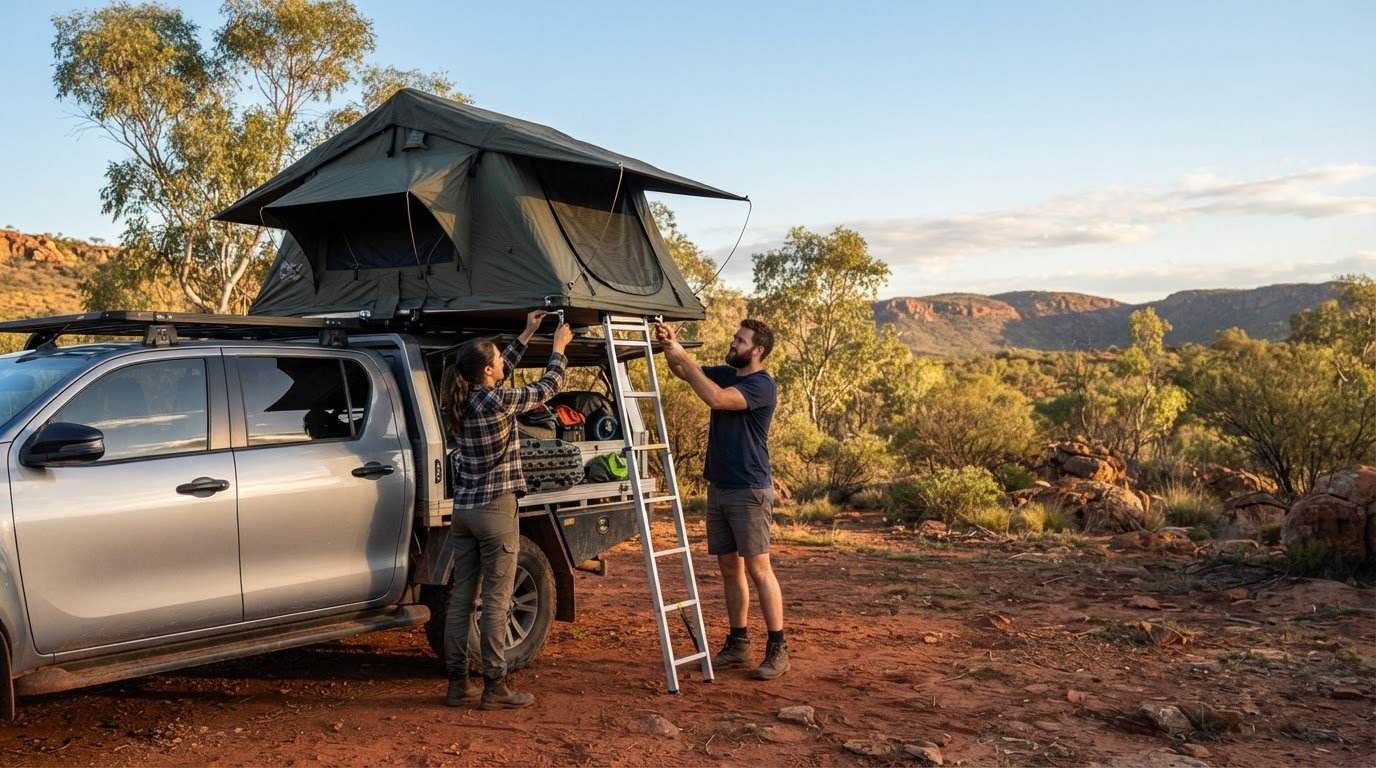
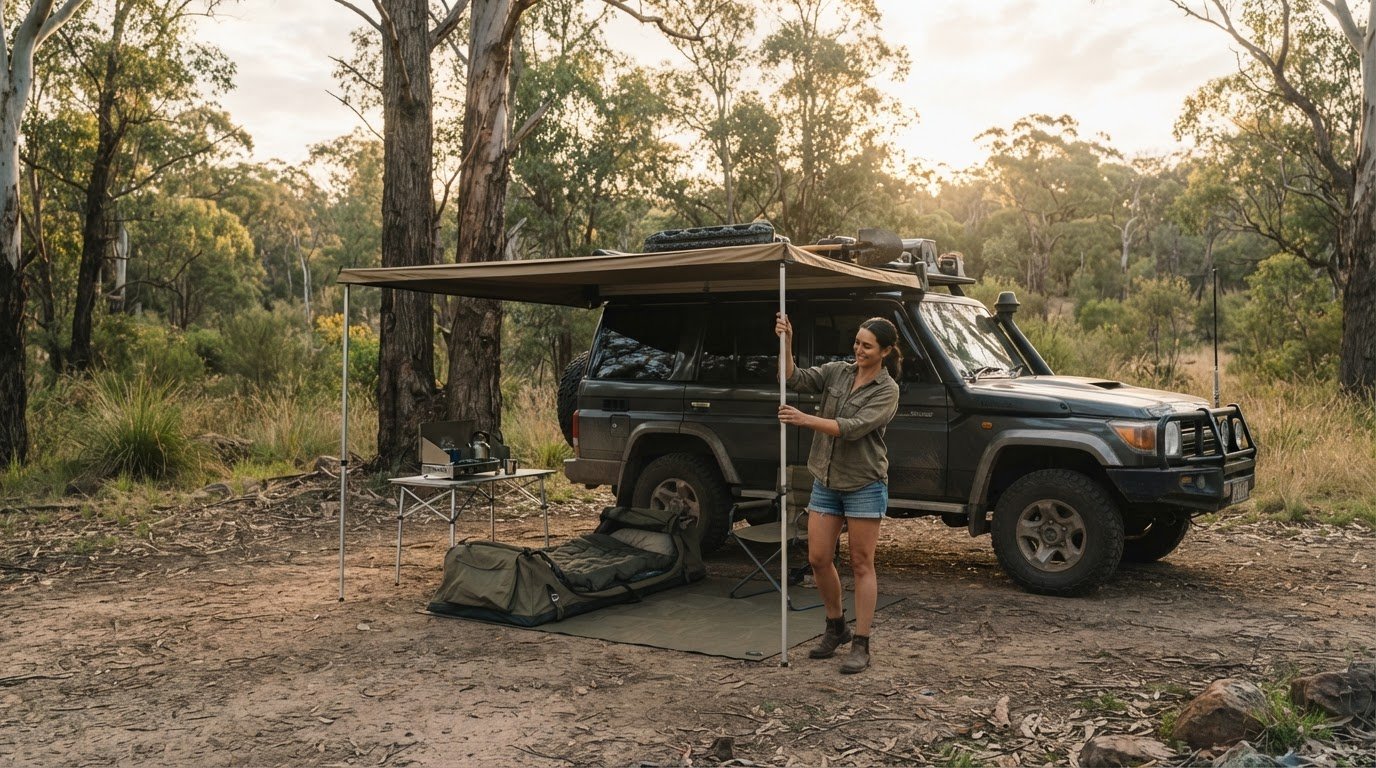
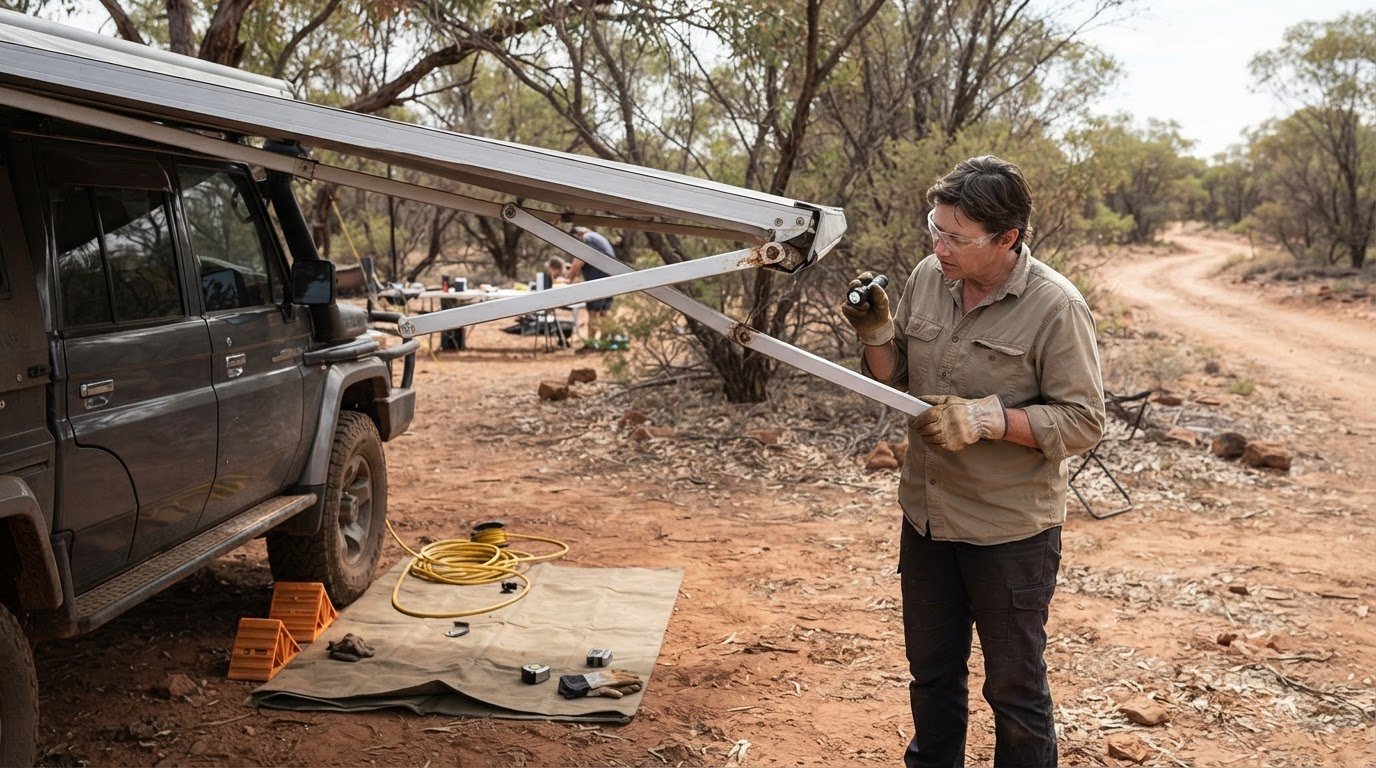
The Australian sun is brutal, so we never skip shade. A high-quality 4WD awning is essential for preventing heat exhaustion during midday track repairs or lunch stops. For sleeping, a rooftop tent is a smart, long-term touring investment. It keeps you off the ground and away from the local wildlife while being incredibly quick to set up after a long day of driving. We recommend soft-shell tents for these builds; they are generally lighter and more affordable, which helps us stay under our strict weight and budget limits without compromising on comfort.
Step 3: Self-Recovery and Safety Essentials
Self-reliance is the core of our community. We’d rather see you carry a quality set of recovery boards and a fast tyre deflator than a cheap, unbranded winch that might fail when you need it most. These tools are easier to use and much safer for beginners. Safety also means being able to call for help in regional areas. Allocate funds for a reliable UHF radio and a comprehensive first aid kit. Finally, don’t forget the basics. A simple tool kit and critical spares like belts, hoses, and a spare fuel filter are your best insurance against an expensive tow truck bill. It’s all about being prepared for the conditions of our unique budget 4wd touring setup.
Sustainable Building: Weight Management and Longevity
We believe that a sustainable budget 4wd touring setup isn’t just about the initial purchase price; it’s about how much it costs to run and maintain over its entire life. Adopting a “Light is Right” philosophy is the smartest move you can make for your wallet and the environment. Every extra kilogram you bolt onto your rig forces the engine to work harder, burning more fuel and increasing carbon emissions. By choosing versatile, lightweight gear, we ensure our vehicles remain nimble on the tracks and efficient on the highway.
Mastering the GVM Game
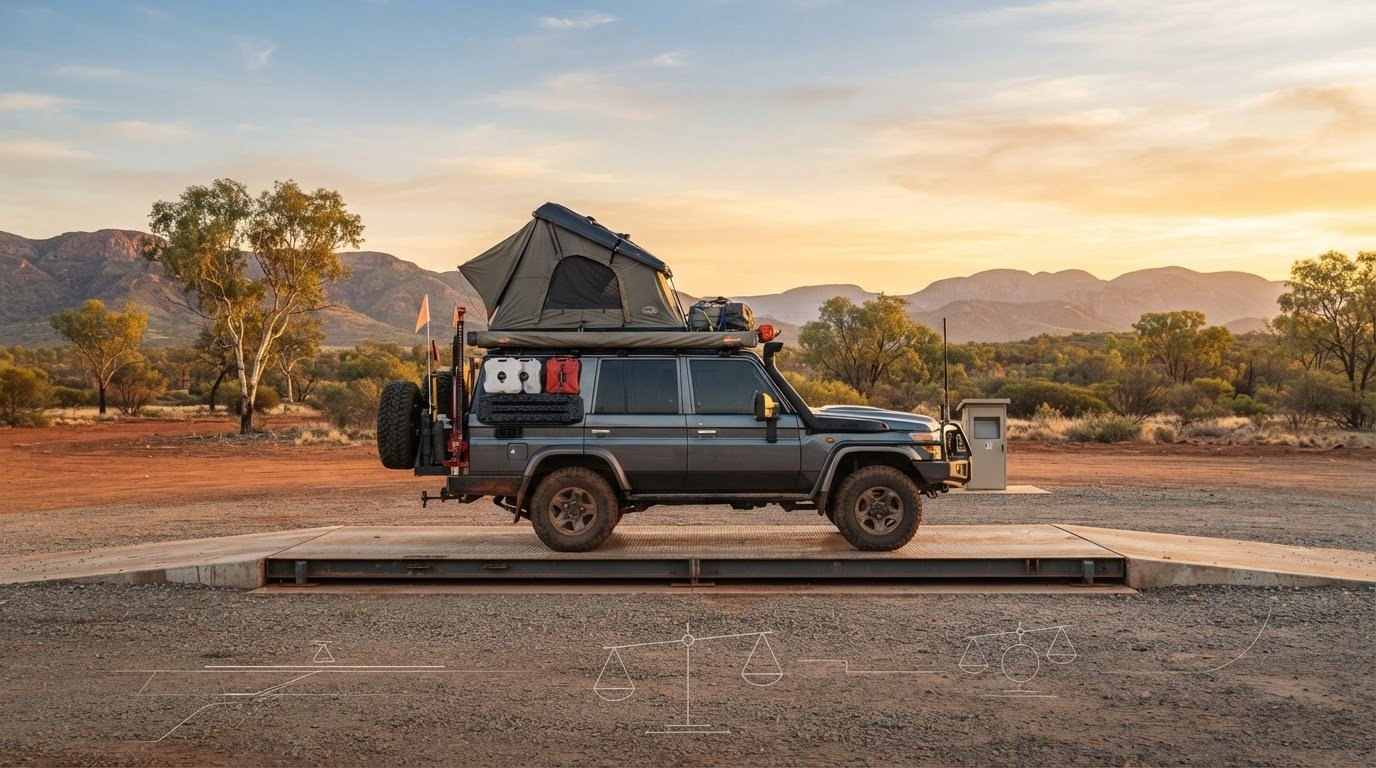
Understanding your Gross Vehicle Mass (GVM) is critical for safety and legal compliance. Roadside checks are becoming more common across Australia. For instance, Victoria Police conducted over 1,200 weighbridge operations in a single year, finding a failure rate of approximately 23%. This shows how easily we can inadvertently overload our rigs. Excess weight doesn’t just attract fines; it destroys fuel economy and puts massive strain on expensive drivetrain components like CV joints and bearings.
We always look for multi-purpose gear to save space and reduce the load on our tyres. A heavy vehicle also has a direct impact on the regional environments we love to visit. Heavier rigs cause deeper track erosion and soil compaction, especially in fragile coastal or alpine areas. Keeping your build lean helps preserve these tracks for the next generation of explorers. If you’re looking for a way to stay light while maintaining comfort, consider our reviews on sustainable shelter options that won’t break your GVM limit.
The Maintenance Mindset
Learning DIY servicing basics is a fantastic way to build self-reliance and save money for more fuel and adventures. Changing your own oil, air filters, and fuel filters is straightforward and gives you a deeper understanding of your vehicle’s health. For those who want to master more advanced vehicle restoration or customisation techniques, resources like Restomod Academy offer in-depth training on bringing older platforms back to their best. This methodical approach ensures your budget 4wd touring setup remains reliable and ready for the dirt whenever the bush calls. A well-cared-for rig is a durable rig, and durability is the cornerstone of responsible exploration.
Finalising Your Build: From Driveway to Dirt
We’ve crunched the numbers and prioritised the essentials. Now comes the exciting part: seeing your budget 4wd touring setup come to life. A successful A$20,000 build for national touring might look like this: a A$15,000 Mitsubishi Pajero with a full service history, A$1,500 for five new all-terrain tyres, A$1,000 for a preventative cooling system refresh, and A$2,500 for a quality roof top tent, awning, and basic recovery kit. This balance ensures you have a capable rig without exhausting your fuel money before you even hit the bitumen. We want you out there exploring, not stuck in the driveway waiting for parts.
The Shakedown Trip: Finding the Weak Links
We never recommend heading straight for the Canning Stock Route after finishing a build. Your first trip should be a low-stress weekend at a local national park. This is the time to identify mechanical gremlins or gear that doesn’t work as expected. Did you actually use that heavy cast-iron skillet, or was it just dead weight? Does your fridge drain your portable power pack faster than anticipated? Refining your packing list now improves your weight distribution and makes everything more accessible when you’re actually in the scrub.
Use this time to practice your setup and pack-down routines. If it takes you two hours to set up camp, you’ll likely feel exhausted after a long day on the tracks. We aim for efficiency so we can spend more time enjoying the regional natural environments and less time fumbling with tent poles. If something feels clunky or unnecessary, leave it at home for the next run. A lean rig is a happy rig.
Next Steps: Planning Your First Remote Adventure
Once you’re confident in your rig’s capability, it’s time to map out your first escape. We’ve designed a travel planner specifically to help our community find sustainable camping spots and navigate regional regulations. Transitioning from a “Weekend Warrior” to a long-term touring lifestyle is about mindset as much as equipment. It’s about slowing down, respecting the environment, and learning from other experienced travellers you meet at the communal fire pit.
The best budget 4wd touring setup isn’t the one with the most expensive catalogue of parts. It’s the one that gets you out exploring safely and brings you home with stories to tell. Join our community, share your build progress, and let’s get those tyres dirty. The outback is waiting, and with a methodical approach to your budget, you’re more than ready to answer the call. See you on the tracks!
Hit the Dirt with Confidence
Building a capable rig on a strict budget is more than just a financial challenge; it’s the first step toward true self-reliance in the Australian bush. We’ve shown that by sticking to the 75/25 rule and choosing reliable platforms like the Pajero or Prado, you can create a durable budget 4wd touring setup without breaking the bank. Remember that staying light and keeping up with preventative maintenance are your best tools for protecting both your vehicle and the fragile regional environments we love to explore.
At Adventurerz, we’re dedicated to helping you make informed choices with expert reviews on over 50 rooftop tents and community-driven advice tailored for local conditions. We focus on sustainable exploration so that our tracks remain open for everyone. Now that your build plan is solid, it’s time to map out the adventure of a lifetime. Start planning your next remote escape with our Ultimate Adventure Planner! We’ll see you out there under the stars, ready for whatever the outback throws your way.
Frequently Asked Questions
Is a $20,000 4×4 build really possible in 2026?
It is absolutely possible to build a capable budget 4wd touring setup for A$20,000 in 2026, though it requires a methodical approach. We recommend spending A$15,000 on a base vehicle with a solid service history and reserving A$5,000 for essential modifications and maintenance. While you won’t get the latest tech or lowest kilometres, you can secure a reliable rig that handles the outback safely if you prioritise mechanical health over aesthetic accessories.
Should I buy a high-kilometre Toyota or a lower-kilometre Mitsubishi?
We often suggest choosing a lower-kilometre Mitsubishi Pajero or Triton over a high-kilometre Toyota if the service records are impeccable. While the “Toyota Tax” exists for a reason, a vehicle with 350,000 kilometres carries more inherent risk than one with 180,000 kilometres. We value a documented history of fluid changes and preventative repairs above all else. Your goal is to find a rig that offers the best mechanical foundation for your specific budget.
What are the most important recovery items for a budget build?
Prioritise a quality set of recovery boards and a reliable tyre deflator before looking at expensive winches. These tools are safer for beginners and highly effective in sand or mud. We also recommend carrying a snatch strap and rated shackles, provided you have rated recovery points on your vehicle. Self-reliance is essential when exploring remote regional environments, and these basic items provide the most value for every dollar spent on your build.
How much should I set aside for unexpected repairs after buying a used 4×4?
We recommend setting aside at least A$1,500 to A$2,000 of your modification budget for immediate preventative maintenance. This fund covers essential tasks like replacing aged cooling hoses, drive belts, and all filters. Catching these issues in your driveway is much cheaper than a remote recovery. It’s the most effective way to ensure your budget 4wd touring setup doesn’t leave you stranded on your first major shakedown trip into the scrub.
Can I install a rooftop tent on a budget 4WD with standard roof racks?
You must check your vehicle’s dynamic roof load rating before installing a rooftop tent. Most standard factory roof racks aren’t designed for the weight of a tent plus occupants. We usually suggest upgrading to a heavy-duty gutter-mount or track-mount system. This ensures your setup remains secure on corrugated roads and stays within legal GVM limits. Safety is paramount, so never exceed the manufacturer’s specified weight limits for your specific roof structure.
Is a diesel engine always better than petrol for an Australian build?
Diesel isn’t always the best choice for a budget-conscious builder in 2026. While diesels offer better fuel range for remote travel, petrol engines are often simpler and cheaper to maintain on older, high-kilometre vehicles. Replacing diesel injectors or a turbocharger can easily blow your entire A$5,000 modification budget. If you aren’t planning on towing heavy loads or doing constant long-distance touring, a well-maintained petrol engine is a very viable, cost-effective alternative.
How do I ensure my budget build is environmentally friendly?
Sustainability starts with keeping your vehicle in peak mechanical condition to minimise emissions and fluid leaks. We advocate for gear that lasts a decade rather than cheap, disposable items that end up in landfill. Managing your weight is also crucial; lighter rigs cause less track erosion and consume less fuel. We encourage our community to follow stay-on-track principles and dispose of all waste responsibly to protect the natural beauty of the Australian bush.
What is the best way to manage weight in a small 4×4 build?
The best way to manage weight is to embrace a “Light is Right” philosophy from day one. Choose multi-purpose equipment, such as a shovel that doubles as a sand anchor, and opt for a lightweight soft-shell rooftop tent. Avoid heavy steel bullbars and rear bars if you don’t strictly need them for protection. Every kilogram saved improves your fuel economy and keeps you well within your GVM, ensuring your rig remains safe and legal on all tracks.