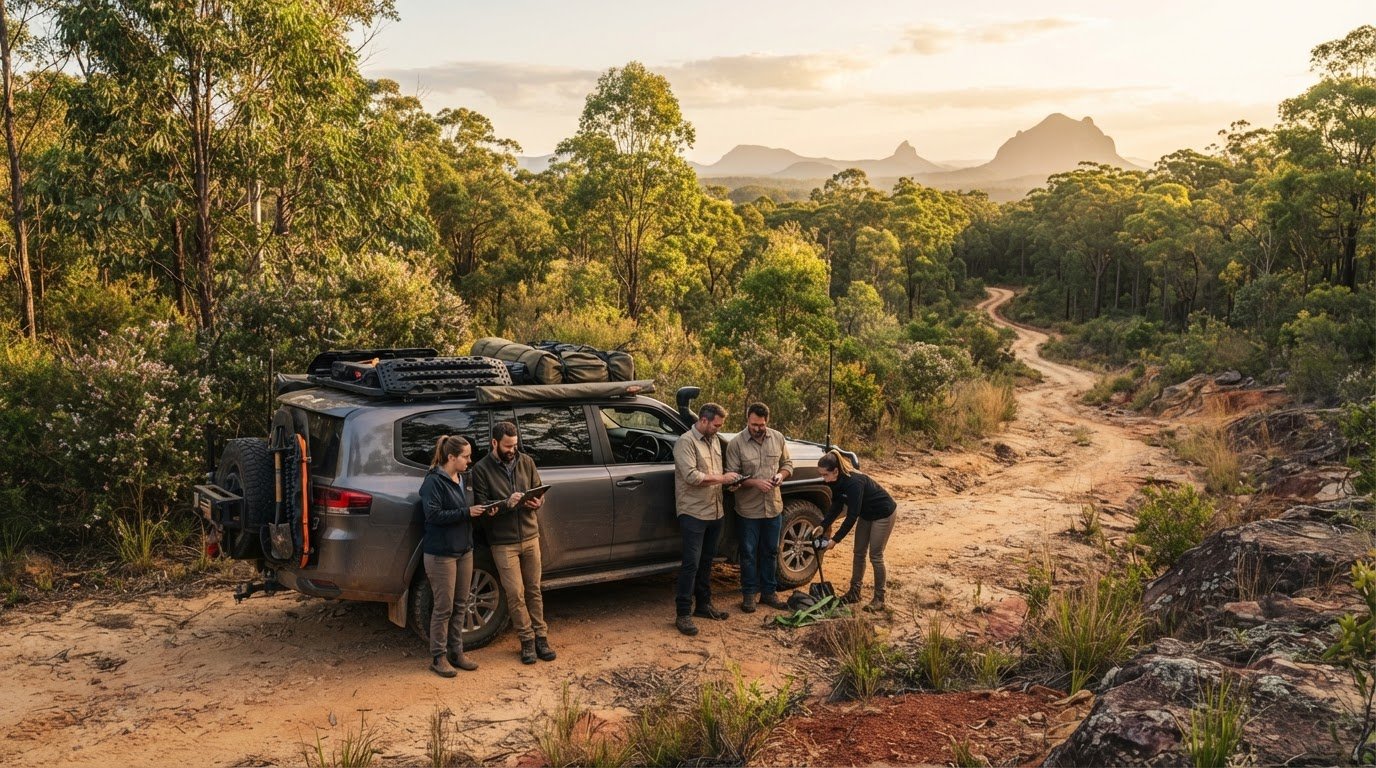
The sweltering heat of summer is a rookie’s playground, but seasoned Adventurerz know that Australia only reveals its true character when the mercury begins to dip. While casual travelers are packing away their gear, we’re just getting started. It’s no secret that scouting the best autumn camping spots Australia has to offer is the ultimate strategy for avoiding the 17.3 million domestic trips that congested our favorite tracks last year. We’ve all felt that frustration of fighting for a cramped site in January, only to realize the real magic happens when the crowds thin and the bush turns to gold.
We want you to head into the bush with total confidence in your 2026 off-road setup. This guide promises to help you navigate fluctuating temperatures and choose landscapes that transition beautifully into the cooler months. We’ll preview the new 2026 NSW National Park fee tiers, explain why hard-shell roof top tents provide the best insulation against damp ground, and share practical tips for low-impact camping. Get ready to master the “Golden Window” of Australian exploration with gear that’s as hardy as the terrain itself.
Key Takeaways
- Identify the “Golden Window” where low humidity and mild temperatures create the perfect environment for exploring diverse landscapes from the Alps to the desert.
- Pinpoint the best autumn camping spots Australia has to offer by evaluating seasonal shifts in the High Country and the Red Centre.
- Learn how to utilize roof top tents and 4WD awnings to stay dry and insulated against heavy autumn dew and fluctuating overnight temperatures.
- Adopt advanced environmental ethics by mastering site-specific “Leave No Trace” techniques and staying ahead of 2026 national park fire safety trends.
- Build a professional-grade 2026 itinerary using our remote travel planner to ensure your off-road escape is both safe and sustainable.
Table of Contents
Why Autumn is Australia’s Premier Camping Season
We call it the “Golden Window.” It’s that fleeting, perfect intersection of low humidity, mild days, and crystal-clear nights that makes finding the best autumn camping spots Australia offers so rewarding. While summer often feels like a battle against the elements, autumn is about harmony. For our community of Adventurerz, 2026 represents a milestone year to reclaim remote tracks. Many iconic routes have finally stabilized after several heavy rain cycles, offering a rare chance to see the interior in its most vibrant, post-rain state without the mud-bogged challenges of the wet season.
Up north, the oppressive “Big Wet” finally retreats, leaving behind lush, accessible gorges and flowing waterfalls that are still safe to visit. Down south, the air takes on a crisp, invigorating edge that makes a morning coffee by the fire feel like a luxury. We also see a massive drop in insect activity; those relentless summer flies and mosquitoes finally pack their bags. With the school holiday rush over, Australia’s national parks return to a state of quiet majesty. This allows us to connect with the landscape without the background noise of overcrowded sites or the stress of securing a booking months in advance.
To see how to find these quiet escapes and maximize your budget, watch this helpful guide on locating free campsites:
The Climate Shift: From Survival to Leisure
Camping in the Australian outback during summer is often a test of endurance. In contrast, autumn invites “slow camping,” where we focus on the ritual of the journey rather than just surviving the heat. It’s a time for deeper reflection and methodical preparation. The Autumn Thermal Transition is the period where daytime highs remain stable while night lows begin to drop. This shift allows for active exploration during the day without the risk of heat exhaustion, followed by the cozy comfort of a well-insulated camp at night. We find that this predictability reduces the mental fatigue often associated with remote travel.
Visual Splendour Across the Continent
The visual transformation is nothing short of spectacular. We get to witness the rare turning of the deciduous beech in Tasmania or the golden hues of alpine grasses in the High Country. For the photographers among us, the low-angle autumn sun provides a soft, warm light that lasts much longer than the harsh overhead glare of summer. This “golden hour” stretch is perfect for capturing the textures of the rugged terrain. When the sun finally sets, the lack of atmospheric haze creates a window into the cosmos, offering some of the best stargazing you’ll experience all year.
Top National Landscape Categories for Autumn Exploration
Alpine Escapes and Mountain Ranges
In the southern ranges, autumn brings a European-style transformation as deciduous trees paint the valleys in burnt oranges. We love the High Country for its crisp mornings and the final bloom of alpine wildflowers, but you must prepare for that first alpine frost. It’s vital to check for track closures following the summer fire season before you depart. You can find up-to-date details via official NSW camping information to ensure your planned route is open. Keep in mind that the new 6-tier fee system for NSW parks kicks in from July 2026, so check your budget tiers before you roll in. When selecting a site, look for sheltered valleys. These natural windbreaks protect us from the sudden autumn gusts that can whip through high-altitude passes. In Victoria, you can also benefit from the government’s decision to maintain half-price camping fees across Parks Victoria sites until July 2027.
Desert Tracks and Arid Heartlands
The Red Centre is notoriously dangerous in summer, but autumn is the safest window for desert 4WD expeditions. Daytime temperatures drop to a manageable mid-20s, allowing us to tackle iconic tracks that become accessible in late autumn 2026. Self-reliance is the name of the game here. You’re often days away from help, so your vehicle must be a fortress. We recommend checking our latest roof top tents reviews to see which models offer the best dust-sealing and insulation for those freezing desert nights.
Beyond the mountains and sand, coastal heathlands offer a different kind of peace. The summer crowds have vanished, leaving us with empty beaches and front-row seats to migrating marine life. Further north, the tropical savannahs finally dry out. This is the moment to access remote tracks just as the wet season recedes, revealing emerald-green landscapes that most travelers never see. If you’re planning a long-range trip across these varied biomes, our adventure ideas in Australia can help you narrow down the perfect destination.
Gear Strategy: Roof Top Tents and Awnings for Cooler Nights
We know that even the best autumn camping spots Australia provides can turn chilly once the sun dips below the horizon. As we move into 2026, our community is seeing a massive shift toward vehicle-supported setups that prioritize thermal efficiency. While ground tents have their place, autumn is where roof top tents truly shine as the superior choice for comfort and protection. Sleeping elevated isn’t just about the view; it’s a strategic move to stay warm as the seasons turn.
The Roof Top Advantage in Autumn
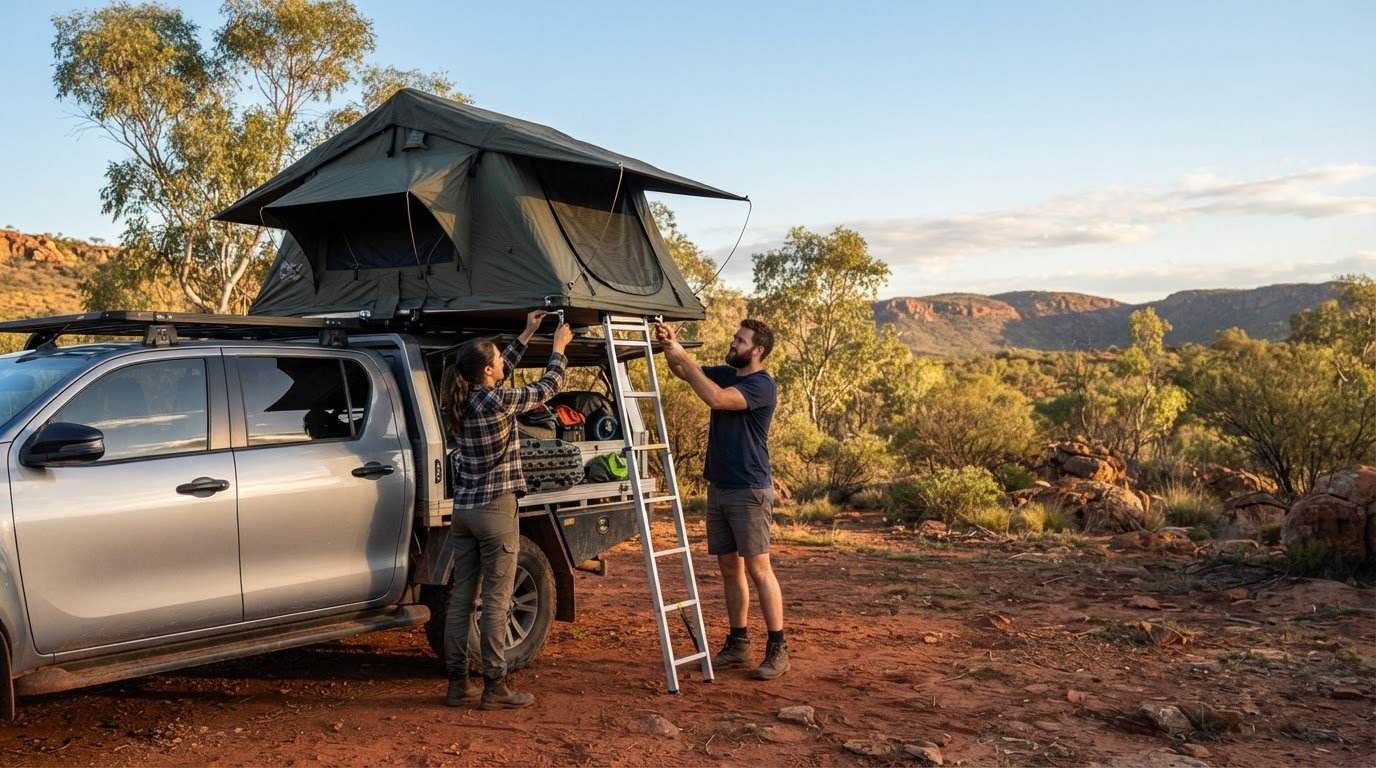
When temperatures hover between 5 and 15 degrees, the type of shell you choose matters. Hardshell models generally offer better insulation and wind resistance than their softshell counterparts, making them ideal for the crisp nights we expect in the High Country. Ground Cold Transfer is the physical process where the cold, damp earth leeches heat directly through your tent floor and mattress, a phenomenon that elevation completely mitigates. By sleeping on the roof, you’re putting a massive air buffer between you and the freezing soil. Speed of setup is another critical factor. As daylight hours begin to shorten in April and May, we don’t want to be fumbling with tent poles in the dark. A hardshell tent lets us go from driving to reclining in under two minutes, maximizing our time around the campfire.
Weather Protection and External Living
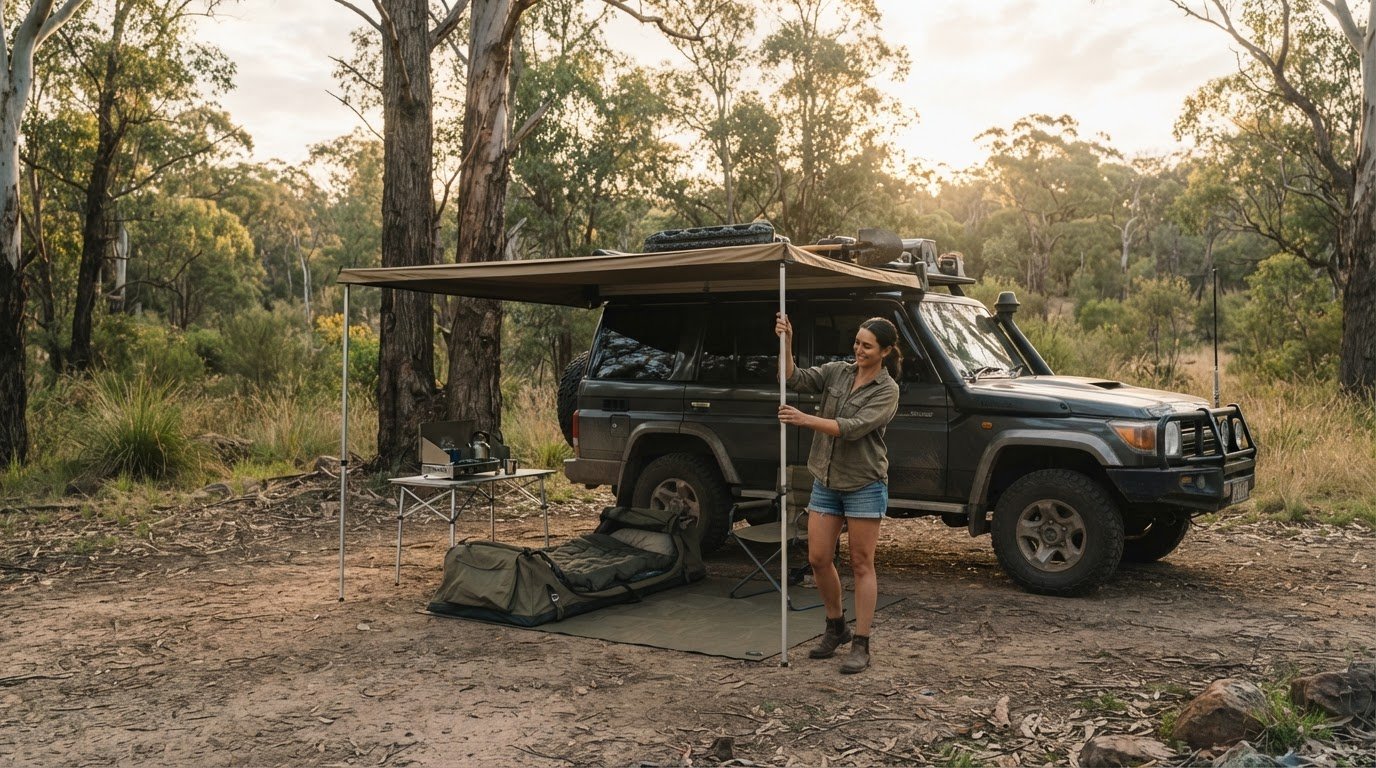
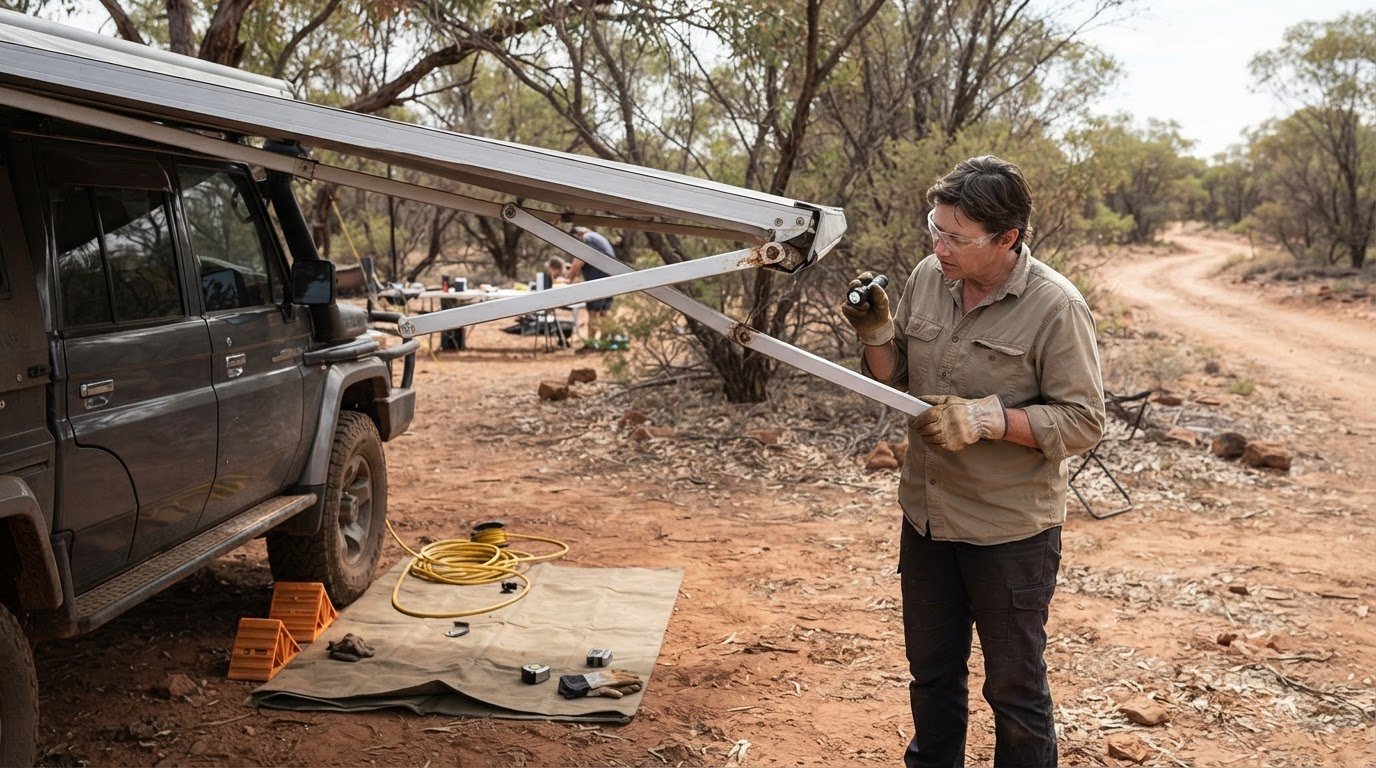
Autumn brings heavy dew that can soak gear left out overnight. We rely on 4WD awnings to create a dry, protected perimeter around the vehicle. Adding awning walls is a game-changer for autumn; they transform a simple shade structure into a wind-protected cooking and lounge area. This keeps the biting evening breeze at bay while we prep dinner. Remember that UV protection remains vital in the cooler months, especially in high-altitude or desert regions where the sun still packs a punch. After a dusty trek through the Red Centre, we always recommend a thorough gear inspection. Dust can degrade zippers and seals, so a quick clean after each trip ensures your setup remains hardy for the next remote escape.
To “Autumnize” your vehicle for 2026, we’ve put together this essential checklist:
- Inspect Tent Seals: Ensure no dust or moisture can penetrate the shell during transit.
- Thermal Liners: Install internal tent liners to trap body heat on sub-zero nights.
- Bedding Upgrade: Swap summer bags for high-quality down quilts or rated sleeping bags.
- Awning Tension: Check all guy ropes and poles to handle sudden autumn wind gusts.
- Battery Health: Verify your auxiliary battery can handle the extra load of portable heaters or electric blankets.
By focusing on these technical details, we ensure our fellowship of travelers stays comfortable regardless of how low the mercury drops. Self-reliance starts with the right gear strategy, allowing us to focus on the beauty of the landscape rather than the bite of the cold.
Essential Autumn Preparation and Ethical Camping Practices
As we venture into the best autumn camping spots Australia provides, we carry a collective duty to protect the landscapes that sustain our spirit of adventure. In 2026, the surge in off-grid travel means our environmental footprint is more visible than ever. Being a member of the Adventurerz community means moving beyond basic compliance and embracing a deeper level of stewardship. Autumn presents unique ecological challenges that require a methodical approach to site management and resource conservation.
Leave No Trace principles take on a specific character during the shoulder season. We must be mindful of the heavy leaf litter that characterizes many southern campsites. While it might be tempting to rake your site clean, that litter provides vital insulation for the soil and the micro-ecosystems beneath it. We recommend sticking strictly to established pads to avoid compacting new growth that often emerges after late summer rains. Additionally, water management remains critical. In many arid heartlands, the autumn rains haven’t yet arrived, so we always pack a minimum of 5 to 7 liters per person per day to avoid putting pressure on local seasonal waterholes.
Fire Safety and Responsible Warmth
The transition from summer to autumn is one of the most dangerous periods for fire management in Australia. While we all love the ritual of a campfire, 2026 fire regulation trends show stricter enforcement during these transition months. Always check for current fire bans on a national level using official state emergency apps before you strike a match. We advocate for the ethics of bringing your own sustainable, heat-treated fuel rather than scavenging for wood. Scavenging removes “dead wood” that serves as critical habitat for small mammals and reptiles preparing for the winter chill. If you do light a fire, use the “drown, stir, and feel” technique. If the coals are too hot to touch, they’re too hot to leave. We also need to address the “ghost camping” phenomenon; if you’ve booked a site but your plans change, cancel it early so others can enjoy the bush responsibly.
Wildlife Awareness and Conservation
Autumn is a high-activity period for Australian fauna as they prepare for the leaner winter months. From the northern migration of coastal whales to the breeding cycles of alpine mammals, we are guests in their home. It’s our responsibility to secure all food waste in hard-sided containers. Animals are often bolder during autumn as they seek out extra calories, and habituating them to human food is a death sentence for local ecosystems. When you document your journey for our fellowship, do so with respect. Use a long lens for photography and never bait or approach wildlife for the sake of a social media post. By maintaining this distance, we ensure these remote tracks remain wild for those who follow.
Ready to put these principles into practice? Explore our latest adventure ideas in Australia to find your next sustainable off-road escape.
Finalizing Your 2026 Autumn Camping Itinerary
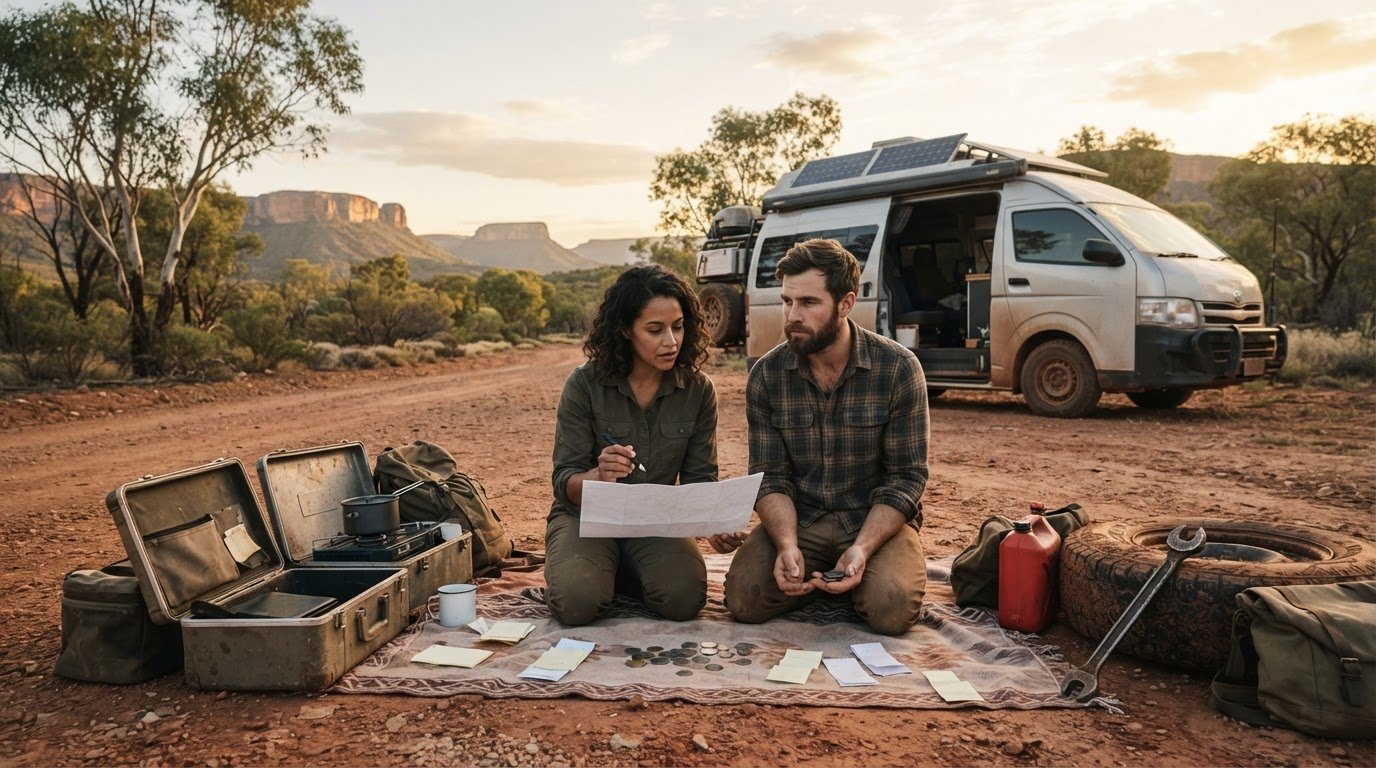
We’ve analyzed the landscapes and dialed in our gear; now it’s time to bridge the gap between inspiration and tires on the track. Reaching the best autumn camping spots Australia offers requires more than just a full tank of diesel. It demands a structured approach to ensure our 2026 escapes are as safe as they are memorable. We’ve broken this down into five actionable steps to get you from your driveway to the bush with total confidence. Planning isn’t just about logistics; it’s the first stage of our shared journey toward responsible exploration. For those seeking further inspiration, Searchland offers curated destination guides and budget-friendly travel resources to help finalize your route.
- Step 1: Choose your biome. Match your vehicle’s true capabilities to the terrain. Don’t push a stock setup into the deep sand of the Red Centre if you aren’t prepared for self-recovery.
- Step 2: Map the route. Use the Ultimate Adventure Travel Planner to visualize distances and identify critical fuel and water points.
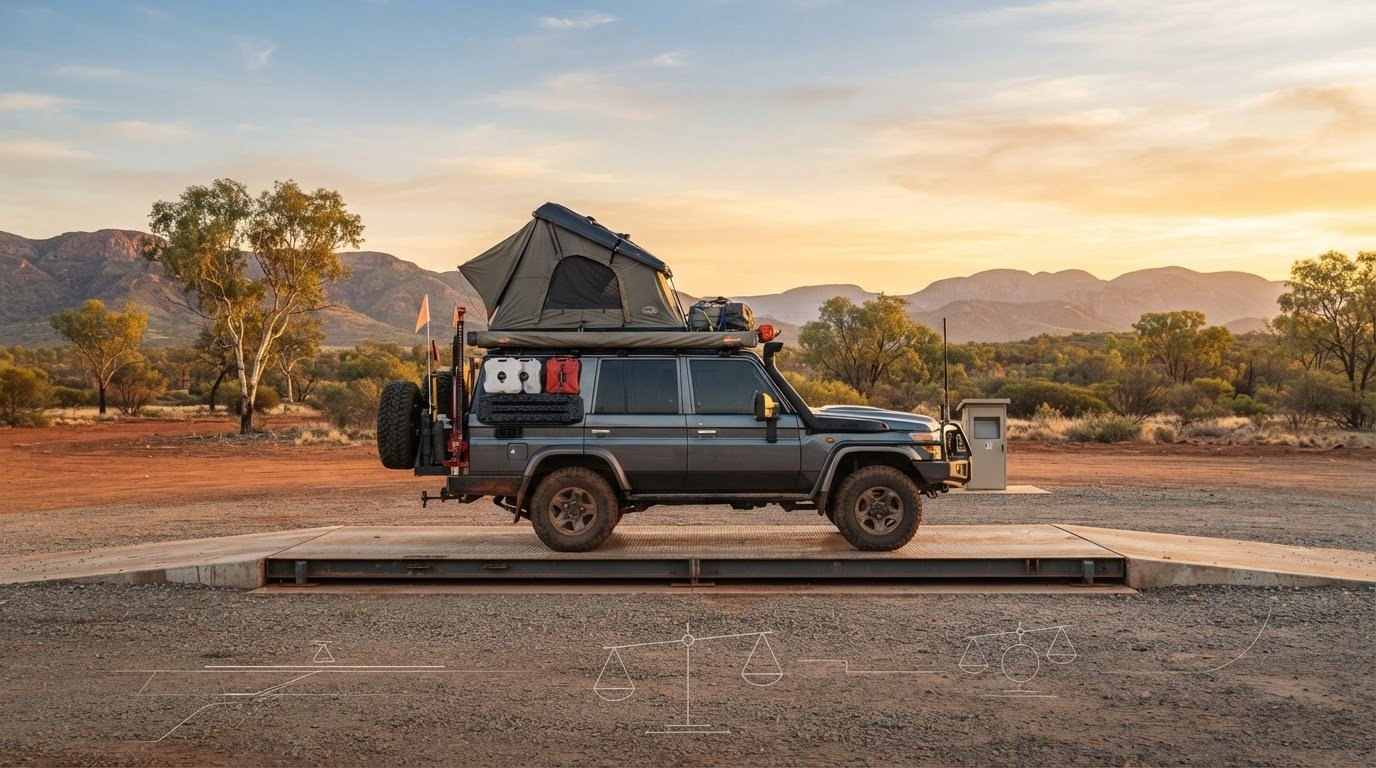
- Step 3: Conduct a gear audit. Focus on your lighting and power systems. The shorter days in April and May mean you’ll be relying on your auxiliary battery and camp lights much earlier in the evening.
- Step 4: Secure permits. Book your national park permits well in advance for the best autumn camping spots Australia has on its map. Remember that places like Capricornia Cays now allow bookings up to 9 months ahead.
- Step 5: Engage with the fellowship. Share your plan with our community for peer feedback. There’s no substitute for real-time advice from someone who was on that same track last week.
Logistics for Remote Travel
Off-grid stays in autumn require precision in our calculations. We advocate for a “Plan B” that accounts for unexpected early-season cold fronts, especially in southern regions where temperatures can plummet without warning. Satellite communication is a non-negotiable requirement for remote Australian regions where mobile coverage is non-existent. We also suggest recalculating your fuel and water requirements to include a 20% safety margin. This buffer allows us to stay an extra night if we find a location that truly speaks to our spirit of adventure.
Community and Documentation
Our journey doesn’t end when we pack up the roof top tent. We encourage you to contribute to the Ethical Explorer database by reporting on track conditions and campsite health. Sharing your 2026 travel photos with the Adventurerz hub helps inspire others to choose sustainable paths. By joining our discussion groups, you gain access to real-time updates that are vital for safe travel. Together, we can ensure that these rugged landscapes remain vibrant and accessible for every member of our growing fellowship.
Master Your Next Remote Escape
The “Golden Window” of 2026 is fast approaching, and we’re ready to help you seize it. We’ve explored how the seasonal shift turns the bush into a masterpiece of color and clarity, provided you have the right gear to handle those dipping night temperatures. By choosing the best autumn camping spots Australia offers and pairing them with high-performance roof top tents and 4WD awnings, you’re setting the stage for an unforgettable off-road journey.
Our community is built on a foundation of self-reliance and environmental accountability. Trusted by thousands of Australian 4WD enthusiasts, we provide expert-led gear reviews that ensure your setup is as hardy as the terrain you tackle. We remain dedicated to sustainable remote exploration, helping you leave every campsite better than you found it. It’s time to move beyond the crowded summer peaks and discover the quiet majesty of the shoulder season.
Start planning your 2026 autumn escape with our expert Travel Planner and join our fellowship of responsible explorers on the track. We’ll see you out there!
Frequently Asked Questions
Is autumn or spring better for camping in Australia?
Autumn is generally superior for remote travel because the ground is dry after summer, whereas spring often features mud and high water levels from winter rains. Autumn also offers more stable barometric pressure, resulting in fewer sudden storms and clearer night skies for stargazing. While spring has wildflowers, autumn provides the “Golden Window” of manageable heat and low humidity across most of the continent.
Can I use a roof top tent in the Australian High Country during autumn?
Yes, and it’s actually the preferred setup for the High Country’s crisp nights. Roof top tents provide essential insulation from the freezing ground, which is a major advantage when overnight temperatures drop toward zero in April and May. We recommend using a hardshell model with an internal thermal liner to trap body heat. This elevation keeps you dry and away from the heavy morning frost common in alpine valleys.
Are national park campsites less crowded in autumn 2026?
Generally, yes, as the peak summer rush has subsided, but popular locations still require booking. With 17.3 million domestic trips recorded in 2025, the competition for the best autumn camping spots Australia offers remains steady. However, mid-week stays in 2026 show a significant drop in occupancy compared to January. Always check the new 6-tier fee system in NSW to see which sites are currently in high demand.
What are the fire restrictions for camping in Australia during May?
Fire restrictions vary by state and are often in a transition phase during May. While many summer total fire bans have lifted, local restrictions often remain in place to protect dry vegetation before winter rains arrive. You must check the official state fire authority website or app daily. We always advocate for carrying a portable gas stove as a backup to ensure we can cook without relying on a campfire.
How do I prevent condensation in my tent during cold autumn nights?
Proper ventilation is the only way to stop moisture buildup when the outside air is colder than your breath. Even on freezing nights, you should leave at least two vents or windows cracked open to allow airflow. Using an anti-condensation mat under your mattress is also a smart move. This creates an air gap that prevents your body heat from turning into liquid when it hits the cold tent floor.
Which Australian states have the best autumn foliage for camping?
Victoria and Tasmania are the premier destinations for autumn colors. The Victorian High Country and towns like Bright offer spectacular displays of exotic deciduous trees, while Tasmania is home to the unique “Turning of the Fagus,” Australia’s only native deciduous tree. If you’re camping in these regions, prepare for higher humidity and damp mornings. These areas offer a stark, beautiful contrast to the evergreen bush found in other states.
Do I need a 4WD to reach the best autumn camping spots Australia provides?
While many beautiful spots are accessible via 2WD, a 4WD is essential for reaching remote, off-grid locations in the Red Centre or the High Country. Many of the most iconic autumn tracks involve river crossings or steep, rocky inclines that require high clearance and low-range gearing. If you’re staying on the bitumen, you’ll still find great sites, but the true “Golden Window” experience often lies at the end of a dirt track.
What is the most essential gear for autumn camping in the desert?
A high-quality sleeping bag rated for sub-zero temperatures is your most critical piece of equipment. Desert temperatures can swing from 25 degrees during the day to -5 at night. We also recommend a 4WD awning with side walls to block the biting desert wind during meal prep. Reliable lighting is equally important, as the sun sets much earlier in May, leaving you in total darkness by 6:00 PM.