What if the greatest risk on your next remote trek isn’t the track itself, but a cluttered, overweight vehicle that you can’t manage when things go wrong? We’ve all felt that magnetic pull of the horizon, yet the lingering fear of getting bogged alone or facing a mechanical failure in the red heart of Australia can be paralyzing. It’s a common hurdle for many in our community who crave the silence of the bush but worry about the logistics of going it solo.
We’re here to help you turn that hesitation into total trail confidence. By refining your solo 4wd camping setup, you’ll master the art of self-reliant exploration without the stress of gear fatigue or safety gaps. We’ll show you how to build a rig that’s light, legal, and incredibly fast to deploy, focusing on expert-backed gear like rapid-setup rooftop tents and 270-degree awnings. From weight management to environmental ethics, this guide provides the blueprint for a functional sanctuary on wheels that respects the land as much as your need for adventure. Let’s get your rig ready for the solo journey of a lifetime.
Key Takeaways
- Learn how to optimize your solo 4wd camping setup for maximum efficiency and minimal environmental impact while we explore the Australian outback together.
- Discover why we recommend rapid-deploy rooftop tents as the superior safety choice for solo travelers needing quick, elevated protection.
- Master self-sufficiency with our guide to modern power solutions and modular kitchen layouts designed for easy solo management.
- Identify the non-negotiable recovery tools and satellite communication gear we use to ensure help is always within reach.
- Understand the critical physics of Gross Vehicle Mass (GVM) to keep your vehicle stable and safe on the most challenging remote tracks.
Table of Contents
The Philosophy of Solo 4WD Camping: Mindset and Ethics
Solo travel isn’t just about the absence of passengers; it’s a profound shift in how we interact with the Australian bush. When we head out alone, our solo 4wd camping setup becomes our lifeline, our shelter, and our primary partner in exploration. This journey is rooted in a deep sense of self-reliance. Unlike group trips where tasks are shared, the soloist carries the full weight of decision-making and mechanical oversight. It’s a challenging but rewarding extension of Overlanding, where the focus shifts from social dynamics to a direct, meditative connection with the landscape. We believe that true adventure starts when you’re comfortable enough in your own skills and gear to venture where the crowds don’t follow.
The Solo Adventurer Mindset
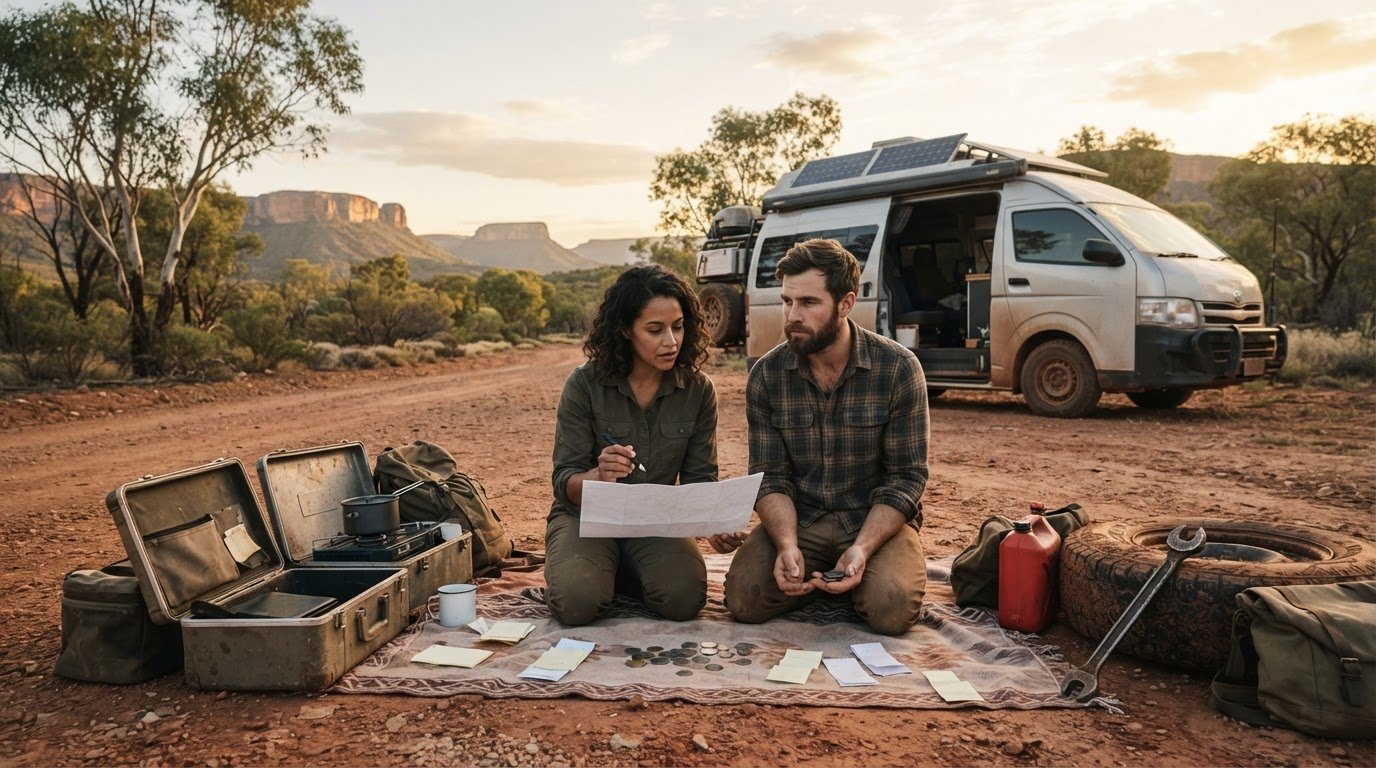
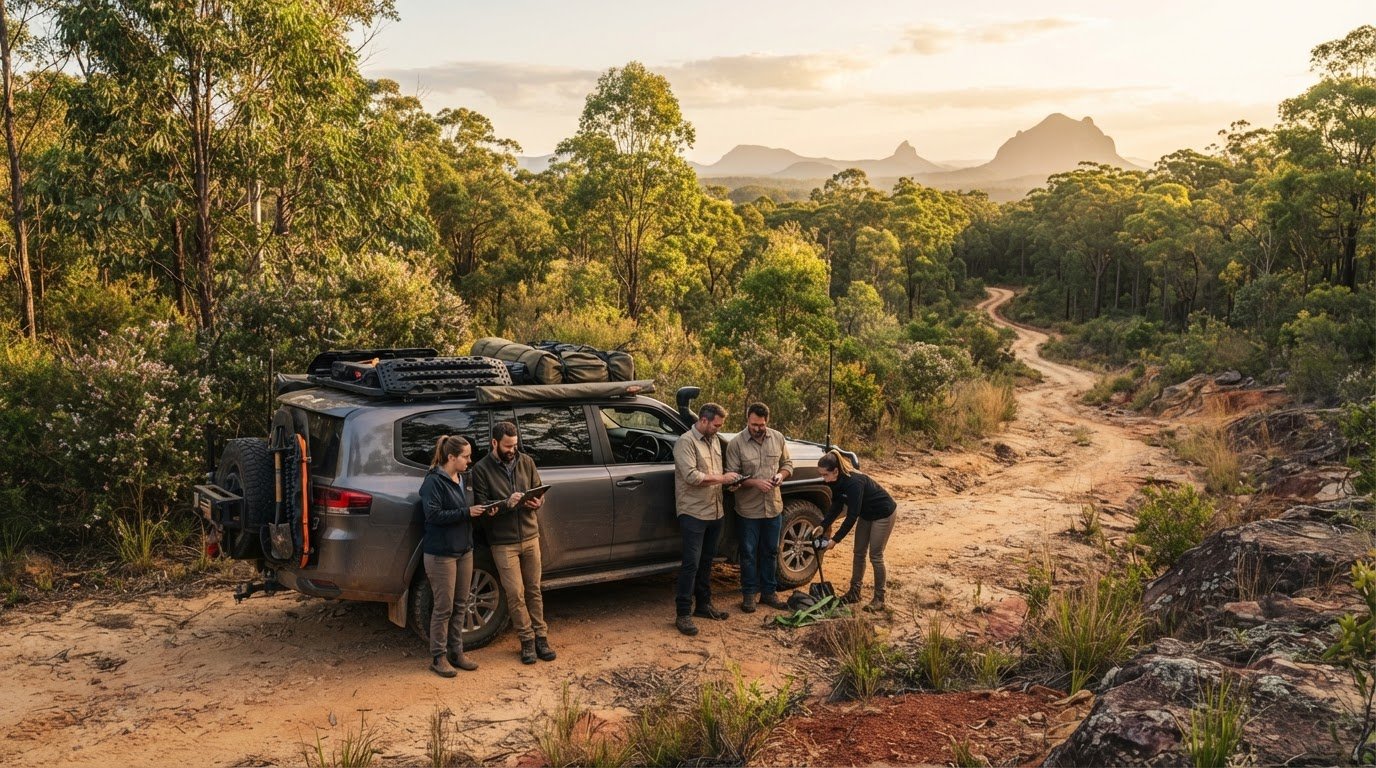
Success starts long before we air down our tyres. Mental preparation is just as critical as your winch or your recovery boards. We find that the most confident soloists are those who invest time in meticulous route planning and “what-if” scenarios. Self-reliance is a muscle. It grows stronger every time you successfully navigate a tricky washout or set up camp in a gale without help. A well-organized rig is the secret to keeping your cool. When every tool has a dedicated home and your solo 4wd camping setup is streamlined, you eliminate the decision fatigue that often leads to mistakes in remote areas. Preparation breeds peace of mind.
Sustainable Exploration Standards
As we look toward 2026, the ethics of our travel are more important than ever. We define sustainable 4WD travel as the practice of minimizing physical and ecological impact to ensure these tracks remain open for future generations. This means adopting a “Leave No Trace” ethos that goes beyond just picking up rubbish. It’s about being mindful of track conditions and avoiding fragile bypasses that scar the land. Our gear choices play a massive role here. For instance, we prioritize silent, emission-free solar power over noisy generators to preserve the natural soundscape. By choosing durable, high-quality equipment, we reduce waste and show respect for the wild places that give us so much. We’re all in this together, acting as stewards of the trails we love.
The Solo Shelter System: Speed and Safety
When we’re out on the tracks alone, the efficiency of our camp setup dictates our safety and comfort. A complex, heavy tent that requires two people to fold or a ground tent that leaves us vulnerable to local wildlife just doesn’t cut it. For a truly effective solo 4wd camping setup, we prioritize gear that allows us to go from “driving” to “sleeping” in under a minute. Speed isn’t just about convenience; it’s about safety. If a storm rolls in or you feel uneasy about a campsite, being able to pack up and leave in seconds is your best defense.
Why Rooftop Tents Win for Soloists
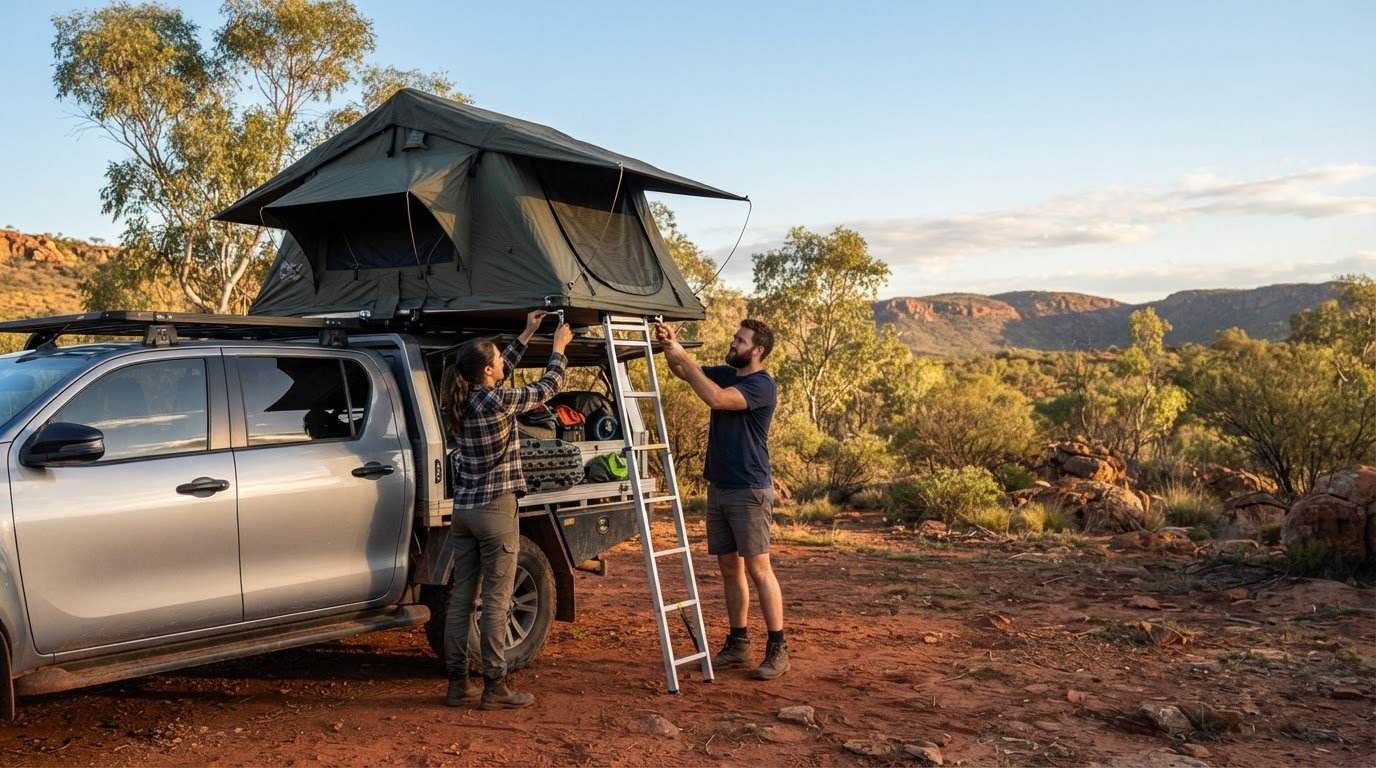
For solo travelers, rooftop tents are the gold standard. Being elevated provides a psychological and physical safety barrier against ground-dwelling critters, particularly in northern regions where crocodiles or snakes are a concern. While soft-shell tents are budget-friendly, they often involve wrestling with heavy PVC covers and multiple zips that are hard to reach alone. We strongly recommend hard-shell models because they typically feature gas-strut assistance, allowing for a 30-second setup. The ideal solo tent is one that requires zero assistance to stow, ensuring you never feel stranded or exhausted by your own equipment. If you’re looking for the right fit, you can check out our roof top tents reviews to see which models handle solo deployment best. We’ve tested these in high winds and heavy rain to ensure they meet our community’s standards for durability.
Awnings and Elemental Protection
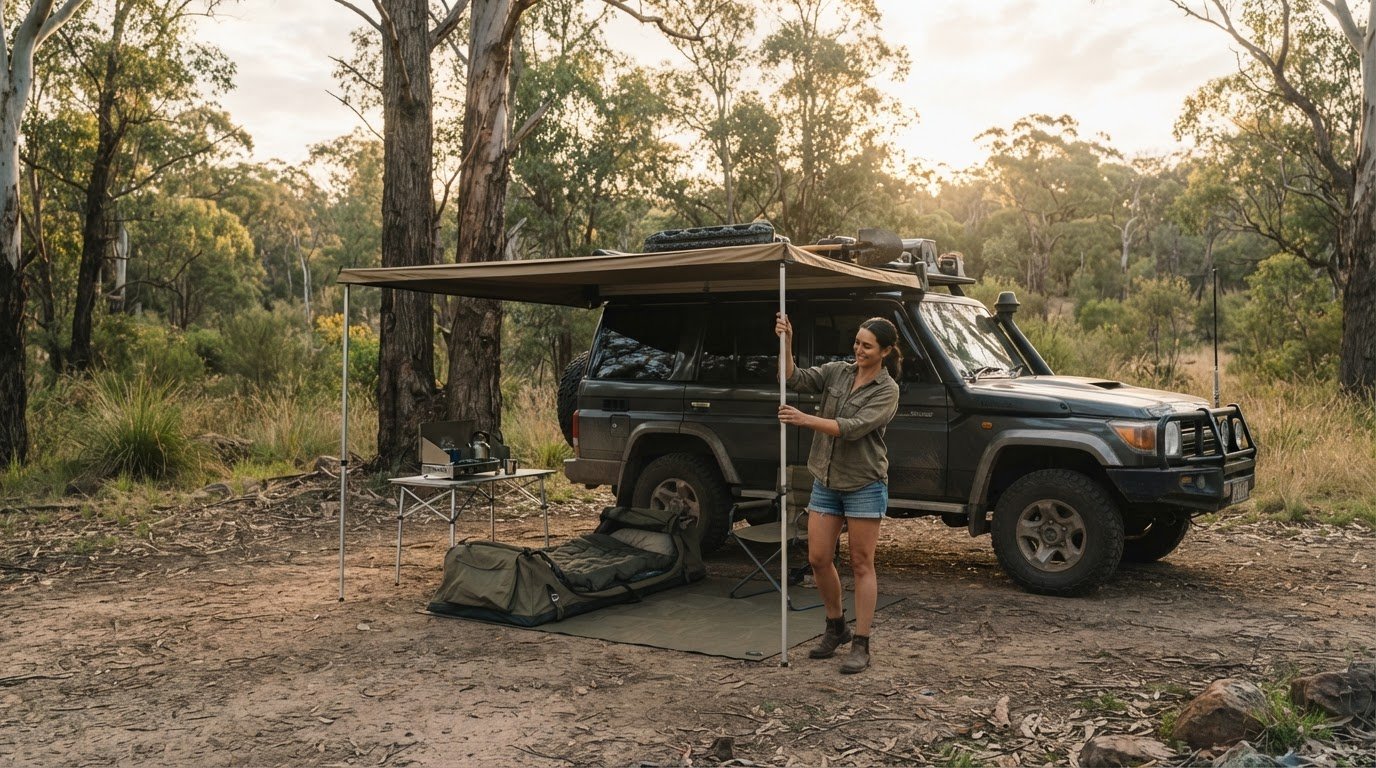
Shelter isn’t just about where we sleep; it’s about creating a livable space during the day within our solo 4wd camping setup. We find that a 270-degree awning is a game-changer for the solo adventurer. Unlike straight-out awnings that only cover a small area, a 270-degree system wraps around the side and rear of the vehicle. This provides maximum shade and rain protection with a single deployment, covering both your side doors and your rear kitchen area. This is vital when you’re managing a kitchen and a fridge on your own. We’ve reviewed the best 4wd awnings on the market to help you find a system that balances weight with ease of use. Look for options with integrated LED lighting; having a well-lit camp perimeter at the flick of a switch significantly reduces the anxiety of solo nights in the bush. Before you commit to a purchase, take a look at our expert awnings recommendations to ensure your gear matches your travel style.
Self-Sufficient Systems: Power, Water, and Kitchen
A self-reliant solo 4wd camping setup is only as good as the systems that sustain it. When we’re hundreds of kilometers from the nearest tap or power point, our rig must function as a closed loop. This requires a shift from being “packed for a weekend” to being “engineered for survival.” We focus on modularity and redundancy, ensuring that if one component fails, we aren’t left stranded or hungry. Efficiency here isn’t just about luxury; it’s about extending our stay and deepening our connection with the wild while leaving the smallest footprint possible.
The Compact Solo Kitchen
Space is at a premium when you’re traveling alone. We recommend a modular kitchen built around drawer-based fridge slides. These allow for easy access without needing to reorganize your entire cargo area every time you want a snack. By 2026, the shift toward induction cooking has become the standard for serious soloists. Removing gas bottles from your vehicle reduces weight and eliminates a significant fire risk. It also keeps your cooking area cleaner. We always keep a “grab-and-go” coffee and meal kit easily accessible. This ensures that even if we arrive at camp late and exhausted, a hot meal is only minutes away without a full unpack.
Reliable Power Management
Power is the heartbeat of our remote adventures. The 2026 standard for a solo 4wd camping setup centers on high-capacity Lithium batteries paired with fixed solar arrays. Lithium offers a depth of discharge that traditional AGM batteries can’t match, which is vital when you’re stationary for two or three days. We rely on DCDC chargers to ensure our house battery tops up quickly while we drive, protecting our starter battery from accidental drain. Use a smart battery monitor to track every milliamp. Knowing exactly how much juice you have left prevents the nightmare of a dead vehicle in a remote location. It’s about data-driven confidence.
Water management is equally critical for extended stays. We carry a minimum of 20 liters of potable water per day, plus a dedicated filtration system for emergency refills from natural sources. Finally, we must talk about waste. Environmental stewardship is a core pillar of our community. We follow a strict “carry in, carry out” rule. This includes all greywater and food scraps. By using induction and solar, we’ve already removed the need for disposable gas canisters. Let’s keep our tracks pristine for the next person who seeks the same solitude we enjoy.
Solo Safety: Recovery, Comms, and First Aid
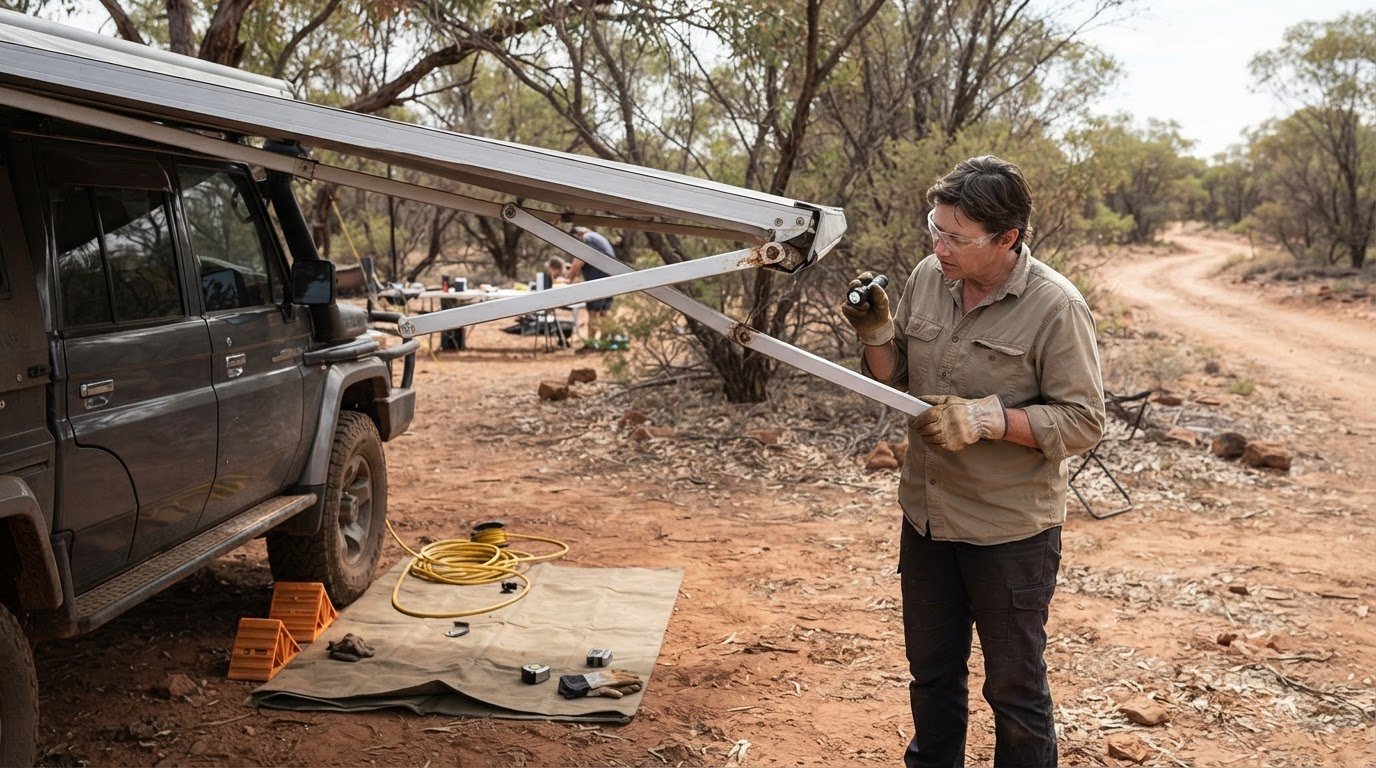
Safety is the silent partner in every successful solo 4wd camping setup. When you’re traveling without a convoy, you’re the driver, the navigator, and the recovery team all in one. This reality demands a shift toward “mechanical empathy.” We define this as an acute awareness of your vehicle’s limits. Listen for new rattles. Feel for vibrations. By catching a loose bolt or a leaking seal early, you prevent a minor inconvenience from becoming a remote emergency. Prevention is always your first line of defense, and you can discover Motortech 4X4 for the specialist servicing and expert advice needed to keep your rig in peak condition.
In a solo context, a winch is your best friend. It provides a controlled, steady pull that doesn’t rely on the erratic momentum of a second vehicle. We never recommend using snatch straps when traveling alone. Without a second vehicle to provide kinetic energy, they’re useless and potentially dangerous if used incorrectly as a static tow. If you find yourself bogged, follow our three-step protocol:
- Stop and Assess: Get out of the cab. Don’t just spin your wheels and dig deeper.
- Reduce Pressure: Air down your tyres further than you think necessary.
- Clear the Path: Use your shovel and traction boards to create a ramp before engaging the winch.
Emergency Communication in 2026
Staying connected in the outback has evolved rapidly. By 2026, we’ve seen a massive shift toward integrated satellite stacks. A Personal Locator Beacon (PLB) remains a non-negotiable for life-and-death situations because of its dedicated frequency and long battery life. However, for managing logistics or minor breakdowns, satellite messengers and Starlink allow for two-way communication. We always maintain a strict “check-in” schedule with a trusted contact back home. Use a comprehensive adventure travel planner to log your intended route and expected return times. This ensures that if you stop moving, someone knows exactly where to start looking.
Your first aid kit needs a solo-specific overhaul too. Standard kits often lack the trauma supplies needed for self-treatment. We carry high-quality tourniquets, pressure bandages, and splints that can be applied with one hand. Practice using them. You don’t want your first time handling a trauma bandage to be while you’re bleeding out in the desert. Ready to build a safer rig? Explore our expert-tested gear recommendations to find the most reliable tools for your next trip.
Weight, Balance, and Organization
We’ve spent years refining our gear, but how we arrange that equipment within our solo 4wd camping setup is what truly determines our vehicle’s performance on the tracks. A poorly balanced rig is more than just an inconvenience; it’s a safety risk that can lead to rollovers or mechanical failure in the middle of nowhere. When we’re alone, we don’t have the luxury of a second vehicle to help us if our suspension gives way or if we tip on a tricky side slope. Mastering the physics of your load is just as important as knowing how to use your winch.
Understanding Payload and GVM
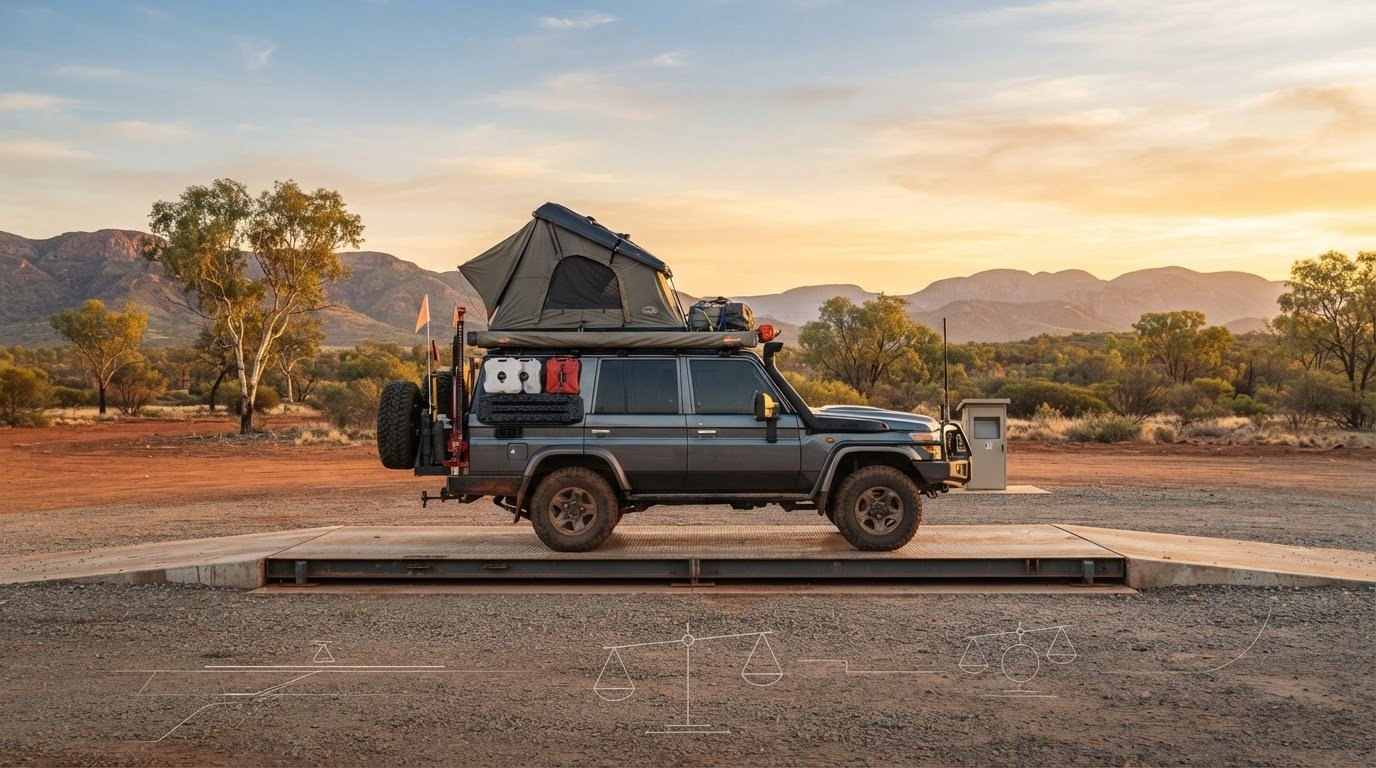
Gross Vehicle Mass (GVM) is the maximum legal weight of your vehicle fully loaded, including the driver, fuel, accessories, and every piece of gear in the back. It’s incredibly easy for soloists to exceed this limit because we often overcompensate for being alone by carrying “just in case” spares for every possible scenario. We recommend taking your fully loaded rig to a public weighbridge before any major solo trek to see exactly where you stand. Remember that every kilogram we add to the roof, like the rooftop tents we discussed earlier, raises the vehicle’s center of gravity. This makes the car much less stable during sudden maneuvers or on off-camber sections of the trail. Keep the heavy items low and between the axles whenever possible.
The Zonal Organization Method
Efficiency in camp starts with a logical packing system. We use a “zonal” approach to ensure we aren’t digging through recovery gear just to find a bag of coffee. By categorizing our solo 4wd camping setup into three distinct zones, we reduce stress and keep the rig tidy throughout the journey:
- Zone 1: Daily Access. This includes the fridge, snacks, and plenty of drinking water. These items should be reachable without moving anything else.
- Zone 2: Evening Use. This covers your tent, kitchen equipment, and lighting. These are the items we only touch once we’ve reached our destination for the night.
- Zone 3: Emergency Only. Your recovery boards, winch extension straps, tool kits, and spare parts go here. They should be accessible but tucked away to prioritize daily functionality.
Don’t be afraid to cull the clutter. If you haven’t used a specific piece of equipment in your last three trips, it’s likely just dead weight that’s hurting your fuel economy and straining your suspension. If you need a place to safely house your off-season adventure gear, you can learn more about professional storage solutions that keep your equipment secure until your next expedition. A lighter rig is a more capable rig, and a more capable rig is a safer rig for the solo adventurer. Let’s keep our setups lean, mean, and ready for the red dust.
Mastering a solo 4wd camping setup is about more than just buying gear; it’s about building a system that fosters independence and respects the wild Australian landscape. We’ve explored how rapid-deploy shelters and smart lithium power systems can transform your experience from a stressful logistical puzzle into a seamless, meditative journey. By prioritizing mechanical empathy and rigorous weight management, you ensure that your vehicle remains a reliable partner on every remote track. We’re here to guide you through every technical choice with expert analysis and community-vetted gear recommendations that put ethical exploration first.
Don’t let gear anxiety hold you back from the silence of the bush. It’s time to refine your rig and head out with total confidence. Check out our expert reviews on the best 2026 Roof Top Tents for solo travelers to find the perfect shelter for your next escape. We’ll see you out there on the trails, traveling light and leaving no trace. Safe travels!
Frequently Asked Questions
Is it safe to go 4WD camping solo?
Yes, solo travel is safe when backed by methodical preparation and redundant safety systems. We believe the key lies in risk mitigation rather than risk avoidance. By carrying the right recovery gear and maintaining a strict communication schedule, you reduce the impact of potential mishaps. It’s about building a sense of self-reliance that allows you to enjoy the solitude of the Australian outback without unnecessary anxiety.
What is the best 4WD for a solo camping setup in 2026?
Reliability and Gross Vehicle Mass (GVM) capacity are the most important factors for your solo 4wd camping setup. While the Toyota LandCruiser and Ford Ranger remain community favorites for their parts availability, any modern 4WD with a strong aftermarket ecosystem works well. Ensure your chosen vehicle can legally carry your gear, fuel, and water without exceeding its weight limits. A vehicle that is easy for one person to maintain is always the best choice.
How much water should I carry for a solo remote trip?
We recommend carrying at least 5 to 7 liters of potable water per day for drinking and basic cooking. In remote Australian environments, you should also factor in a 20-liter emergency buffer for every three days of travel. This ensures you’re covered if a leak occurs or if you’re delayed by track conditions. Always store your water in multiple smaller tanks rather than one large one to prevent total loss from a single puncture.
Do I really need a rooftop tent for solo camping?
While ground tents or swags are options, we advocate for rooftop tents as the superior solo solution. They offer elevated protection from crocodiles, snakes, and damp ground while providing a much faster setup time. When you’re managing a camp alone, reducing the physical labor of pitching a tent in the dark or wind is a significant safety advantage. Hard-shell models are particularly effective for soloists who need to pack up quickly.
What is the most important recovery tool for a solo traveler?
An electric winch is the most critical recovery tool for anyone traveling without a convoy. Unlike traction boards, which require physical digging and might not work in deep mud or steep washouts, a winch provides a controlled and powerful pull. It essentially acts as your “second vehicle” during a recovery. We always suggest pairing your winch with a synthetic rope and high-quality rated recovery points to ensure maximum safety during solo operations.
How do I manage my vehicle weight when traveling alone?
Managing your solo 4wd camping setup weight requires a disciplined approach to gear selection. Start by visiting a public weighbridge to get an accurate baseline of your vehicle’s current mass. Avoid the temptation to carry “double of everything” just because you’re alone. Focus on high-quality, multi-purpose tools and keep heavy items like water and fuel stored as low as possible to maintain a stable center of gravity on the trails.
Can I use a standard first aid kit for solo remote travel?
No, standard kits are often insufficient for the realities of remote solo travel. You need a specialized trauma kit that includes items like arterial tourniquets, Israeli bandages, and splints that you can apply to yourself with one hand. We also recommend carrying a broad-spectrum antibiotic and high-strength pain relief, provided you’ve consulted with a medical professional. Self-treatment is a core skill for the solo adventurer, so ensure your kit matches your training level.
What communication device is best for solo 4WDing where there is no mobile service?
A Personal Locator Beacon (PLB) is the most reliable device for life-and-death situations due to its dedicated satellite frequency. For non-emergency check-ins, we suggest using a satellite messenger or a portable Starlink system. These allow you to send “I’m okay” messages to your community contacts, which prevents unnecessary search and rescue activations. Having two-way communication is a massive psychological boost when you’re navigating the most isolated tracks in the country.