What if the bottle of vinegar you’ve packed in your 4WD for beach emergencies is actually making your stings worse? We’ve all been there, standing on a pristine stretch of the East Coast, spotting those electric blue bubbles on the sand, and wondering if it’s safe to dive in. It’s a common worry for every Adventurerz member that a painful encounter with blue bottles jellyfish might cut a legendary camping trip short. You want to enjoy the surf without the constant fear of a sting ruining your day, especially when you’re hours away from help.
This guide settles the first aid debate once and for all so you can explore our stunning coastlines with total confidence. We’ll show you exactly how to identify these complex “armadas” and provide the proven medical protocol updated for May 2026. You’ll learn why hot water is your best friend, how to spot dangerous onshore wind patterns, and how to keep the tribe safe when you’re camping off-the-grid. Let’s make sure your next coastal mission is memorable for the right reasons.
Key Takeaways
- Master the updated “Adventurer’s Protocol” to treat stings effectively using hot water, ensuring a painful encounter doesn’t end your trip early.
- Learn why blue bottles jellyfish are actually complex colonies known as siphonophores and how onshore winds drive them toward our favorite remote beaches.
- Discover the critical differences between bluebottle stings and deadly tropical stingers to avoid using the wrong first aid treatments in an emergency.
- Protect the tribe by learning how to assess beach safety before setting up your gear and teaching kids a “look but don’t touch” approach to marine life.
- Gain the confidence to explore off-the-grid coastlines by knowing exactly when it’s safe to enter the water and when it’s better to stay on the dunes.
What are Blue Bottles and Why Do They Invade Our Beaches?
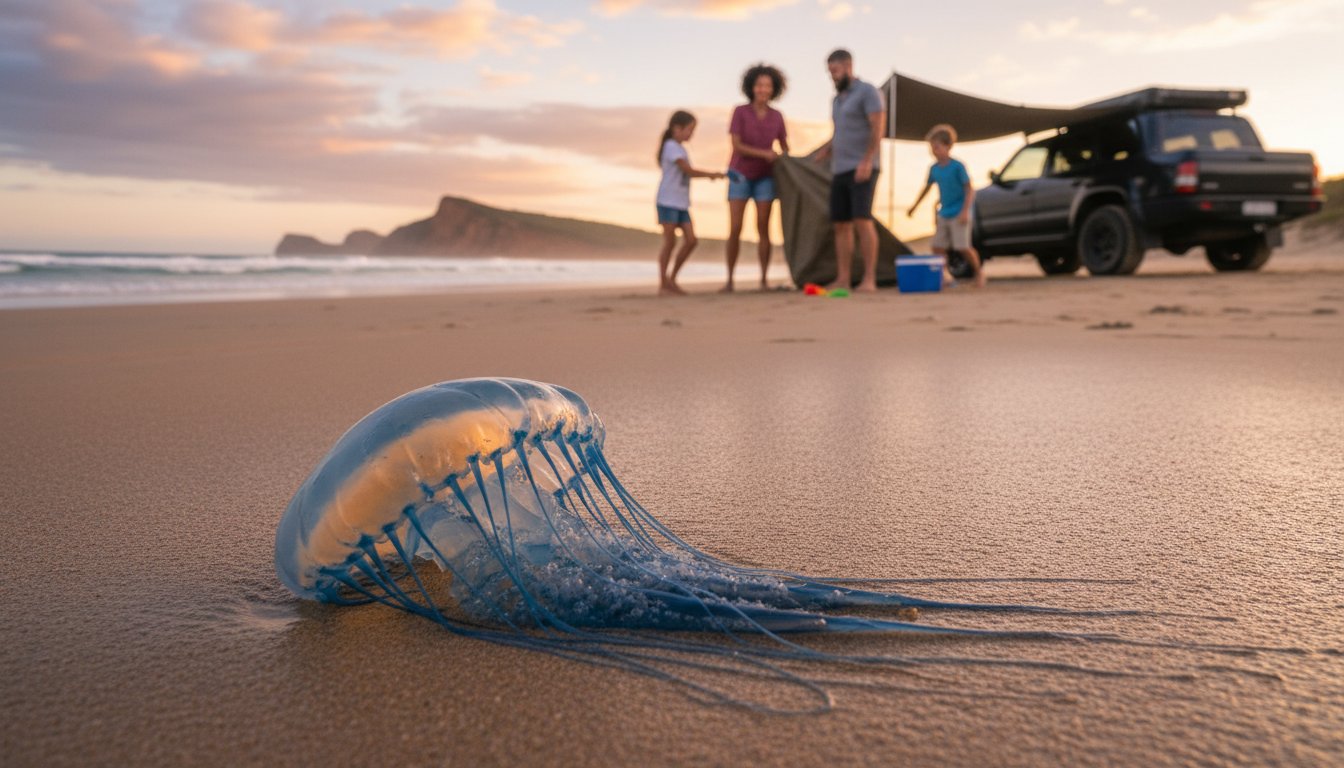
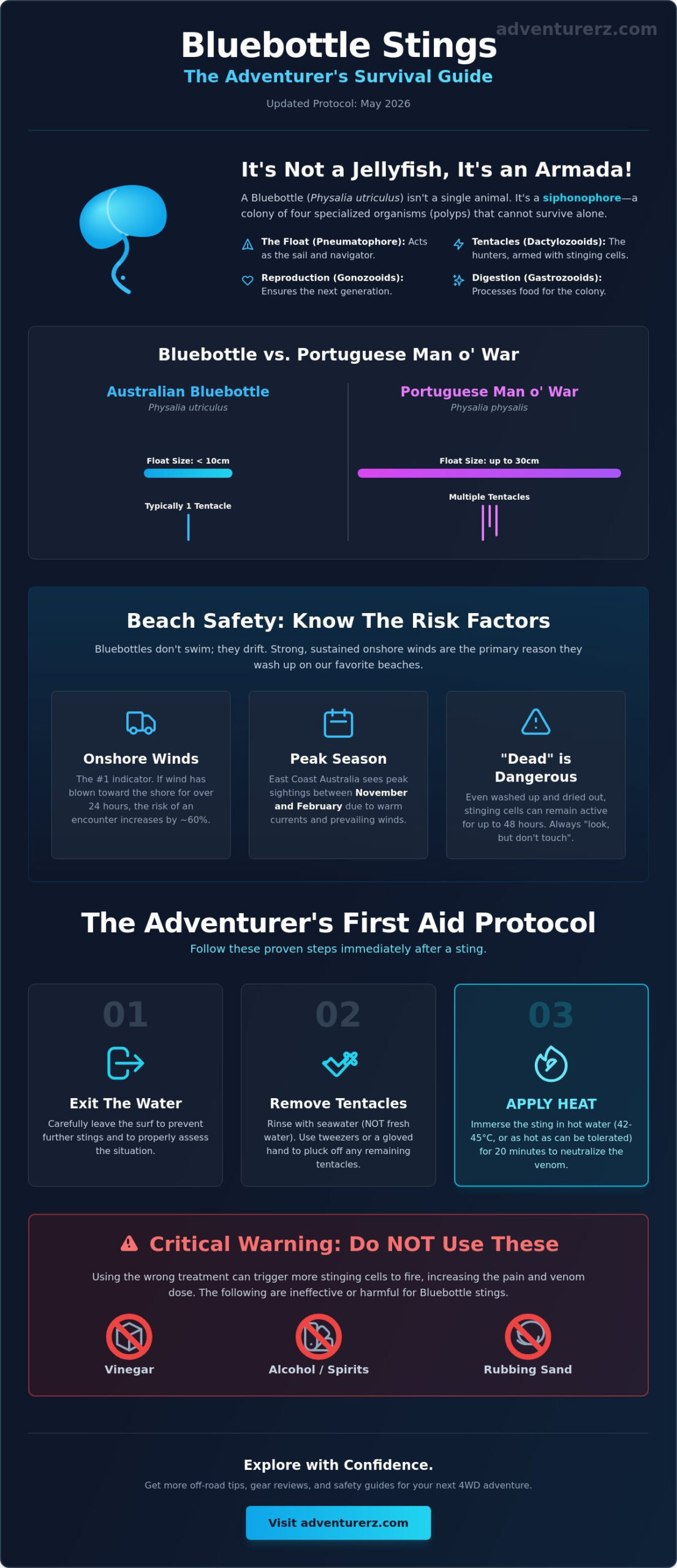
We’ve all been there, scouting the perfect stretch of sand to park the 4WD, only to spot those shimmering blue bubbles scattered along the tide line. While they might look like single, translucent animals, the blue bottles jellyfish is actually a complex colony of individual organisms called polyps working together as a single unit. These creatures, technically known as Physalia utriculus, are not true jellyfish. They belong to a group called siphonophores. Unlike true jellyfish that pulse through the water, these blue beauties are at the total mercy of the wind and currents.
The “Armada” effect is what brings them to our shores in such massive numbers. Each colony uses a gas-filled float, known as a pneumatophore, which sits above the waterline like a miniature sail. When strong onshore winds pick up, thousands of these sailors are pushed from the open ocean toward the coast. For the 2026 summer season, we expect peak sightings to hit the East Coast between November and February. This is when the warm East Australian Current brings the blue bottles jellyfish closer to land, and those consistent North-Easterly breezes do the rest of the work.
The Science of the Sail: Left-Handed vs. Right-Handed
Nature has a brilliant way of ensuring the survival of the species through a biological “drift” strategy. Bluebottle floats are naturally built with a twist to either the left or the right. This means that when a specific wind blows, only a portion of the colony is driven toward the hazards of the beach while the rest remain safe in the open sea. For us Adventurerz, this design explains why one beach might be covered in stingers while the next bay over is completely clear. A sudden change in wind direction is the most reliable signal to be cautious before you dive in. If the wind has been blowing toward the shore for more than 24 hours, the risk of an encounter increases by about 60 percent based on local coastal patterns.
Blue Bottles vs. The Portuguese Man o’ War
It is easy to confuse our local bluebottle with its larger Atlantic cousin, the Portuguese Man o’ War (Physalia physalis). However, the Australian variety is generally smaller, with a float that rarely exceeds 10cm in length. While the Atlantic version has multiple long tentacles, our local stinger usually trails just one main fishing tentacle that can stretch up to 10 meters. This smaller size doesn’t mean they aren’t powerful, but it makes them harder to spot when you’re setting up your roof top tents near the water. The Bluebottle is a colonial organism consisting of four specialized zooids.
The Fascinating Biology of the Bluebottle Colony
Think of the blue bottles jellyfish as a highly organized camping convoy where every member has one specific job to do. Because they are siphonophores, these creatures rely on a symbiotic relationship between four distinct types of polyps. The float (pneumatophore) acts as the navigator, while the reproductive polyps (gonozooids) ensure the next generation of explorers. The digestive polyps (gastrozooids) handle the food, and the long, trailing tentacles (dactylozooids) serve as the colony’s primary hunters. This interdependence makes the “tribe” incredibly resilient in the harsh environment of the open Pacific and Indian Oceans.
If you look closely at the tentacles, you’ll notice a distinct “beaded” appearance. These beads are actually dense clusters of thousands of stinging cells. This design is highly effective for snagging larval fish and small crustaceans. For an Adventurerz member, these beads represent the primary danger to your skin. When a tentacle brushes against you, it doesn’t just touch; it anchors. This complex biological machinery is why we always recommend staying informed about the latest first aid for bluebottle stings before heading into remote surf zones.
How Nematocysts Fire: The Mechanics of a Sting
The sting of the blue bottles jellyfish is a mechanical marvel. Each stinging cell contains a microscopic “harpoon” called a nematocyst. These are triggered by pressure and chemical signals on contact. Even if the animal has been washed up on the sand for 48 hours and looks completely dried out, these cells can still fire. The venom is a complex mix of proteins that causes immediate, sharp pain in humans. Because the trigger is purely mechanical, a dead bluebottle is often just as dangerous as a live one floating in the lineup.
What Do Bluebottles Eat and What Eats Them?
In the great blue wilderness, these colonies hunt a diet consisting mainly of larval fish and tiny crustaceans. However, they aren’t at the top of the food chain. They are hunted by specialized predators like the Blanket Octopus and the stunning Blue Dragon (Glaucus atlanticus). The Blue Dragon is a tiny sea slug that actually eats the bluebottle tentacles and stores the stinging cells in its own body for defense. If you spot these 3cm long, silver-and-blue dragons on the shore, take it as a 100 percent certain warning sign that the water is currently thick with bluebottles.
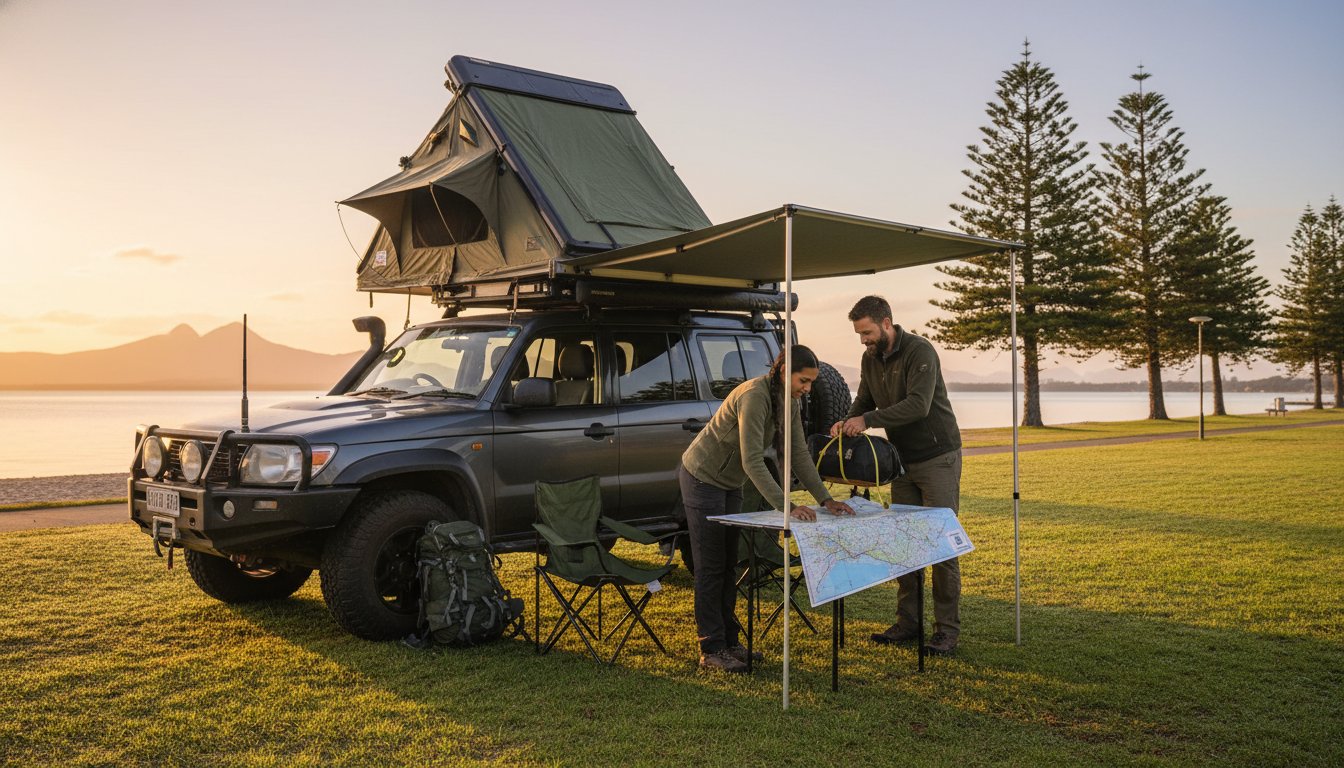
Before you head out to the dunes, make sure you’ve packed the right gear for a day of beach observation. Setting up one of the best 4wd awnings gives you a perfect, shaded vantage point to scout the shoreline for these blue invaders. You can find more expert tips for your next coastal mission at Adventurerz.com.
Bluebottle vs. Other Marine Stingers: A Comparison
Identifying what is bobbing in the surf is the difference between a quick sting and a medical emergency. While blue bottles jellyfish are the most common uninvited guests on our beaches, they are often confused with far more dangerous species. In the tropical north, the Box Jellyfish and Irukandji are the “Deadly Killers” that require immediate vinegar treatment to neutralize their venom. However, applying vinegar to a bluebottle sting can actually trigger more venom release and increase the pain. This is why identification is the first step in our safety strategy. We always encourage our tribe to research local marine life before hitting a remote camp spot. Knowing the difference ensures you apply the right protocol the first time.
Don’t let the “By-the-Wind Sailor” (Velella) fool you either. These look similar with their blue tint and upright sail, but they are flat, disk-shaped, and lack the long, venomous stinging tentacle. They are harmless to humans. Being able to tell a Velella from a bluebottle means you can keep the kids in the water without unnecessary panic while you enjoy the coastal views. It’s all about preparation and knowing the environment you’re exploring.
Visual Identification Guide
Spotting these stingers starts before you even hit the water. From the elevated vantage point of your 4WD awning, look for bright blue, balloon-like floats bobbing in the white wash. A bluebottle float usually ranges from 2cm to 15cm in length, making them easy to see if you’re looking for that specific flash of electric blue. The key feature is the single, dark blue trailing tentacle that can stretch many meters behind the float. If you see these bubbles on the sand, it is a 100 percent guarantee they are also in the water nearby.
Danger Levels and Risk Assessment
For most healthy adults, bluebottles are a painful nuisance rather than a lethal threat. The pain is intense and sharp, but it usually subsides within 30 to 60 minutes if treated correctly. However, we need to be extra vigilant with children, the elderly, or anyone with known allergies. Their thinner skin and smaller body mass can lead to more systemic reactions. You should seek emergency medical help immediately if a person experiences shortness of breath, swelling of the throat, or chest pain. These are rare but serious signs of an allergic reaction that require professional intervention. Staying calm and monitoring the person is vital during those first 20 minutes after a sting.
First Aid and Prevention: The Adventurer’s Protocol
When a sting happens, the first 60 seconds are critical. We don’t panic; we follow the Adventurer’s Protocol to manage the pain and stop the venom from spreading. First, get out of the water immediately. Extra movement increases your heart rate and blood flow, which can carry the venom through your system faster. Once you’re safely on the sand, remove any visible tentacles. Use tweezers or a gloved hand to do this. Never use your bare fingers, as those “beaded” nematocysts we discussed earlier will fire into your fingertips too.
The verified gold standard for treating blue bottles jellyfish stings as of May 2026 is hot water immersion. Immerse the affected area in water heated to 45°C for a full 20 minutes. This specific temperature helps break down the protein-based venom and provides the most effective pain relief available. If you’re on a remote beach without a way to heat water, apply a cold pack or ice wrapped in a dry towel to dull the ache until you can get back to your main camp. Always monitor the person for secondary reactions like nausea or lightheadedness over the next hour.
The Vinegar Myth: Why It Makes Bluebottle Stings Worse
Never apply vinegar to a bluebottle sting; use salt water to rinse instead. While vinegar (acetic acid) is life-saving for tropical Box Jellyfish in the Far North, it is a disaster for bluebottles. The acid triggers undischarged nematocysts to fire, effectively doubling the dose of venom in your skin. Stick to a thorough rinse with seawater to clear away any microscopic debris. Avoid using freshwater for the initial rinse, as the change in pH and pressure can also cause the stinging cells to discharge.
Essential Gear for Sting Prevention
Preparation is the hallmark of every experienced explorer. Wearing a Lycra stinger suit or a high-quality rashie provides a physical barrier that the short bluebottle nematocysts simply can’t penetrate. We always recommend keeping a specialized marine first aid kit in your rooftop tents or 4WD storage. This ensures you have tweezers, seawater-safe wipes, and heat packs ready the moment you step off the sand. Always wear protective footwear when walking the tide line. Beached stingers can remain active for days, and a stepped-on float can still deliver a nasty hit to an unprotected foot.
Equip your tribe with the best survival gear and expert knowledge by visiting Adventurerz.com today.
Safe Beach Camping: Protecting the Adventurerz Tribe
Before you deploy the ladder on your roof top tent or unroll the swag, take five minutes to walk the high-tide line. This simple scouting mission is the best way to assess the safety of your swimming spot for the next few days. If you spot those tell-tale blue bubbles glistening on the sand, it is a clear sign that the local waters are currently hosting blue bottles jellyfish. We believe in being prepared rather than being surprised. By checking the beach before you set up camp, you can choose a site further up the coast or decide to keep the surf sessions for a day when the winds shift.
Protecting the younger members of the tribe is all about education and engagement. We like to turn stinger identification into a “look but don’t touch” game. Challenge the kids to see how many different marine objects they can find without using their hands. Teaching them that even a dried-out bluebottle can deliver a nasty sting empowers them to explore safely. If you do find a large cluster near your campsite, resist the urge to bury them. Burying stingers actually creates a hidden hazard for other beachgoers who might step on the active nematocysts later. It’s much better to leave the beach natural and let the next high tide or the sun handle the disposal process.
Sustainable Exploration of Our Coastlines
Being an Adventurerz member means committing to “Leave No Trace” principles, even when dealing with unwelcome visitors. If you encounter massive “blue bottle fleets” that pose a significant risk to others, use your satellite comms or mobile data to report the sighting to local surf life-saving authorities. Sharing this real-time data helps keep the whole community safe. For those who want to dive deeper into marine biology while enjoying a bit of comfort, there are several resorts in Australia that offer guided marine education programs. These sessions are perfect for learning more about the delicate balance of our coastal ecosystems.
Final Checklist for Your Next Coastal Trip
Preparation is what separates a legendary trip from a painful one. Before you hit the tracks, run through this final safety check to ensure you’re ready for anything the ocean throws your way:
- Check the wind forecast daily; be especially wary of persistent North-Easterly (NE) winds that push stingers toward the shore.
- Pack a reliable thermometer in your first aid kit to ensure you hit that 45°C mark for the hot water treatment.
- Ensure you have a way to heat water quickly at camp, whether it’s a gas burner or a 12V kettle.
- Keep your Lycra stinger suits easily accessible in your 4WD storage.
The best way to stay safe is to stay connected. Join the Adventurerz community online to share your photos, real-time stinger sightings, and safety tips from the road. Together, we can explore Australia’s wild coastlines with the respect and preparation they deserve!
Conquer the Coast with Confidence
Exploring Australia’s wild and rugged beaches is the ultimate reward for any dedicated explorer, and a few blue bottles jellyfish shouldn’t stand in your way. By mastering the 45°C hot water protocol and keeping a sharp eye on those North-Easterly wind forecasts, you’ve turned a potential trip-ender into a manageable part of the journey. We’ve established how to spot the difference between a nuisance stinger and a lethal threat, ensuring you always apply the correct first aid when it matters most. Preparation is the bridge between a stressful emergency and a quick recovery back at the dunes.
We are here to support every step of your journey with expert 4WD and camping advice that’s rooted in real-world experience. As Adventurerz, we rely on comprehensive gear reviews for Australian conditions and a shared commitment to being eco-conscious mentors of the wilderness. Ready for your next coastal escape? Join the Adventurerz community and gear up today! Let’s get out there, stay safe, and keep our coastlines pristine for the next generation of travelers. See you on the sand!
Frequently Asked Questions
Can a dead blue bottle still sting you?
Yes, a dead specimen remains dangerous. The stinging mechanism is a mechanical trigger that doesn’t require the organism to be alive. Research shows cells can remain active for up to 48 hours after being beached on the sand. We always tell the tribe to keep their boots on when walking the tide line to avoid a nasty surprise from a dried-out float.
Should I use vinegar on a blue bottle sting?
Never use vinegar on a bluebottle sting. While it works for tropical Box Jellyfish, it causes blue bottles jellyfish nematocysts to discharge more venom. Stick to a seawater rinse followed by the hot water protocol. This is a critical distinction for anyone camping along the diverse Australian coastline where different stingers require opposite treatments.
How long does the pain from a blue bottle sting last?
Most people experience sharp, intense pain for 30 to 60 minutes. While the initial hit is shocking, the discomfort usually fades to a dull ache within the first hour if treated correctly. If the pain persists beyond 2 hours or spreads to the joints, it’s time to consult a medical professional at the nearest coastal town.
Is it safe to swim if I see blue bottles on the sand?
Swimming is generally discouraged if you spot them on the sand. Those blue bubbles are the scouts for a much larger fleet currently drifting in the surf zone. If the onshore winds are strong enough to beach them, there’s a 100 percent chance that many more are lurking just behind the breakers where they’re harder to see.
What is the best way to remove blue bottle tentacles from the skin?
Use tweezers or a gloved hand to lift the tentacles away from the skin. Avoid using your bare fingers or rubbing the area with a towel or sand. Rubbing only forces more stinging cells to fire into your tissue. A quick, clean lift is the most effective way to minimize the amount of venom delivered during the encounter.
Are blue bottle stings ever fatal?
No confirmed deaths from bluebottle stings have been recorded in Australia. They’re considered a painful nuisance rather than a life-threatening species for the average person. However, a small fraction of the population may experience anaphylaxis. If you notice swelling of the face or difficulty breathing, call emergency services immediately.
What is the difference between a blue bottle and a Portuguese Man o’ War?
The main differences are size and the number of tentacles. Our local blue bottles jellyfish (Physalia utriculus) rarely grow larger than 15cm and usually trail a single fishing tentacle. The Atlantic Portuguese Man o’ War is a much larger beast with a float up to 30cm and a complex web of multiple stinging tentacles.
Can I use ice instead of hot water for a sting?
You can use ice or a cold pack if hot water isn’t available. While 45°C water is the gold standard for neutralizing the venom proteins, cold therapy is an excellent secondary method for numbing the area and reducing inflammation. We recommend keeping a few instant-cold packs in your 4WD first aid kit for exactly this scenario.