Last summer, the Miller family arrived at a remote site in the Kimberley only to discover their water filtration system was missing a crucial seal. It’s a sinking feeling we’ve all faced when the excitement of the outback meets the reality of a forgotten essential. Preparing for a trip into the bush shouldn’t feel like a high-stakes gamble. That’s why we’ve built the most comprehensive family camping checklist Australia has to offer for the 2026 season.
We know the pressure of balancing a mountain of gear options with the need for a stress-free departure. You want to ensure your family is safe in remote conditions without overpacking the rig. Our expert-vetted guide promises to streamline your packing process, giving you total confidence in your gear’s durability and your family’s comfort. We’ll cover the latest 2026 biosecurity requirements, explain the new tiered camping fee structures in NSW, and highlight the specialized equipment needed to protect our delicate ecosystems. Let’s get your crew ready for a memorable adventure that respects the land and fuels your spirit of exploration.
Key Takeaways
- Choose the right shelter by comparing rooftop tents and ground options to ensure your family’s safety and comfort in various Australian climates.
- Simplify your outdoor meals using our “Golden Rule” of pre-prepped cooking and the right stove setup for hungry kids.
- Navigate the outback with confidence by using this family camping checklist Australia to select essential safety gear like PLBs or EPIRBs.
- Keep everyone happy and dry with smart layering techniques and the essential “Two-Pair” shoe rule for rugged terrain.
- Master the art of packing your 4WD by balancing weight distribution and performing a backyard “Dry Run” before you hit the track.
Table of Contents
Essential Shelter and Sleeping Gear for the Australian Climate
Your choice of shelter is the cornerstone of your family’s safety. In the Australian bush, it’s the primary barrier between your loved ones and the elements. Whether you’re chasing the sun in the Top End or bracing for a cold snap in the High Country, your gear must be up to the task. This is why shelter is the first item on any robust Camping in Australia plan. A bad night’s sleep ruins more than just your mood; it impacts your alertness and safety on the tracks the next day.
Don’t overlook what’s beneath you. Even in the desert, the earth siphons heat from your body at night. We recommend selecting sleeping mats with an R-value of at least 4.0 for winter outback trips. This rating measures thermal resistance; the higher the number, the better you’re insulated from the cold ground. It’s a non-negotiable addition to your family camping checklist Australia. Managing temperature fluctuations is part of the Aussie adventure. You might face 30-degree days in the tropics followed by near-zero nights in the Red Centre. Use breathable mesh inner tents for the heat, but ensure you have a heavy-duty fly to trap warmth when the sun goes down.
Rooftop Tents: A Game Changer for Mobile Families
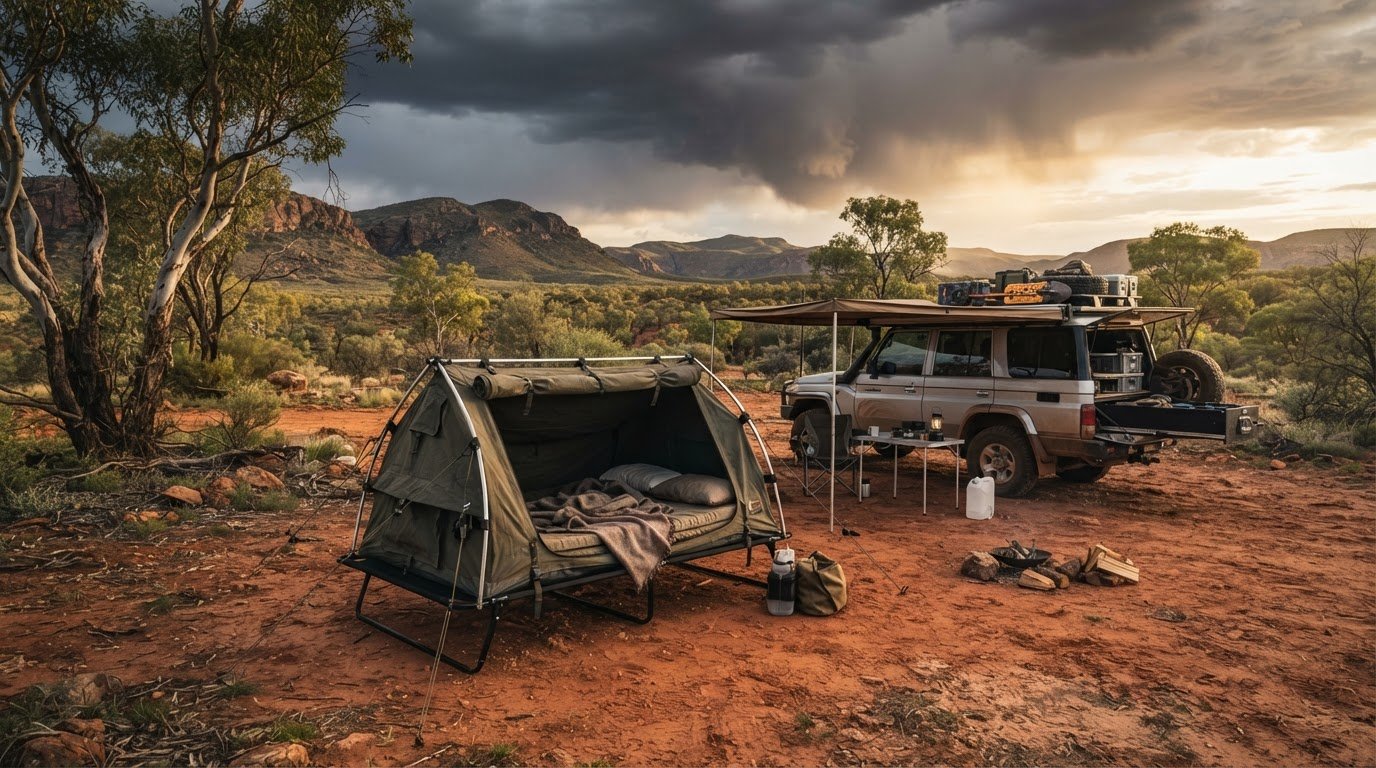
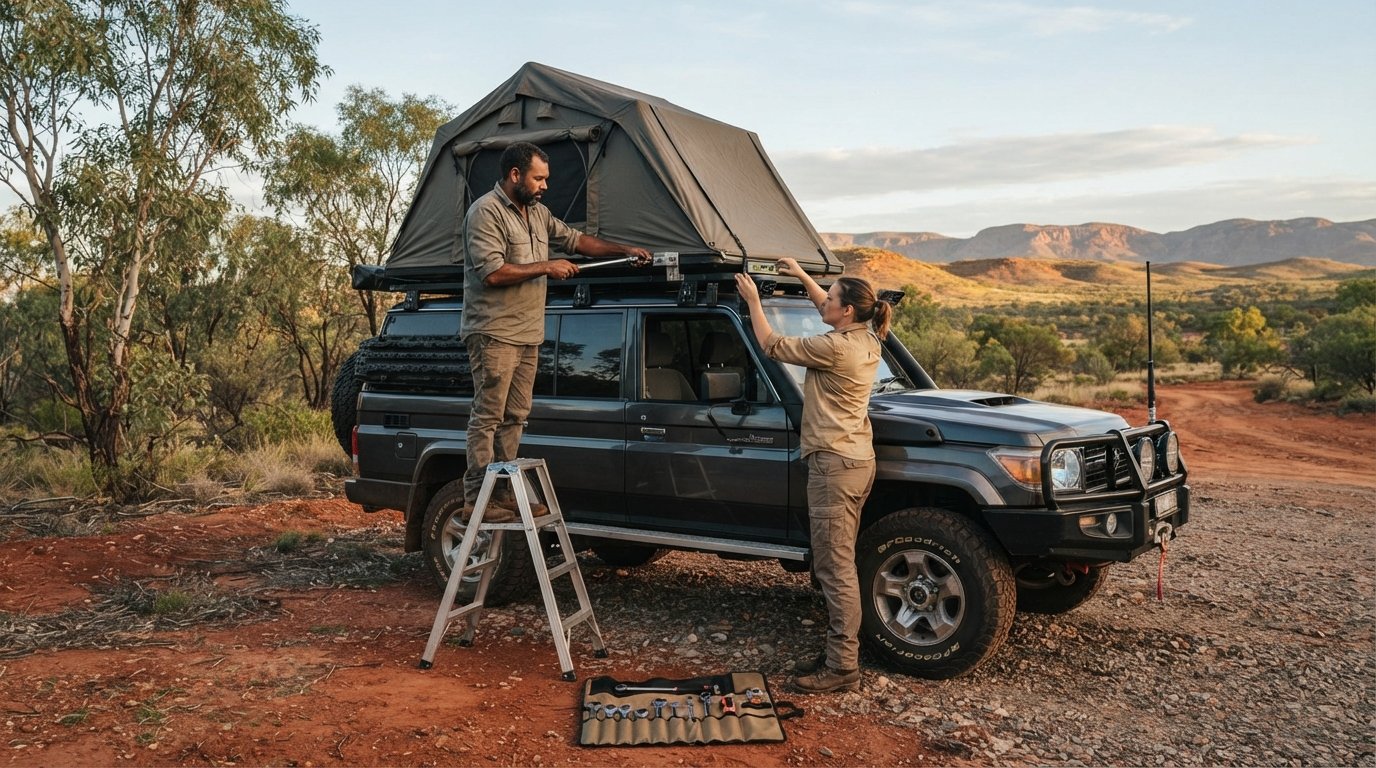
For mobile families, rooftop tents are a total game changer. We love the “park and pop” lifestyle because it eliminates the struggle of finding level, rock-free ground at dusk. Being elevated also provides a literal layer of safety from ground-dwelling critters like snakes, scorpions, or inquisitive goannas. While ground tents offer more living space for longer stays, the efficiency of a rooftop tent is hard to beat for touring. It keeps your bedding inside and ready to go, which means more time for the kids to explore. If you’re considering making the switch, check out our comprehensive guide to roof top tents to find models built for family durability.
Sleeping Bags and Bedding for All Seasons
Understanding temperature ratings is vital for a successful trip. Always look for the “comfort” rating rather than the “limit” or “extreme” scores, as those lower numbers are about survival rather than a good night’s rest. For the kids, we suggest individual bags instead of sharing a double. Smaller bodies struggle to heat up a large pocket of air, so a snug, correctly sized bag keeps them much warmer. We also recommend these essentials for your family camping checklist Australia:
- Individual liners: Silk or fleece liners add extra warmth and are easier to wash than the whole bag.
- Dedicated pillows: Don’t rely on rolled-up jumpers. A real pillow ensures everyone wakes up without a stiff neck.
- Hot water bottles: A simple, low-tech way to pre-warm the kids’ beds on frosty desert nights.
Layering isn’t just for your clothes; it’s for your bedding too. By combining a high R-value mat with a comfort-rated bag and a liner, you create a modular system that handles everything from tropical humidity to alpine frosts. This methodical approach to sleep ensures your crew stays hardy and ready for whatever the track throws your way.
The Camp Kitchen: Organising Meals and Shade
The camp kitchen is the heart of any site, but it can quickly become a source of frustration if you’re under-equipped. We live by the “Golden Rule” of camp cooking: keep it simple and pre-prepped. Chop your vegetables, marinate your meats, and vacuum-seal meals at home before you leave. This strategy saves precious water, reduces onsite waste, and means you aren’t stuck over a stove while the kids are off exploring. It’s a vital component of a successful family camping checklist Australia strategy. When it’s time to cook, a dual-burner stove is almost always superior to a single-burner for family meals. Having the ability to boil pasta on one side while the sauce simmers on the other makes a world of difference when hungry children are waiting.
Hydration is critical in the rugged Australian landscape. We recommend calculating 5-7 litres per person per day for drinking, cooking, and basic hygiene. This might seem like a lot, but in the dry interior, it’s the minimum for safety. For food preservation, the 12V fridge vs high-performance icebox debate depends on your setup. If you have a reliable dual-battery system, a 12V fridge offers the ultimate set-and-forget convenience. However, a high-quality icebox remains a hardy, lower-cost alternative for shorter trips, provided you have a solid plan for ice replenishment along your route.
Creating a Shaded Hub with 4WD Awnings
In the harsh Australian sun, your kitchen needs more than just a table; it needs a roof. An awning is likely your most used piece of gear, transforming the side of your rig into a protected living space. While a standard pull-out awning works well, 180-degree or 270-degree models offer much better coverage for the whole family. They wrap around the rear of the vehicle, sheltering your kitchen setup from both sun and sudden downpours. You can check out our top picks for the best 4wd awnings to see which model fits your family’s needs. Proper shade is a cornerstone of Family Camping Safety, especially when you’re managing hot stoves and high UV levels.
Efficient Camp Kitchen Storage and Cleanup
Space is a premium in any 4WD. We use nesting cookware to keep our cargo organized and rattle-free on corrugated roads. When it’s time to clean up, we stick to the three-bucket wash system: one for soapy water, one for a warm rinse, and one for a final sanitizing dip. It’s a sustainable approach that minimizes water usage while keeping your gear spotless. Remember the “Pack it in, pack it out” rule; in remote areas, there are no bins, so we always carry heavy-duty rubbish bags to ensure we leave our campsites exactly as we found them. If you’re looking to upgrade your setup, our reliable awning reviews can help you find the perfect shade for your next bush kitchen.
Remote Australia Safety: The “Must-Haves” for Peace of Mind
Traveling through the red dust of the interior or the dense scrub of the High Country is an incredible experience, but it requires a fundamental shift in how we think about safety. We call it the self-reliance mindset. In the outback, help isn’t just a phone call away; it’s often hundreds of kilometres across challenging terrain. This makes safety gear the most critical part of your family camping checklist Australia. We don’t pack these items hoping to use them. We pack them because we respect the land and prioritize our crew’s well-being.
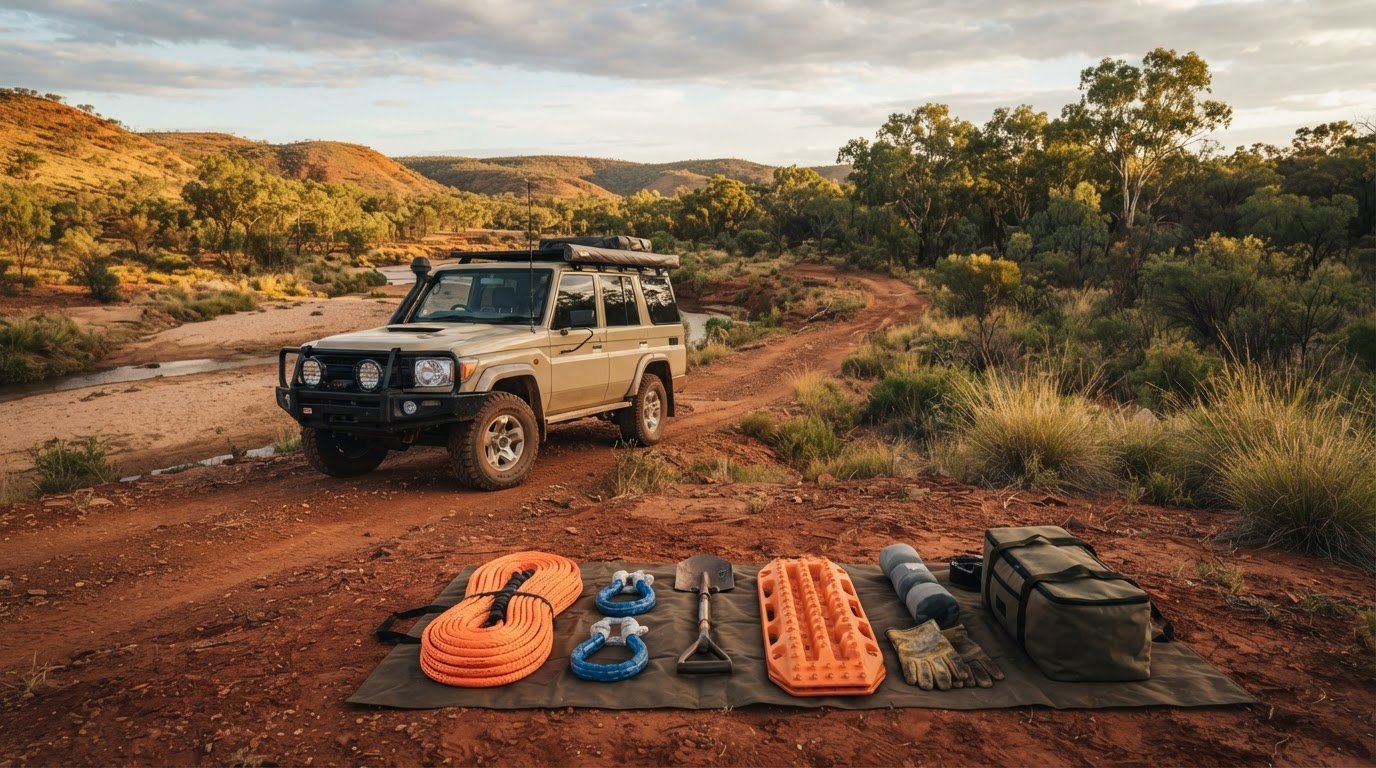
One of the most frequent questions we get is about the difference between a PLB and an EPIRB. For our mobile families, a Personal Locator Beacon (PLB) is usually the best fit because it’s compact enough to take on a hike. An Emergency Position Indicating Radio Beacon (EPIRB) is traditionally larger and designed for maritime use, though many modern units are cross-functional. In 2026, ensure your beacon is GPS-equipped and registered with the Australian Maritime Safety Authority (AMSA). A non-GPS unit is essentially a relic in a modern emergency. Even if you don’t plan on heavy 4WDing, a basic recovery kit including a shovel and traction boards is essential. Rain can turn a dusty track into a slippery bog in minutes. While we love digital tools, paper maps still belong in your glovebox. Heat can kill a tablet and dust can ruin a charging port. A physical map never runs out of battery.
First Aid for the Australian Bush
Managing a medical emergency in the bush requires specialized tools. Every kit must include a dedicated snake bite kit utilizing the Pressure Immobilisation Technique (PIT) with tension-indicator bandages. These bandages show you exactly how much pressure to apply to slow the spread of venom. We also focus heavily on managing heatstroke and hydration in our high-UV environments. A remote-area first aid kit must be stocked with professional-grade trauma supplies and heat-stable medications to meet 2026 safety standards. Don’t forget to cross-reference your supplies with an official Parks Victoria camping checklist to ensure you haven’t missed the basics like antiseptic or saline.
Communication and Emergency Signalling
For communication, we recommend a layered approach. A UHF radio is perfect for convoy chatter or talking to truckies on the highway, but for true emergencies, a satellite messenger like an InReach or Zoleo is a must-have. These devices allow you to send 2-way texts even when there’s zero mobile reception. We always register our trip details with a trusted contact or local authorities before heading off-grid. To keep these lifelines active, a portable solar panel is vital for keeping your emergency devices and satellite messengers charged under the harsh Australian sun. It’s about building a system that works when the grid doesn’t.
The Family Factor: Clothing, Comfort, and Kids
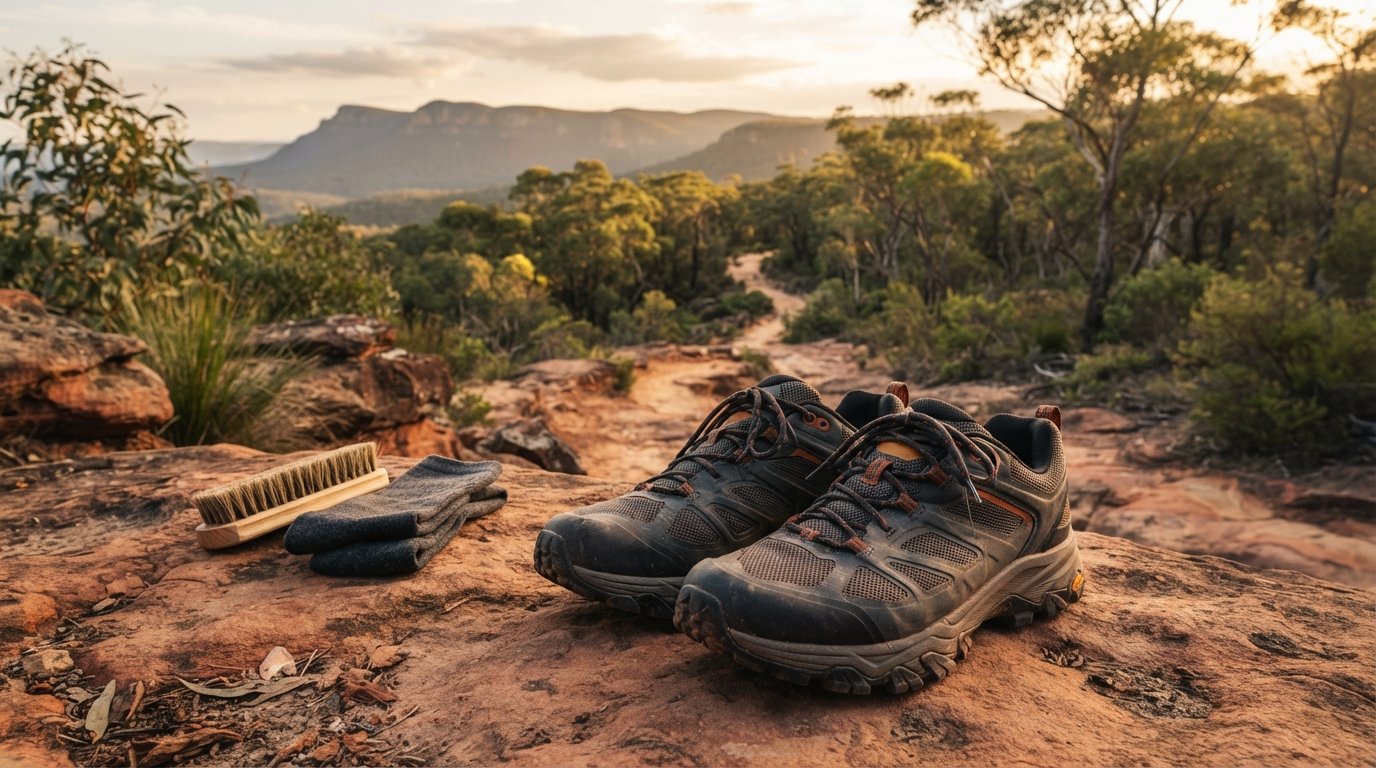
Successful trips into the bush aren’t just about having the right rig; they’re about keeping your crew comfortable and engaged. When selecting clothing, merino wool is our best friend. Unlike synthetic fabrics that trap odours and moisture, merino regulates temperature beautifully. It keeps the kids warm during those frosty desert nights we mentioned earlier and remains breathable when the tropical humidity kicks in. It’s a staple on any family camping checklist Australia. We also follow the “Two-Pair” shoe rule religiously. Every family member needs sturdy, closed-toe boots for protection against rough terrain and snakes, plus a pair of breathable camp shoes for relaxing. This keeps the heavy dirt outside the sleeping area and gives tired feet a break.
Sun protection in the outback requires more than just a bottle of SPF 50. We recommend broad-brimmed hats that shade the neck and ears, along with UPF50+ clothing. These provide a physical barrier against the high UV levels that no cream can match. For families with infants, sourcing gentle skincare and bath accessories from Bubs Universe helps keep little ones comfortable and protected. And for the inevitable dust? We never travel without a bulk supply of biodegradable wet wipes. They’re our secret weapon for “bush showers” and cleaning sticky hands before dinner. Managing these small comfort factors keeps morale high when you’re deep in the wilderness.
Keeping Kids Entertained and Involved
Keeping the little ones engaged prevents the “are we there yet” syndrome. We turn nature into a playground with bird watching or track identification. Adding these activities to your family camping checklist Australia ensures the trip is as much about the journey as the destination. Giving the kids “Camp Jobs” like helping set up the 4WD awning or fetching kindling builds their confidence. It makes them feel like part of the expedition team rather than just passengers. We also allow one “Comfort Item” from home. Whether it’s a favourite teddy or a specific blanket, that familiar scent helps them settle into a new environment much faster.
Night-time Safety and Lighting
When the sun drops, the bush gets dark fast. We give every child their own headlamp. It’s safer than a lantern because it keeps their hands free for climbing or holding onto a parent. To prevent midnight trips and tumbles, we use solar markers or glow sticks to identify tent guy-ropes. Finally, establish a “no shoes in the tent” rule from day one. It’s the only way to keep your sleeping bags free from the red dust that defines our favourite remote locations. If you’re still deciding on the best sleeping setup for your crew, our family rooftop tent reviews offer great insights into keeping the whole family off the ground and comfortable.
Preparation and Packing: The Master Strategy for 2026
The best family camping checklist Australia provides is only as good as the packing strategy behind it. We’ve seen many trips delayed by a frantic search for a single missing tent peg or a misplaced headlamp. To avoid this, we use clear storage tubs for all our gear. Being able to identify items at a glance saves time and keeps the site organized. We also prioritize weight distribution within our 4WDs. Keeping the centre of gravity low by placing heavy water tanks and recovery gear near the floor is vital for safety on uneven tracks. It’s about being methodical so you can stay hardy in the field.
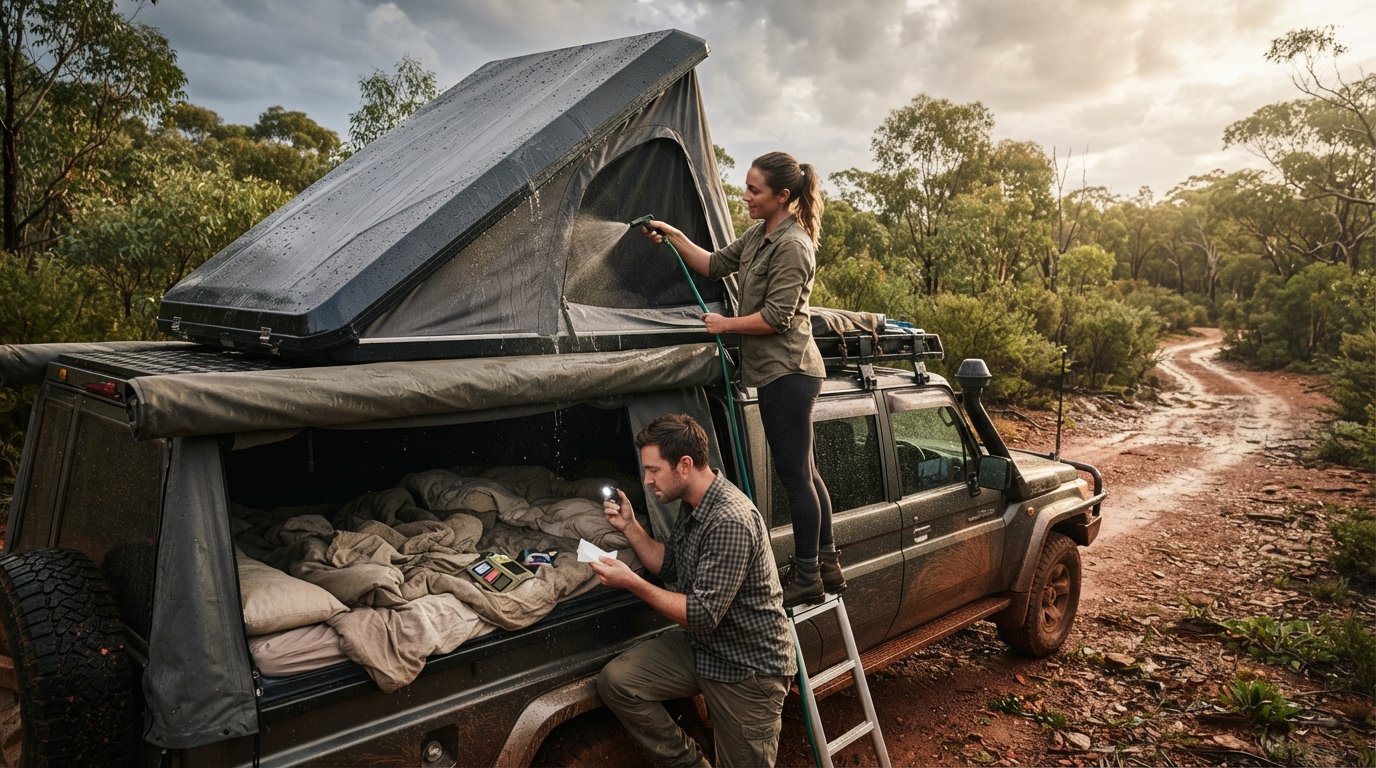
Never skip the “Dry Run” strategy. We suggest setting up your entire camp in the backyard or a local park a week before your departure. It’s the perfect time to check if your rooftop tent hinges need a bit of lube or if the kids’ sleeping bags still fit. Finding a leak in a mattress at home is a minor inconvenience; finding it in the middle of the Simpson Desert is a disaster. This practice builds confidence and ensures every piece of equipment is ready for the rigours of the bush.
Sustainable Camping and Environmental Ethics
We believe in leaving the land better than we found it. Integrating “Leave No Trace” principles into your packing list is essential for the modern adventurer. We choose biodegradable soaps and detergents to ensure our greywater doesn’t harm native vegetation. We also work hard to eliminate single-use plastics from our camp kitchen by using refillable containers and silicone covers. In remote areas without facilities, we follow strict protocols for human waste. Use a trowel to bury waste at least 20cm deep and 100m away from any water source or campsite. It’s about accountability and respecting the ecosystems that make Australian travel so unique.
The Final Pre-Departure Countdown
Before you hit the bitumen, run through a final mechanical check. Verify your tyre pressures and fluid levels, as the heat and dust of remote travel are unforgiving. Ensure all your digital maps and offline content are fully downloaded while you still have high-speed internet. For those planning an extended journey, consult our ultimate adventure travel planner for detailed long-term mapping. Taking these final steps ensures your crew is prepared for a safe, responsible, and truly epic Australian adventure.
Ready for Your Next Great Aussie Escape?
The red dust is calling. We’ve explored everything from the thermal R-values needed for chilly desert nights to the tactical advantages of a wrap-around awning. A successful journey depends on that perfect balance between rugged durability and family comfort. By following this family camping checklist Australia, you’re not just packing gear; you’re building a foundation for self-reliance and environmental respect. We’ve shown you how a methodical “Dry Run” and a focus on sustainable ethics can transform a stressful departure into a seamless adventure. It’s about being ready for anything the bush throws your way while keeping your crew happy and safe.
Don’t stop here. Our mission is to guide you through the maze of outdoor equipment with expert 4WD and rooftop tent recommendations tailored specifically for our unique environment. We’re a passionate community of Australian explorers dedicated to sustainable adventure and helping you make informed decisions before you buy. Join the Adventurerz community for more expert gear reviews! The tracks are waiting, and the stars are always brighter once you’re off-grid. We’ll see you out there on the road!
Frequently Asked Questions
What is the best time of year for family camping in Australia?
The best time depends entirely on your destination. For the Top End and Central Australia, the dry season between May and August offers mild days and clear nights. If you’re heading south to Victoria or Tasmania, the summer months from December to February provide the best temperate weather, though you must stay alert to the Fire Danger Period which often runs through April.
How do I keep my kids safe from snakes and spiders while camping?
Education and vigilance are your best tools for keeping the crew safe. Teach your kids to never put their hands where they can’t see and to always wear closed-toe shoes when walking through camp. We keep our tent zips closed at all times and use headlamps after dark to spot any inquisitive locals. Always carry a snake bite kit with tension-indicator bandages for peace of mind.
Do I really need a 4WD to go camping in Australia?
You don’t need a 4WD to enjoy many of our spectacular national parks. Thousands of campsites across the country are accessible via sealed or well-maintained gravel roads suitable for 2WD vehicles. However, a 4WD is essential if you want to tackle iconic soft-sand tracks or remote inland routes. Always check the latest park alerts and road conditions before you set off.
How much water should I pack for a 3-day family camping trip?
You should pack between 60 and 84 litres of water for a family of four on a 3-day trip. This follows our standard calculation of 5 to 7 litres per person per day for drinking, cooking, and basic hygiene. Having this volume secured is a non-negotiable part of your family camping checklist Australia, especially when heading into arid regions where natural water sources are unreliable.
What are the essential “Leave No Trace” rules for Australian campers?
The core rules are to pack out every piece of rubbish you bring in and to respect our unique wildlife. Use biodegradable soaps for all washing and ensure you’re at least 100 metres away from water sources when disposing of greywater. We always stick to marked tracks to protect fragile native vegetation and ensure we leave our campsites exactly as we found them for the next family.
How can I keep my food cold without a 12V fridge?
A high-performance, rotomoulded icebox can keep food cold for several days if managed correctly. We recommend using large blocks of ice rather than crushed ice, as they melt much slower. Pre-chill your icebox the night before you pack it and keep it in the shade under your awning to maximize its efficiency. Limit how often you open the lid to trap the cold air inside.
What is the most important piece of safety gear for remote camping?
A GPS-enabled Personal Locator Beacon (PLB) or a satellite messenger is the most critical safety item. In the outback, mobile reception is often non-existent, making these devices your only reliable lifeline in an emergency. Including a modern, AMSA-registered beacon in your family camping checklist Australia ensures that emergency services can locate your crew with precision if a crisis occurs off-grid.
How do I choose the right size rooftop tent for a family of four?
Look for “Family” or “XL” models that offer an internal width of at least 180cm to 200cm. Soft-shell fold-out tents generally provide a larger footprint than hard-shell models, making them better suited for families. If your kids are older, you might even consider a dual-tent setup or a model with an integrated annexe to provide extra room for changing and storage.