What if you could delete every caravan park booking from your calendar and never look back? Most of us dream of finding that perfect, silent campsite by a red-dirt ridge, yet the fear of a dead battery or an empty water tank keeps us tethered to the power pole. We’ve all felt that familiar knot in the stomach when the voltage drops just as the sun goes down! It’s time to trade that anxiety for total energy independence and the freedom to roam on your own terms.
Mastering a reliable off grid caravan setup is about more than just buying the biggest battery you can find. It’s a delicate balance of high-tech power management and low-impact environmental ethics. In this 2026 guide, we’ll demystify the complex electrical jargon and tackle those weight limit concerns head-on. You’ll learn exactly how to configure your power, water, and waste systems to survive weeks in the outback without a single plug. From the latest lithium energy density standards to the new self-containment rules rolling out across Australia, we have you covered. Let’s get your rig ready for the ultimate remote escape!
Key Takeaways
- Learn how to engineer a bulletproof off grid caravan setup using 2026 lithium standards and solar math to keep your gear running deep in the bush.
- Discover why water is your real limiting factor and how to master waste management to respect the rugged landscapes we explore together.
- See how integrating 4WD awnings and induction cooking can streamline your weight while dramatically improving your caravan’s thermal efficiency.
- Navigate the tricky balance of GVM limits and safety gear to ensure your rig remains legal, light, and ready for any remote emergency.
- Gain the confidence to ditch the power cord and embrace seven plus days of total self-sufficiency with our expert gear recommendations.
Table of Contents
- What is an Off Grid Caravan Setup? Defining the 2026 Standard
- Powering the Dream: Solar, Lithium, and Management Systems
- Water and Waste: The Overlooked Essentials of Remote Travel
- Holistic Setup: Integrating Awnings, Shelter, and Appliances
- Preparing for the Track: Weight, Safety, and Community Intel
What is an Off Grid Caravan Setup? Defining the 2026 Standard
We define a true off grid caravan setup in 2026 as the total ability to operate every onboard system for at least seven days without a single external connection. Gone are the days when “off-grid” just meant having a spare jerry can and a dim 12V light. Today, it means total self-reliance. While traditional travel often involves hop-scotching between crowded powered sites, our community is pushing further into the silence of the bush. We aren’t just camping; we’re taking our entire lifestyle into the wild without compromising on comfort or safety.
To truly master What is an Off Grid Caravan Setup? we have to look at the massive technological shift occurring right now. We’re seeing a move toward high-capacity lithium (LiFePO4) banks and entirely gas-free living, where induction cooktops replace heavy gas bottles. This evolution isn’t just about luxury. It’s what we call “Responsible Independence.” It’s a commitment to using the best gear to minimize our impact on the pristine Australian environments we love to explore. We want to leave nothing but tyre tracks, and modern tech makes that possible.
The Pillars of Self-Sufficiency
To stay out there longer, we focus on three critical areas that must work in perfect harmony:
- Power: This is the heartbeat of your rig. It involves generating energy through high-efficiency solar, storing it in dense lithium batteries, and using smart management systems to convert that power for your appliances.
- Water: This is usually the first thing to run out. A 2026 standard setup prioritizes high-capacity tanks, advanced 12V filtration systems, and strict conservation habits.
- Waste: We take stewardship seriously. Managing grey water and solids responsibly is no longer optional; it’s a core part of being a self-contained traveler in 2026.
Why Go Off-Grid in 2026?
The appeal of the off grid caravan setup is stronger than ever. Commercial parks are becoming more crowded, and peak-season fees for sites with facilities can now reach up to $89 per night. By investing between $2,900 and $5,500 in a robust off-grid system, we effectively buy our freedom. The setup pays for itself within a few long trips, but the real value is the silence. There’s nothing quite like waking up to the sound of the wind through the ghost gums rather than a neighbor’s air conditioner. We also reduce our environmental footprint, choosing silent solar energy over the noise and fumes of old-school generators.
Powering the Dream: Solar, Lithium, and Management Systems
Building a reliable off grid caravan setup in 2026 begins and ends with your battery choice. Lithium (LiFePO4) is now the non-negotiable standard for our community. Unlike old AGM batteries that suffer if discharged below 50%, lithium allows us to use nearly 100% of its rated capacity without damage. It’s significantly lighter, charges faster, and lasts for thousands of cycles. When you’re deep in the bush, you need gear that doesn’t quit just because the sun went down.
To get your system right, we use “Solar Math.” Calculate your daily Watt-hour (Wh) consumption by multiplying an appliance’s Watts by the hours you’ll use it. If your 12V fridge pulls 40W and runs for 10 hours a day, that is 400Wh. We always recommend a solar array that can replenish at least twice your daily consumption to account for cloudy days or winter travel. We also rely on a DC-DC charger to harvest energy while we’re on the move. This acts as a smart bridge between the tow vehicle’s alternator and the caravan’s lithium bank, ensuring your batteries are topped up before you even reach camp.
For high-voltage gear like induction cooktops or starlink, a Pure Sine Wave Inverter is essential. It delivers clean power identical to a home wall socket, protecting sensitive electronics from the surges that cheaper modified sine wave units produce. Safety is paramount when Integrating Awnings, Shelter, and Appliances, so ensure all high-draw items are correctly fused and ventilated. If you’re still deciding on your base rig, our latest rooftop camping reviews offer great insights into lightweight, energy-efficient setups.
Solar Arrays: Fixed vs. Portable
We prefer a hybrid approach. Fixed panels on the roof provide passive charging while we drive, keeping the fridge cold without any effort. However, we also carry portable solar blankets. These allow us to park the rig in the shade under one of our recommended 4wd awnings while the blanket sits 10 metres away in the direct sun. Always choose an MPPT regulator over older PWM tech; it’s up to 30% more efficient in low-light conditions.
Battery Management Systems (BMS)
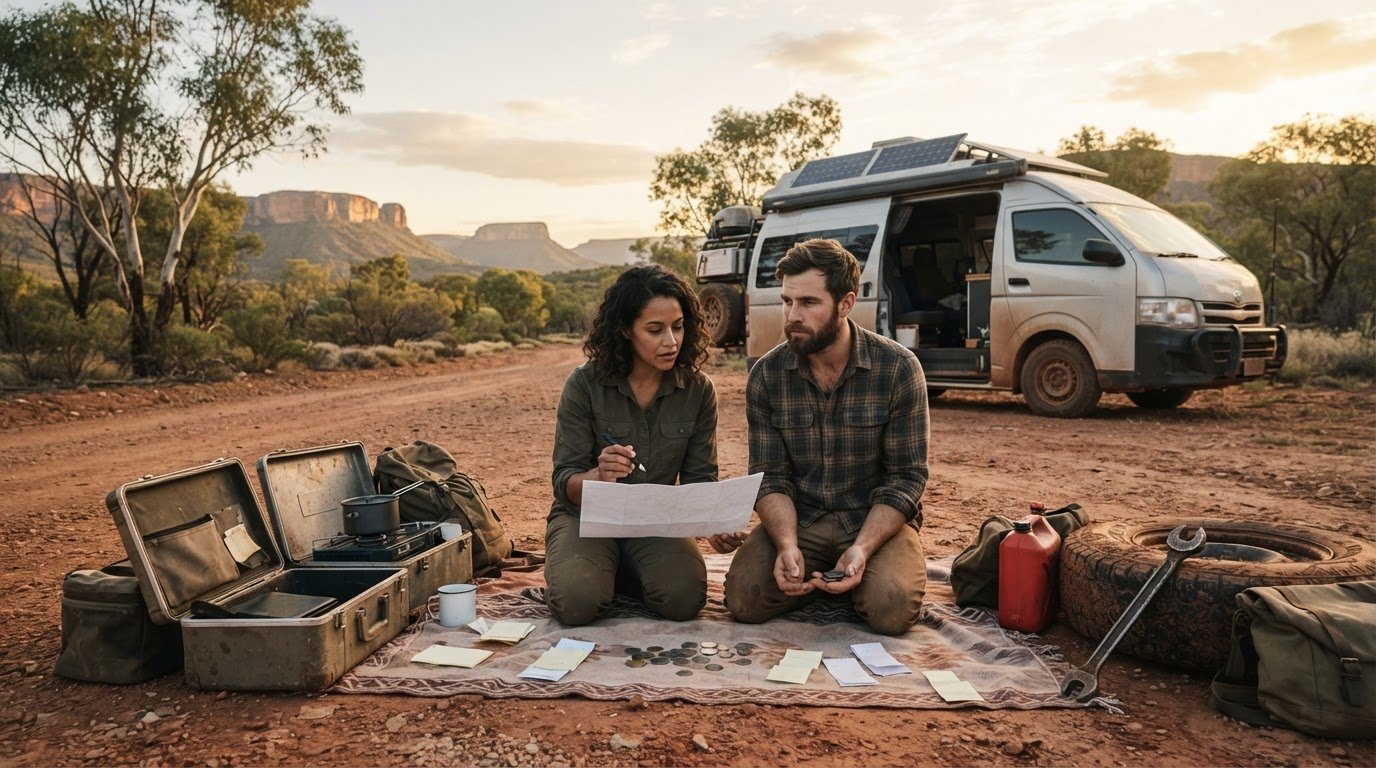
Your BMS is the brain of the operation. Modern 2026 units offer real-time Bluetooth monitoring so we can check our levels from the campfire. It protects your investment with low-voltage disconnects and thermal management. By integrating these stats with our travel planning tools, we can map out our energy use across the entire trip. It’s about using data to ensure we never have to cut an adventure short.
Water and Waste: The Overlooked Essentials of Remote Travel
While solar and lithium get all the glory, water is what usually sends us packing back to civilization. You can have all the power in the world, but if your tanks are bone dry, your adventure is over. In a modern off grid caravan setup, water management is the ultimate game of strategy. We calculate our needs based on a framework of 5 to 10 litres per person, per day. This covers drinking, basic hygiene, and cooking. If you’re planning on hot showers every night, you’ll need to double those figures. It’s about being realistic with your consumption to extend your stay in the wild.
Stewardship of the land is just as vital as our own survival. We advocate for a strict “Leave No Trace” philosophy. This means managing every drop of grey water and every gram of waste with absolute care. Pristine environments are fragile. Dumping soapy water or food scraps directly onto the ground can damage local ecosystems and attract unwanted pests. By taking a holistic approach to our utility systems, we ensure these remote tracks remain open and beautiful for the next generation of explorers.
Advanced Water Filtration and Storage
We don’t always have access to town water. A professional off grid caravan setup should include multi-stage filtration that allows you to safely draw from creeks or bores. Carbon filters are great for taste, but for outback safety, UV sterilization is the gold standard for killing bacteria and viruses. We also recommend dividing your storage. Keep a dedicated, high-quality tank for drinking water and separate tanks for general-purpose utility water. This prevents a single point of failure and ensures your most precious resource stays uncontaminated.
Sustainable Waste Management
The shift toward composting toilets is one of the best trends we’ve seen in 2026 caravans. They eliminate the need for harsh chemicals and dramatically reduce water usage. Grey water tanks have also moved from being an “extra” to a “must-have.” Many regions now enforce strict “self-contained” rules. In early 2026, Tasmania’s Central Coast implemented a $15 per night permit system strictly for self-contained vehicles. We use community-driven apps to find official dump points. This ensures we never impact the natural beauty of our campsites. If you’re still refining your exterior kit, checking our reviews of 4wd awnings can help you plan a better outdoor utility area for managing these essentials.
Holistic Setup: Integrating Awnings, Shelter, and Appliances
We believe a truly effective off grid caravan setup works like a single, integrated ecosystem. It’s not just about the batteries we discussed earlier; it’s about how your external shelter protects your internal energy reserves. By using high-quality 4WD accessories, we can create a seamless camp that keeps us comfortable while reducing the strain on our lithium banks. This holistic approach is what separates a basic rig from a professional remote touring setup. When every piece of gear works together, you can stay out there longer and with far less stress on your equipment.
Thermal Management and External Shelter
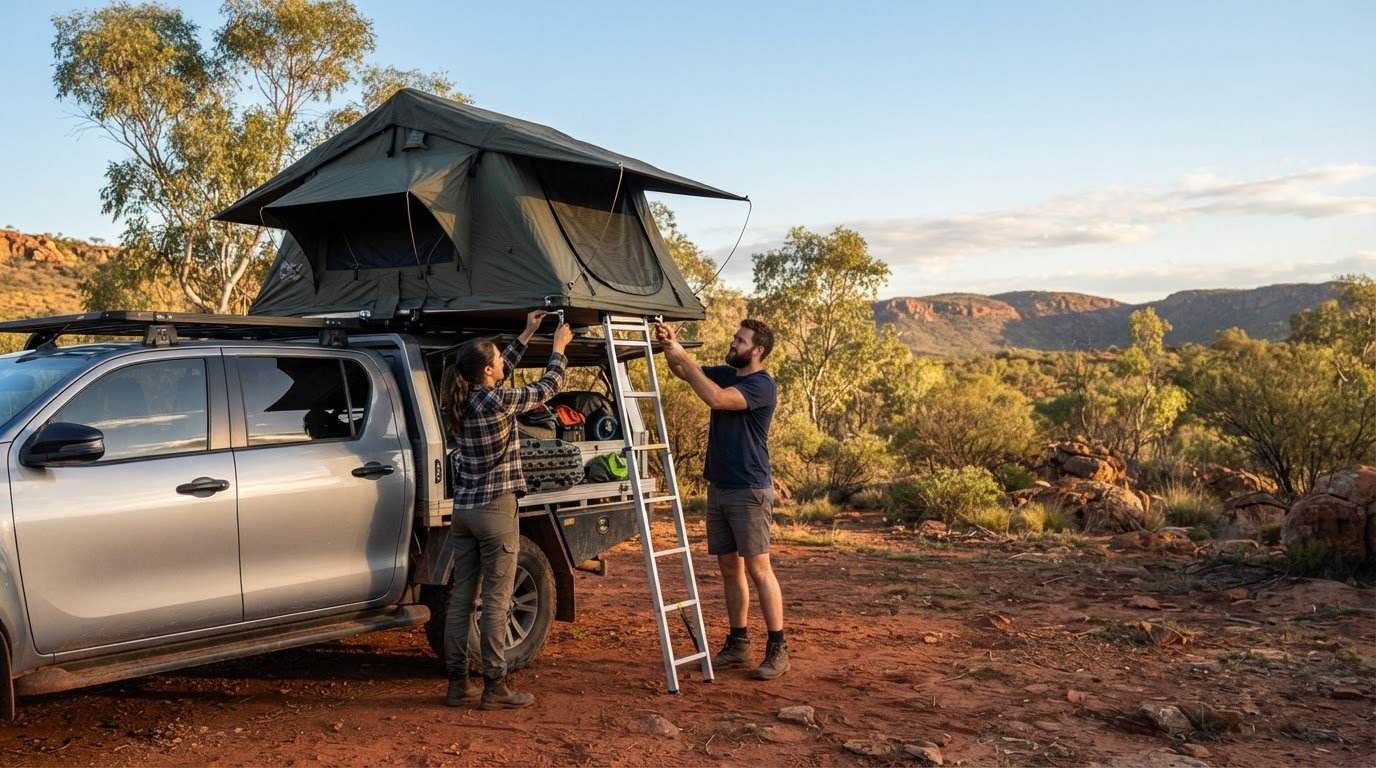
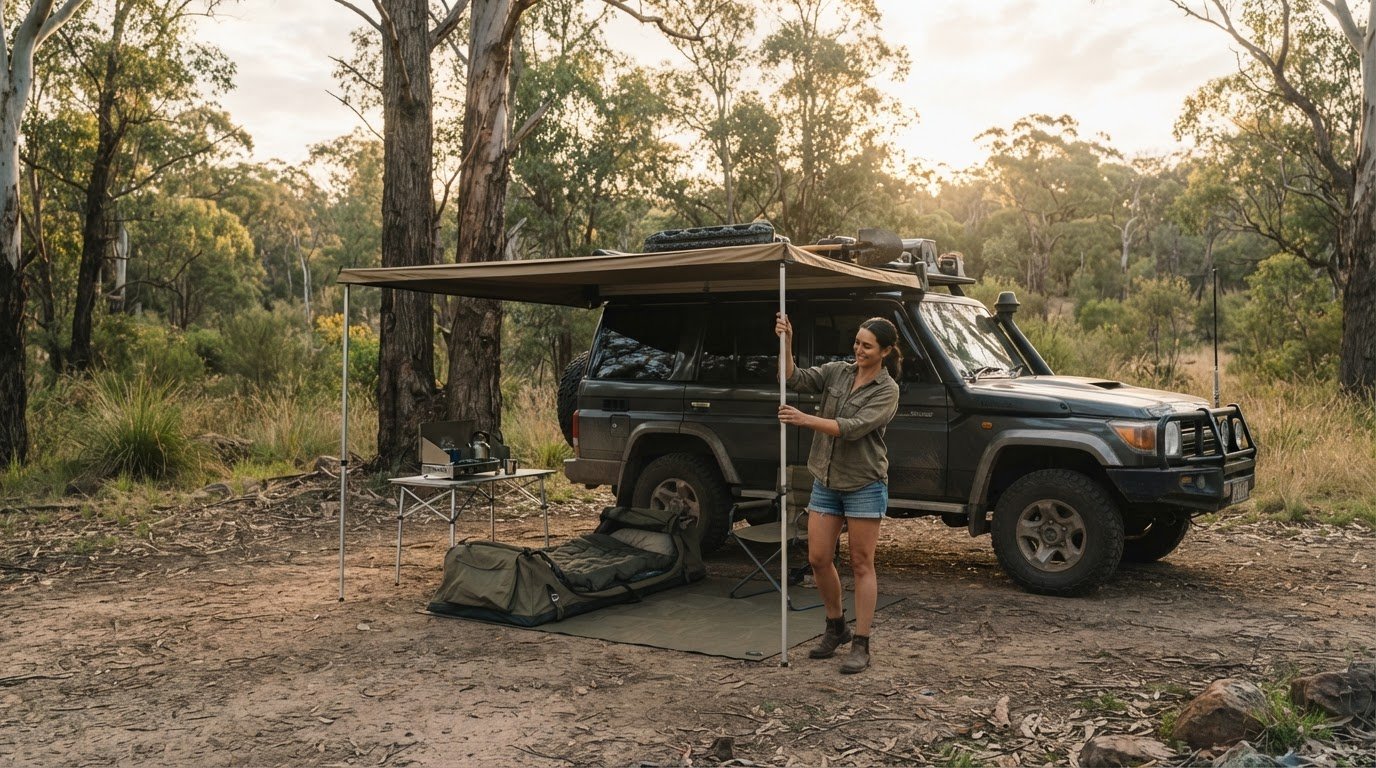
Thermal management starts outside the caravan walls. When we use the gear featured in our best 4wd awnings guide, we aren’t just making a nice spot for a brew. We’re physically shielding the side of the caravan from the harsh Australian sun. This simple act of creating shade can reduce internal temperatures by several degrees, which drastically lowers the need for power-hungry air conditioning. For larger groups or families, we often suggest using roof top tents as secondary sleeping quarters. This provides better airflow for the occupants and keeps the main cabin less crowded and cooler during those humid nights. If you want maximum protection, 270-degree awnings are the gold standard for shielding your external kitchen and fridge from both heat and sudden outback rain.
The Gas-Free Caravan Debate
We’re seeing a massive push toward gas-free living in 2026. Induction cooktops are at the center of this shift. While they require a robust inverter, usually 2000W or higher, they offer incredible efficiency and safety. By removing gas bottles, we reduce our Gross Vehicle Mass (GVM) and eliminate the risk of gas leaks while traveling on corrugated terrain. For heating, we’ve moved toward diesel or electric heaters. Diesel units are incredibly fuel-efficient for those freezing desert nights, while electric heaters work perfectly if your solar and lithium bank is sized correctly. It’s all about choosing appliances that match your energy generation. This transition to electric cooking and heating makes the entire rig more self-reliant and easier to manage in remote areas.
Ready to upgrade your exterior shelter? Check out our expert reviews on the best 4wd awnings for your rig.
Preparing for the Track: Weight, Safety, and Community Intel
Before we point the bullbar toward the horizon, we have to talk about the physical reality of our gear. An off grid caravan setup is only as good as the vehicle’s ability to carry it safely across corrugated tracks. While we’ve focused on the tech that keeps the lights on and the water flowing, the final hurdle is always the scale. We need to ensure our rigs remain balanced and within legal limits to avoid mechanical failure or insurance headaches in the middle of nowhere. It’s about being hardy and methodical in our preparation so we can be daring in our exploration. To stay truly organized, many travelers maintain a physical binder of appliance manuals and electrical diagrams; using professional dividers from Ozzie Tabs ensures you can find the right page quickly when troubleshooting in the bush.
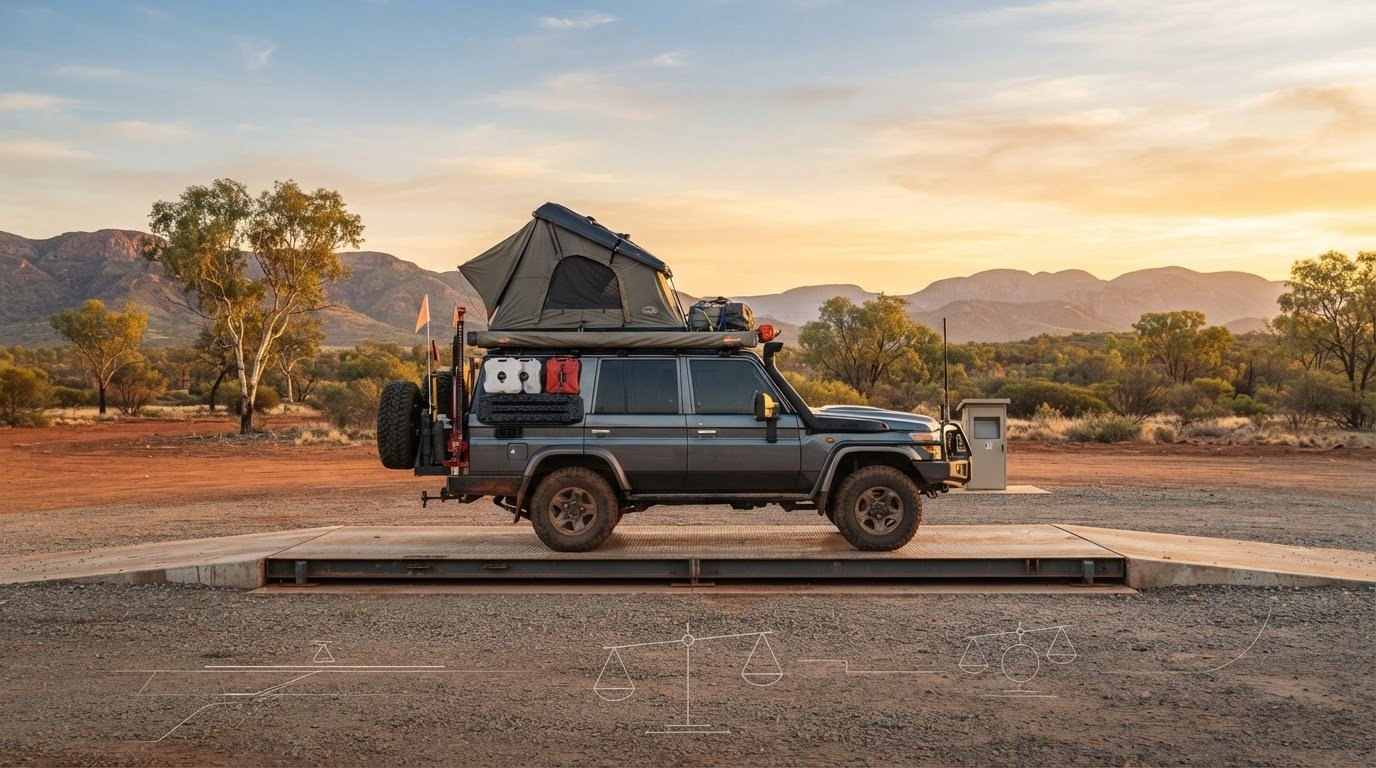
Weight is the #1 objection for any serious traveler. We know that water is heavy; it’s exactly 1kg per litre. If you’re carrying 200L of fresh water to sustain a week in the bush, that’s 200kg of your payload gone before you’ve even packed a spare tyre! This is where the lithium transition pays massive dividends. By swapping old AGM batteries for modern lithium units, we can save up to 60kg, effectively offsetting the weight of a secondary water tank. We always recommend placing these heavy batteries and tanks directly over the axles. This keeps the center of gravity low and prevents the caravan from swaying at highway speeds. If you’re pushing the limits, a GVM upgrade is becoming a standard part of the conversion process for 2026 tourers.
Safety in Remote Australia
Safety out here is built on redundancy. We never rely on a single power source or a single line of communication. If your solar array gets smashed by a stray branch, you need that DC-DC charger to pick up the slack. For communication, mobile reception is a luxury we don’t count on. We carry EPIRBs and satellite SMS devices as non-negotiable kit for areas with zero bars. Between those rugged, remote legs, we often plan “recharge” stops at high-end stays to reset our systems. You can use our resorts in australia guide to find the perfect spot to flush the tanks and enjoy a hot shower before heading back into the wild.
We’re all in this together. Join the Adventurerz community to share your real-world testing data and see how other rigs are performing on the track. Your feedback on gear helps every one of us travel more responsibly and safely. Let’s keep the conversation going; review your gear and help your fellow adventurers build the ultimate off grid caravan setup for the tracks of tomorrow!
Claim Your Remote Freedom
You’ve seen how a modern off grid caravan setup relies on the synergy between high-capacity lithium and smart water management. By shifting toward gas-free appliances and using external shelter to regulate temperature, we can extend our time in the bush while protecting the landscapes we love. It’s about being prepared, being methodical, and being part of a community that values the track as much as the destination. We’re here to guide you through every technical choice and ethical consideration on your journey.
Join the Adventurerz community to share your off-grid setup and get expert gear advice! We are a passionate group of over 50,000 explorers dedicated to expert-led gear reviews and sustainable, responsible travel across Australia. Whether you’re refining your solar math or choosing the best 4WD accessories, our collective experience ensures you never travel alone. The red dirt is calling and your rig is finally ready to answer. We’ll see you out there on the track!
Frequently Asked Questions
How much solar do I need for a 12V caravan setup?
We recommend at least 400W of solar to cover basic needs like refrigeration and lighting. If you’re running high-draw appliances like Starlink or coffee machines, you should aim for 600W to 800W. Solar blankets are excellent additions to fixed panels because they let you chase the sun while parked in the shade. Always use an MPPT regulator to squeeze every drop of energy from your panels, especially on overcast days.
Can I run an air conditioner off-grid in my caravan?
You can run an air conditioner off-grid, but it requires a serious energy investment. You’ll need at least 400Ah to 600Ah of lithium and a 3000W pure sine wave inverter. Even then, most setups only provide a few hours of cooling. We suggest focusing on thermal management first; use high-quality 4WD awnings to shade your rig and keep the internal temperature down naturally before reaching for the remote.
Is lithium really worth the extra cost for off-grid travel?
Lithium is absolutely worth the investment for any serious off grid caravan setup. While the initial cost is higher than AGM, you get double the usable capacity and a lifespan that can exceed ten years. The weight savings are the real winner; swapping two 100Ah AGM batteries for a single 200Ah lithium unit can save you nearly 40kg. This helps you stay under your GVM while carrying more water.
How do I manage grey water if I don’t have a built-in tank?
If your rig lacks a built-in tank, you should use a portable grey water bladder or a wheeled waste tank. These allow you to collect sink and shower water to dispose of it later at an official dump point. Many Australian national parks now strictly enforce self-contained rules, meaning you can’t let a single drop hit the ground. It’s our responsibility as explorers to keep these pristine campsites clean for everyone.
What is the best way to cook without gas in a caravan?
Portable induction cooktops are the gold standard for gas-free cooking in 2026. They are incredibly fast, safe, and efficient, though they do require a powerful inverter to run. By ditching the gas bottles, we remove significant weight from the drawbar and eliminate the need for permanent gas ventilation. This helps keep the dust out on those long outback tracks. It’s a cleaner, more sustainable way to prepare meals.
How long can I realistically stay off-grid with 200Ah of lithium?
With a 200Ah lithium bank, most of us can comfortably stay off-grid for three to four days without any solar input. This assumes you’re running a 12V fridge, LED lights, and charging basic devices. If you have 400W of solar and clear skies, you can stay out indefinitely. The key is monitoring your usage through a Bluetooth BMS app so you don’t get caught out after a few cloudy days.
Do I need a DC-DC charger if I have plenty of solar panels?
We always recommend a DC-DC charger, even if you have a massive solar array. Solar is great while you’re parked, but it can be inconsistent during rain or heavy forest cover. A DC-DC charger ensures your batteries are topped up by the vehicle’s alternator while you drive. It also provides the correct charging profile for lithium, which a standard vehicle alternator cannot do on its own. It is essential redundancy.
What are the legal requirements for off-grid waste disposal in Australia?
Legal requirements vary by region, but the national trend is toward mandatory self-containment in popular areas. This means you must carry all grey and black water out with you. In early 2026, several regions implemented permit systems that require proof of onboard waste storage for an off grid caravan setup. Always use community-driven apps to find designated dump points. Disposing of waste in bushland is illegal and carries heavy fines.